Inspiration
I wanted to make Twitch viewers part of the game they were watching.
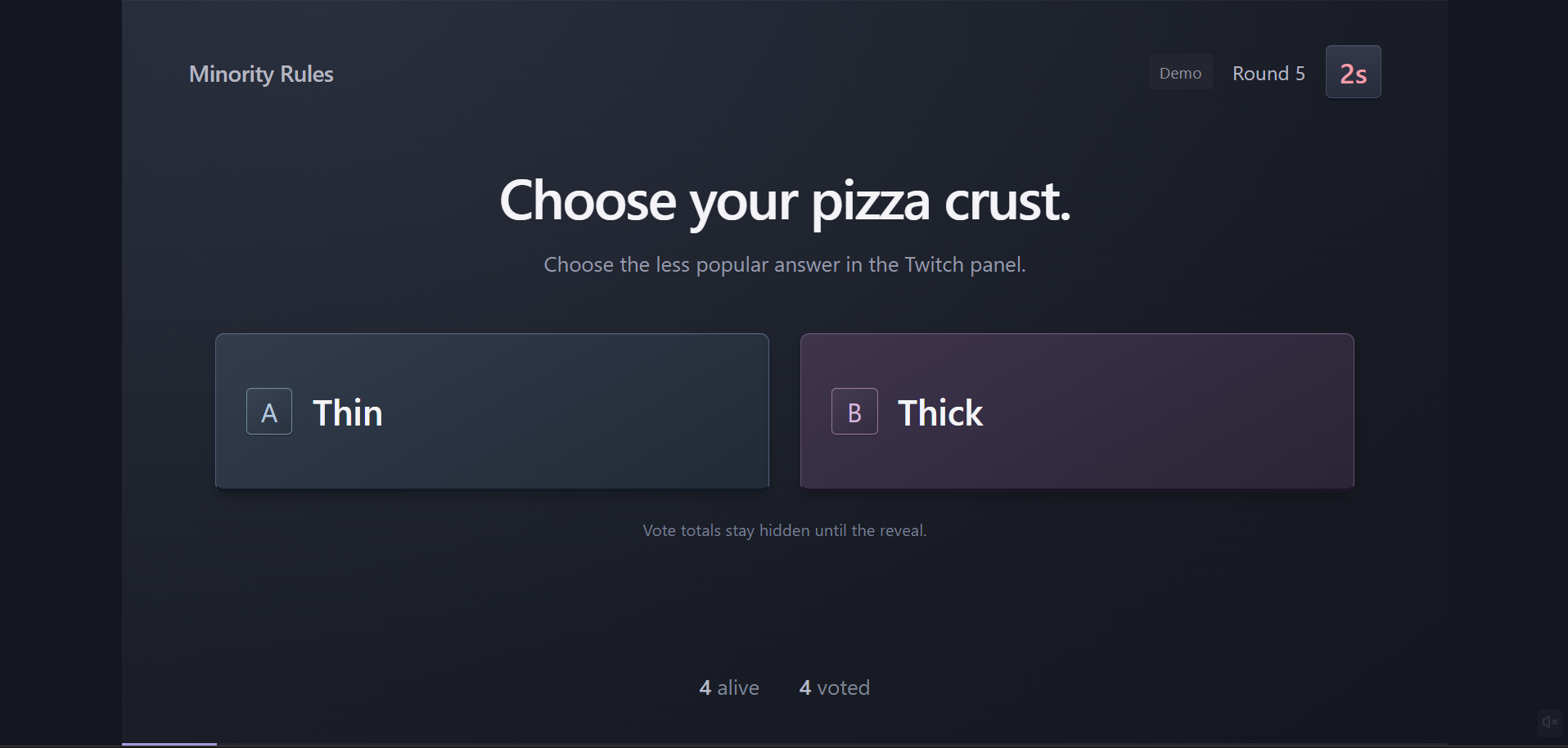
The idea behind Minority Rules is simple: everyone chooses between two answers, but the less popular answer survives. Instead of following the crowd, players have to predict it—and go the other way.
A familiar A-or-B question becomes a competition between viewers, giving streamers and their communities something to play together.
What it does
Minority Rules is an interactive survival game for Twitch.
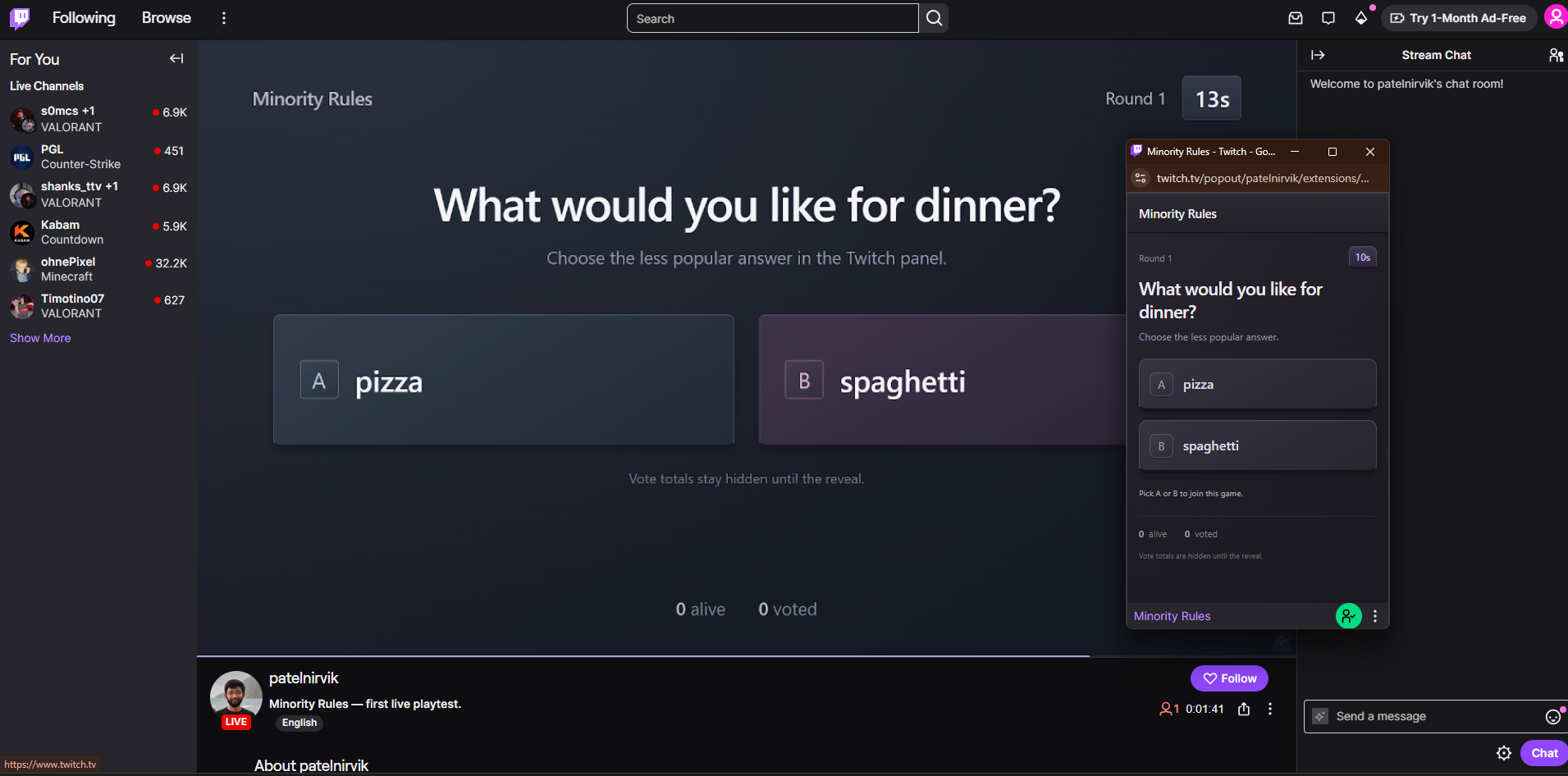
- Viewers vote for A or B directly through a Twitch extension.
- Players can change their answer until the countdown ends.
- Vote totals stay hidden during voting.
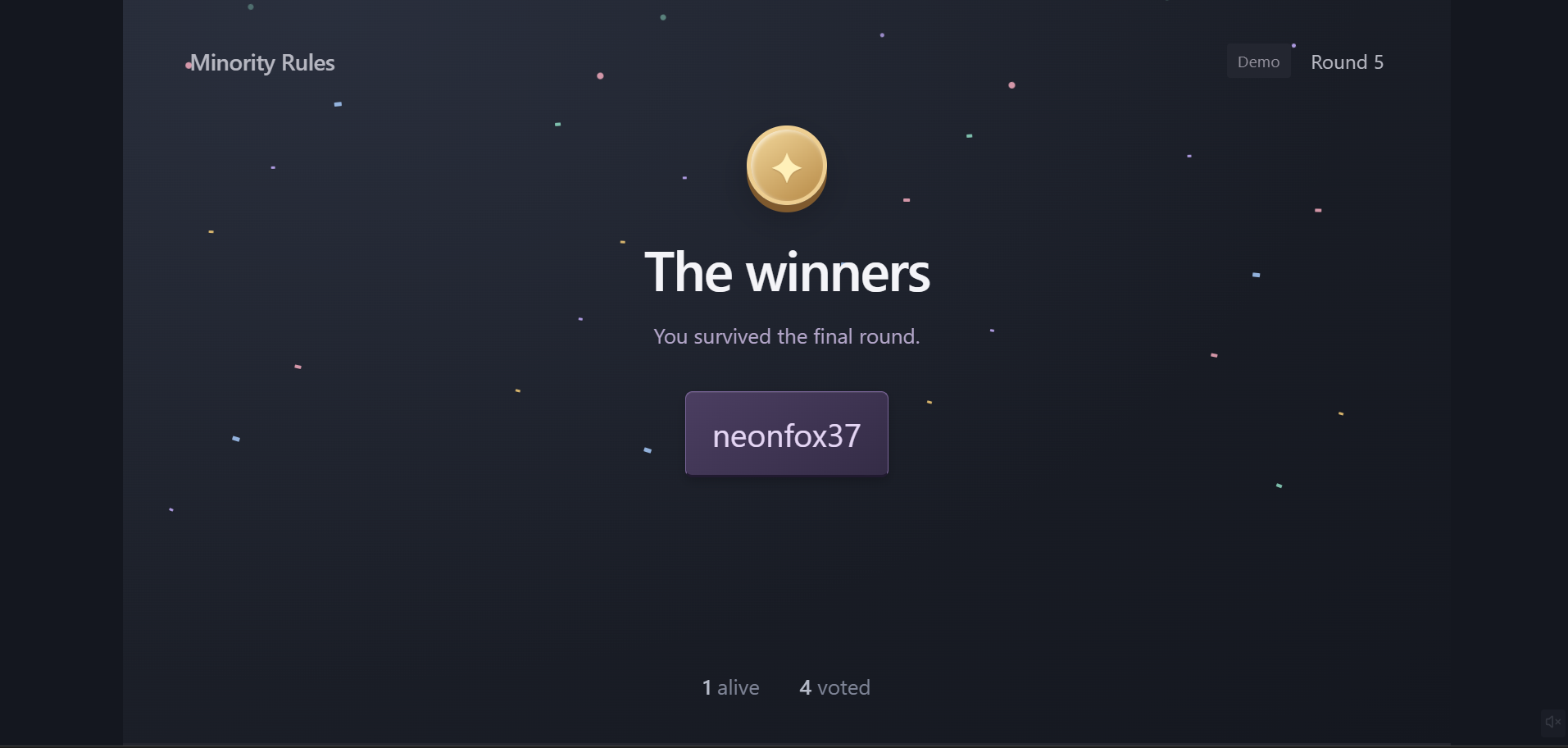
- When the round ends, the minority survives and the majority is eliminated.
- Surviving players continue until the game produces a winner.
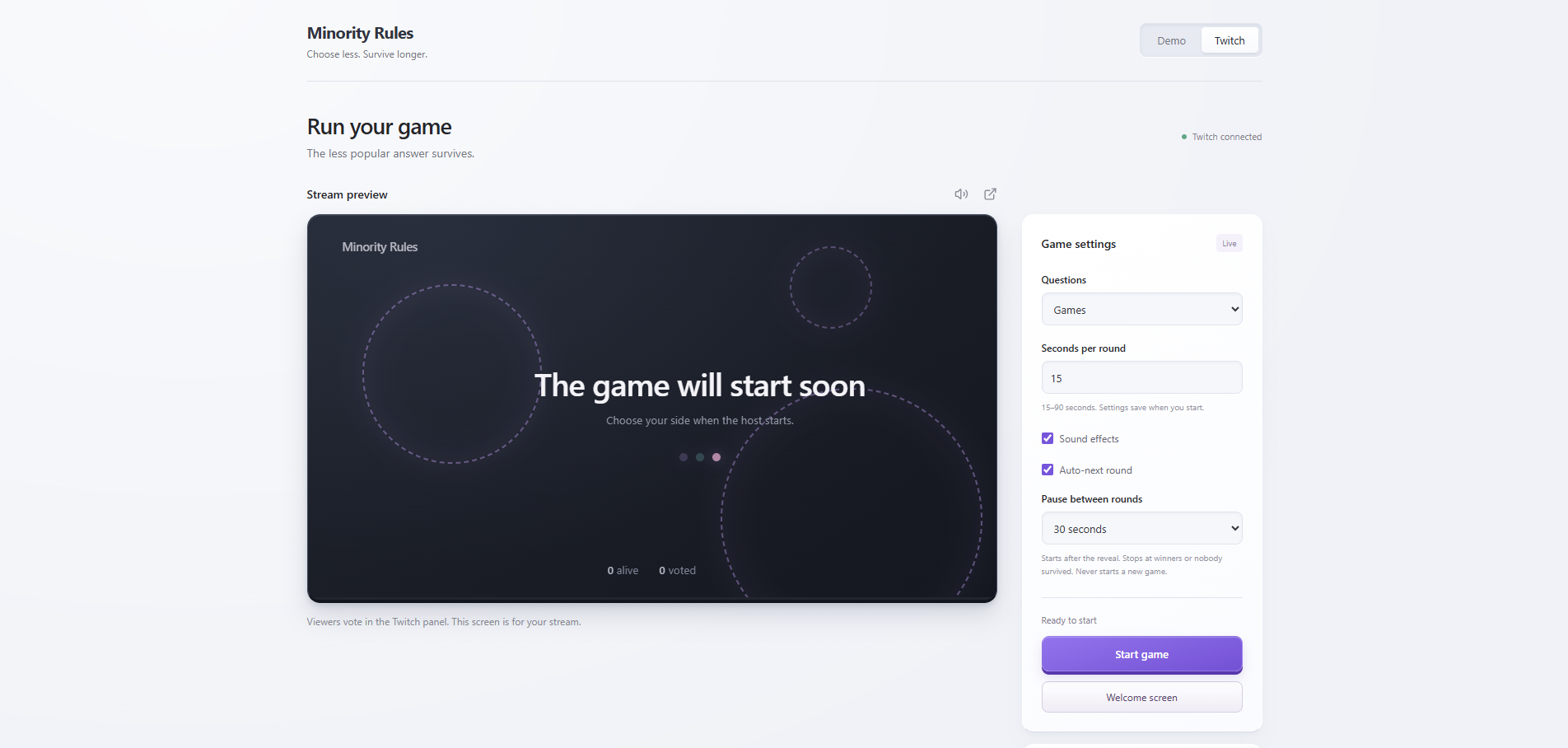
The streamer dashboard lets hosts choose question packs, set voting time, adjust pauses between rounds, and control automatic round progression and sound effects. Streamers can also add their own questions to suit their community.
The game includes a stream preview for OBS and a separate demo mode with simulated players, so streamers can explore the experience before inviting an audience.
How I built it
I built Minority Rules with Codex using GPT 6.1 Sol at medium reasoning effort.
I started with an idea and a list of features, but no clear implementation plan. In Codex’s Plan mode, I explained what I wanted and worked through the decisions it presented. Instead of making every choice upfront, I could select options as the plan developed. The completed plan was saved in plans.md.
After I approved the plan, Codex helped implement the game logic, interface, streamer dashboard, Twitch extension, and Cloudflare backend.
Because I was new to Twitch development, Codex’s embedded browser was especially useful. It helped navigate the Twitch setup and extension upload process by inspecting pages and interacting with the interface.
I then tested with friends, requested additional features, and iterated on the project. The project went from an idea to a live game in one day.
Challenges I faced
The biggest challenge was connecting the game to the real Twitch viewer experience. Getting the extension running involved testing access, viewer identity authorization, and checking that friends could successfully join and vote.
Testing uncovered an authorization validation bug that could reject valid viewers. Codex helped investigate and fix it, and we retested with a friend’s account.
I also had to understand the difference between the game shown in OBS and the Twitch extension where viewers actually vote. Both parts needed to work together for the experience to make sense.
What I learned
I learned that a clear plan makes it much easier to turn an idea into a working product. Plan mode helped me make decisions before implementation, while testing with real people revealed issues that a simulated demo could not.
I also learned how Twitch extensions, viewer identity, streamer controls, and an OBS game display fit together.
Most of all, I learned how much I could build by combining my own product decisions with Codex’s planning, implementation, and debugging support.
What’s next
I’d like to test Minority Rules with larger communities, expand the question packs, and refine the experience based on feedback from streamers and viewers.
Choose less. Survive longer.
Built With
- cloudflare
- codex
- openai
- twitch
- twitch-extension


