Inspiration
Imagine you can only move your eyes. It's 2 AM, you're cold, and the nurse won't be back for hours. You can't call out and you can't press a button, so you wait. For people with ALS or locked-in syndrome, or on a ventilator in the ICU, that's every night.
We started by talking to an ICU nurse about how they communicate with patients who can't speak. Nurses agree on a yes and a no, like one blink for yes and two for no, and then go through every option one at a time. For anything more complex, like where does it hurt?, they use picture boards or spell out the alphabet letter by letter. The alternative is a dedicated eye-tracking device, and those can cost thousands of dollars.
Our first idea was to automate that process to make nurses' lives easier. Then we flipped the question: what does the patient actually need? A 2026 study of patients' experiences of missed nursing care (Albrechtsen et al.) found that patients held back because they knew nurses were busy. One said: "I would rather call one time too little than one time too many." We found plenty of tools that help patients answer, but none that ask first.
What it does
MinimEyes lets patients who can't speak use their eyes and eyebrows to control their room, call for help, and answer their nurses. The name comes from three goals:
- Minimize the glances and the time it takes a patient to communicate
- Minimize the time nurses spend guessing
- Minimize the silence, when patients wonder whether they should speak up
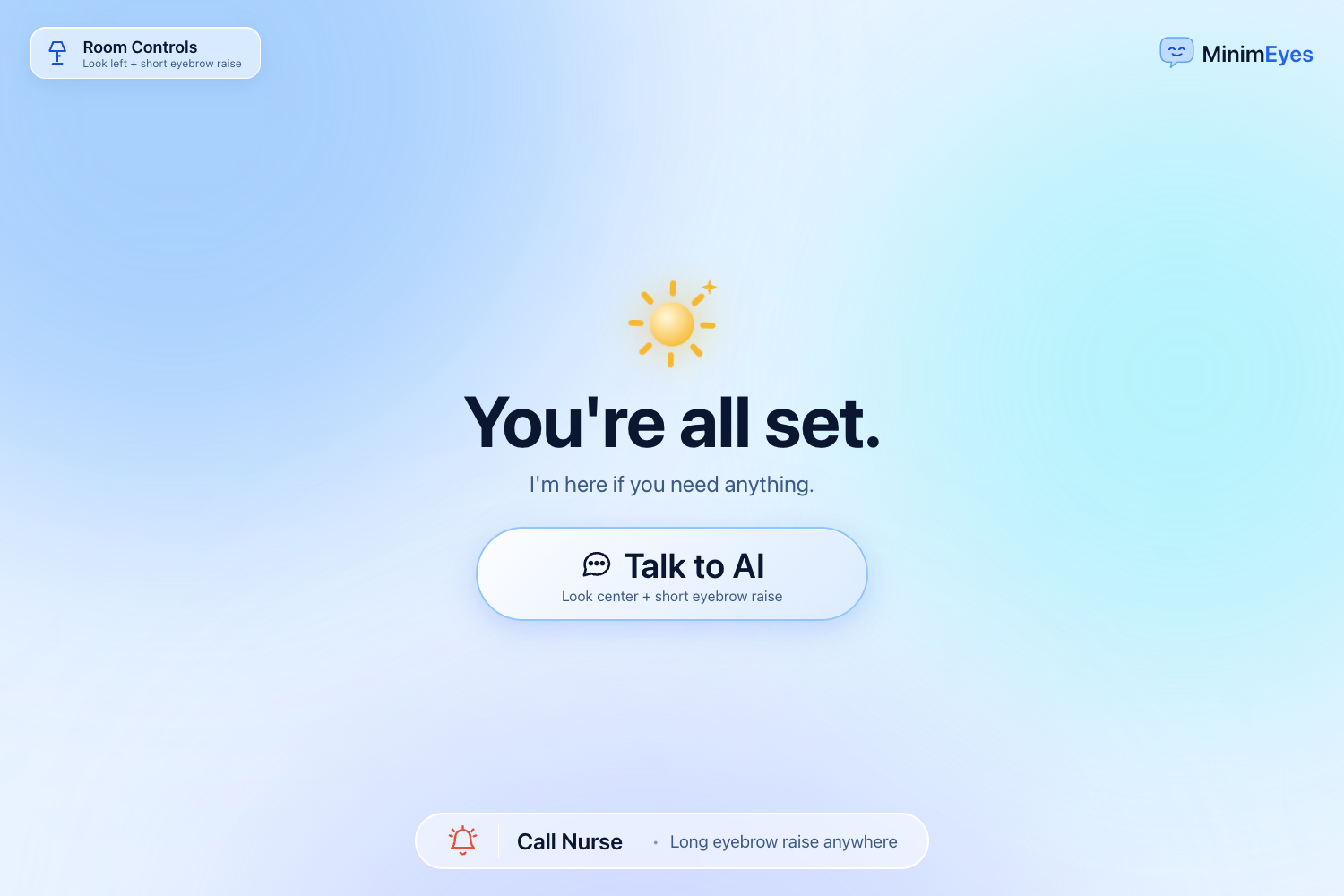
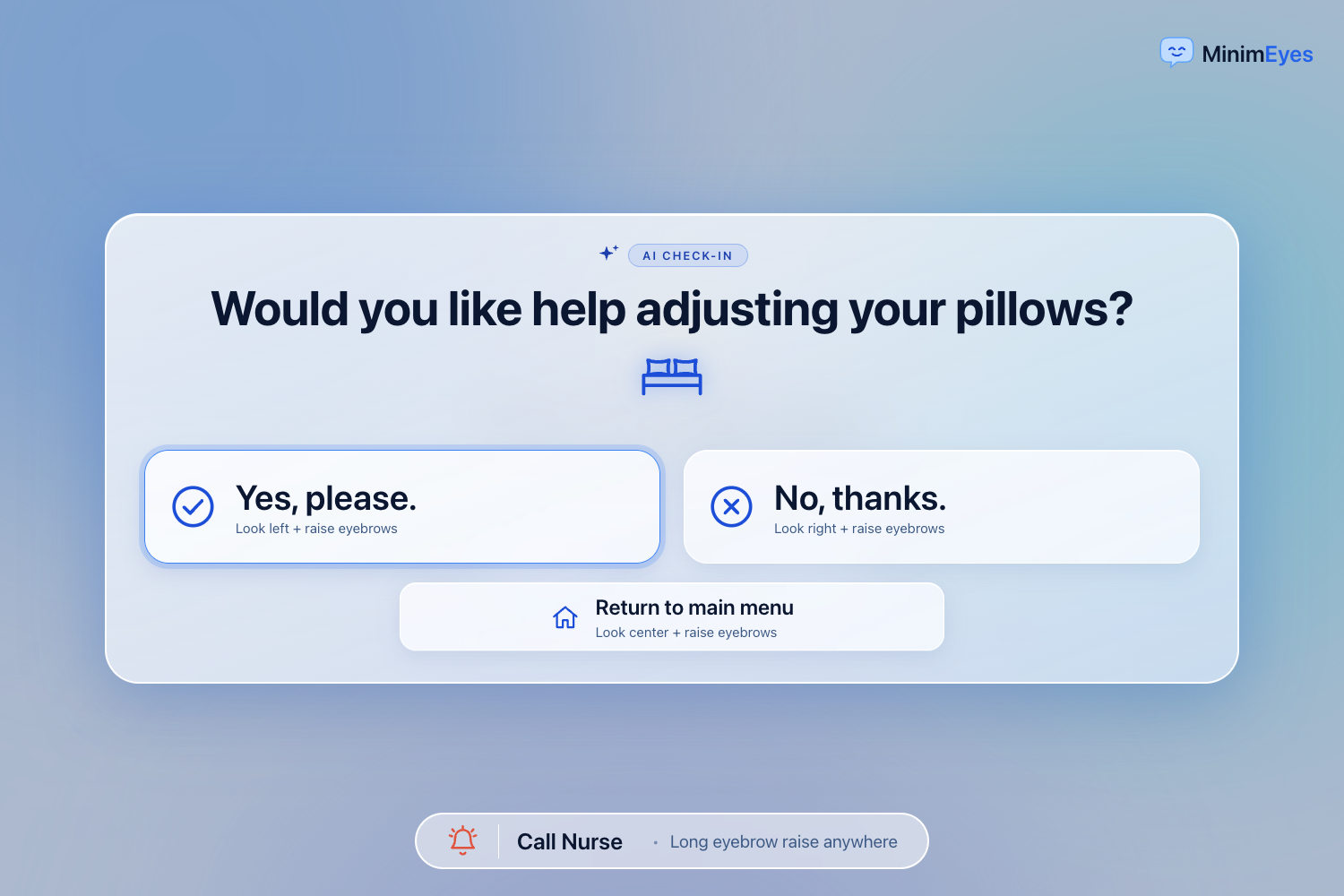
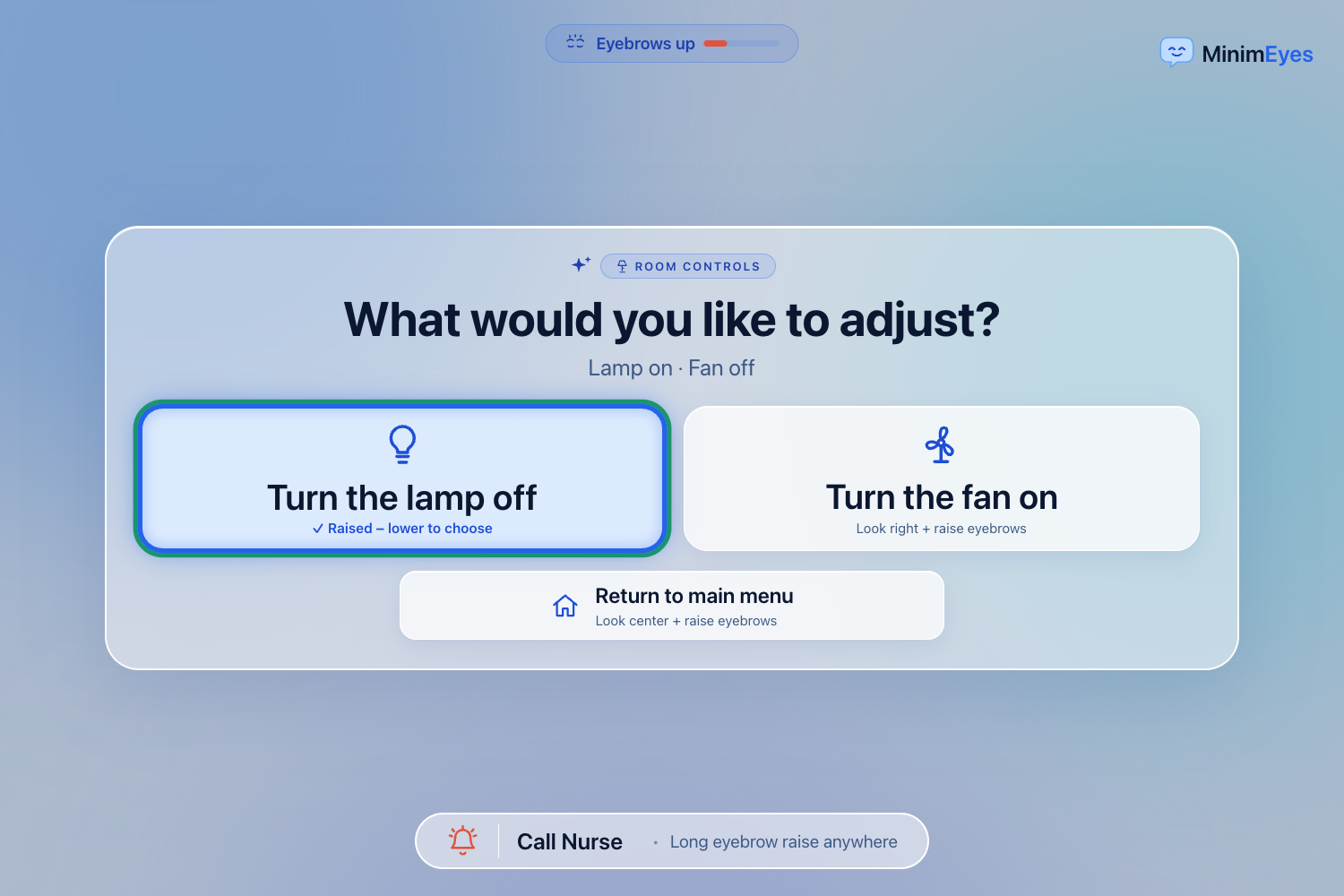
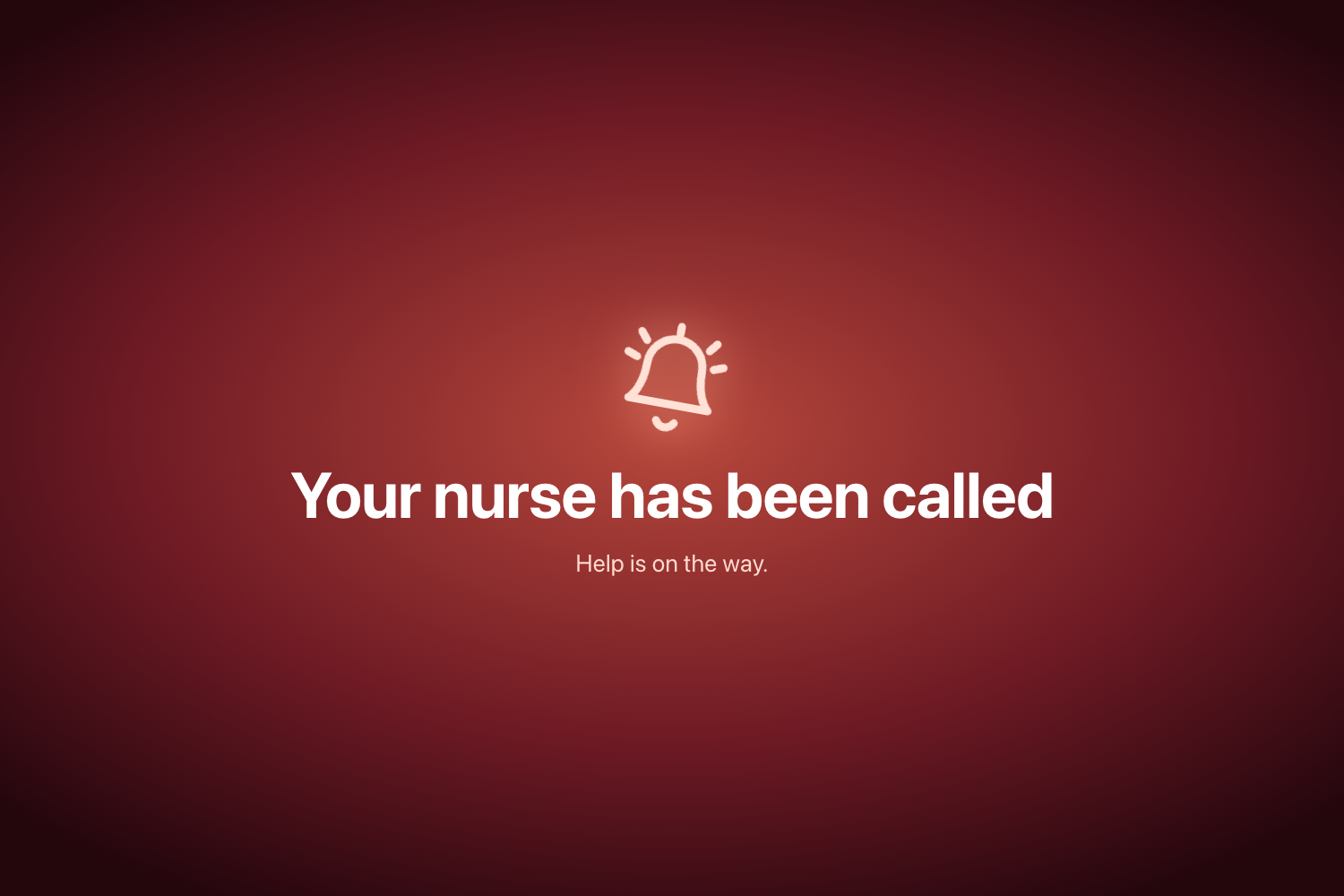
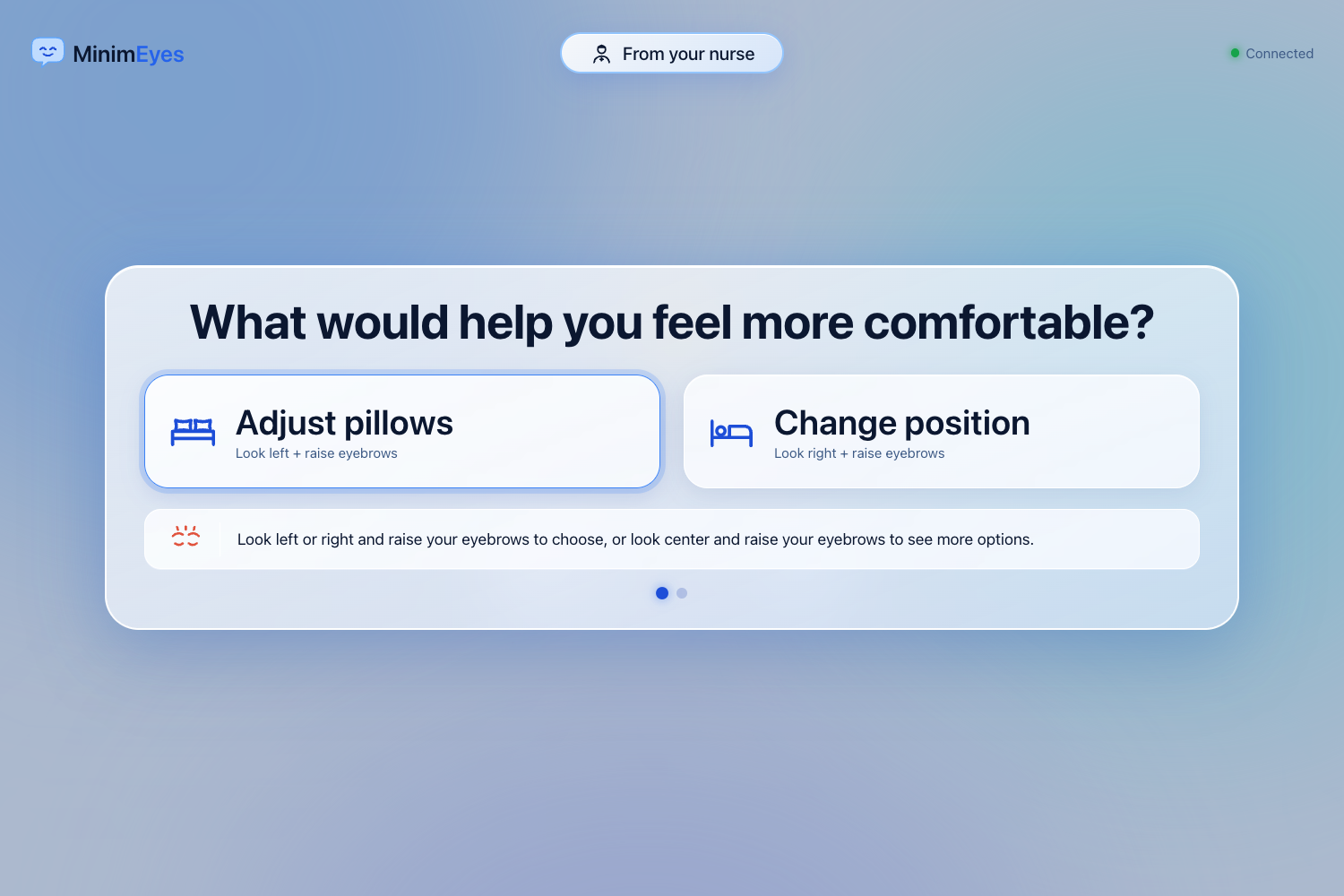
Looking left, center, or right selects a choice, and a short eyebrow raise confirms it. A long eyebrow raise calls the nurse directly, from any screen, at any time.
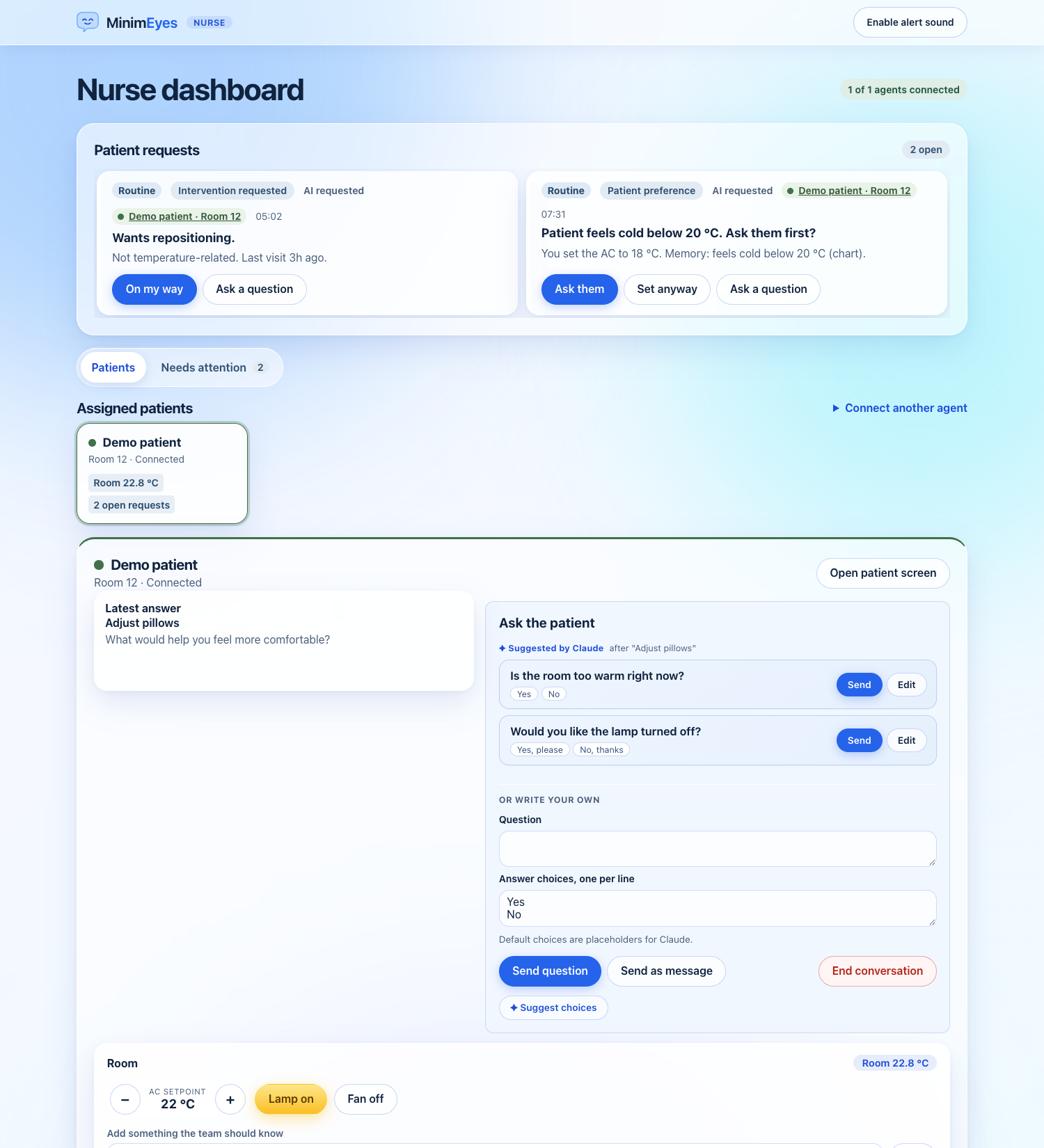
What makes it different: nothing is hardcoded. There's no rule saying "turn on the light at 7:30" or "ask about the fan above 25 °C." The AI agent keeps a memory of each patient's routines, habits and preferences, and it decides on its own whether to interrupt them and what to ask. If a patient usually wakes around 7:30 and likes their lamp on, the agent offers it then. If their room gets too warm while they're awake, it connects those facts and asks one question, "Too warm?", instead of showing a menu. It also knows the patient gets cold below 20 °C, so when a nurse tries to lower the temperature past that point, the nurse's phone warns them and suggests asking the patient first. Every answer the patient gives is remembered, so the more they use MinimEyes, the better it knows when to speak up and when to stay quiet.
How we built it
- Vision: A standard webcam feeds Google's MediaPipe face-landmark model. On top of that, we built our own classifier, calibrated to each person's face, that detects gaze direction (left, center, or right) and short or long eyebrow raises.
- Agent: Claude runs as an agent with nine tools. It reads the room's sensors, asks the patient questions, switches the real fan and lamp through smart plugs, checks that the action worked, pages the nurse, remembers the patient, adapts to their habits and preferences, and turns nurses' questions into simple choices.
- Nurse app: On the nurse's phone, Claude drafts a question and its answer choices, going from broad to specific. The nurse can edit everything before sending, and the patient's answer comes straight back to the phone.
- Safety rules: Nothing happens without the patient's Yes. Anything medical goes to the nurse, never to the agent. If the internet drops, a rule-based fallback takes over so the patient is never left without a way to call for help.
Challenges we ran into
- Every face is different. Fixed thresholds for gaze and eyebrow raises didn't work across people, so we added a per-person calibration step.
- Knowing when to interrupt. A proactive agent that asks too often becomes a burden. We had to teach it to ask one well-timed question, and to let the patient say no or simply let the prompt fade.
- Drawing the line on autonomy. We had to decide what the agent may do on its own (lamp, fan) and what only a person can do (a blanket, anything medical), and enforce the patient's explicit Yes every time.
- Real hardware. Getting the agent to control physical smart plugs reliably took more debugging than we expected.
- Not flooding nurses. Nurses are already overloaded, so we built a supervisor layer that filters routine updates and only surfaces what needs a human.
What we learned
- Talk to the people who live the problem. One conversation with an ICU nurse changed our whole direction, and reading patient studies changed it again.
- The best interface asks the right question at the right moment. Fewer, better questions beat a bigger menu.
- Agents need guardrails as much as capabilities. Confirmation, escalation to humans, and an offline fallback mattered as much as any tool we gave Claude.
What's next
We want to test MinimEyes with patients, caregivers, and nurses in real care settings, support more room devices, and keep improving calibration so setup takes seconds. For people trapped in their own bodies, who can only move their eyes and wait in silence for someone to notice, we want MinimEyes to speak before they have to ask, and to speak up for them when no one else does.
References
- Albrechtsen et al., 2026: patients' experiences of missed nursing care
- Harris et al., 2019: patient and carer perspectives of intentional rounding
- Sims et al., 2020: compassionate nursing care in a tick-box culture
- ICU nurse interview (team research)


