Inspiration
We were inspired to make this because of the need for better home technology. Right now, smart homes are very rare. This is due to the lack of interest in them, mainly due to cost, lack of knowledge, and general inaccessibility. We wanted to bring smart homes into a new light and draw greater attention to them and how much value they can bring to the world.
What it does
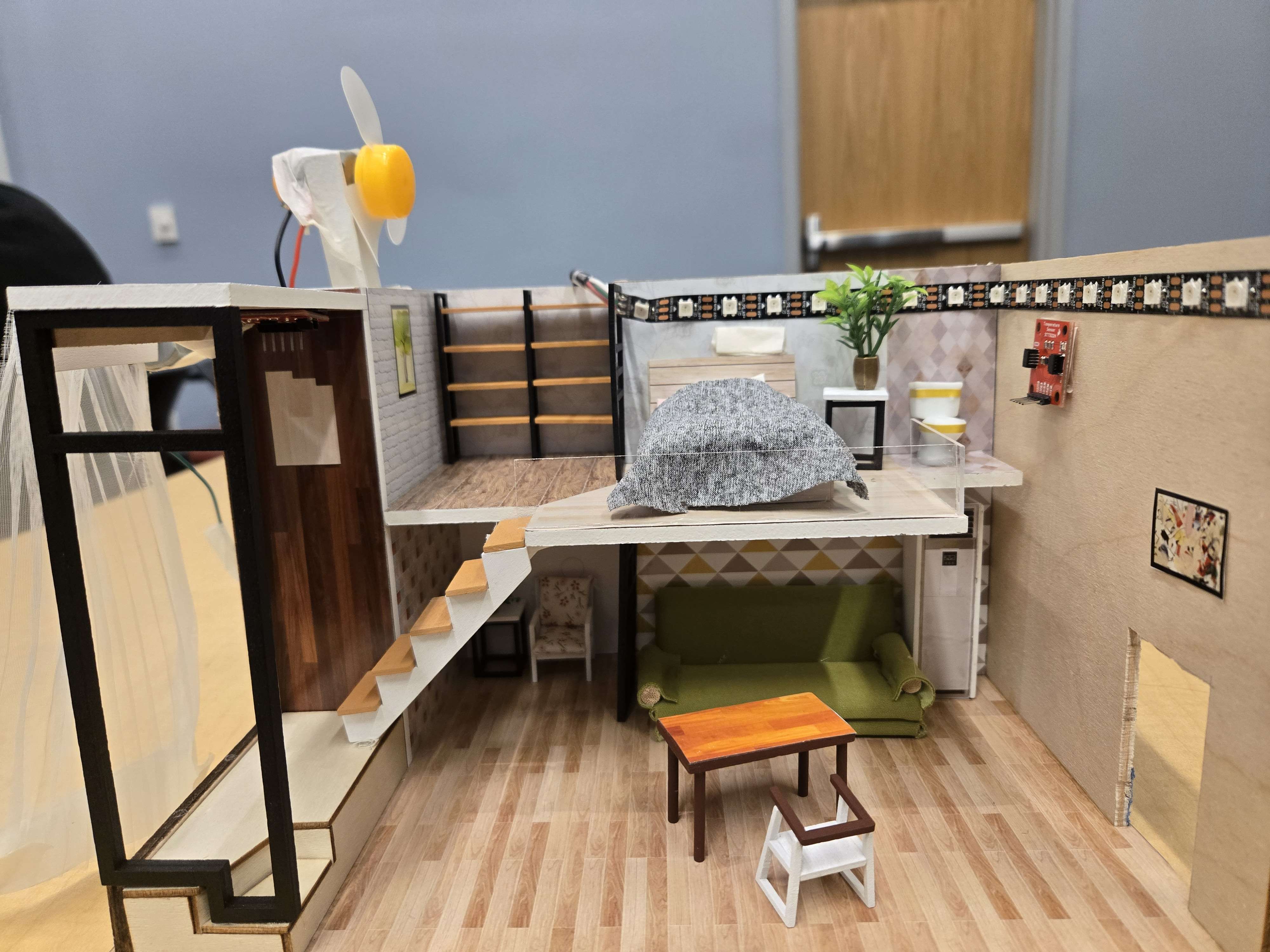
We have essentially built a smart home that makes living life lazier. It takes the worry out of package deliveries, energy conservation, and everything else regarding home control. As people go about their daily lives, the systems learn about their habits and will make adaptations based on their schedules. Additionally, for any elderly citizens, the home can check on them and see if they have gotten injured, especially when going up and down the stairs.
How we built it
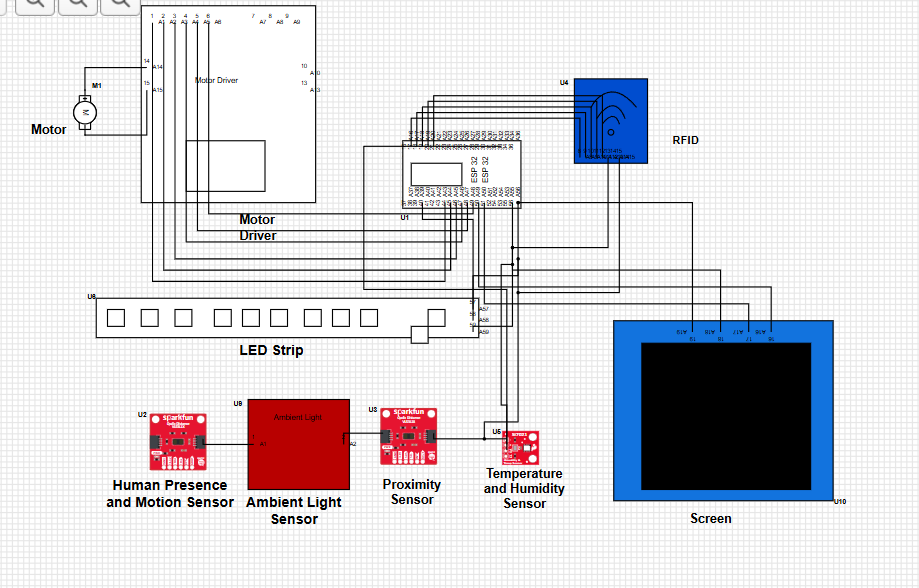
We assembled a model house kit for the base of our home. On top of this foundation, we added electronic circuits and components to automate various components of the house. Our programs that control the circuits were made using LLM models that helped us quickly debug and produce code.
Challenges we ran into
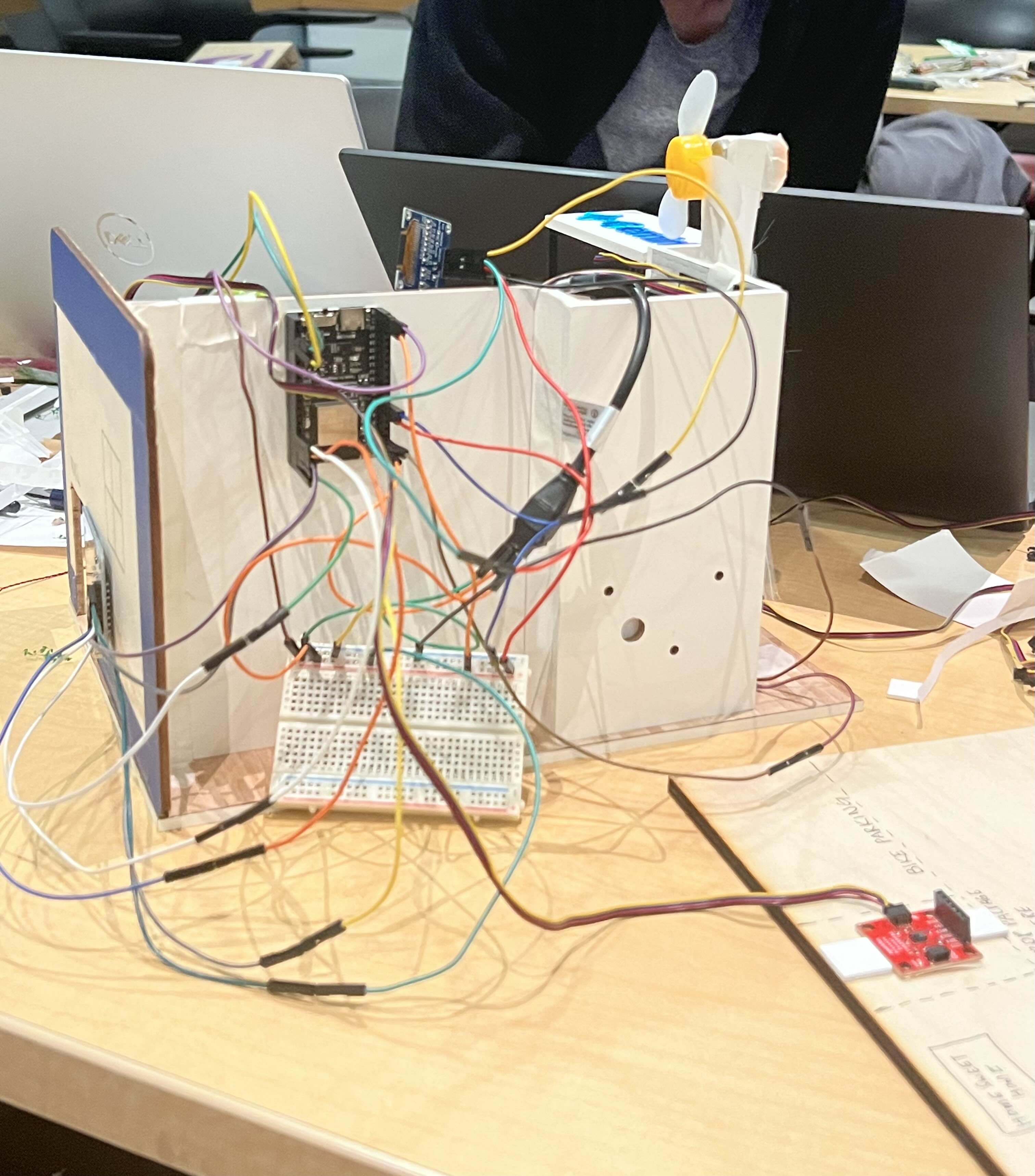
Our original board overheated and burned out, rendering it inoperable. Additionally, the LLM models did not know how to properly implement the libraries that we were using. They constantly had the wrong syntax and didn't use function calls properly. The Qwiic Connectors also did not properly work with the Arduino Uno-Q, and we were not the only ones with this issue. We had to solder the parts to get them to work, and even then, they didn't send signals through without a lot of software modifications.
Accomplishments that we're proud of
We managed to salvage our build with a new microcontroller after the original one broke. In doing this, we actually managed to get the Qwiic connectors to work with our design, greatly simplifying the wiring and making it a lot easier to manage the cables.
What we learned
The biggest thing we learned was how to manage our time. We originally wasted a lot of time making no progress, but as the event went on, we learned how to better manage our time to actually do something that would help us complete the project. Something else we learned was how to better use the Arduino systems and the Qwiic products, so if we ever have a project that requires them in the future, we will be better prepared.
What's next for Minimax
We would love to expand the coverage of our technology. We still have to add automation for the windows, the kitchen, and many other aspects of the house. We had to skip out on many of these additions because of time limitations, but if we had more time, we could have implemented many more things for the house.

Log in or sign up for Devpost to join the conversation.