-
-
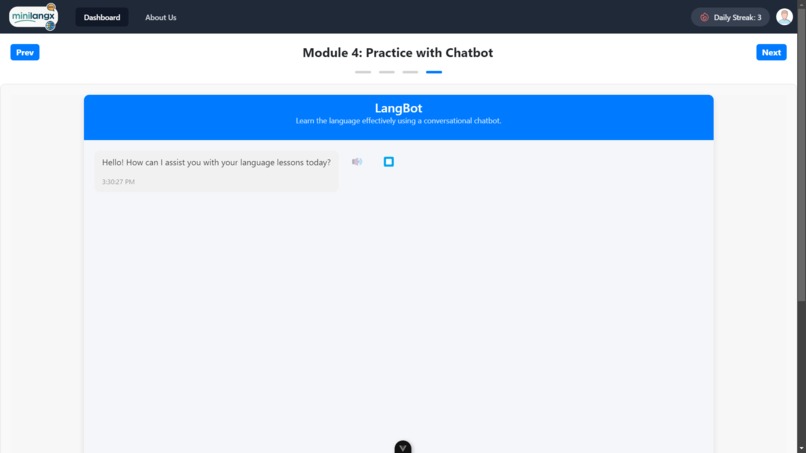
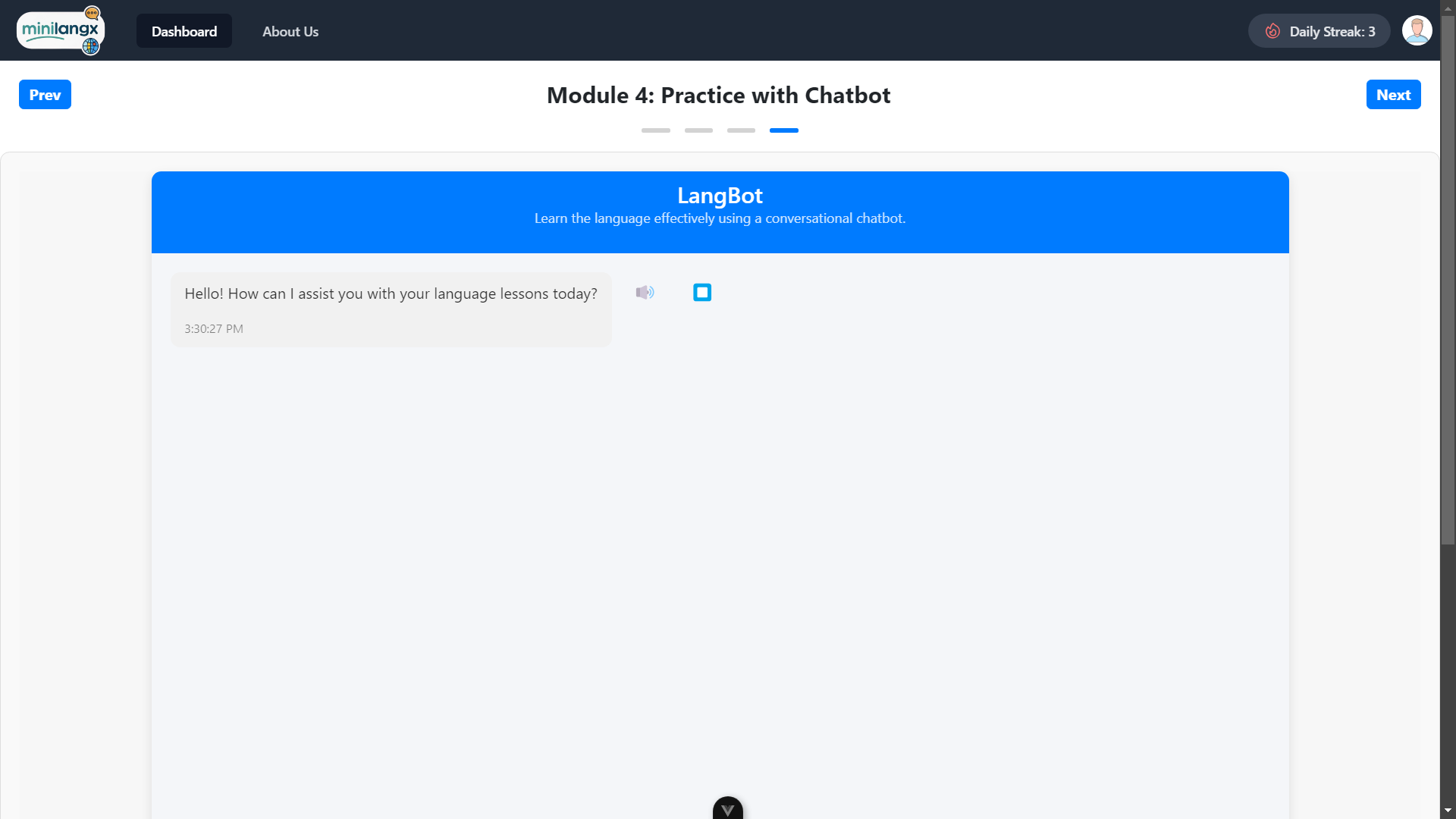
Chatbot
-
-
-
-
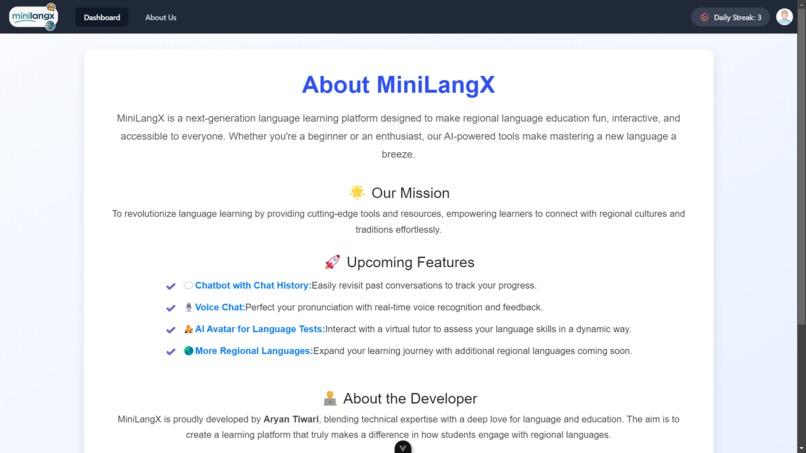
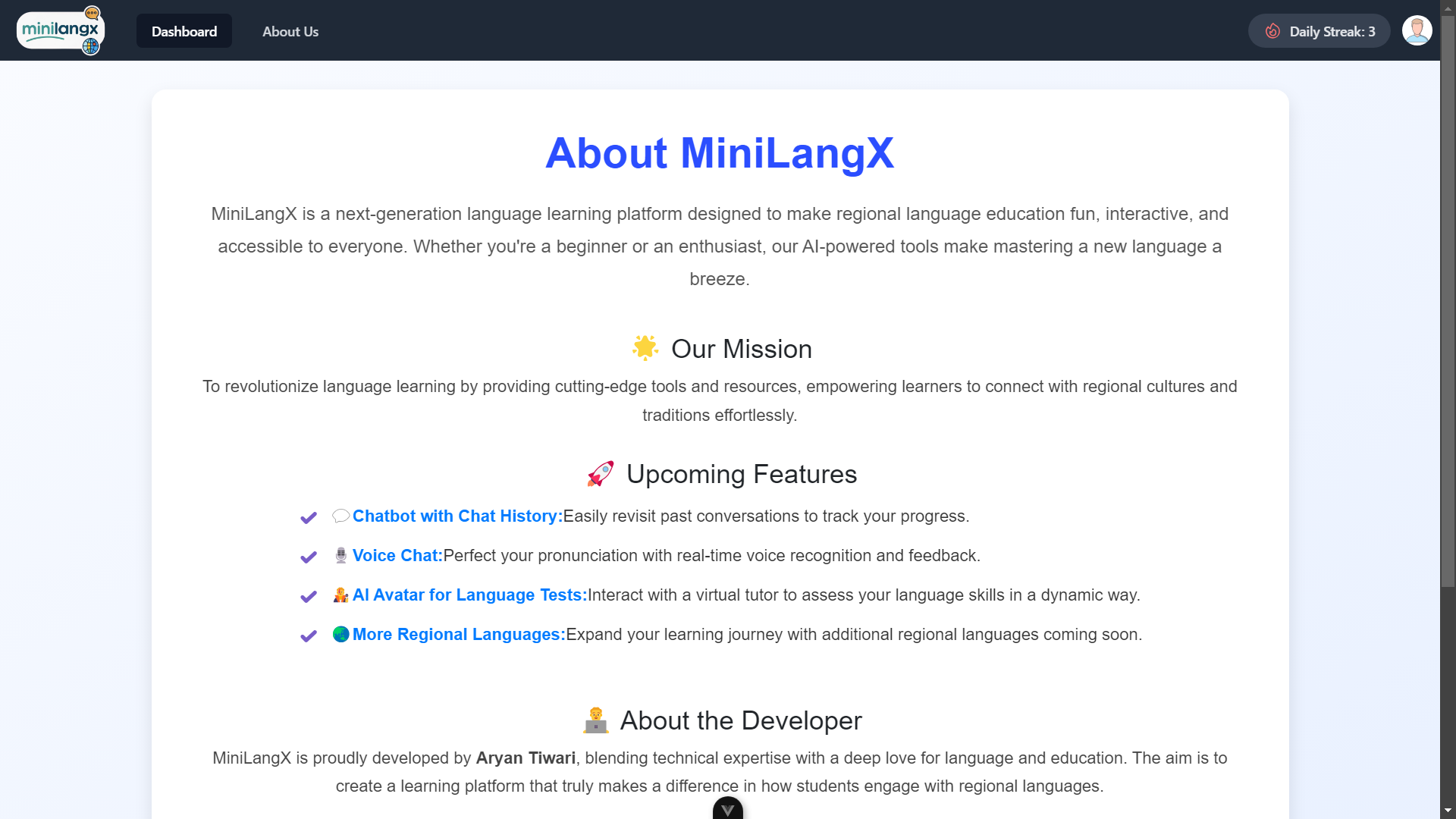
About Us section
-
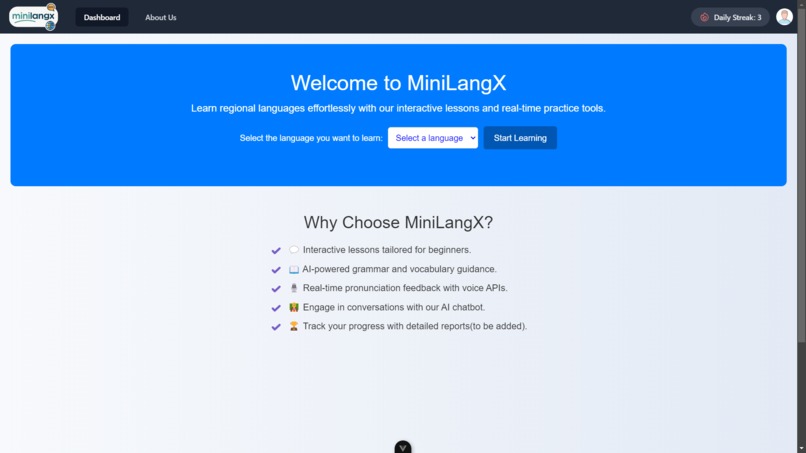
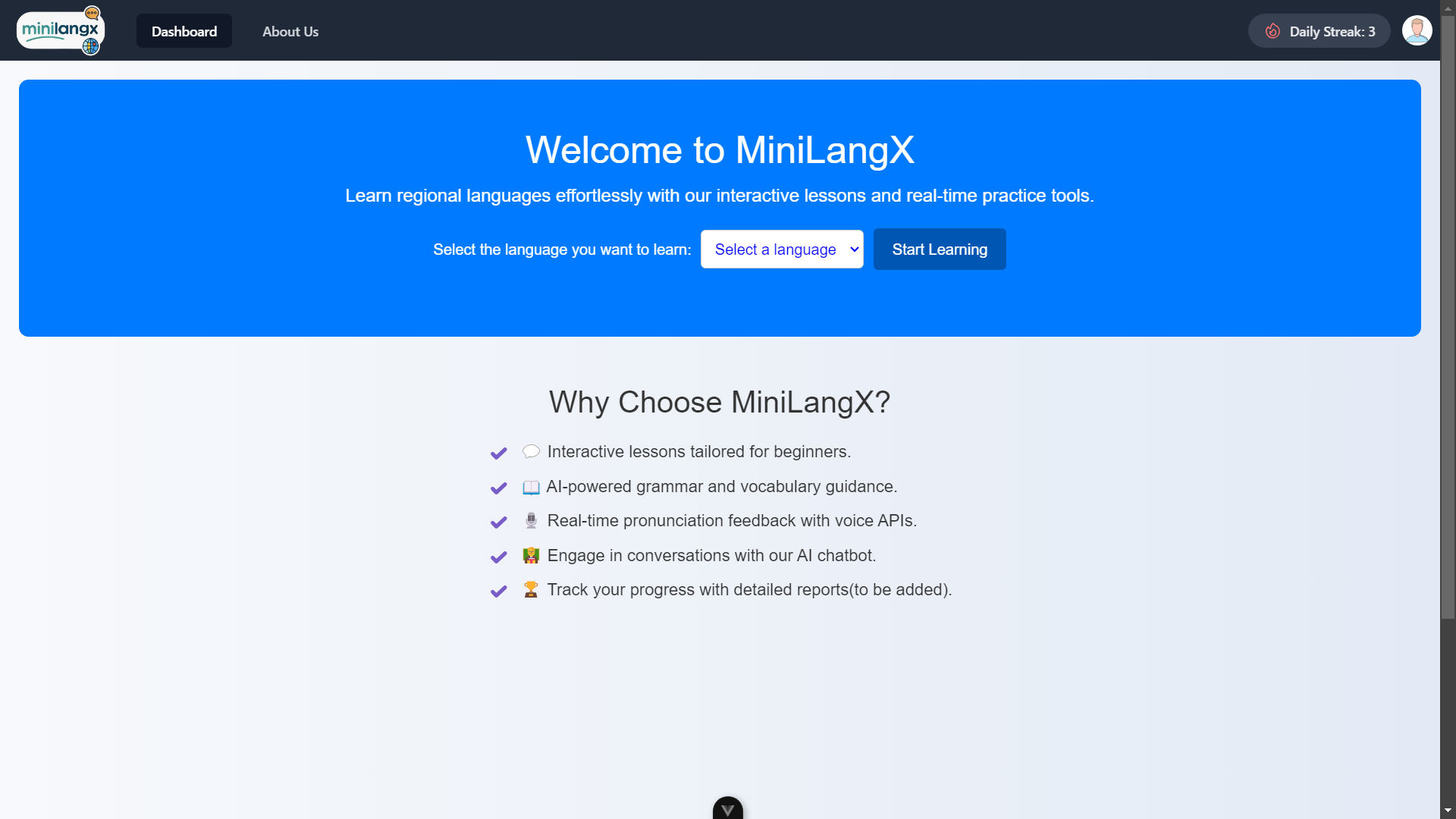
Landing Page where we can select languages which we want to learn
Inspiration
The inspiration for MiniLangX came from the desire to make regional languages more accessible and interactive for young students. In many parts of the india , children face difficulty in learning the native languages of other states due to a lack of engaging and accessible resources. I wanted to create an application that could bridge this gap, making language learning fun, interactive, and effective for students.
What I Learned
Throughout this project, I learned a great deal about integrating modern generative AI models into a practical application. Specifically, I learned about:
- LLM Integration: Incorporating AI models like Llama 3.3 and AzureOpenAI for language learning.
- Speech-to-Text and Text-to-Speech: Using Azure Speech Services to add real-time Text-To-Speech(TTS) Functions.
- Frontend Development: Building a smooth, interactive UI with Vue 3 and managing components.
- Backend Development: Designing a backend system in Flask to handle various language lessons, practice exercises, and real-time conversations.
How I Built It
MiniLangX is being built with a robust tech stack, including:
- Frontend: Vue 3, which provides a reactive and component-based architecture, making it easy to build interactive UIs.
- Backend: Flask, a lightweight Python web framework, for handling the business logic and API endpoints.
- Generative AI: LangChain and LLMs (Llama 3.3) for creating language learning interactions and real-time conversation capabilities.
- Voice APIs: Azure Speech Services, integrated for providing text-to-speech functionality to aid pronunciation practice.
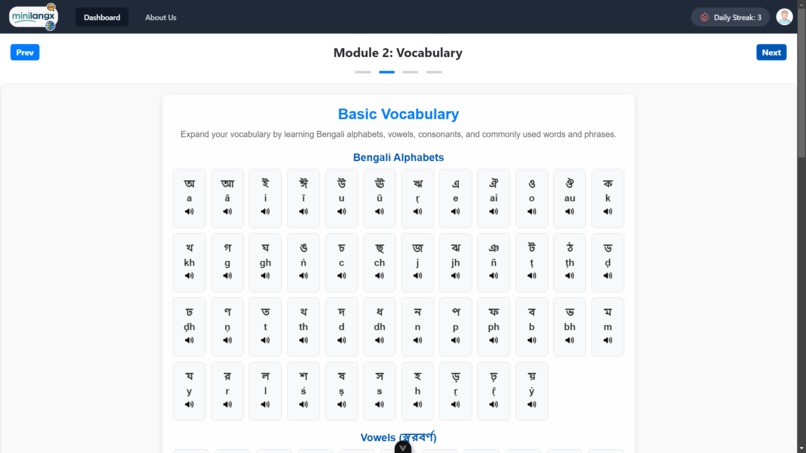
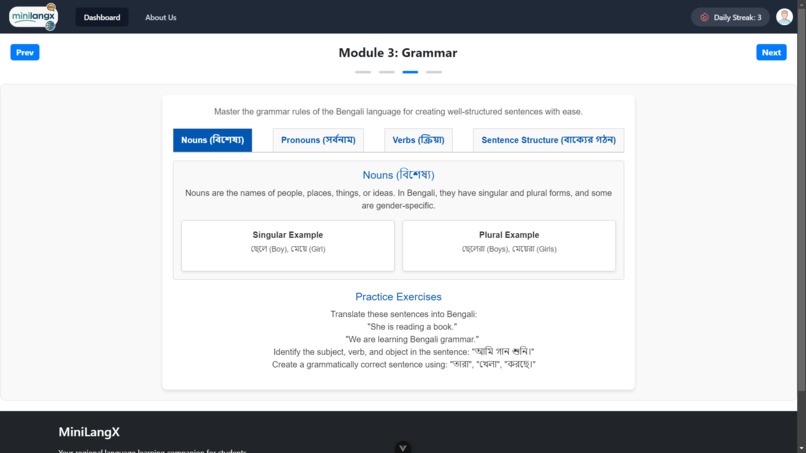
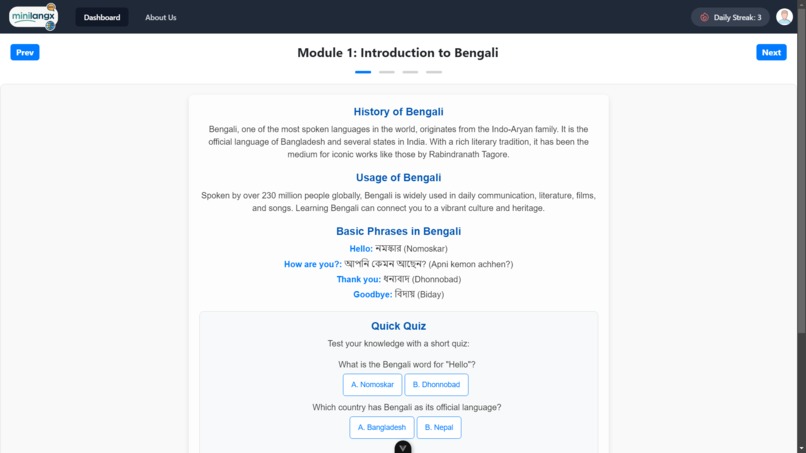
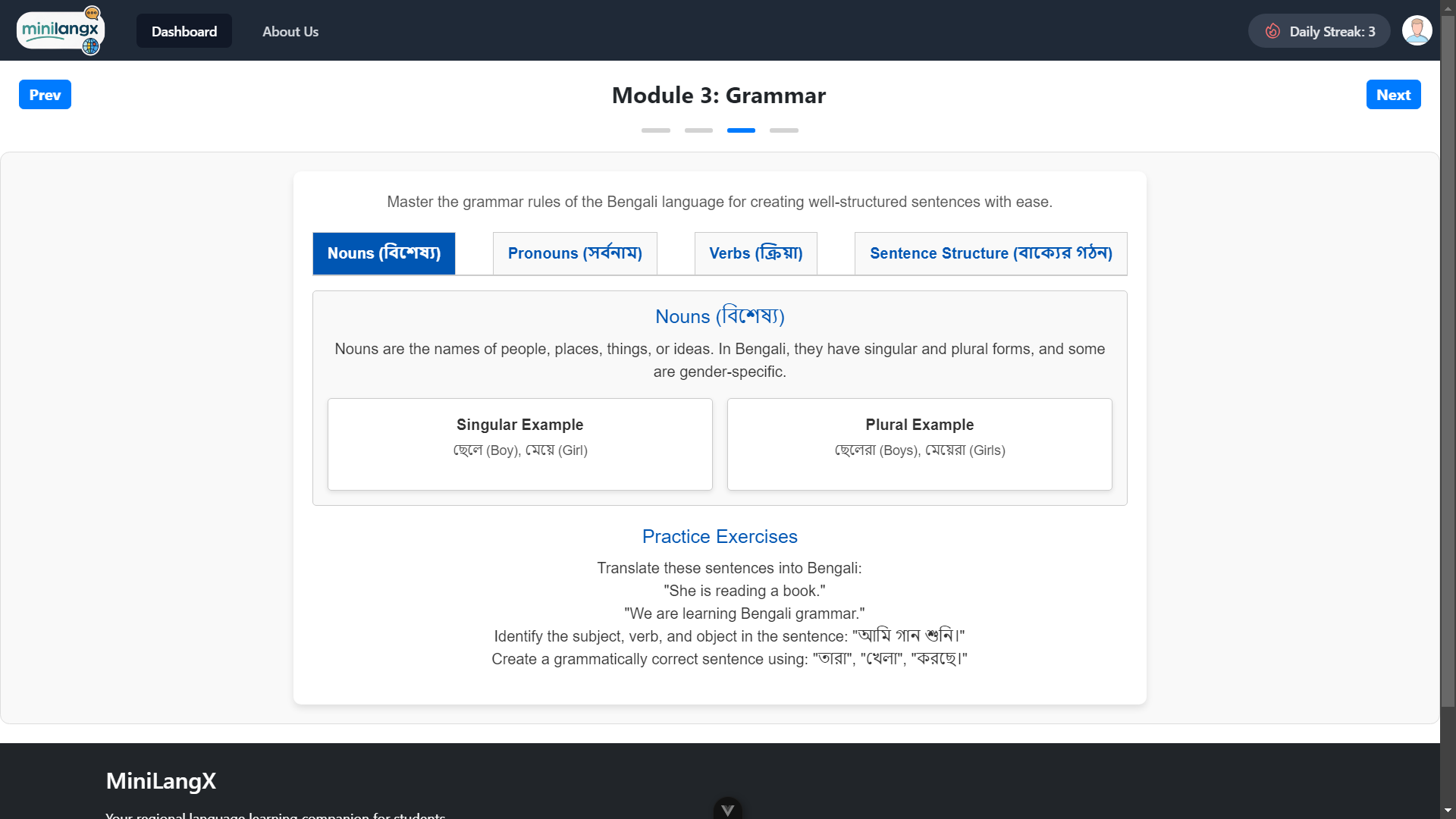
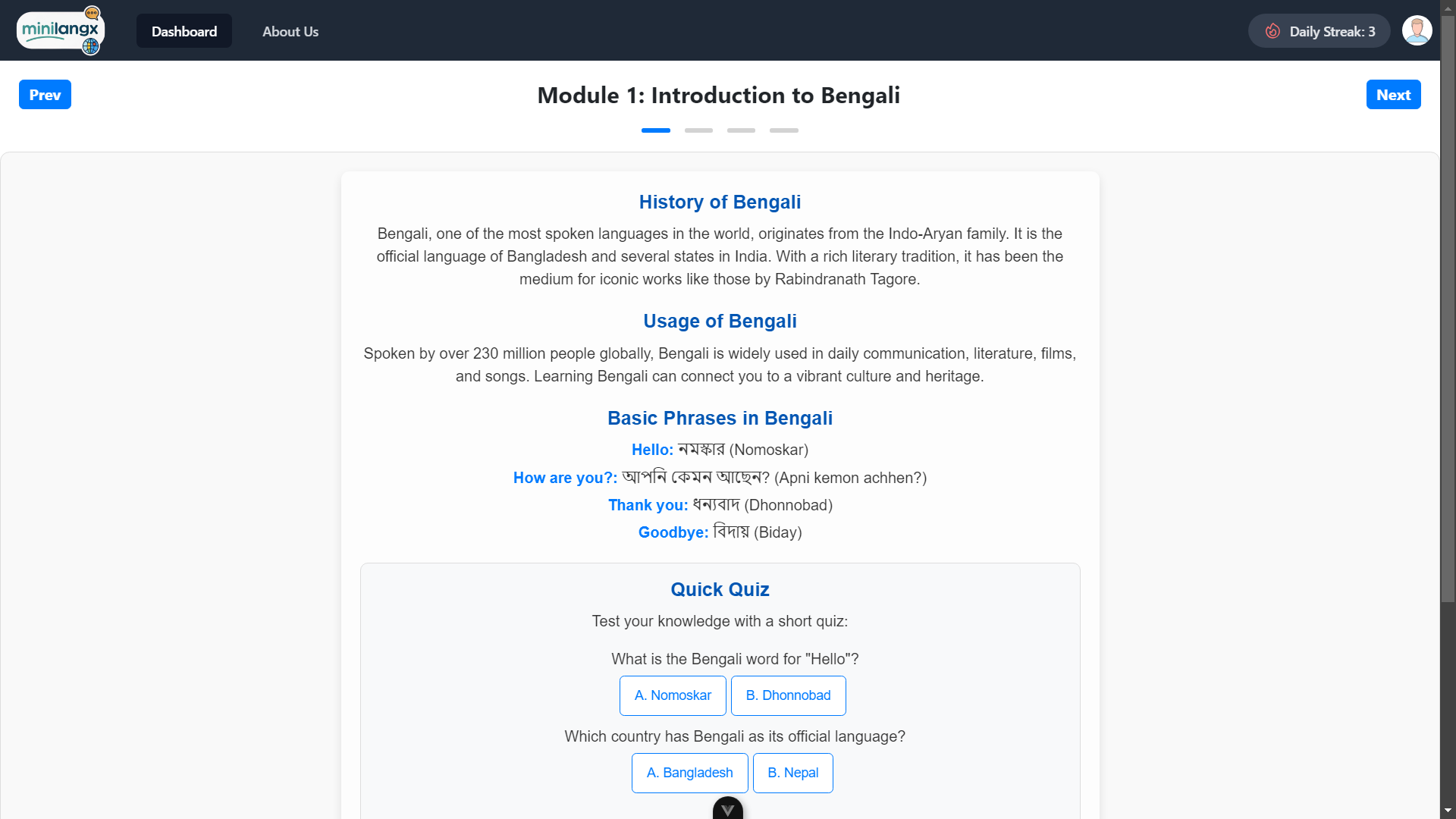
The project is structured to have various modules, including Language Lessons, Practice Exercises, and a Real-Time Chatbot. The backend is being developed incrementally, starting with the Language Lessons Module.
Challenges Faced
While building MiniLangX, I faced several challenges:
- Integrating LLMs: The integration of generative models for personalized language learning was complex. Ensuring that the models could provide accurate, relevant responses for different levels of students required tuning and optimization.
- Speech API Integration: Handling real-time speech-to-text and text-to-speech features was tricky, especially with varying voice inputs. Ensuring smooth interaction with Azure Speech Services required a lot of debugging.
- Frontend Development: While Vue 3 provided great flexibility, managing the state across multiple components and ensuring a seamless user experience required careful planning and testing.
Despite these challenges, working through them taught me valuable lessons about building and scaling interactive AI-powered applications.
Future Plans
As MiniLangX continues to develop, the next step is to integrate more regional languages, improve the voice interaction capabilities, and enhance the AI’s ability to provide real-time, personalized feedback during lessons.


Log in or sign up for Devpost to join the conversation.