-
-
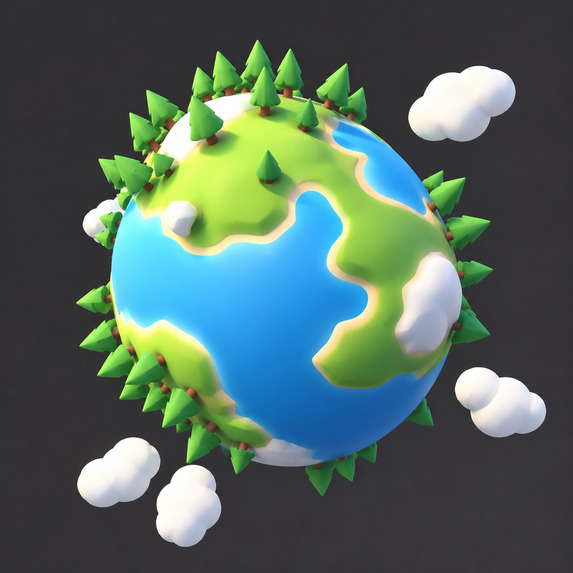
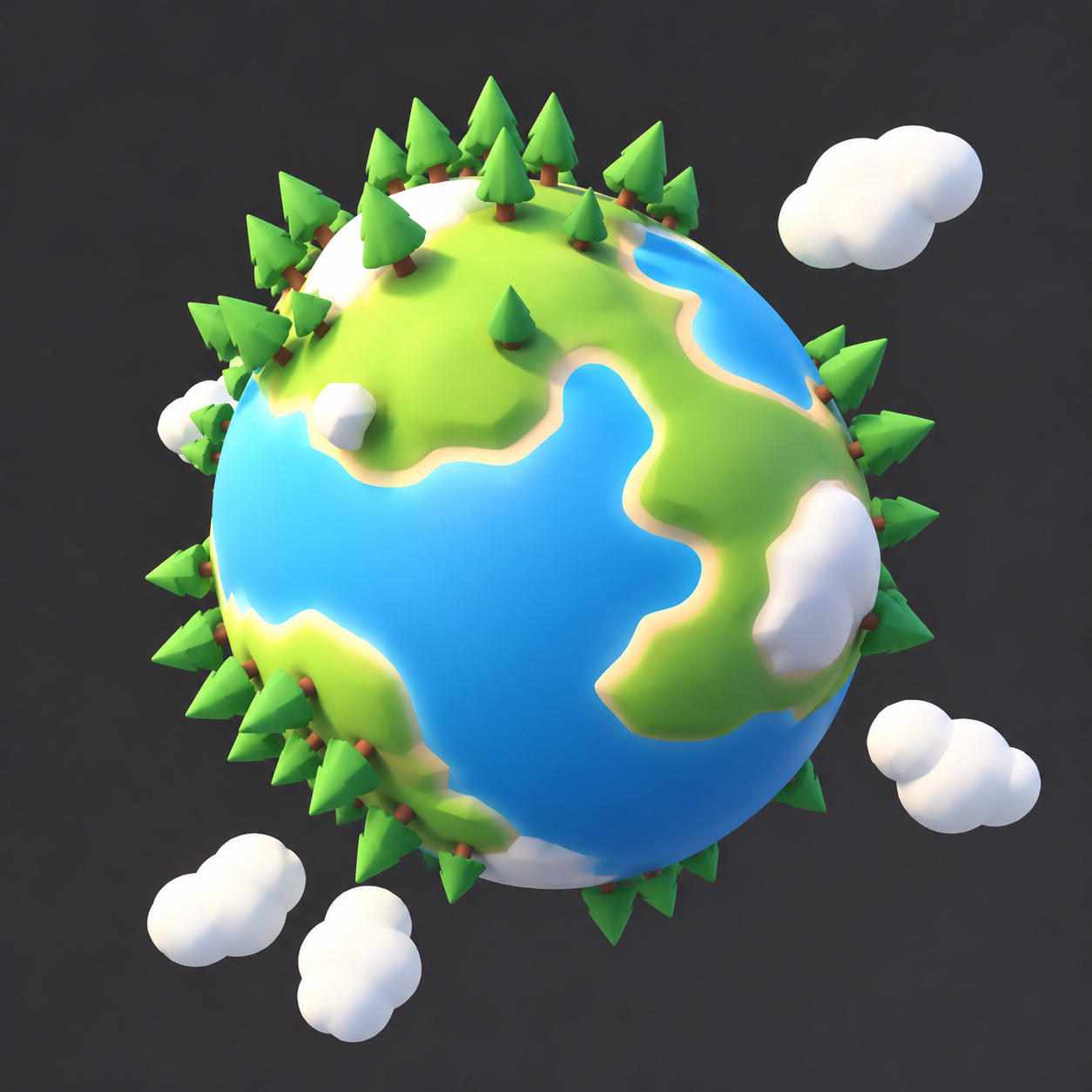
Minature Earth
Inspirations: We were inspired by the idea that nature is constantly changing, even when those changes happen too slowly for us to notice. Climate shifts, habitat loss, and changes in food availability can reshape entire ecosystems over generations. We wanted to make these invisible processes visible, interactive, and understandable.
Our vision was to combine the charm of a miniature, toy-like world with the science of ecology and evolution. Instead of learning about Earth's history through static diagrams or textbooks, players could build their own tiny ecosystem, experiment with its conditions, and watch life respond to the passage of time.
What it does: Miniature Earth is an interactive ecosystem sandbox where players can explore the relationship between life, the environment, and time through a miniature 3D world.
Players can place organisms into the environment, adjust conditions such as temperature, food availability, water, and habitat space, and move through different eras using an interactive timeline. As the environment changes, organisms may thrive, struggle, or disappear. Across generations, inherited traits can also change, demonstrating evolution in action.
Our goal is to make complex ecological processes intuitive through a relaxing, visually engaging experience. By allowing players to experiment with different environmental conditions, Miniature Earth encourages curiosity about biodiversity, animal adaptation, and environmental conservation.
How we built it: We designed Miniature Earth around two connected experiences: an interactive 3D miniature world and an ecosystem simulation.
The frontend uses Three.js to create a colorful, low-poly diorama with an isometric camera, textured terrain, soft lighting, and animated organisms. An interactive timeline lets players explore environmental changes, while the interface provides feedback about population sizes, carrying capacity, and organism traits.
For the simulation, we use a backend to model population changes and evolution across generations. The frontend presents the simulation results visually, connecting changes in population and inherited traits to the environment in which organisms live.
To keep the experience manageable within a hackathon, we focus on a small number of representative environments and simplified ecological interactions rather than attempting to simulate Earth's entire history in full scientific detail.
Challenges we ran into:
One of our biggest challenges was turning an ambitious idea into something achievable within a single hackathon. We envisioned a miniature world spanning billions of years of Earth's history, with evolving ecosystems, interactive organisms, and dynamic environments. Balancing that vision with our limited development time meant deciding which features mattered most and focusing on the core experience first.
Another challenge was connecting the visual experience with meaningful ecological behavior. We wanted the world to feel alive, rather than simply changing its appearance as the timeline moved. This meant thinking carefully about how environmental conditions, population changes, and inherited traits could work together without attempting to recreate the full complexity of real ecosystems.
Accomplishments that we're proud of
We're proud of turning an ambitious concept into Miniature Earth, an interactive experience that brings the history of life into a miniature, explorable world.
One of our favorite aspects is the combination of a 3D ecosystem and an interactive timeline. Instead of learning about environmental change and evolution through static images or text, players can explore these concepts by changing their world and observing what happens over time.
We're also proud of the direction we've taken with the project: keeping the experience accessible, visually inviting, and open-ended. Players can experiment with different organisms and environments at their own pace, making the experience both playful and educational.
Most importantly, we're proud of building a foundation that can grow beyond the hackathon into a richer ecosystem sandbox.
What we learned:
We learned that building a compelling experience isn't just about having a big idea. It's about identifying the essential interaction that makes the idea special and making that interaction work well.
We also learned to distinguish between visual representations, simplified ecological rules, and actual biological simulation. Environmental changes can happen relatively quickly, while evolution unfolds across generations. Representing these processes thoughtfully is essential to making Miniature Earth both engaging and educational.
Finally, we learned the importance of prioritization and iteration. Rather than trying to build every feature at once, we focused on the core experience first and treated polish and additional mechanics as later steps. This helped us approach a complex idea in a more manageable way and gave us a clearer vision for what Miniature Earth could become.
What's next for Miniature Earth: We want to expand Miniature Earth with more organisms, environments, and historical periods, creating a richer world to explore across Earth's history and into possible futures.
Future improvements could include more detailed ecological relationships, additional species with distinct adaptations, and environmental scenarios involving climate change, habitat destruction, conservation, and restoration.
We also hope to improve the visual experience with smoother animations, more atmospheric effects, and immersive environmental sounds. In the long term, we want Miniature Earth to become both a relaxing sandbox and an engaging educational tool that helps people understand how interconnected life on Earth really is.

Log in or sign up for Devpost to join the conversation.