-
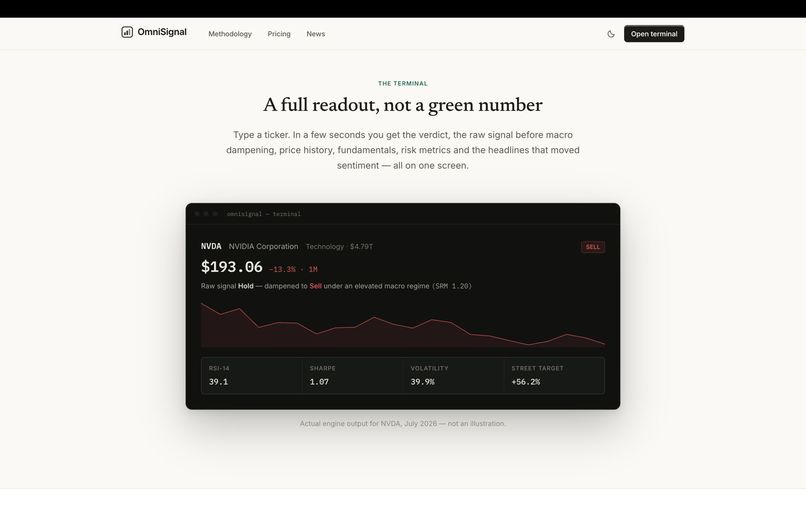
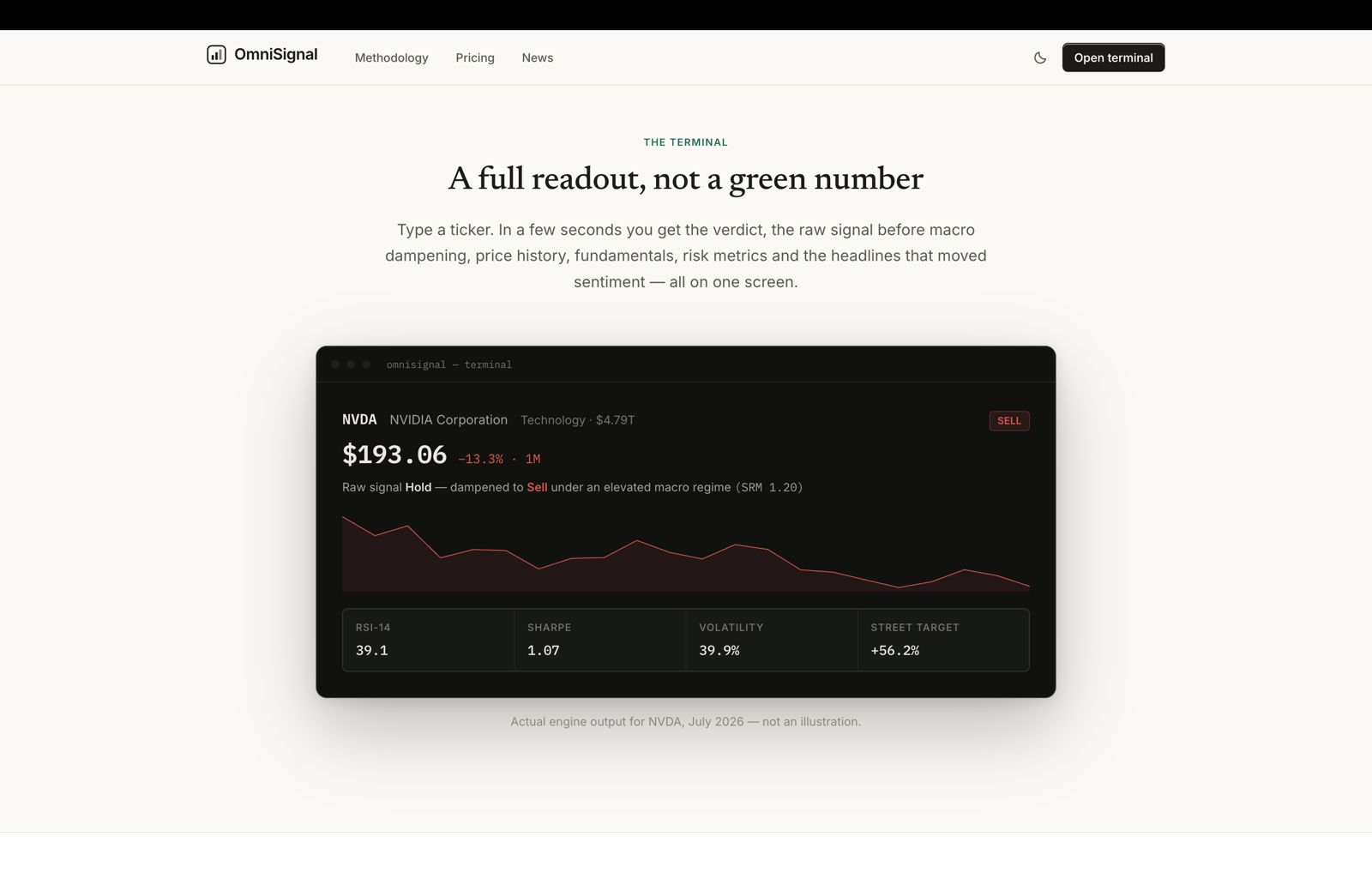
Terminal overview showing a complete stock verdict with price, signals, risk metrics, and sentiment.
-
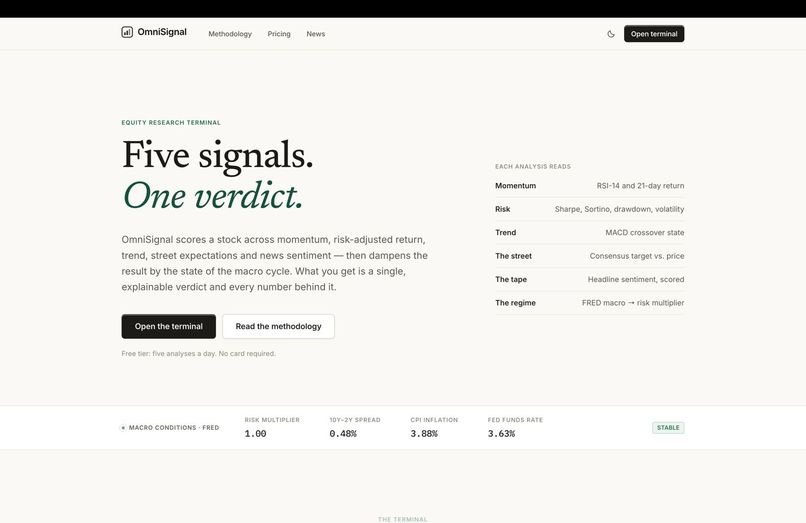
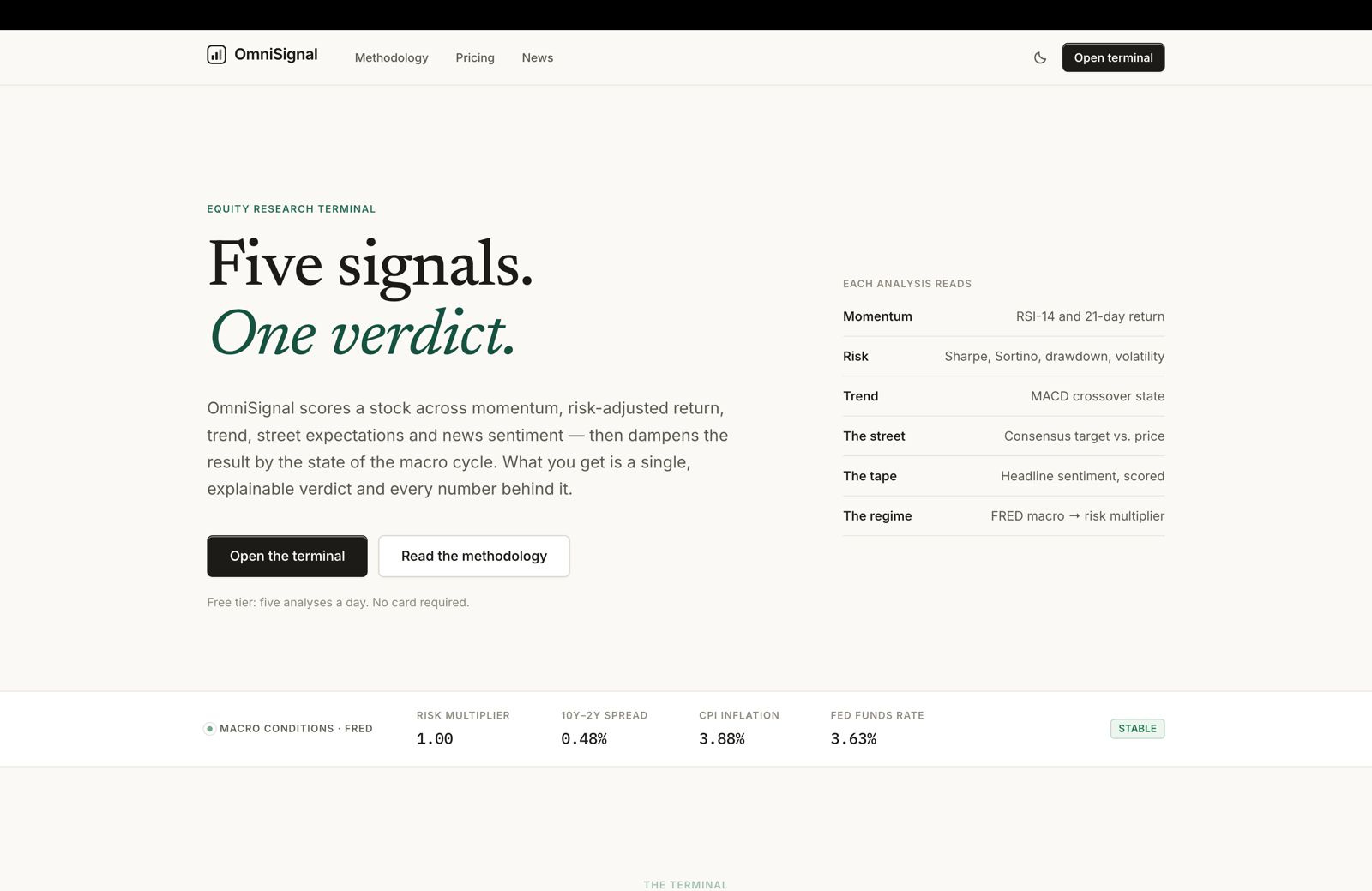
OmniSignal landing page showing the core five-signal stock analysis approach.
-
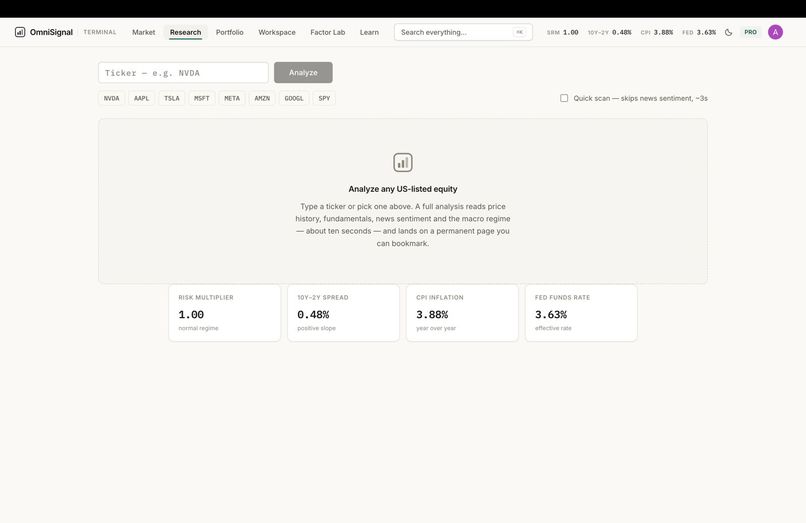
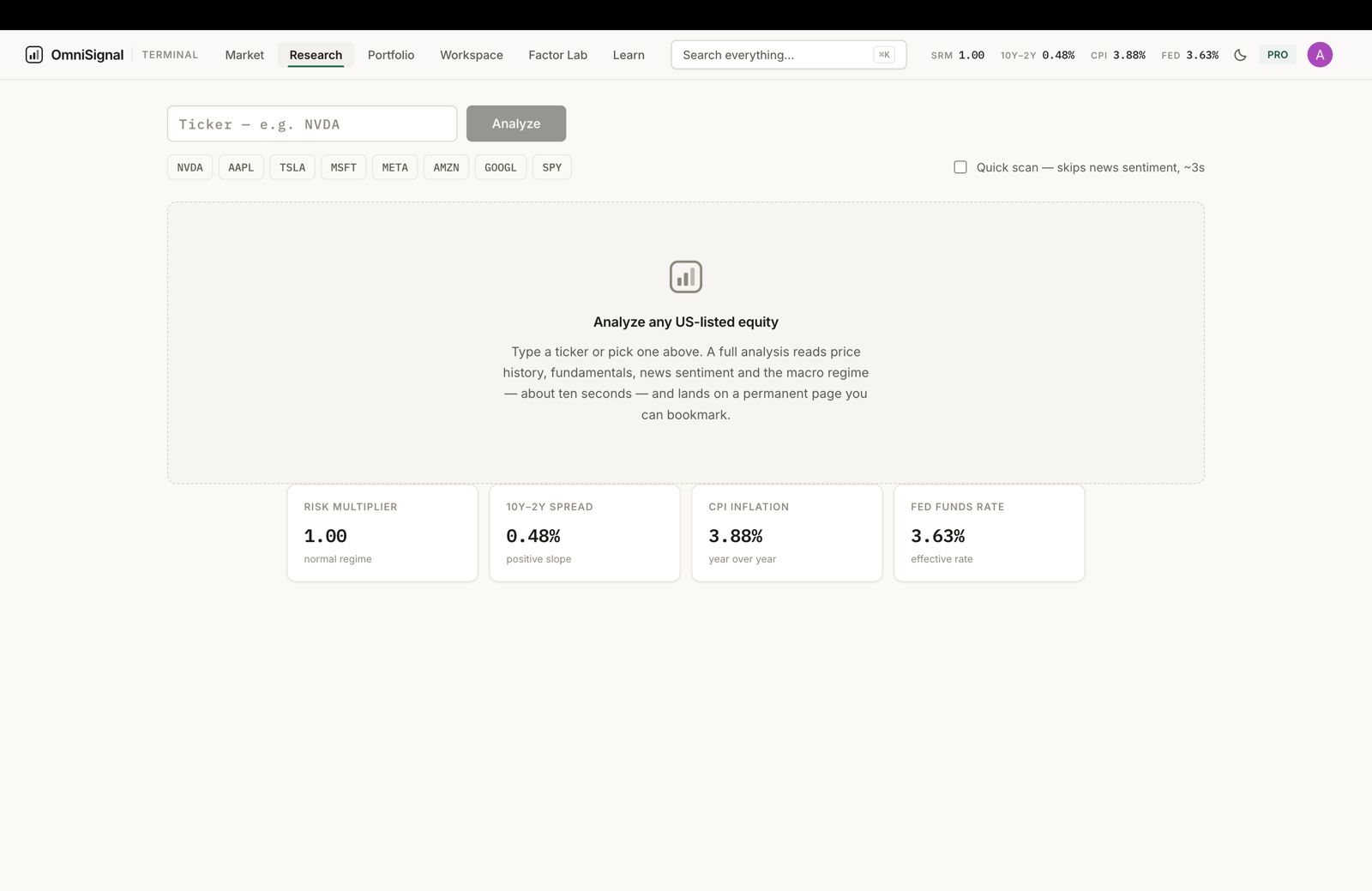
Research workspace where users can analyze any US-listed stock using the OmniSignal engine.
-
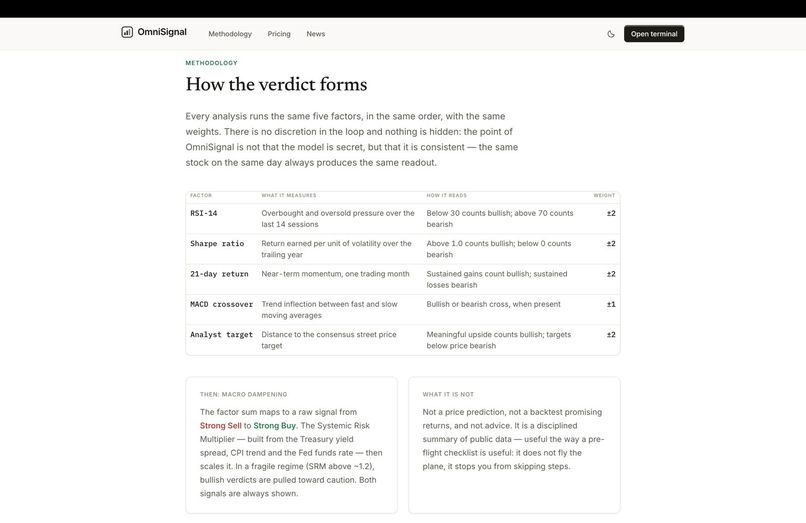
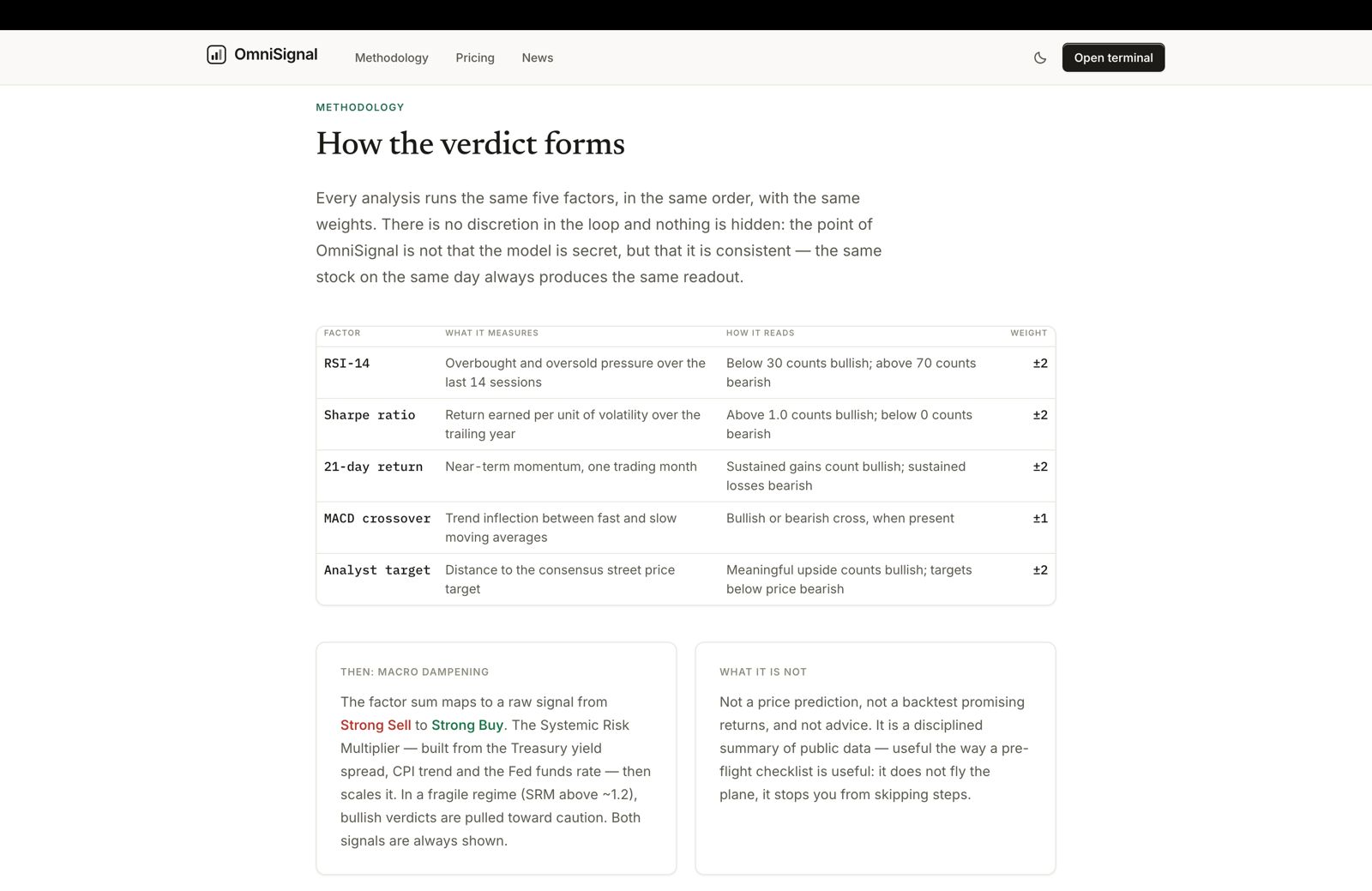
Methodology page explaining how OmniSignal combines its factors into a final verdict.
-
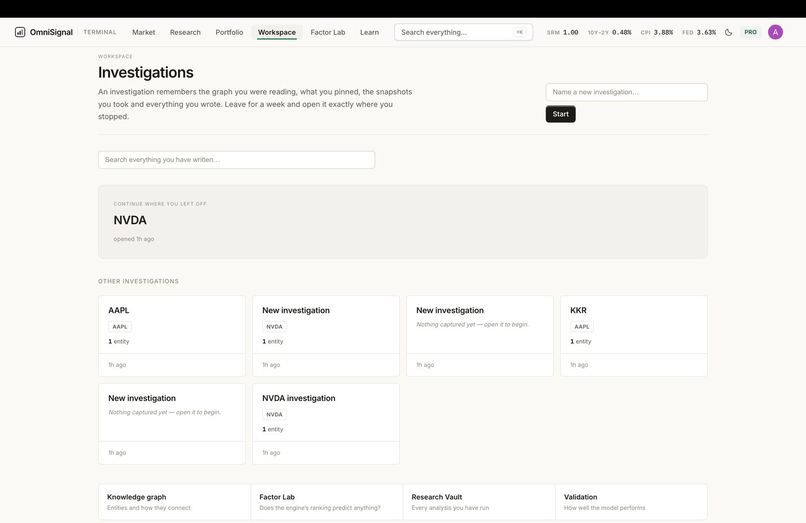
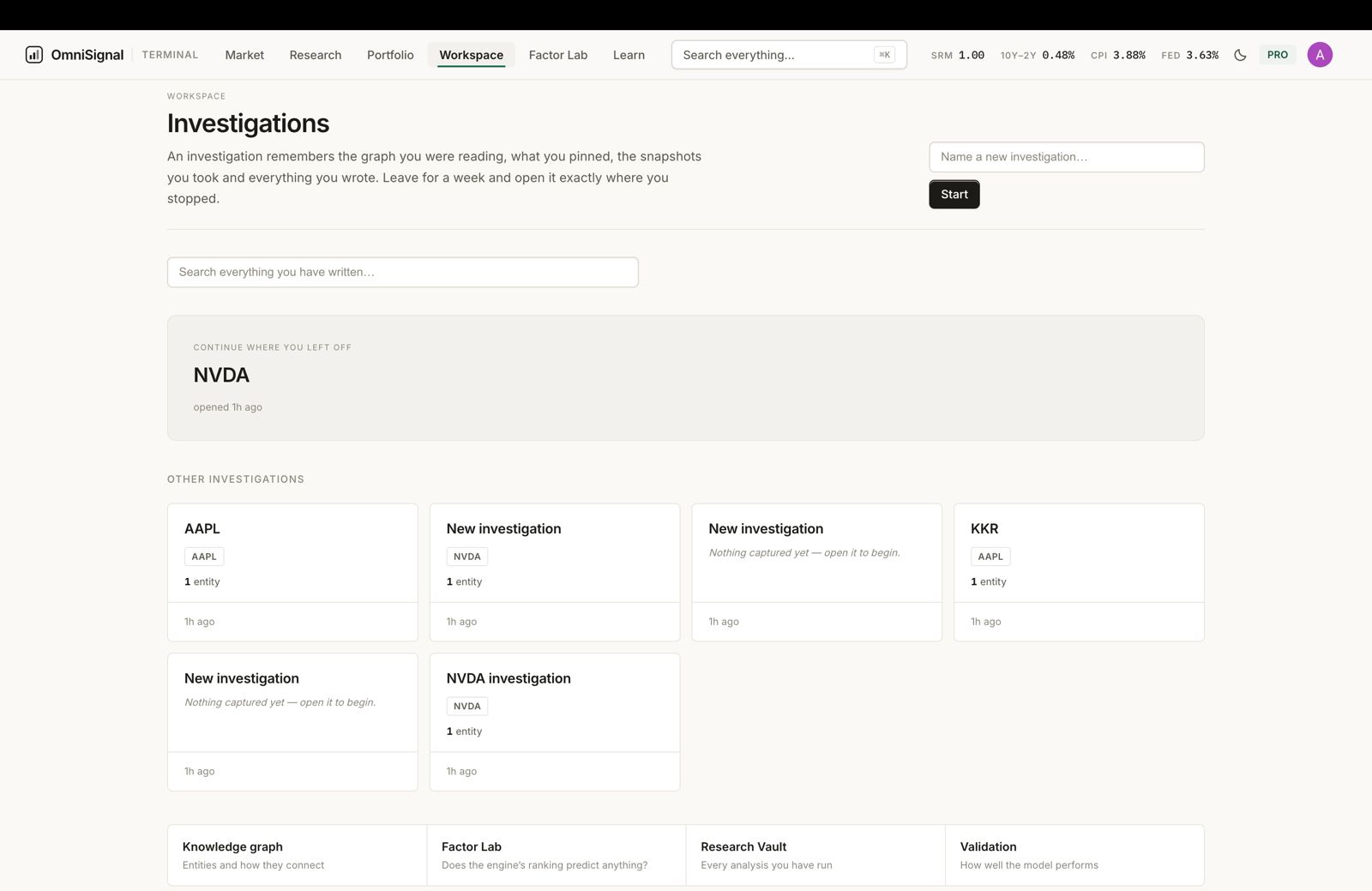
Workspace for saving and continuing stock investigations and research.
-
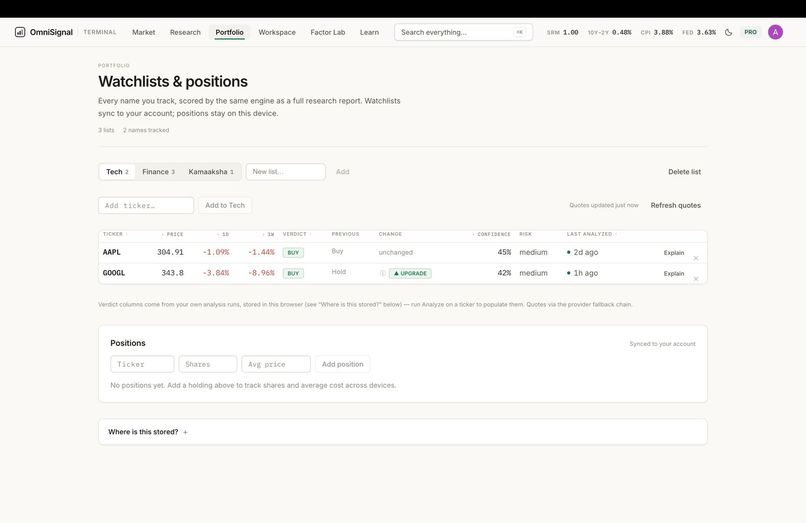
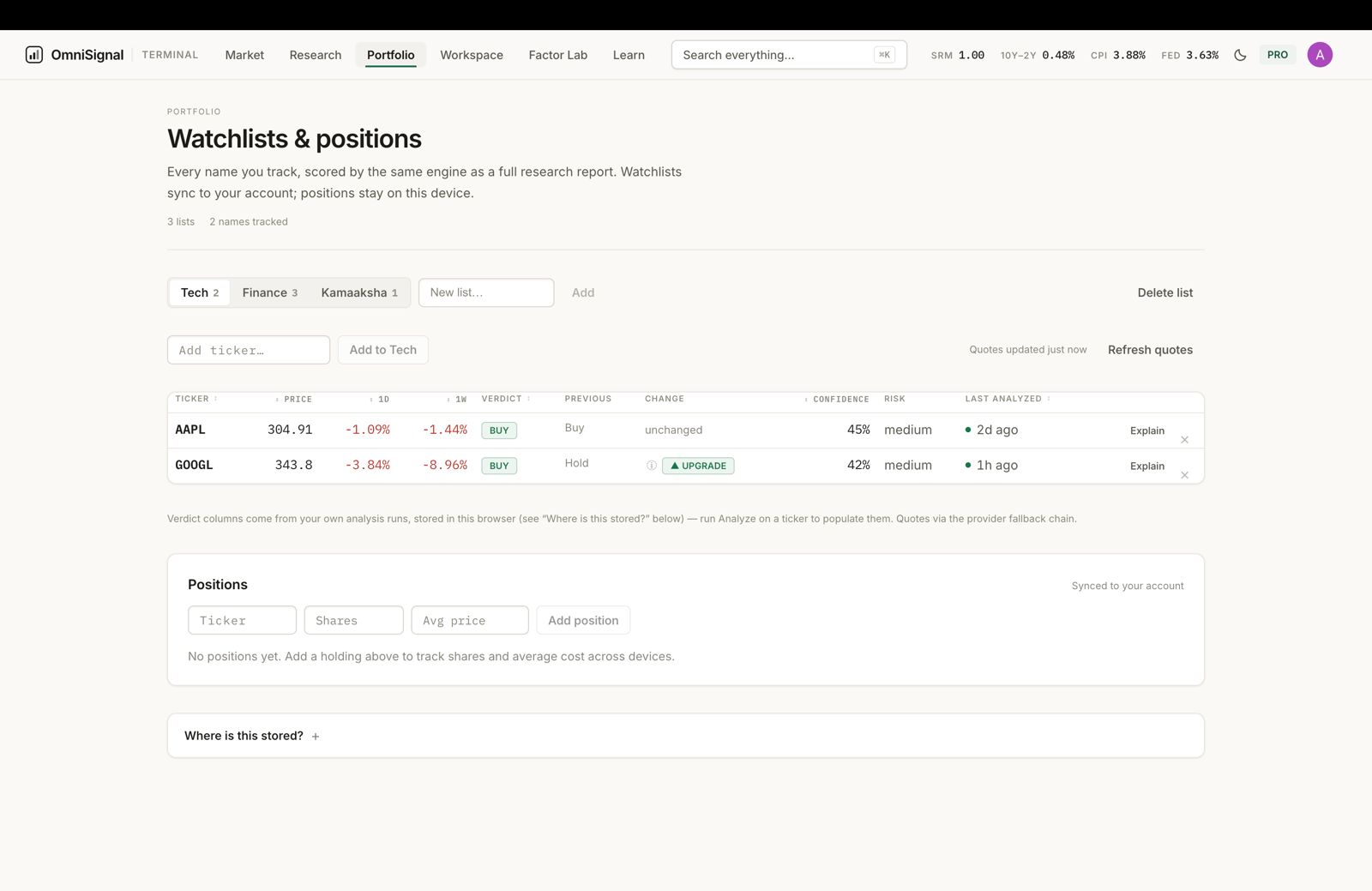
Portfolio dashboard for tracking watchlists, stock verdicts, confidence, and risk.
-
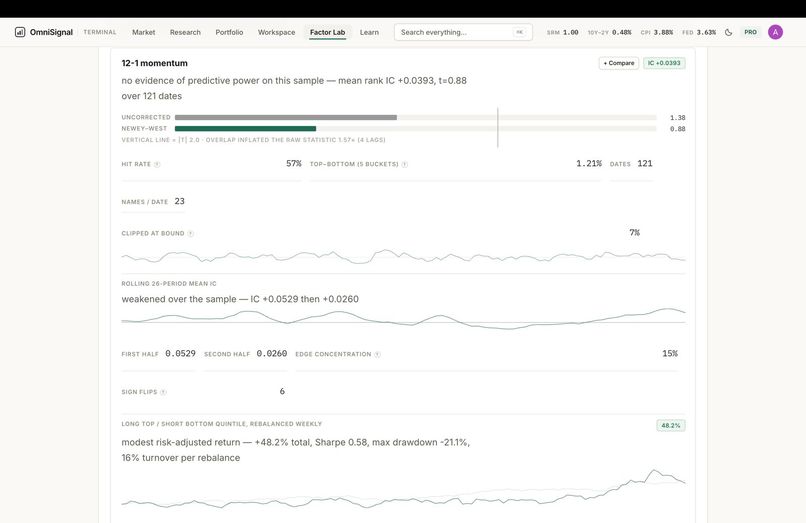
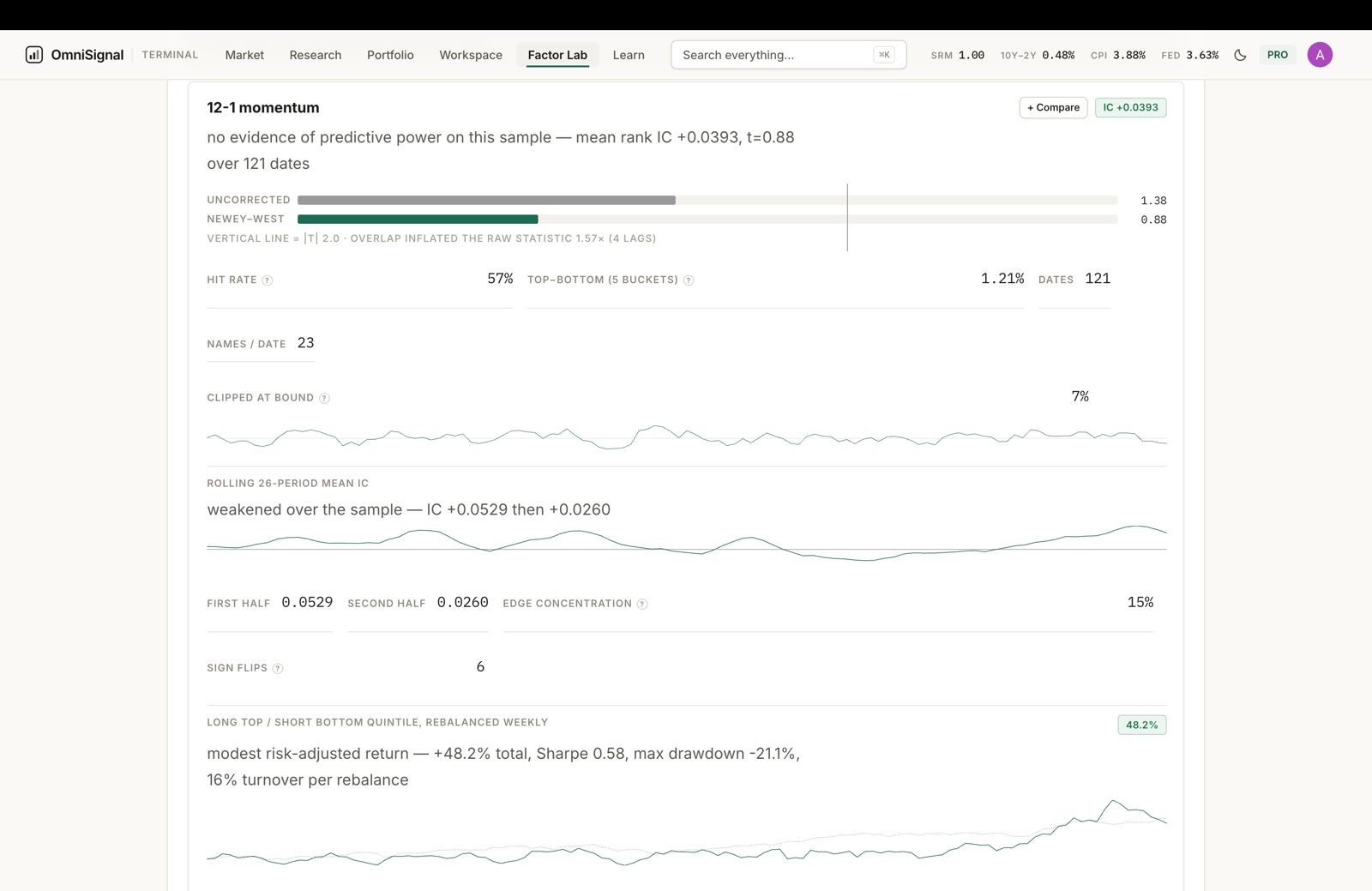
Factor-level analysis showing momentum performance, rolling information coefficients, and portfolio results.
-
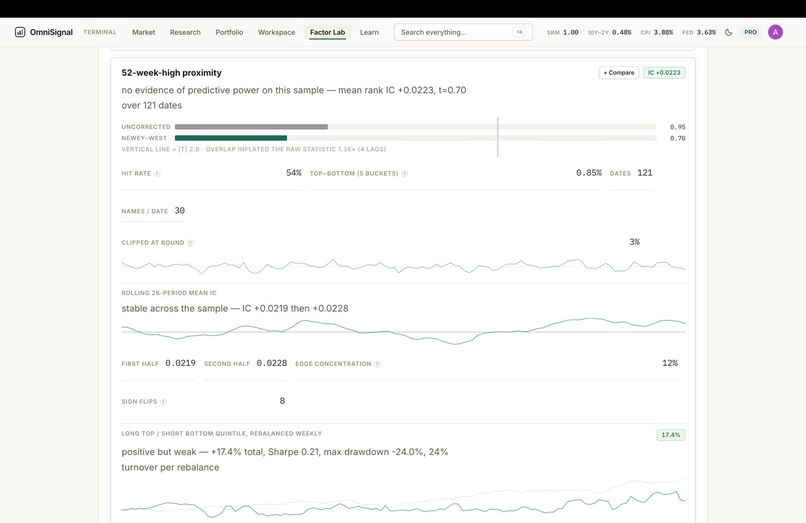
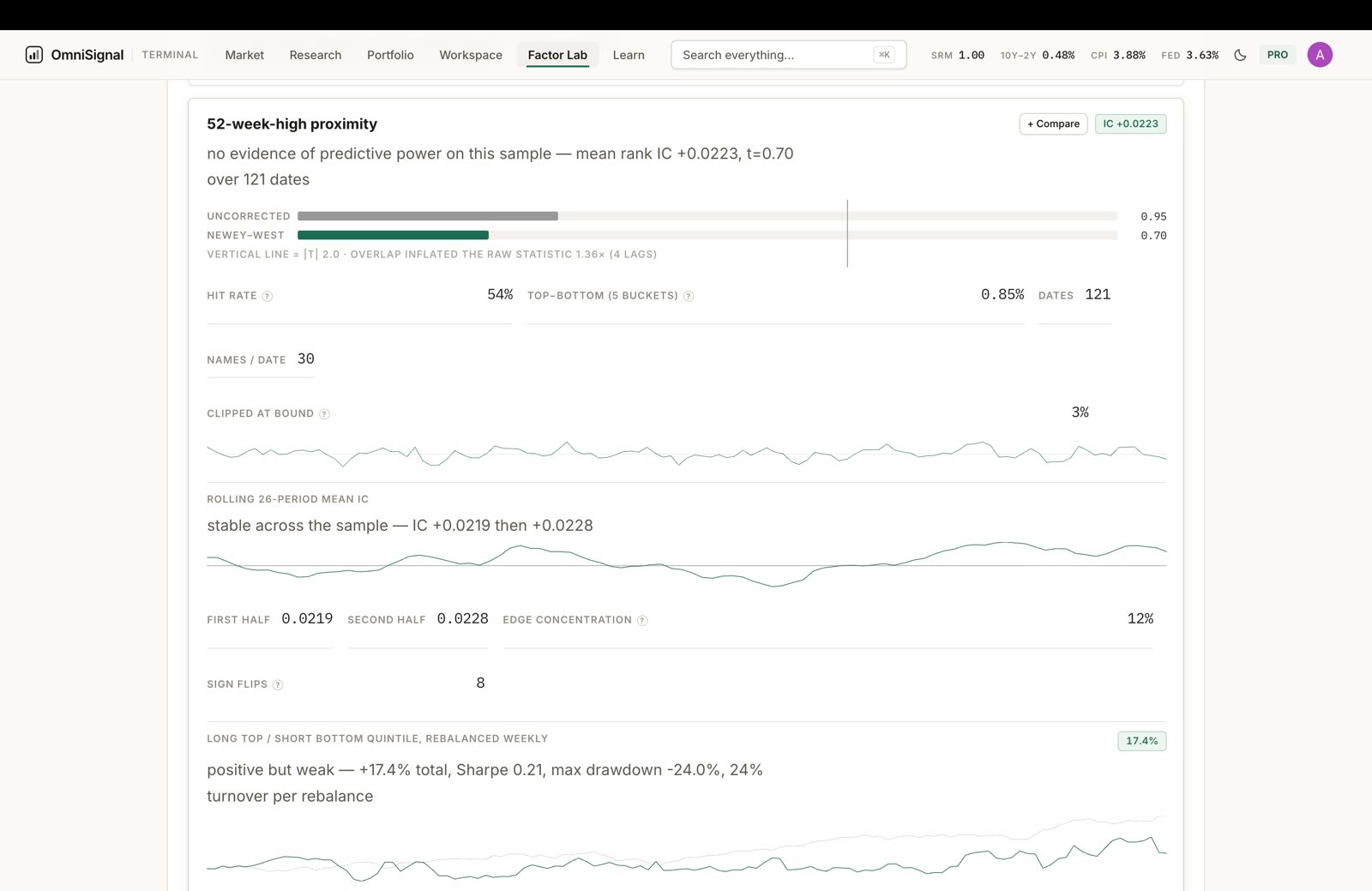
Factor validation showing 52-week-high proximity, predictive statistics, and portfolio performance.
-
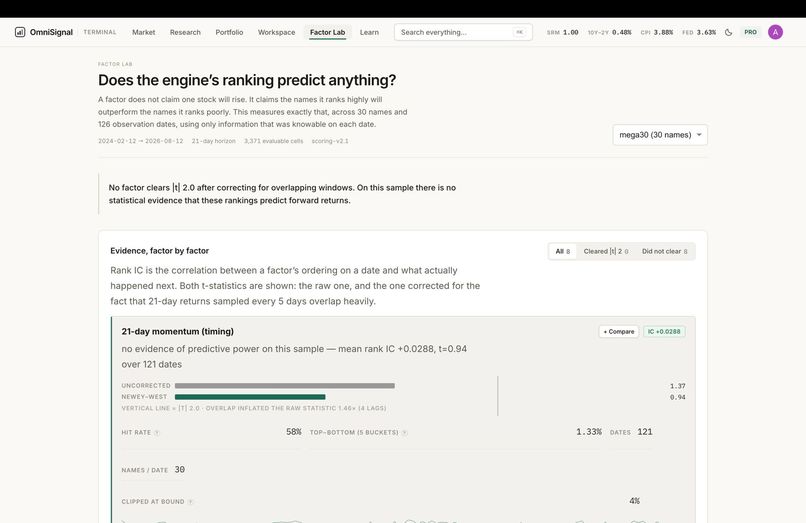
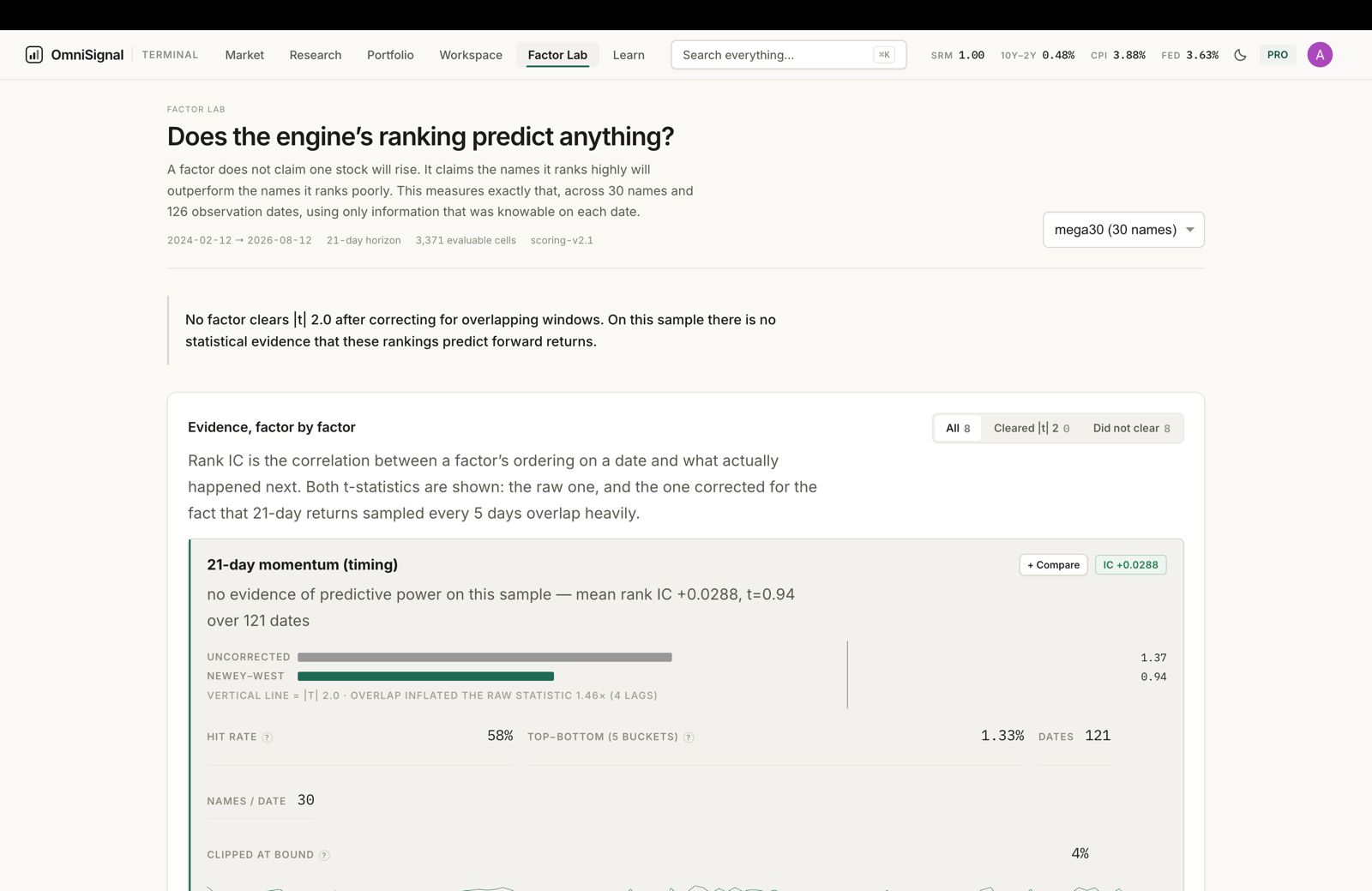
Factor Lab showing statistical validation of the ranking engine across 30 stocks and multiple observation dates.
-
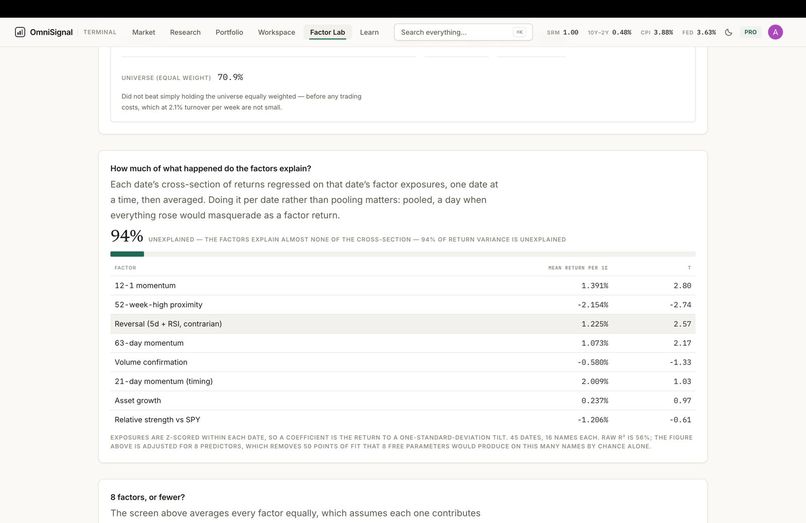
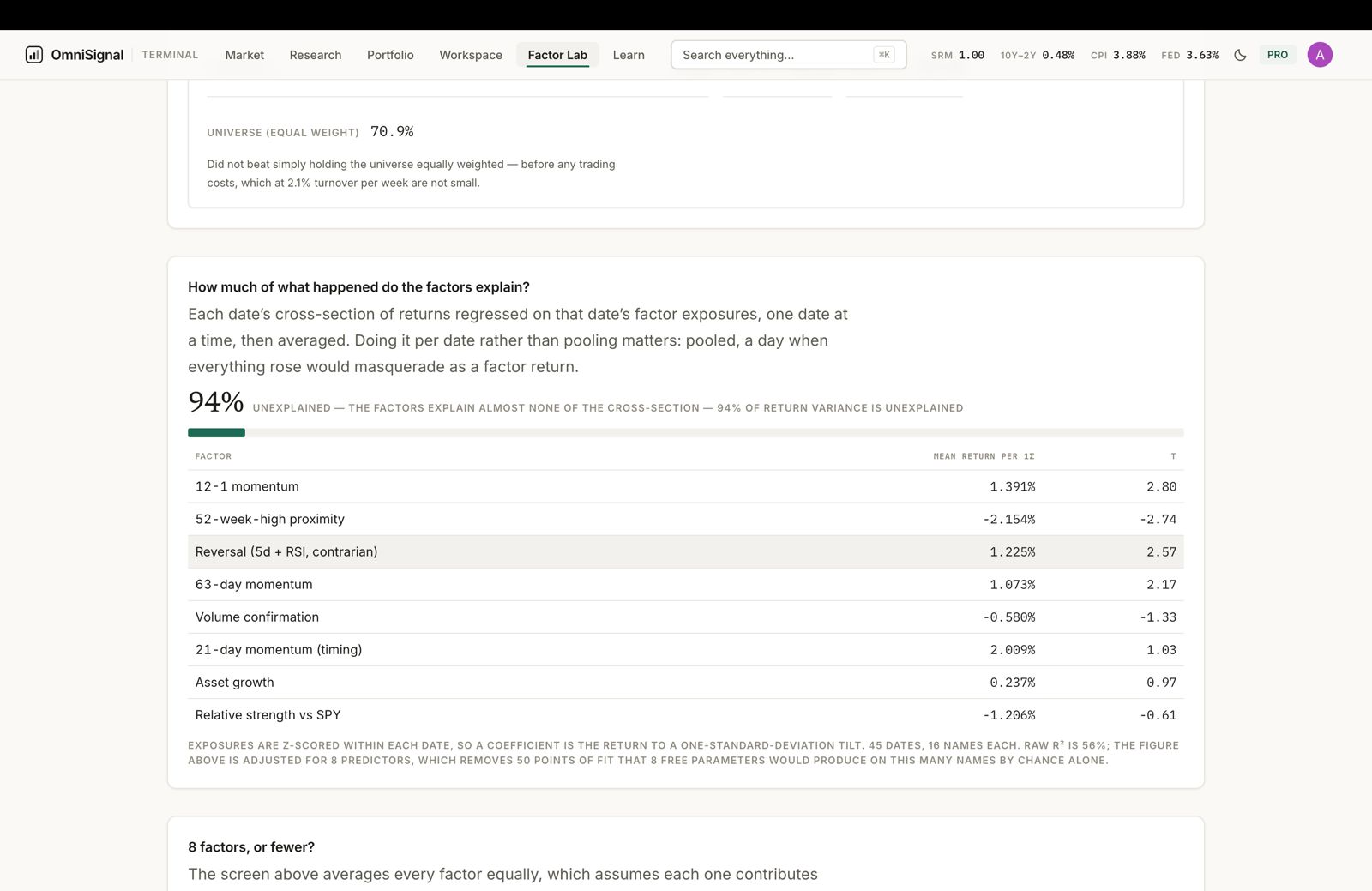
Cross-sectional analysis showing how much of stock return variation is explained by the selected factors.
-
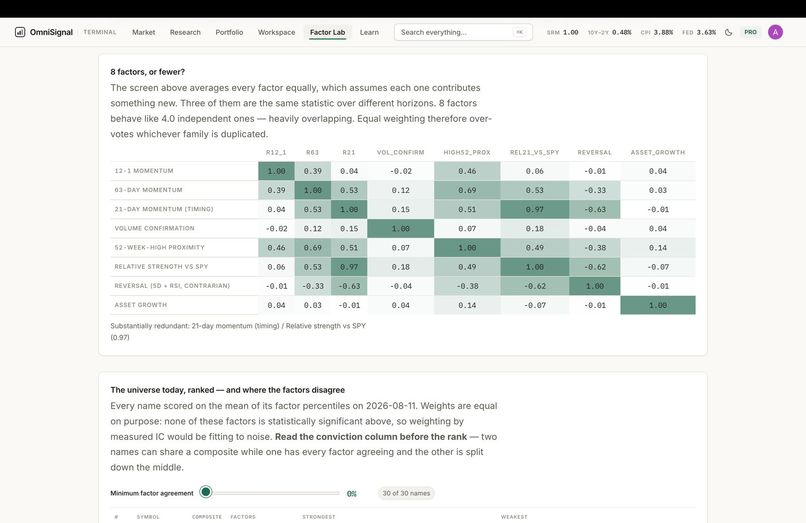
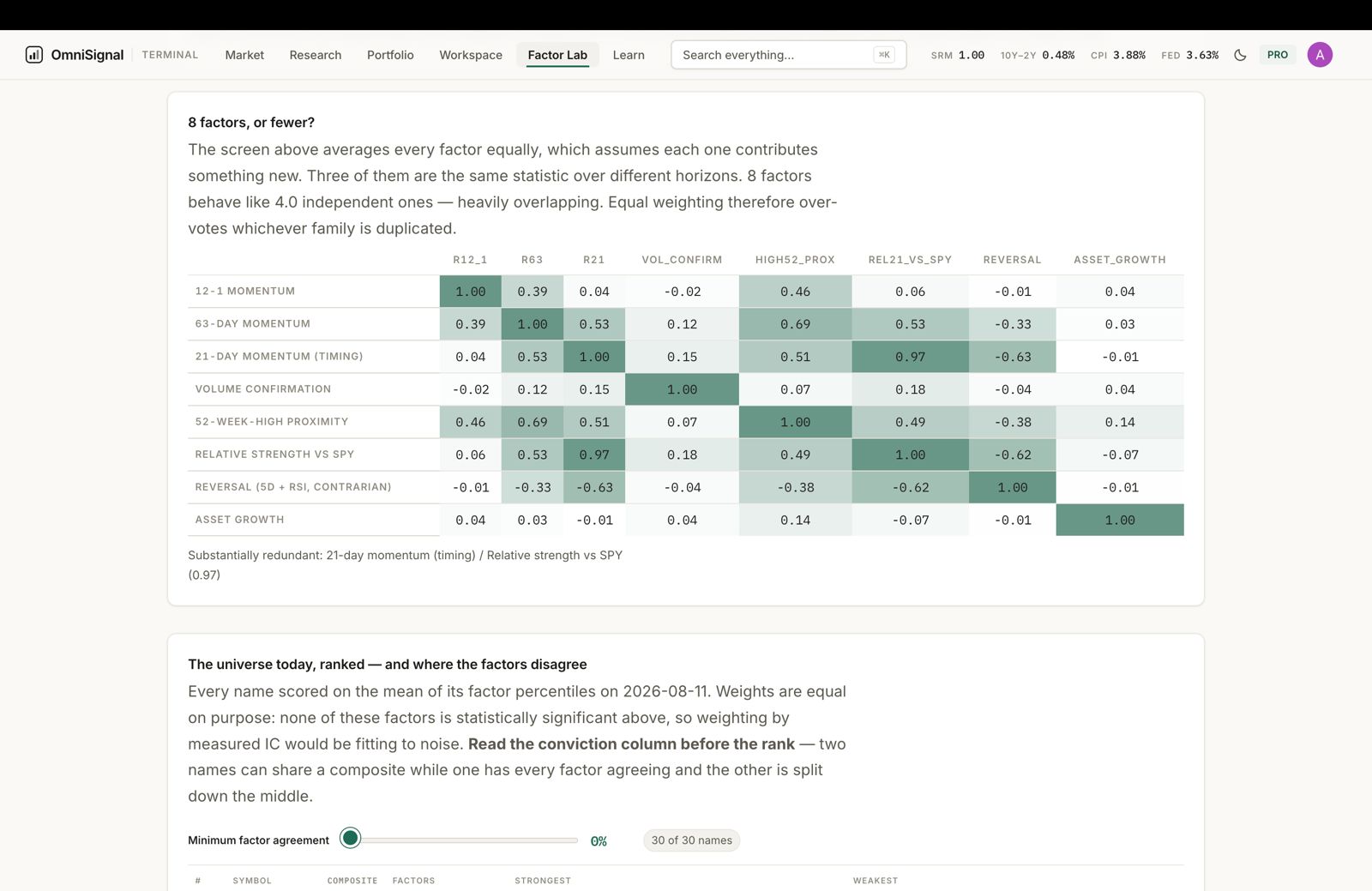
Correlation matrix revealing relationships and redundancy between different factors used by the engine.
-
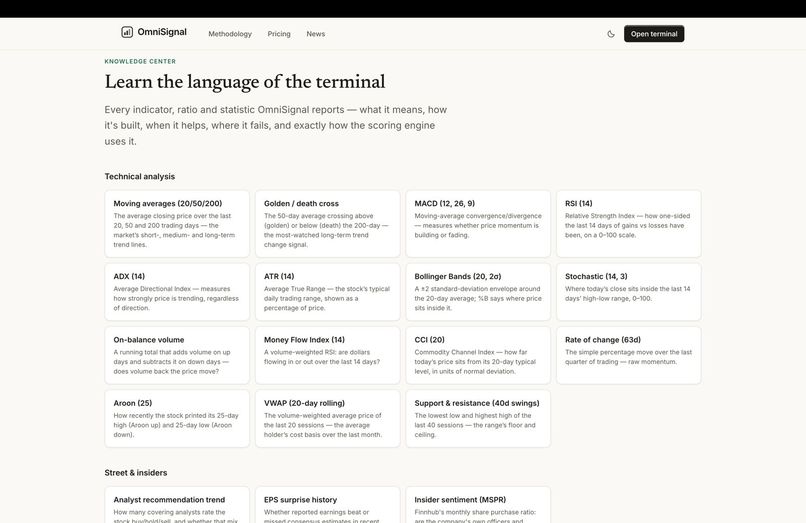
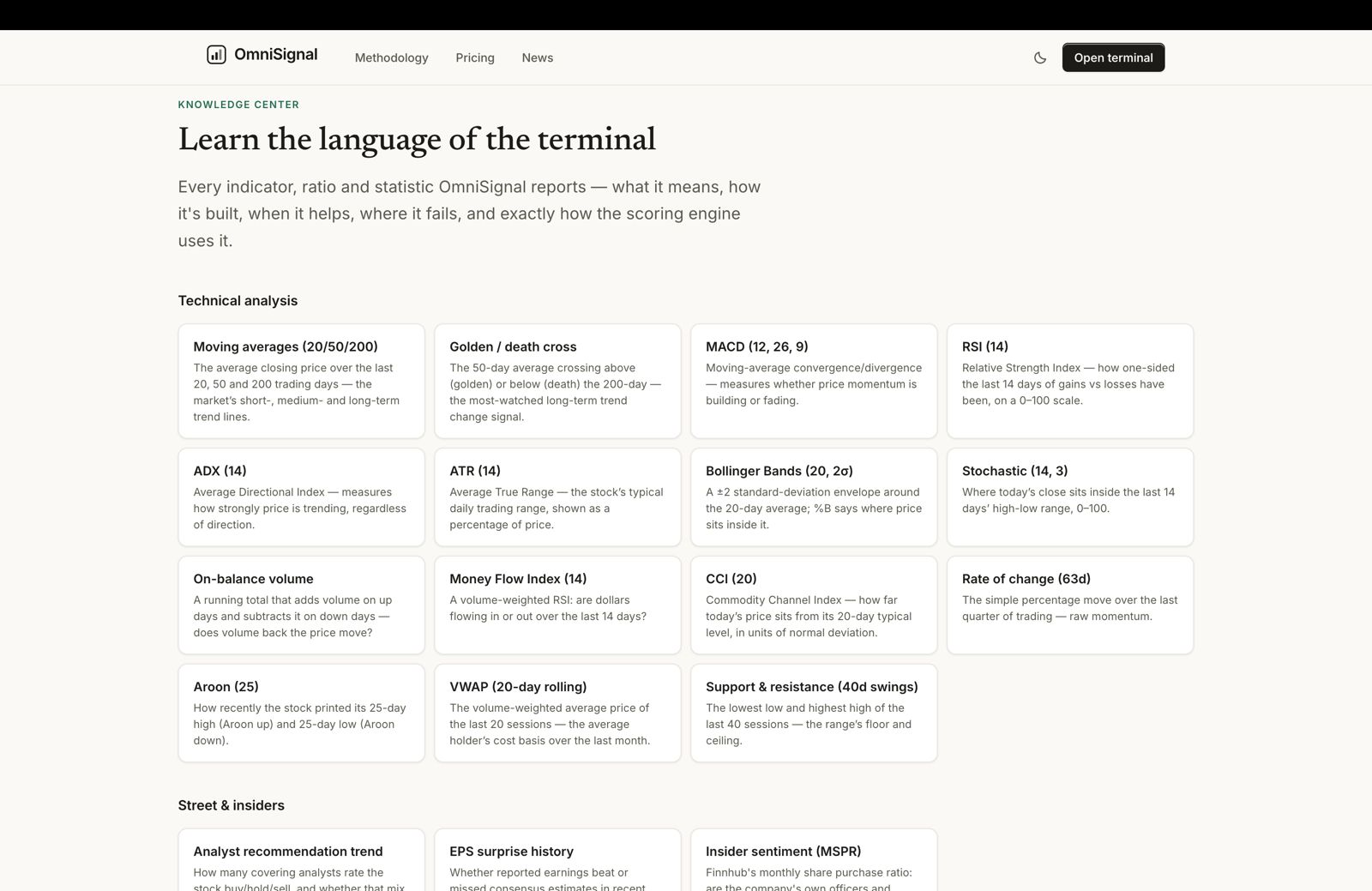
Knowledge Center explaining the technical indicators and financial metrics used throughout OmniSignal.
I built MiniAladdin because I wanted to make financial research less fragmented and more interactive. Normally, you have to jump between charts, company data, news, quantitative signals, and different tools just to understand what is happening in a stock or the market.
So I built MiniAladdin (OmniSignal) as an AI-powered financial research terminal where all of that comes together in one place.
I built the full application myself, including the React/Next.js frontend, FastAPI backend, financial data integrations, factor analysis, validation tools, portfolio and research workflows, and the interactive research interface. I also added AI-assisted analysis to help turn the underlying financial and quantitative data into useful research insights.
One of the biggest things I learned was that building an AI product is much more than just adding an LLM. The data, calculations, backend, UI, and reliability all have to work together. I also learned a lot from dealing with real-world problems like slow quantitative calculations, incomplete data, deployment issues, and differences between my local environment and production.
The biggest challenge was turning all these different pieces into something that actually feels like one research platform rather than a collection of separate tools.
Built With
- fastapi
- fred-api
- groq
- next.js
- numpy
- pandas
- postgresql
- python
- react
- supabase
- tailwind-css
- typescript
- vercel
- yfinance

Log in or sign up for Devpost to join the conversation.