-
-
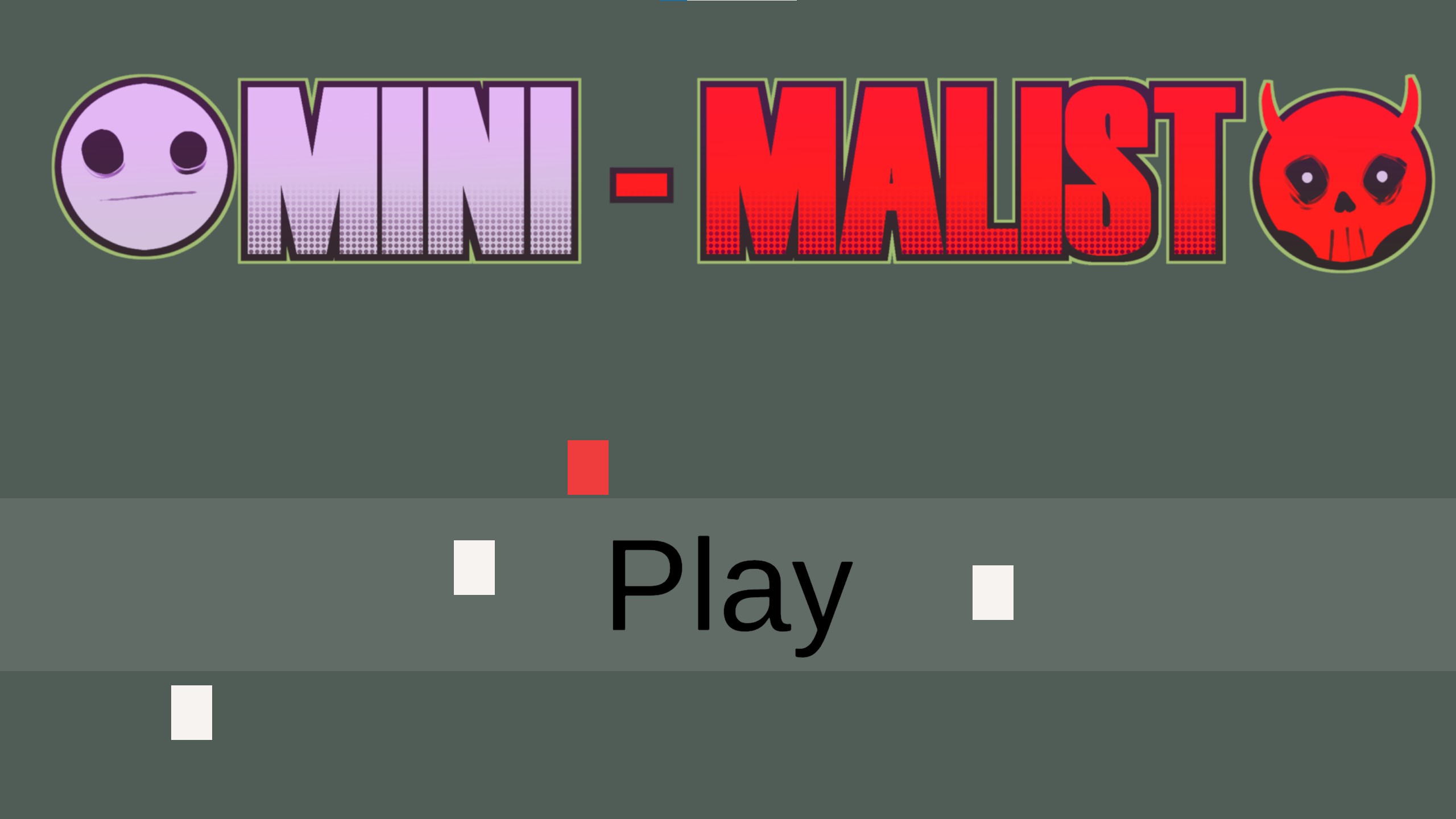
Title art done by @Grimp_Art
-
Malism Definition
-
Gameplay 1
-
Gameplay 2

Inspiration
Inspired by games like Mini Motorways and Hidden Folks, Mini-Malism has a top-down view of a dynamic ecosystem of evil, innocent, and good squares. One of my first thoughts when reading the theme was Conway's Game of Life. Like Conway's Game of Life, Mini-Malism creates a complex structure from a few simple rules, with the addition of randomness for re-playability.
What it does
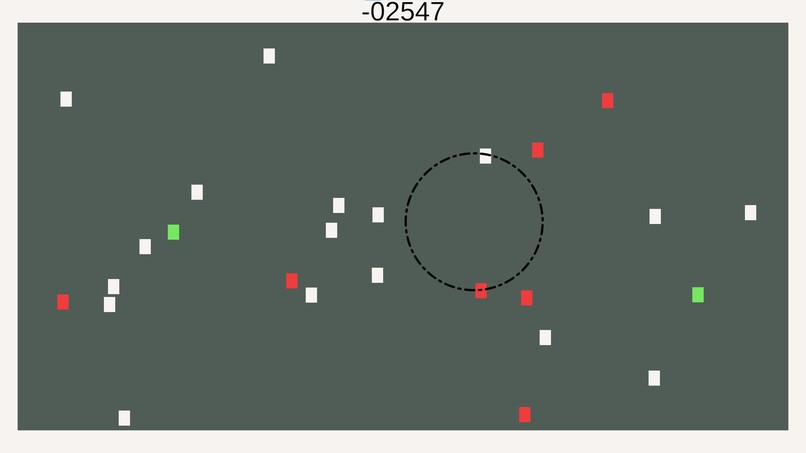
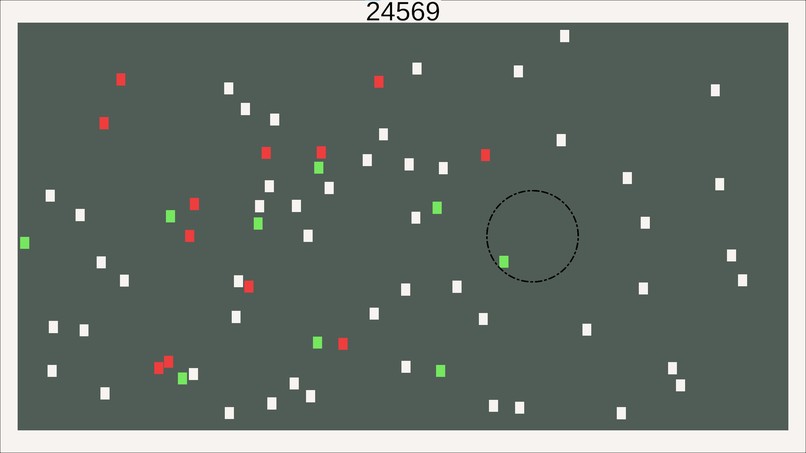
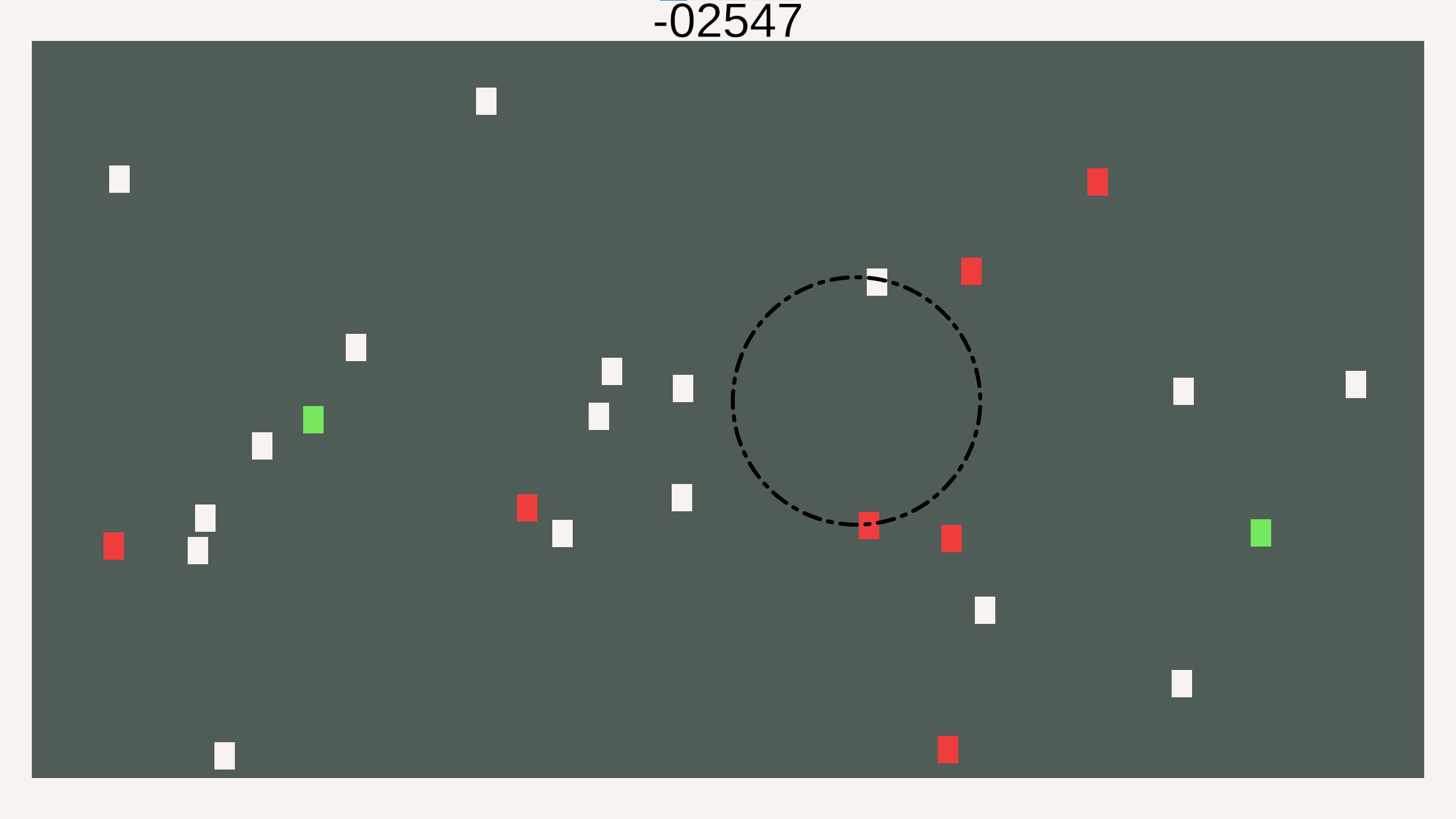
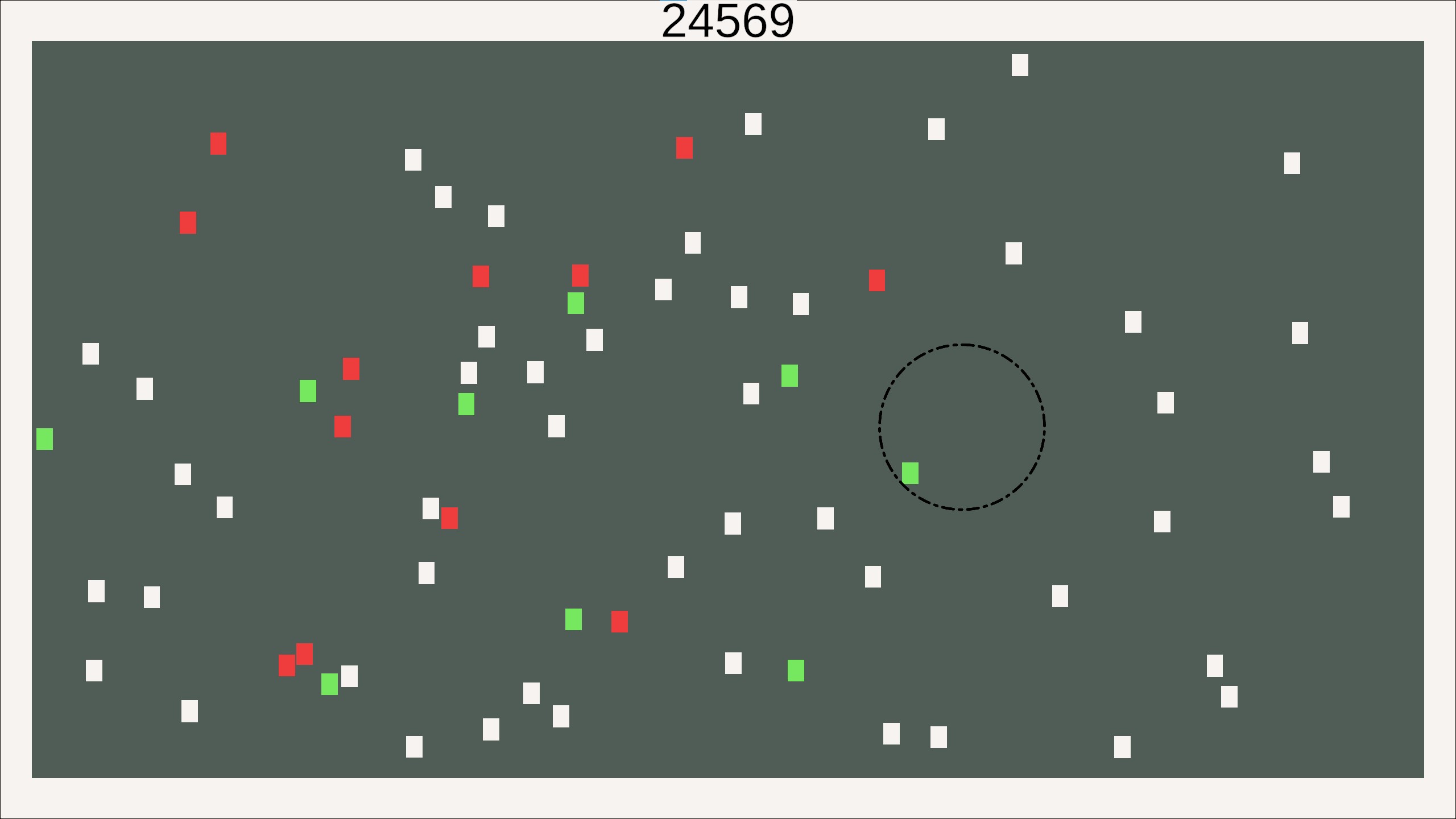
You act as a 'god' passing judgment down onto the evildoers of a mini world. The gameplay consists of guiding your circle of influence to destroy evil squares (indicated in red) while avoiding good squares (indicated in green). The four levels present different challenges to the player, from reaction time to patience.
How I built it
Mini-Malism is built in unity. During the first half of the week my focus was on writing code that was easy to add more features too, and as the deadline closed in my focus shifted to speed to get a playable game. I also used Krita to make the art target sprite.
Challenges we ran into
A main challenge was balancing development of Mini-Malism with schoolwork which I navigated with time-management techniques like lists and schedules. A challenge I came upon in development was trying to design an easy system for evil squares to convert innocent squares. This problem stumped me for a day or so before I came up with the solution of having each square have a field containing a morality script that handled morality-dependent logic. Then, when a square was converted it simply swapped moralities.
Accomplishments that we're proud of
Although I don't use it to its full extent, I wrote an equation that takes a (x,y) coordinate and percentage as input and outputs a unit-vector pointing in a random direction that tends towards the inputted (x,y) coordinate. For example, an input of (0,1), 50% would mean that whenever a direction was chosen, the farthest away from (0,1) it could point is perpendicular to it. While an input of (0,1), 10% would give outputs that always point vaguely towards the input. This is used to skew the random movement of the squares towards a target. This is currently only used in the main menu to have the red square target all the white ones.
Additionally, the ecosystem created by simple movement ended up better than I expected. I often find it very satisfying to just watch the squares move around, and find myself unconsciously injecting a personality into them.
What we learned
Through this project I have seen the progress I have made as a game developer. In the past I would not be able to plan a project with a realistic scope and then implement it. Additionally, I improved my knowledge of general unity workflow which will increase my productivity even more.
What's next for Mini-Malist
Due to the simple nature of the game, there is a lot of room for expansion. Beyond adding music, sound effects, and particle effects, there are many features I would love to implement. These include: -Descriptions before each level that flesh out story and add more personality to the squares -more square types, for example a golden good square that can convert innocent squares to good -Flesh out the UI with a better font and simple art with a cohesive color pallet -Timed levels -levels with varying target size -visualization of score multiplier
Credits
Title art done by Grimp! Find him HERE!


Log in or sign up for Devpost to join the conversation.