Inspiration
As students living in Munich, we open our phones every morning and get hit by the same thing: crises, conflicts, bad news, and endless feeds that keep us scrolling far longer than we wanted. At the same time, Munich is full of good things happening every single day, but nobody headlines them.
- The Negativity Gap: Bad news spreads fast, good news about our own city barely reaches us
- The Endless Feed: Social media is designed to never end, which leaves us more tired than happy
- The Missing Connection: We live next to thousands of people in our district, but rarely share the small moments that make a day better
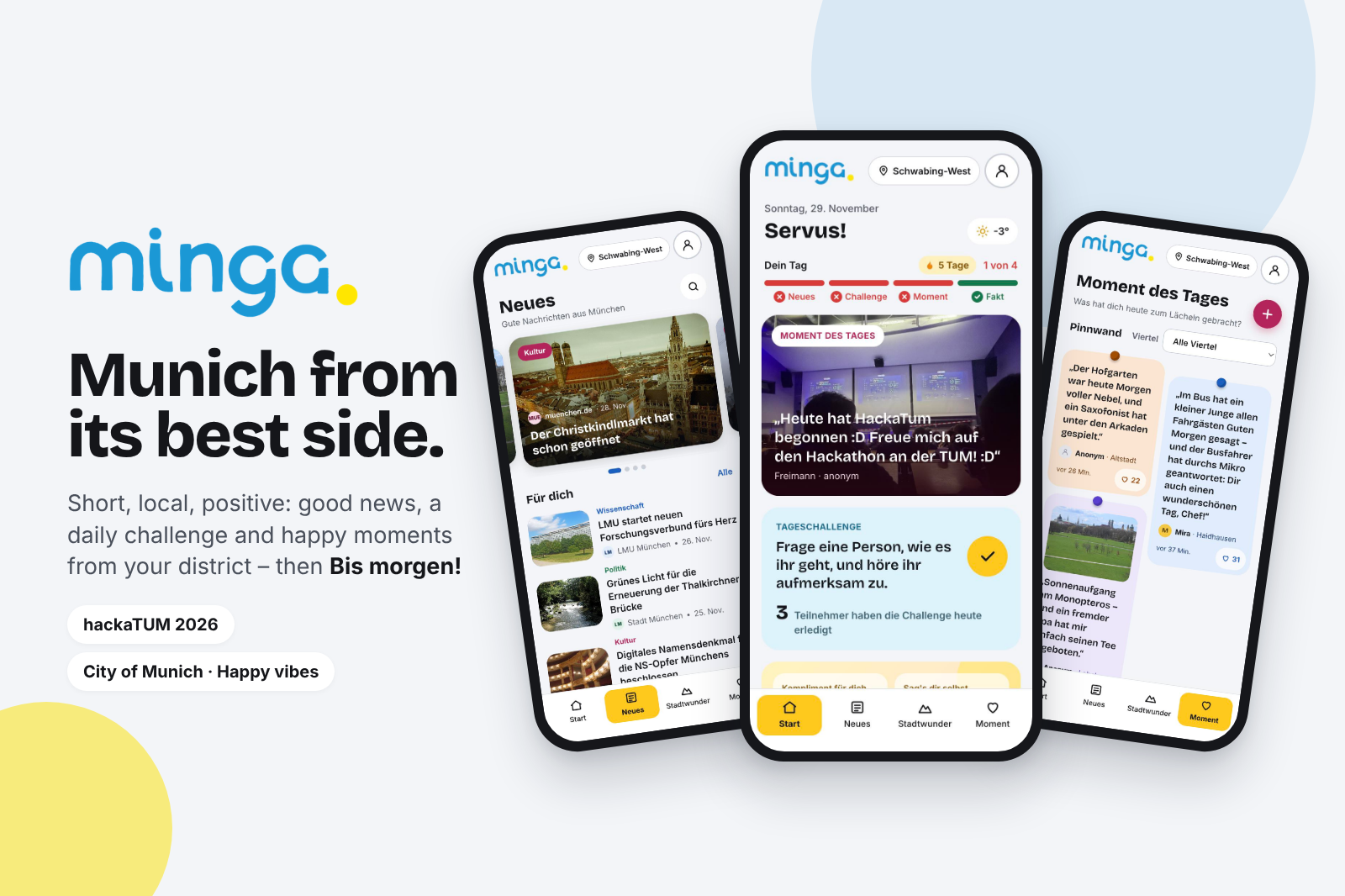
That's why we built minga.: It shows the city from its good side: short, local and positive.
What it does
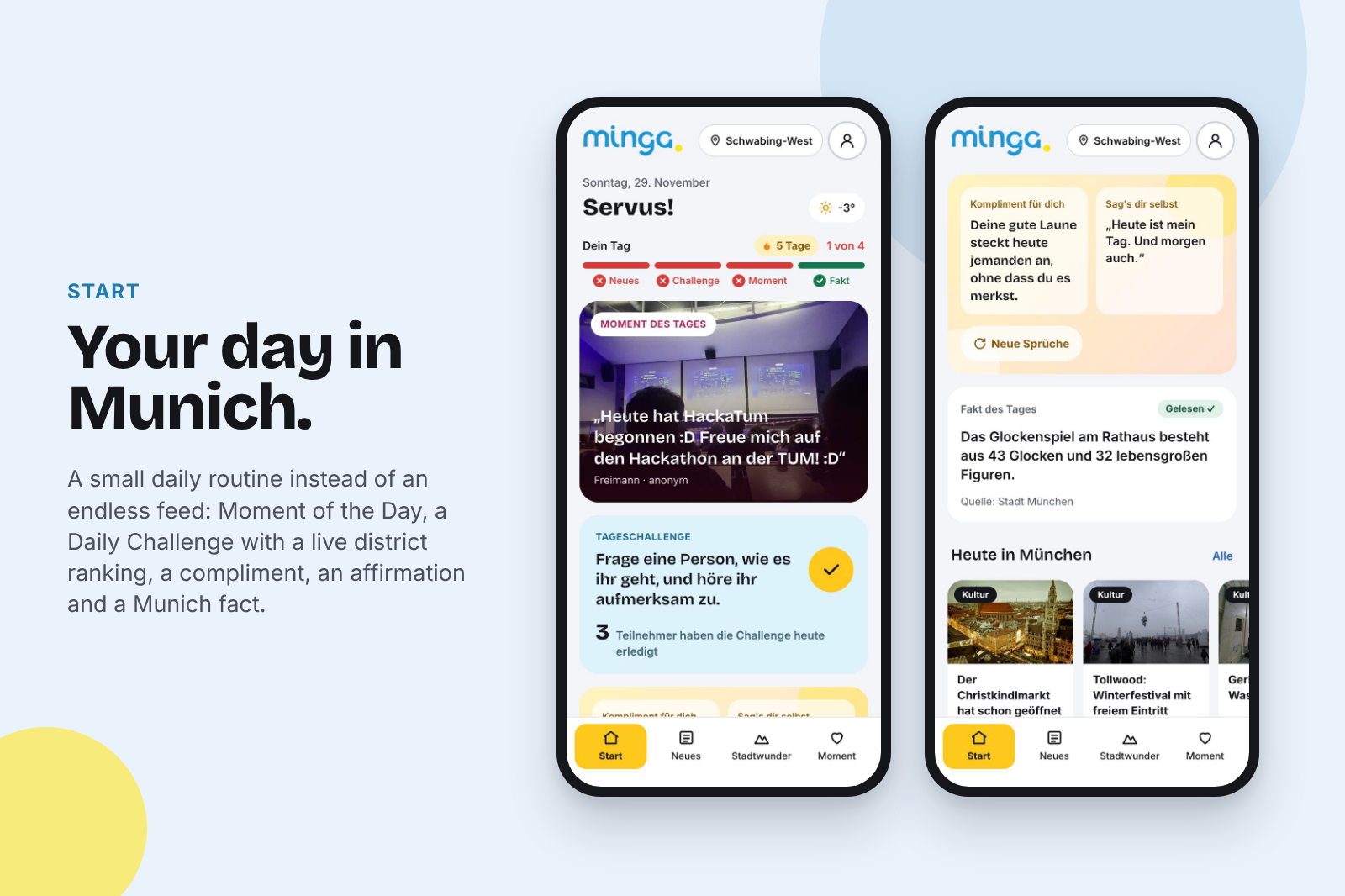
minga. gives you a small, positive daily routine instead of an endless feed.
- Start: A daily dashboard with the Moment of the Day, a Daily Challenge (e.g. "Say Servus to a bus driver") with a live ranking of Munich's districts, a compliment and an affirmation, a Munich fact of the day and today's good news. A progress bar and a streak make checking in feel rewarding.
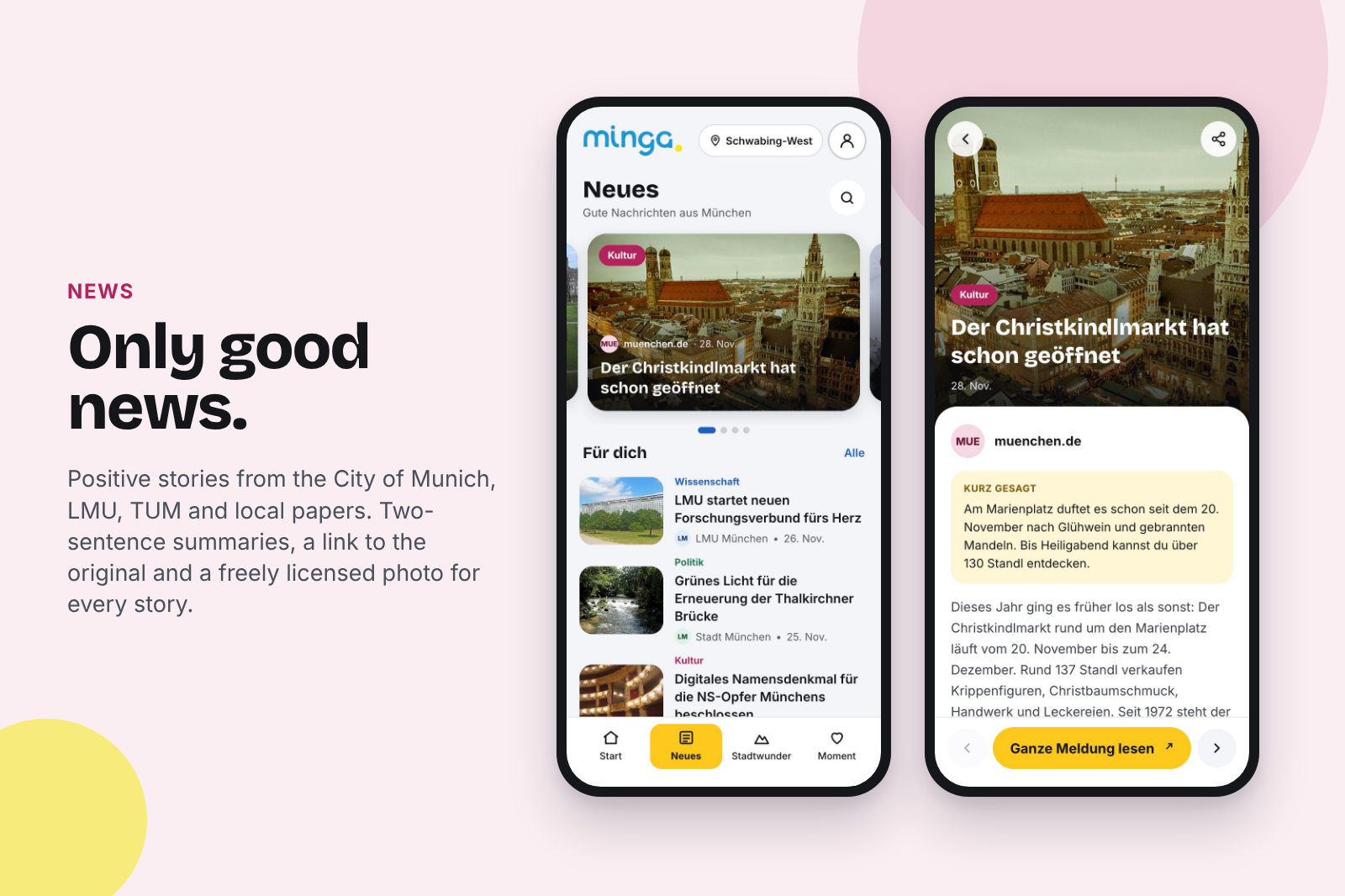
- News: Only positive news from Munich, from sources like the City of Munich, LMU, TUM and local papers. Each story has a two-sentence summary, a link to the original and a fitting, freely licensed Munich photo.
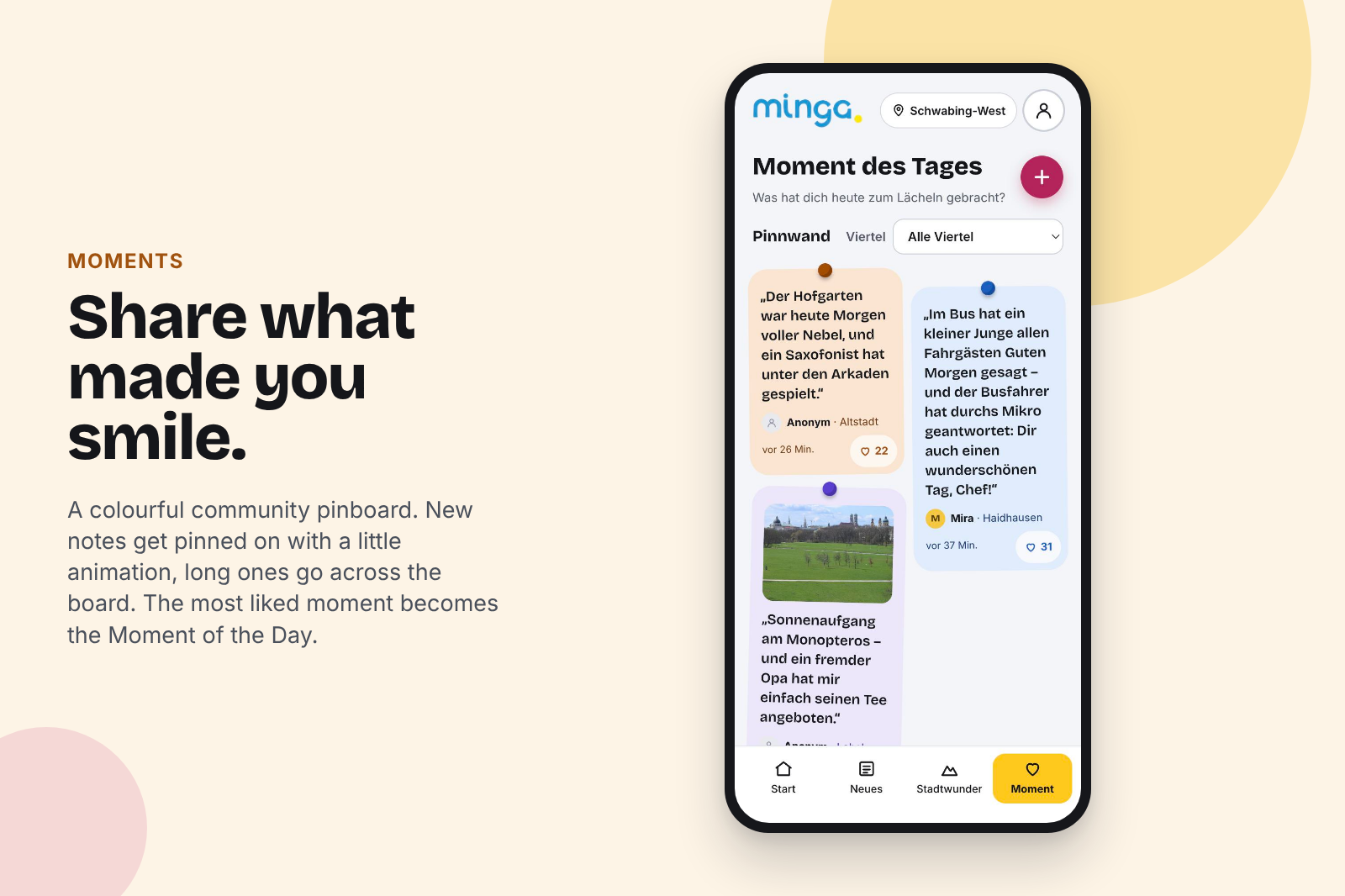
- Moments: A community pinboard where people share what made them smile today. New notes get pinned to the board with an animation, and the most liked one becomes the Moment of the Day.
- City Wonders: Fun facts and live data about the city, like the sun arc and cycling traffic.
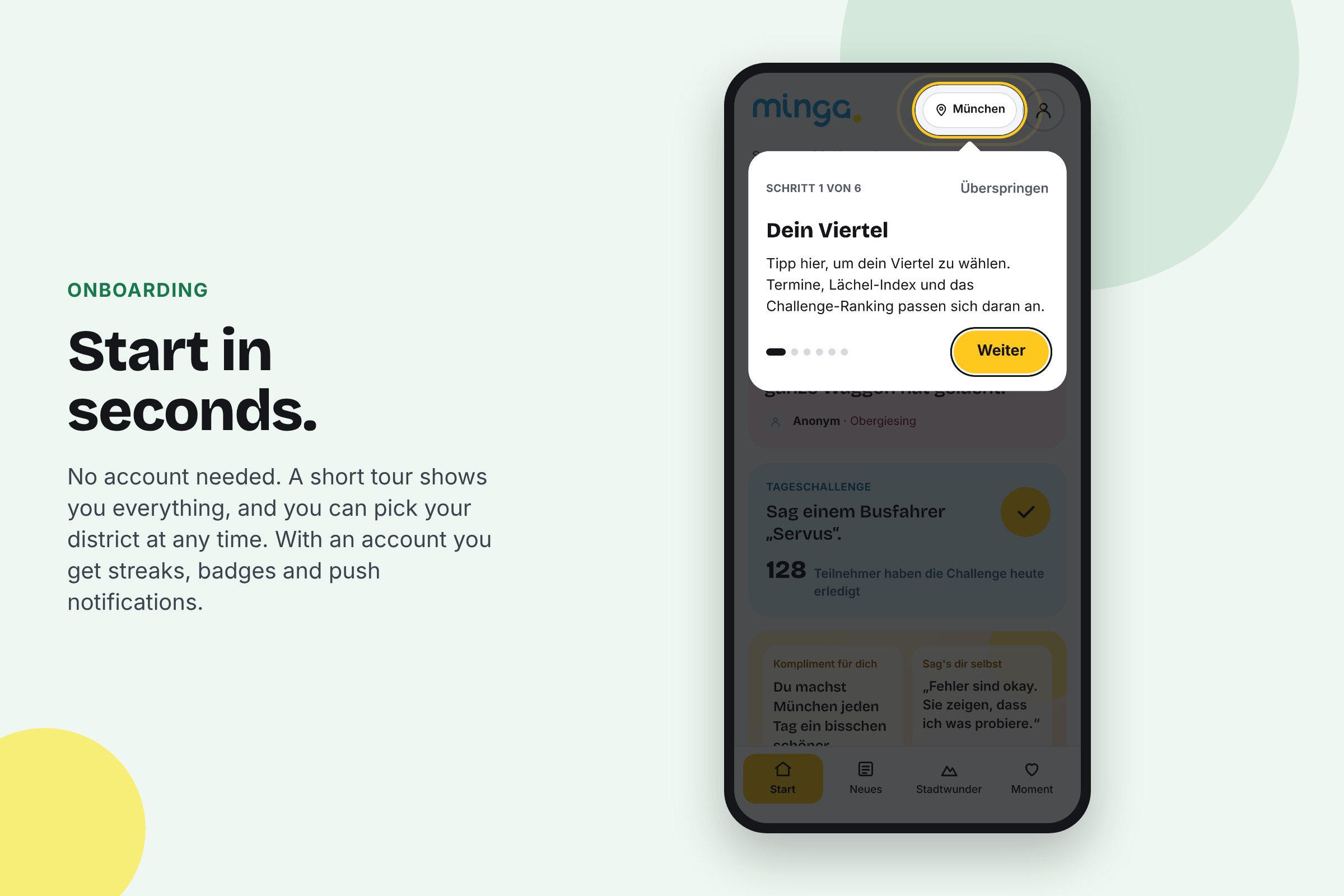
You can use everything without an account: just pick your district. With an account you also get a profile, badges, your own moments and push notifications.
We designed minga. for everyone in Munich, young and old: from students to families to seniors. That's why it works without an account, keeps every screen short and simple, and starts with an onboarding tour that explains the app step by step.
How we built it
We built minga. as a mobile-first web app that can be installed like a native app (PWA).
- Frontend: Next.js 16, React 19, TypeScript and Tailwind CSS 4, with an onboarding tour and dark mode.
- Backend & Data: Supabase with Postgres, Row Level Security, Auth, Storage for photos, RPC functions for the challenge ranking and likes, and Edge Functions.
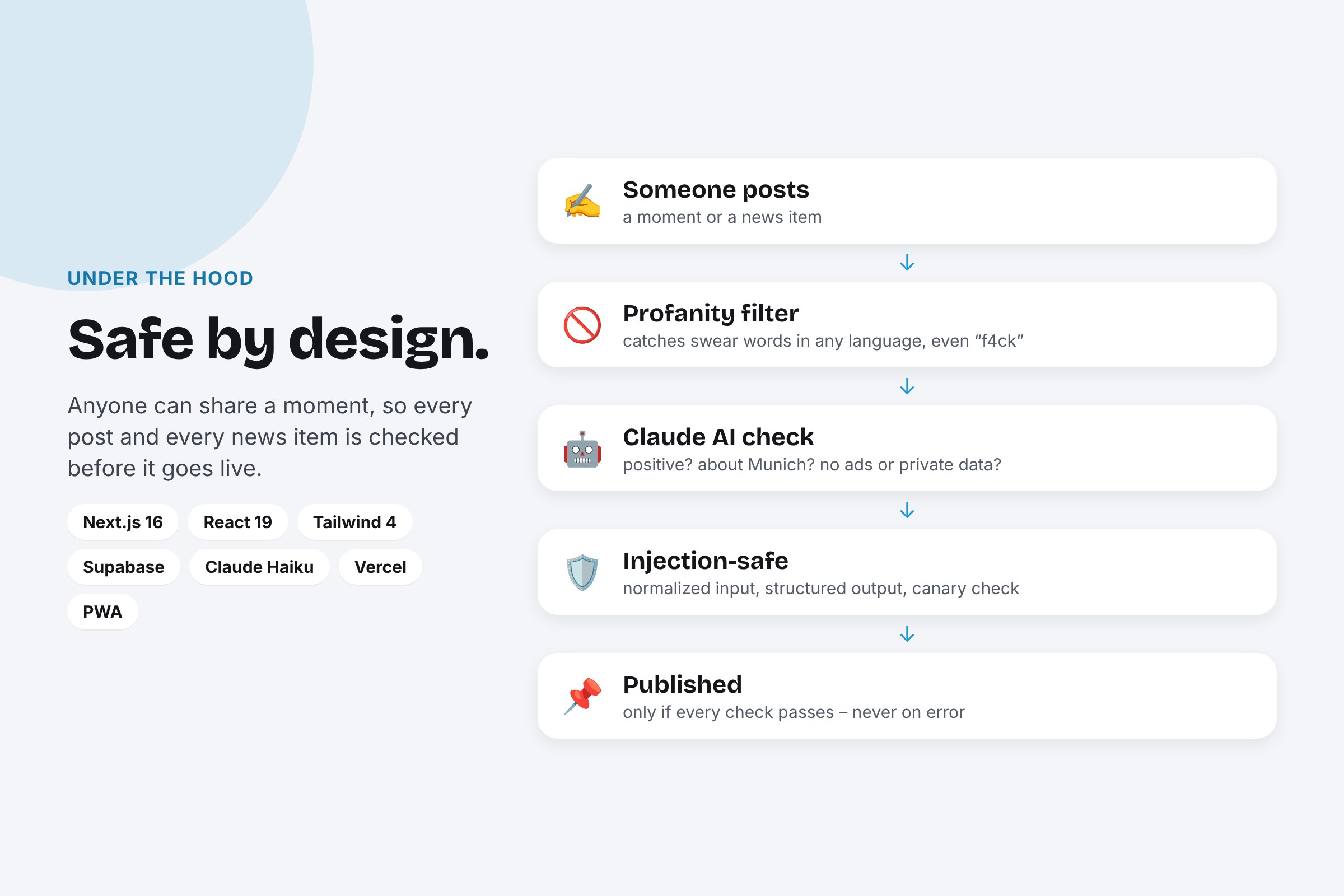
- AI Moderation: Every moment and every news item is checked by Claude (Haiku) before it goes live: Is it positive? Is it about Munich? No ads, no private data? On top of that, a profanity filter catches swear words in any language, even disguised ones like "f4ck".
- Prompt-Injection Protection: Since anyone can post, we normalize and filter the input, use structured output and a canary check, and let the code make the final decision. If anything fails, nothing gets published automatically.
- Images: News photos come from Wikimedia Commons and are matched to each story's topic, with photographer and license shown.
- Deployment: Vercel, plus web push notifications.
Challenges we ran into
- Finding real good news: Many news sites are behind paywalls, so we switched to primary sources like city press releases and university news and wrote our own short summaries.
- Safe but open: Letting people post anonymously only works if moderation is strict, fast and can't be tricked, which took more thought than expected.
- Built for young and old: We wanted minga. to work for every age group, from students who are always on their phones to seniors who rarely use apps. Finding a design that feels playful and rewarding for younger users (streaks, badges, confetti) but still stays clear and easy to use for older users took several rounds of rethinking.
Accomplishments that we're proud of
We're proud that minga. is something we would actually use ourselves: an app that wants you to put your phone away again. On the technical side, we're proud of our multi-layer AI moderation and that every news item and fact can be traced back to its source. We also love the small details: the pin animation on the pinboard, the streak, and the confetti when you complete the daily challenge.
And honestly, the yellow dot in our logo is doing a lot of heavy lifting.
What we learned
We learned a lot about Supabase (Row Level Security, RPCs, Edge Functions), about building safe AI moderation, and about how much small design decisions change how an app feels, especially when you design for all ages and not just for people like us. We also learned how to work quickly as a team, and that sleep is optional during a hackathon :)
What's next for minga.
- Automatically turn the city's press releases (Rathaus Umschau) into short good news
- Connect more live open data, like the Isar temperature and playgrounds
- A daily morning push with the fact and the challenge of the day
- More languages, so everyone in Munich can join
- Work together with the City of Munich to bring minga. to all residents
Built With
- claude
- nextjs
- postgresql
- pwa
- react
- supabase
- typescript
