-
-
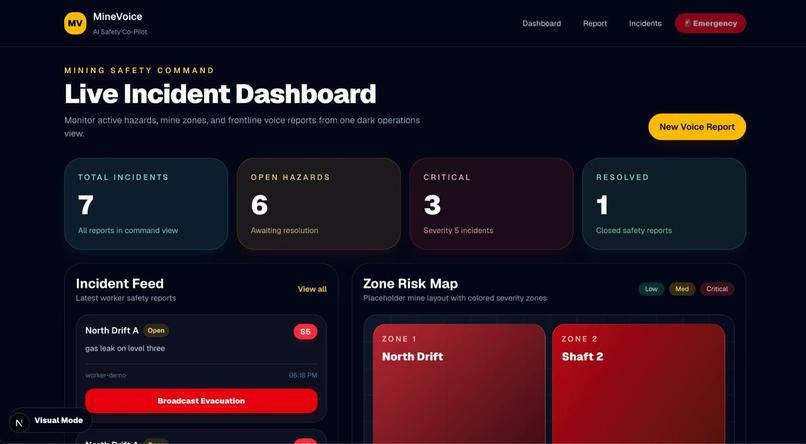
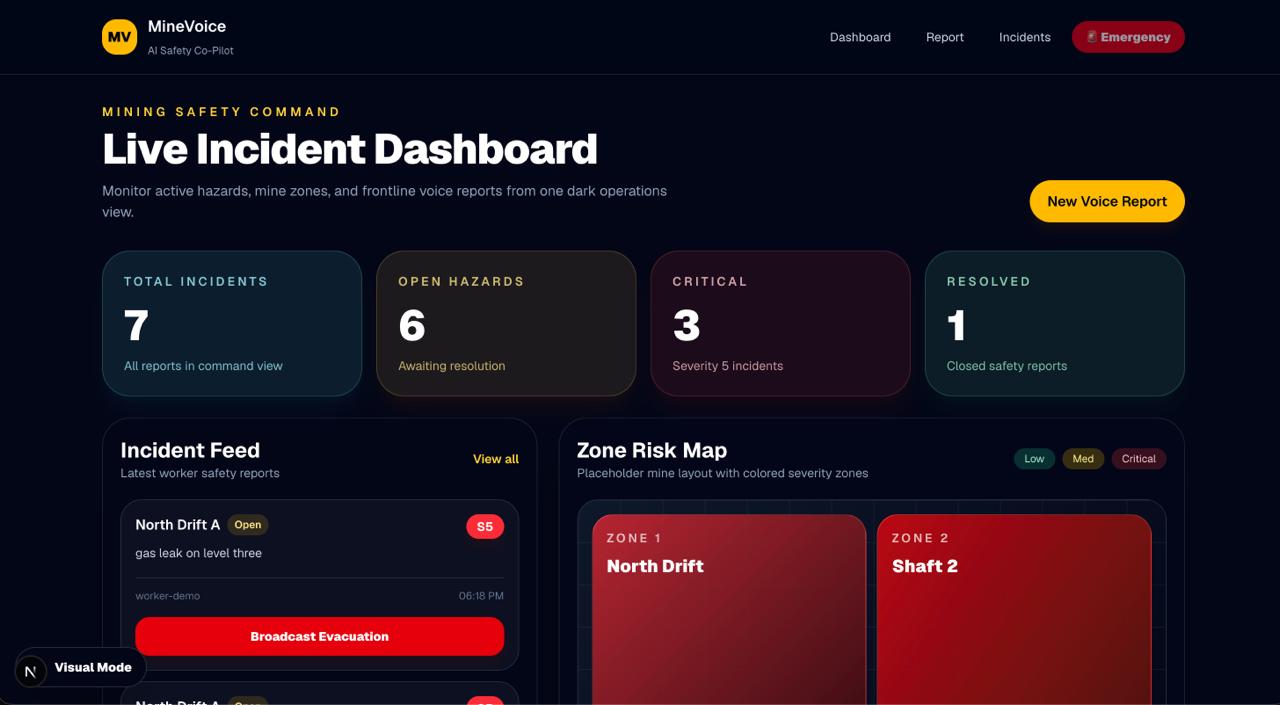
Dashboard page
-
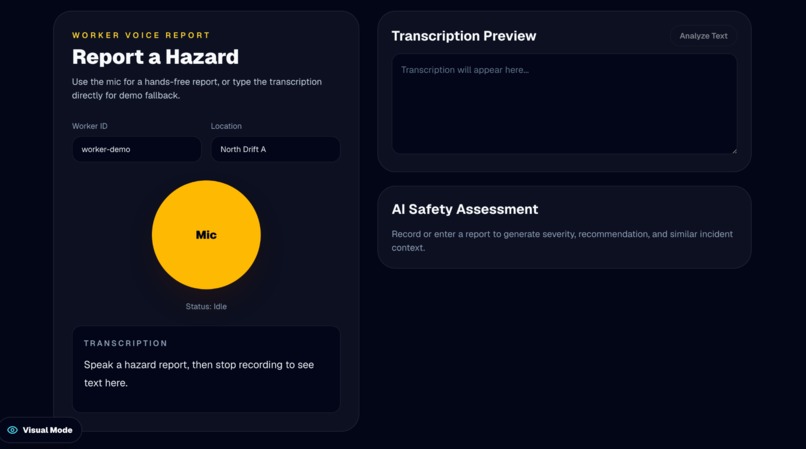
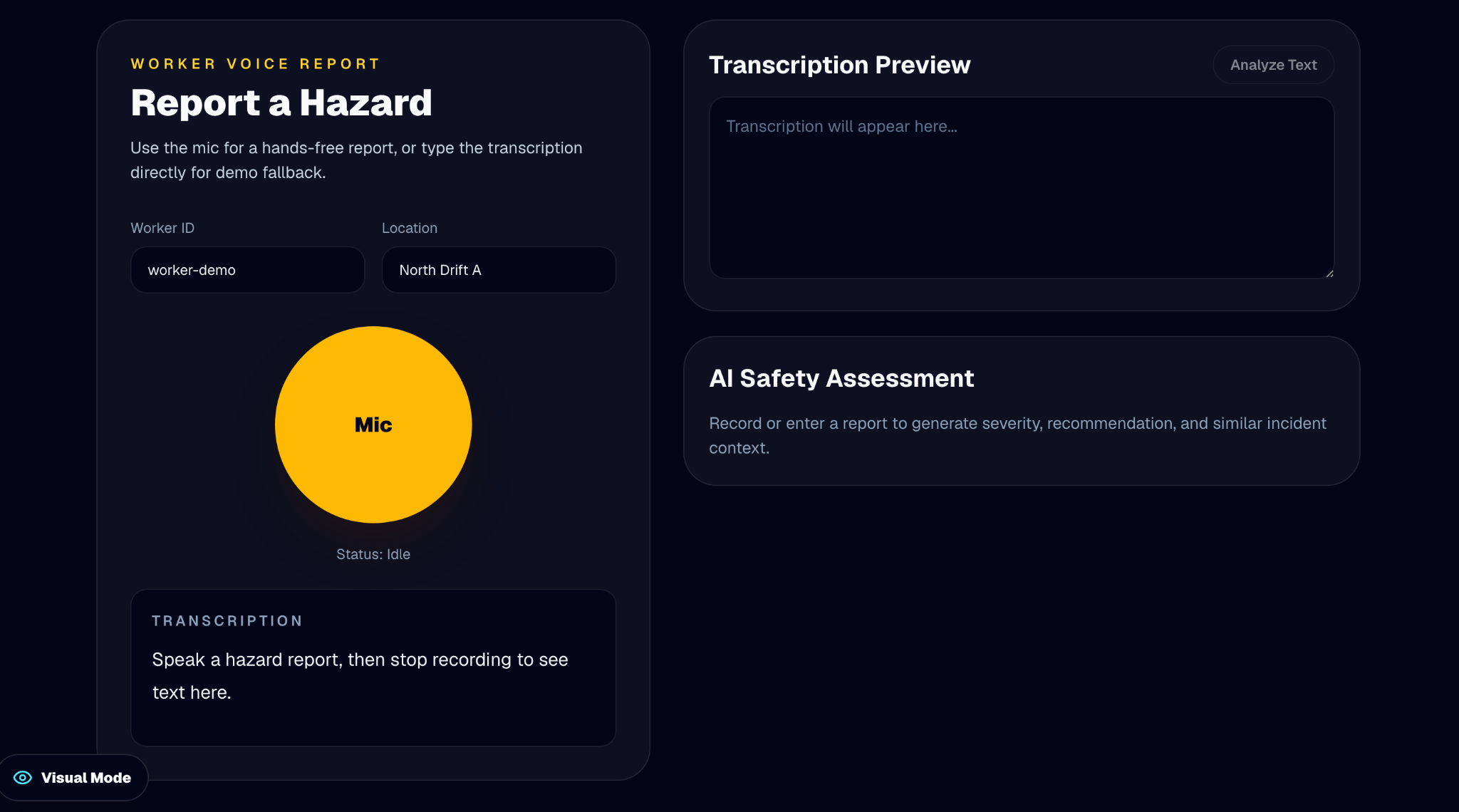
voice dictation page
-
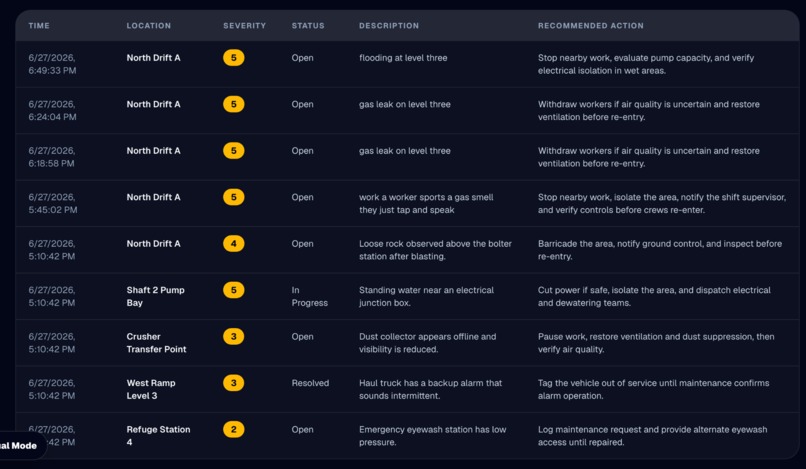
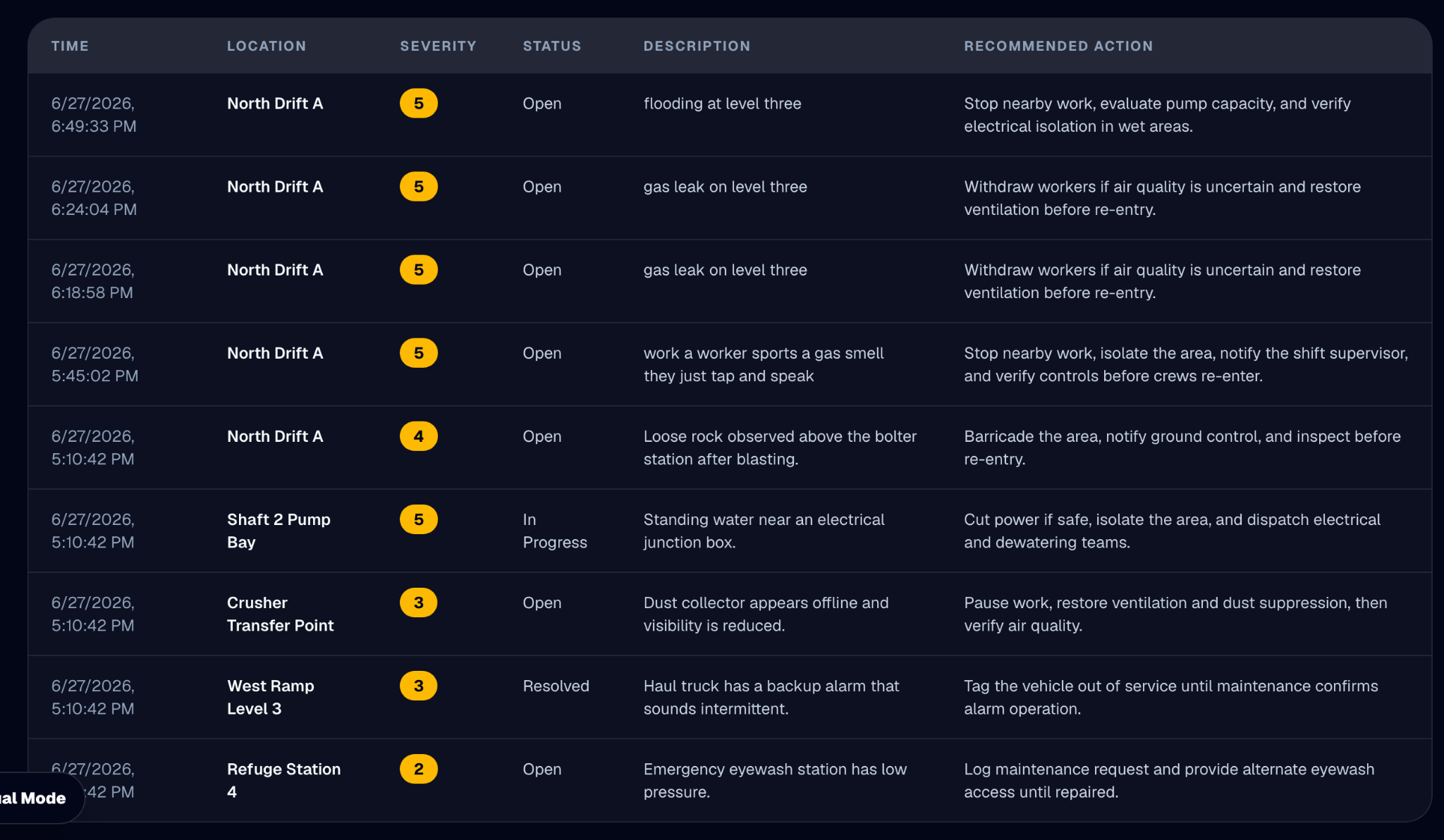
records
-
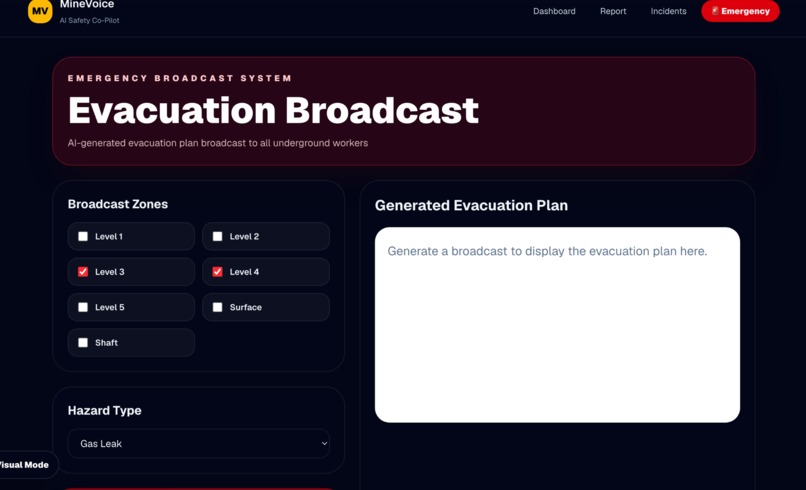
emergencyplan
-
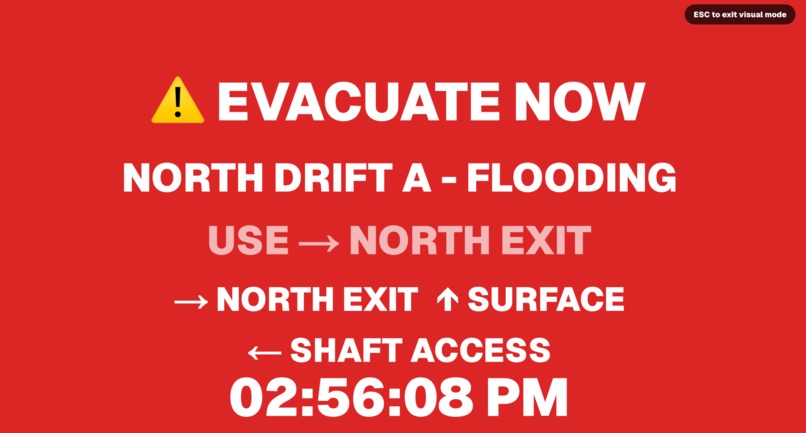
diaplay
Inspiration
Underground mining is high-risk, fast-moving, and communication-heavy. A small delay in reporting a hazard like gas smell, loose rock, flooding, or electrical danger can quickly become life-threatening.
MineVoice was inspired by the idea that a miner should be able to report danger hands-free, in plain language, without filling out forms or waiting to reach a supervisor. We wanted to build a safety co-pilot that turns a worker’s voice into immediate action: transcription, AI analysis, incident tracking, emergency broadcast, and accessible visual alerts.
What It Does
MineVoice is a voice-powered AI safety platform for underground mining.
Workers can record a hazard report using a large microphone button. The app transcribes the audio, analyzes the hazard, assigns severity, recommends safety actions, cites Ontario mining regulation references, and stores the incident in a live database.
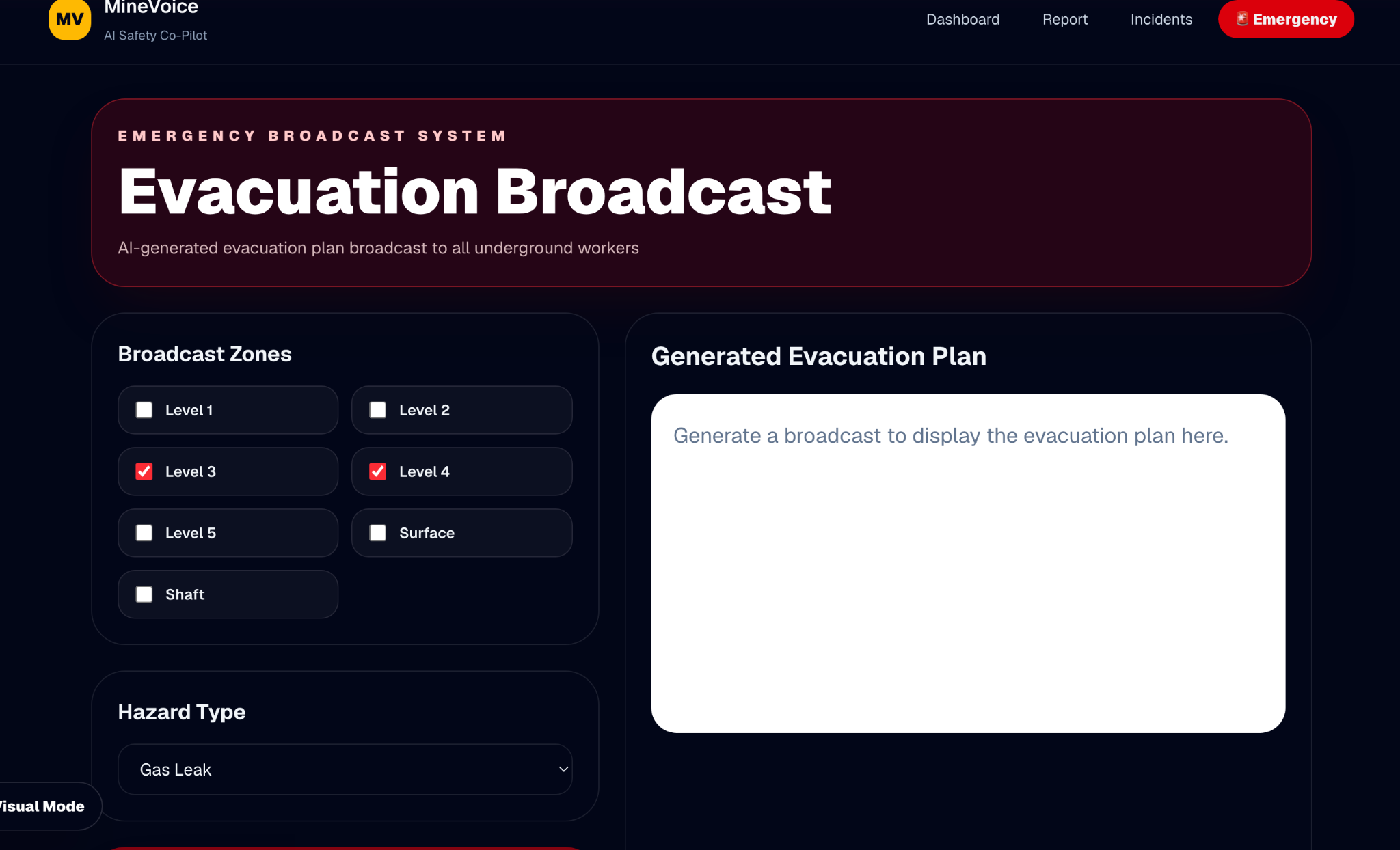
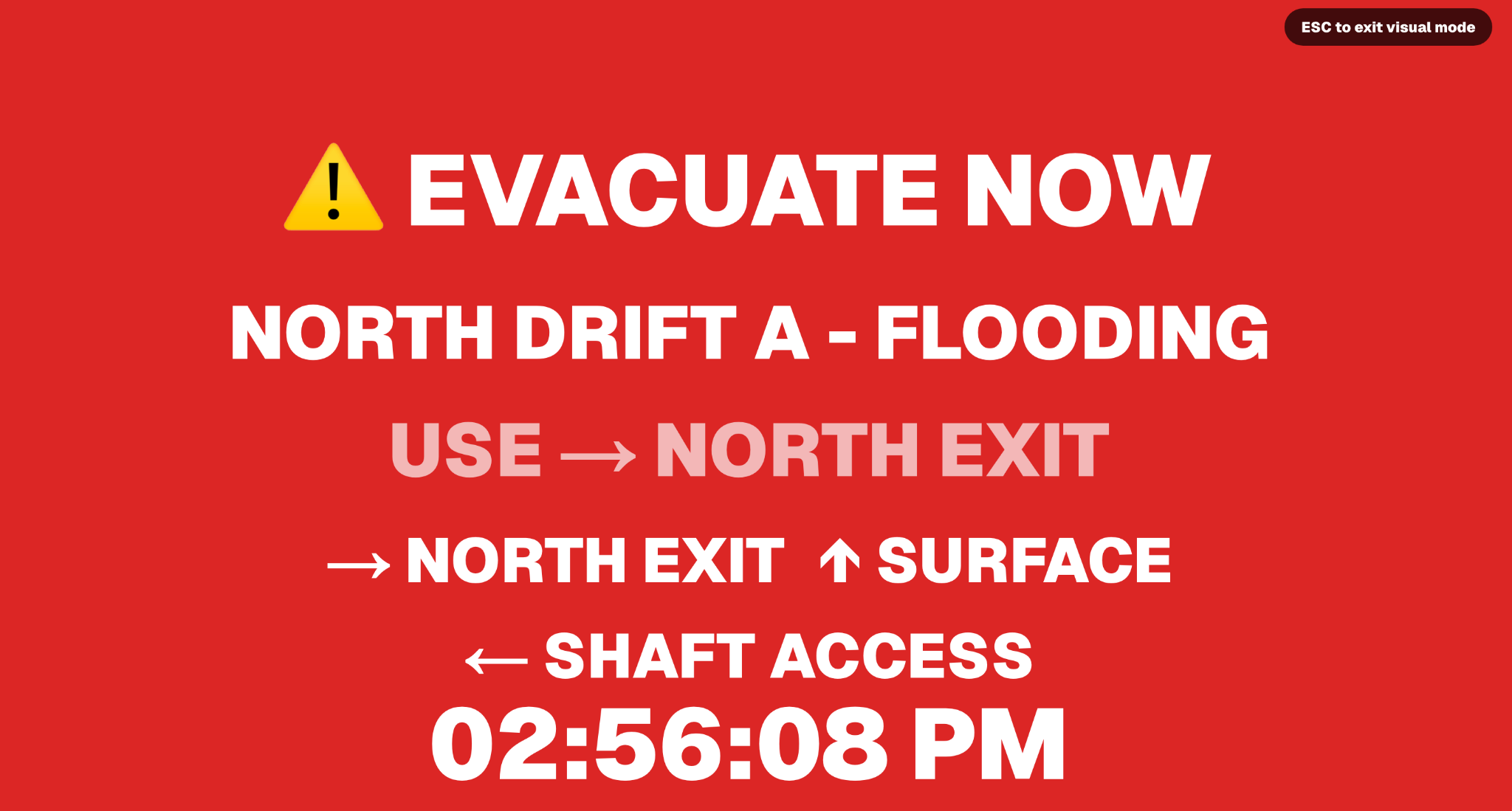
Supervisors get a dark-themed dashboard with active incidents, severity stats, and a zone risk map. For emergencies, MineVoice can generate an evacuation broadcast, read it aloud with browser speech synthesis, and trigger full-screen visual alerts for deaf and hard-of-hearing workers.
How We Built It
MineVoice was built as a full-stack web app using Next.js, React, TypeScript, and Tailwind CSS.
The reporting flow uses the browser MediaRecorder API to capture audio. Audio is sent to a transcription endpoint powered by Valsea. The transcribed report is then analyzed using NVIDIA-hosted LLM models through an OpenAI-compatible API. TiDB stores incidents, worker status, emergency context, and mining safety data.
The emergency system uses real-time database context such as workers underground, deaf-worker flags, affected zones, active incidents, and exit routes. It generates an evacuation plan and broadcasts it through the browser’s Web Speech API. The Visual Alert Mode uses flashing high-contrast screens, massive text, directional arrows, and vibration patterns for accessible emergency signaling.
Challenges We Faced
One major challenge was integrating multiple AI and data services while keeping the demo reliable. Some model identifiers changed or returned 404, so we added model fallback logic and mock safety fallbacks to keep the workflow running during live demos.
Another challenge was performance. The dashboard initially blocked server-side rendering while waiting for TiDB. We moved data fetching to the client side, added skeleton loading states, and made /api/incidents return cached or mock data quickly while refreshing TiDB in the background.
We also had to design for safety and accessibility. Audio alerts are not enough in underground mines, especially for deaf and hard-of-hearing workers. That led to Visual Alert Mode: fullscreen flashing signals, vibration, giant text, and directional evacuation instructions.
What We Learned
We learned how important latency, fallback behavior, and accessibility are in safety-critical software. An AI demo cannot simply “fail closed” when an API is slow. It needs graceful fallbacks, clear UI state, and fast emergency paths.
We also learned that voice interfaces are powerful in industrial environments, but they become much more valuable when paired with structured incident storage, supervisor dashboards, and emergency workflows.

Log in or sign up for Devpost to join the conversation.