-
-
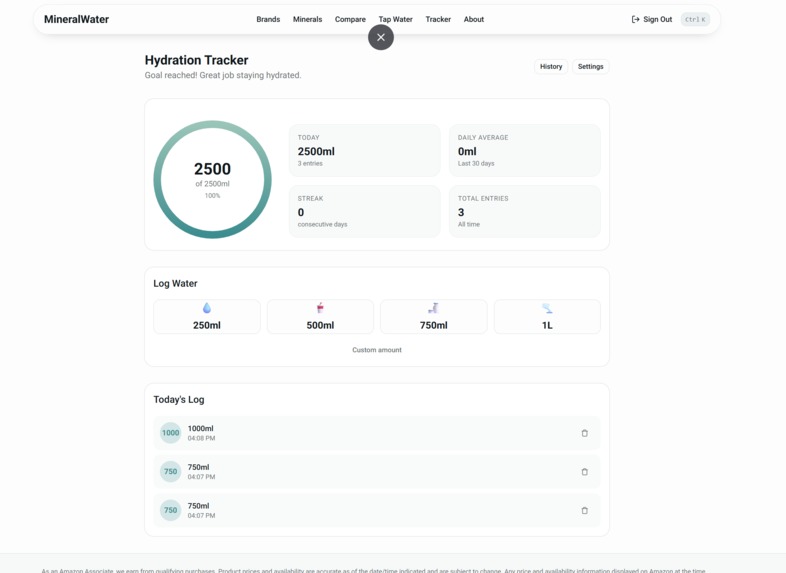
Track Water Daily
-
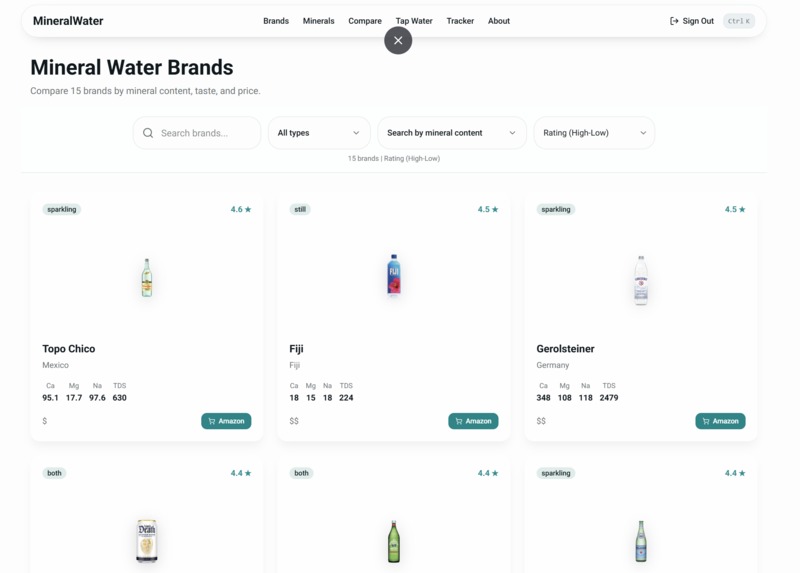
Brands
-
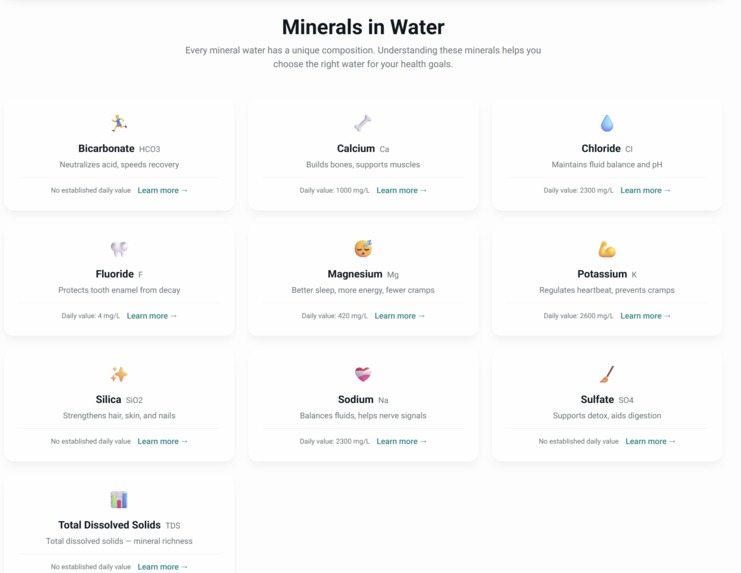
Minerals
-
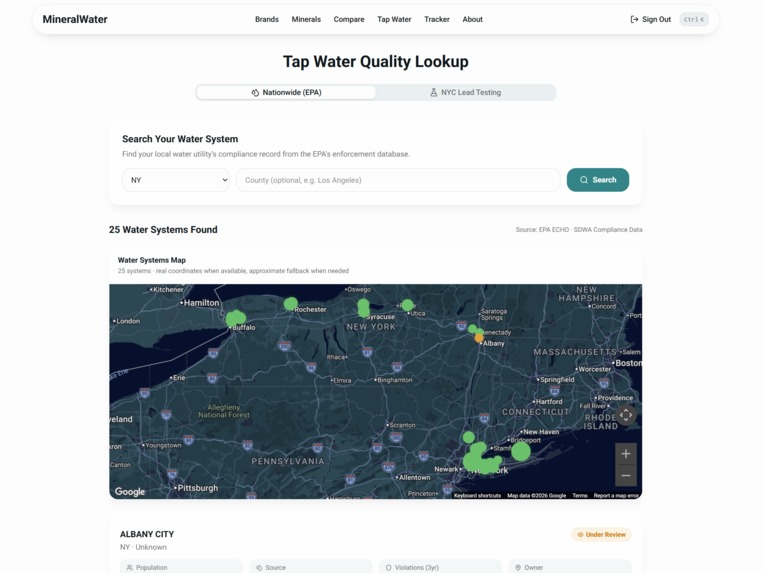
Tap Water Lookup
-
Compare
-
Home Page
Inspiration
Water is something that we have to drink, yet there is a shockingly low amount of insight into what's actually in it, we realized that there was no available application that demonstrated the information, which pertained to health benefits and statistics regarding water. Meanwhile, 12,000+ U.S. water systems have had safety violations in the last three years, and most people have no idea if theirs is one of them. We built MineralWater to close that gap — to make the invisible visible and help people make smarter choices about something they consume every single day.
What it does
MineralWater is a content-driven platform that lets users:
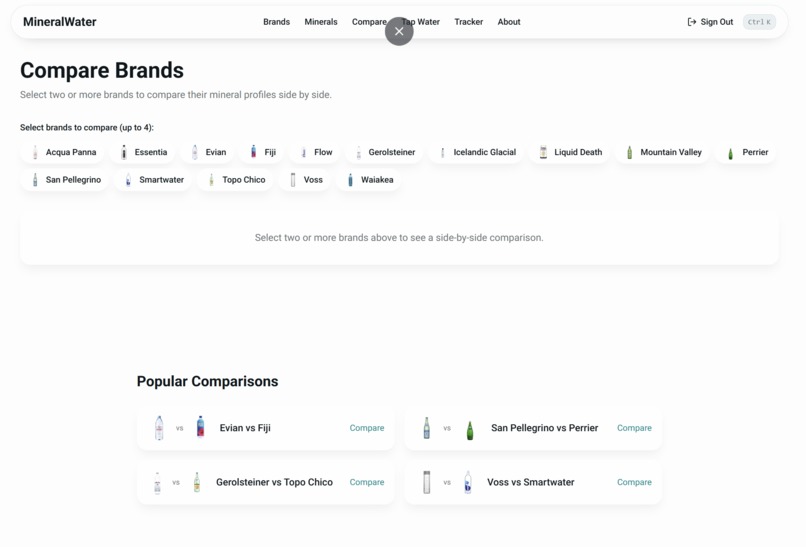
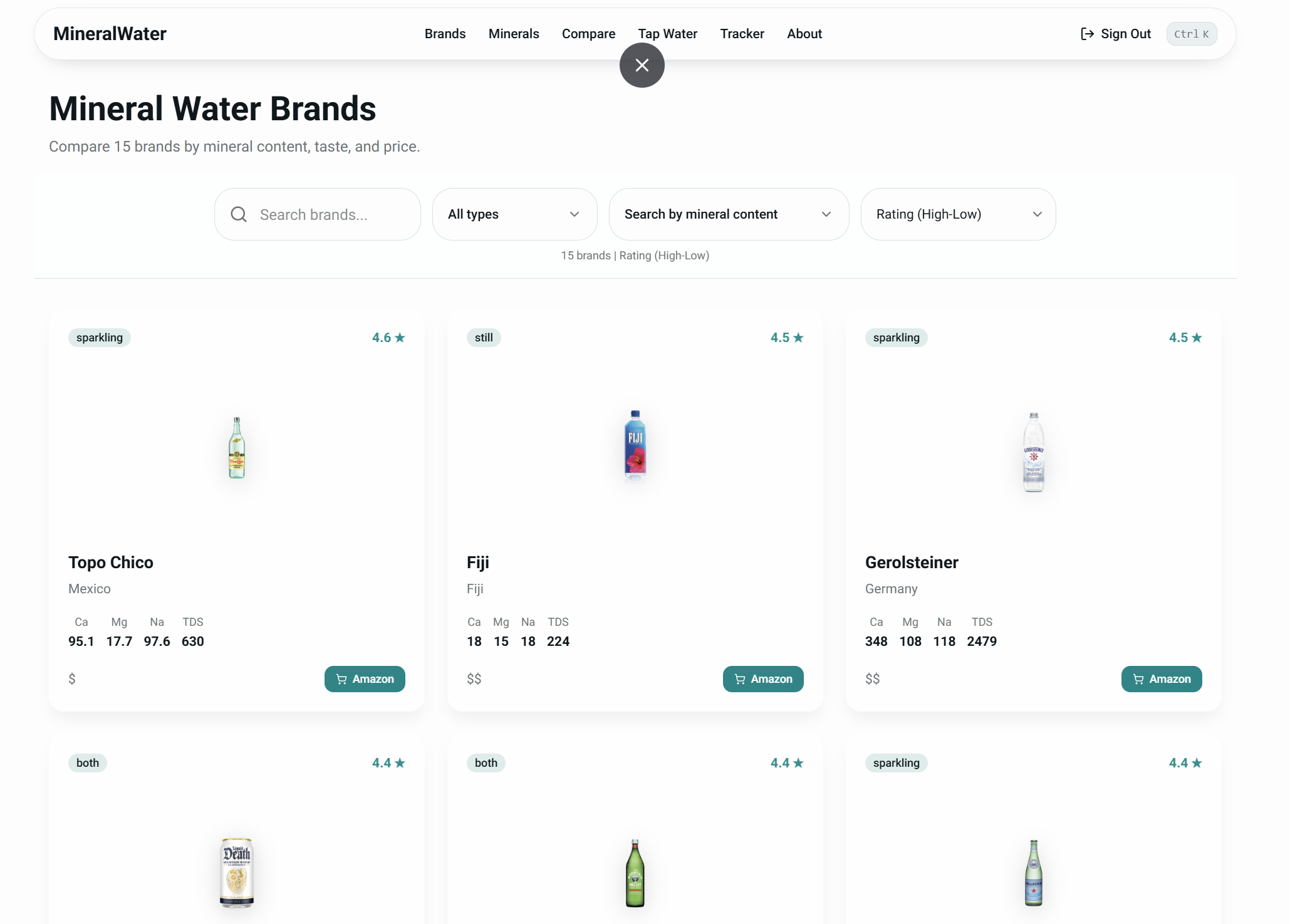
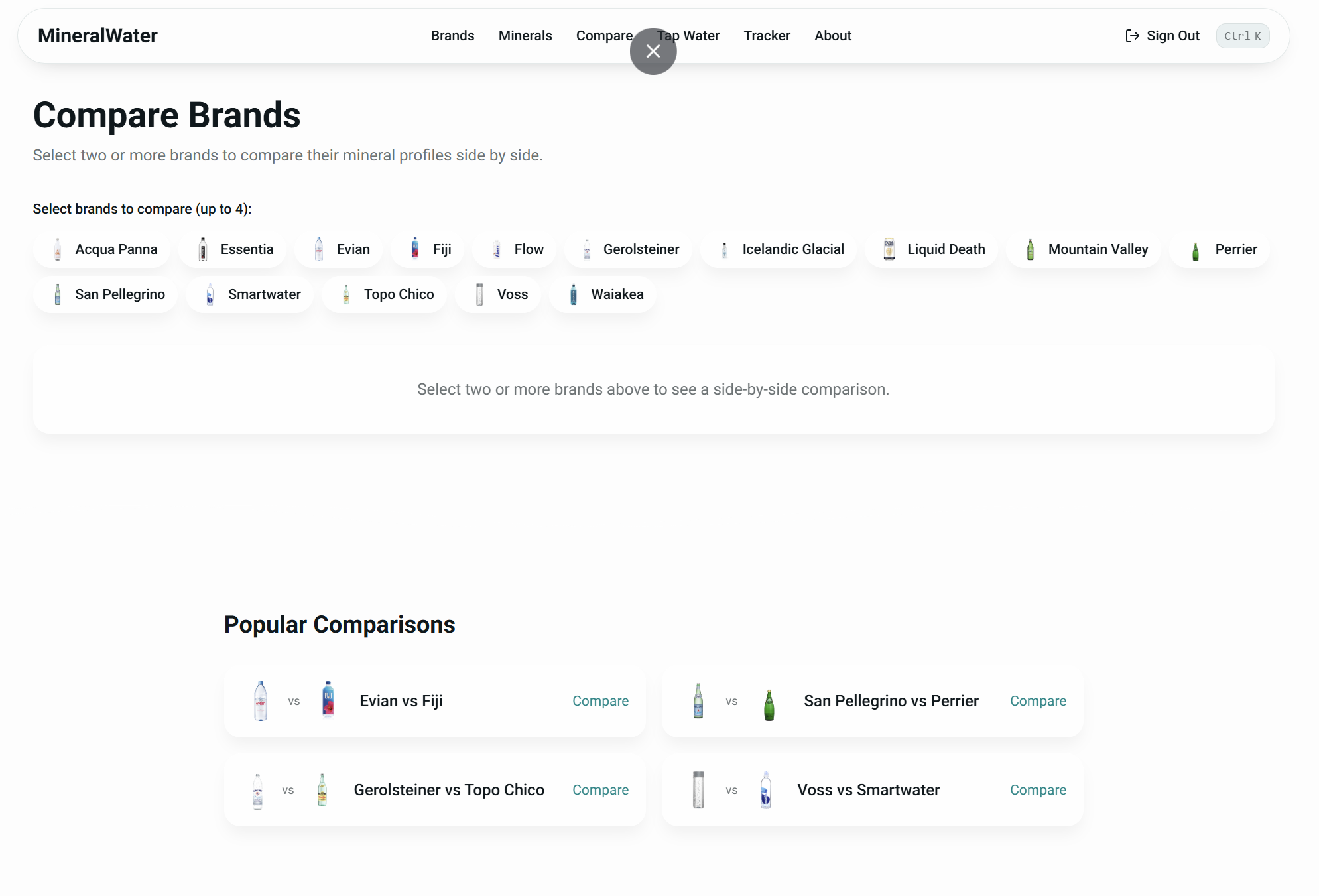
- Compare 15 mineral water brands side-by-side by calcium, magnesium, sodium, pH, TDS, and 11 mineral types — with real product images and Amazon affiliate links
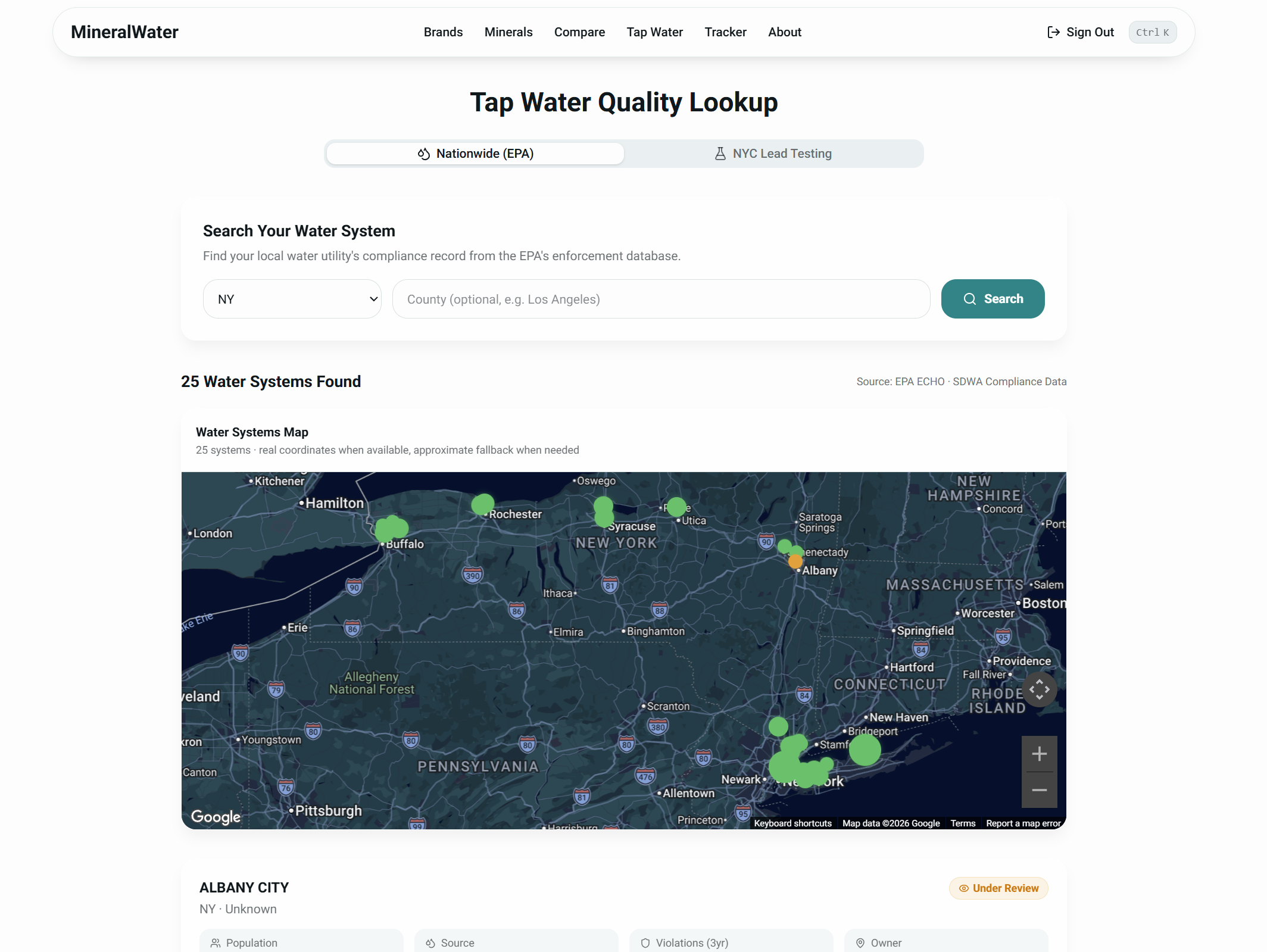
- Look up U.S. tap water quality by state and county using live EPA ECHO enforcement data, with an interactive map, lead/copper test results (actual mg/L values), violation history, and compliance tracking
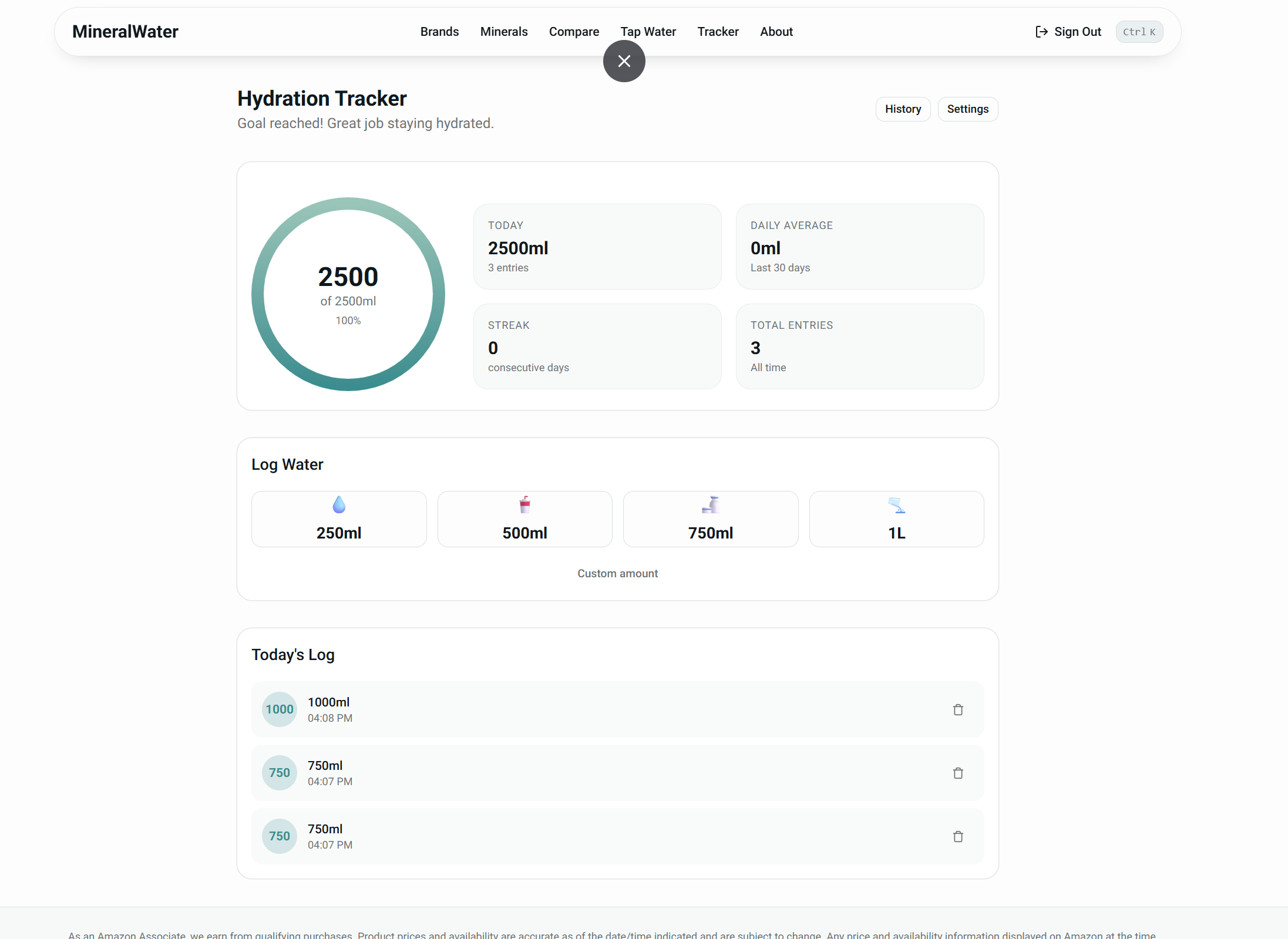
- Track daily hydration with a personal dashboard featuring a progress ring, quick-log buttons, history charts, and smart reminder settings
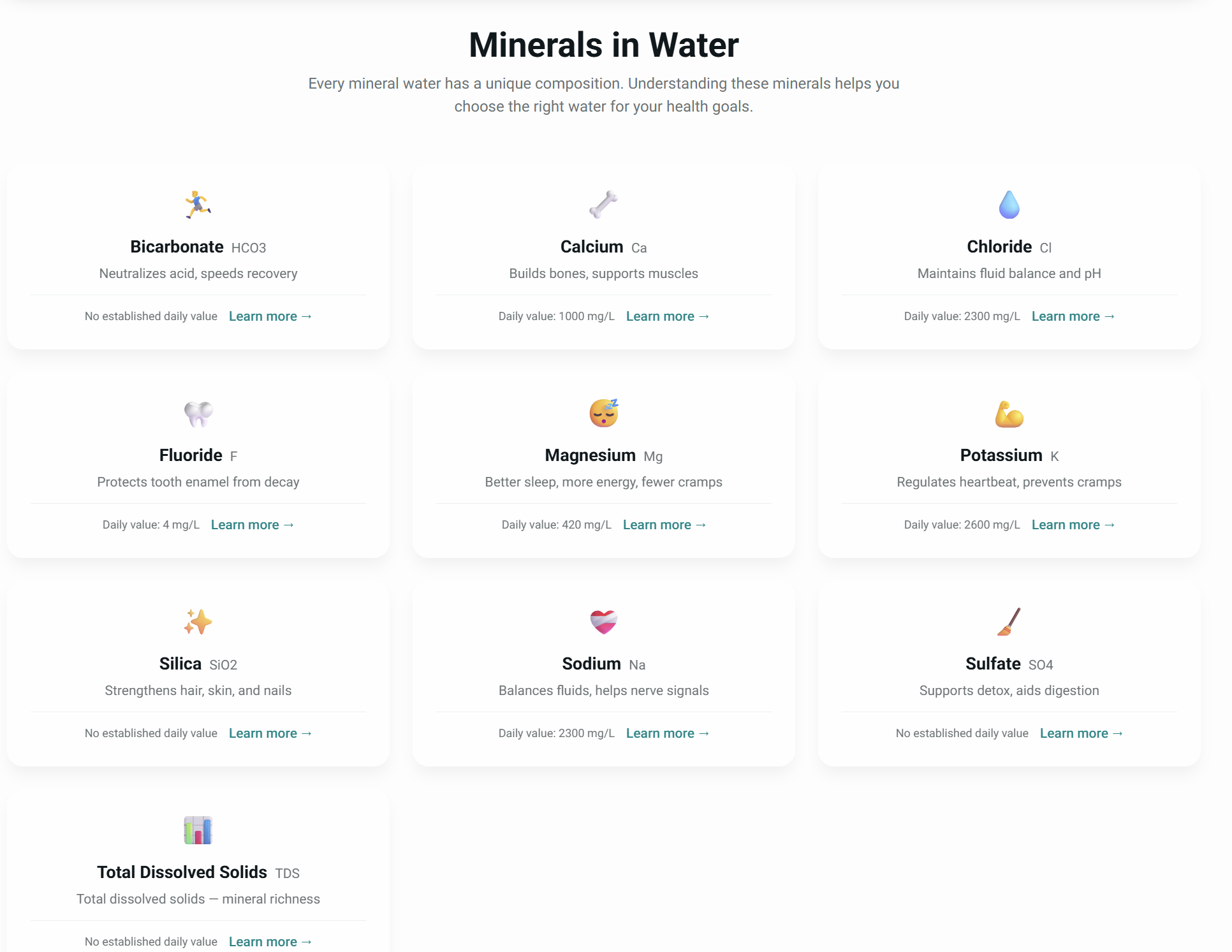
- Learn what each mineral does through problem-first framing ("Poor sleep? Low energy?" leads to Magnesium) so users understand health impacts at a glance
- Read curated content, including best-for guides (best water for athletes, alkaline, budget), brand reviews, and educational blog posts about water quality
How we built it
- Frontend: Next.js 16 App Router with TypeScript, Tailwind CSS v4, and shadcn/ui components
- Database & Auth: Supabase (PostgreSQL) with Row Level Security policies on every table, Supabase Auth for email/password + Google OAuth with built-in email verification
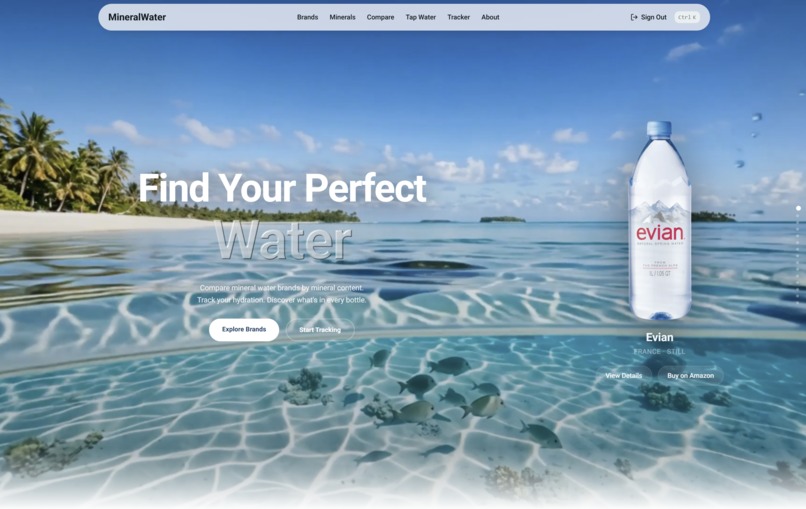
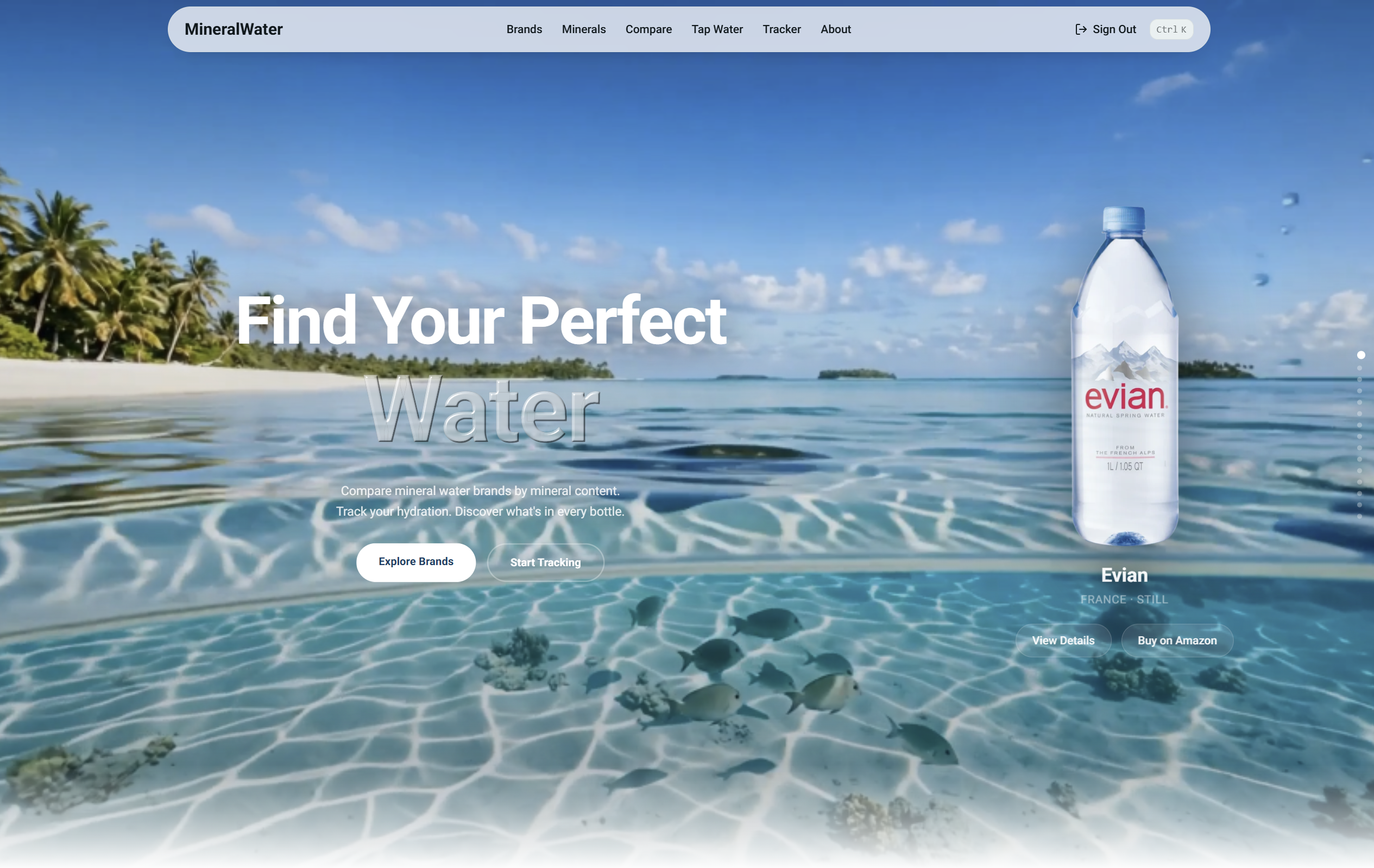
- Animations: Scroll-driven video hero with 120 pre-rendered canvas frames, Motion (Framer Motion) for scroll reveals, CSS keyframe animations for floating bottles and wave dividers
- Water Quality Data: EPA ECHO SDWA REST API integration for nationwide water system lookups, plus NYC lead-at-the-tap CSV data for local testing results
- Map: Leaflet with OpenStreetMap tiles (free, no API key) for visualizing water systems by compliance status
- Deployment: Vercel with automatic GitHub deployments, environment variable management, and serverless functions
- Security: Zod validation on all inputs, sanitize-html for XSS prevention, rate limiting on API routes, CSP headers, open redirect protection on OAuth callbacks
- SEO: Dynamic sitemap, JSON-LD structured data (Product, Article, Organization schemas), Open Graph + Twitter Card meta tags on every page
Challenges we ran into
- EPA API limitations: The Envirofacts SDWIS API had poor ZIP code search support and returned XML instead of JSON. We pivoted to the ECHO API which had richer data but required a two-step query pattern (search returns a QueryID, then fetch results separately).
- Scroll-driven video performance: Setting
video.currentTimeon scroll was extremely laggy. We solved this by pre-extracting 120 frames intoImageBitmapobjects and drawing them to a canvas — instant scrubbing with zero decode lag. - Tailwind v4 migration: The implementation plan was written for Tailwind v3 (config-based with HSL colors). Tailwind v4 uses CSS-native
@theme inlineblocks with oklch colors — every theme token and utility class had to be adapted. - Supabase Auth on Vercel: The
getUser()call would throw for unauthenticated users, crashing the entire server component render. Video files were also being intercepted by the proxy middleware and redirected to the login page for logged-out users. - Amazon ASINs: All 15 initial product ASINs were fake/outdated from the seed data generator. We had to manually search Amazon for each brand and verify every link points to a real product page.
- Team coordination: Multiple developers pushing to the same branch caused TypeScript errors from untyped dependencies (
jsdom,leadRisktype mismatches) that broke Vercel deployments. Required constant pull-before-push discipline.
Accomplishments that we're proud of
Scroll storytelling hero: 15 water bottles reveal one-by-one as you scroll, with the ocean video scrubbing in sync — each bottle has glassmorphism "View Details" and "Buy on Amazon" action buttons
Real EPA data integration: Users can look up any U.S. water system by state/county and see actual lead test results in mg/L compared against EPA action levels, with color-coded violation severity and enforcement history
Security-first architecture: RLS on every database table, security audit with 12 findings (2 critical, 3 high) — all fixed before launch. Even if API code has a bug, the database blocks unauthorized access.
At-a-glance mineral education: Problem-first framing with colored keywords ("Poor sleep?" in violet, "Dull skin?" in pink) makes health benefits scannable in seconds without reading paragraphs
Full product in one session: 50 tasks across 8 phases — from scaffold to deployed site with auth, 15 brand pages, hydration tracker, blog, comparison tool, and EPA integration
What we learned
Video on the web is harder than it looks: Autoplay policies, codec support, file size budgets, and scroll-driven playback each have their own set of browser quirks. Pre-rendering frames to canvas was the only approach that worked smoothly across all browsers.
Security is a feature, not an afterthought: Running the security auditor agent mid-development caught an open redirect in the OAuth callback and a service role key syncing to OneDrive — both would have been serious production vulnerabilities.
Users don't read — they scan: Every description we wrote was too long on the first pass. Cutting to one-line explanations with colored problem keywords made the content 10x more effective.
Pull before push, every time: With multiple contributors, forgetting to pull caused non-fast-forward rejections and merge conflicts. Making it a muscle memory habit (commit && pull && push) eliminated deployment failures.
What's next for MineralWater
Personalized mineral recommendations: Based on user health goals (better sleep, stronger bones, post-workout recovery), recommend specific brands with the highest relevant mineral content
Water filter recommendations: Based on tap water contaminant data, suggest the right filter type (activated carbon, reverse osmosis, etc.) with affiliate links
Community reviews: Let users rate and review brands with verified purchase badges Mobile app: React Native companion app with push notification reminders for hydration tracking
Built With
- css
- javascript
- mdx
- plpgsql
- typescript


Log in or sign up for Devpost to join the conversation.