🧠 About the Project: MindWeaver
🚀 Inspiration
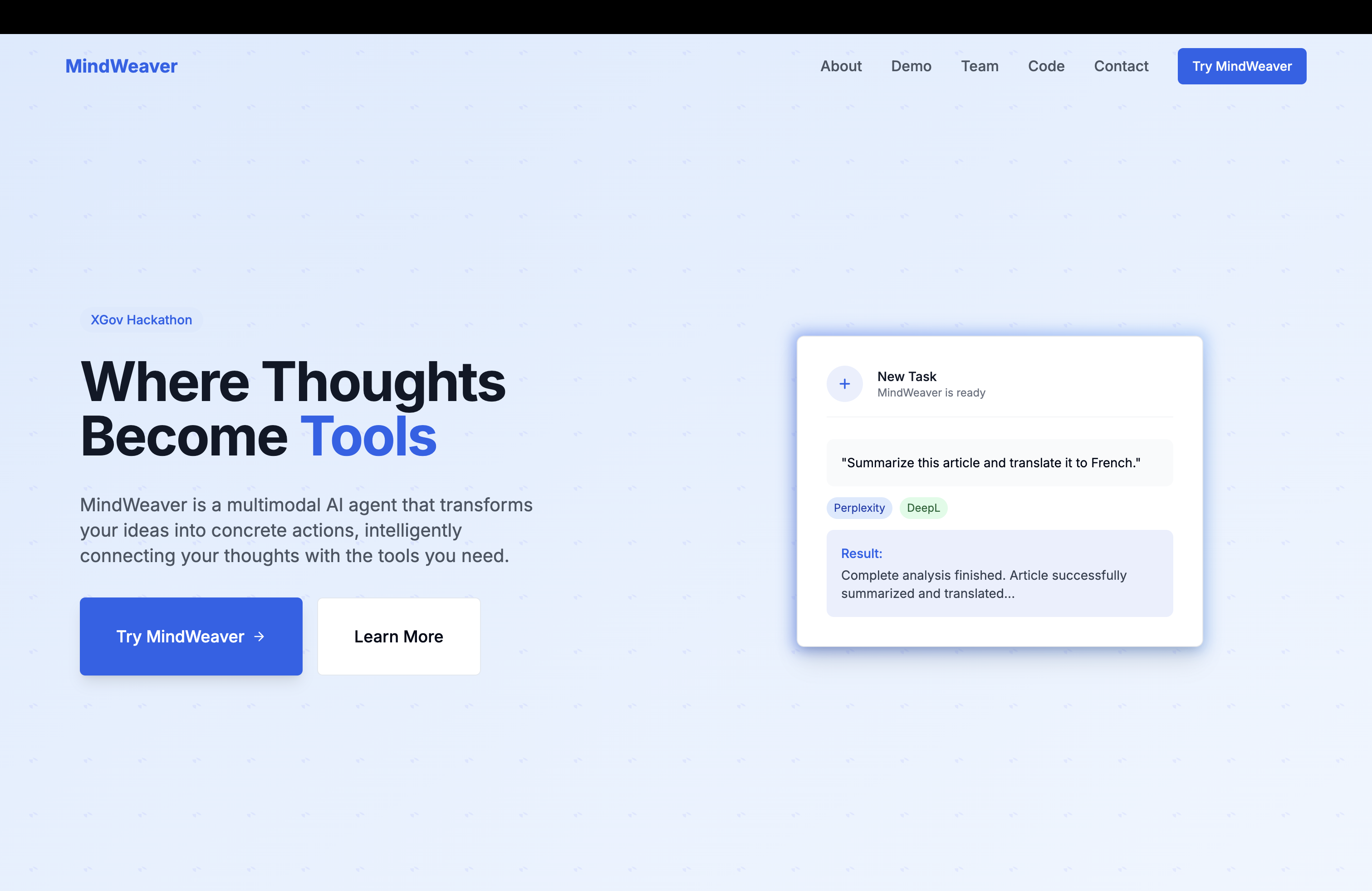
The idea for MindWeaver was born from a simple but powerful observation: while AI has become increasingly adept at understanding human ideas, there remains a significant gap between comprehension and execution. We wanted to bridge this gap by creating an AI agent that not only understands user intent but can also autonomously select and use the right tools to turn thoughts into real, actionable outcomes.
Our inspiration came from the desire to empower users—regardless of technical background—to leverage advanced AI and automation for everyday tasks, research, and creativity.
🧠 What We Learned
Throughout this project, we deepened our understanding of:
- Multimodal AI architectures: Integrating text, files, and external APIs into a seamless workflow.
- Orchestrating toolchains: Building a system where the AI can reason about which tools to use and in what order.
- User experience design: Crafting an interface that is both intuitive and powerful, lowering the barrier for non-technical users.
- Collaboration and open source: Working as a distributed team, leveraging GitHub for code sharing and feedback.
🏗 How We Built MindWeaver
MindWeaver is a full-stack, open-source web application. Here’s how we brought it to life:
- Frontend: Built with React and Tailwind CSS for a modern, responsive, and accessible user interface. We focused on smooth transitions, clear call-to-actions, and a welcoming design.
- Backend: Powered by Node.js and Express, with a modular architecture that allows easy integration of new tools and APIs.
- AI Reasoning Engine: At the core, we use a combination of language models and custom logic to interpret user requests, plan actions, and execute them using the right APIs (e.g., Perplexity for research, DeepL for translation).
- Tool Manager: A flexible system that manages available tools, their capabilities, and how they can be chained together.
- Action Planner: Determines the optimal sequence of tool invocations to fulfill complex user requests.
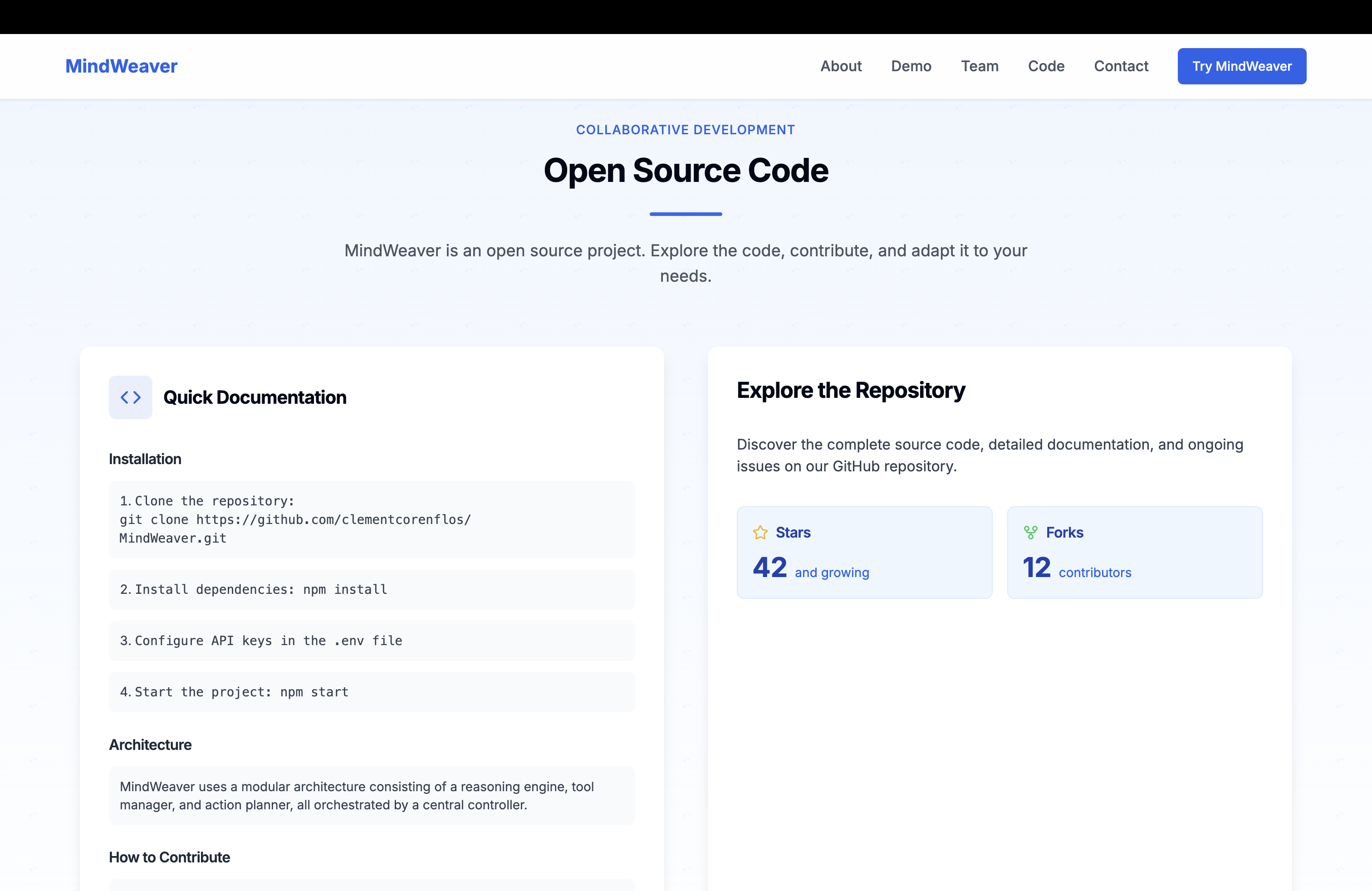
- Open Source Collaboration: The project is hosted on GitHub, with clear documentation and contribution guidelines to encourage community involvement.
🧗 Challenges We Faced
- Complexity of Orchestration: Designing a system where the AI can autonomously select and sequence tools was a major challenge. We iterated on several architectures before finding a balance between flexibility and reliability.
- User Experience: Making advanced AI capabilities accessible to all users required careful UI/UX design and lots of user testing.
- API Integration: Ensuring smooth, reliable connections to third-party APIs (and handling their quirks and rate limits) was a constant technical hurdle.
- Time Constraints: As with any hackathon, building a robust, feature-rich product in a short time frame required focus, teamwork, and creative problem-solving.
🌟 The Result
MindWeaver is more than just a demo—it’s a vision for the future of human-AI collaboration. By making it open source, we hope to inspire others to build on our work, contribute new tools, and help realize the potential of AI as a true partner in creativity and productivity.
🧑💻 GitHub Repo: github.com/yourteam/mindweaver
🌐 Website: mindweaver.app


Log in or sign up for Devpost to join the conversation.