


Inspiration
I wanted to build an experience that tackles the common flaws of VR—motion sickness and clunky controllers—by focusing entirely on natural, bare-hand interactions. Inspired by psychological thrillers and the tactile beauty of spatial computing, I set out to create something intimate, seated-optimized, and deeply immersive.
What it does
MindWeave: The Memory Architect is a seated, hands-first psychological puzzle-thriller where I step inside fractured, dreamlike memories to repair them. Using bare-hand pinch, grab, and mesh-stretching gestures, I manipulate floating memory shards alongside an advanced, responsive AI companion.
How I built it
I built it using Unity and the Meta XR SDKs, designing custom hand-tracking collision layers and mesh-deformation shaders. I integrated a 3D spatial audio soundscape, dynamic ambient music, and secure encrypted local state management to ensure a polished standalone experience on Meta Quest hardware.
Challenges I ran into
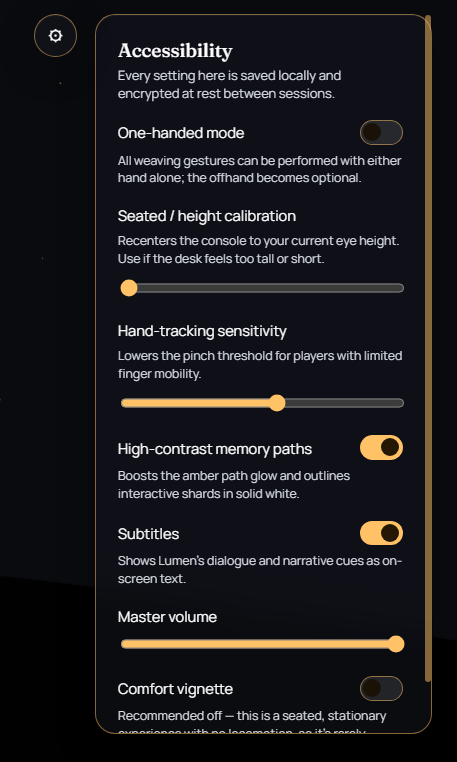
Calibrating the hand-tracking thresholds to make precise "weaving" and pinching feel responsive without hand fatigue was tough. I also had to carefully optimize the custom shaders and particle effects to maintain a buttery 90fps frame rate while seated in a stationary two-foot radius.
Accomplishments that I'm proud of
I successfully implemented zero-controller, end-to-end bare-hand interaction that feels magical rather than glitchy. I also crafted a seamless 30-second opening hook and integrated an agentic AI companion that elevates the narrative.
What I learned
I gained deep insight into spatial UX design, constraint-based VR development for standalone hardware, and how to optimize hand-tracking collision states for high-immersion puzzle mechanics.
What's next for MindWeave: The Memory Architect
I plan to expand the narrative with multiple character memory chapters, deepen the agentic AI's contextual puzzle-solving capabilities, and add more complex mesh-deformation puzzles.


Log in or sign up for Devpost to join the conversation.