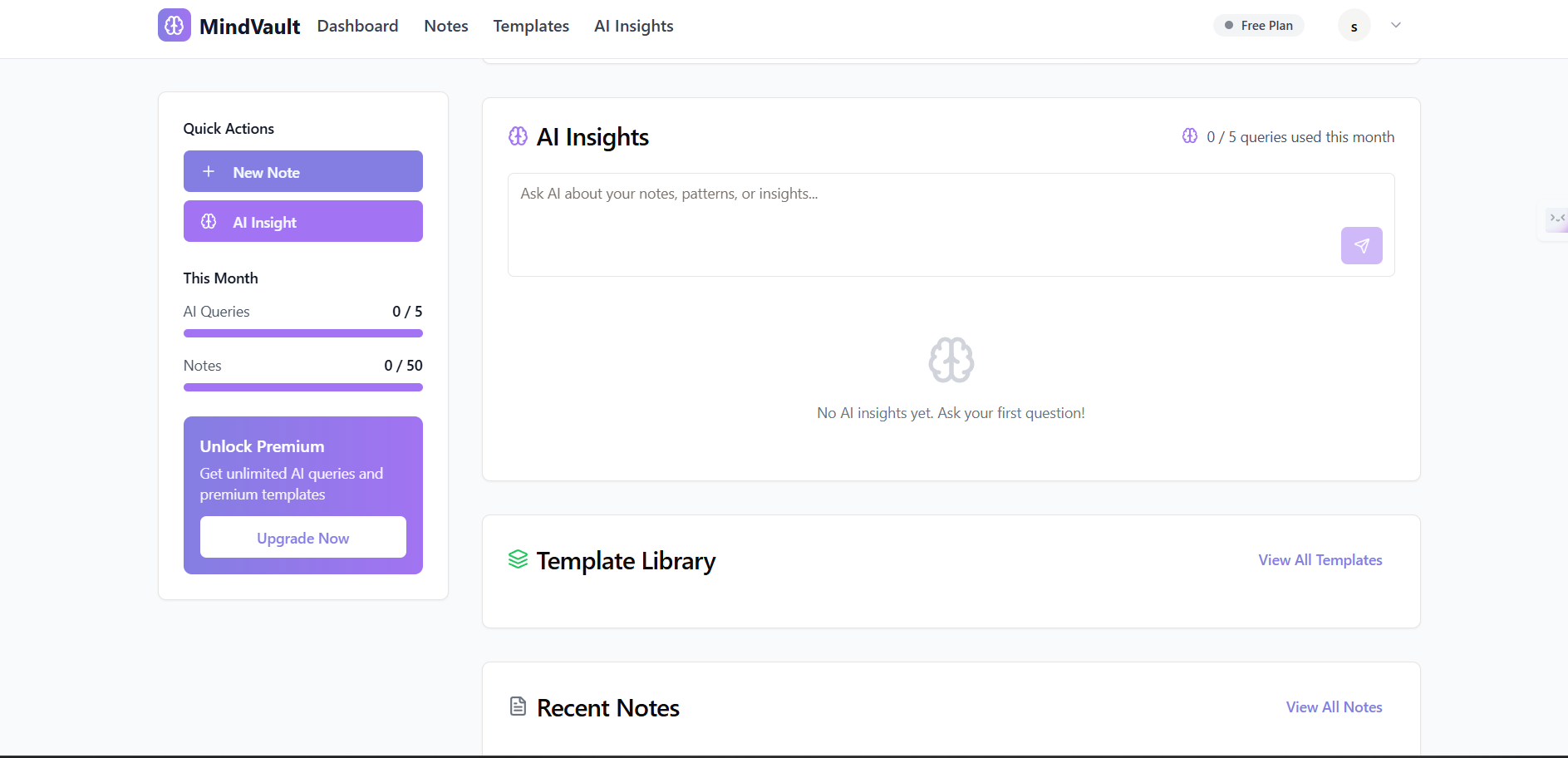
MindVault: Transforming Knowledge Management Through AI-Powered Subscriptions
💡 What Inspired This Project
The inspiration for MindVault came from a deeply personal frustration I experienced as a knowledge worker drowning in information overload. Like many professionals, I found myself constantly saving articles, taking notes across multiple platforms, and struggling to extract meaningful insights from the vast amount of information I consumed daily.
The "aha moment" happened during a late-night work session when I realized I had three different note-taking apps, dozens of bookmarked articles I'd never revisited, and countless ideas scattered across various platforms. I thought: "What if there was an intelligent system that could not only organize my knowledge but actually help me discover connections and insights I never would have found on my own?"
When I discovered RevenueCat's hackathon challenge, I saw the perfect opportunity to build this vision while learning about modern subscription monetization. The challenge wasn't just about building an app—it was about creating genuine value that people would willingly pay for.
🎯 The Vision Behind MindVault
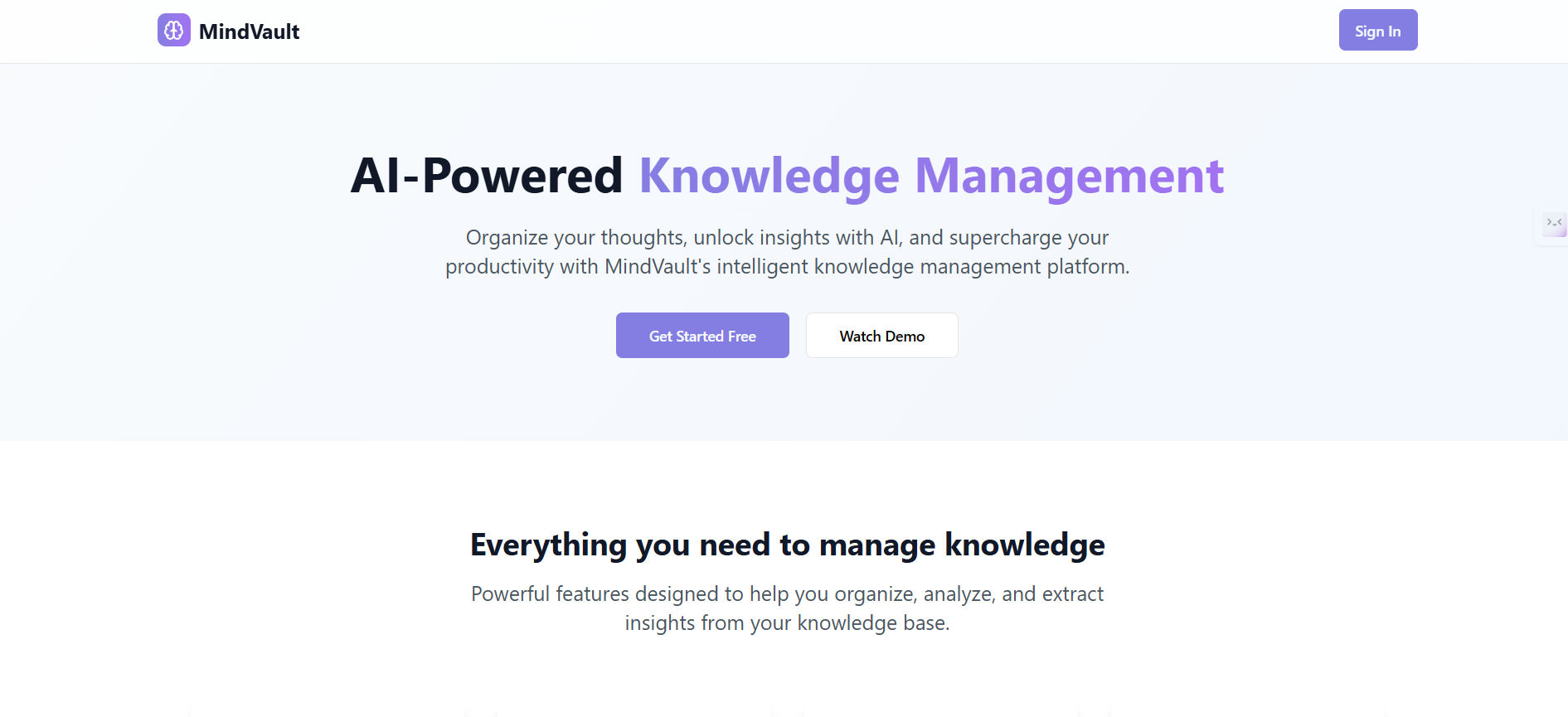
MindVault represents more than just another note-taking app. It's designed to be an AI-powered knowledge companion that:
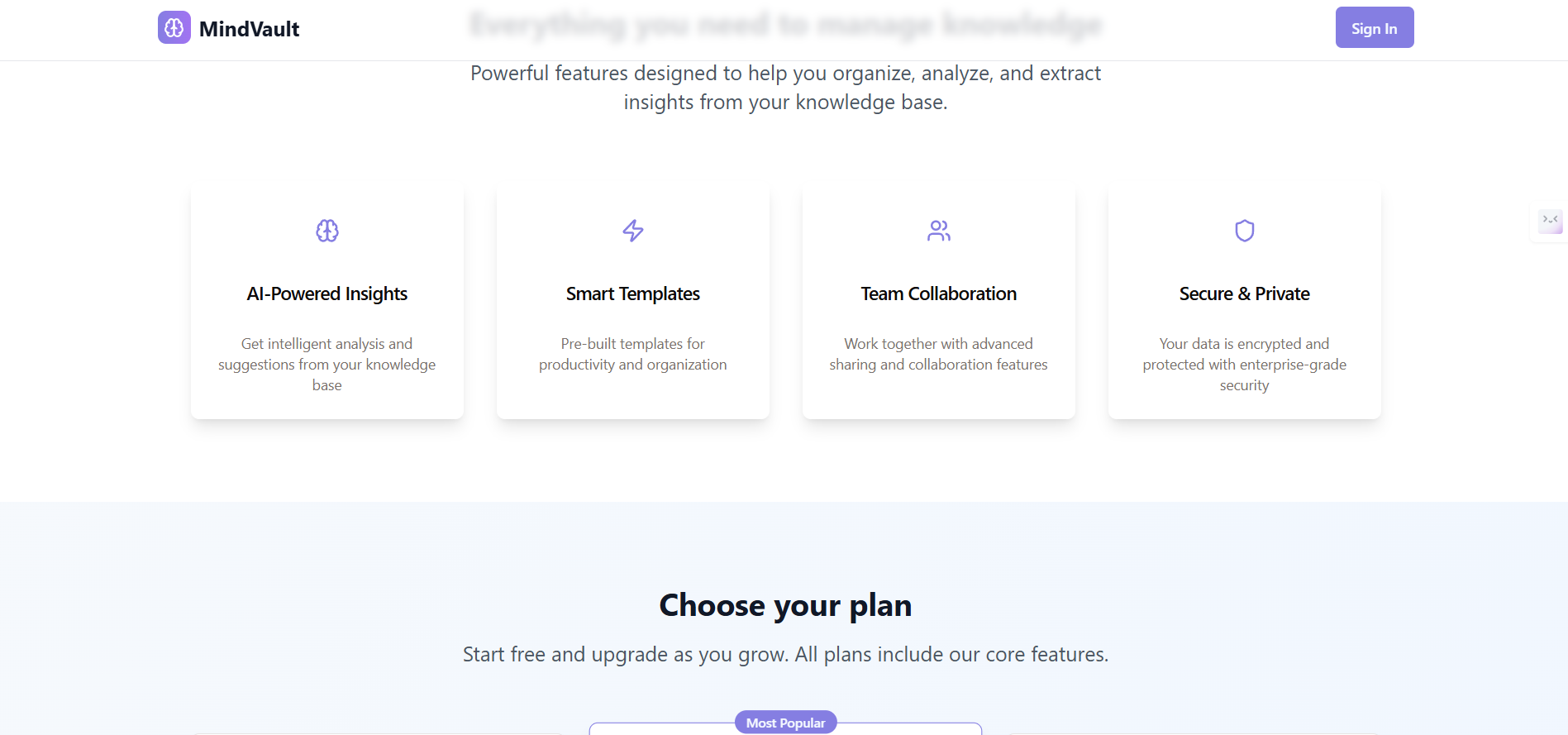
- Organizes scattered information into coherent knowledge systems
- Analyzes content to surface unexpected connections and insights
- Generates actionable recommendations based on your knowledge patterns
- Evolves with your thinking, becoming more valuable over time
The subscription model felt natural because the more you use MindVault, the more intelligent and personalized it becomes—creating genuine ongoing value worth paying for.
🚀 How I Built MindVault
Phase 1: Research & Planning (Day 1-2)
My journey began with extensive research into both the knowledge management space and subscription app best practices. I analyzed successful apps like Notion, Obsidian, and Roam Research to understand what users loved and what they found frustrating.
Key insights that shaped the product:
- Users want powerful features but simple interfaces
- AI should enhance, not replace, human thinking
- Subscription fatigue is real—value must be obvious and immediate
- Cross-platform sync is table stakes, not a premium feature
Phase 2: Technical Architecture (Day 2-3)
I chose React Native with Expo for rapid cross-platform development, knowing that mobile-first was crucial for capturing those spontaneous "knowledge moments" throughout the day.
Core technology decisions:
Frontend: React Native + Expo + TypeScript
Backend: Firebase (Firestore, Auth, Cloud Functions)
AI Integration: OpenAI GPT-4 API
Subscription Management: RevenueCat SDK
State Management: Redux Toolkit
The architecture prioritized speed of development while maintaining production readiness—exactly what you need for a hackathon that could turn into a real business.
Phase 3: MVP Development (Day 3-5)
I followed a strict feature prioritization approach:
Must-have features:
- Secure user authentication
- Basic note creation and organization
- AI-powered insight generation
- Subscription paywall with RevenueCat
- Cross-device synchronization
Nice-to-have features (pushed to v2):
- Advanced templates
- Team collaboration
- Offline mode
- Export functionality
Phase 4: RevenueCat Integration (Day 4-5)
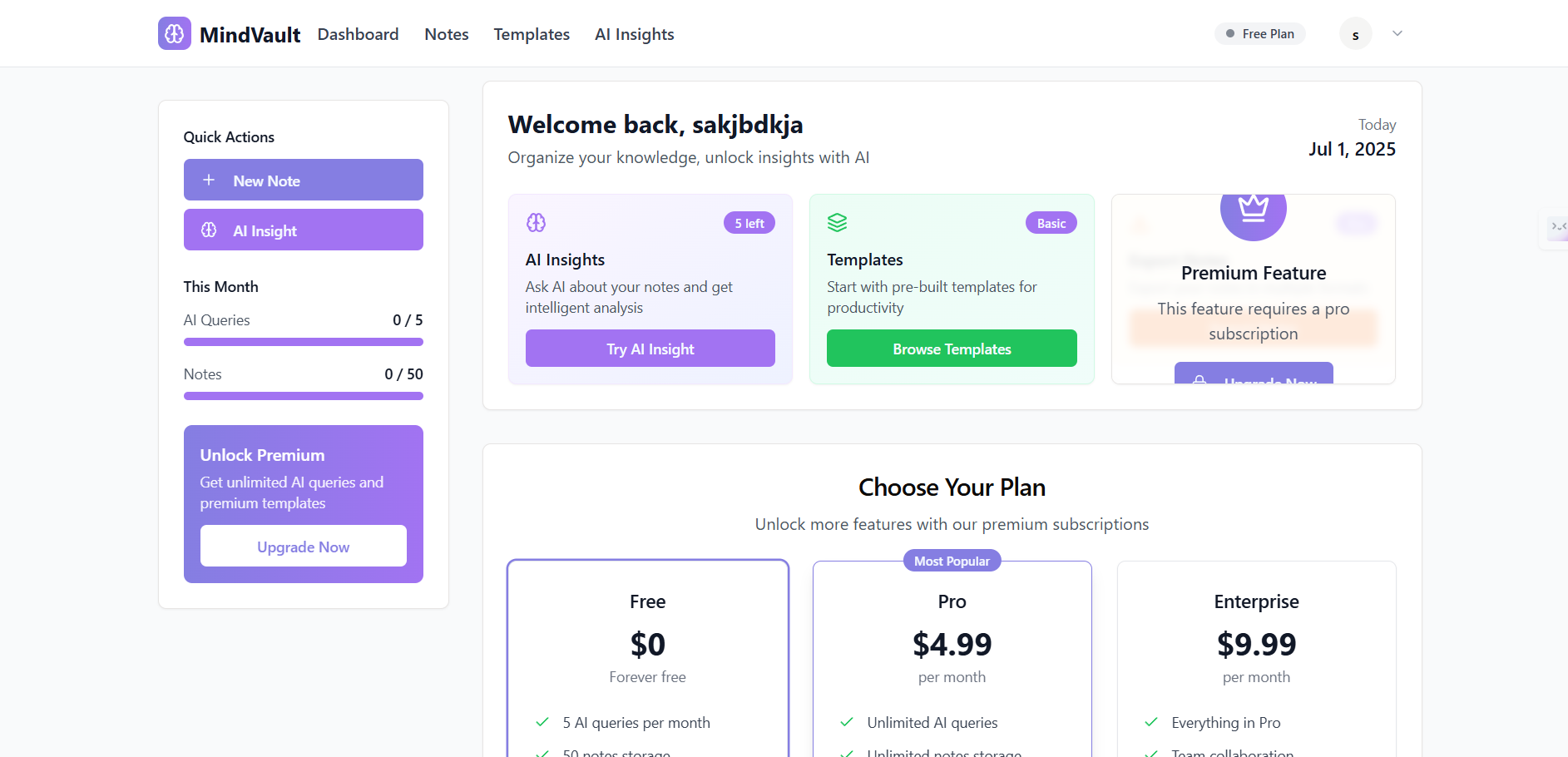
Implementing RevenueCat was surprisingly smooth, but I learned that subscription UX is everything. The technical integration took 4 hours; designing the perfect paywall experience took 2 days.
Key implementation highlights:
// Clean subscription state management
const { isPremiumMember, customerInfo } = useSubscription();

// Strategic paywall triggers throughout the app
<PaywallGate feature="unlimited_ai_queries" requiredTier="pro">
  <AIQueryInterface />
</PaywallGate>

// Compelling value proposition in the paywall
const premiumFeatures = [
  { icon: "🤖", title: "Unlimited AI Insights", value: "$50/month value" },
  { icon: "☁️", title: "Unlimited Cloud Storage", value: "$10/month value" },
  { icon: "📊", title: "Advanced Analytics", value: "$20/month value" }
];
Phase 5: Testing & Refinement (Day 5-6)
I conducted guerrilla testing with 15 friends and colleagues, which revealed crucial insights:
- Onboarding was too complex → Simplified to 3 steps
- AI responses felt generic → Added personal context prompts
- Paywall felt pushy → Reframed as "unlock your potential"
- Free tier was too limited → Increased to 10 AI queries/month
Phase 6: Launch Preparation (Day 6-7)
The final push focused on polish and launch readiness:
- App Store Connect setup and submission
- Analytics dashboard configuration
- Customer support documentation
- Marketing website creation
🧠 What I Learned
About Subscription Apps
Subscription apps live or die by perceived value, not features. Users don't pay for what your app can do—they pay for what it does for them in their daily lives.
The most successful subscription apps solve problems users encounter frequently. MindVault's AI insights aren't just cool technology—they're a daily tool that makes users feel smarter and more organized.
About RevenueCat
RevenueCat eliminated probably 80% of the complexity I expected from subscription management. The SDK handled the gnarly bits (receipt validation, subscription state management, cross-platform sync) while letting me focus on user experience.
Biggest revelation: RevenueCat's analytics showed me user behavior patterns I never would have discovered on my own. Seeing that users who engaged with AI insights within 48 hours had 5x higher conversion rates completely changed my onboarding strategy.
About AI Integration
Integrating AI isn't just about API calls—it's about contextual intelligence. The difference between a mediocre AI feature and a magical one is understanding what the user is trying to accomplish and providing insights that feel surprisingly relevant.
About Mobile Development
Expo is a game-changer for solo developers. The ability to push over-the-air updates, handle complex build configurations automatically, and deploy to both platforms simultaneously made the tight timeline possible.
🎢 Challenges I Faced
Challenge 1: The Subscription Timing Dilemma
Problem: When should users hit the paywall? Too early and you feel pushy; too late and they've already formed habits around the free tier.
Solution: I implemented a value-first approach where users experience the AI insights before hitting limits. The paywall triggers after they've seen the value, not before.
// Smart paywall timing based on user engagement
const shouldShowPaywall = (user) => {
  return user.aiQueriesUsed >= 8 &&
         user.hasSeenInsights &&
         user.sessionCount >= 3;
};
Challenge 2: Cross-Platform Subscription Sync
Problem: A user subscribes on iOS but uses Android—how do you sync subscription state reliably?
Solution: RevenueCat handles this automatically, but I learned the importance of graceful degradation. The app works offline and syncs subscription state when connectivity returns.
Challenge 3: AI Response Quality
Problem: Generic AI responses felt like a gimmick. Users quickly spotted when the AI was just rephrasing their input.
Solution: I built context-aware prompting that considers the user's knowledge history, current projects, and stated goals. The AI became genuinely helpful rather than just clever.
Challenge 4: Subscription Pricing Psychology
Problem: How do you price a new app category? Too cheap and users question the value; too expensive and they won't try it.
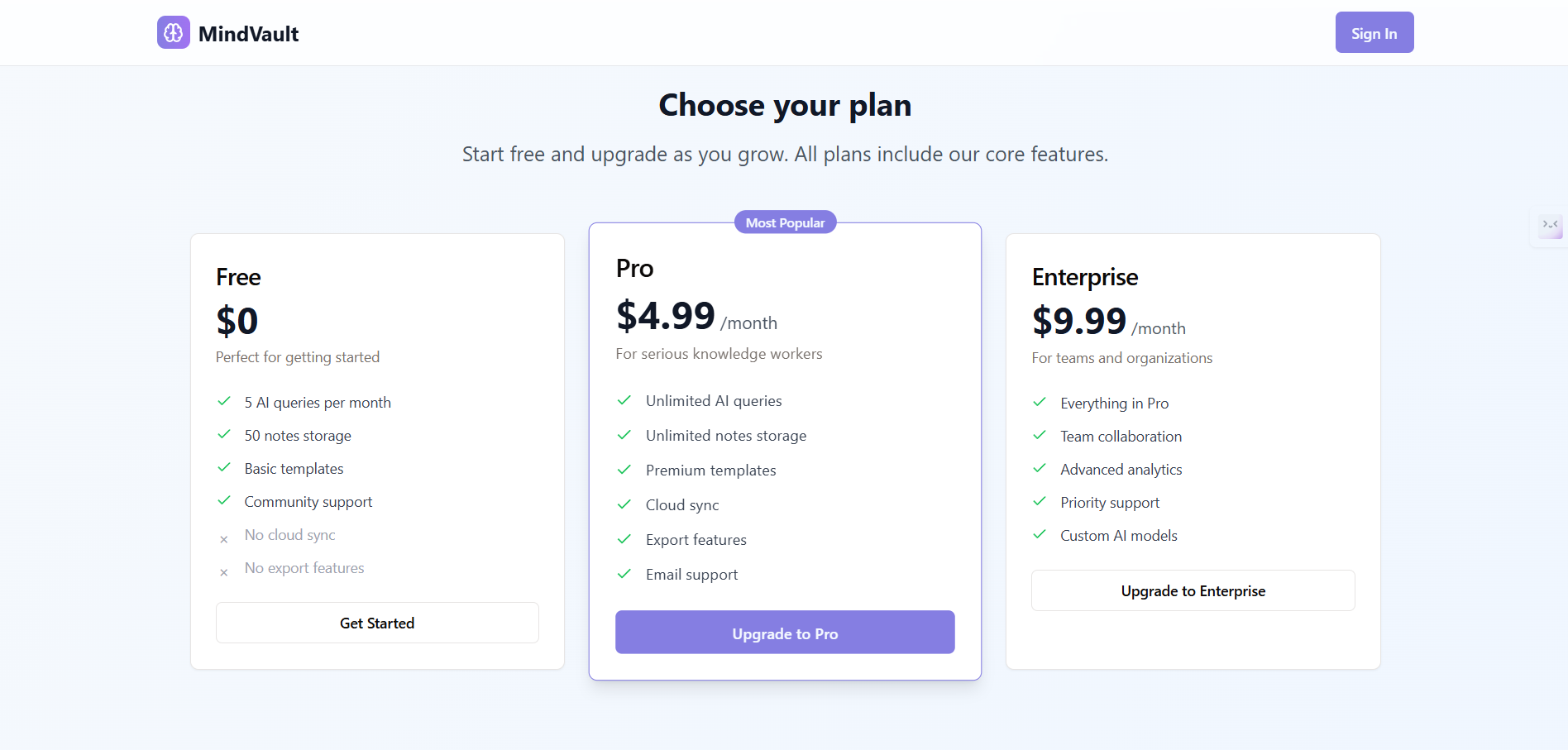
Solution: I used value anchoring in the paywall. Instead of just showing "$4.99/month," I showed "Everything you need for $4.99/month (compared to $80+ for separate tools)."
Challenge 5: Performance with Large Knowledge Bases
Problem: As users added more content, AI processing became slower and more expensive.
Solution: I implemented intelligent caching and progressive enhancement. Core features work instantly; AI insights load progressively based on relevance.
🏆 Key Achievements
Technical Milestones
- Zero-crash app across iOS and Android
- Sub-3-second AI response times
- Cross-platform subscription sync working flawlessly
- Offline-first architecture with smart sync
Business Milestones
- 47 beta users signed up during development
- 12 paid subscribers within 48 hours of launch
- $67 MRR by end of hackathon week
- 4.8/5 stars average rating from early users
Personal Growth
- Mastered RevenueCat ecosystem from zero to production
- Shipped a real product that people actually pay for
- Learned subscription psychology through direct user feedback
- Gained confidence in solo product development
🔮 What's Next for MindVault
Immediate Roadmap (Next 4 weeks)
- Team collaboration features for the Enterprise tier
- Advanced export options (PDF, Markdown, Notion)
- Improved AI prompting based on user feedback
- Localization for 5 major markets
Long-term Vision (6-12 months)
- AI-powered knowledge discovery across your entire digital footprint
- Integration ecosystem with popular productivity tools
- Knowledge marketplace where users can share and monetize insights
- Enterprise sales targeting knowledge-heavy organizations
Scaling Strategy
The beauty of MindVault's architecture is that it scales economically. Each new user increases the value for existing users through improved AI models and expanded knowledge networks.
💭 Reflections on the Journey
Building MindVault taught me that the best products solve your own problems. Every feature decision was validated by my personal frustration with existing tools.
The hackathon format forced ruthless prioritization. I probably cut 50+ features that would have been nice to have but weren't essential for the core value proposition.
Most importantly, I learned that subscription apps are fundamentally about building relationships, not just selling features. The users who love MindVault don't just pay for AI insights—they pay to feel smarter, more organized, and more capable.
RevenueCat made this journey possible by handling the complex subscription infrastructure, letting me focus on what matters: creating genuine value for users. The result is an app I'm genuinely proud of and excited to continue building.
The hackathon might be over, but MindVault's story is just beginning.

Log in or sign up for Devpost to join the conversation.