-
-
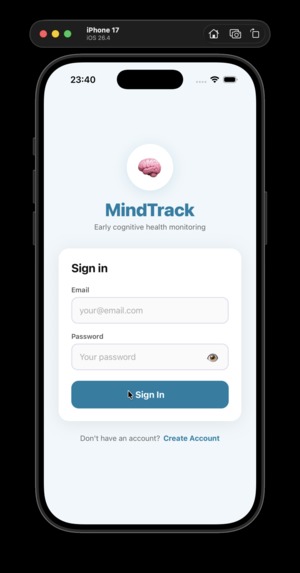
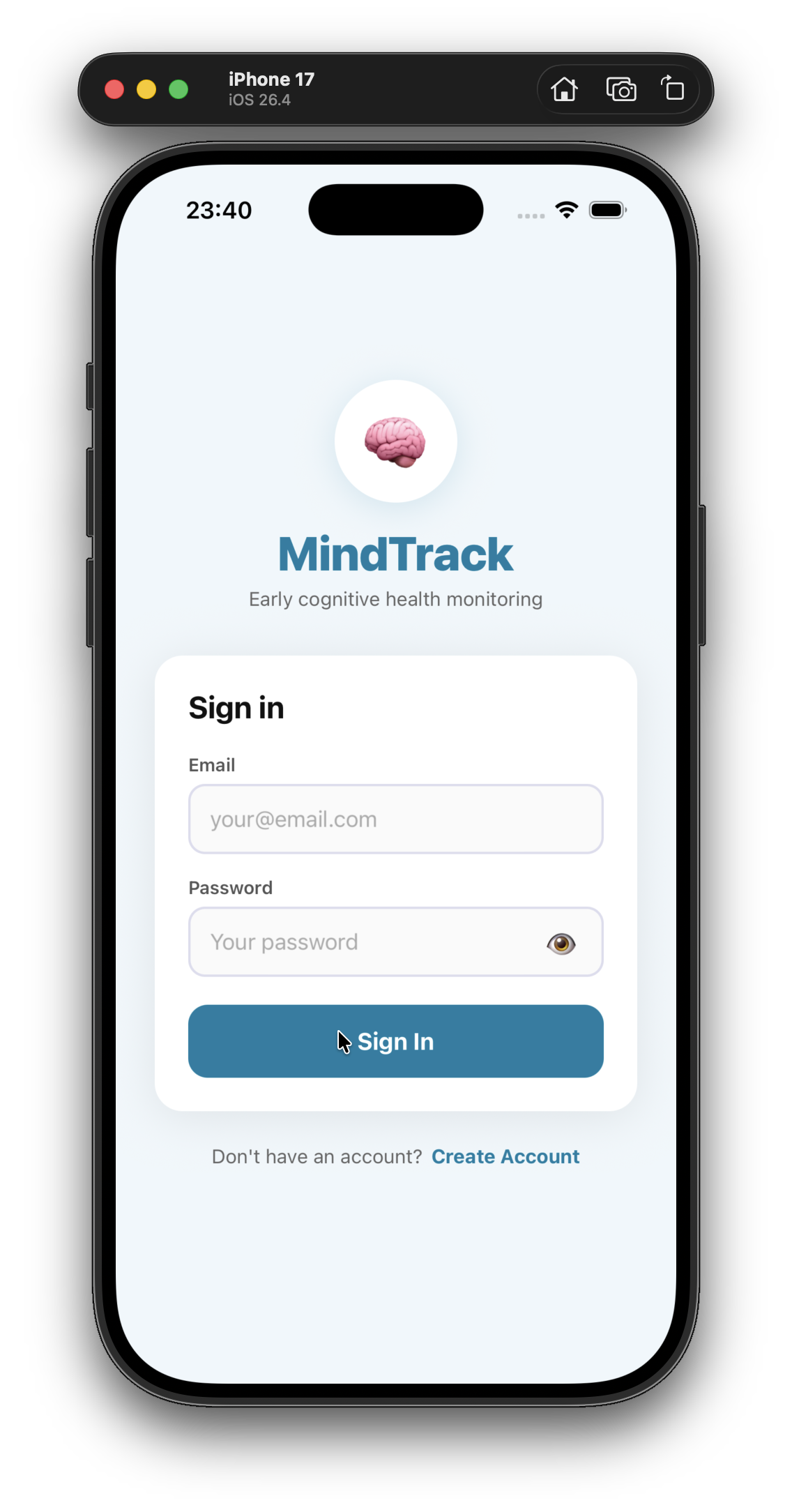
Sign In Screen: "Welcome to MindTrack"
-
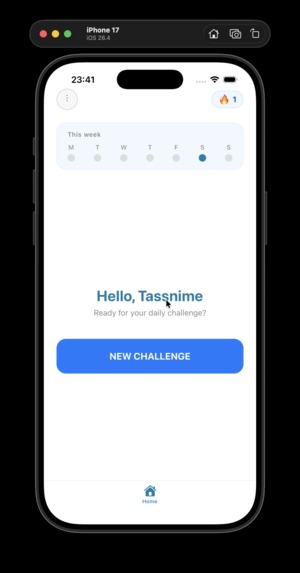
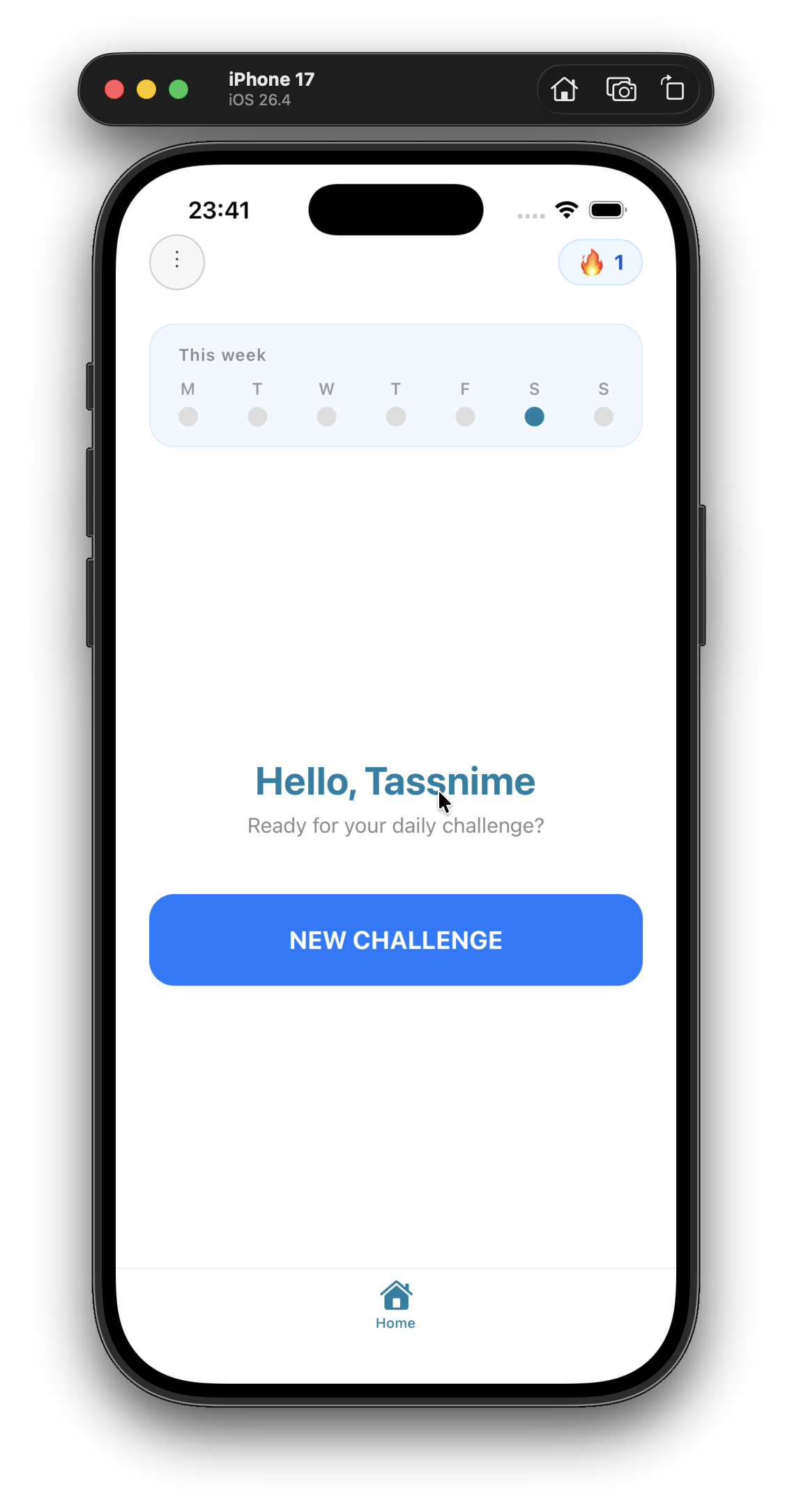
Home Screen: (Hello, Tassnime)
-
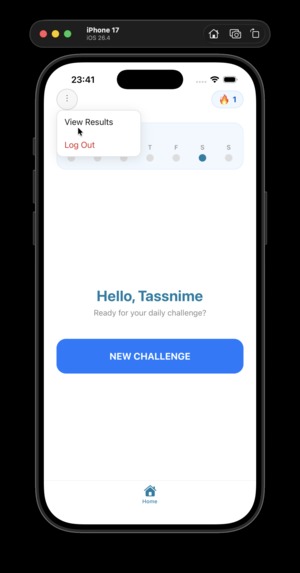
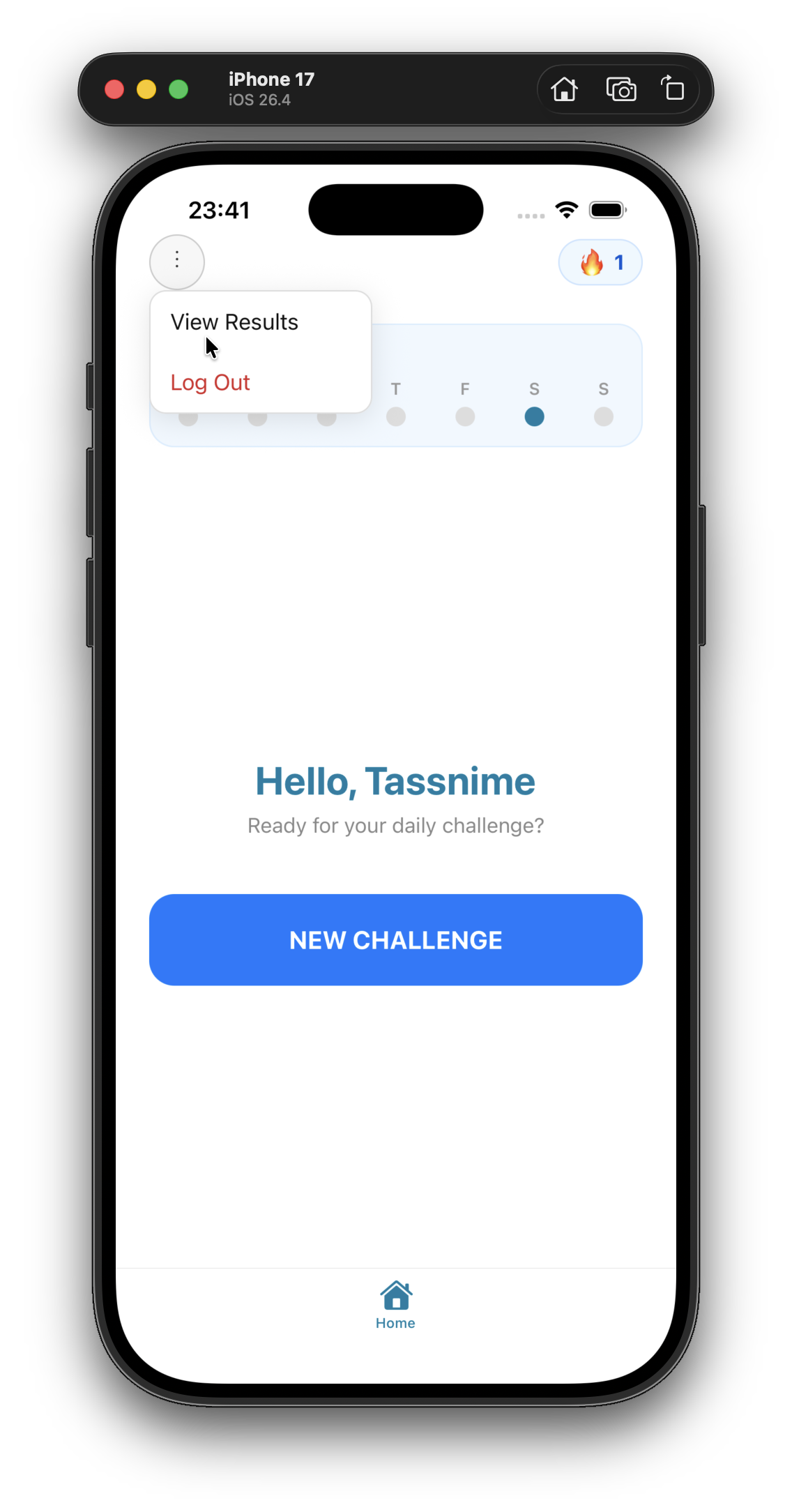
Menu Dropdown
-
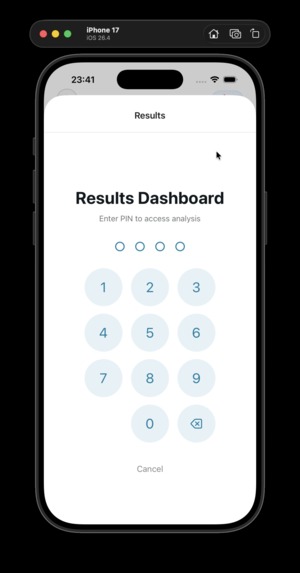
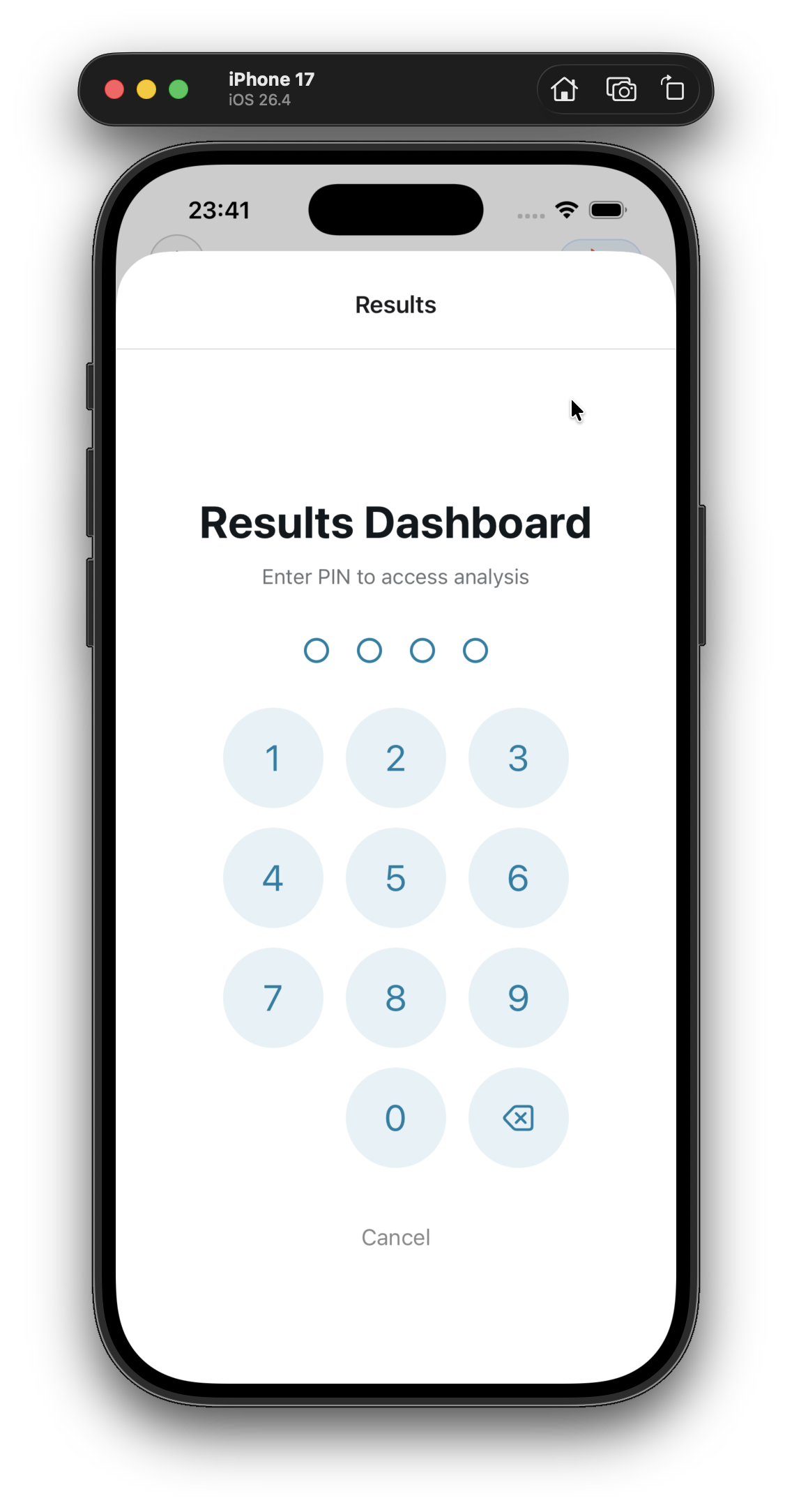
Pin Entry Screen
-
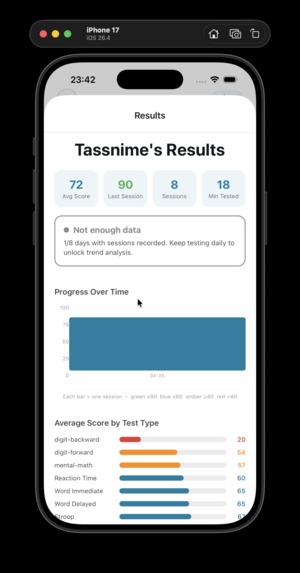
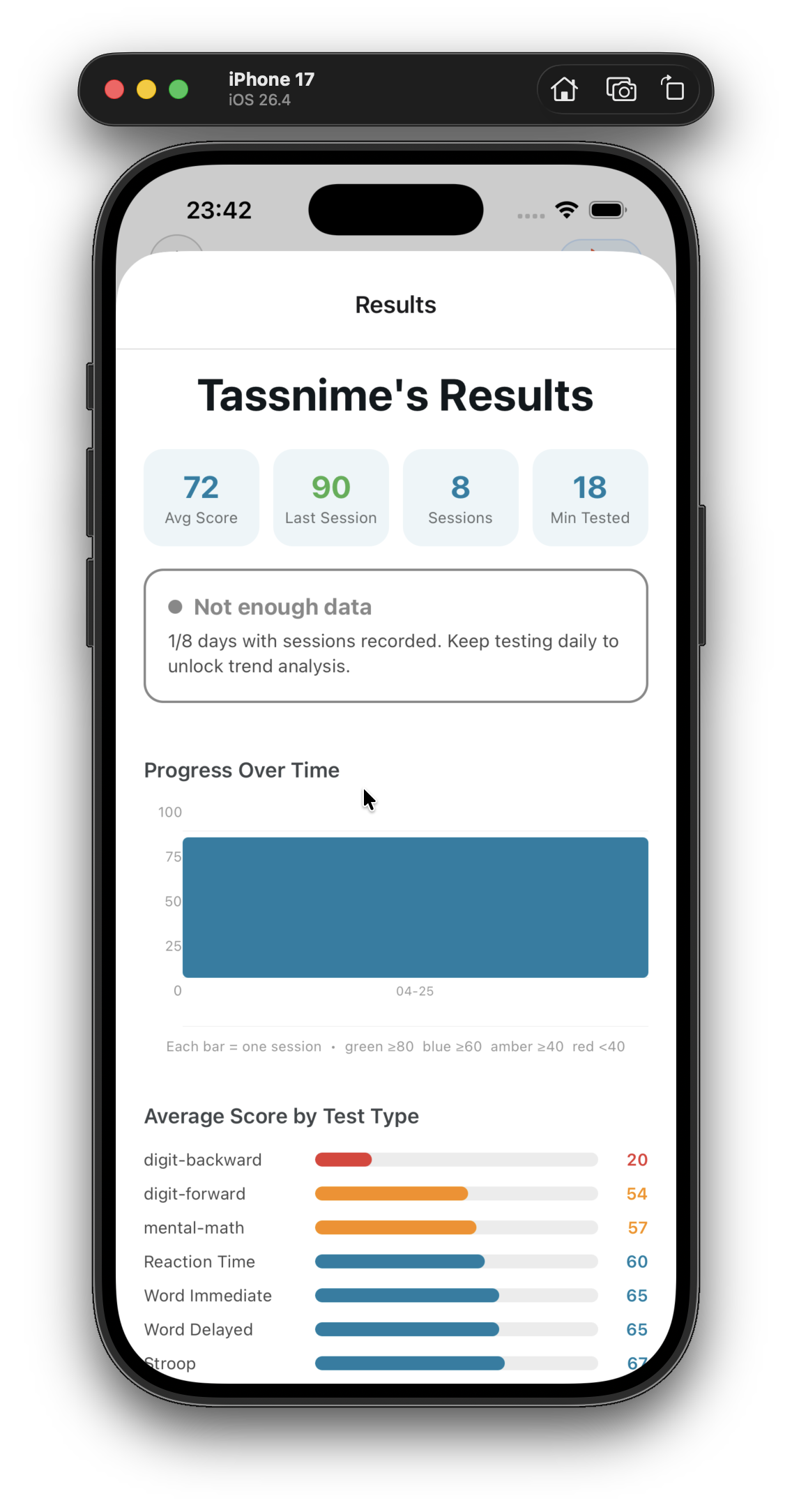
Results Dashboard
-
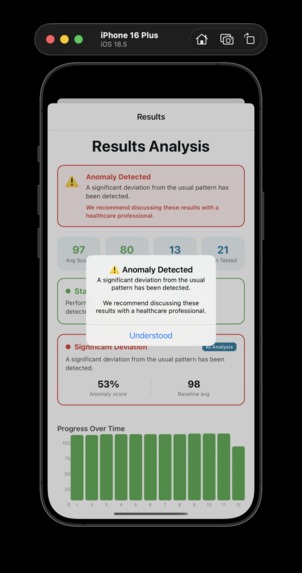
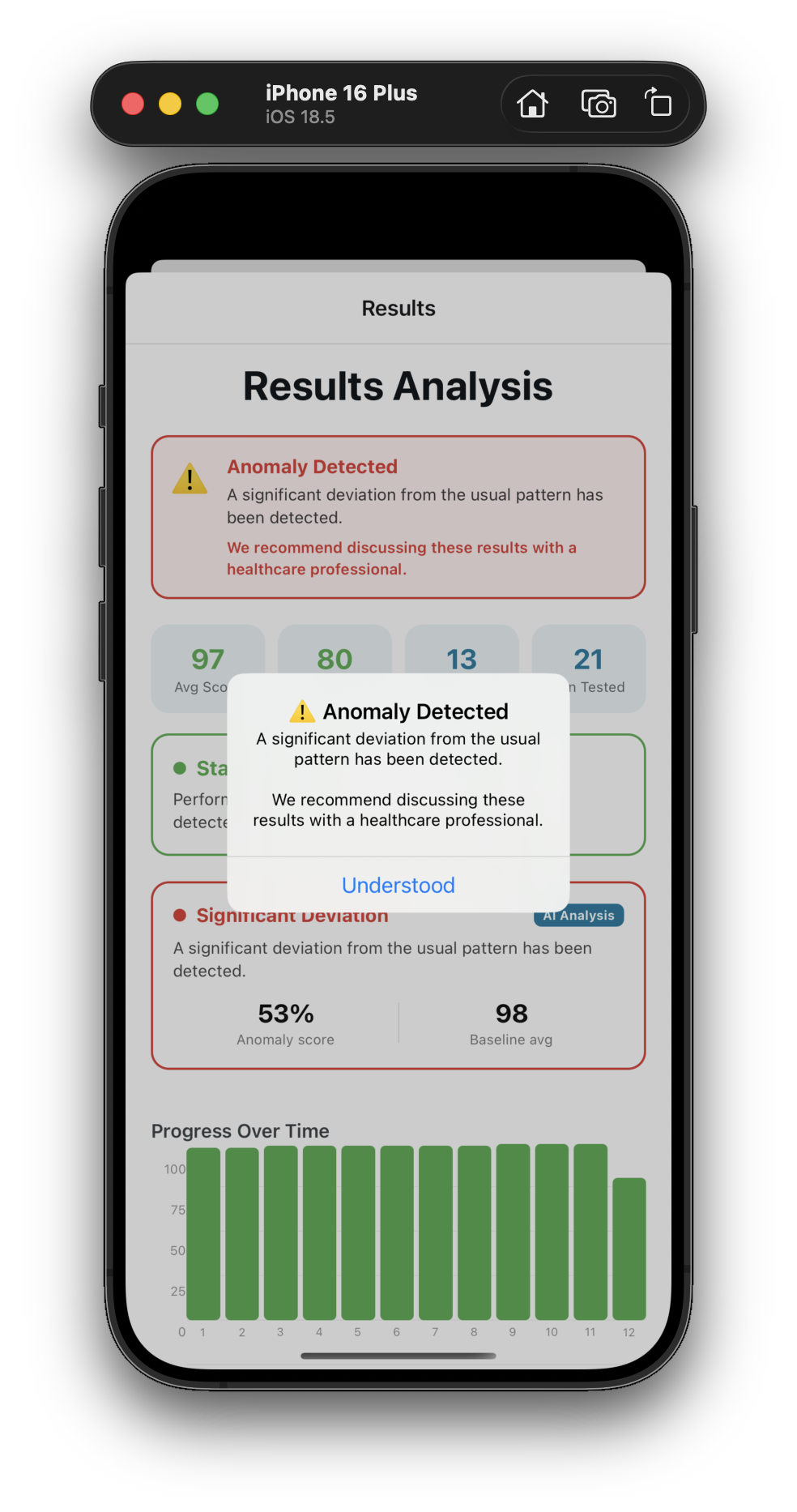
Results Analysis with Anomaly Detection
-
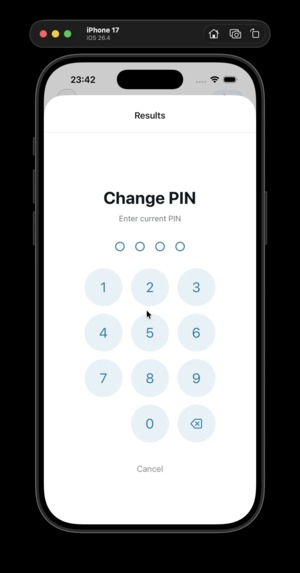
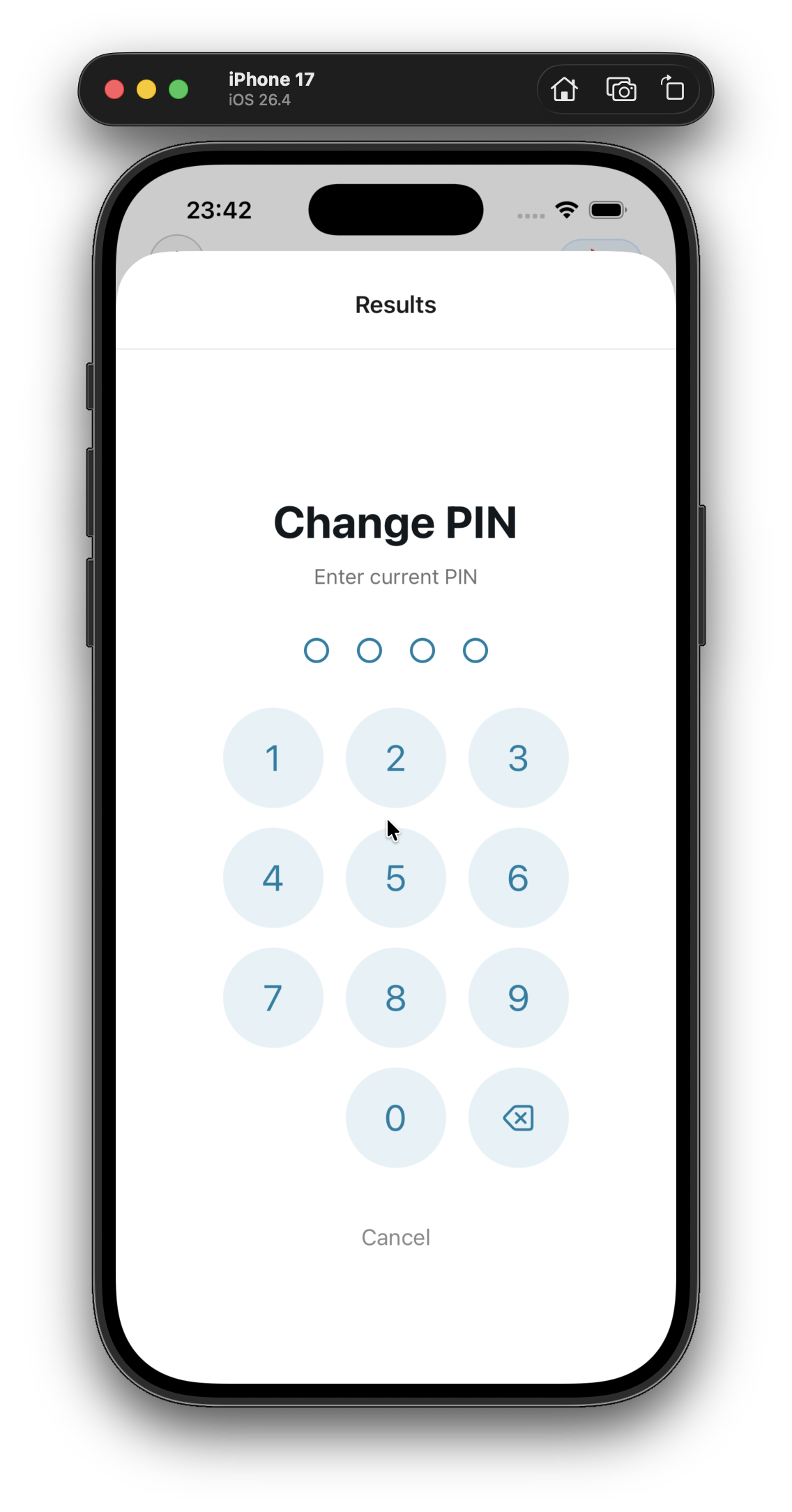
Change Pin Screen
-
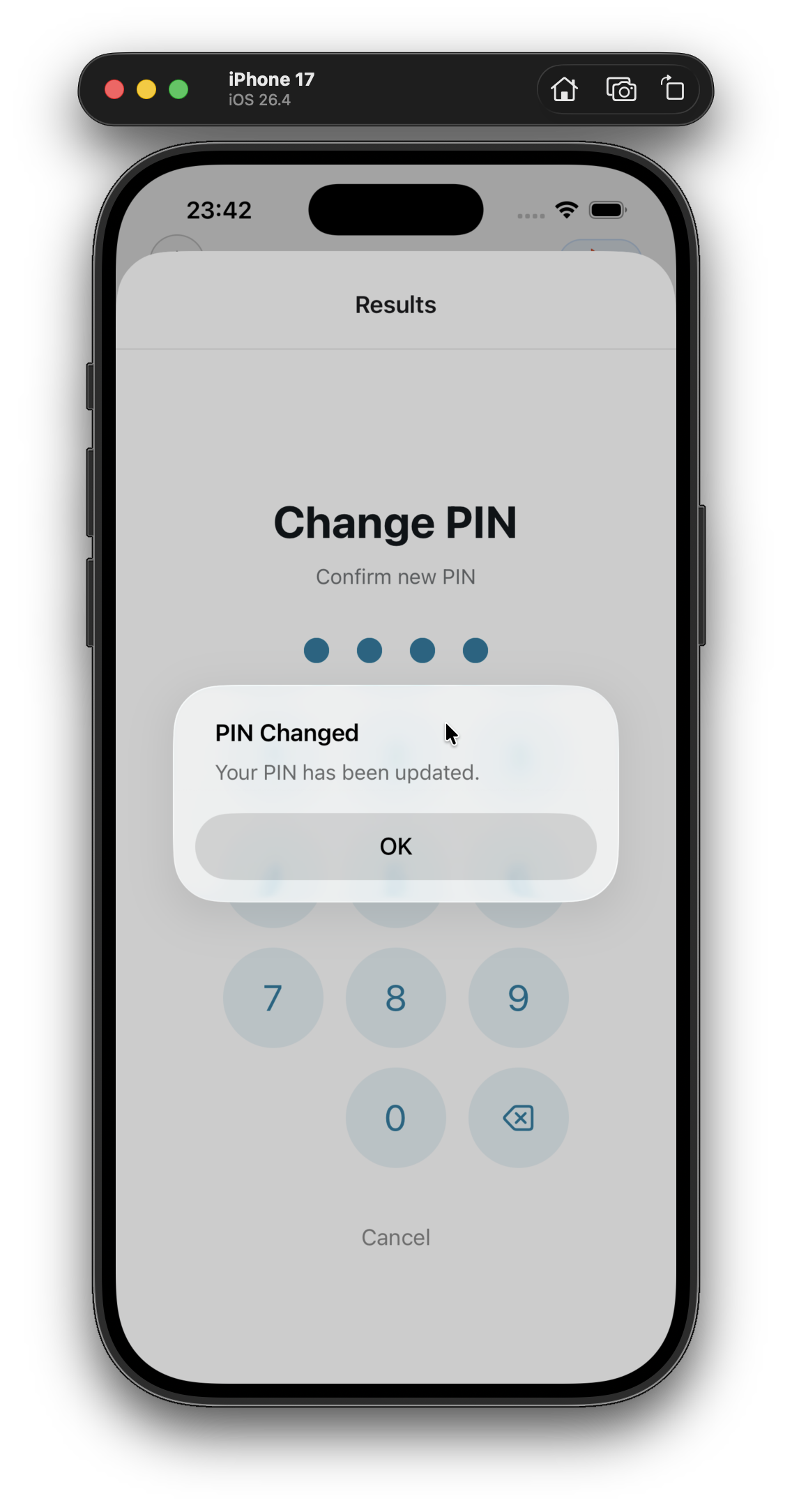
Pin Changed confirmation
Tagline
Daily cognitive tests that detect the early signs of Alzheimer's — years before symptoms become visible.
Inspiration
Watching a grandmother slowly lose her memories is heartbreaking, and both of us have lived that experience. What made it harder was learning, during our Bioinformatics degree at UPC, that Alzheimer's silently progresses for 10 to 20 years before diagnosis. There's a long window where intervention could matter, but it's almost always missed. The reason is access. The gold-standard tools for early detection — neuropsychological assessments, PET scans, and CSF biomarker tests — are expensive (thousands of euros), slow (months-long waiting lists), and concentrated in urban specialist centers. Most people who could benefit never get screened. The key insight: cognitive decline is measurable through performance on the same cognitive tasks neuropsychologists already use. So why not put that screening in everyone's pocket? MindTrack turns the smartphone into a daily, free, first-pass cognitive screening tool, democratizing early detection and giving families a chance to act during the decade-long window that's currently being lost.
What It Does
MindTrack is a mobile application for early Alzheimer's and neurodegenerative disease detection through daily cognitive testing.
Every day, the user completes a battery of clinically-inspired cognitive tests
Each test captures two signals: score (accuracy) and reaction time. These are sent to the backend, where they are compared against the user's own personal baseline (their average performance history).
Anomaly Scoring
The backend computes a personal anomaly score after every test session:
anomaly_score = (0.6 × score_drop_ratio) + (0.4 × reaction_time_increase_ratio)
Score classification:
- Stable (score < 0.15): Performance is within the expected range — no concerns flagged.
- Mild deviation (score 0.15 – 0.35): A mild change has been detected — worth continued monitoring over time.
- Significant deviation (score > 0.35): A notable change has been detected — flagged for clinical follow-up.
By comparing against the user's own baseline (not a population average), MindTrack is sensitive to individual decline, which is far more clinically meaningful.
What the user sees
- A clean daily test flow with clear, accessible instructions
- A streak tracker showing daily consistency (key for longitudinal data quality)
- A PIN-protected Results Dashboard showing their 8-day performance trend and anomaly history. Designed so a caregiver or family doctor can review it at an appointment
How We Built It
Mobile app — React Native + Expo Router
We built a cross-platform mobile app (iOS/Android) using React Native with Expo Router for navigation. All cognitive tests are implemented as individual screens with precise timing using Date.now() to capture reaction times. User data is persisted locally with AsyncStorage and synced to the backend.
Backend — Python FastAPI A lightweight REST API built with FastAPI handles result storage (SQLite) and the anomaly scoring logic. The anomaly detection algorithm is implemented in pure NumPy.
Algorithm design The scoring function weights score degradation more heavily (60%) than reaction time increase (40%), reflecting the clinical literature where accuracy decline is a stronger early signal than speed alone.
Challenges We Ran Into
We are Bioinformatics undergraduates, and either of us had ever built a mobile application before this hackathon.
In 36 hours we had to:
- Learn React Native and Expo Router from scratch
- Design and implement different interactive cognitive tests, each with its own timing and scoring logic
- Build a REST API with persistent storage and a meaningful algorithm
- Design a UX that is clear enough for elderly users
Every single one of those was new to us. We faced a lot of challenges that we had to go through and solve. This hackathon showed us that the skills we do have (scientific rigor, algorithm thinking, domain knowledge in neuroscience) transfer directly into building meaningful health tech.
Accomplishments We're Proud Of
- Clinical grounding: The test battery is directly inspired by validated neuropsychological assessment instruments (CERAD, MoCA, digit span tasks). We didn't make up random games, we mapped known cognitive domains to testable tasks.
- Personal baseline model: Instead of comparing users to a population average, MindTrack builds each user's individual performance profile. This is the right clinical approach as a person with naturally fast reflexes shouldn't be flagged for having fast reflexes.
- Built from zero mobile experience in 36 hours and it works.
- Accessibility-first thinking: The PIN-gated results dashboard was designed with the caregiver use case in mind — a family member or family doctor can review trends without the patient navigating complex menus, or even knowing they're being tracked. To the user, it's just a fun daily game.
What We Learned
- How to build a full-stack mobile application end-to-end in 36 hours under pressure
- How to translate neuropsychological clinical knowledge into software requirements
- The difference between population-level and individual-level anomaly detection, and why it matters for health applications
- How to design interfaces for a user population that is not tech-savvy
Most importantly: that a strong scientific background is a real advantage in health tech. We knew why we were building what we were building and that shaped every design decision.
What's Next
MindTrack is a prototype, but we believe it has real potential as an accessible, low-cost, longitudinal screening tool. Here's the roadmap:
1. Alexa Mode (Voice-Only Frontend) We are designing an Alexa skill that runs the same cognitive test battery as a fully voice-driven experience, sending results to the same backend. This makes MindTrack fully accessible to users with reduced vision or limited digital literacy — a critical population for Alzheimer's screening.
2. Clinical Validation We want to partner with neurologists and neuropsychologists to validate our anomaly scoring against clinical diagnoses. The scientific foundations are solid — but real-world validation is essential before this can complement clinical care.
3. GP Integration A web dashboard for clinicians where they can review a patient's longitudinal MindTrack data before or after appointments.
4. Expanded Test Battery Additional tests targeting language fluency, executive function, and episodic memory covering more of the cognitive domains implicated in Alzheimer's progression. Personalized elements, such as recognition tasks featuring the user's own family members, would make the assessments both more sensitive and more meaningful.
We are actively looking for foundations, research groups, and health tech partners who share the goal of making early dementia detection accessible to everyone not just those who can afford specialist care.
Team
Tassnime Reddahi & Mariona Almató Bioinformatics students, Universitat Politècnica de Catalunya (UPC) HackUPC 2026 — 36 hours
Nothing is worse than losing your memories and your most beloved people in your final decades of life. We built MindTrack because we believe that with the right tools, we can give people the chance to act before it's too late.
Built With
- asyncstorage
- axios
- expo-router
- expo.io
- fastapi
- numpy
- pydantic
- python
- react-native
- sqlite
- uvicorn


Log in or sign up for Devpost to join the conversation.