The Problem: The Gap Between Feeling and Healing
Mental wellness often starts with a feeling — being stressed, tired, or disconnected. But between that first moment of “something feels off” and getting professional help lies a huge gap. Existing self-assessment tools feel too clinical. Finding the right resources feels overwhelming. People need a gentle, personal, intelligent first step.
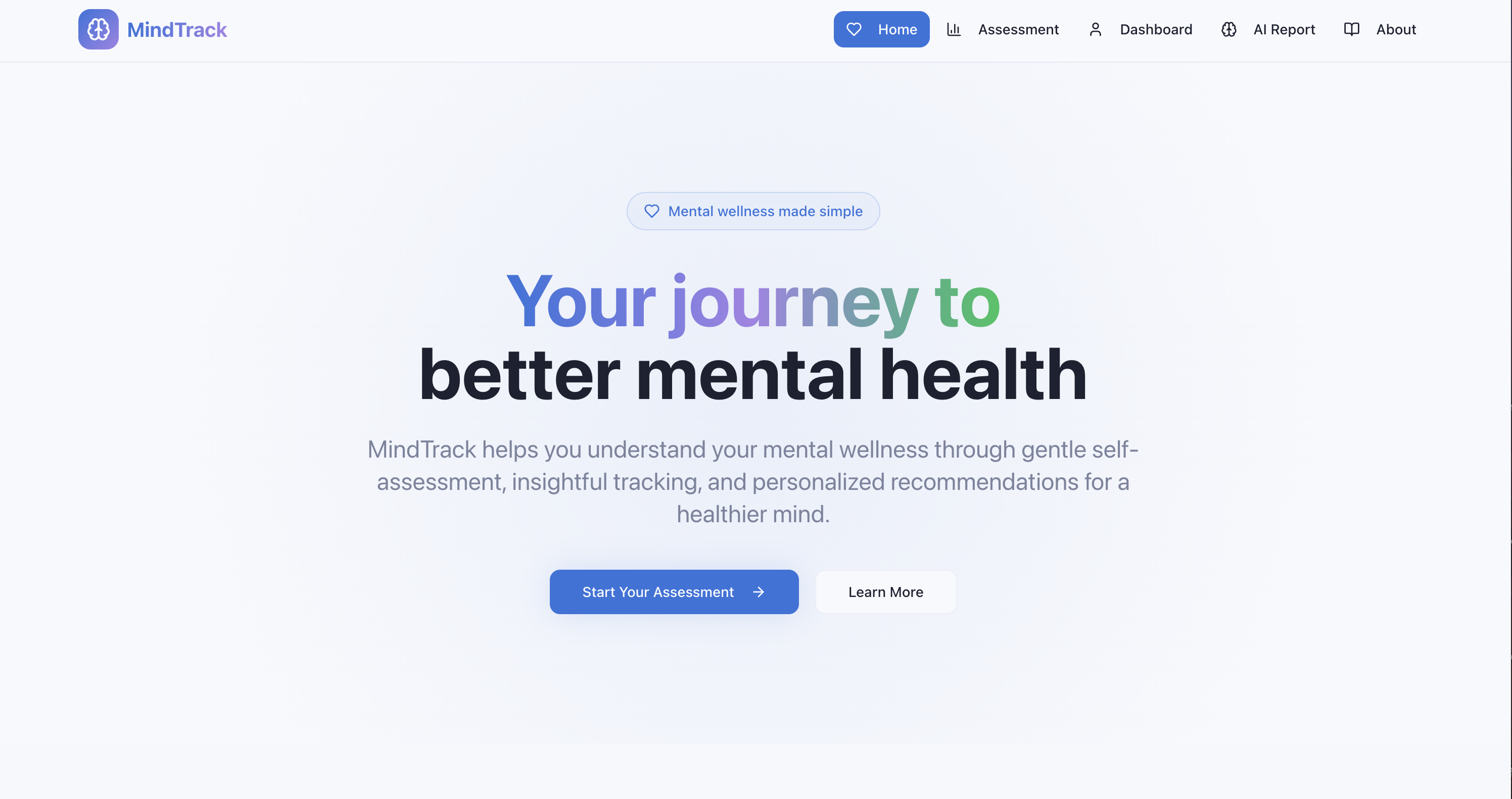
Our Solution: MindTrack AI
MindTrack AI is a web app built to empower individuals at the very start of their mental wellness journey. It works on three core pillars: Detect: Simple, guided mood check-ins that feel conversational, not clinical. Connect: An empathetic AI Companion that suggests coping strategies and resources. Personalize: AI-powered insights tailored to each user’s unique patterns.
The Standout Feature: The AI Wellness Report
We pivoted away from generic graphs and built the Wellness Balance Radar Chart. One glance shows how a user’s Mood, Stress, Energy, Sleep, and Social Connection balance out. It’s not just data — it’s a personal snapshot that instantly highlights areas of strength and areas needing focus.
The Evolution: Building a Lasting Companion
A one-time tool is useful — but real wellness requires tracking over time. That’s why we added: User Authentication (secure login system) Supabase Database (for storing private check-ins) This transforms MindTrack AI into a long-term wellness companion, where users can safely build their own mental health history.
The Payoff: Visualizing Your Victories
We introduced the Personalized Wellness Trends Graph, which connects check-ins across the day. Example: A user feels stressed at 11 AM. After applying a coping strategy, they check in again at 2 PM. The graph shows stress decreasing while mood and energy rise. This creates tangible, visual proof that small positive actions lead to measurable improvements.
Tech Stack
Frontend: Next.js + Tailwind for a clean, fast, and responsive design Backend / Auth: Supabase for authentication and secure data persistence AI Engine: OpenAI API for empathetic conversational AI and report generation Data Visualization: Chart.js for Radar + Trend graphs Deployment: Vercel for smooth web hosting
Challenges We Ran Into
Designing charts that were empathetic, not clinical Shifting from a “weekly trend” mindset to real-time wellness tracking Implementing secure, user-friendly authentication without breaking flow Making sure personalization was both useful and approachable
Accomplishments We’re Proud Of
Turning a hackathon idea into a polished, working app Designing the Wellness Balance Radar Chart, a novel mental health visualization Building persistence and authentication in a short timeframe Creating a system that genuinely helps users see their growth
What We Learned
Mental health tools must balance technical rigor with empathy Small pivots (like changing a graph type) can drastically improve usability Building for long-term user trust requires a focus on security and privacy from the start
What’s Next
Expand the AI Companion to support multi-lingual conversations Add community-driven features (anonymous peer stories, safe sharing) Integrate wearables (sleep trackers, heart rate monitors) for richer wellness reports Partner with mental health organizations to provide pathways to professional help
Built With
- javascript
- lovable
- react
- typescript


Log in or sign up for Devpost to join the conversation.