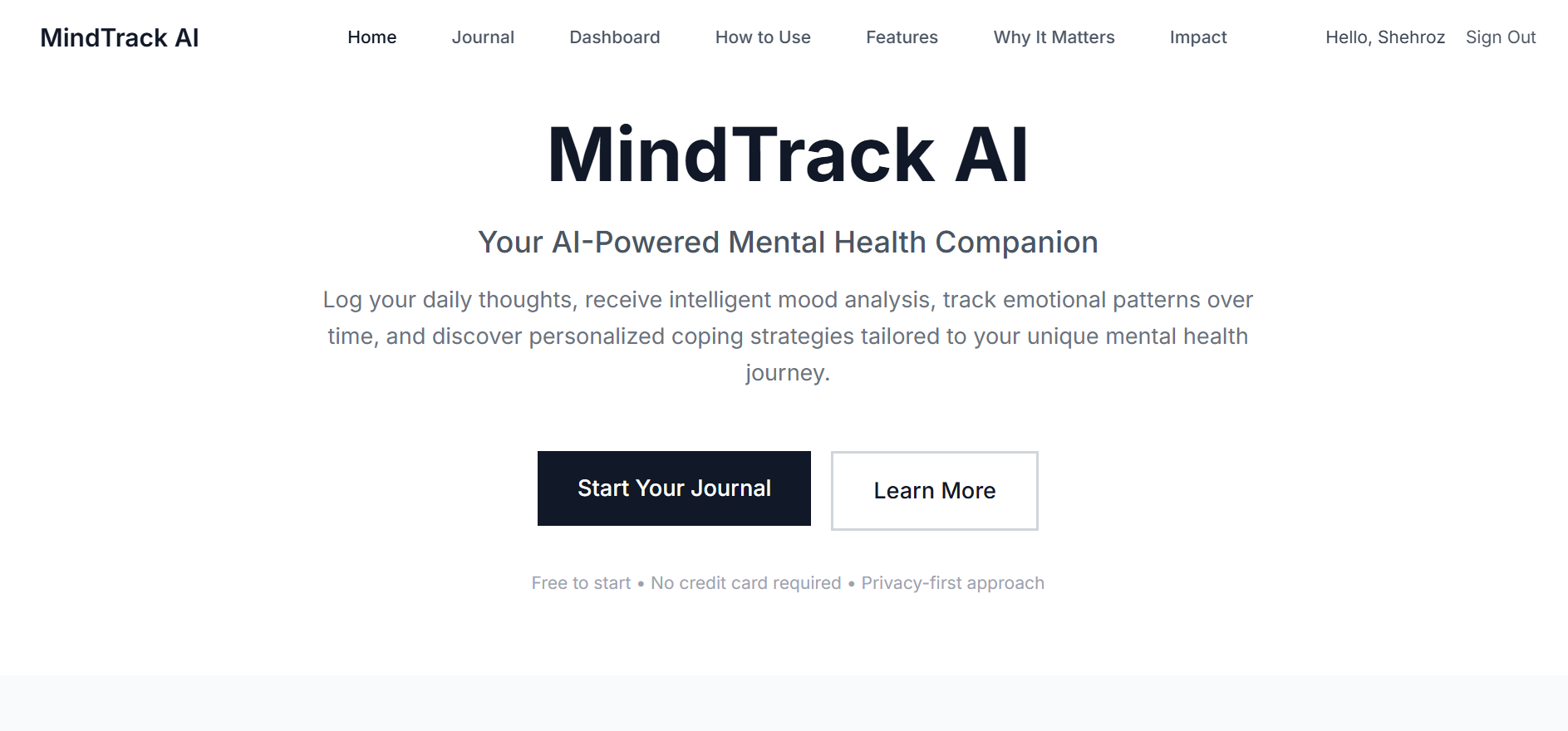
MindTrack AI — Your AI-Powered Mental Health Companion
Inspiration
The idea for MindTrack AI came from observing how stress and busy schedules can impact mental health. Many people struggle to maintain a consistent journaling habit or recognize emotional patterns in their daily lives. I wanted to create a digital companion that encourages reflection, tracks progress, and offers AI-driven support without replacing professional help.
What it does
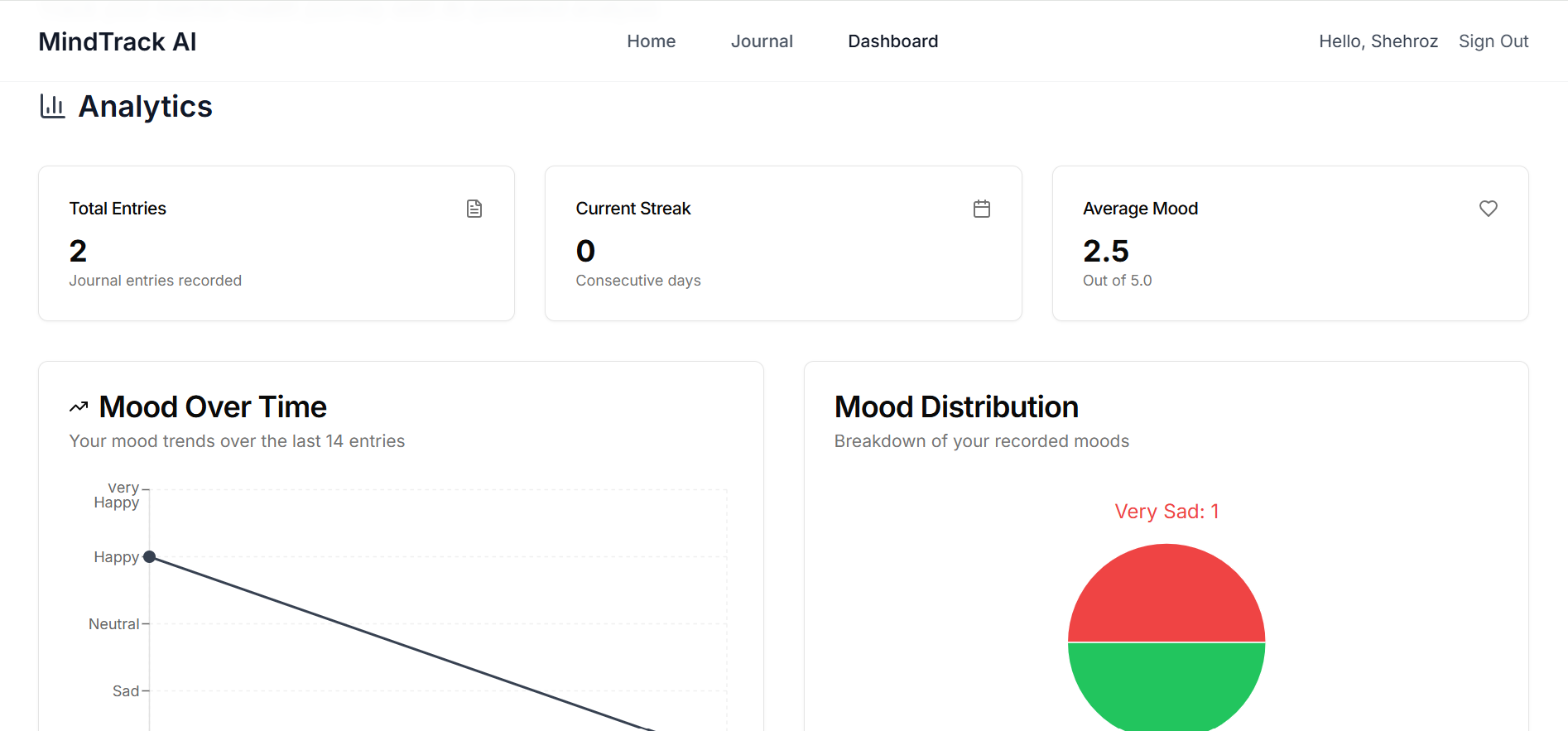
MindTrack AI is an AI-powered mental health journal. Users can log daily entries, track moods, and receive personalized suggestions from an AI-powered supportive chatbot. The dashboard displays past entries and visualizes mood trends over time. Users can also export their journal data as CSV or PDF for personal tracking. The platform prioritizes privacy, safety, and a clean, minimal design for a seamless experience.
How we built it
We built the project using Next.js App Router with TypeScript, TailwindCSS, and shadcn/ui for a modern, minimalistic UI. Authentication and data storage are handled by Firebase Auth and Firestore. The Groq API powers the AI chatbot and provides emotion analysis for each journal entry. Recharts are used to visualize mood trends. The dashboard integrates journal entries, mood analytics, and the chatbot in a responsive two-column layout. All AI calls are handled server-side to keep API keys secure.
Challenges we ran into
- Configuring dynamic API routes with
request.json()in Next.js App Router initially conflicted with static export settings. - Ensuring the chatbot had contextual awareness of past entries without re-fetching data from Firestore.
- Optimizing dashboard performance for multiple entries and charts.
- Balancing a minimalistic, clean design with a rich, user-friendly interface.
Accomplishments that we're proud of
- Fully functional AI-powered mental health journal with real-time storage and retrieval.
- Responsive dashboard with mood analytics and charts.
- Context-aware chatbot that provides supportive guidance based on historical and current moods.
- Clean, minimal design with seamless user experience.
What we learned
- How to integrate Next.js App Router, Firebase, and Groq API for a full-stack AI application.
- Techniques for managing state and asynchronous workflows across frontend and backend.
- Best practices in UI/UX design for accessibility and minimalism.
- How to handle AI context effectively to provide meaningful responses without exposing sensitive data.
What's next for MindTrack AI
- Add mood prediction and trend forecasting based on historical data.
- Introduce more personalized AI suggestions tailored to user patterns.
- Expand export options to include more detailed analytics reports.
- Explore integration with mobile platforms for on-the-go journaling.

Log in or sign up for Devpost to join the conversation.