-
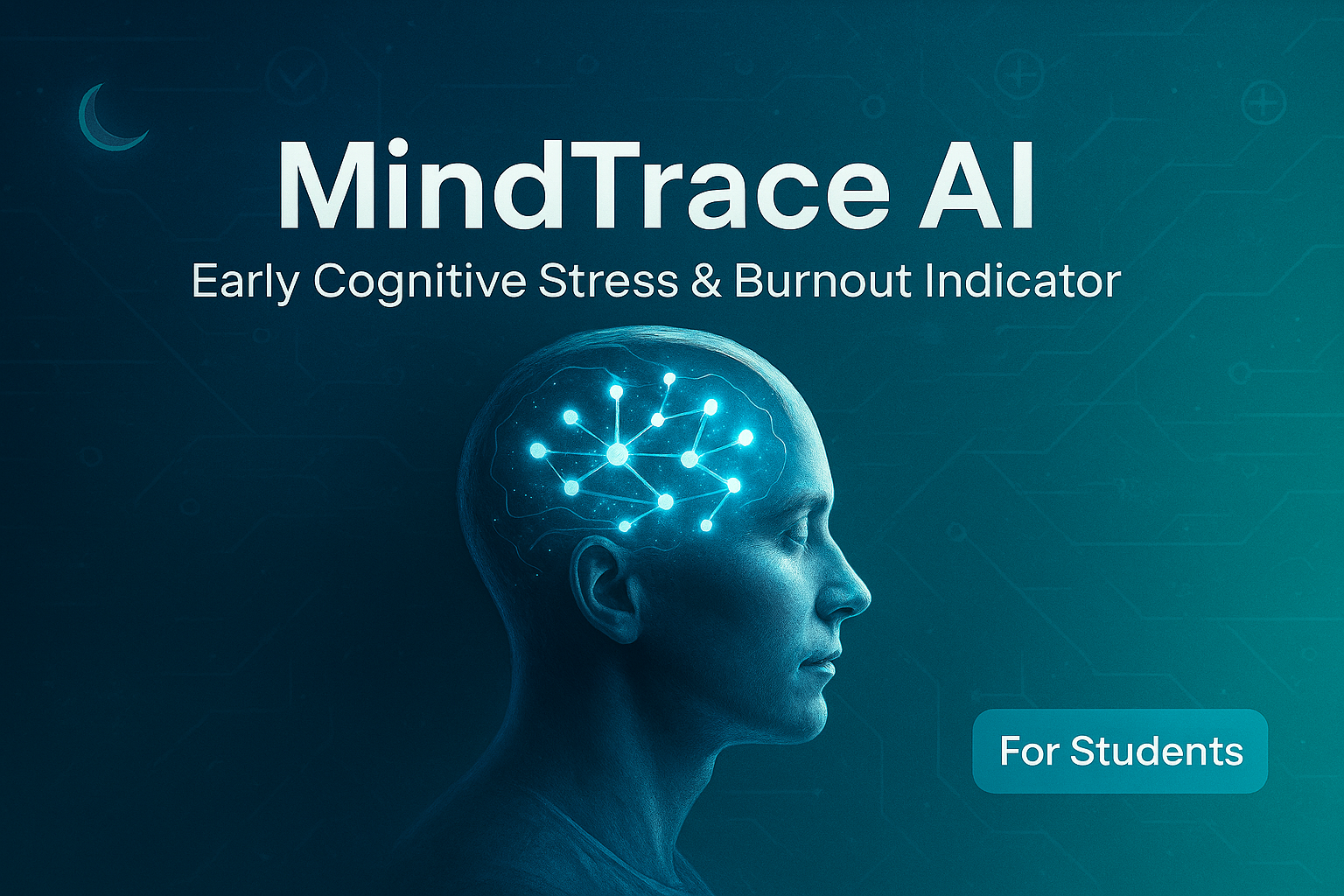
MindTrace AI: Early Cognitive Stress & Burnout Indicator
-
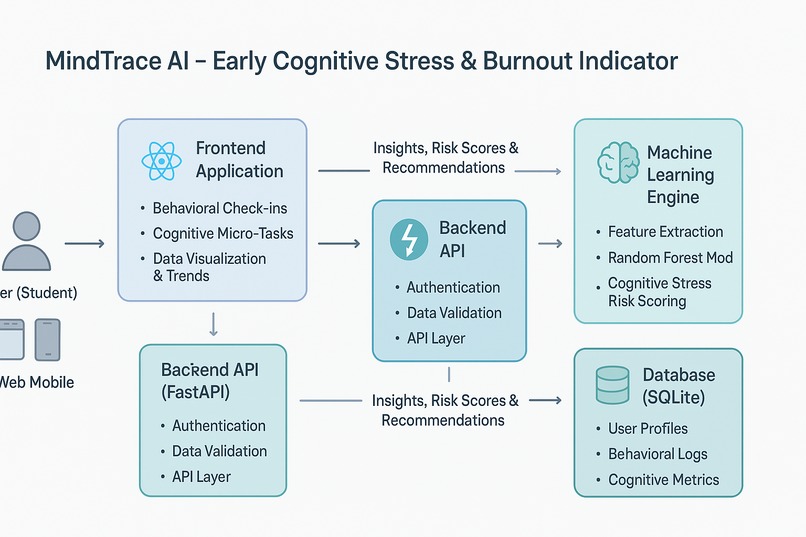
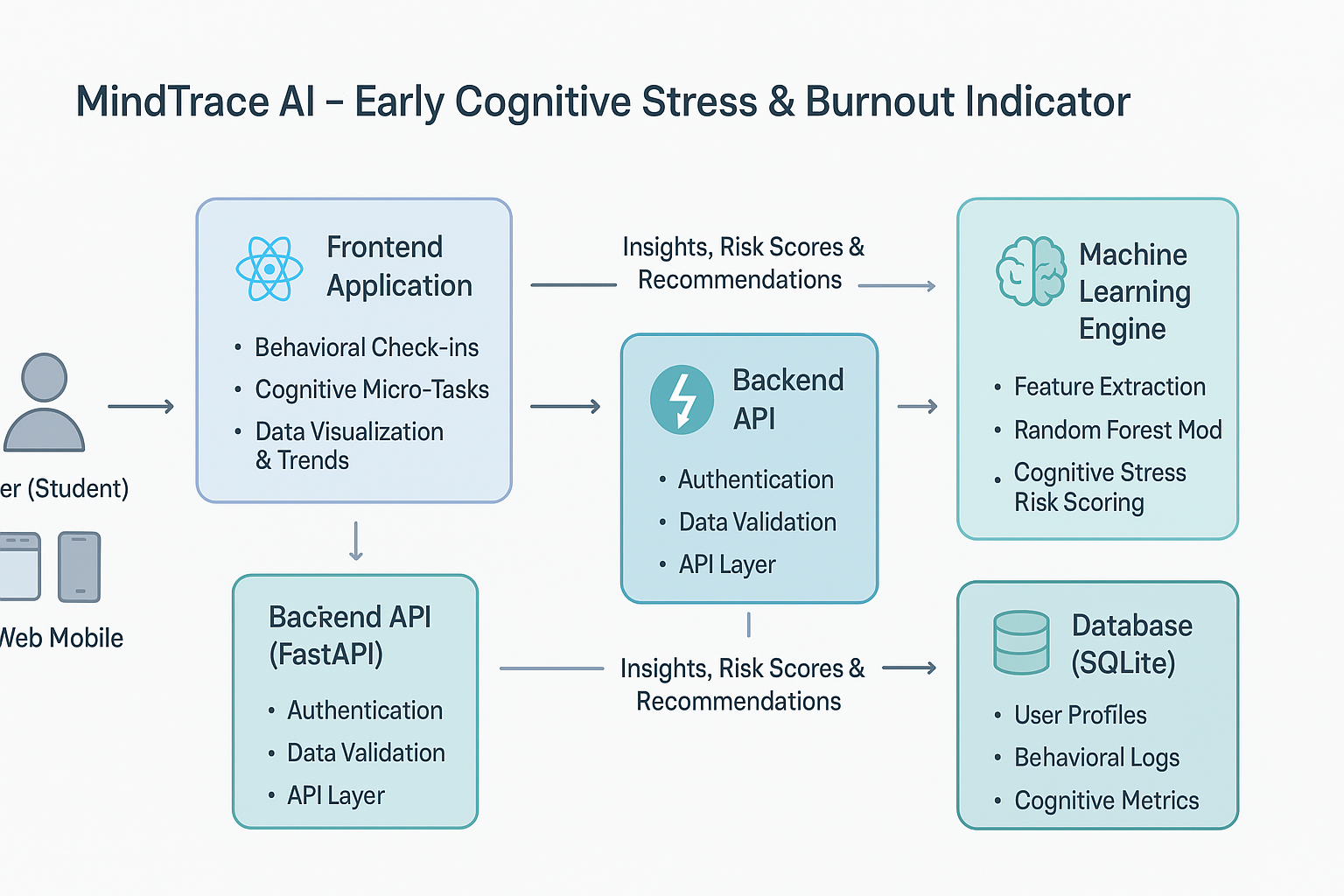
Architecture Diagram
-
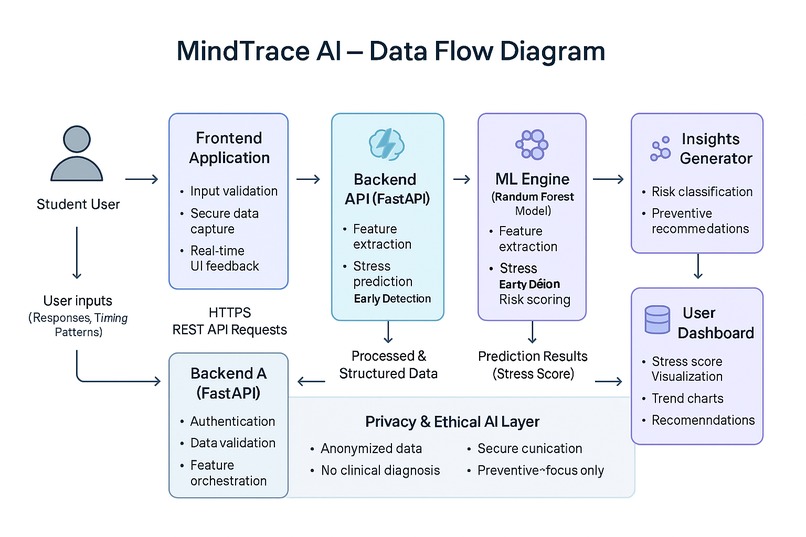
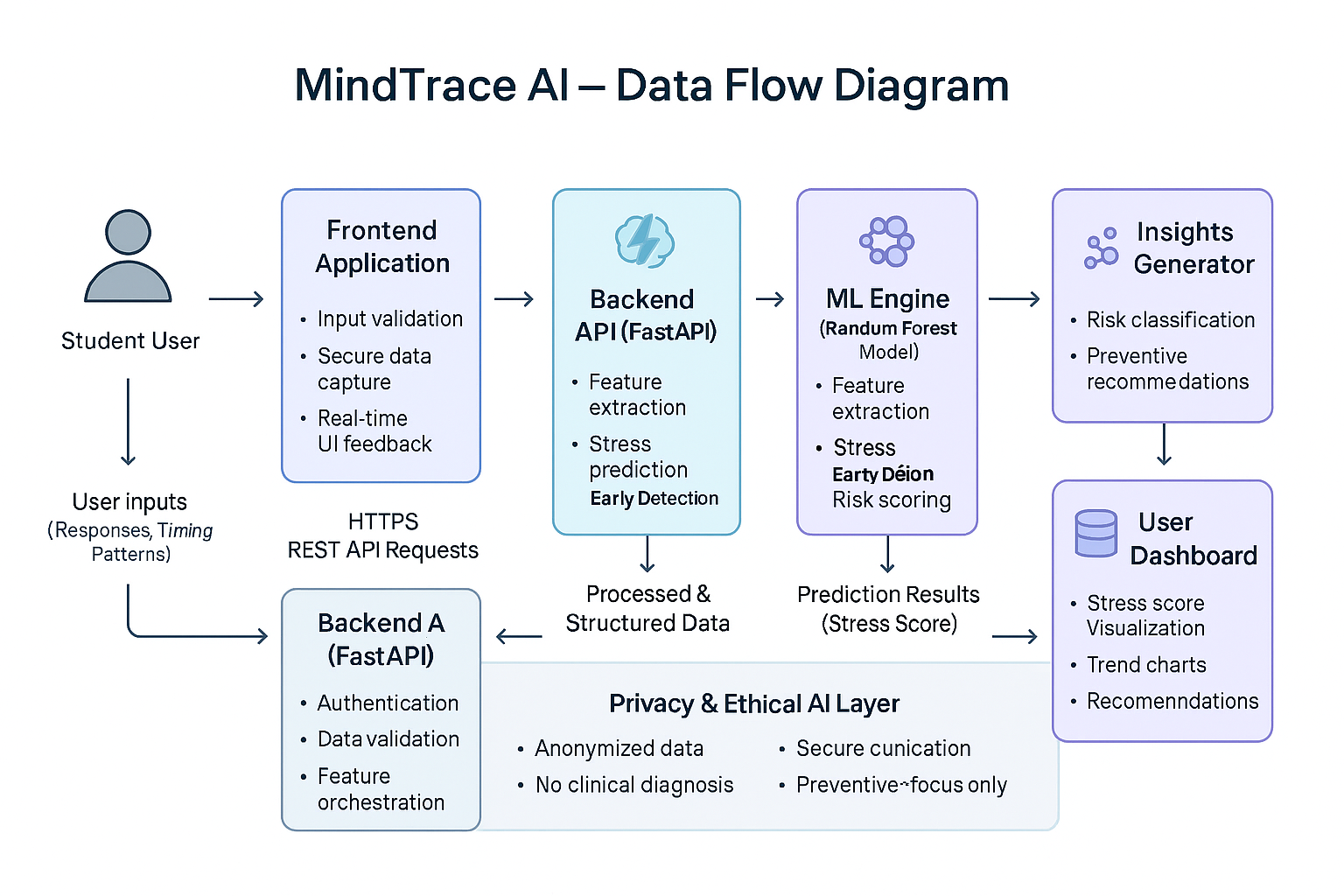
Data Flow Diagram
-
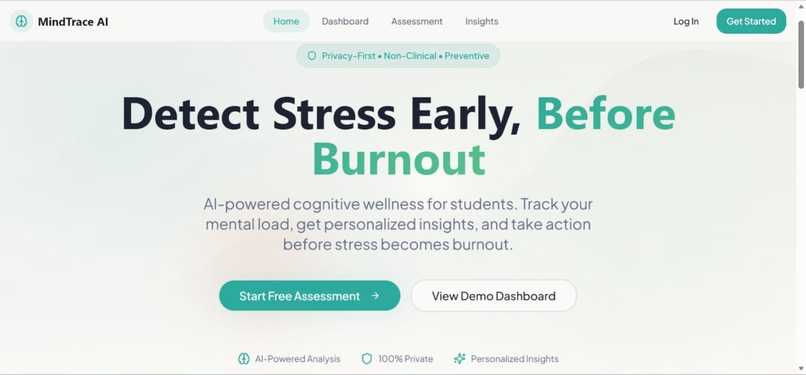
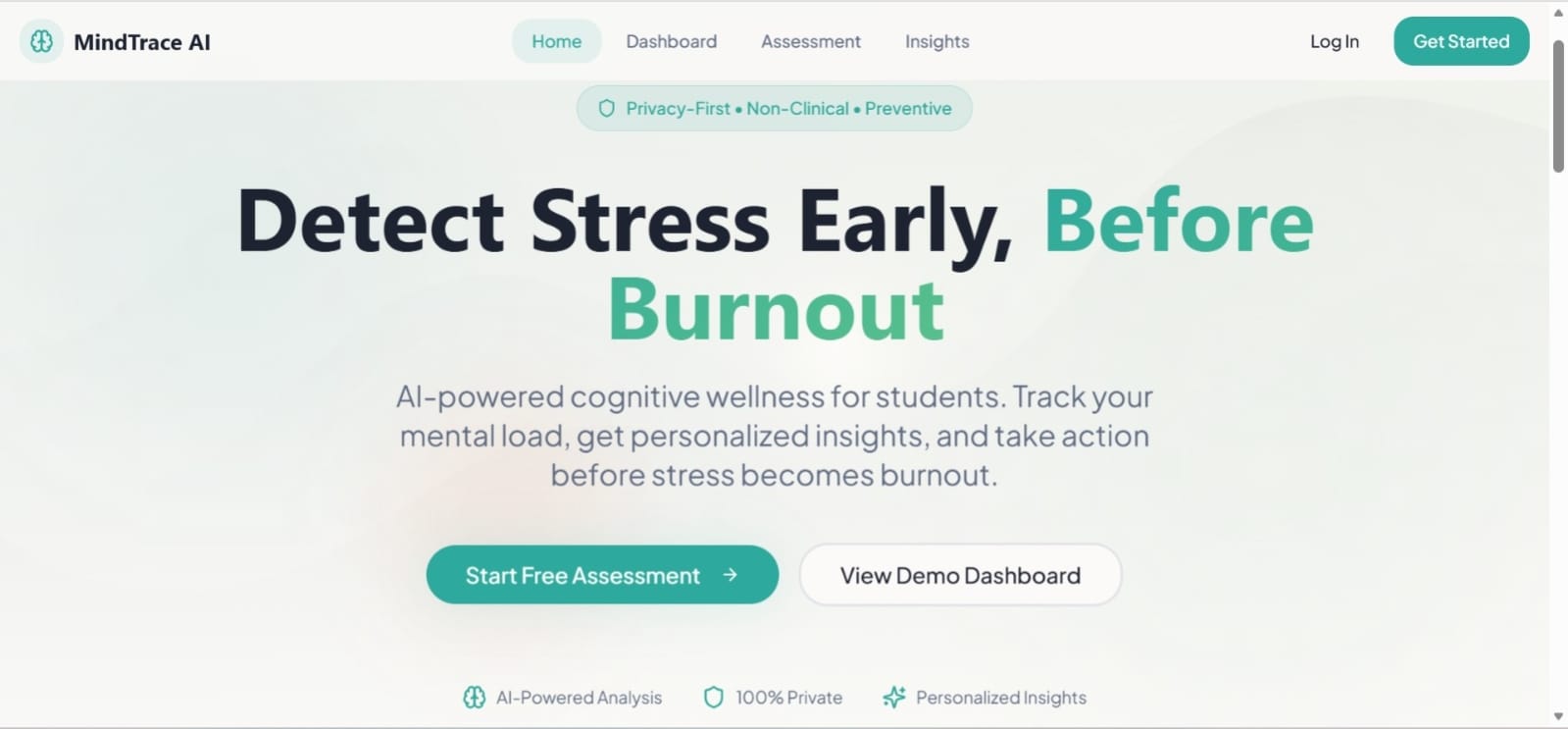
Home Page
-
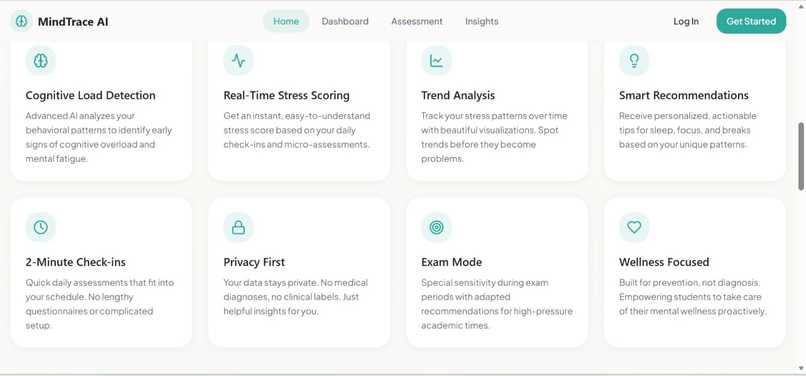
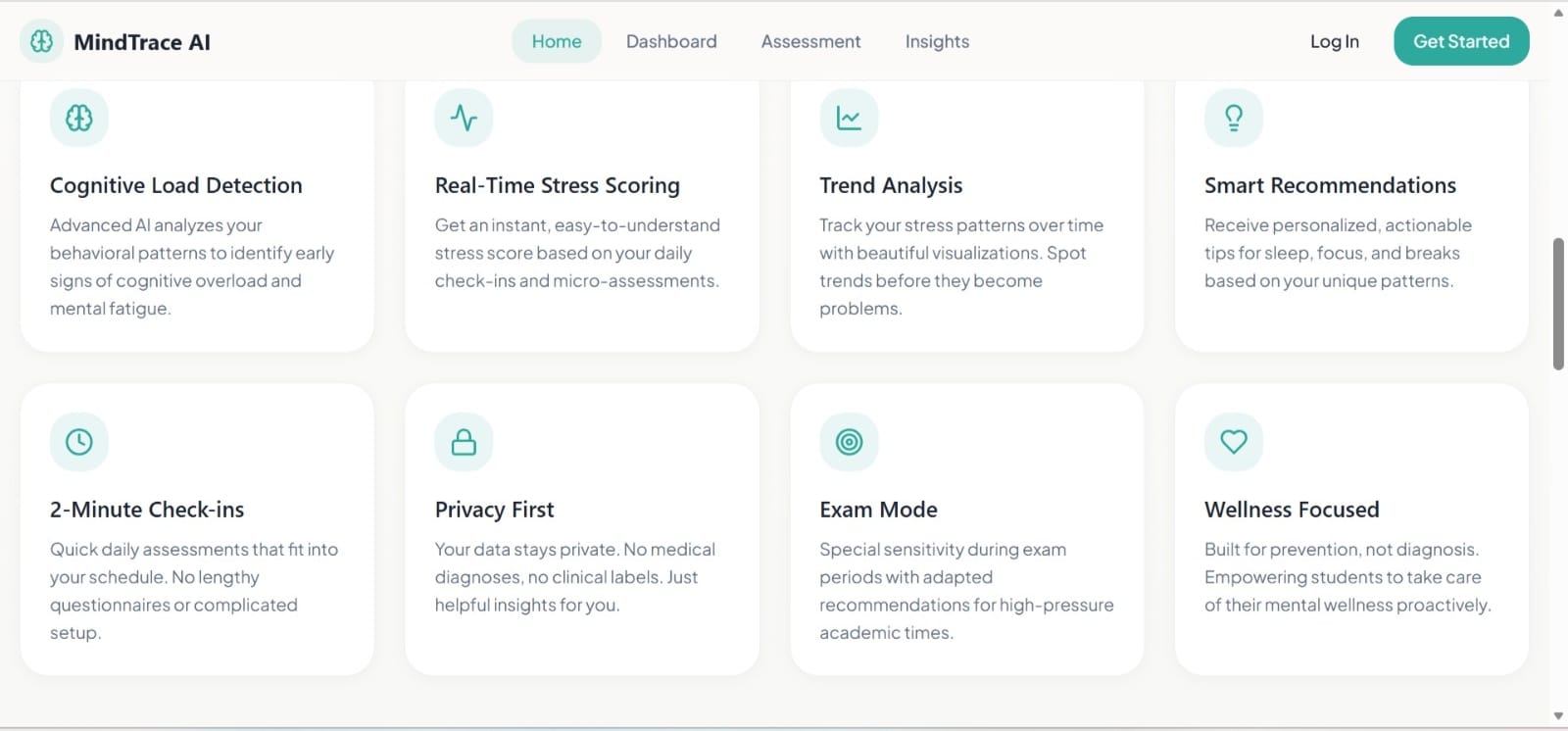
Home Page
-
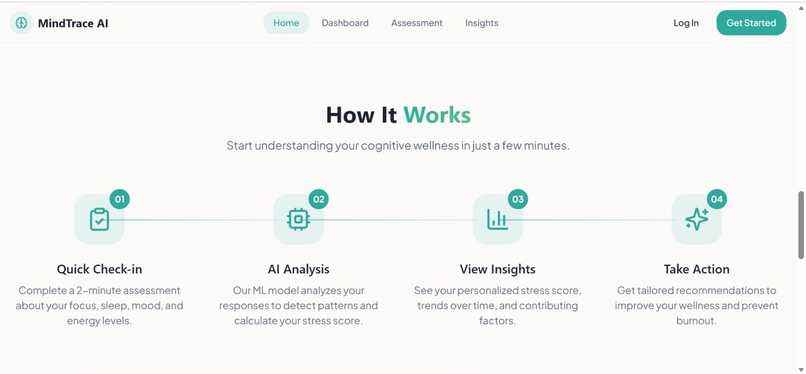
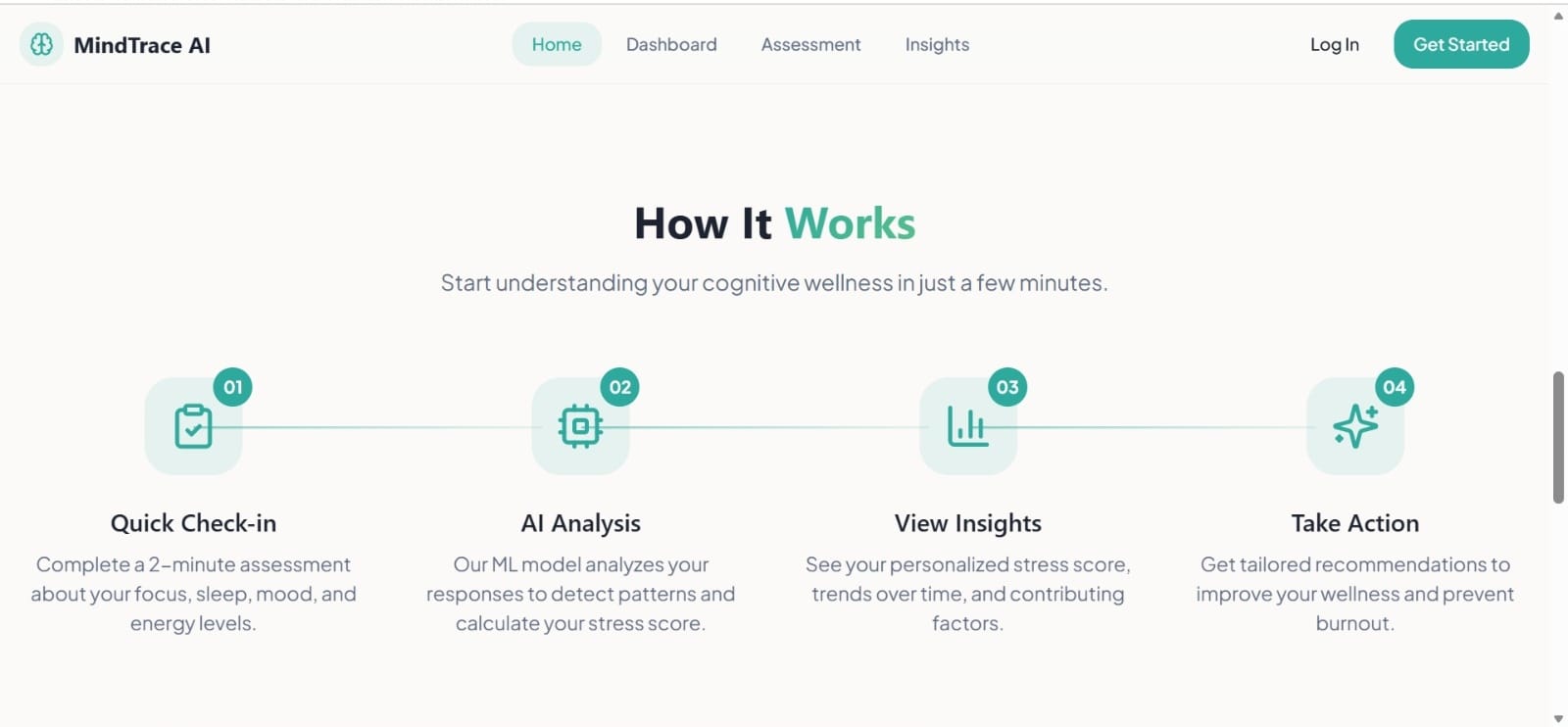
Home Page
-
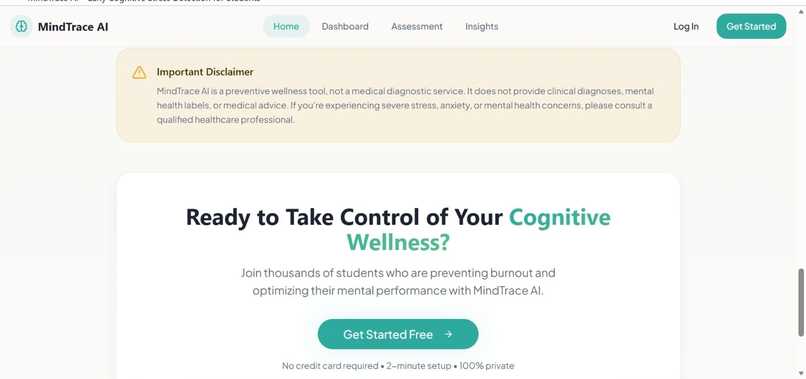
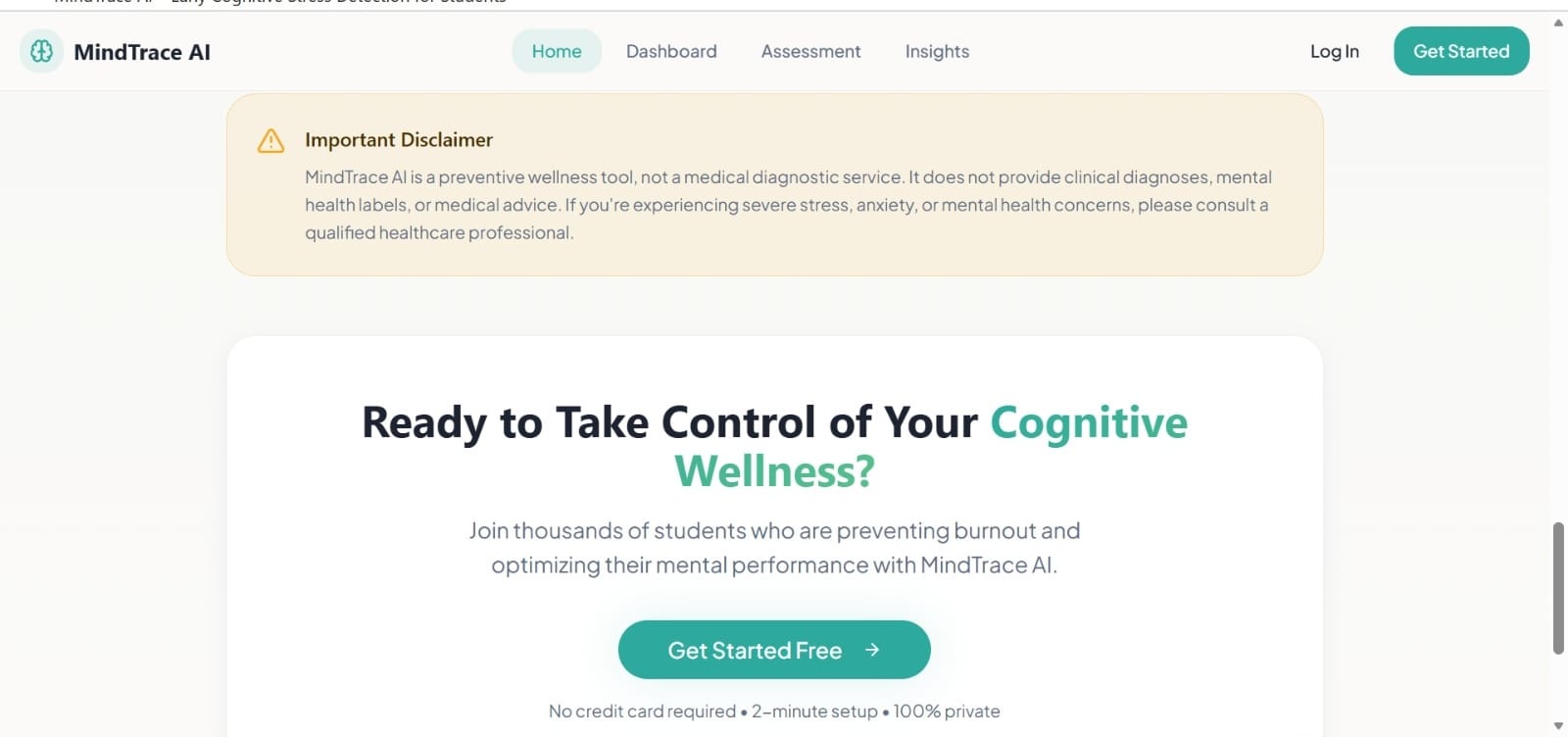
Home Page
-
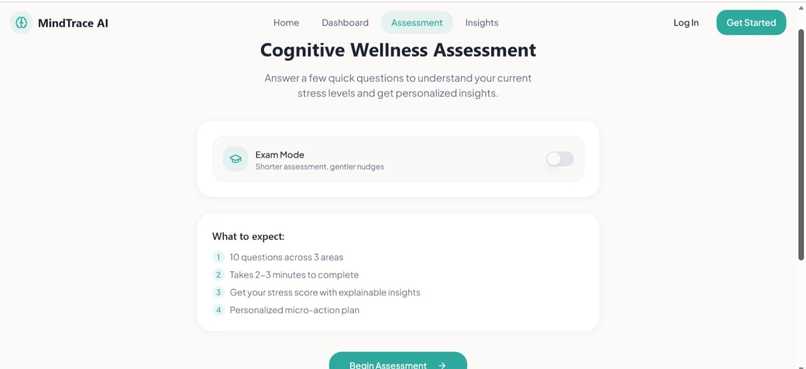
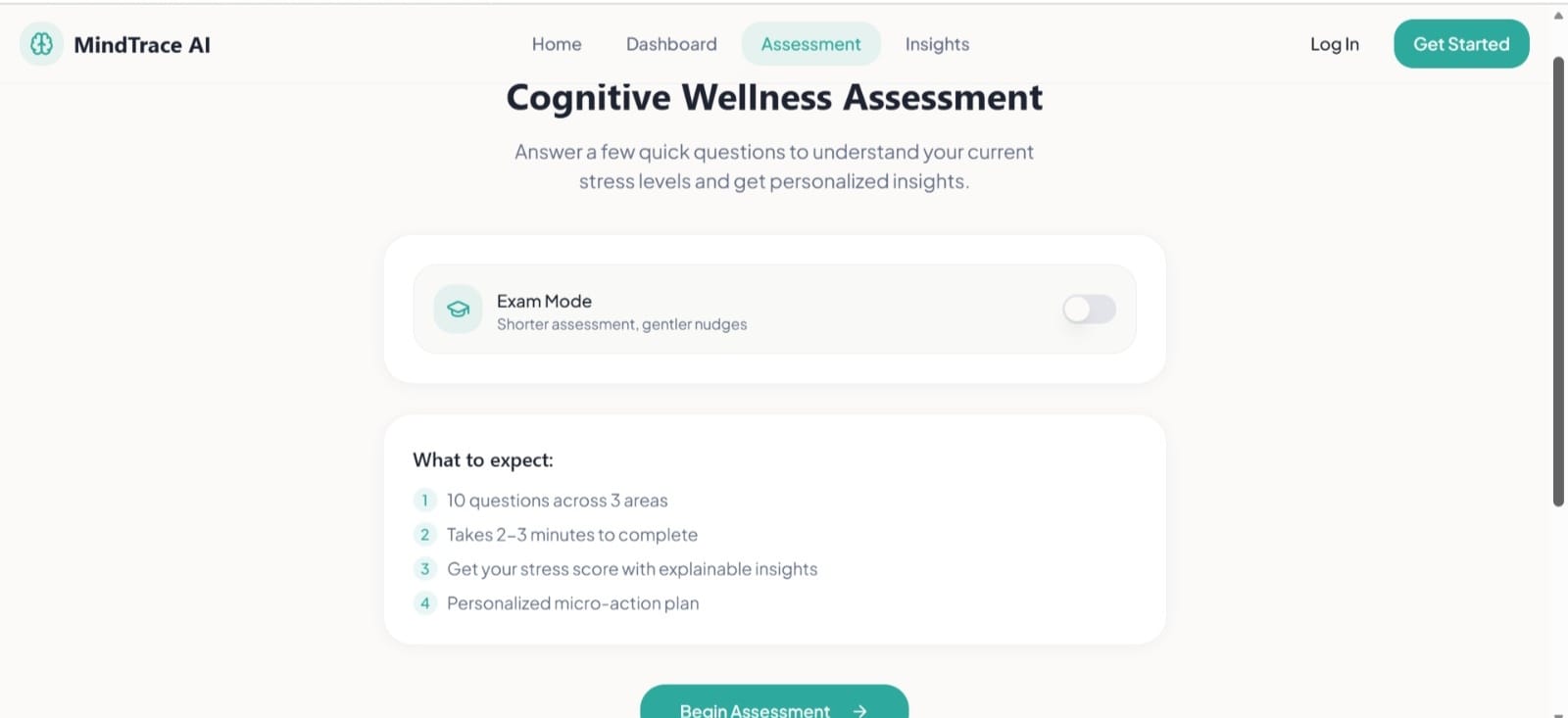
Assessment
-
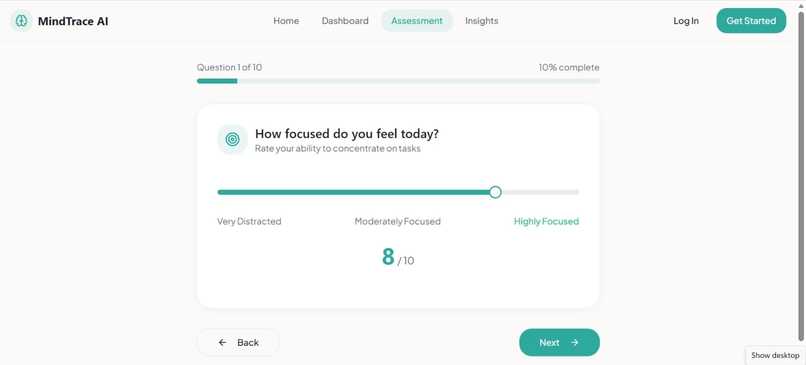
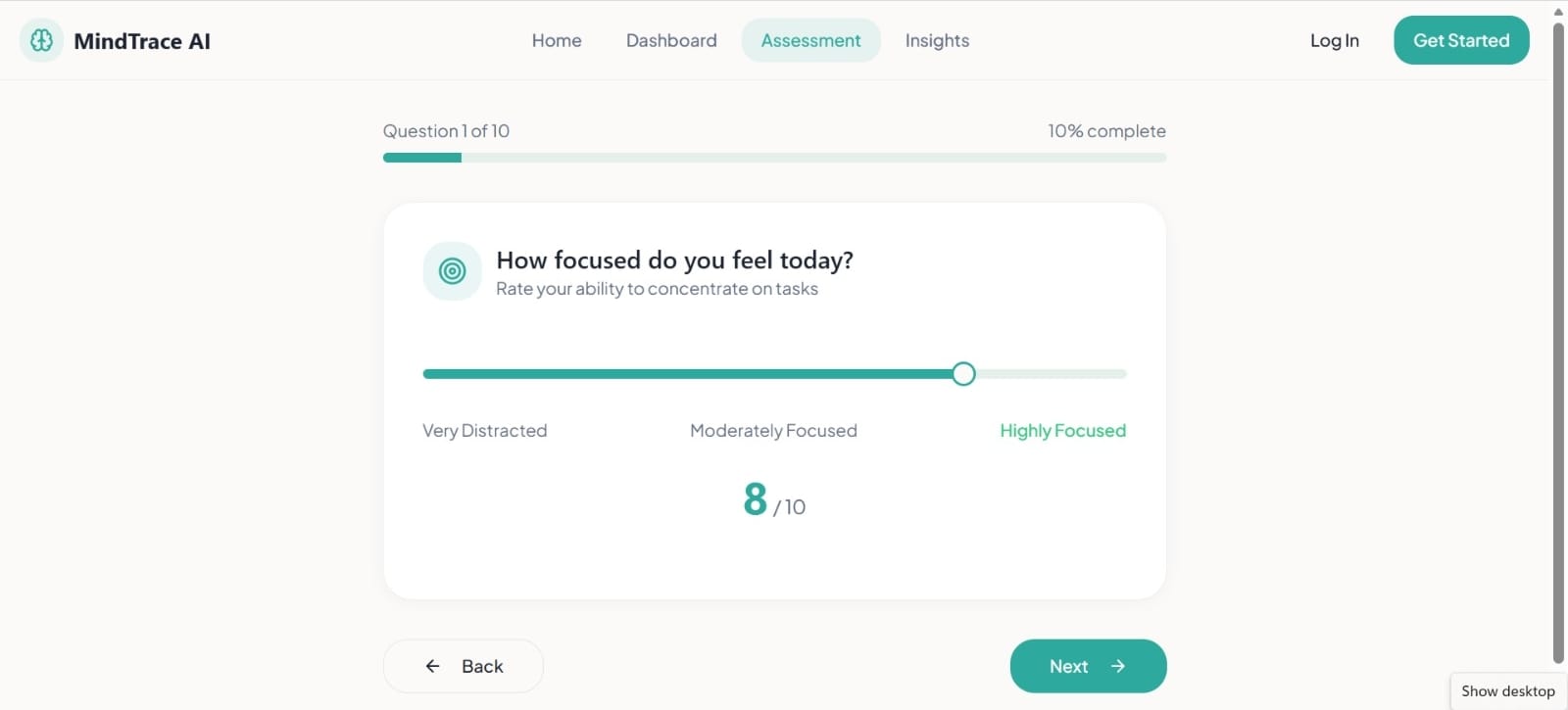
Assessment
-
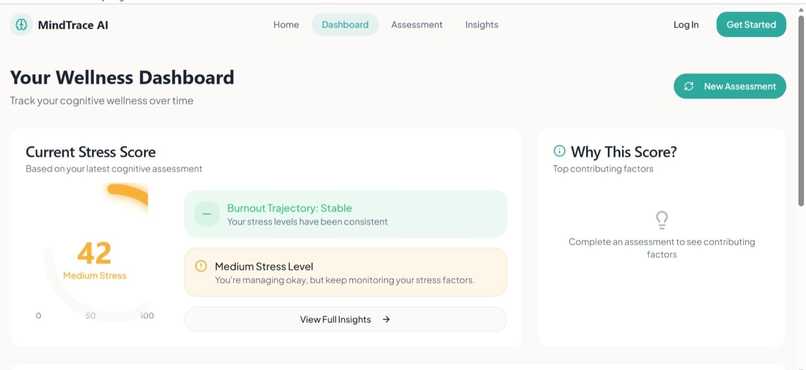
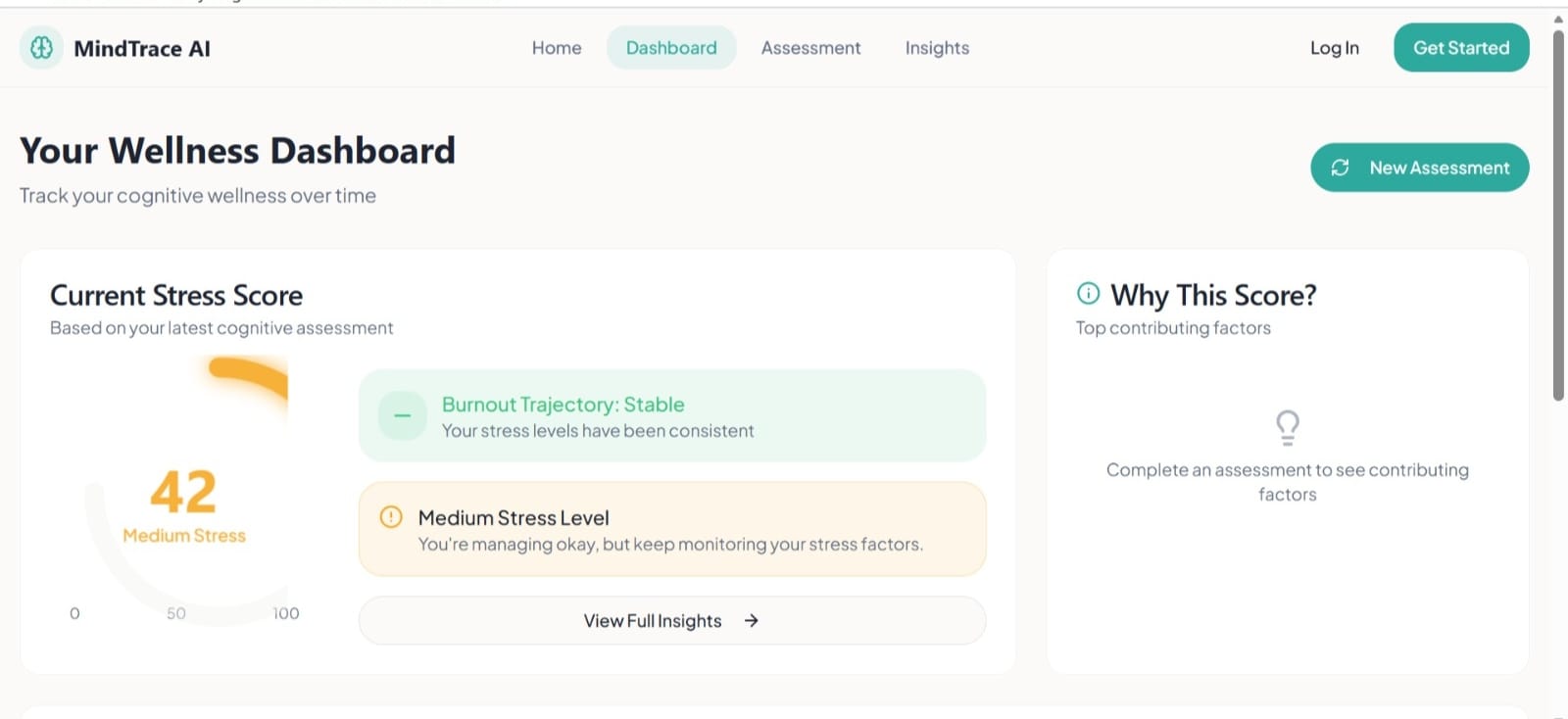
Dashboard
-
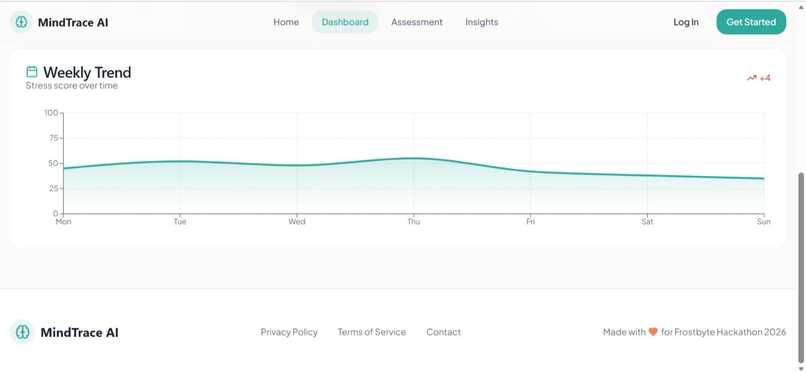
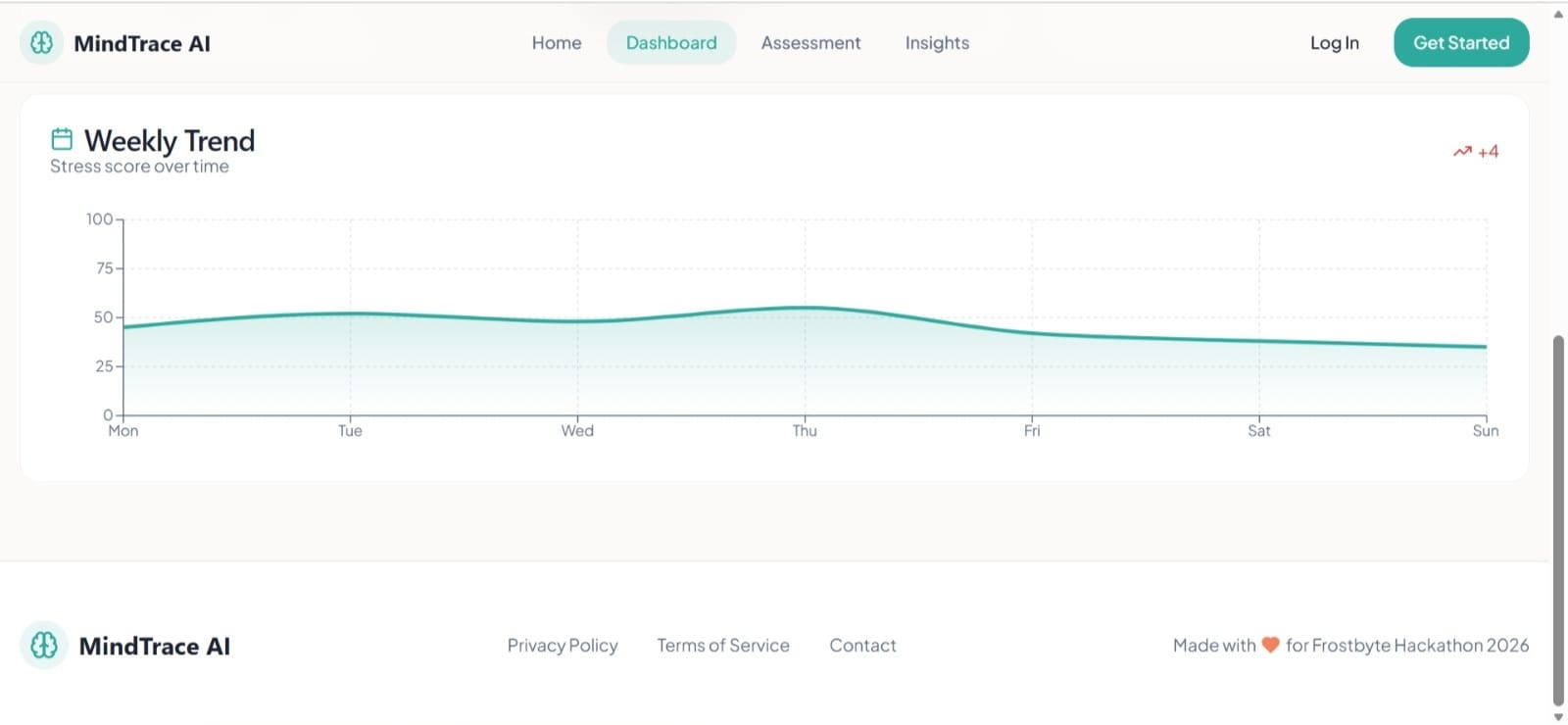
Dashboard
-
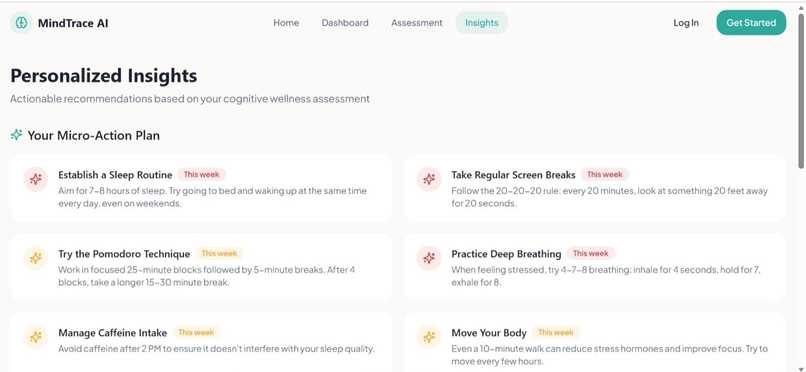
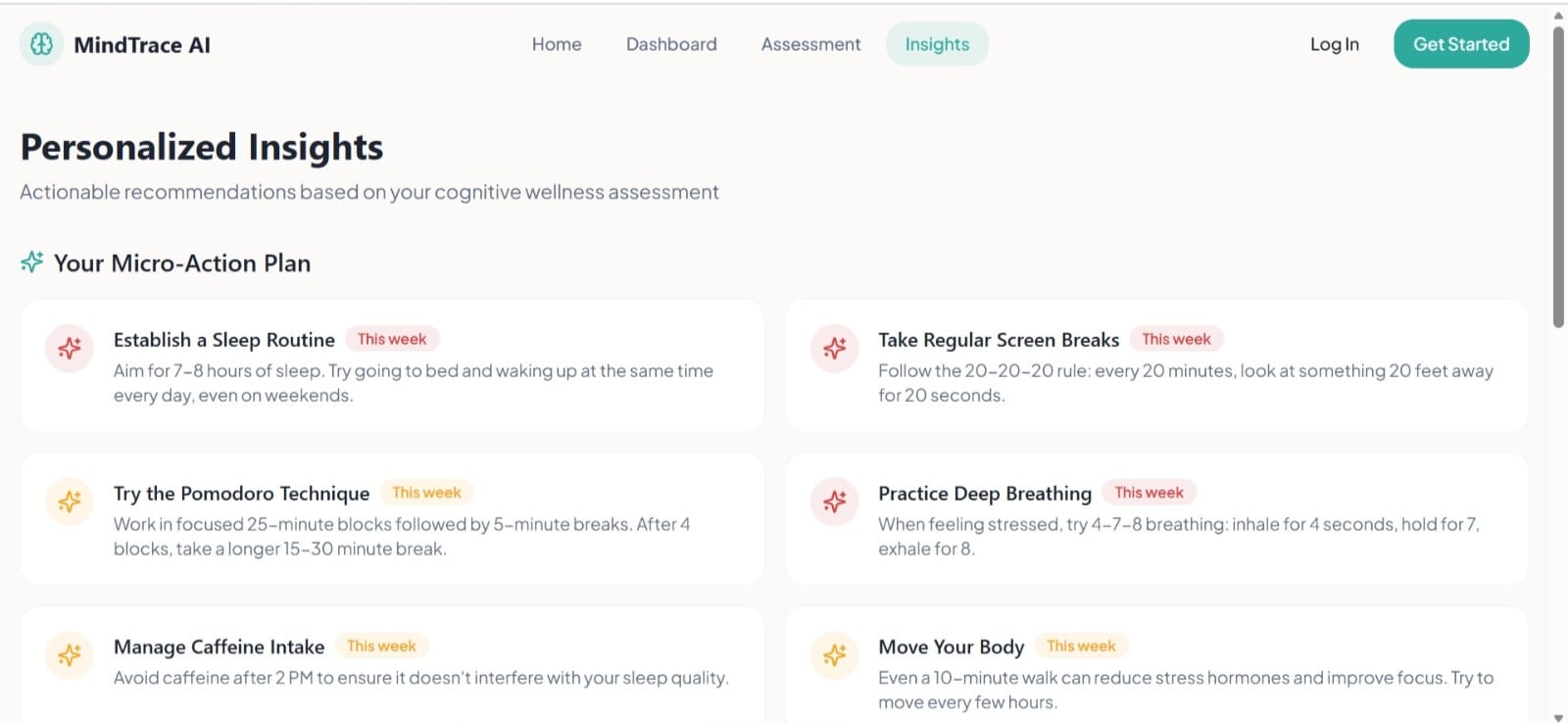
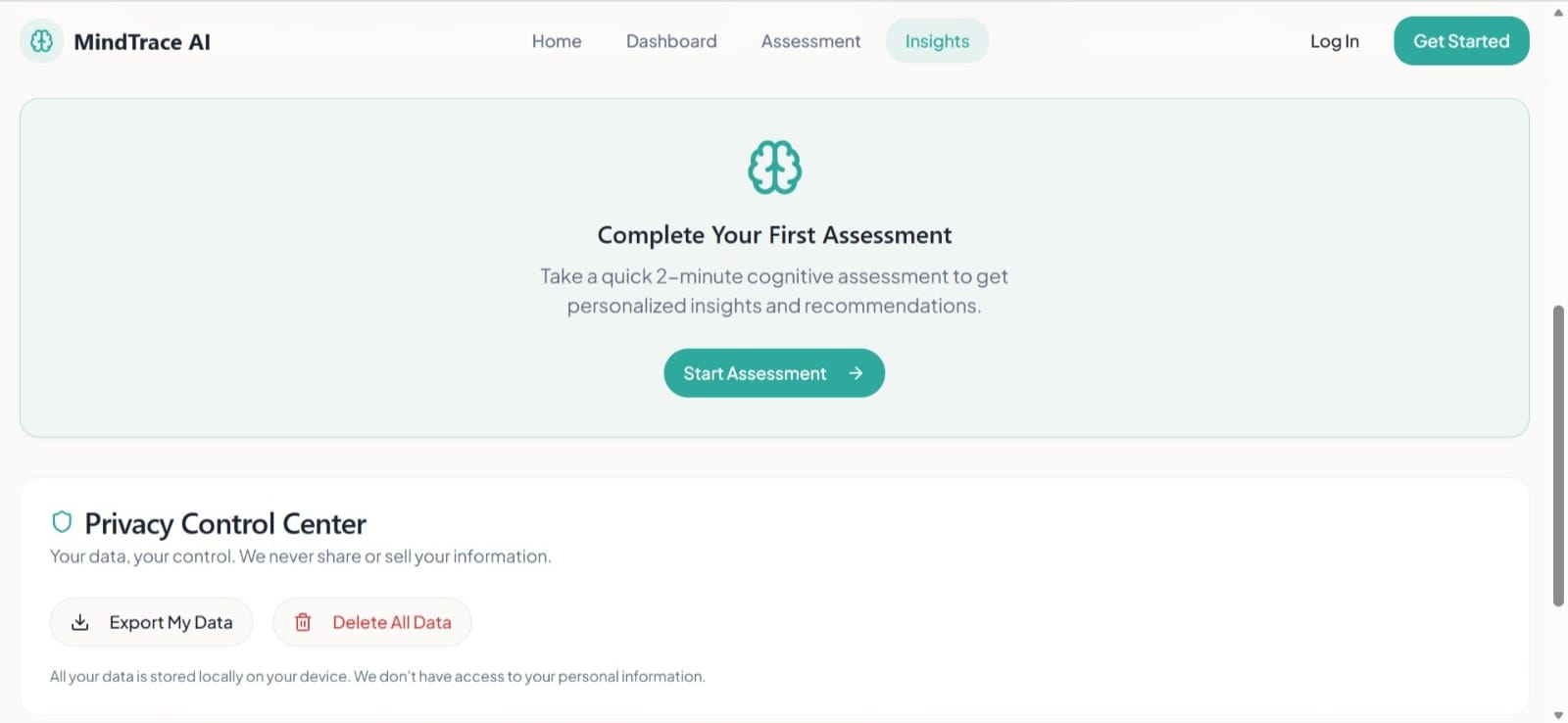
Insights
-
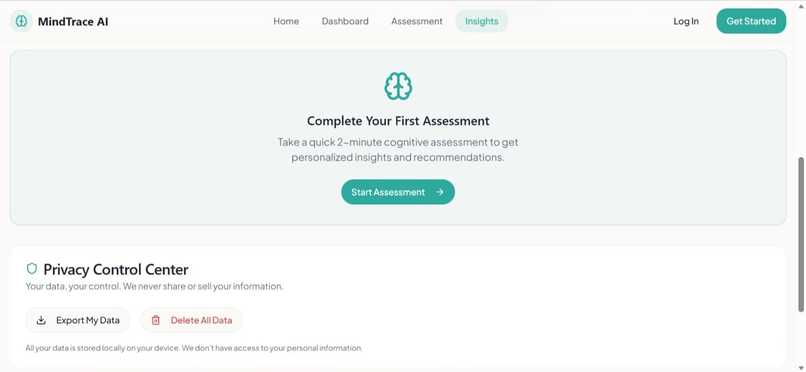
Insights
MindTrace AI – Early Cognitive Stress & Burnout Indicator
MindTrace AI is an innovative AI-powered platform designed to detect early signs of cognitive stress and burnout in students. By leveraging behavioral data, cognitive tests, and lifestyle inputs, it provides personalized insights and preventive guidance before serious mental health issues arise.
Inspiration
In today’s fast-paced academic and digital environment, students face unprecedented levels of cognitive stress, anxiety, and burnout. Mental health resources are often reactive, providing help only after problems have escalated.
We were inspired to create MindTrace AI because early awareness can make all the difference. The idea is to empower students with actionable insights about their cognitive health, using AI to analyze subtle patterns in daily behavior, attention levels, sleep, and lifestyle choices.
Our goal was to develop a tool that is preventive, non-intrusive, and scientifically informed, allowing students to take proactive steps toward maintaining mental wellness.
What it does
MindTrace AI transforms everyday behavior into meaningful wellness insights:
- Behavioral Check-Ins: Students answer short, daily questions about stress, focus, and sleep.
- Cognitive Tasks: Quick, interactive tasks measure reaction time, attention, and focus patterns.
- Data Analysis with AI: Machine learning models detect subtle patterns indicating early cognitive stress.
- Personalized Insights: Students receive clear, actionable recommendations to improve focus, reduce stress, and maintain balance.
- Trend Tracking: The platform visualizes cognitive health trends over time, allowing students to see progress and changes in their mental state.
- Preventive Guidance: Emphasis is on prevention rather than diagnosis, ensuring ethical and safe usage.
By combining behavioral data with machine learning, MindTrace AI creates a proactive, student-centered approach to mental wellness.
How we built it
Technology Stack
- Frontend: React.js, HTML5, CSS3, Material UI
- Responsive design for web and mobile
- Interactive cognitive task interfaces
- Responsive design for web and mobile
- Backend: FastAPI with Python
- RESTful API endpoints
- Secure data handling and validation
- RESTful API endpoints
- Machine Learning: Scikit-learn and TensorFlow Lite
- Models: Random Forest for predictive stress scoring, optional LSTM for trend analysis
- Models: Random Forest for predictive stress scoring, optional LSTM for trend analysis
- Database: SQLite for lightweight, secure data storage
- Data Sources: Behavioral input, cognitive task performance, sleep and lifestyle metrics
Development Workflow
- Research & Data Collection: Identified key behavioral and cognitive indicators relevant to early stress and burnout.
- Model Training: Developed ML models on anonymized, publicly available datasets simulating student behavior.
- Frontend Integration: Built an intuitive dashboard to visualize trends, scores, and personalized recommendations.
- Backend Integration: Connected frontend with secure APIs, handling user input and delivering ML predictions in real time.
- Testing: Multiple iterative rounds to ensure usability, accuracy, and performance.
The platform was designed to be scalable, ethical, and user-friendly, ensuring it could be deployed widely with minimal technical barriers.
Challenges we ran into
Data Availability:
- Real-world student cognitive and stress datasets are rare due to privacy concerns.
- Solution: Used anonymized public datasets and synthetic behavioral data for model training.
- Real-world student cognitive and stress datasets are rare due to privacy concerns.
Model Accuracy vs. Interpretability:
- Balancing predictive power with understandable output for students was challenging.
- Solution: Opted for Random Forest + clear scoring metrics and visualizations to make AI output actionable.
- Balancing predictive power with understandable output for students was challenging.
Ethical Concerns:
- Ensuring that the tool does not misdiagnose or alarm students.
- Solution: Added clear disclaimers emphasizing prevention, not medical diagnosis, and focused on wellness recommendations.
- Ensuring that the tool does not misdiagnose or alarm students.
User Engagement:
- Motivating students to consistently input data.
- Solution: Designed short, interactive tasks and visually appealing dashboards with gamified progress tracking.
- Motivating students to consistently input data.
Despite these challenges, we maintained a strong focus on usability, accuracy, and positive impact.
Accomplishments that we're proud of
- Built a fully functional AI-driven platform capable of predicting early cognitive stress patterns.
- Designed a clean, modern, and interactive dashboard that visualizes trends and insights intuitively.
- Created actionable preventive recommendations that students can use immediately to improve focus and reduce stress.
- Achieved a balance of technical complexity and ethical responsibility, making it safe for widespread student use.
- Developed a model that can adapt to individual behavior trends, providing personalized feedback rather than generic advice.
This project demonstrates that AI can be applied responsibly to improve mental wellness, addressing a pressing need among students worldwide.
What we learned
- AI for mental health requires both ethics and empathy: Predictive models must be accurate but also safe and non-alarming.
- User-centered design is critical: A tool can be powerful technically but ineffective without a clear, intuitive interface.
- Behavioral data is nuanced: Small daily changes can reveal significant cognitive trends — capturing and interpreting this data responsibly is key.
- Collaboration enhances outcomes: Combining skills in AI, frontend, backend, and UX design created a robust, polished solution.
- Preventive focus increases impact: Solutions that address problems early have higher societal value and greater adoption potential.
What's next for MindTrace AI
We envision MindTrace AI growing beyond a hackathon prototype to a fully deployed platform with global impact:
- Mobile App Integration: Launching iOS and Android apps for wider accessibility.
- Advanced Machine Learning: Incorporate more sophisticated models such as LSTM and Transformer-based attention mechanisms for better trend prediction.
- Gamification & Engagement: Reward consistent user engagement and healthy behavior patterns with badges, streaks, and insights.
- Integration with Wearables: Connect with smartwatches or fitness trackers to capture real-time physiological data like heart rate and sleep quality.
- Research Partnerships: Collaborate with educational institutions to validate and enhance model accuracy with anonymized real-world data.
- Community & Social Impact: Create dashboards for student counselors, wellness coaches, and educators to help guide interventions ethically.
MindTrace AI is positioned not just as a hackathon-winning project, but as a scalable, socially responsible AI solution that can meaningfully improve student mental wellness globally.
Join us in shaping a future where students can understand their cognitive health early, take preventive action, and thrive academically and mentally — with MindTrace AI.
Built With
- css3
- fastapi
- git
- github
- html5
- javascript
- numpy
- pandas
- python
- react.js
- rest-apis
- scikit-learn
- sqlite
- tensorflow-lite
- uvicorn


Log in or sign up for Devpost to join the conversation.