Mindsync: Unlock Your Peak Potential
Inspiration
As someone diagnosed with ADHD, I have always struggled with focus and attention regulation. Traditional solutions—medications, white noise apps, and mindfulness exercises—never truly adapted to my brain's real-time needs.
The idea for Mindsync was born out of this frustration. I needed a system that understands and reacts to my brain activity in real time, helping me regain focus without external distractions. EEG-based neurofeedback seemed like the answer, leading to the development of Mindsync: an adaptive EEG-powered cognitive enhancement system.
What It Does
Mindsync is a real-time EEG-based neurofeedback system designed to optimize focus, relaxation, and productivity.
- Monitors EEG signals using an in-ear EEG headset
- Analyzes brainwave activity in different frequency bands (Delta, Theta, Alpha, Beta, Gamma)
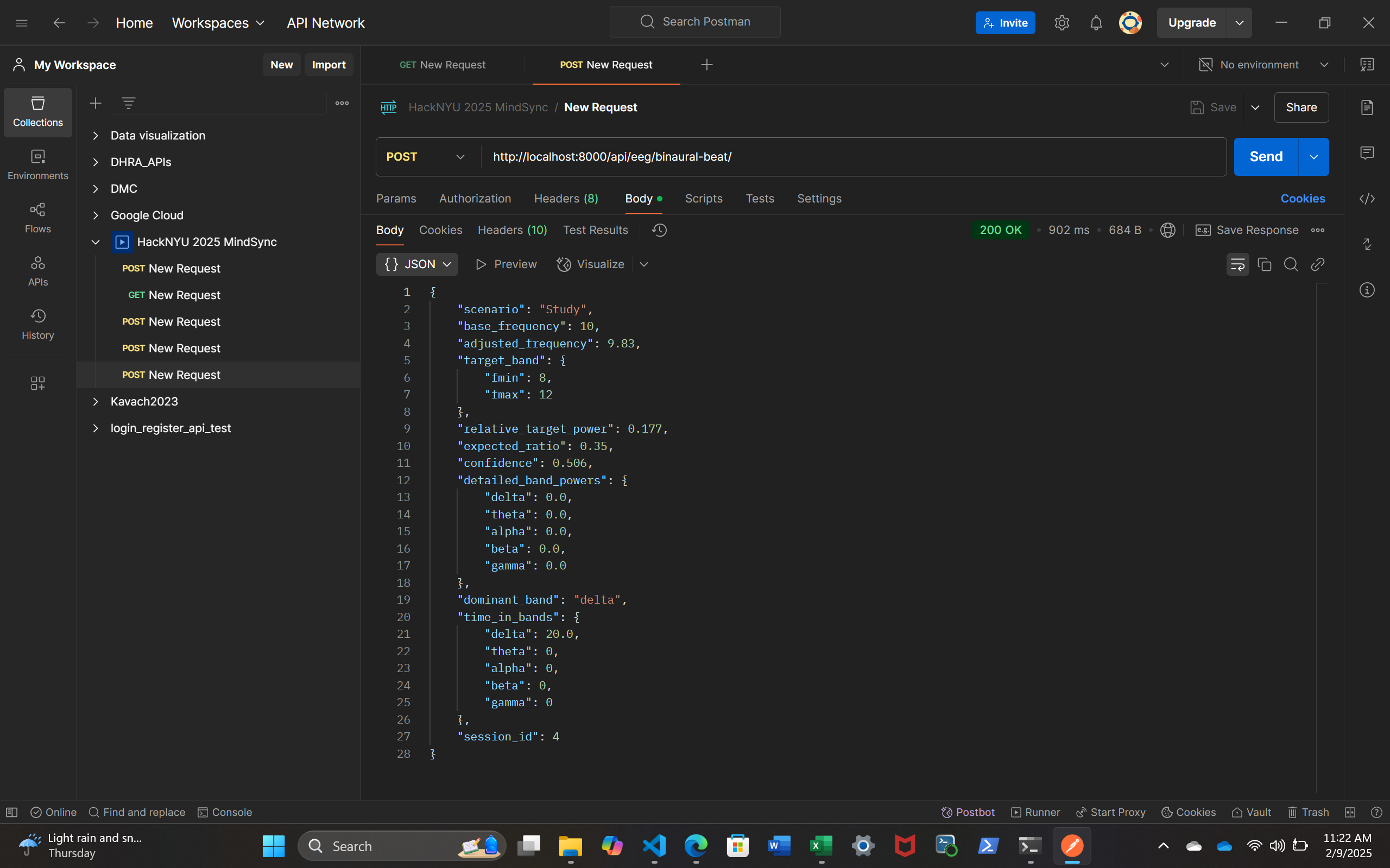
- Dynamically adjusts binaural beats to steer the brain toward optimal cognitive states
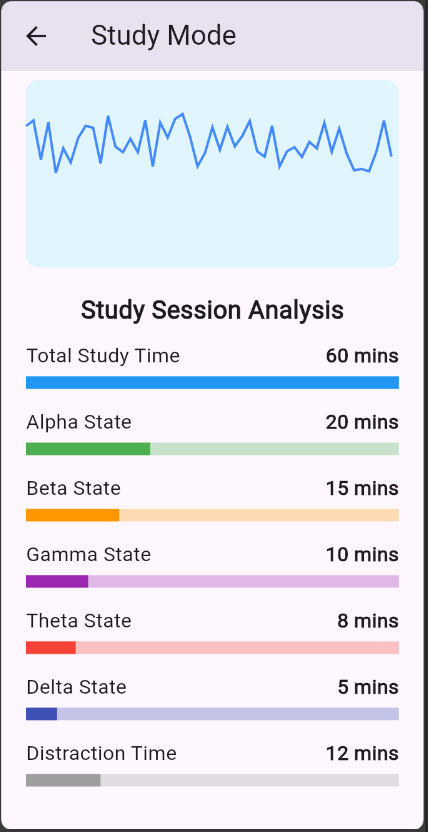
- Tracks time spent in each mental state to provide long-term insights
For example, if the system detects loss of focus while studying, it automatically adjusts binaural beats to realign brain activity, helping the user regain focus instantly.
How We Built It
Mindsync's architecture combines EEG signal processing, real-time data analysis, and an intuitive Flutter-based frontend.
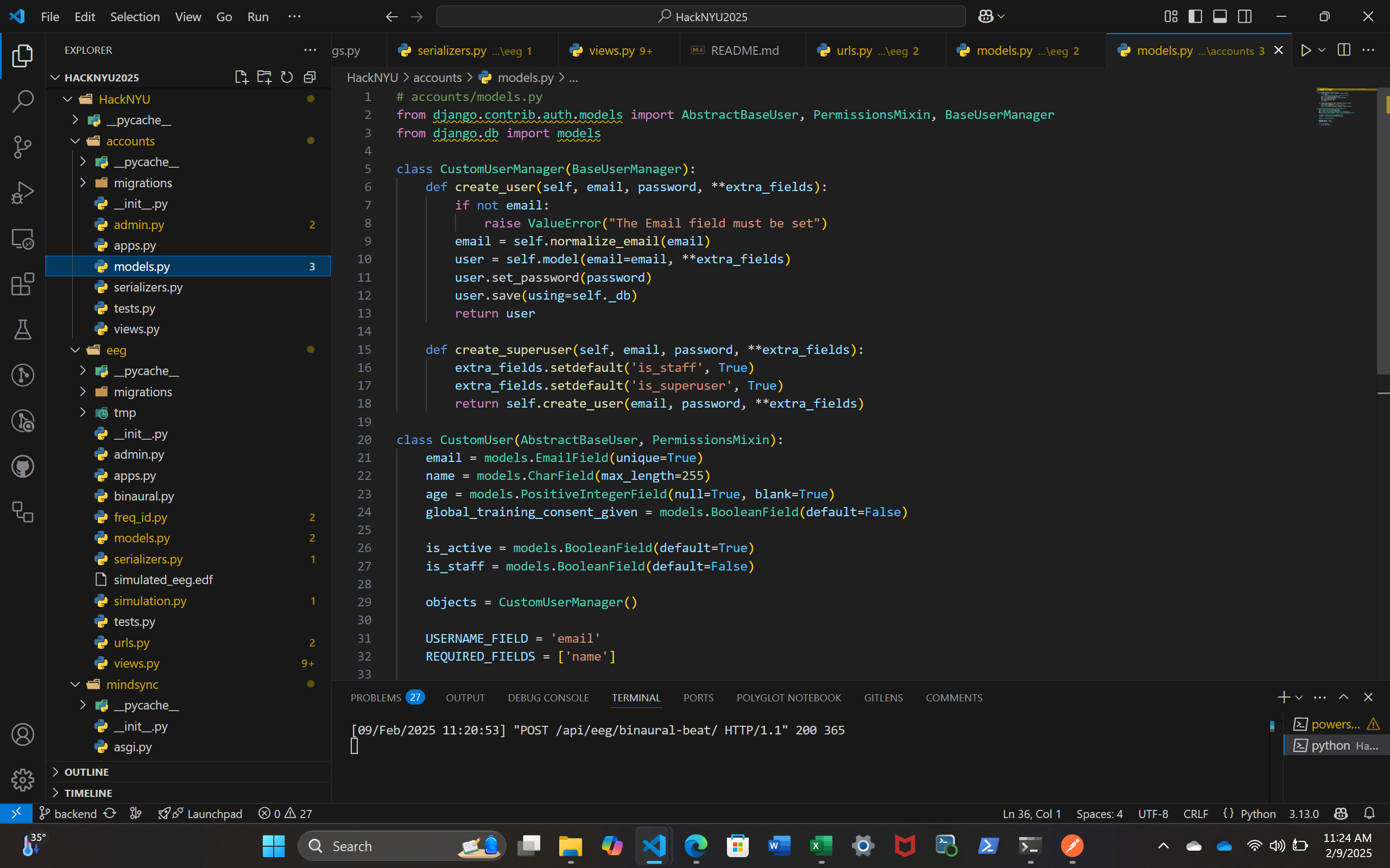
Backend (Django + MNE-Python)
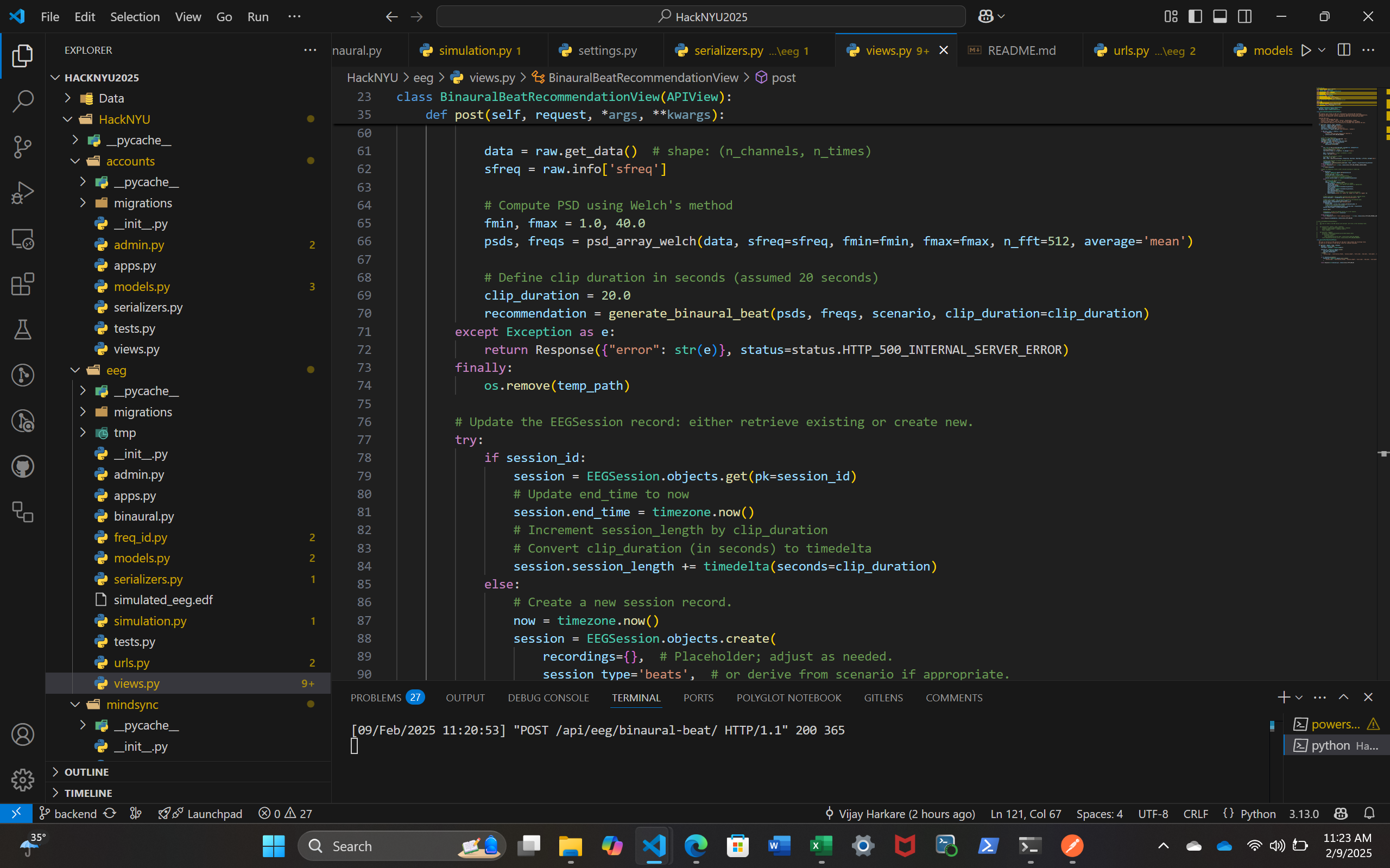
- EEG signals processed using MNE-Python
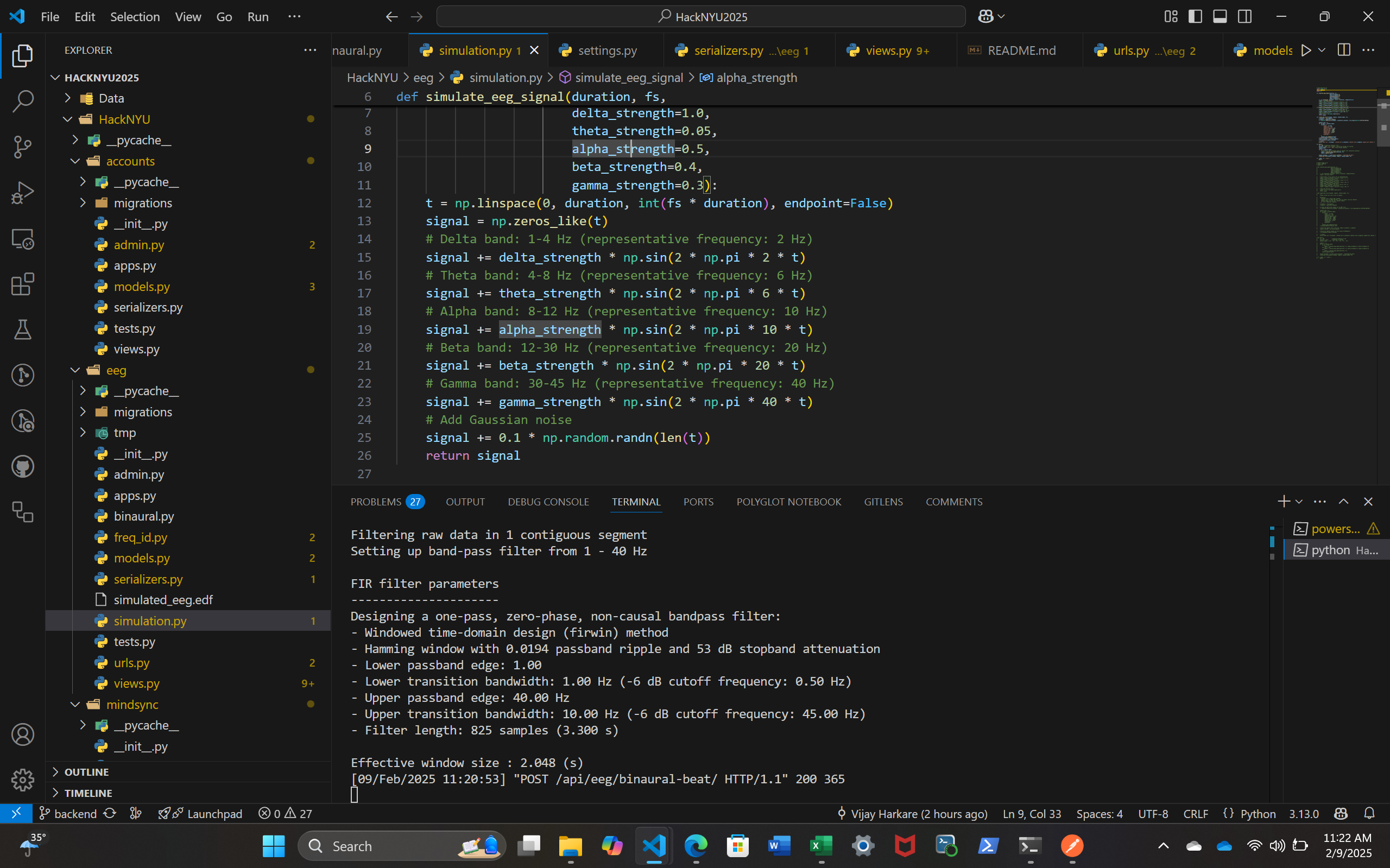
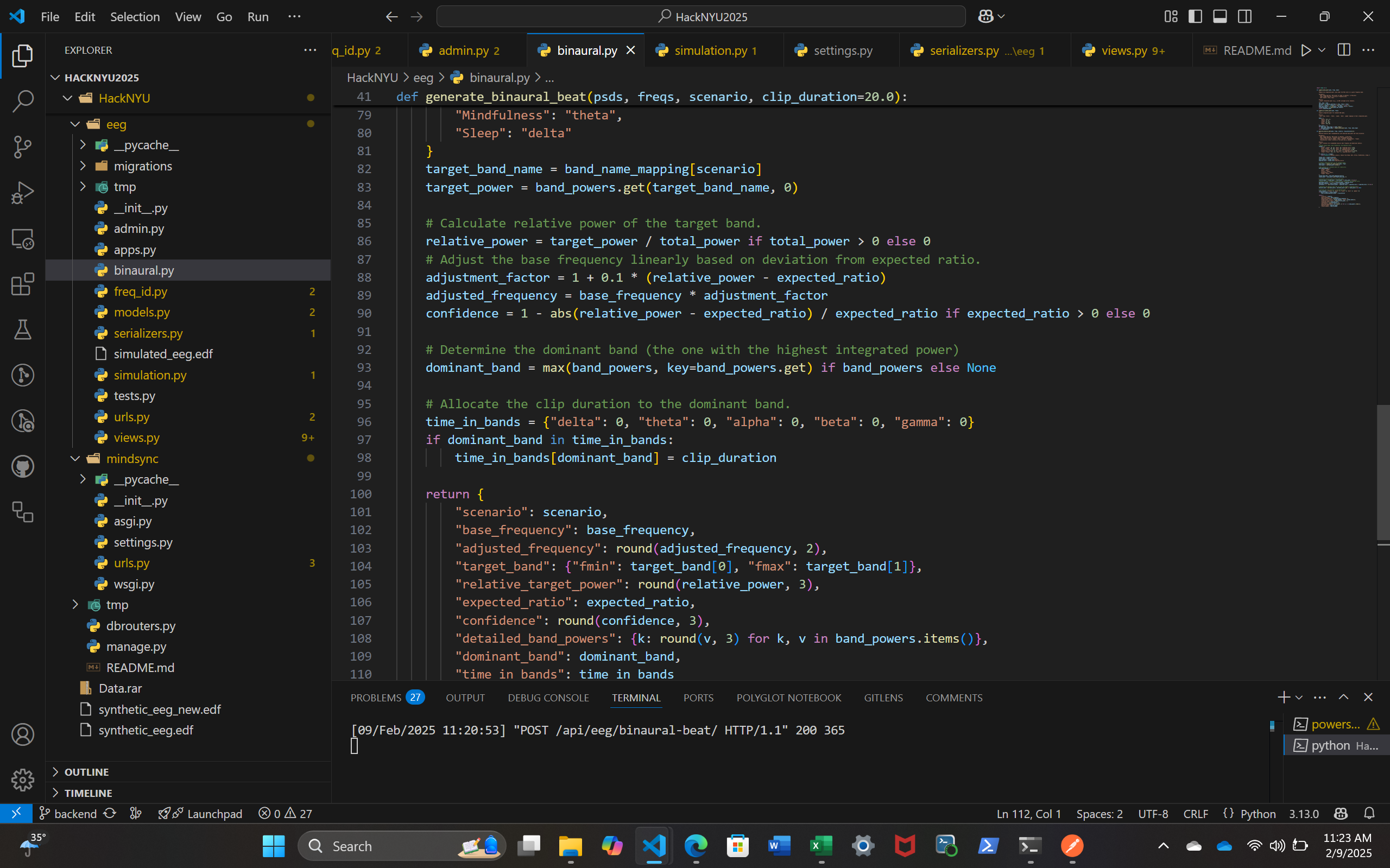
- Bandpass filtering (1–40 Hz) + Welch’s method for PSD estimation
- Relative band power computation to determine dominant brain state
- EEG session data stored in MongoDB, user metadata in PostgreSQL
- API built with Django REST Framework, processing 20-second EEG clips in real time
Frontend (Flutter)
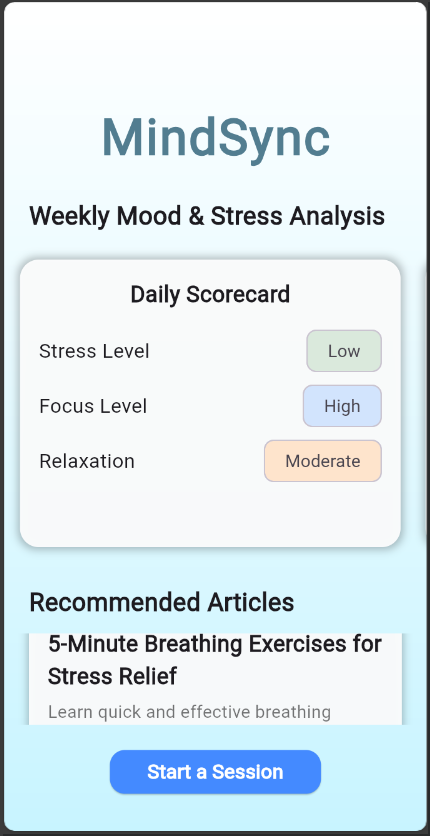
- EEG session dashboard for real-time brainwave tracking
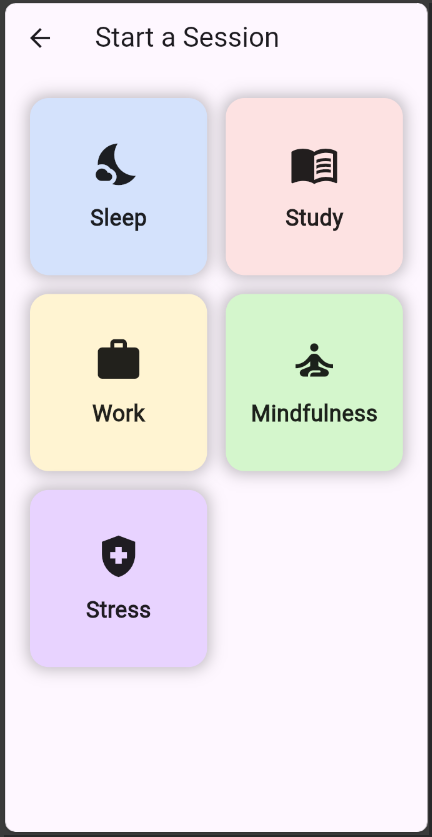
- Session summaries & mode-based EEG analysis
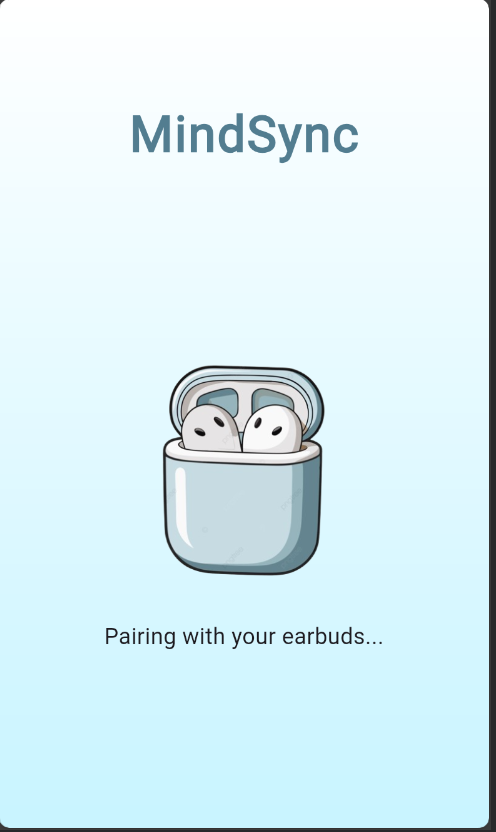
- Seamless ear-EEG headset pairing
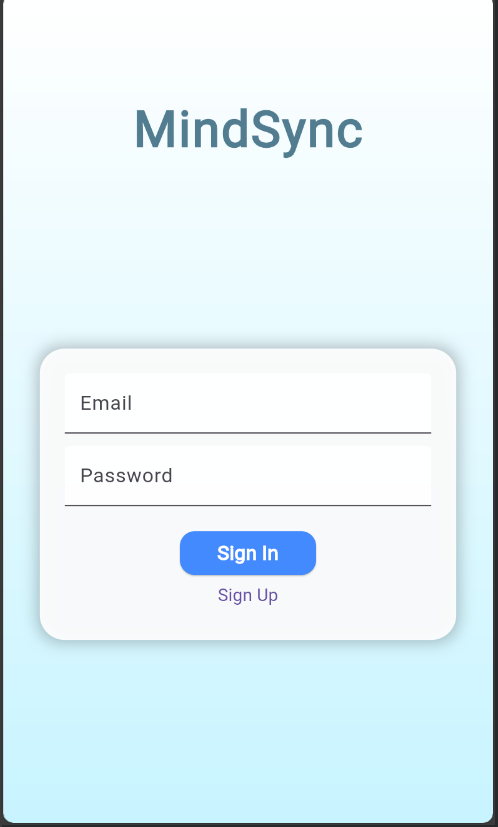
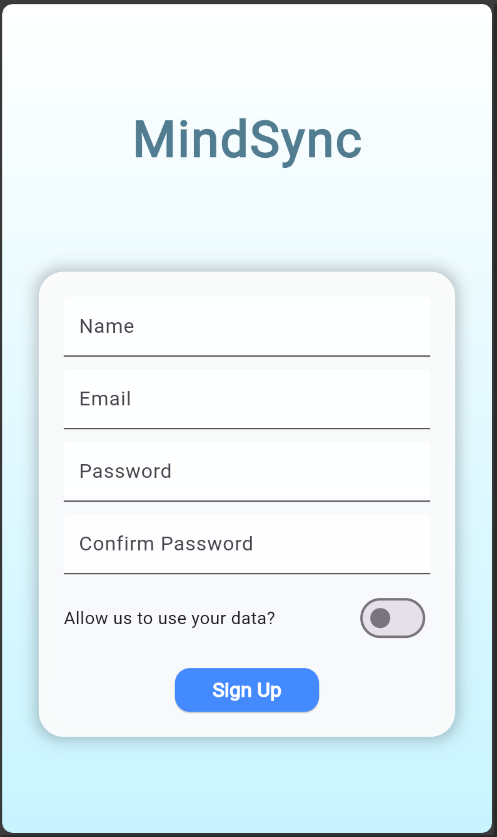
- Minimalist, distraction-free UI
Challenges We Ran Into
Real-Time EEG Processing
- Implementing fast & accurate EEG signal analysis for instant neurofeedback
- Managing low-latency EEG processing while maintaining accuracy
- Implementing fast & accurate EEG signal analysis for instant neurofeedback
Database Architecture
- Balancing MongoDB for EEG data storage and PostgreSQL for user metadata
- Optimizing queries for real-time EEG state tracking
- Balancing MongoDB for EEG data storage and PostgreSQL for user metadata
Frontend Development
- Designing an intuitive, calm-themed UI
- Creating real-time EEG visualizations in Flutter
- Designing an intuitive, calm-themed UI
Hardware Constraints
- While our MVP runs on simulated EEG data, we are actively developing a proprietary in-ear EEG headset
- While our MVP runs on simulated EEG data, we are actively developing a proprietary in-ear EEG headset
Accomplishments That We're Proud Of
- Successfully implemented real-time EEG processing & neurofeedback
- Developed a multi-database architecture to handle both structured and unstructured EEG data
- Built a Flutter-based frontend that delivers an intuitive, distraction-free user experience
- Designed an adaptive binaural beats algorithm based on EEG band power analysis
What We Learned
- EEG signal processing techniques (bandpass filtering, PSD estimation, and real-time data interpretation)
- Django REST Framework & Flutter integration for smooth backend-frontend communication
- Optimizing database performance for real-time EEG analysis
- The importance of real-time adaptability in neurofeedback applications
What's Next for Mindsync
We are actively developing ear-EEG headphones to enable seamless, real-time brainwave monitoring.
Beyond binaural beats, we are working on generalized EEG representations using foundation models like LaBraM and BENDR. These models allow for self-supervised learning of EEG signals, improving:
- Better EEG signal analysis & feature extraction
- Personalized neurofeedback with deeper cognitive state understanding
- Enhanced inference for long-term brain health monitoring
Our goal is to move beyond simple band-power analysis and incorporate advanced AI models that can decode brain states more accurately, paving the way for next-generation cognitive enhancement tools.


Log in or sign up for Devpost to join the conversation.