Inspiration
The inspiration behind MindStudy came from a common struggle many students face: Productivity often crashes when mental well-being suffers. We saw classmates stressing over deadlines, burning out, and pushing through without understanding why they felt demotivated.
We wanted a tool that respects emotions while promoting productivity. Instead of forcing students into intense study schedules, MindStudy encourages balance, reflection, and emotional awareness.
This mindset guided our design: Productivity=Consistency×Emotional Stability
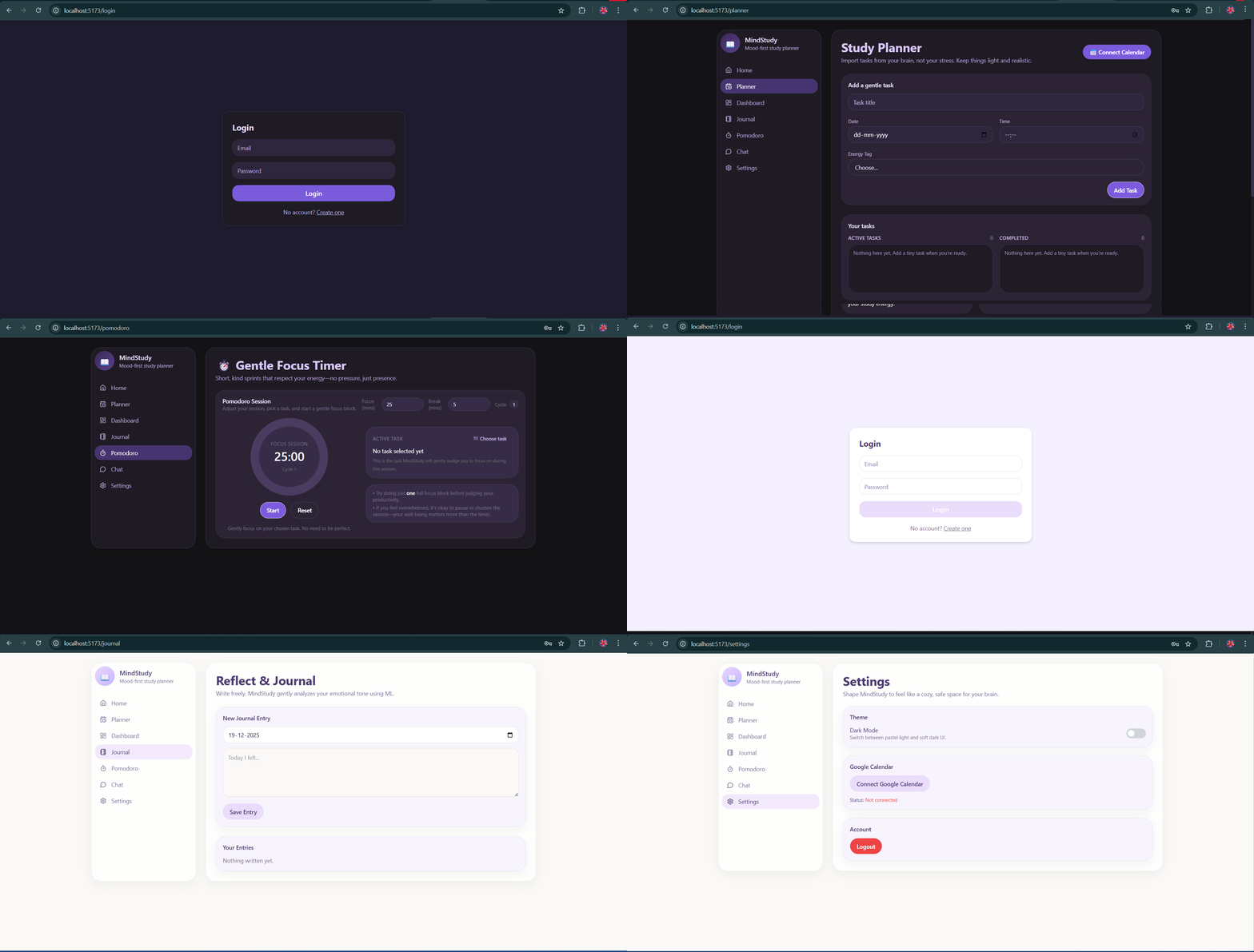
💡 What it does MindStudy is a mood-aware study companion that helps students:
- Track their daily moods
- Maintain a personal journal 3 .Organise tasks and to-dos
- Visualise study and mood trends with charts
- Build positive study habits instead of burning out
- It blends emotional wellness with task planning (like having a planner and a personal reflection coach in one place.)
🛠️ How we built it
MindStudy is developed using a full-stack architecture:
Frontend: React for UI/UX, contextual renders based on mood inputs Backend: FastAPI for authentication, journaling, tasks, and analytics APIs Database: MongoDB to store entries and tasks Charts: Chart.js for mood and productivity visualization
We used a simple scoring mechanism to relate task intensity with mood: Recommended Difficulty=max(1,5−MoodScore)
This allows the platform to respond intelligently to emotional input.
🧩 Challenges we ran into
- Creating meaningful mood quantification models
- Designing UI that feels supportive, not intrusive
- Balancing between privacy concerns and analytics tracking
- Managing async API calls and state between journal, mood logs, and tasks
- Keeping charts simple but insightful
- We wanted MindStudy to feel human — not like a surveillance tool — and that required careful decisions.
🏆 Accomplishments that we're proud of:
- Built a fully working mood + task planning system in one app
- Delivered consistent analytics charts for emotional and study progress
- Added personal journaling to encourage reflection
- Ensured a smooth, student-friendly UI
- Designed an approach that promotes healthy academic routines
- Watching a simple mood log influence study plans was a big moment.
📚 What we learned:
- Emotional data needs careful handling and privacy safeguards
- Minimal design is more effective for reflection-based tools
- Students respond better to suggestions than instructions
- Analytics can motivate users when visualized clearly
- User well-being should guide feature decisions
- We also learned that tech can support mental balance without medical claims.
🔮 What's next for MindStudy
Completed Advancements:
- AI-generated study timetable
- Mood-based task difficulty adjustment
- Deeper analytics charts
- Mobile app version
- Data encryption at rest
- Upcoming Enhancements
- Personalised recommendations based on long-term patterns
- Community reflection prompts
- Secure offline journaling export
- Cognitive-behaviour-based streak encouragement
The next step is turning MindStudy into a daily emotional-productivity ecosystem for students everywhere.


Log in or sign up for Devpost to join the conversation.