-
-
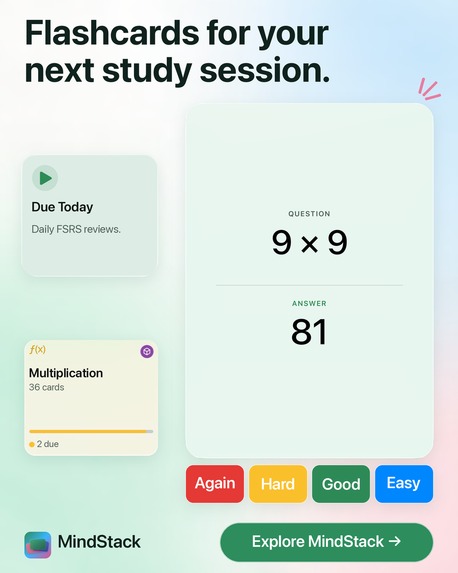
MindStack Flashcards: daily reviews, with familiar four-button grading.
-
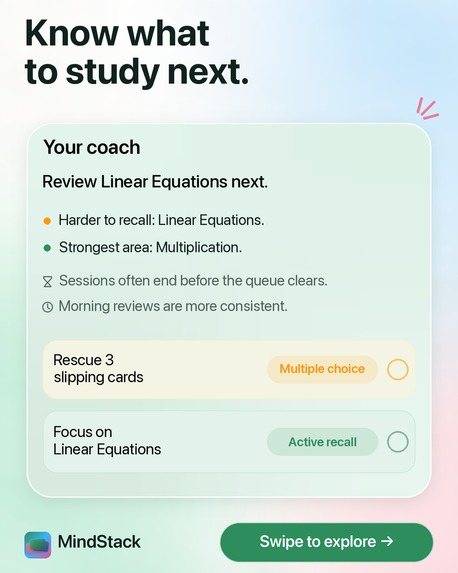
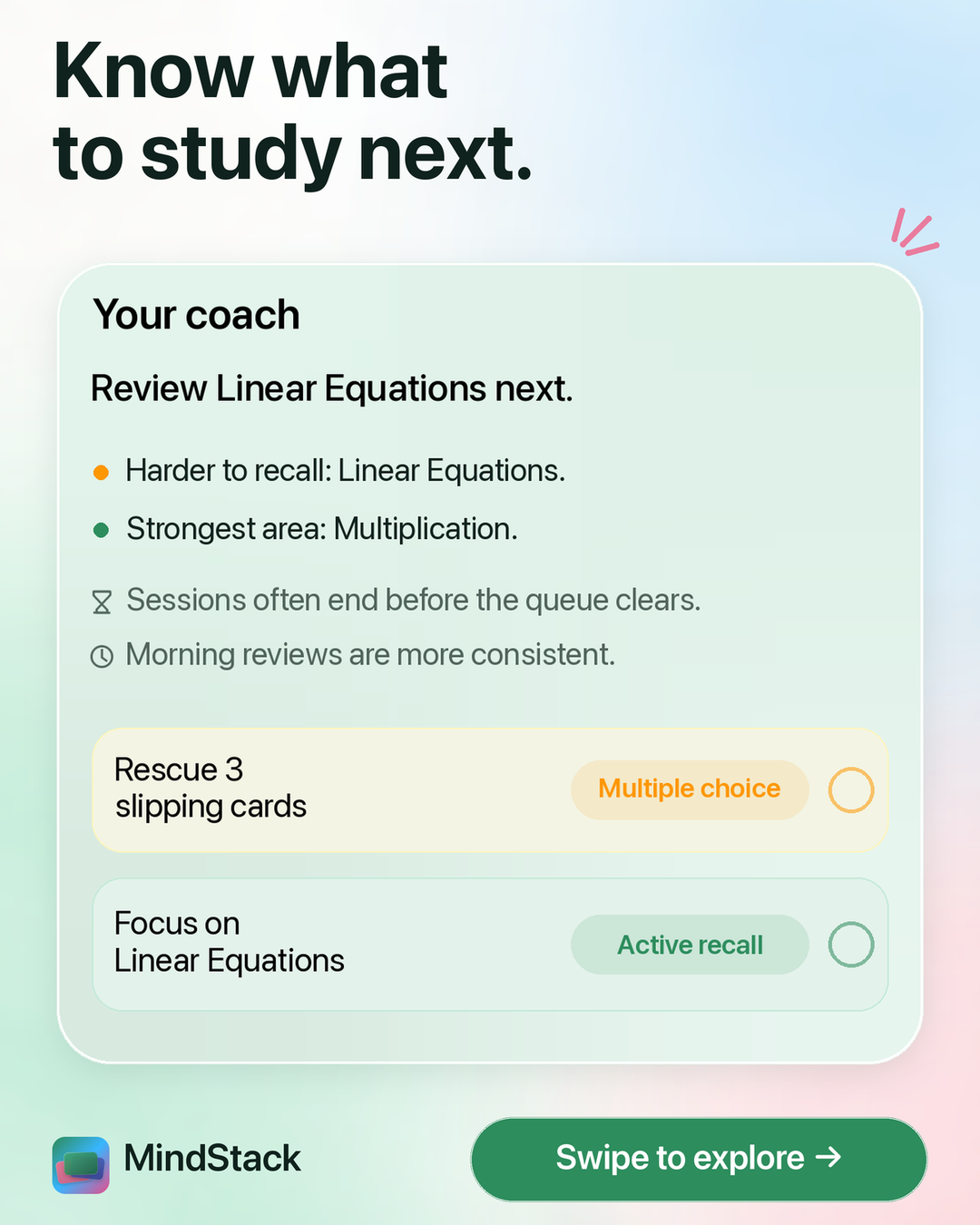
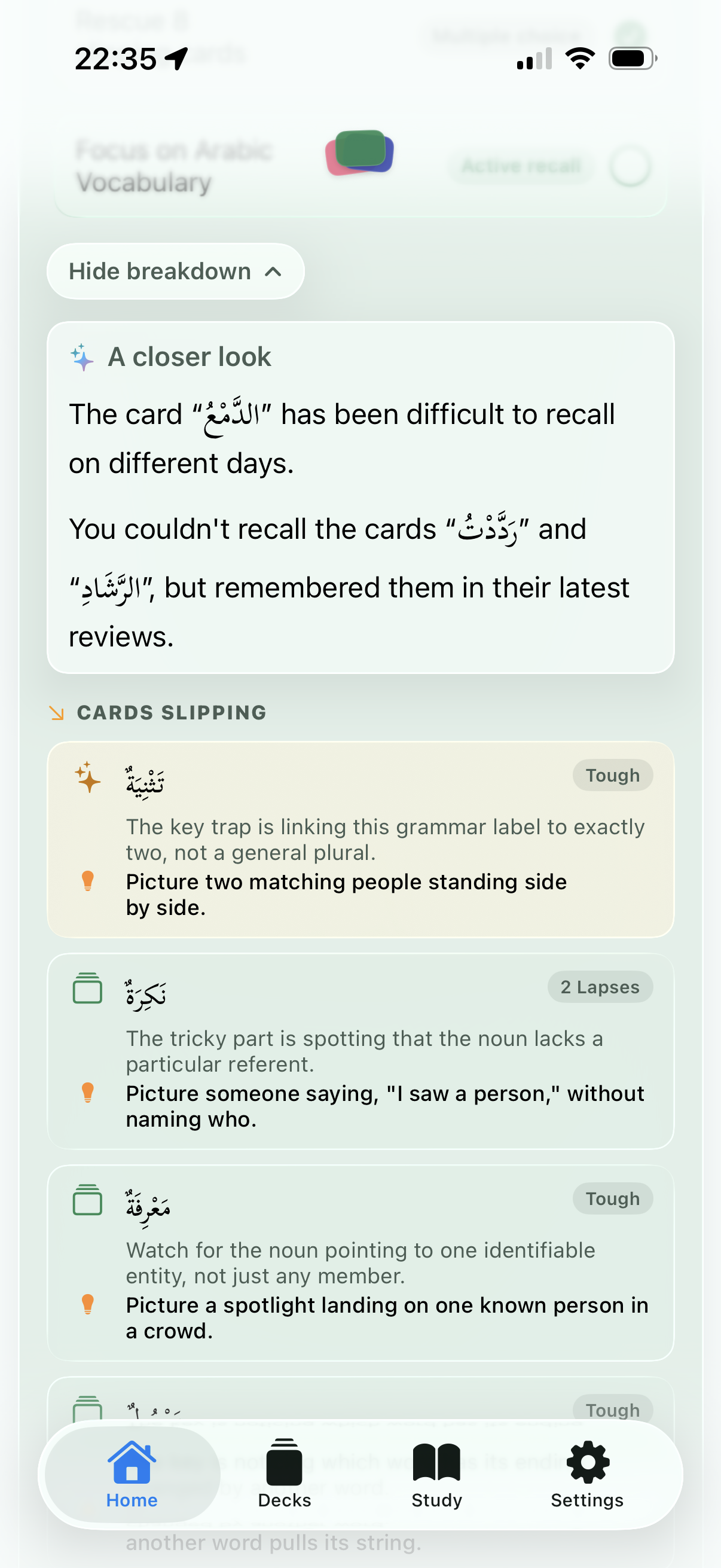
Your study history becomes focused practice with the AI coach.
-
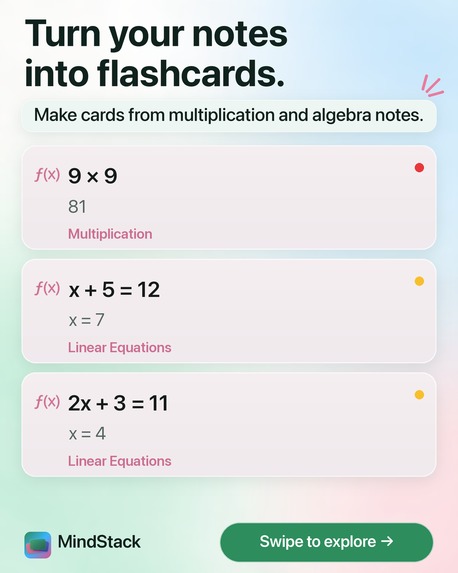
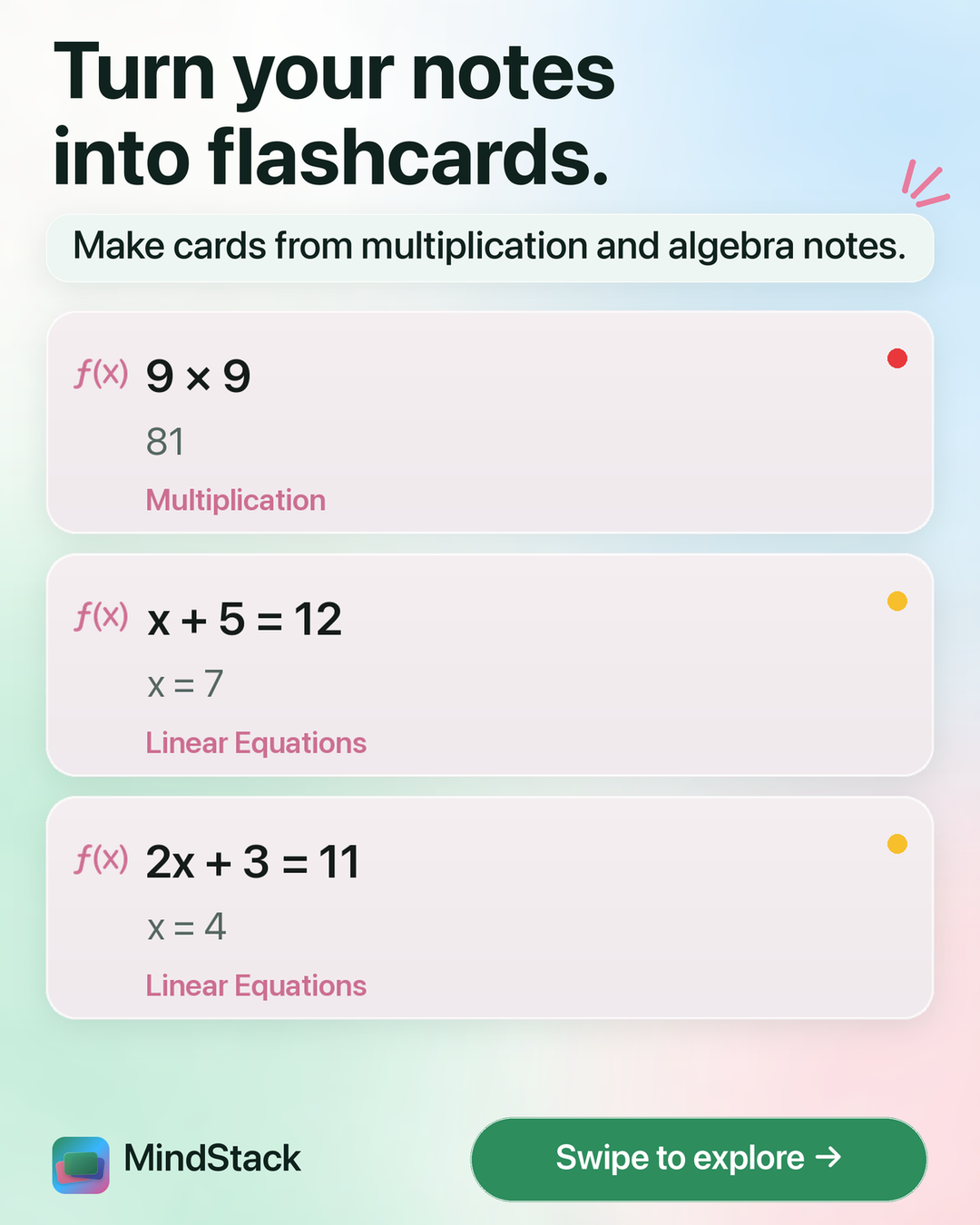
Turn your notes into flashcards with AI.
-
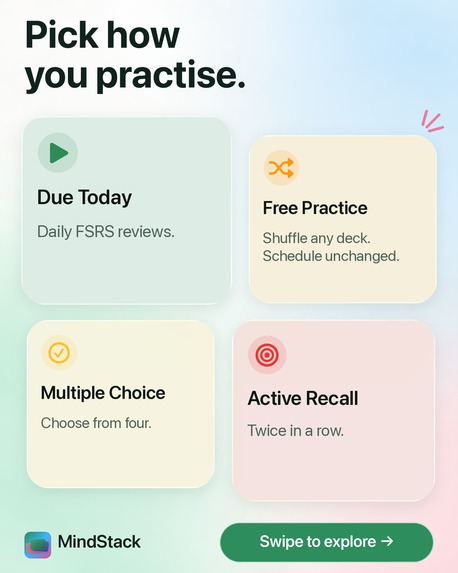
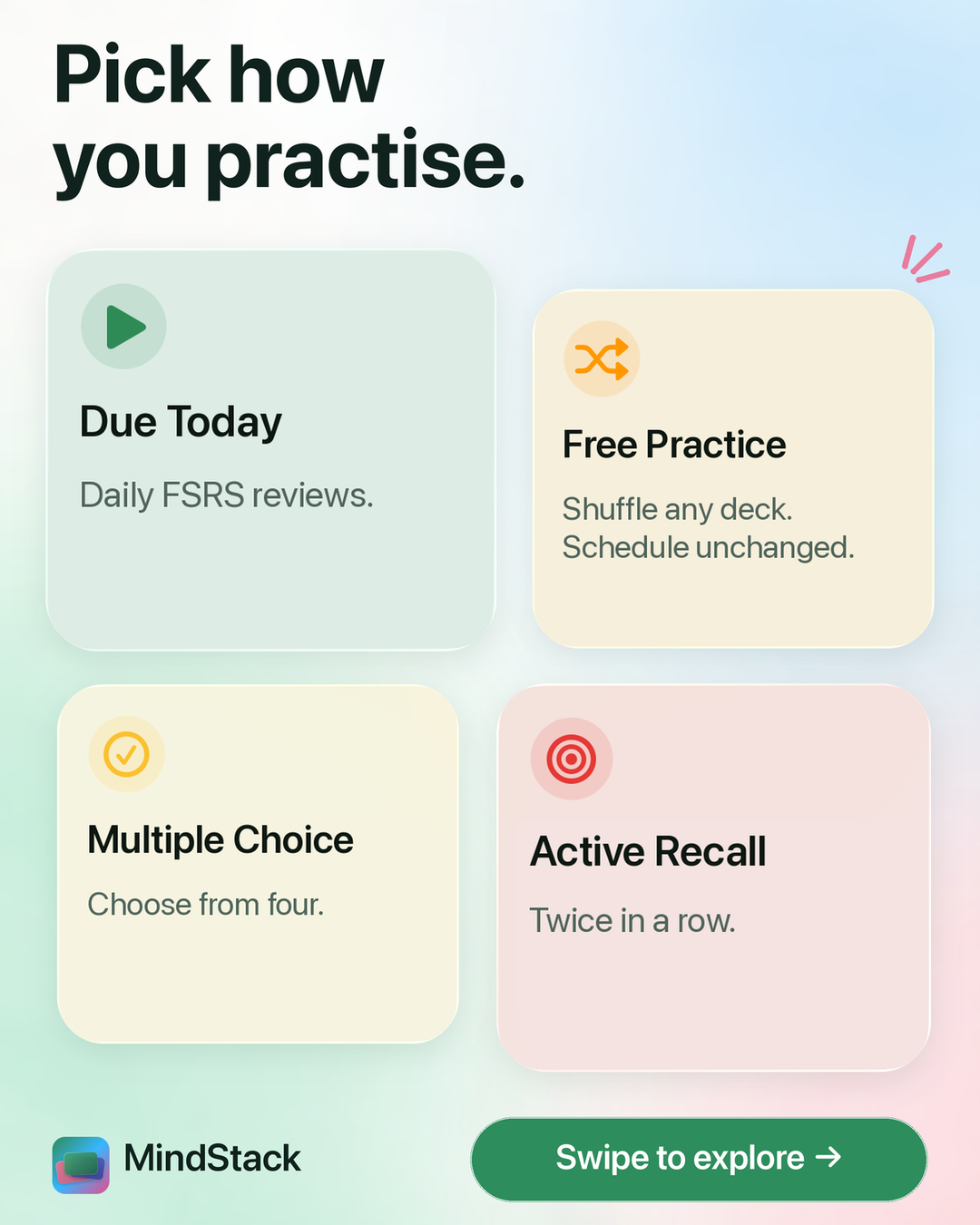
Choose daily reviews, free practice, multiple choice or active recall.
-
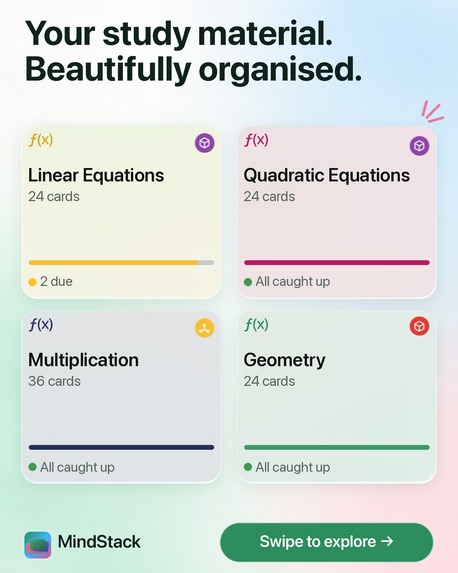
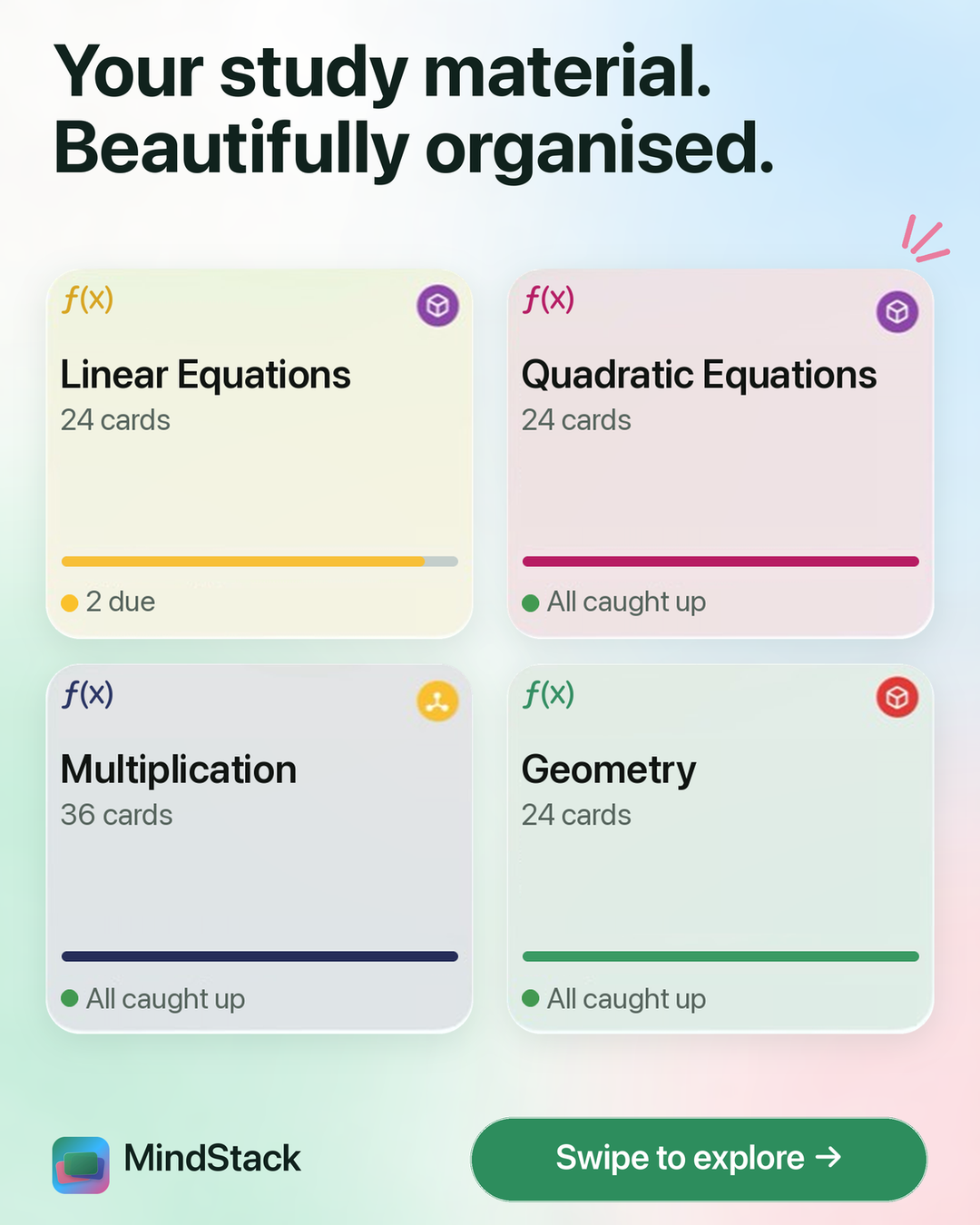
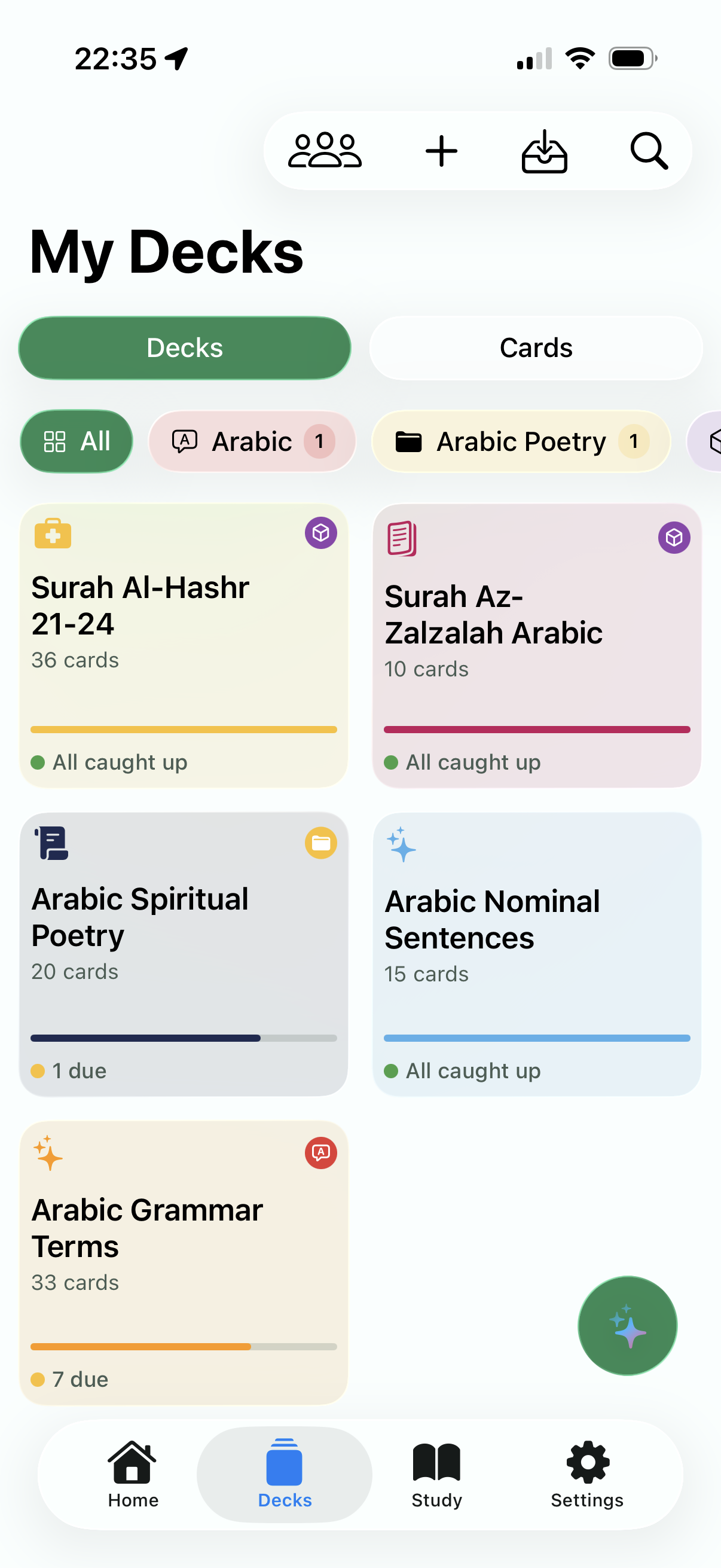
Keep your subjects organised, with progress visible on every deck.
-
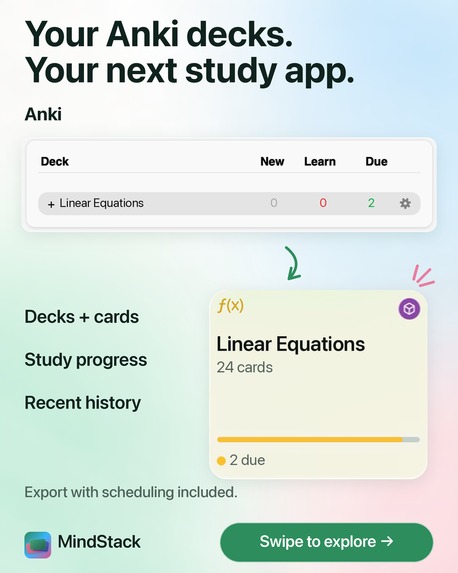
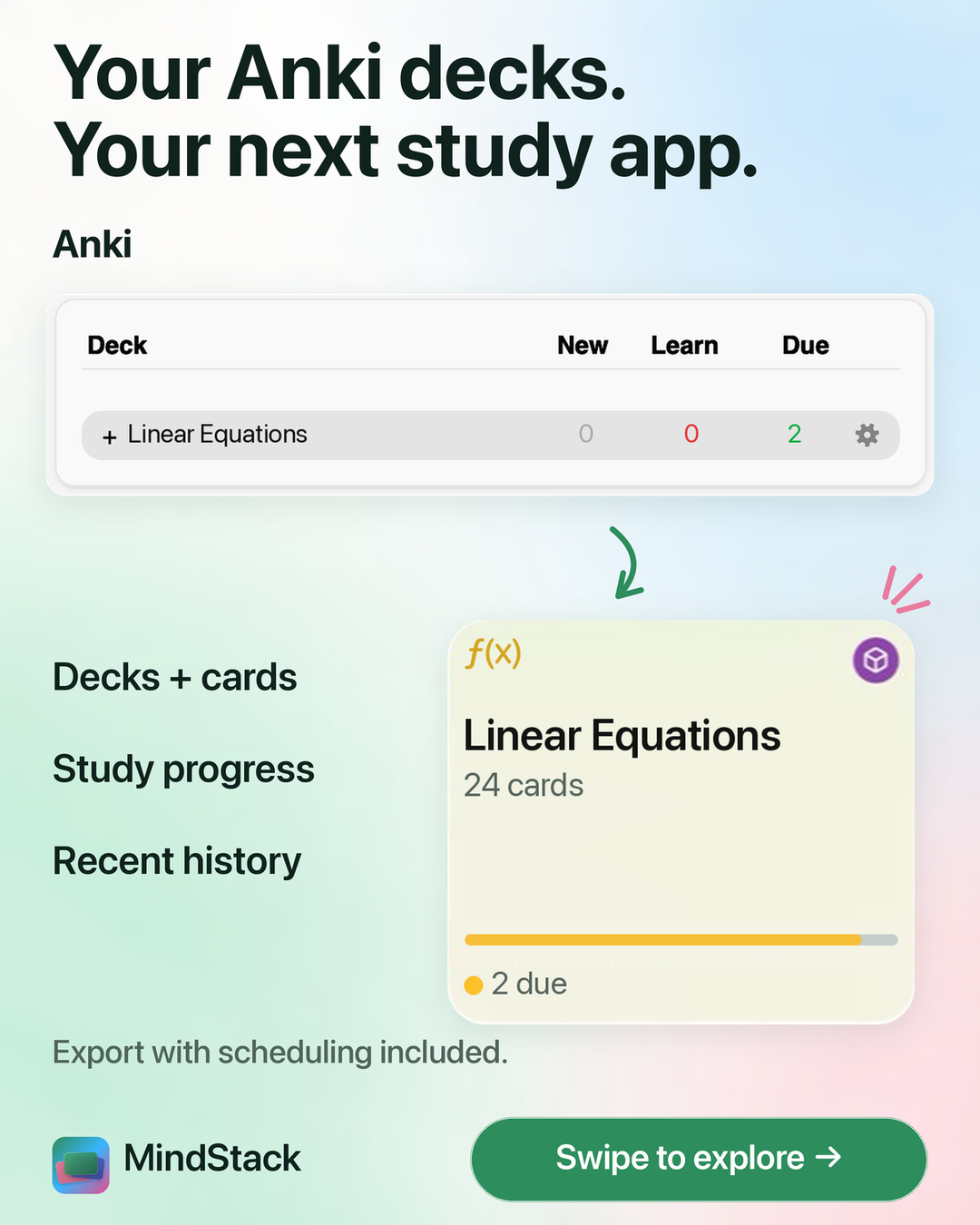
Bring your Anki decks, scheduling and recent study history.
-
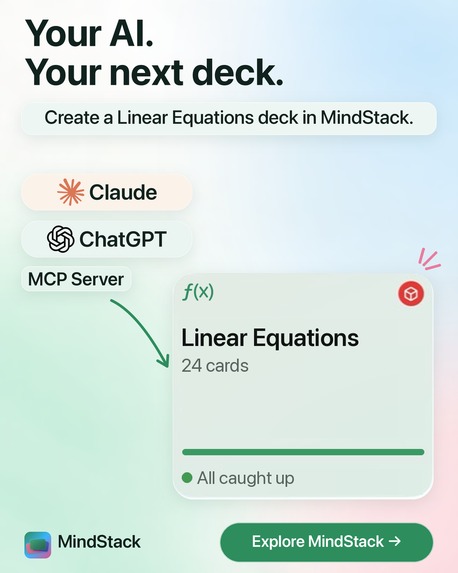
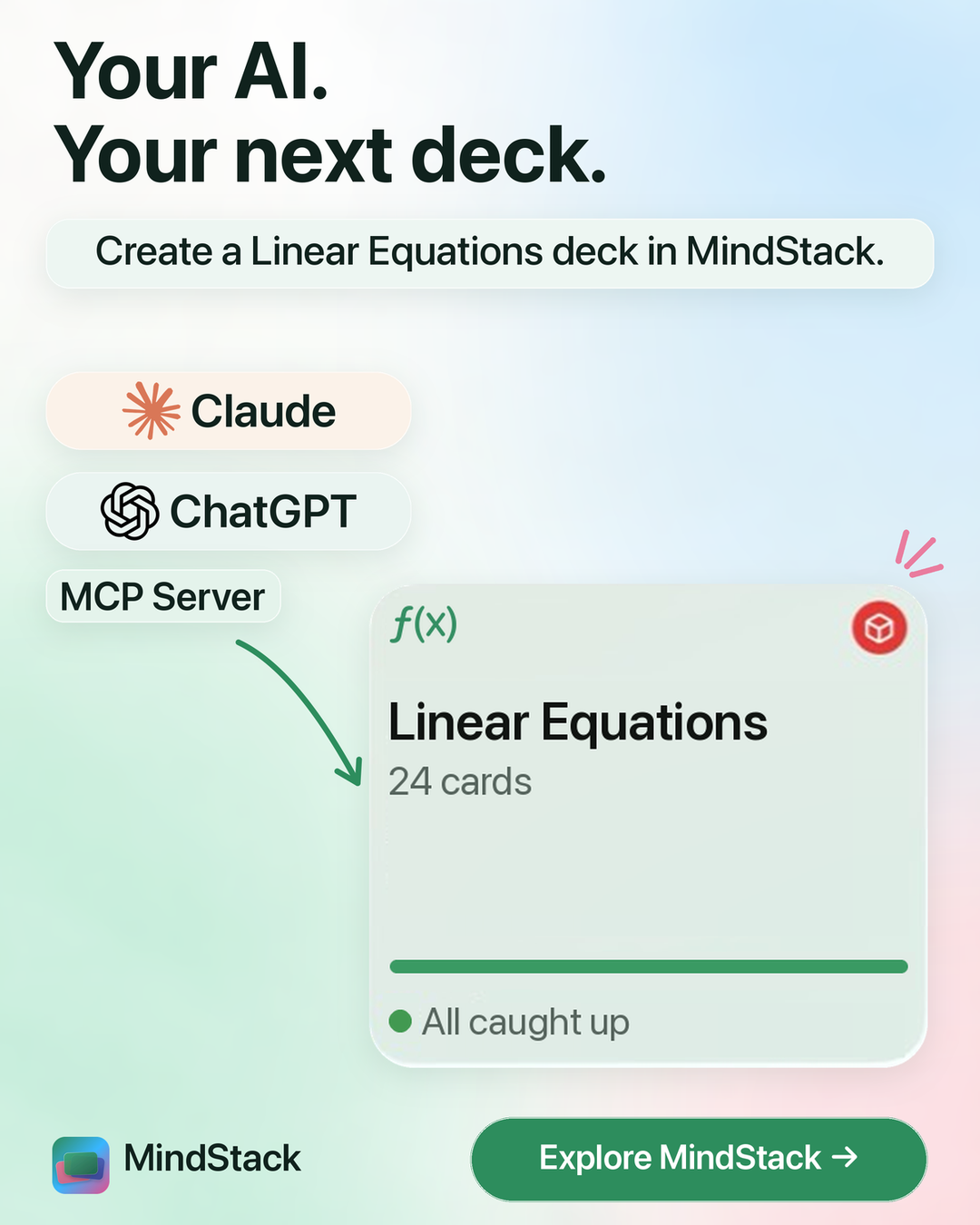
Connect your own AI through MCP to create decks in MindStack Flashcards.
-
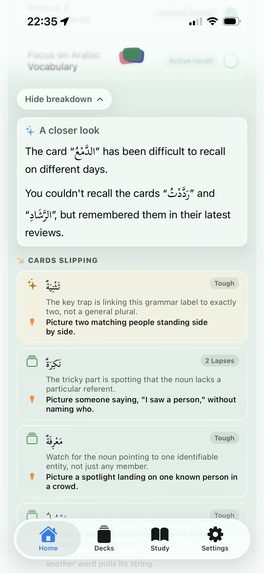
Raw screenshot: Your Coach surfaces slipping cards and memory cues.
-
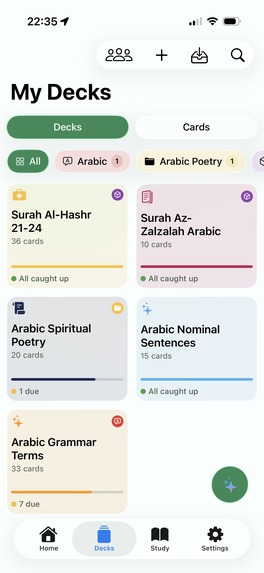
Raw screenshot: My Decks, subject organisation and review progress.
-
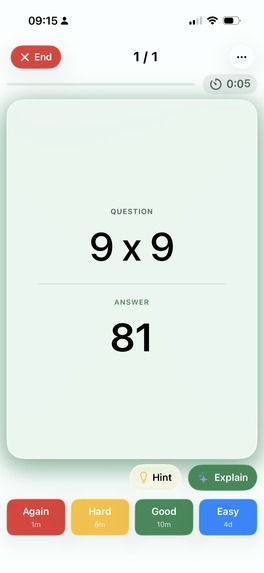
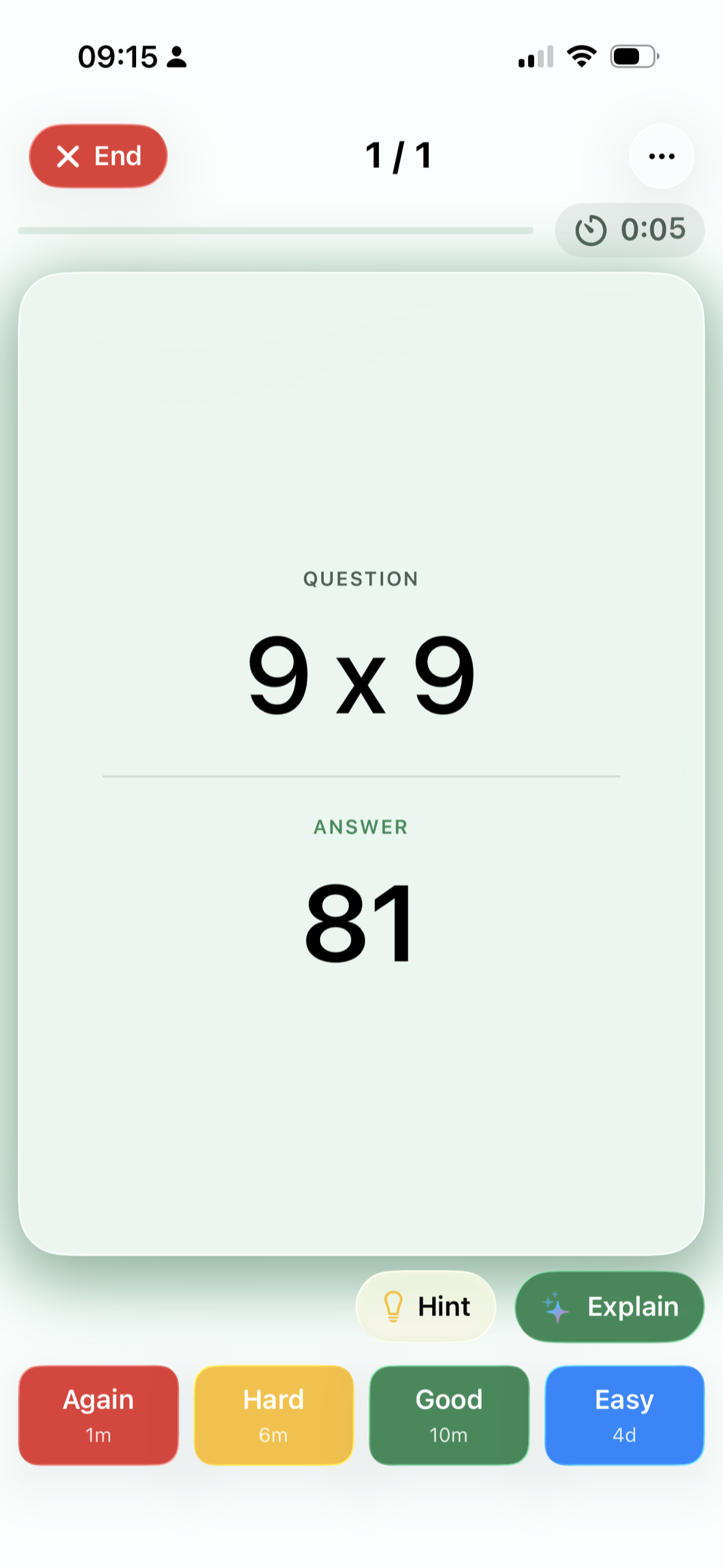
Unframed app screenshot, 1179 x 2556: answer reveal and grading.
-
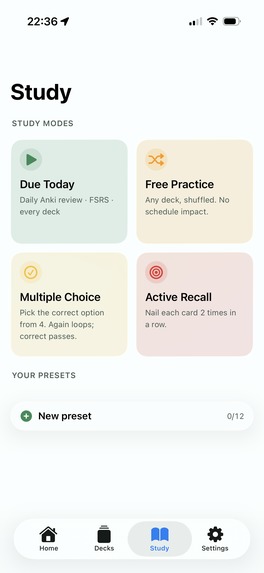
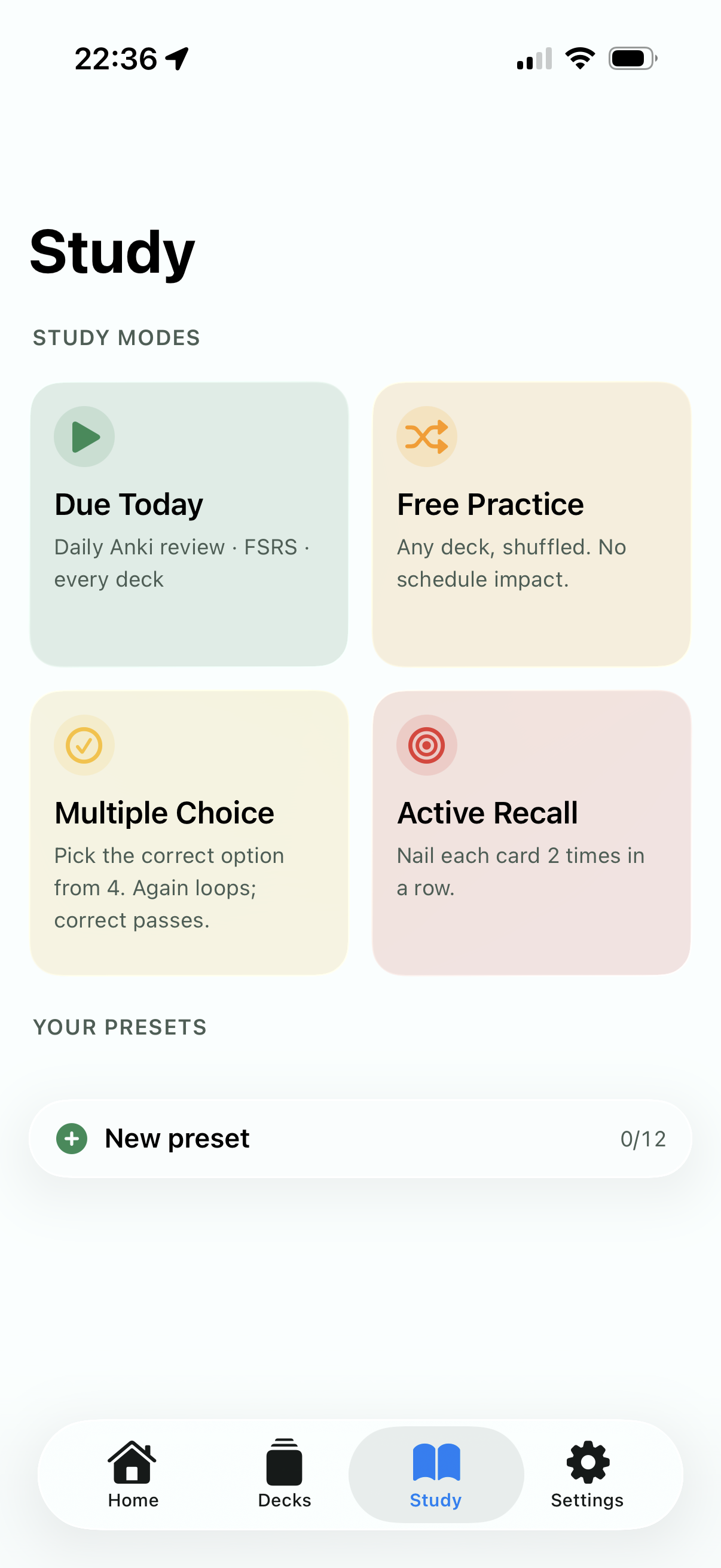
Raw screenshot: four ways to study in MindStack Flashcards.
-

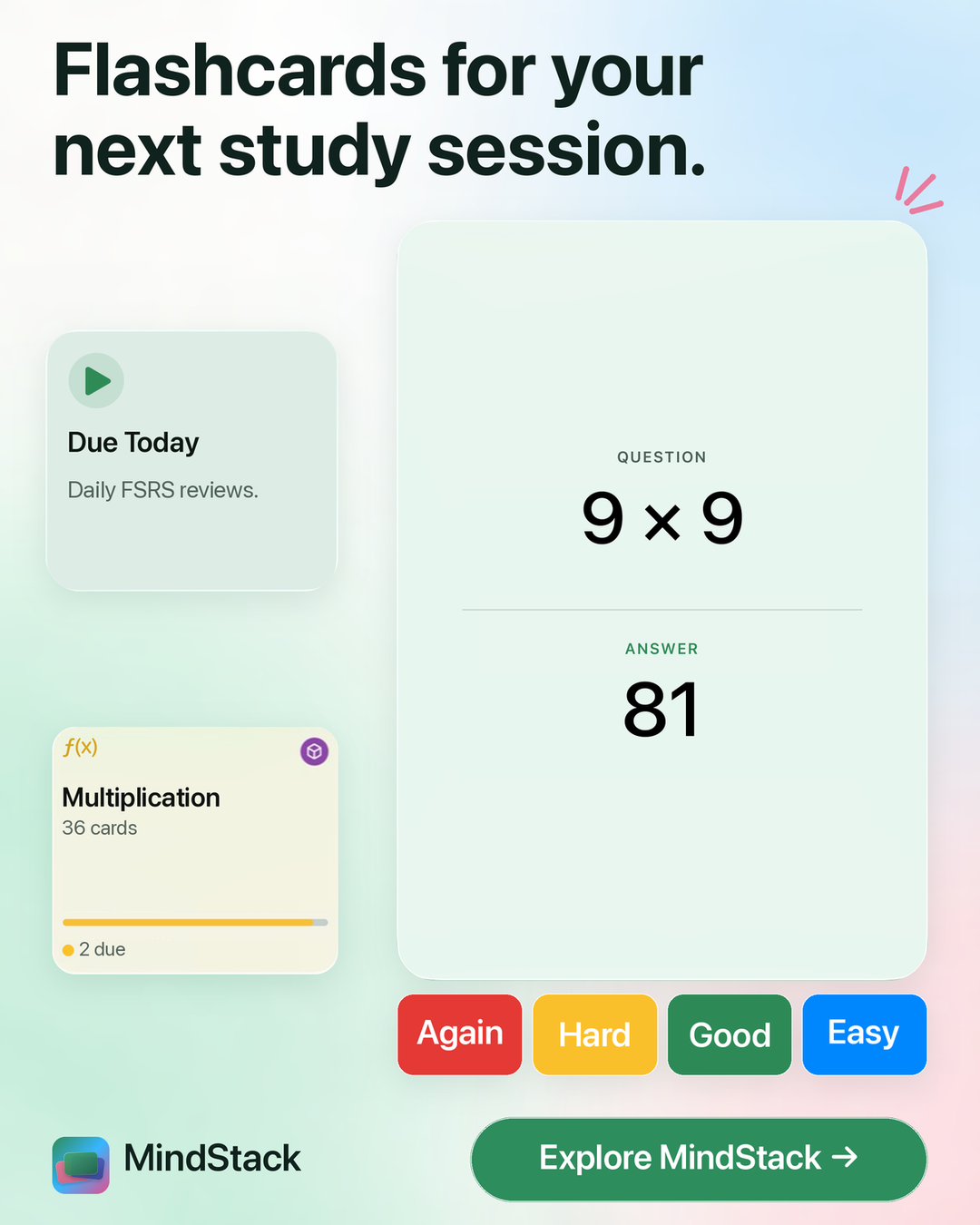
MindStack Flashcards app icon. Original 1024 x 1024 artwork.

Why I built MindStack Flashcards
I built MindStack Flashcards for students at every level, studying any subject, from school and college to university and professional qualifications. Whether you’re revising biology, practising maths, studying medicine or learning a language, the aim is to help you remember more of what you learn and make your study time count.
At its core is FSRS spaced repetition, which adapts your review schedule from your answers. Cards return at intervals tailored to your learning, helping you build lasting recall through regular practice. AI coaching builds on that foundation, helping you identify weak spots and decide what to work on next.
Looking at Anki, I could see why people trusted it with years of learning. Spaced repetition works, the review controls are familiar, and a well-used deck represents a huge investment of time. But the interface felt dated to me. I saw room for a more inviting iPhone and iPad experience, with intelligent help woven into the everyday act of studying.
That became the starting point for MindStack Flashcards - keep the rigour of spaced repetition, make the experience feel modern and considered, and use AI to help a learner decide what deserves their attention next.
You can bring your existing Anki decks, create cards yourself, or start with notes, a PDF, a photo or a topic. Creating the cards is the beginning. The part I wanted to make especially useful comes after you have started answering them.
Your Coach turns study history into a next step
A review queue tells you what is due. There is another question a learner needs help with, which cards am I really struggling with, and what should I do about them?
Your Coach is built around that question. It uses your review history and each card's learning state to surface flashcards that need attention, cards you repeatedly find difficult, cards you previously knew but have started missing, and weak areas emerging across your decks. Recent performance helps shape those priorities, so the guidance can change as your learning changes.
Imagine revising French. Your everyday phrases are becoming comfortable, but two similar verbs keep tripping you up. Your Coach can bring those weak spots into view, explain the pattern and offer a short rescue quiz or focused active-recall practice on the relevant cards. You can go from "I keep getting this wrong" to practising it from the coach itself.
The connection to actual cards matters. The app ranks the cards from recorded study evidence; AI helps explain what that evidence means. The result is guidance you can act on inside your own collection, without writing a prompt or copying your history into a separate chat.
That is the centre of MindStack Flashcards for me, a study app that helps you see where to put your next few minutes.
Help throughout the learning journey
AI generation reduces the work of turning source material into a first deck. Hint gives you a nudge before you reveal an answer. Explain helps unpack something you got wrong. Audit looks for problems in the cards themselves, including duplicates and questions that give too much away. Your Coach connects the ongoing practice back to the learner's strengths and weak spots.
Underneath it all, FSRS spaced repetition schedules reviews from your answers. Q&A, cloze and term-and-definition cards support different material, while daily reviews, free practice, multiple choice and active recall offer different ways into a session. Existing Anki users can import .apkg decks, including supported scheduling and review history, so their previous work can remain part of the journey. Saved cards remain available for offline study, with iCloud sync across devices.
An app you want to come back to
Learning asks people to return again and again, so the everyday details matter. Decks have their own colours and identities. Progress is visible at a glance. Card transitions, gestures and small moments of feedback make a repeated task feel considered, while the study screen keeps the question at the centre.
I built MindStack Flashcards in Swift and SwiftUI, with UIKit where needed, Core Data for persistence and CloudKit for sync. Light and dark appearances and a layout adapted for iPad carry the same design through organising, practising and reflecting.
Making AI sustainable
The core study engine is free. AI features are available through a trial and then Pro, which funds the ongoing cost of generation, explanations and coaching.
For an unusually intensive revision week, Pro users can buy a repeatable AI Usage Reset through RevenueCat. It restarts the allowance for the remainder of the current cycle without moving the next monthly reset date. The purchase is available in Plans and surfaced when the allowance is exhausted. Existing subscriptions remain on StoreKit 2; RevenueCat powers the consumable purchase flow and reporting.
Shipped, and still being improved
MindStack Flashcards launched on 10 September 2026 during Shipaton and is available globally on the App Store. Version 1.0.2 and the AI Usage Reset purchase are live.
The next chapter is refining the experience with real use, clearer onboarding, responsive reviews and increasingly useful coaching. The ambition remains the reason I started, bring the rigour of spaced repetition into an app people enjoy using, with help that makes their next study session count.

Log in or sign up for Devpost to join the conversation.