-
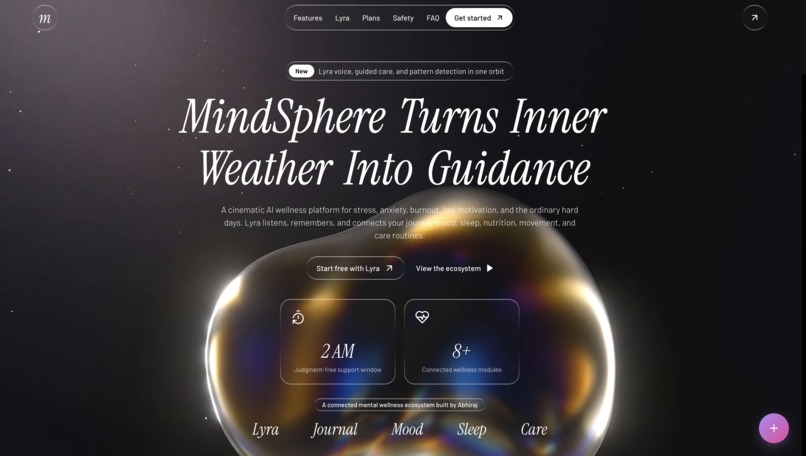
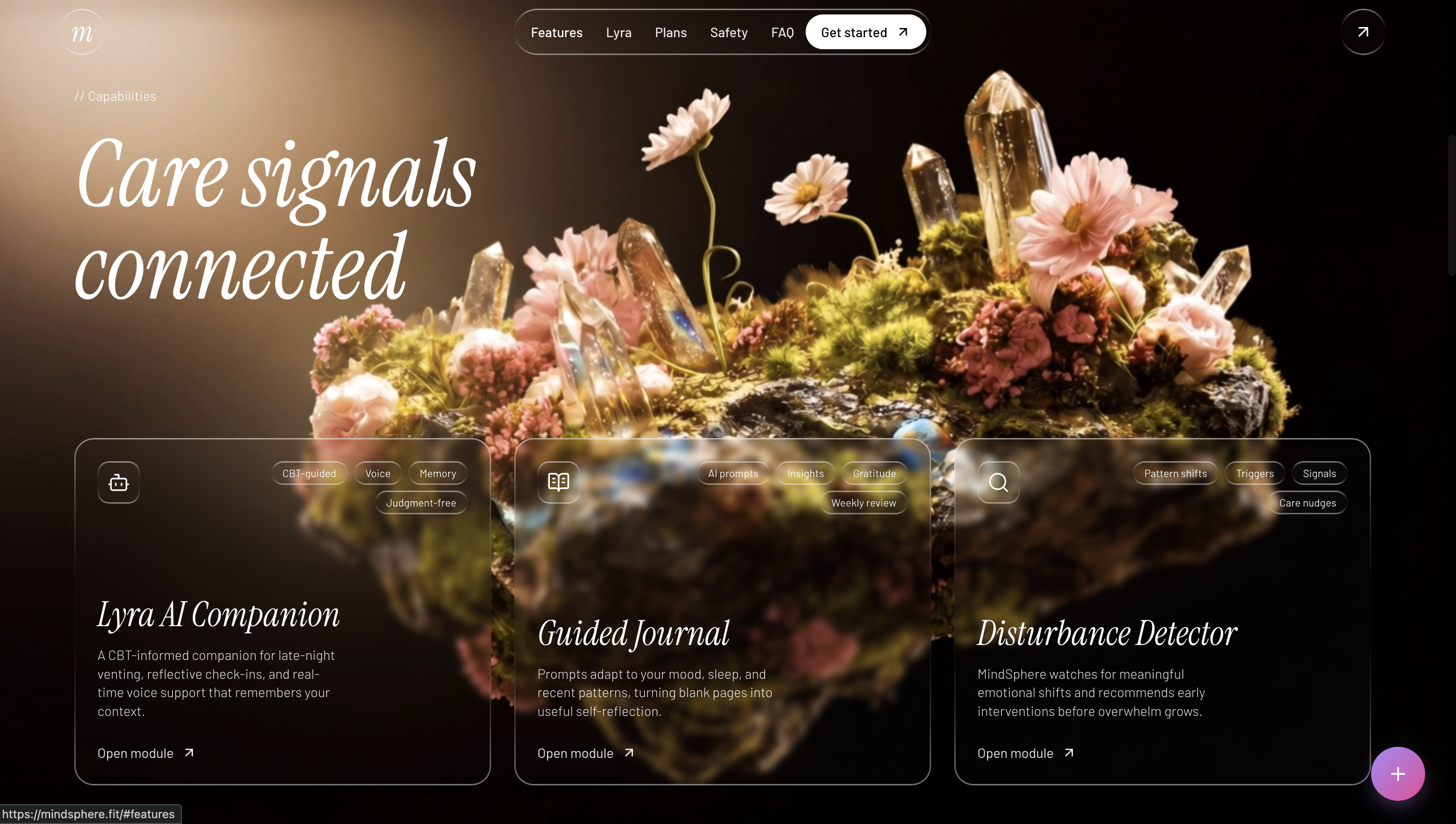
Home Page
-
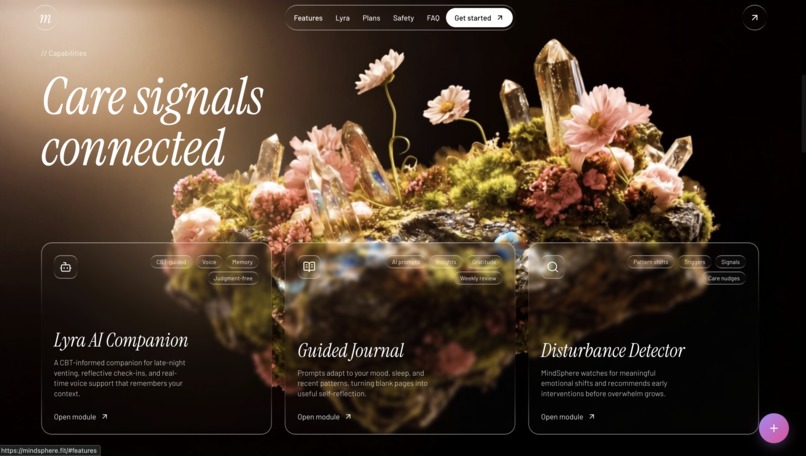
Home Page
-
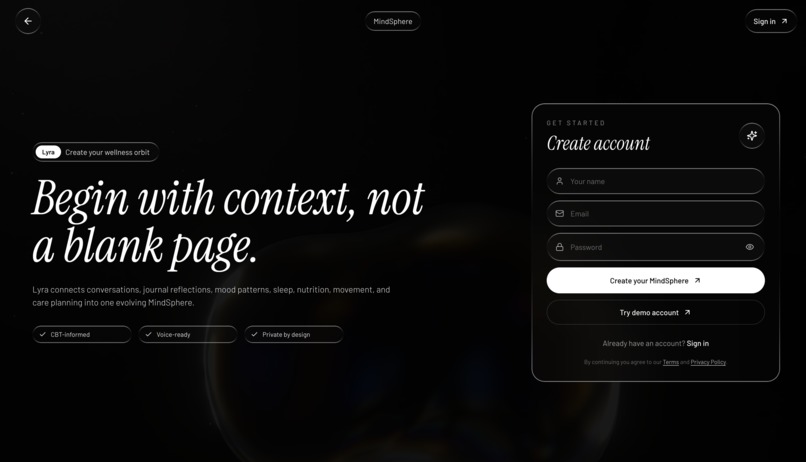
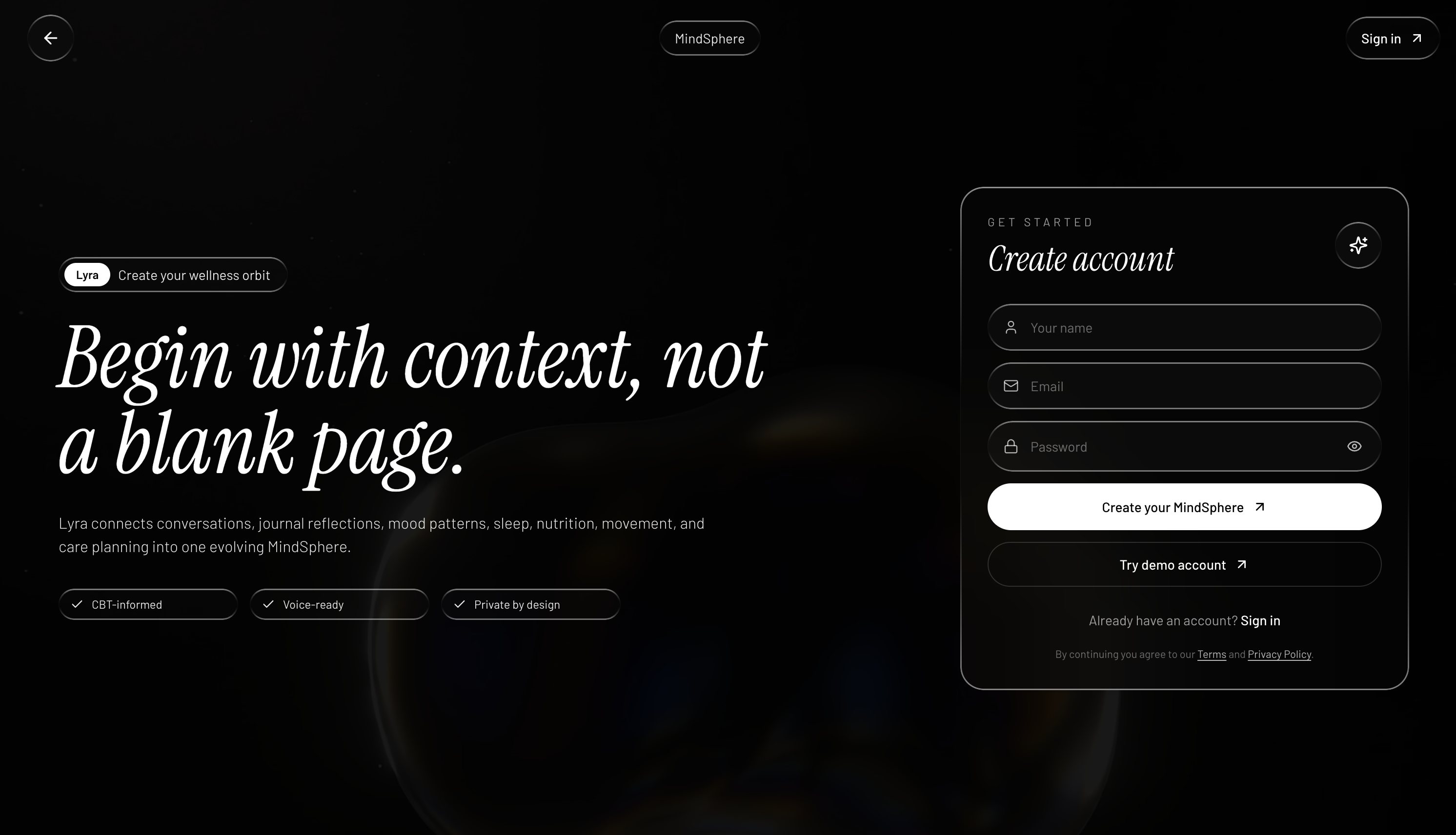
Get Started
-
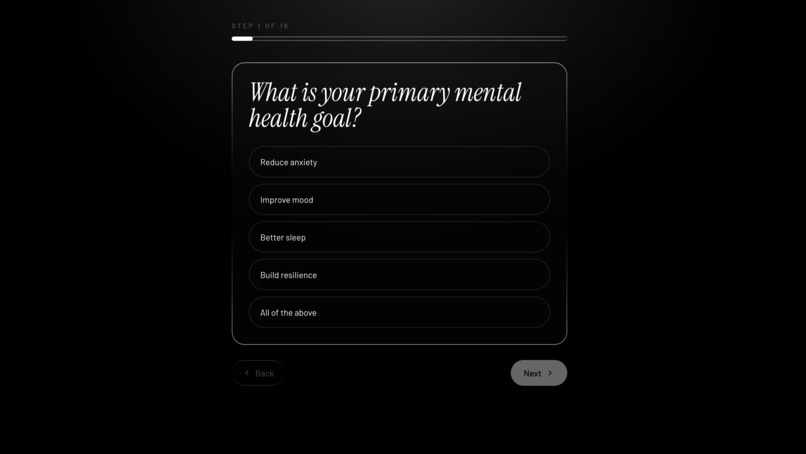
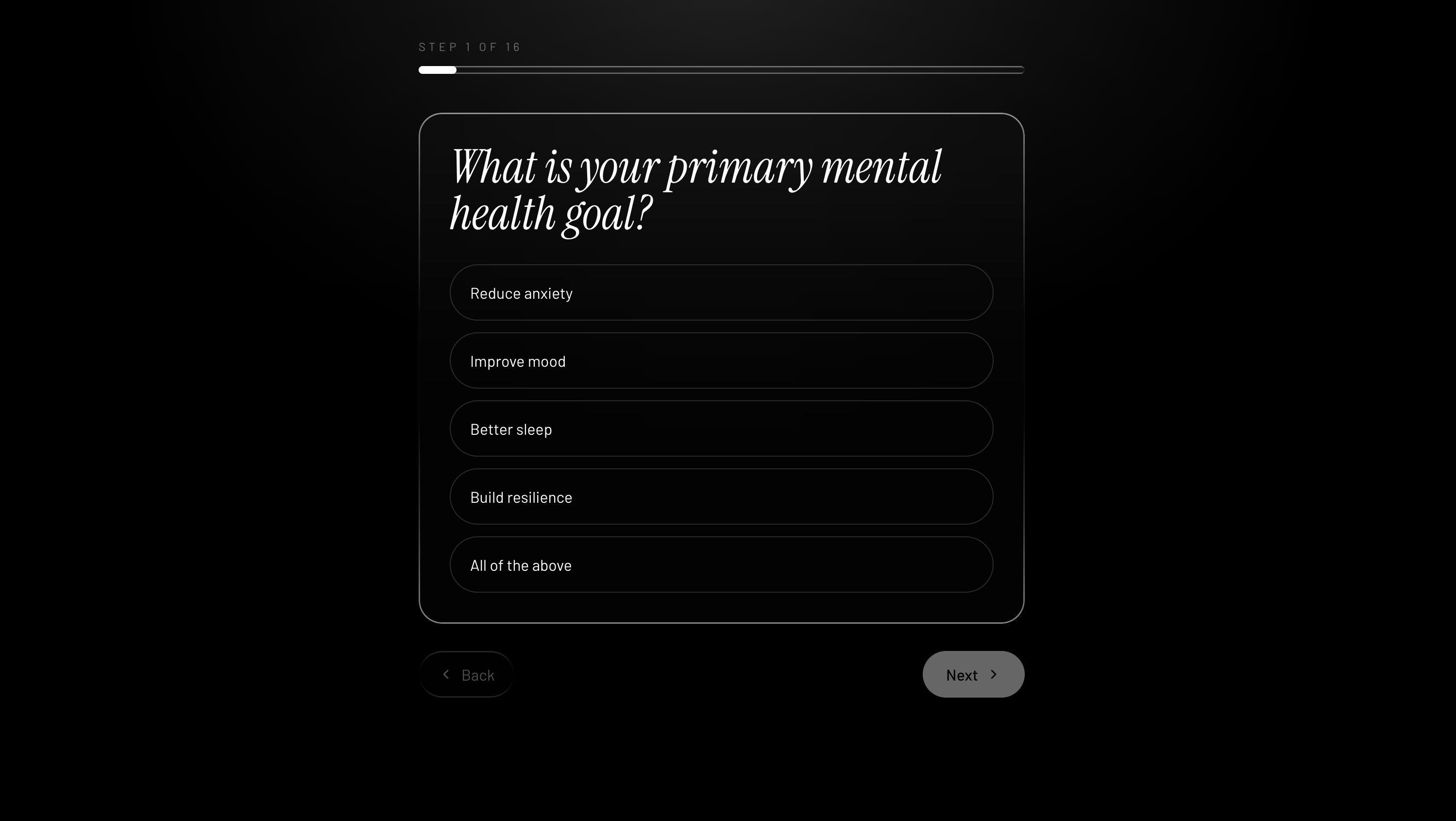
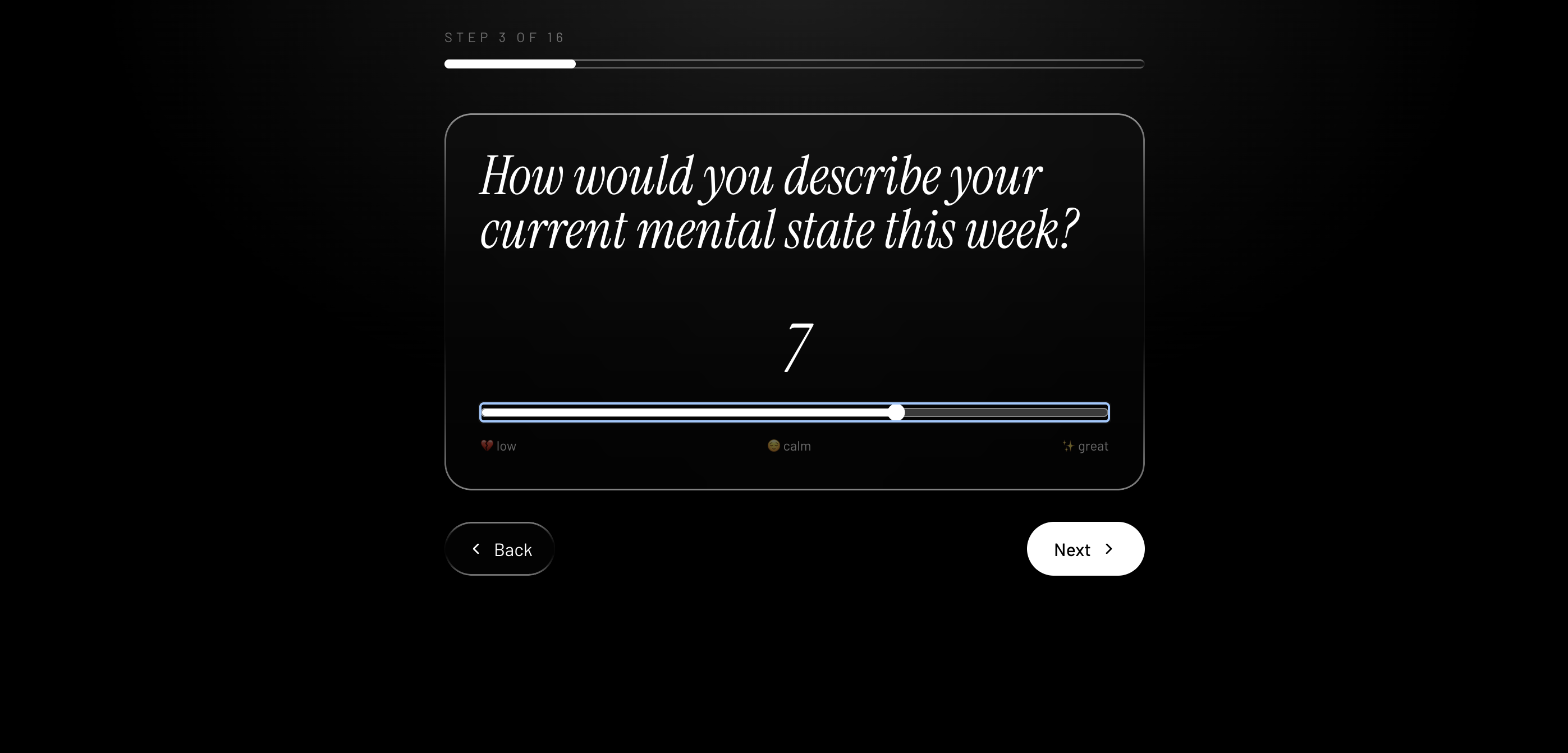
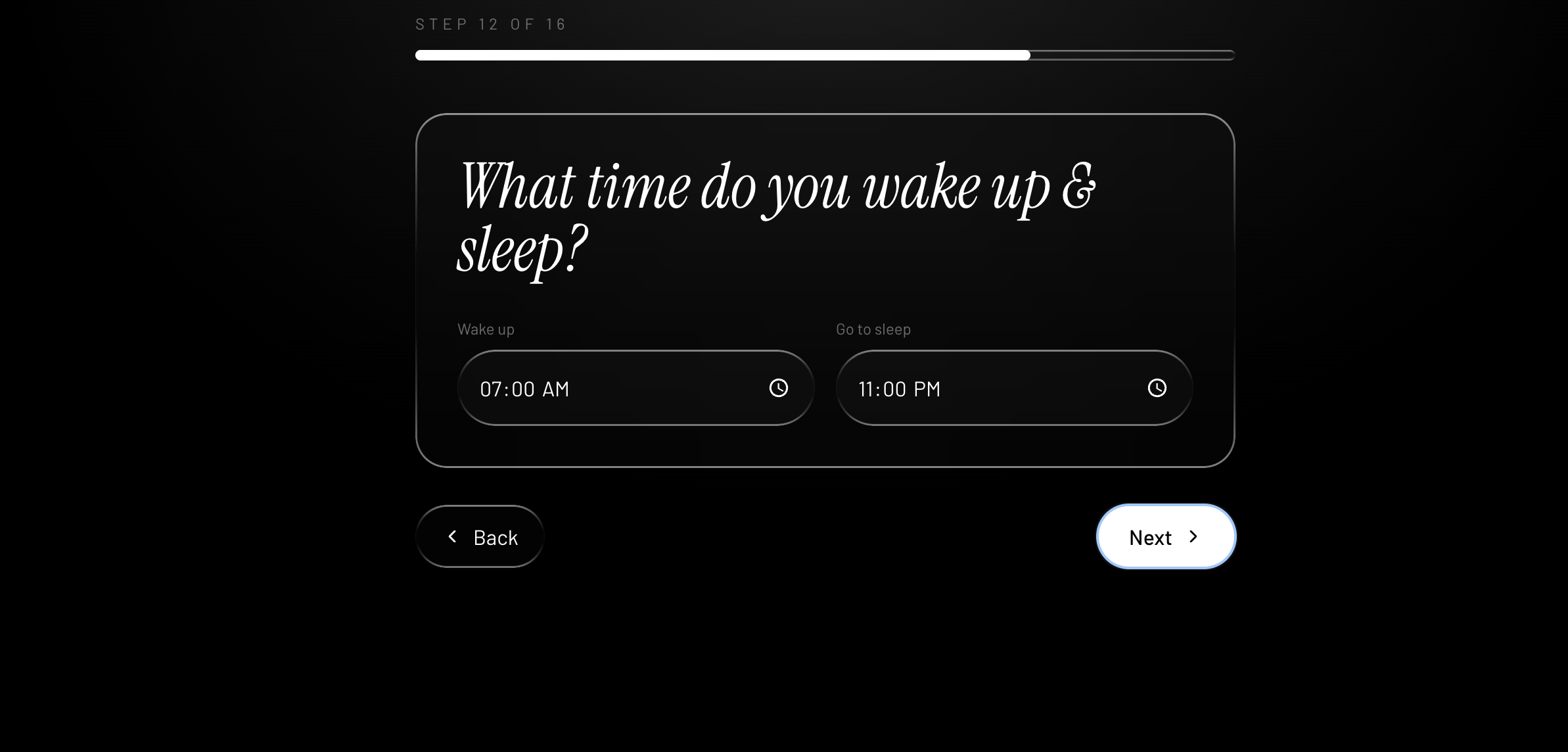
Onboarding Questions
-
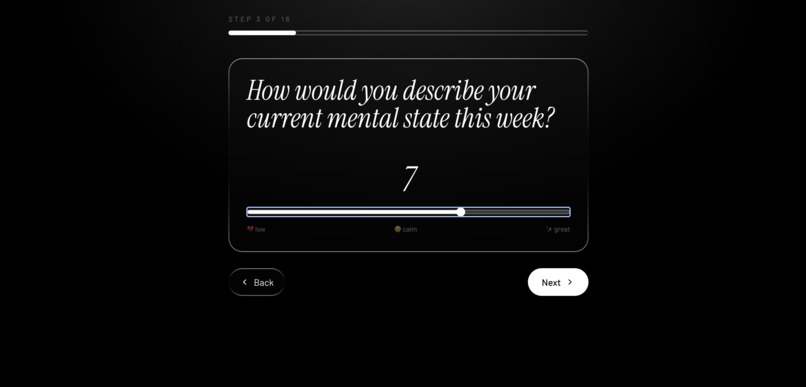
Onboarding Questions
-
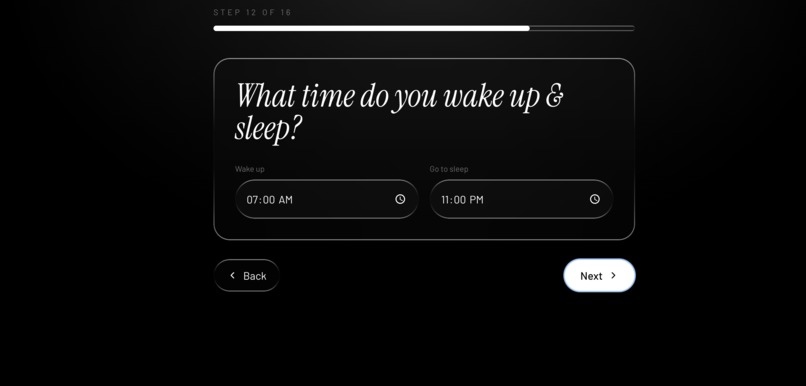
Onboarding Questions
-
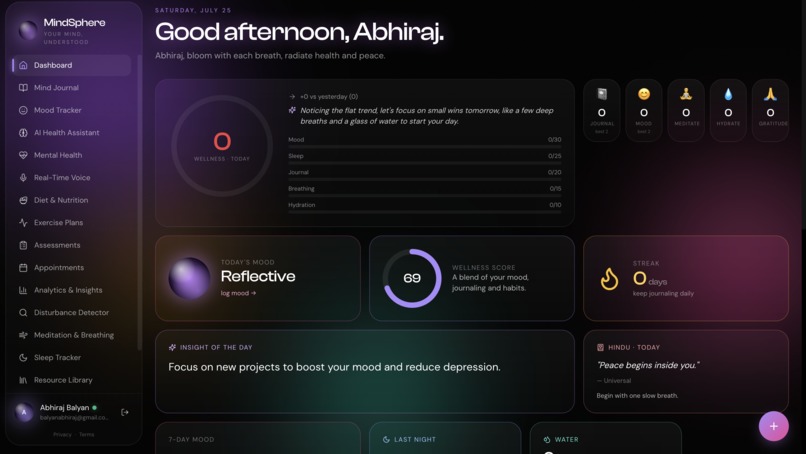
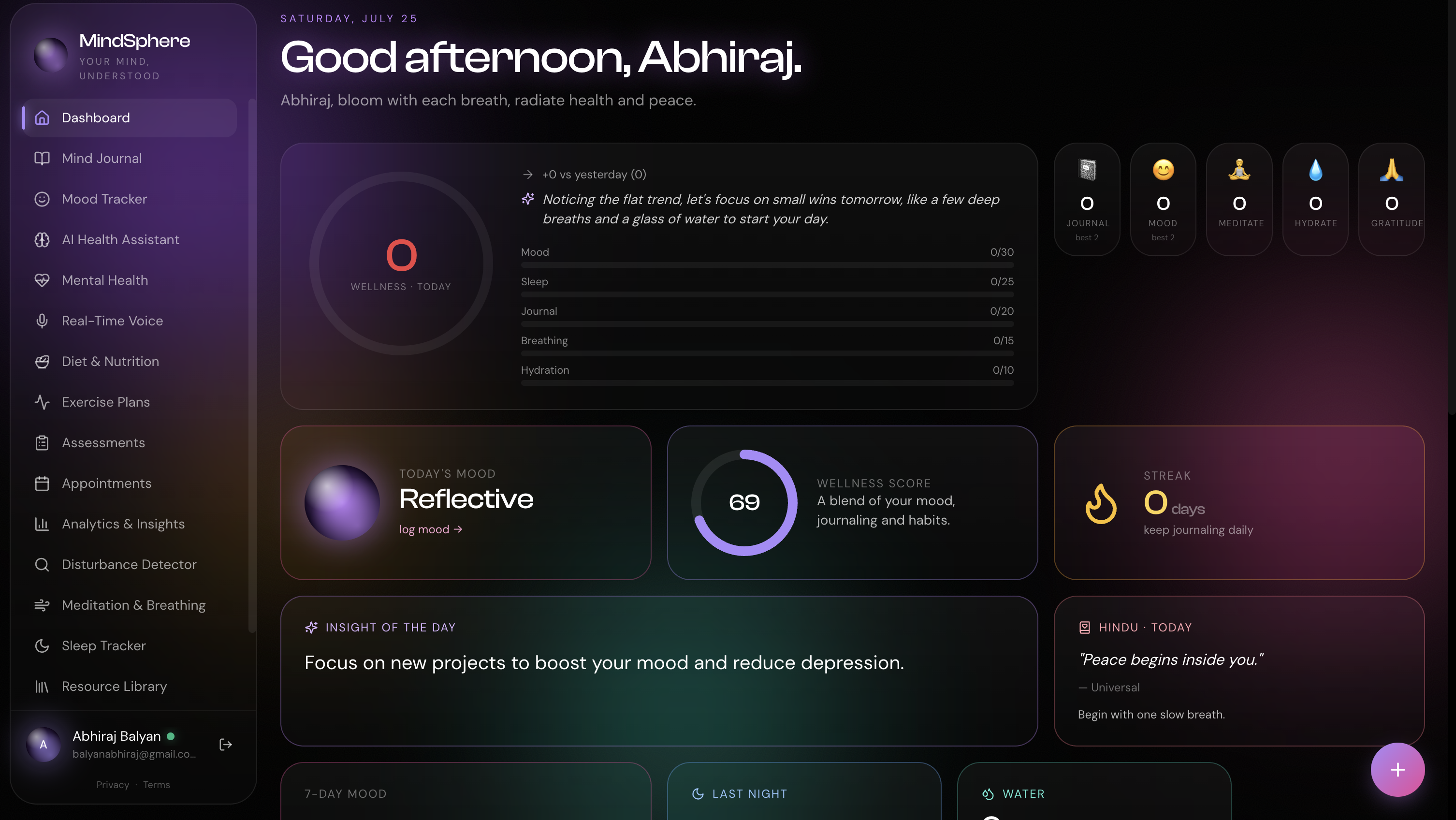
Dashboard
-
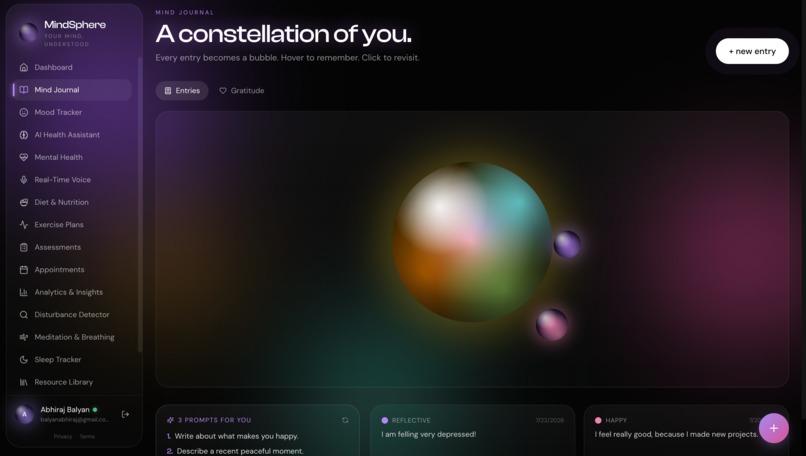
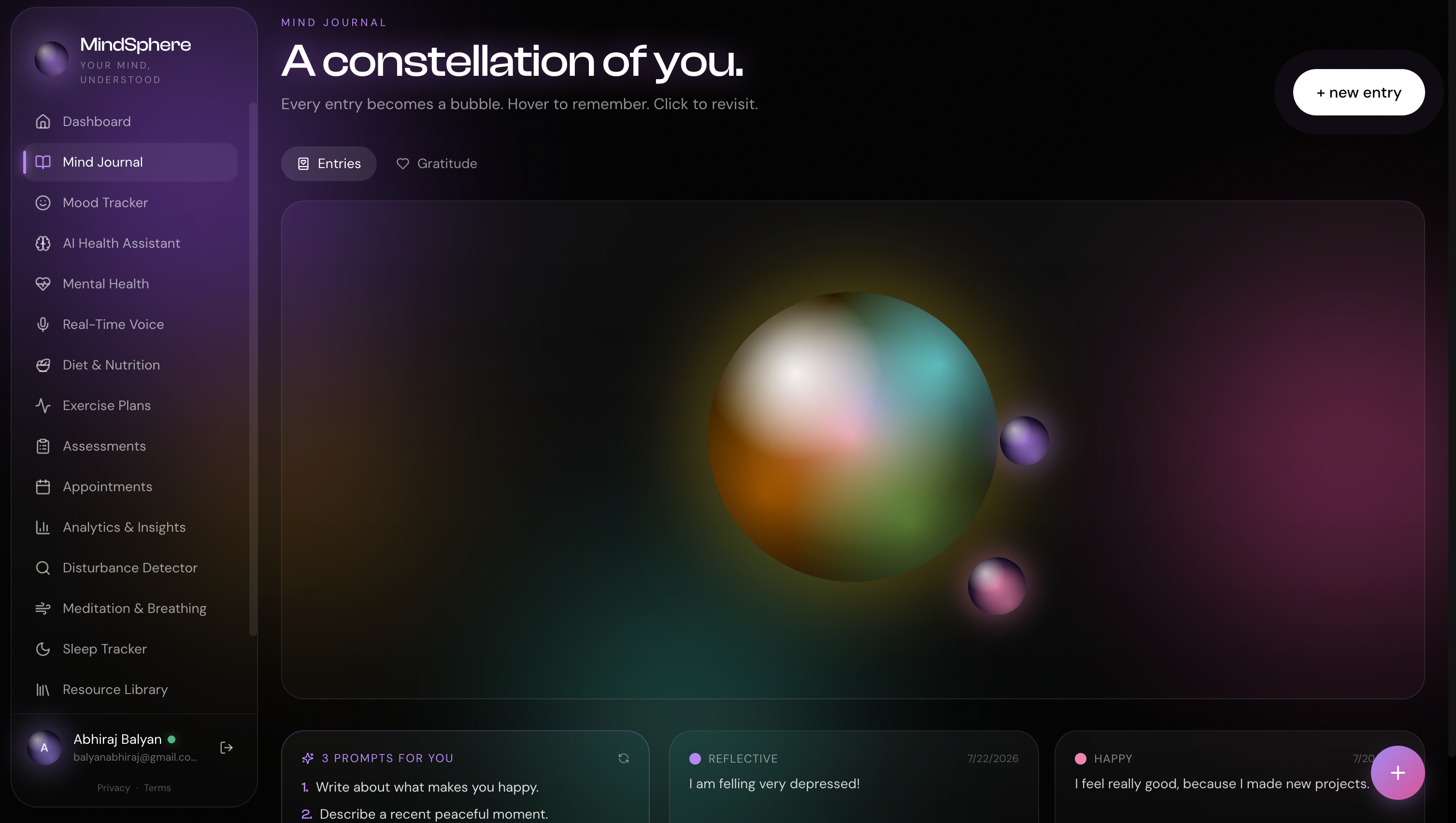
Journals
-
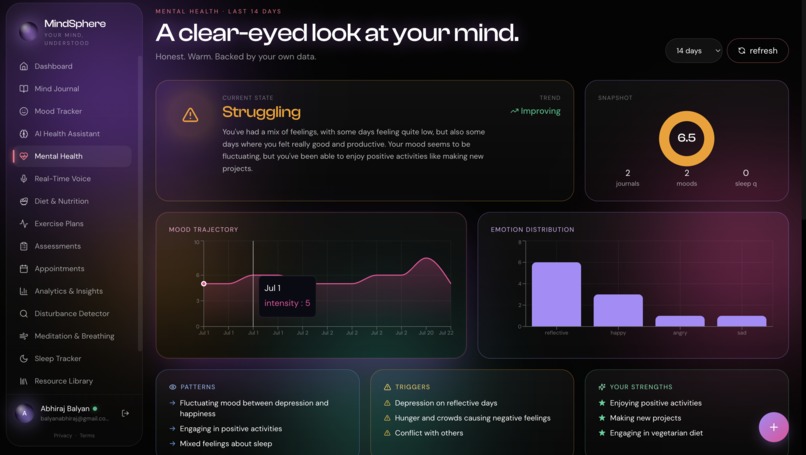
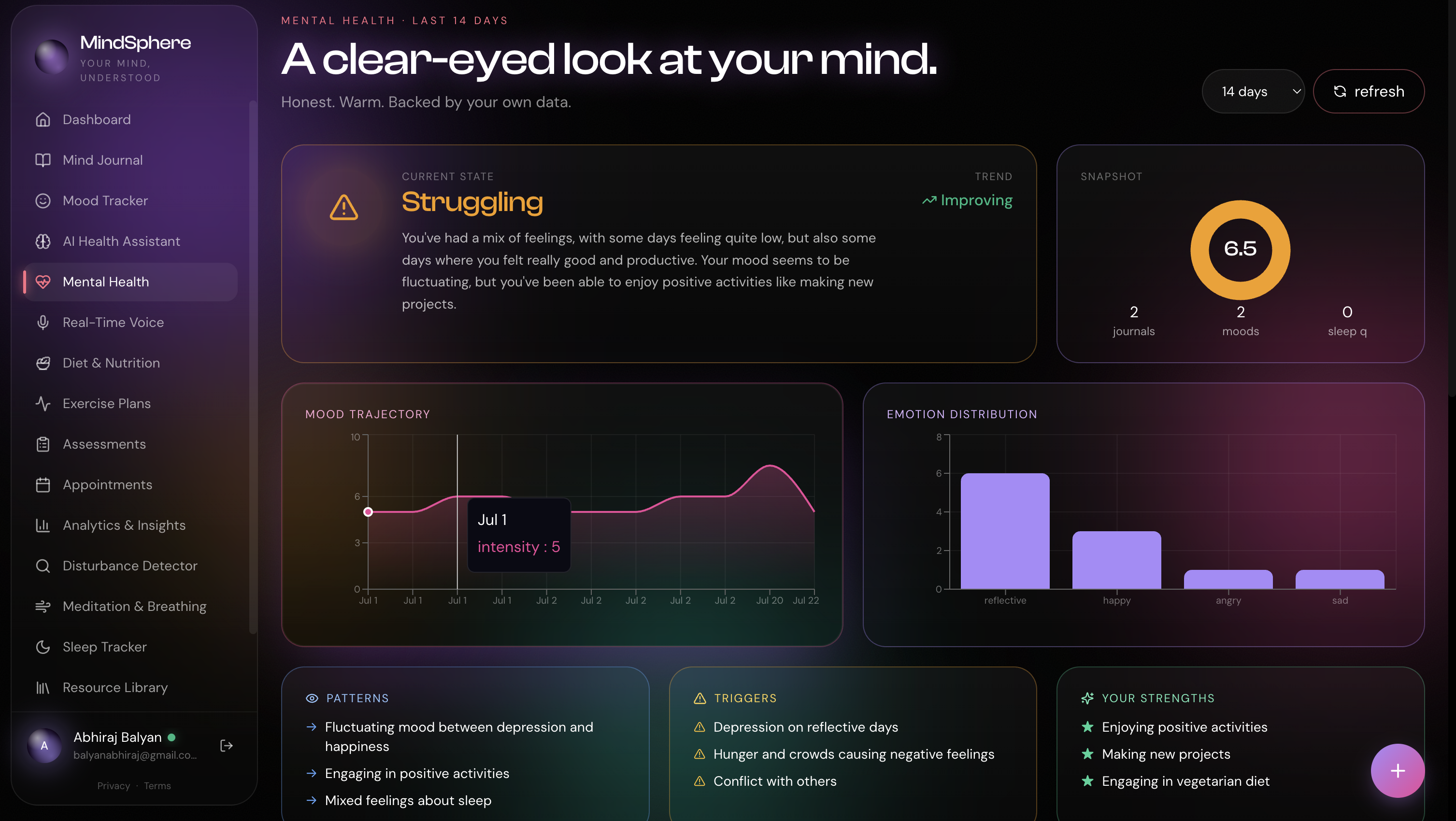
Mental Health
-
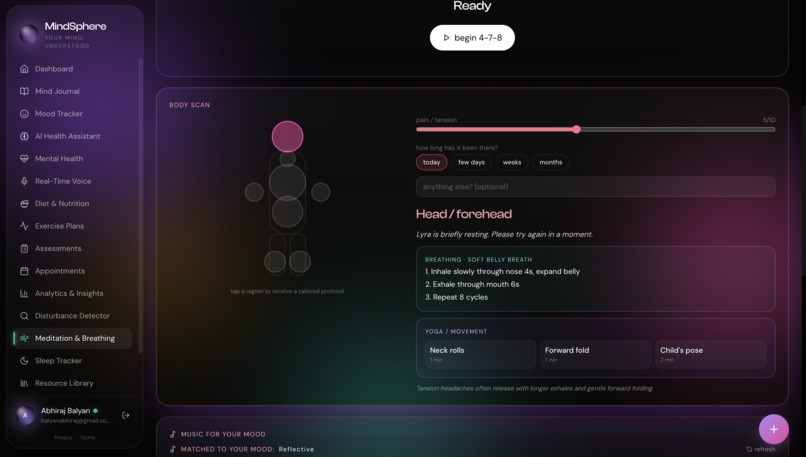
Body Pain
-
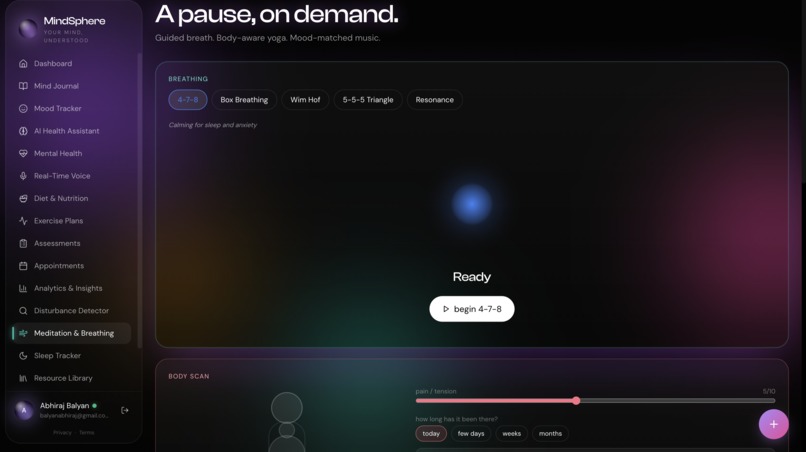
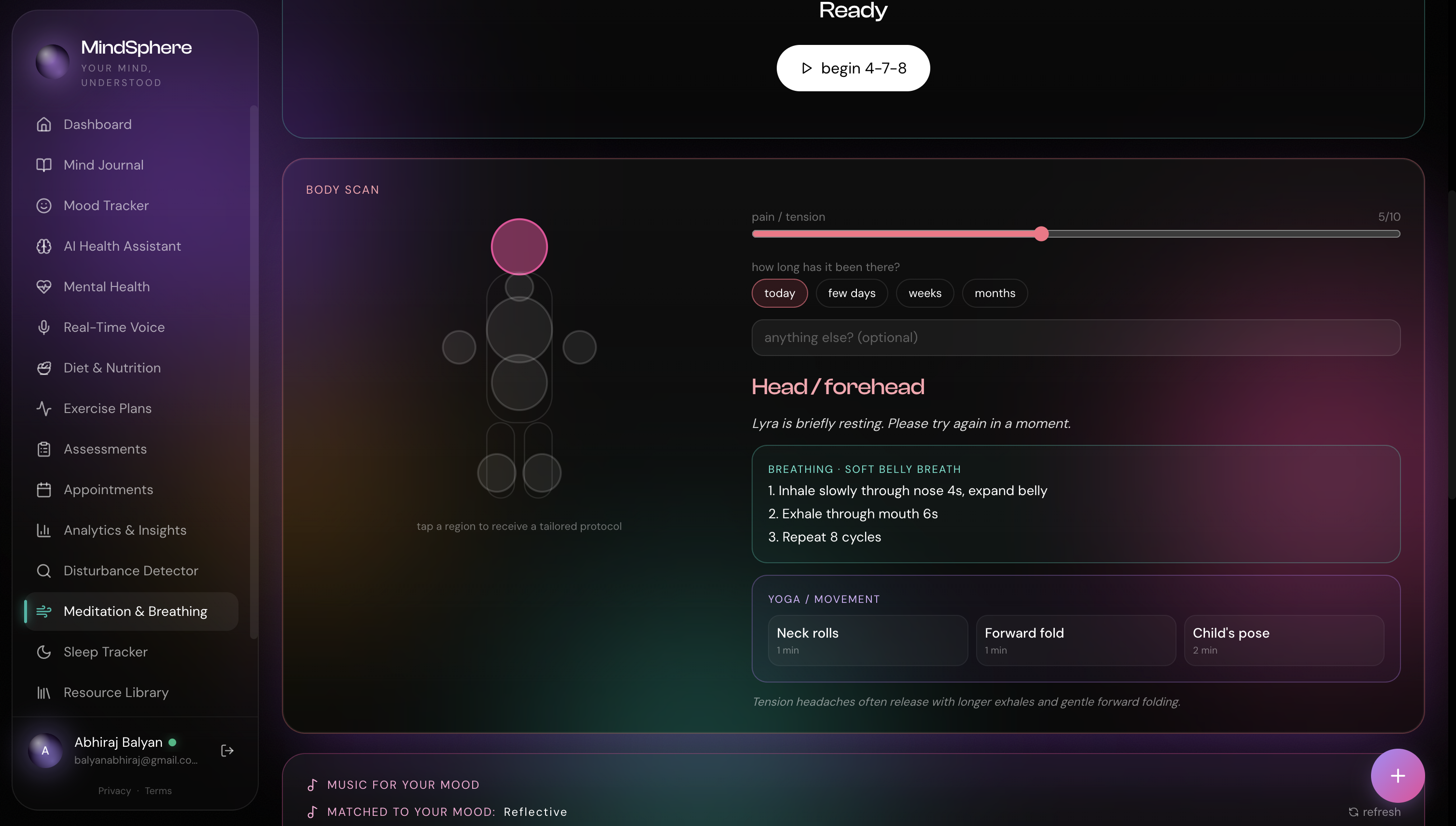
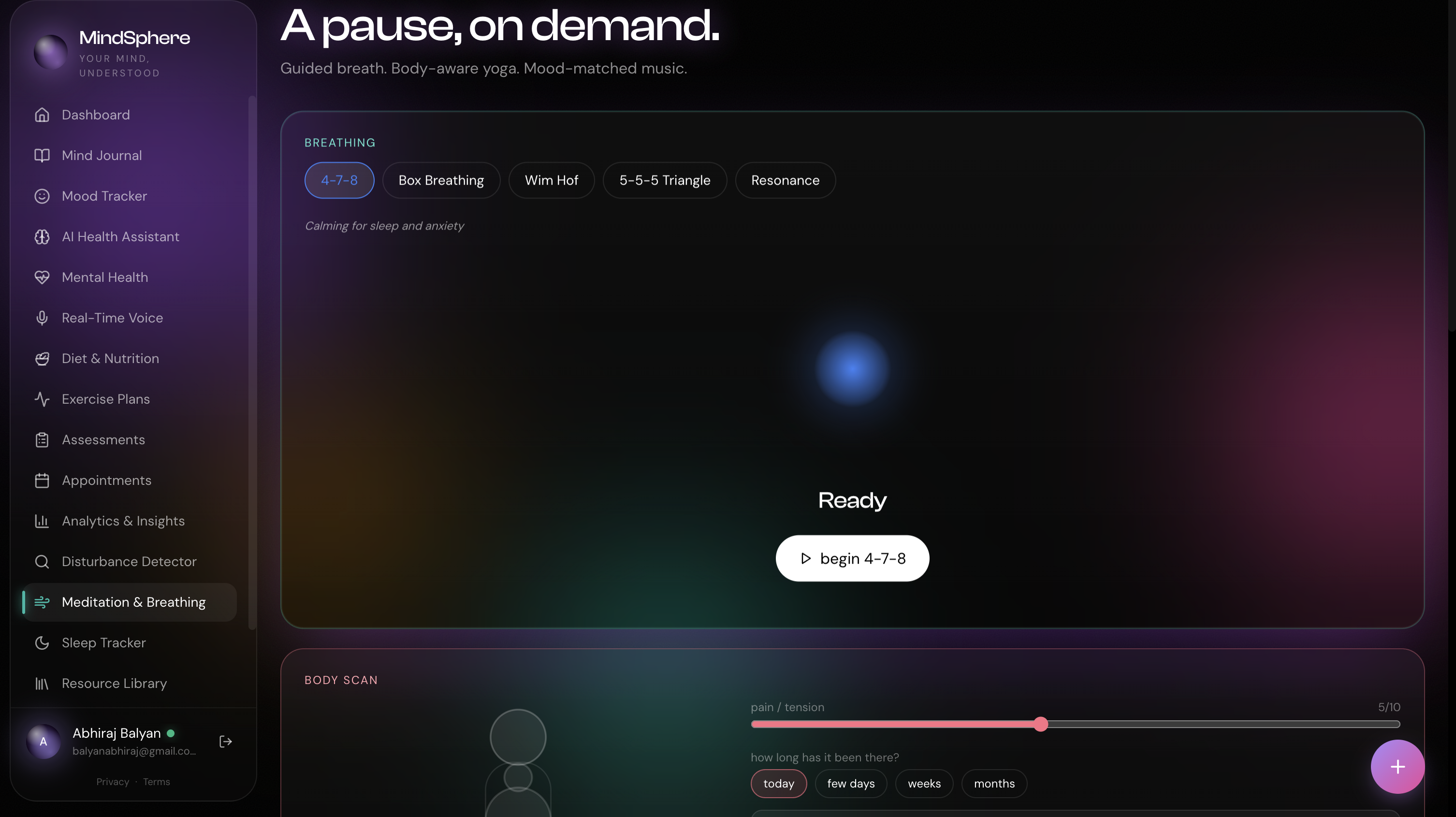
Meditation & Breathing
-
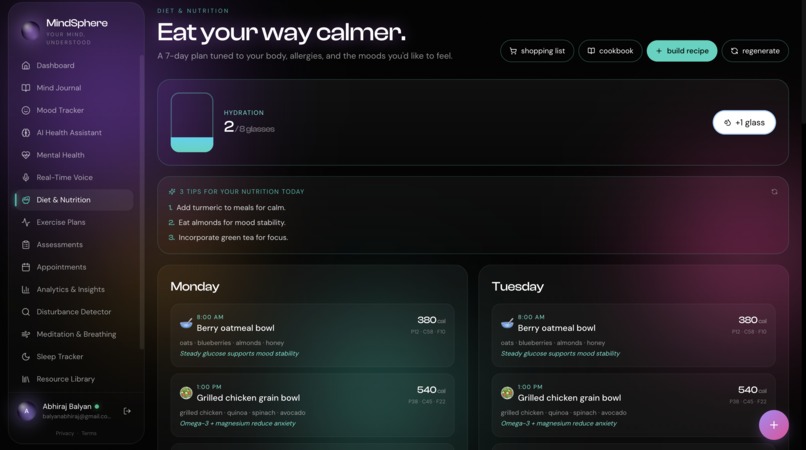
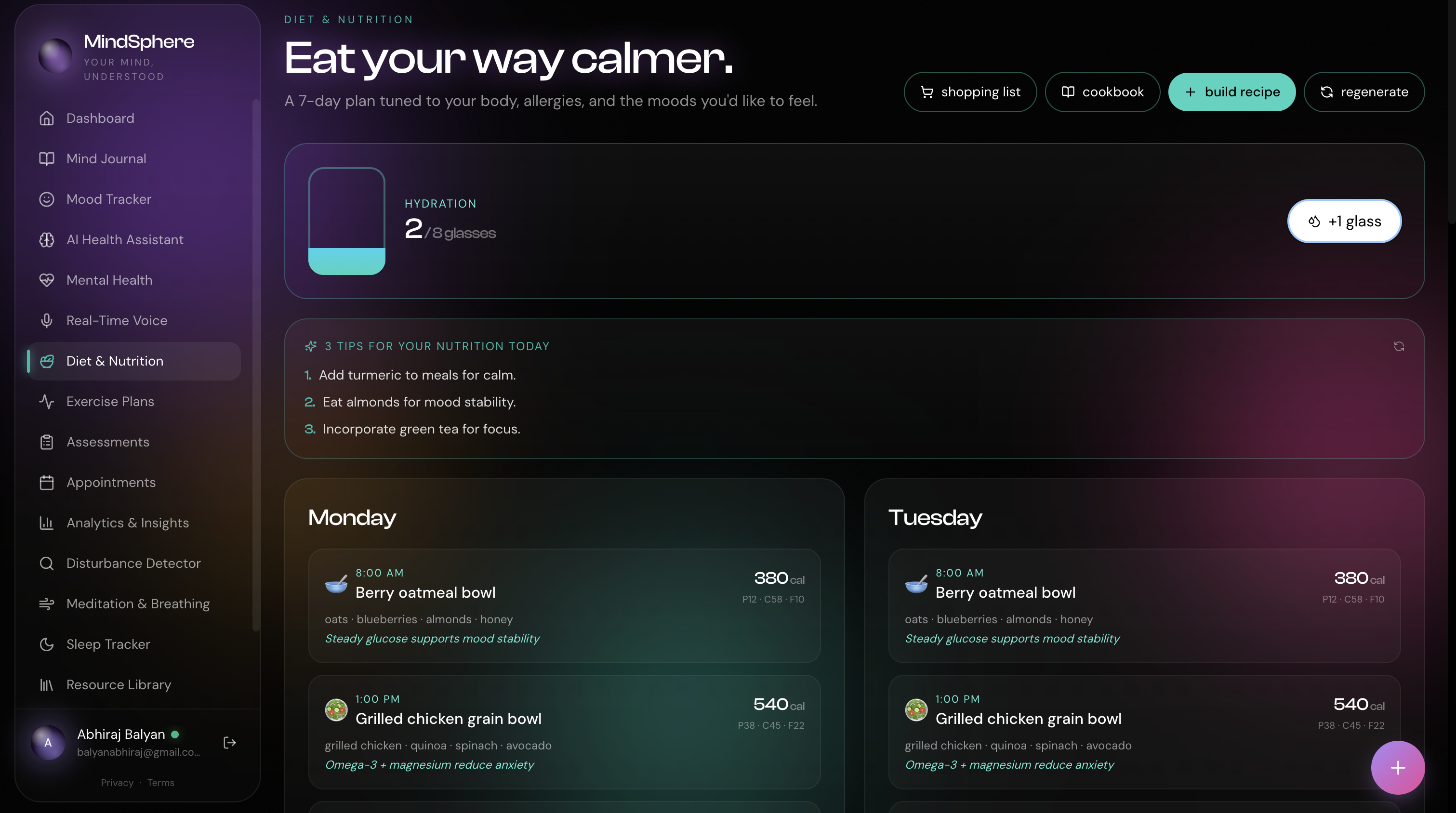
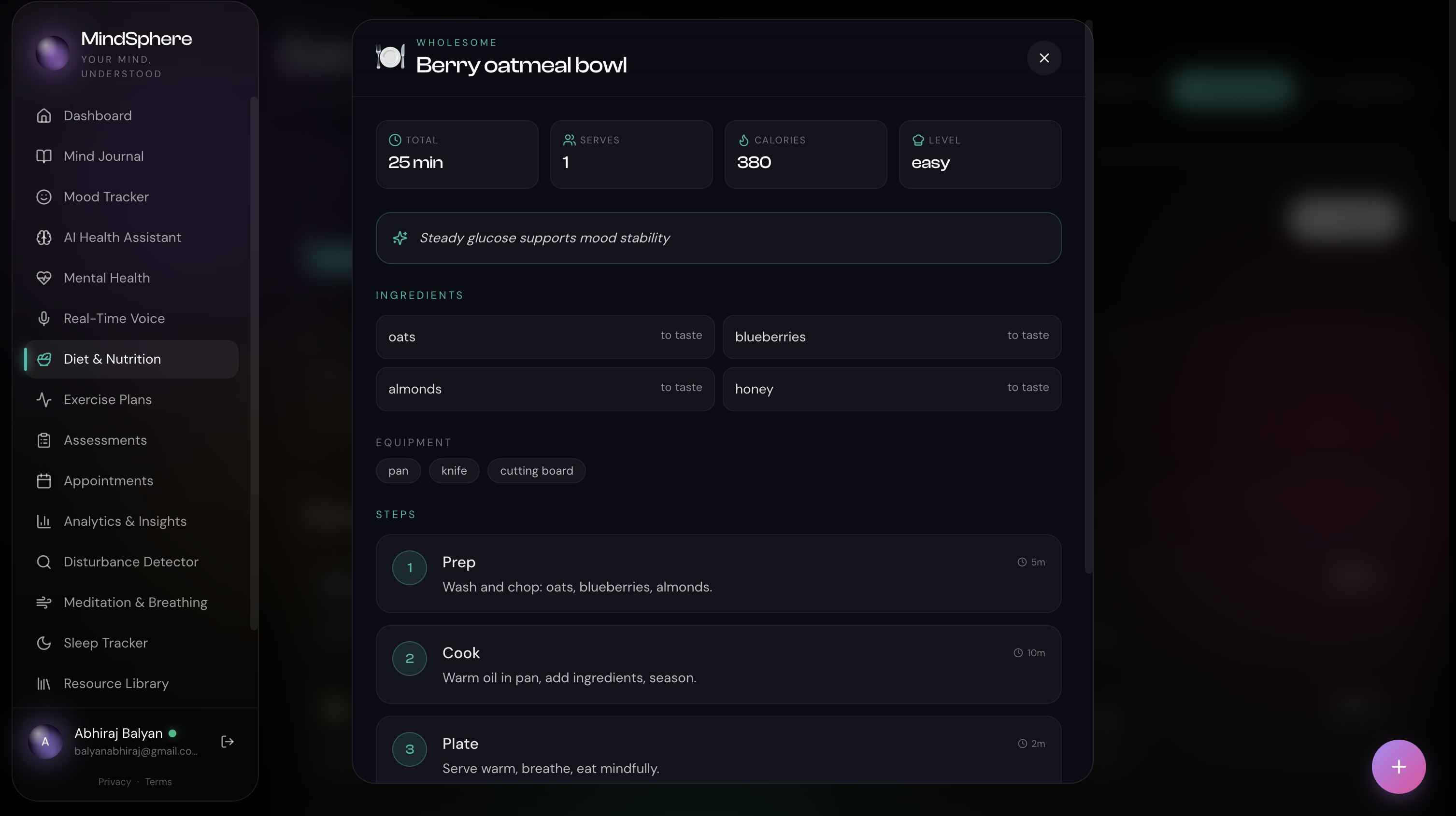
Diet & Nutrition
-
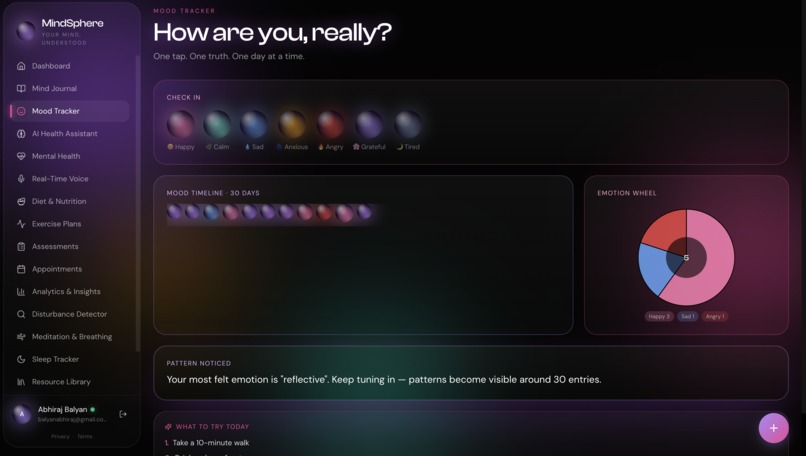
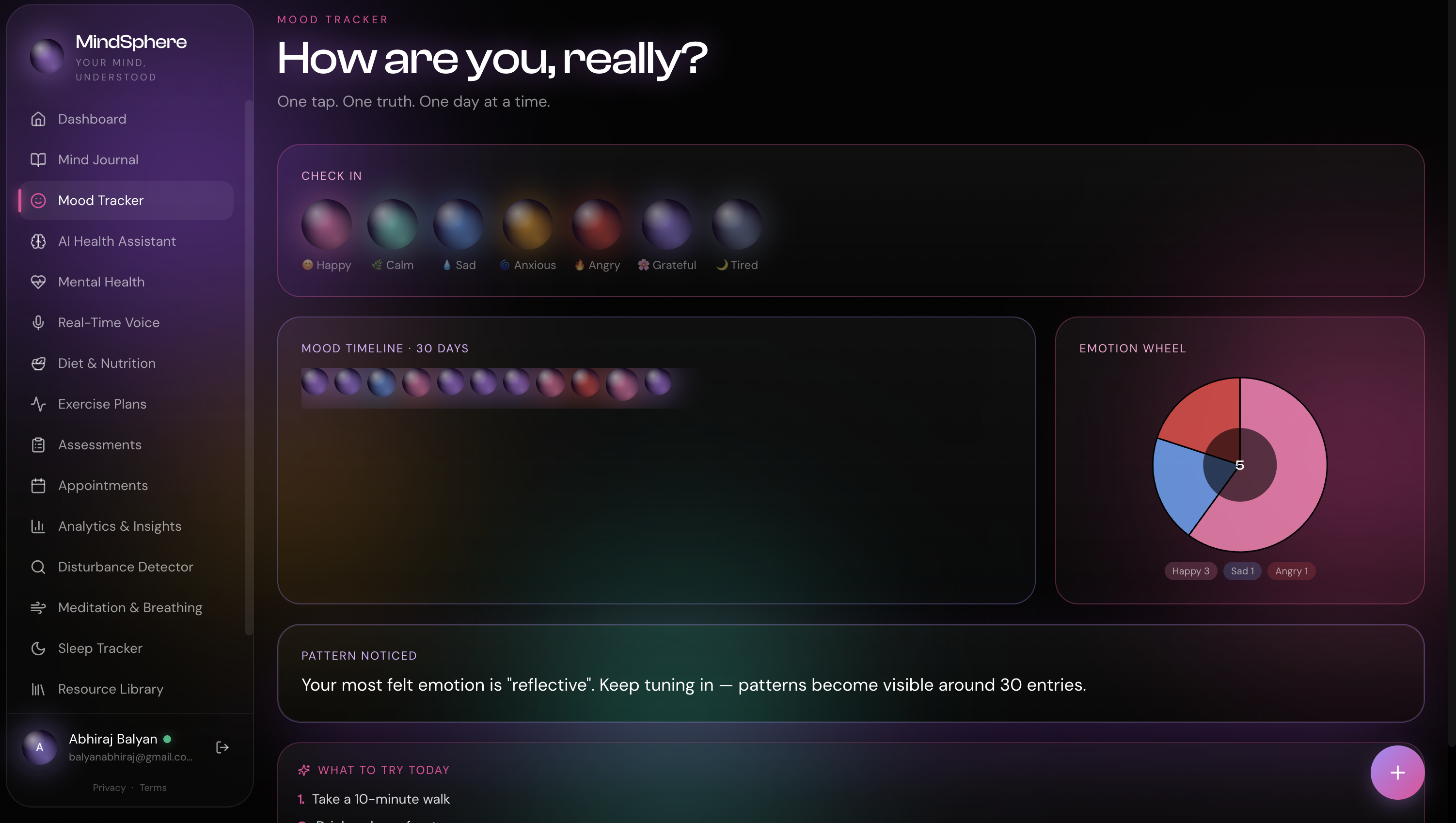
Mood Tracker
-
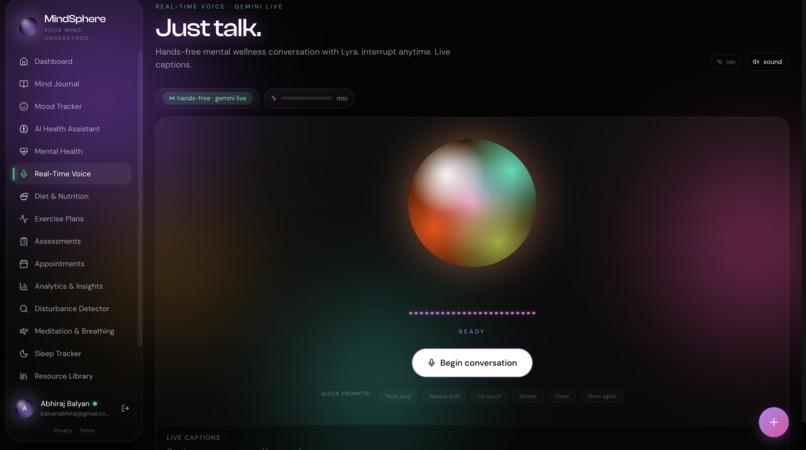
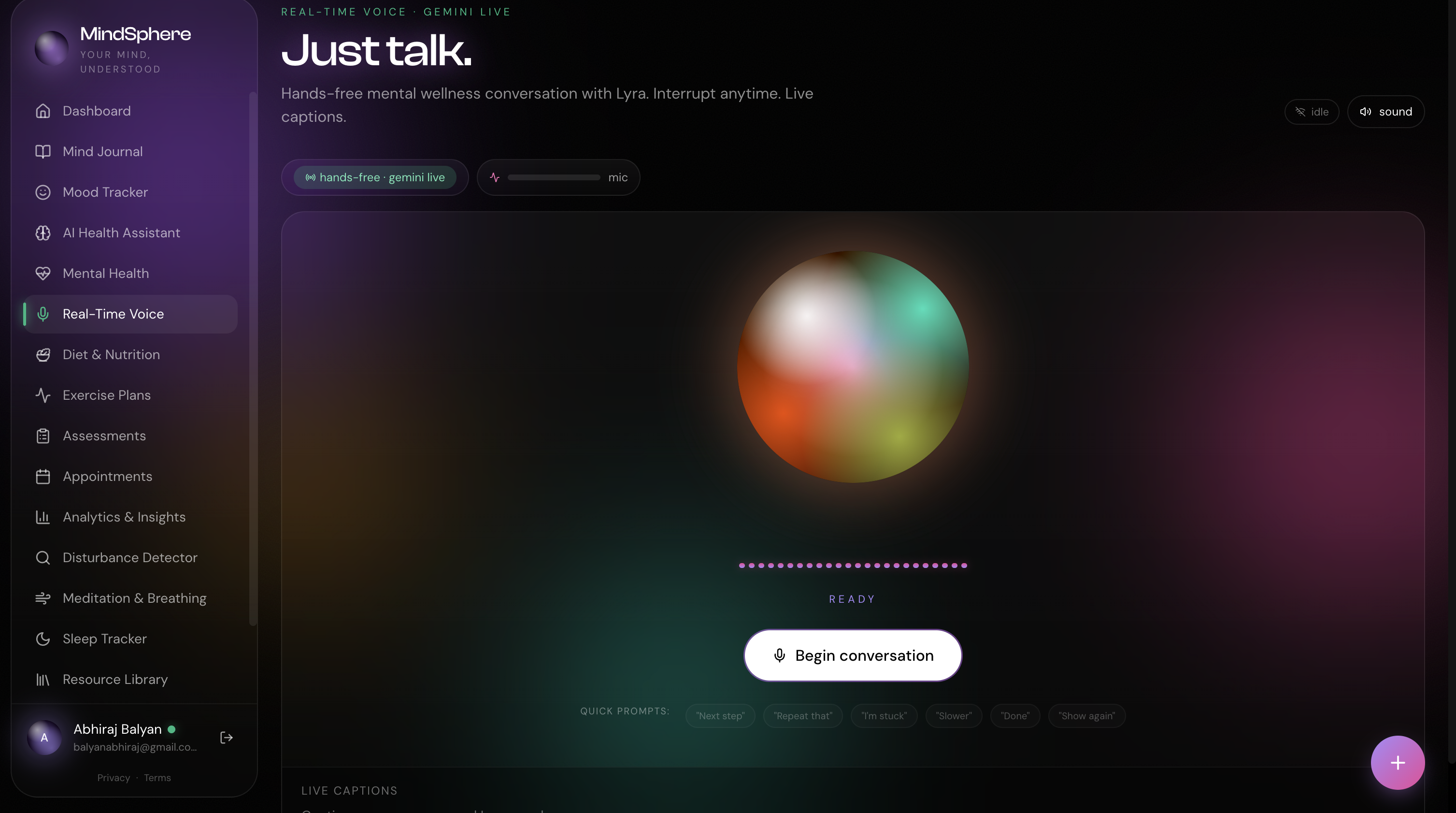
Real-Time Voice Mode
-
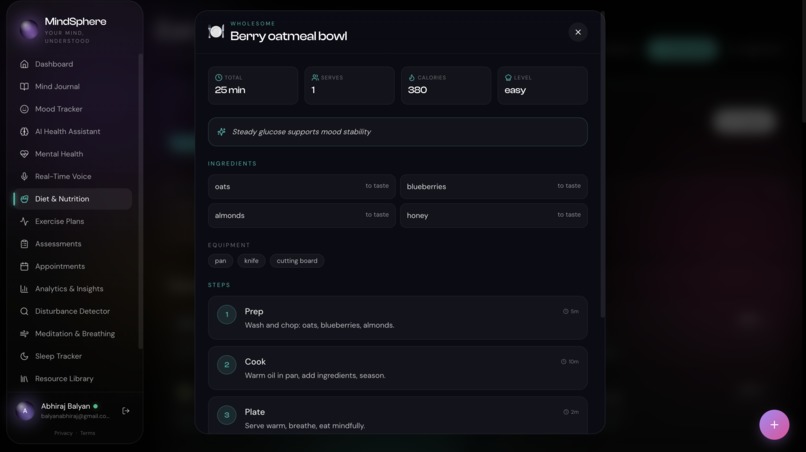
Recipe
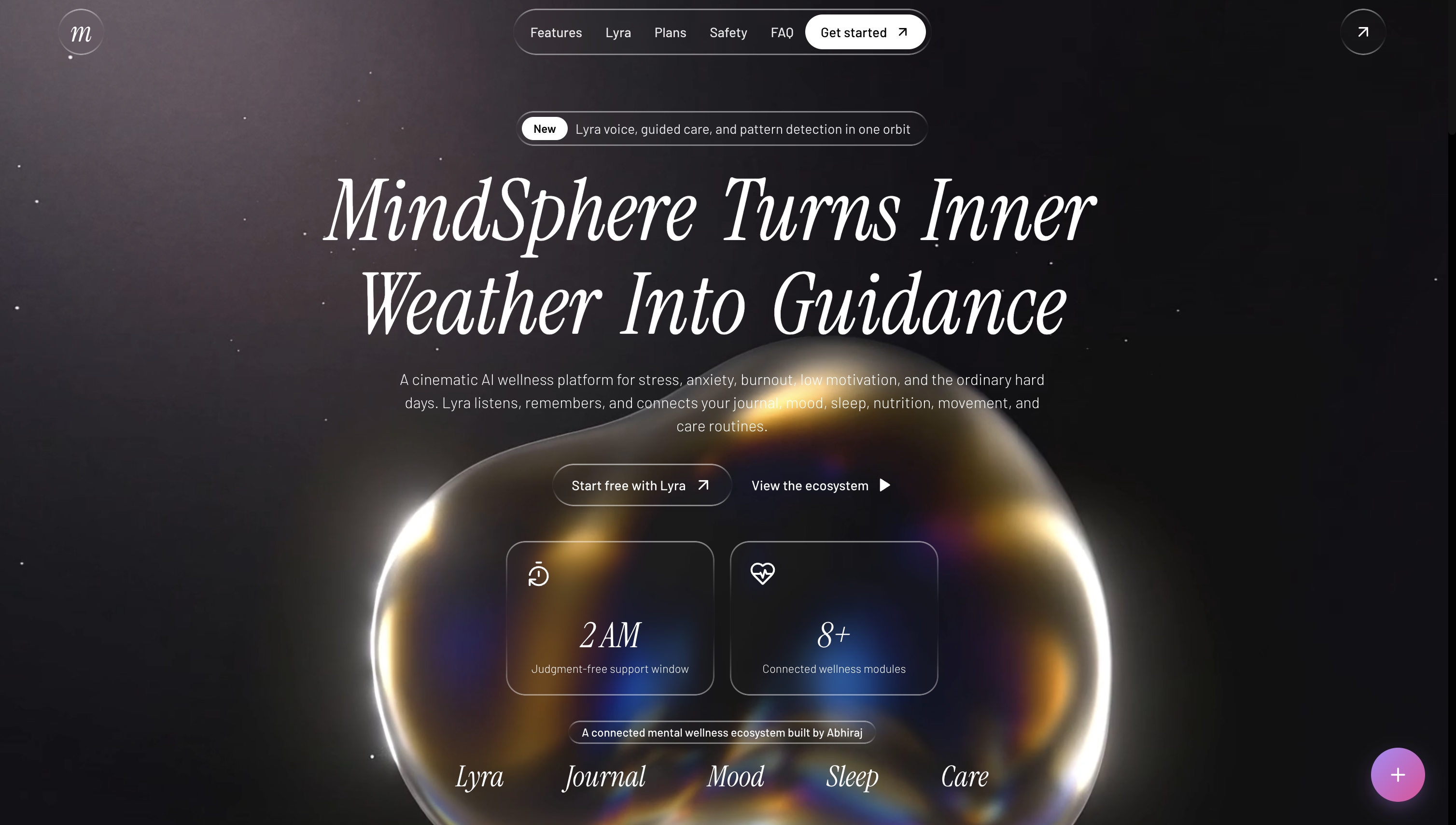
MindSphere
Inspiration
The idea for MindSphere didn't come from a textbook or a market report—it came from watching people close to us struggle quietly. Friends and family dealing with stress, anxiety, burnout, and loneliness without having anyone they felt comfortable talking to. Not because they didn't want help, but because the support available is often too expensive, difficult to access, or surrounded by stigma.
We kept noticing the same pattern: someone appears completely fine on the outside while silently carrying an overwhelming mental burden. That disconnect inspired us to build something that meets people exactly where they are—on their phone, at any time of day, without appointments, waitlists, or fear of judgment.
Our goal was simple: make mental wellness support as accessible and consistent as fitness apps have made physical wellness.
What it does
MindSphere is an AI-powered, all-in-one mental wellness platform that supports users proactively—not just during moments of crisis.
At the heart of the platform is Lyra, our AI wellness companion, available 24/7 through both text and real-time voice conversations. Whether someone wants to vent, reflect, or simply talk, Lyra is always available.
Beyond conversational AI, MindSphere includes:
- 📊 Mood Tracker to monitor emotional trends over time.
- 📖 Mind Journal for guided reflection and emotional awareness.
- 🚨 Disturbance Detector that identifies patterns which may indicate declining mental well-being.
- 🥗 Personalized diet and nutrition plans.
- 💪 AI-generated fitness and exercise routines.
- 🧘 Guided meditation and breathing exercises.
- 😴 Sleep tracking and wellness insights.
- 👨⚕️ Direct booking with verified mental health professionals when human support is needed.
Instead of solving one isolated problem, MindSphere combines AI, wellness, and professional care into a single platform designed for everyday mental health.
How we built it
We focused on building a modern, production-ready architecture capable of supporting both conversational AI and wellness features.
Frontend
- React
- Vite
Backend
- FastAPI
Database
- MongoDB Atlas
AI
- Qwen 2.5 via Hugging Face for conversational intelligence
- Gemini Live for real-time voice conversations
Deployment
- Frontend deployed on Vercel
- Backend deployed on Railway
MindSphere is fully deployed and available today at https://mindsphere.fit—this isn't just a prototype or proof of concept, but a working product that real users can access.
Challenges we ran into
Building such a broad platform required constant trade-offs between adding new capabilities and ensuring everything felt cohesive.
Every major feature—AI conversations, voice interactions, mood tracking, journaling, nutrition, exercise planning, sleep tracking, and appointment booking—could have become an individual application. The real challenge was designing an architecture and user experience where they worked together naturally.
Another significant challenge was AI behavior.
Mental health conversations demand empathy, emotional intelligence, and appropriate boundaries. Generic chatbot responses weren't good enough. We spent considerable time refining prompts, conversation flows, and response quality so interactions felt supportive rather than robotic or overly clinical.
Implementing real-time voice conversations introduced additional complexity around latency, streaming, and creating natural interactions.
Accomplishments that we're proud of
- 🚀 Shipping a fully deployed, production-ready application instead of a hackathon-only demo.
- 🎙 Successfully integrating end-to-end real-time AI voice conversations using Gemini Live.
- 🧠 Building an AI companion that prioritizes empathy, trust, and supportive conversations.
- ❤️ Combining mental health, physical wellness, nutrition, sleep, and professional care into one unified ecosystem.
- 🌍 Creating a platform that anyone can access anytime without appointments or long wait times.
What we learned
Building for mental health is fundamentally different from building a traditional SaaS product.
Functionality alone isn't enough—tone, trust, empathy, privacy, and user safety are equally important. Every interaction has the potential to affect someone's emotional well-being, making responsible AI design just as critical as technical implementation.
We also learned that AI should complement professional care rather than replace it. Technology can provide immediate support and encourage healthier habits, but knowing when to guide users toward qualified professionals is equally important.
What's next for MindSphere
We're just getting started.
Our roadmap includes:
- Improving the Disturbance Detector to identify emotional patterns earlier and with greater accuracy.
- Making Lyra even more personalized by learning from users' long-term wellness journeys.
- Expanding our network of verified mental health professionals for seamless referrals.
- Adding richer wellness analytics and personalized recommendations.
- Supporting multiple languages and improving accessibility.
- Introducing wearable integrations for deeper health insights.
- Continuing to strengthen AI safety, privacy, and personalization.
Our long-term vision is for MindSphere to become the first place people turn to for mental wellness—not just during difficult moments, but every single day—helping prevent problems before they become crises.
Built With
- ai
- fastapi
- gemini
- gemini-live
- huggingface
- javascript
- jwt
- llm
- mongodb
- mongodb-atlas
- natural-language-processing
- python
- qwen
- railway
- react
- rest-api
- tailwindcss
- vercel
- vite
- websockets

Log in or sign up for Devpost to join the conversation.