-
-
Mindspace
Inspiration
Every night, the human brain generates 3–5 dreams, adding up to over 100,000 dreams in a lifetime. Yet nearly 95% of dreams are forgotten within 10 minutes of waking up.
Despite how fleeting they are, dreams contain rich emotional signals, memories, and subconscious thoughts. They often reflect unresolved emotions, creativity, fears, and ideas that our conscious mind hasn't fully processed.
We asked a simple question: What if we could explore the hidden world of our dreams instead of losing them every morning?
This idea led to Mindspace, a platform designed to visualize, explore, and interact with the subconscious mind through dreams.
What it does
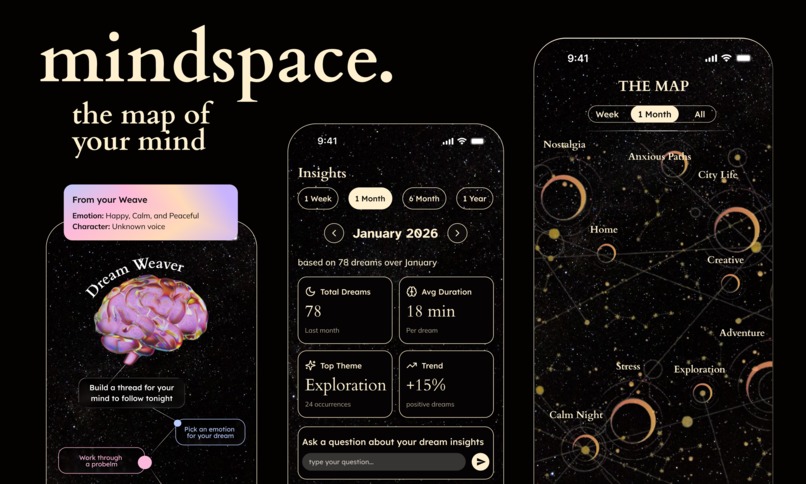
Mindspace is a conceptual dream exploration platform that helps users visualize and navigate their dreams as meaningful experiences rather than forgotten memories.
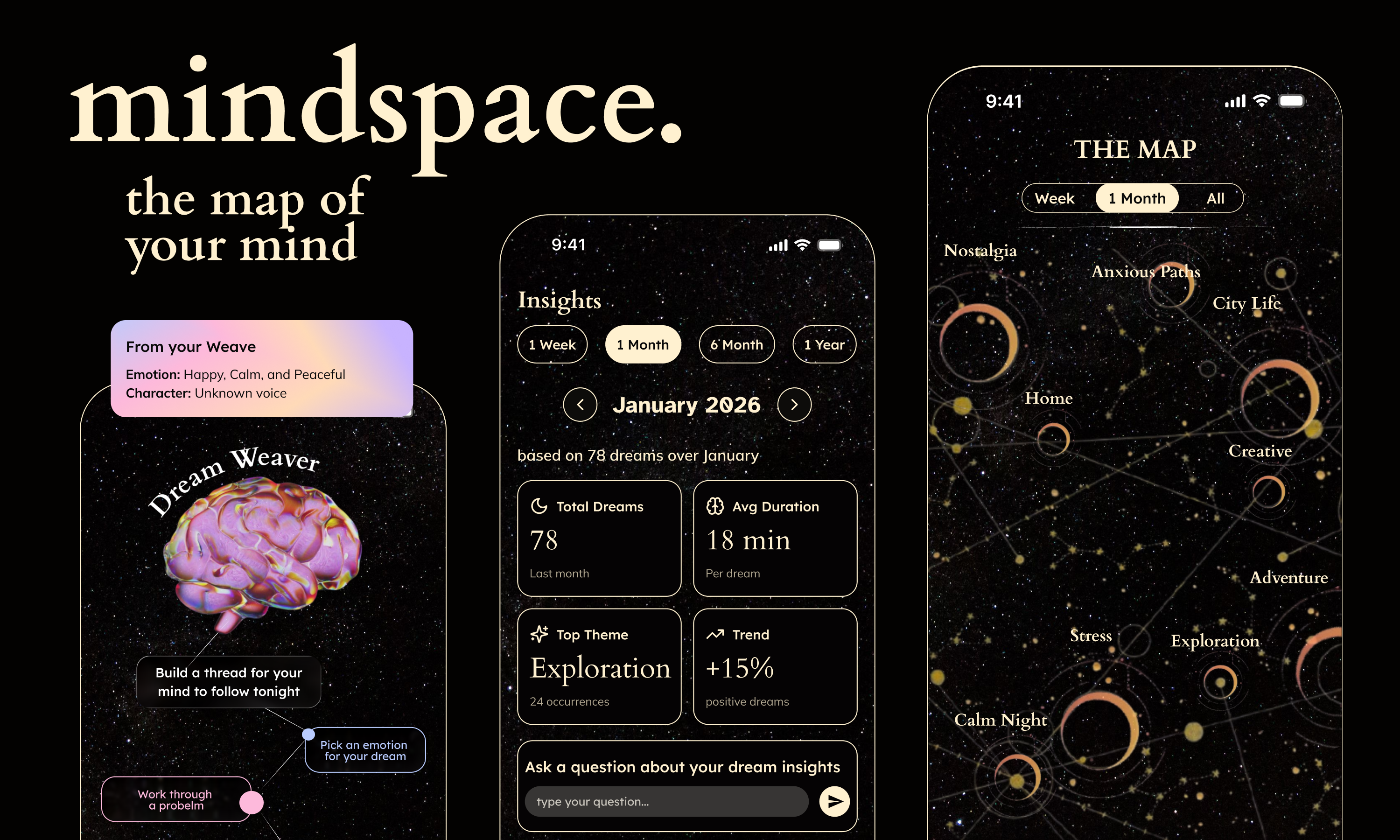
The platform transforms dreams into visual stories, emotional insights, and interactive maps, allowing users to understand patterns in their subconscious.
Mindspace introduces a new sensory experience called Subconscious Awareness — the ability to perceive patterns, emotions, and connections emerging from dreams that would normally remain hidden.
The platform enhances three internal senses:
Interoception Understanding emotional states revealed through dream experiences.
Chronoception Recognizing patterns in dreams across time.
Metacognition Becoming aware of how our thoughts and emotions manifest subconsciously.
Together, these create a new way of understanding the mind.
How we built it
Mindspace was designed as a conceptual prototype exploring future interfaces for subconscious interaction.
We designed the product experience using: Figma for interface design and prototyping Figma Make to create interactive prototype flows AI-assisted visualization tools to generate dream video imagery Conceptual data analysis systems for dream insights and pattern detection
The prototype demonstrates how users would navigate through: Dream videos Insight dashboards Mind maps Dream weaving tools
Challenges we ran into
One of the biggest challenges was designing interfaces for something inherently abstract.
Dreams are nonlinear, symbolic, and emotional, which makes them difficult to represent in traditional UI structures.
To address this, we explored: visual storytelling through dream videos network visualization through mind maps temporal exploration through dream calendars
Another challenge was ensuring the platform did not over-interpret dreams, which could lead to misleading conclusions.
We addressed this by framing insights as patterns and reflections rather than definitive meanings.
What we learned
Through this project we explored how design can make invisible mental processes visible.
Dreams represent a vast, unexplored layer of human experience. By visualizing and analyzing them, we can create tools that help people better understand themselves.
Mindspace demonstrates how future interfaces may help humans interact with their inner cognitive landscapes, not just external data.
What's next for Mindspace - the map of your mind
Future iterations of Mindspace will explore: Video generation and incorporation AI-generated dream scene reconstructions AR/VR dream exploration environments Wearable device design and interaction
Ultimately, Mindspace aims to turn dreams into a meaningful tool for self-awareness, creativity, and wellbeing.
Built With
- figma
- figmamake


Log in or sign up for Devpost to join the conversation.