-
-
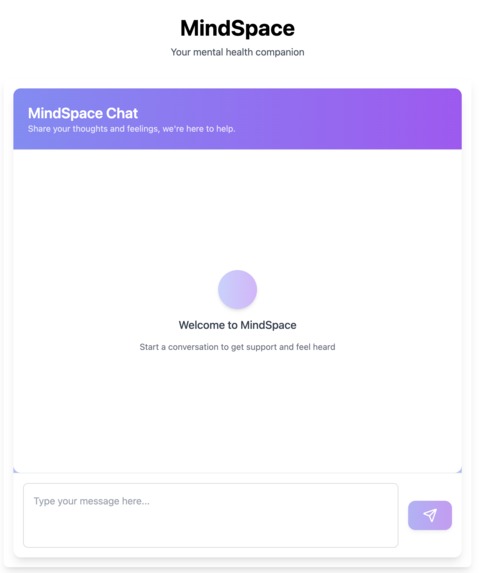
Home Page
-
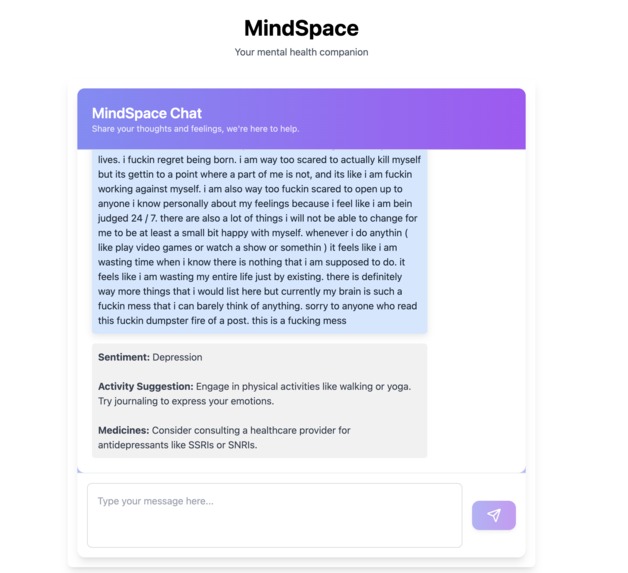
chat surface
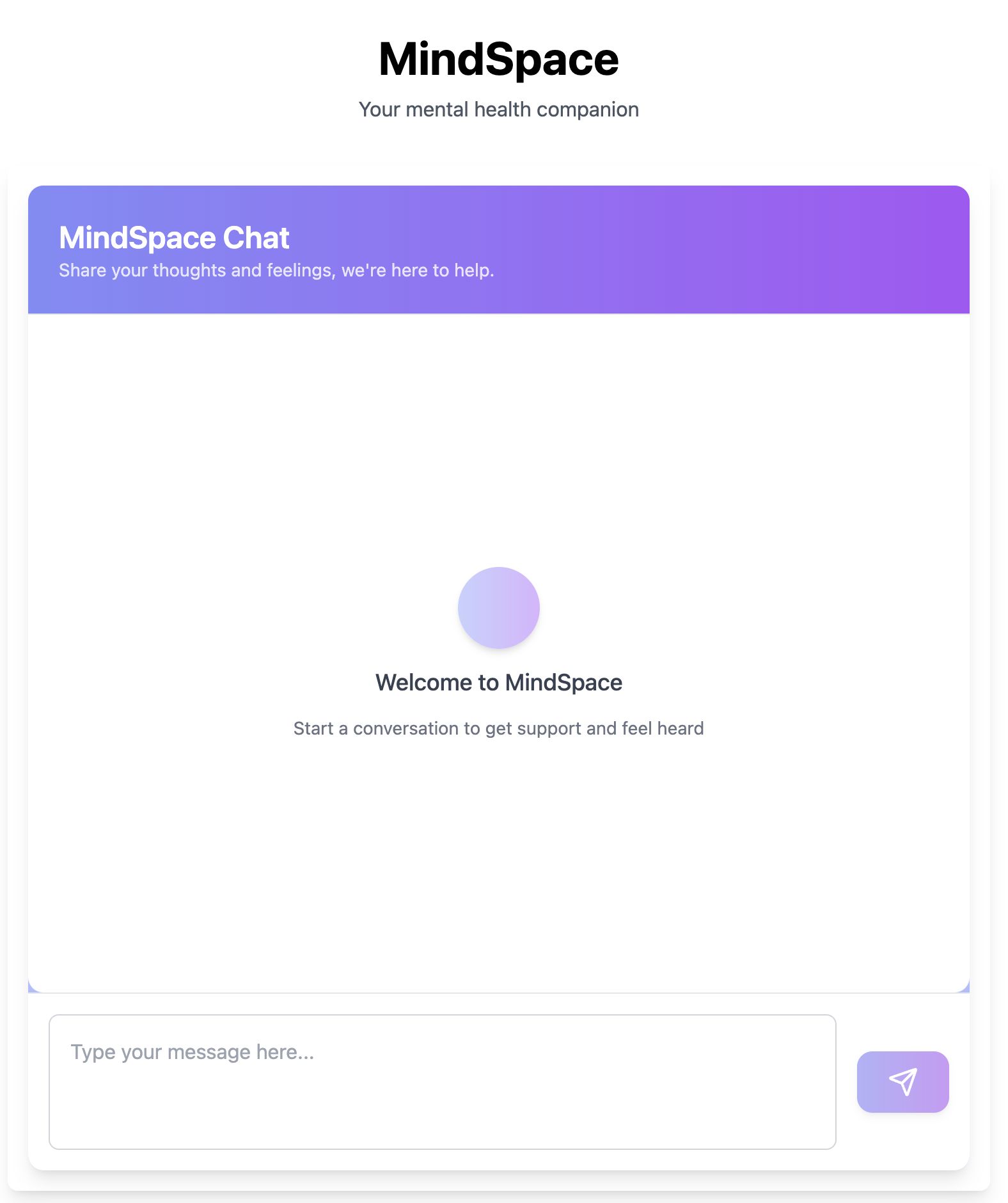
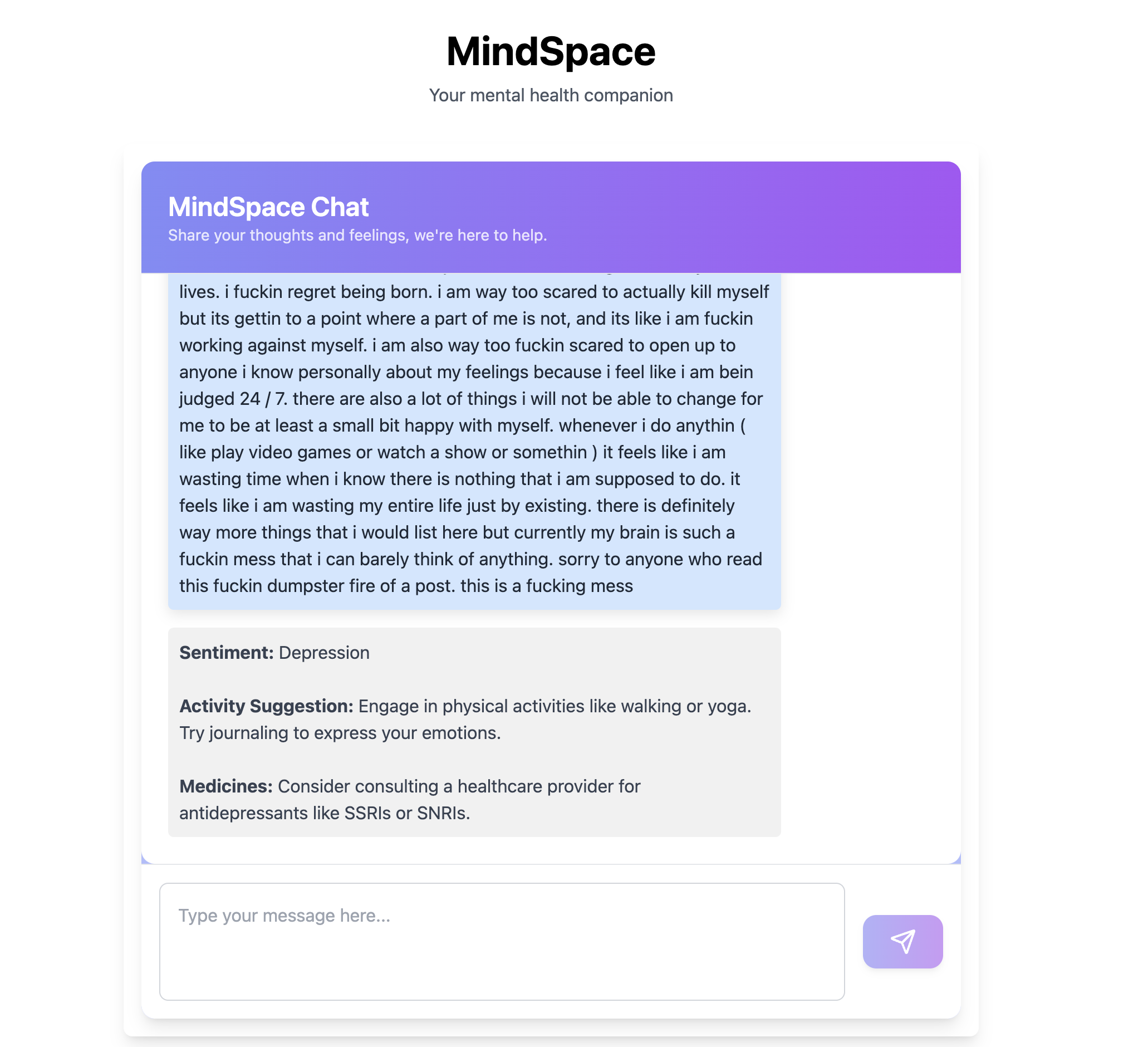
Inspiration
MindSpace was inspired by the growing need for accessible, compassionate mental health support. In a world where many people experience emotional distress and don't know where to turn, the idea was to create a space where anyone could share their feelings without judgment and receive instant, personalized support. Observing the increasing reliance on digital platforms for emotional expression, I realized there was a gap for a tool that could not only listen but also offer meaningful guidance, from activity suggestions to relevant mental health resources.
What it does
MindSpace is an AI-powered chatbot designed to analyze users' thoughts and emotions based on the text they share. The app offers:
- Sentiment Analysis: It evaluates the emotional tone of the user's message, detecting feelings such as sadness, happiness, stress, or anxiety.
- Activity Suggestions: Based on the user's emotional state, the chatbot suggests relevant activities like meditation, exercise, journaling, or breathing exercises to help improve their well-being.
- Medicines: For users showing signs of serious distress or mental health conditions, MindSpace offers gentle recommendations for professional help or appropriate medications (after a disclaimer about consultation with a healthcare provider).
- Related Content: The app provides curated mental health resources—articles, videos, and other helpful links tailored to the user's emotional state.
How we built it
MindSpace was built using advanced Natural Language Processing (NLP) and machine learning algorithms to interpret and analyze user text. Here's a breakdown of the process:
- Research & Design: The first step was understanding what users needed and what resources would be most beneficial. We focused on mental health, wellness activities, and evidence-based practices.
- Sentiment Analysis: We integrated sentiment analysis tools to evaluate the emotional tone of text input. This involves parsing the language to detect subtle cues like word choice, punctuation, and context.
- AI Model Training: We trained machine learning models on large datasets of emotional language to improve the bot's understanding of different emotional states.
- Recommendation System: We developed algorithms to suggest personalized activities and resources based on the detected sentiment, ensuring they were both effective and scientifically backed.
- UI/UX Development: The app's design is intuitive and empathetic, with a user-friendly interface that ensures a seamless experience for anyone, whether they're tech-savvy or not.
Challenges we ran into
- Sentiment Detection Accuracy: While NLP is powerful, understanding nuances like sarcasm or indirect expressions of emotions (e.g., "I'm fine" when someone is clearly upset) proved challenging. Ensuring the chatbot could accurately interpret these subtleties required continuous model refinement.
- Balancing Empathy and Precision: The chatbot had to offer empathetic responses without being overly generic or robotic. Striking the right balance between automation and genuine emotional support took a lot of iteration.
- Curating Resources and Activities: Selecting evidence-based mental health activities and resources that were universally helpful, without overwhelming the user, was another challenge. We had to ensure that suggestions were not only helpful but also tailored to different emotional states.
- Data Privacy: Protecting user data, especially given the sensitive nature of mental health conversations, was a priority. Implementing robust security measures was essential to ensure user trust.
Accomplishments that we're proud of
- Empathetic AI Responses: We’ve successfully developed a chatbot that doesn’t just offer responses but does so in a compassionate, empathetic tone, which is crucial for mental health support.
- Personalized Support: MindSpace doesn't just provide generic advice. It tailors its suggestions and resources to each user’s emotional state, ensuring relevant and actionable guidance.
- User Safety: We built the app with strict privacy controls to ensure all conversations remain confidential, addressing a major concern for anyone seeking mental health support online.
- Positive User Feedback: Early testers have found MindSpace not only helpful but also comforting. Many have expressed appreciation for having a non-judgmental platform to share their feelings.
What we learned
- The Power of Empathy in Technology: One of the key lessons was realizing how important it is for technology, particularly in mental health, to convey empathy. A machine might have the data, but human connection (even through AI) is what truly makes a difference.
- Iterative Development is Key: MindSpace started with basic sentiment analysis, but constant iteration and user feedback were crucial in making the system more accurate and responsive. What worked initially had to be fine-tuned over time.
- Mental Health is Complex: Every individual experiences mental health differently, and building a one-size-fits-all solution is difficult. Customization and flexibility in the app’s responses became a vital component of its success. ### What's next for MindSpace
- Expanded Feature Set: We plan to integrate more advanced mental health assessments, like mood tracking and progress monitoring, allowing users to see how their emotional well-being evolves over time.
- Professional Integration: A future goal is to connect users with certified mental health professionals if they desire, offering live chats or even video sessions, blending the support of AI with human expertise.
- More Personalized Content: We'll expand the range of activities and resources, making the content more personalized and diverse, including meditation guides, coping techniques, and even interactive sessions.
- Multilingual Support: To make MindSpace more accessible globally, we plan to incorporate multiple languages, ensuring non-English speaking users can benefit as well.
- Continual AI Improvement: As we gather more user interactions, we’ll refine the AI’s sentiment analysis and response generation, making it even more empathetic and accurate.


Log in or sign up for Devpost to join the conversation.