-
-
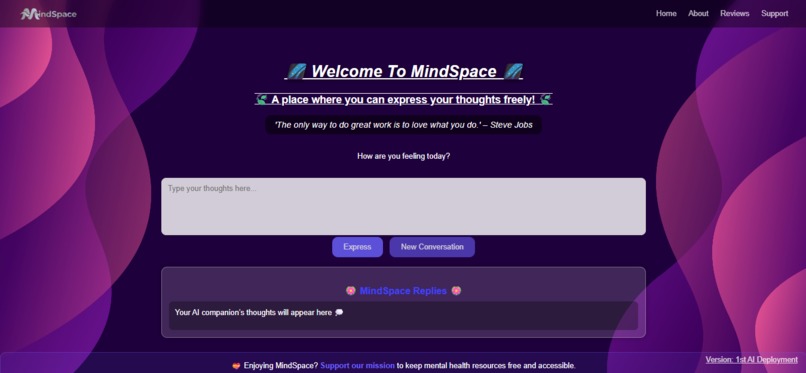
Webpage
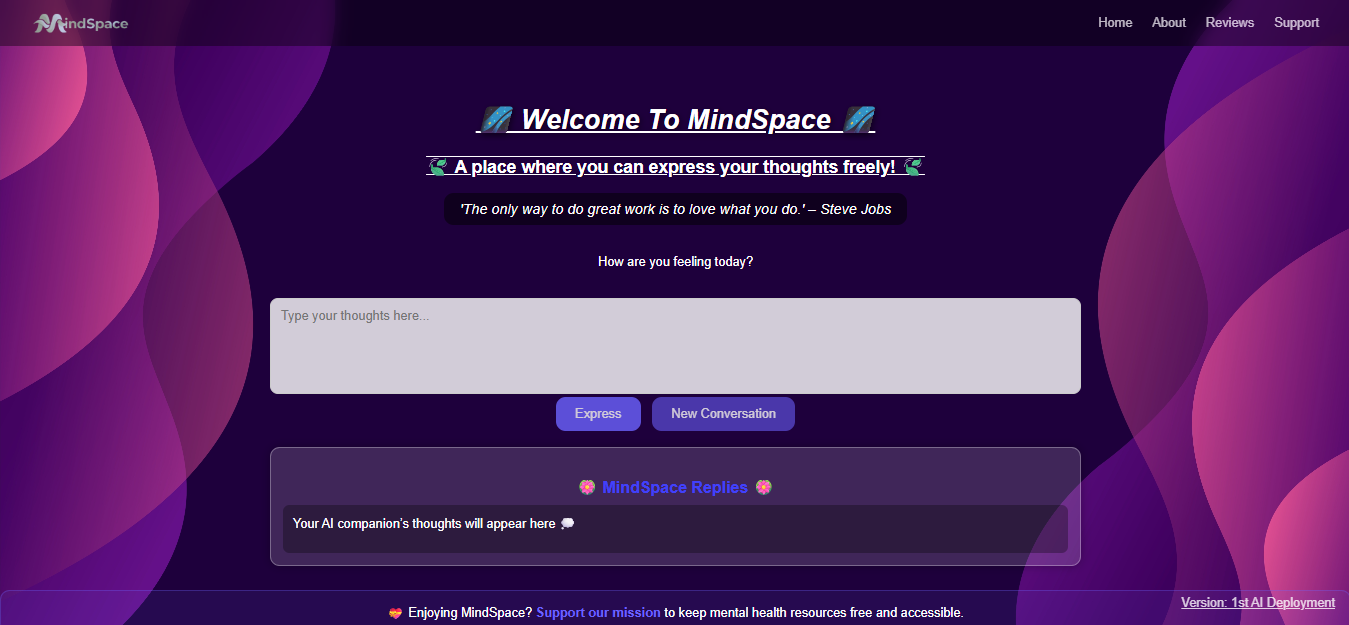
🌌 MindSpace
Inspiration
MindSpace was born from something deeply personal.
A schoolmate lost her life after struggling under intense parental pressure, constant conflict at home, and overwhelming expectations. It was a painful reminder that many young people carry emotional weight silently, without a safe outlet to express what they are going through.
At the same time, I found myself navigating similar pressures — academic expectations, performance stress, and the constant feeling of needing to measure up. What made the difference for me was having a space to release those thoughts before they became overwhelming.
That realization shaped this project.
Sometimes people don’t immediately need solutions. They need space. A place to express themselves honestly without judgment, cost, or fear of exposure.
MindSpace was created as a small step toward building that space.
What It Does
MindSpace is a free, privacy-first AI emotional reflection platform.
Users can:
- Enter their thoughts freely
- Receive supportive AI-generated responses
- Use the platform without logging in
- Avoid data storage or account creation
There are no subscriptions, no hidden tracking, and no required sign-ups.
The goal is to create a calm, minimal environment where someone can pause, reflect, and feel heard — even if just for a moment.
MindSpace is not a replacement for therapy or professional help. Instead, it serves as an accessible starting point for reflection, especially for students and individuals who may not have immediate support.
How It’s Built
Frontend
- HTML
- CSS
- Vanilla JavaScript
- Deployed on Netlify
The frontend is intentionally lightweight and framework-free to ensure speed, simplicity, and accessibility.
Backend
- Node.js (Serverless)
- Deployed on Vercel
- Secure AI API integration
- Environment-based secret management
The backend securely processes AI requests without exposing any API keys to the client.
Security & Privacy Architecture
Security and privacy were treated as core features.
Key protections include:
- Strict origin validation (only the official frontend can access the backend)
- Controlled CORS configuration
- Rate limiting to prevent abuse
- Payload size and content-type validation
- Secure HTTP headers (HSTS, X-Frame-Options, CSP, etc.)
- No sensitive error leakage
- Server-side environment variable storage for API credentials
- Retry logic for upstream reliability
No conversations are stored. No personal data is collected. No accounts are required.
Challenges Faced
1. Preventing API Abuse
A publicly accessible backend endpoint can still be exploited even if the API key is hidden. To prevent misuse, strict validation, origin controls, and rate limiting were implemented.
2. Zero-Cost Infrastructure
The entire system — frontend hosting, backend deployment, and AI usage — was built using free tiers. This required careful optimization within rate and hosting constraints.
3. Time Constraint
The project was developed within a short timeframe after discovering the hackathon, requiring focused execution and rapid deployment.
Accomplishments
- Fully deployed production system
- Secure AI integration without exposing credentials
- Privacy-first architecture
- Zero-cost infrastructure
- Clean and minimal UI
- Completion under time pressure
- Part of a long-term 12 Hackathons in 12 Months commitment
What I Learned
- Security must be built in from the beginning.
- AI integrations require careful abuse prevention.
- Constraints encourage smarter engineering decisions.
- Consistency matters more than perfection.
- Building under pressure strengthens execution skills.
What’s Next
Future improvements may include:
- Context-aware but privacy-safe conversation continuity
- Multilingual support
- Optional journaling features
- Scalable AI tier integration
- Enhanced emotional tone refinement
- Expanded accessibility optimizations
The goal is to continue refining MindSpace while keeping its core values intact: accessibility, privacy, simplicity, and responsible AI usage.
Built For
This project was built for a global hackathon as Month 2 of a personal challenge: 12 Hackathons in 12 Months — a commitment to consistent growth, disciplined execution, and real-world building.
Built With
- css3
- gemini
- google-ai
- html5
- javascript
- netlify
- vercel


Log in or sign up for Devpost to join the conversation.