Inspiration
The inspiration behind MindShift comes from our own personal experiences through the challenges of mental health. As college students, we all suffered great pressures from peers, parents, and society. Once we were asked in a psychology class about how many of us felt stressed and depressed. The result was not surprising. Almost everyone raised their hands. As statistics shows, mental health with sub-health conditions such as emotional disorders and depression account for a large proportion of the population. Thus, we hope to create a platform that provides accessible mental health support through AI chat bot and other tools. So that no one will ever need to go through any lonely and dark moment.
What it does
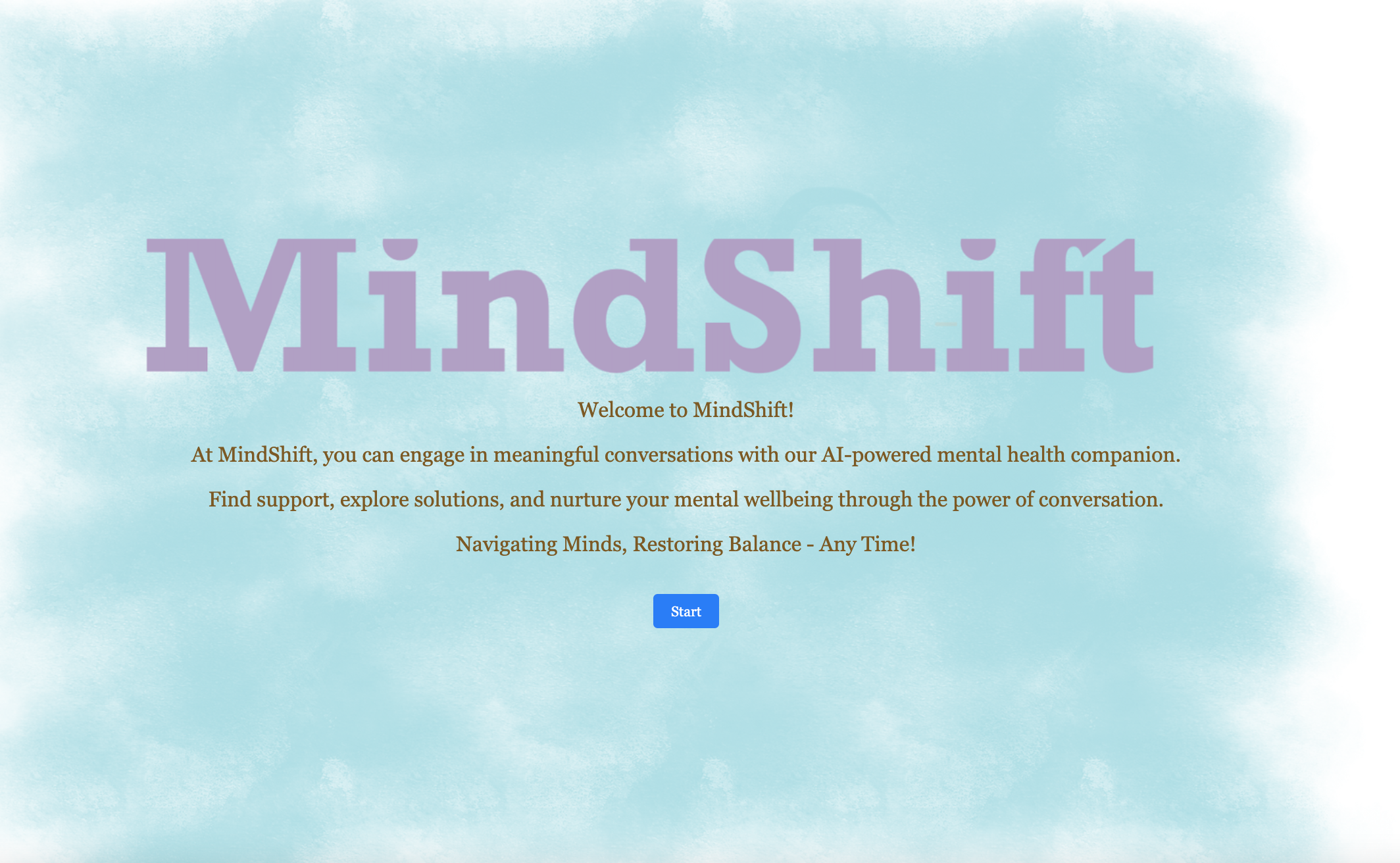
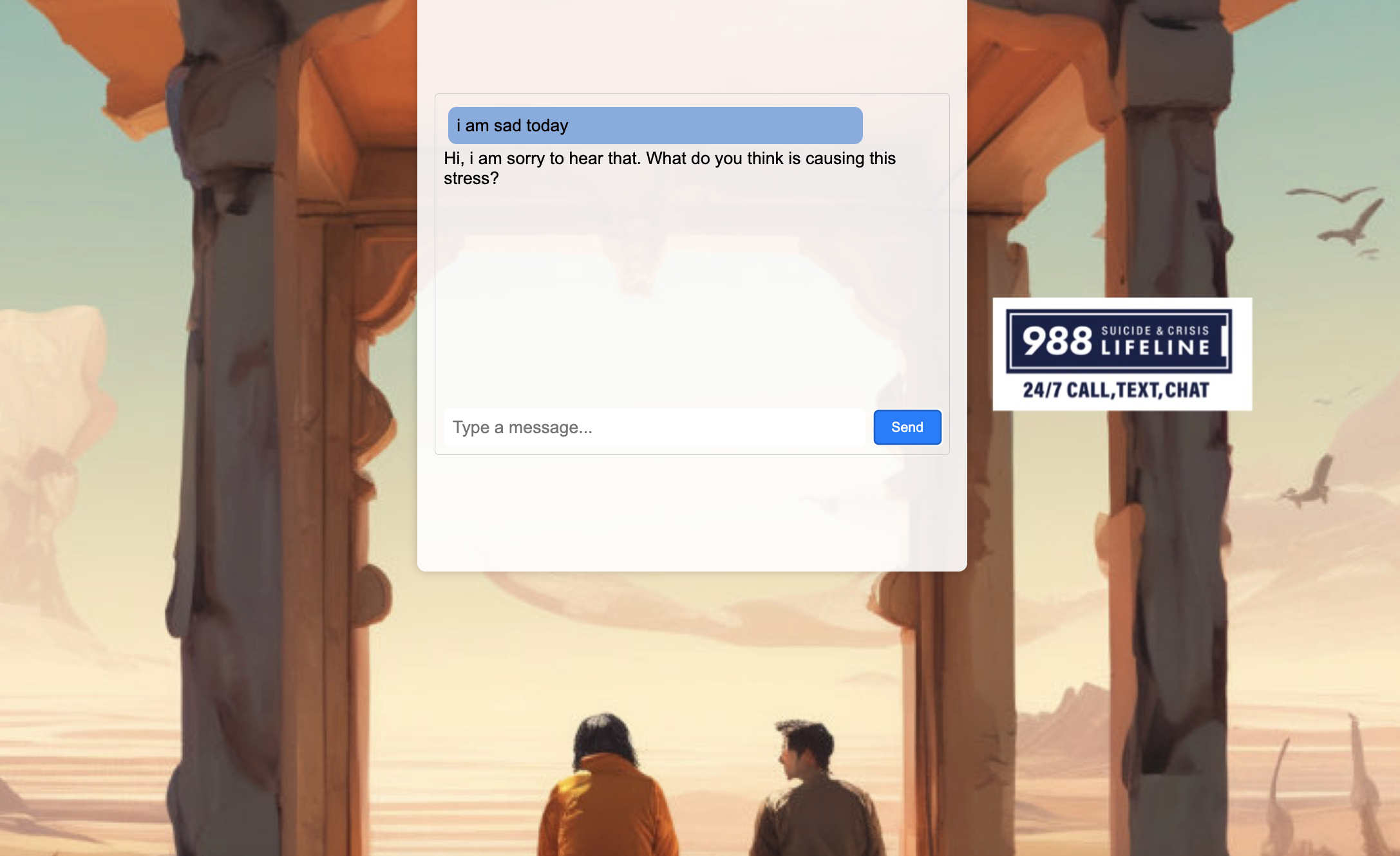
MindShift is a platform that targets individuals who need immediate mental health support. Our chat bot functions as a trained and professional online mental therapist. We aim to deliver real-time response to people who may be experiencing emotional distress or seeking guidance. We offers a safe space for users to open up, discuss their feelings, and receive guidance, with the goal of fostering emotional well-being and resilience.
How we built it
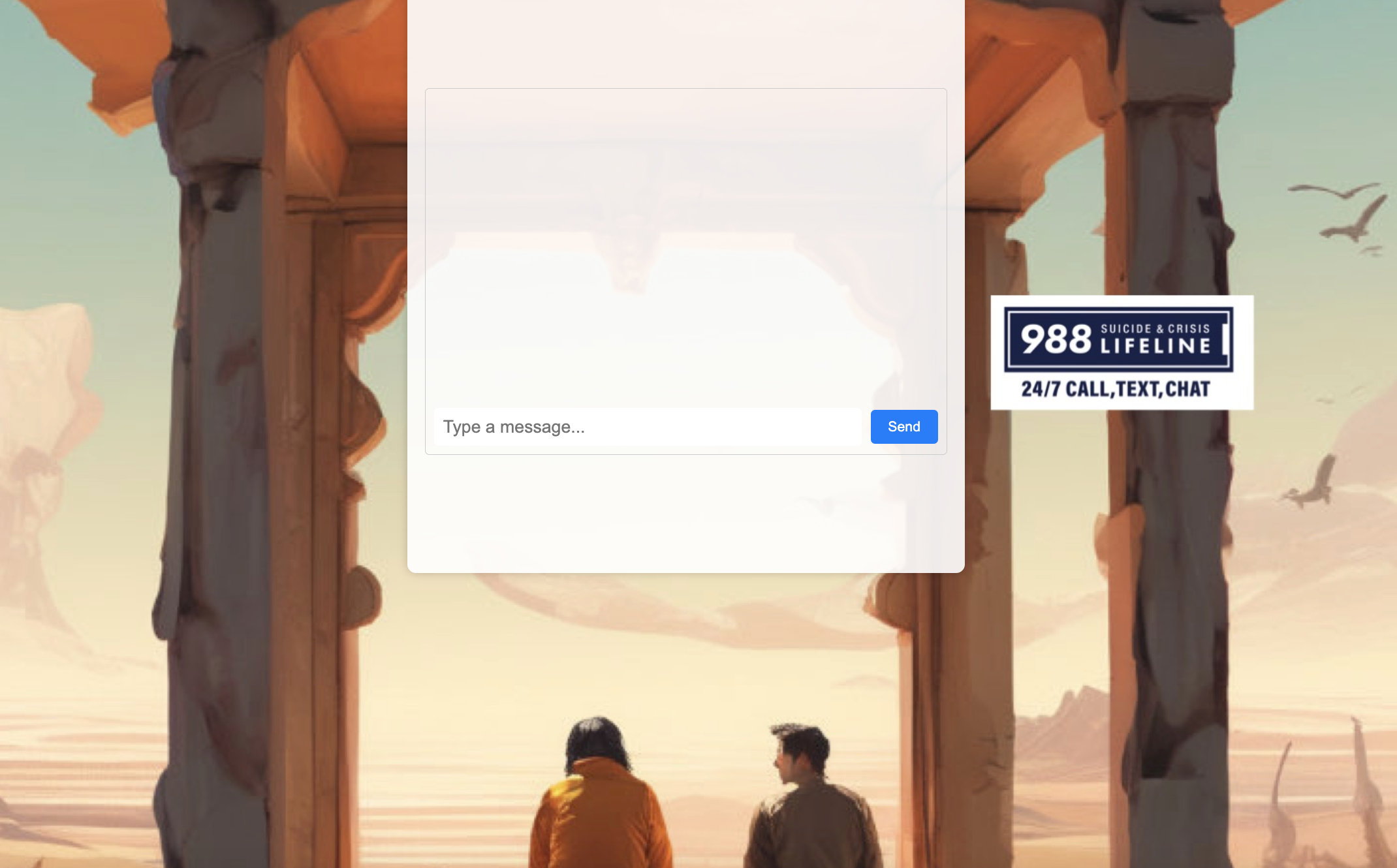
We used HTML, CSS, and JavaScript while building our front end, to create the user interface and chatbox. The back-end is powered by Node.js and Express, allowing for server-side communication with the GPT-3 API by OpenAI. One important aspect of our development process was the fine-tuning of the GPT-3 model. We found that AI's responses need to be sensitive and effective in the context of mental health therapy, so we subjected the model to extensive training with a vast dataset of real-world mental health therapy conversations. it ensures that our chat bot can provide informed and empathetic responses, making it a valuable asset in assisting users with their mental well-being.
Challenges we ran into
Initially, we were deeply inspired to create a 3D interactive game since we believed that an immersive interface could be a powerful way to engage users. However, this it was a time-consuming as we were a beginners to unity, so it then leading us to reevaluate our direction. One of the most challenges we encountered was fine-tuning the model for specific mental health scenarios. Not only because our dataset was not large enough, crafting an AI chat bot's capabilities of addressing the human's emotional needs required many aspect of evaluation.
Accomplishments that we're proud of
It is our first time trying to integrate the GPT-3 AI model into our work. Users could feel supportive and encouraged when they have a conversation with our bot. We also successfully created a user-friendly interface, which encourages users to express their minds, face the difficulties and consider ways to overcome.
What we learned
We learned how to use the innovative technologies and how to combine the front end and back end, which was super useful knowledge. We also learned that to never give up. Because we were spending a quite amount of time learning how to create a game, which ended up not working. So we had to go for other alternative while not much time left for us, but we did it although it could be better if time was enough.
What's next for MindShift
In the future, MindShift will not only focus on chat bot, but other services that might benefit people who need mental support. Such as AI's weekly book, music recommendations. We would also like to get more technical support, such as getting more data to help us train our model and provide more effective responses. Collaboration with some psychologists and professionals can also help us improve the credibility and efficiency of our platform. We hope MindShift can be a great platform that can accept everyone's negative emotions and help deal with them, providing mental health support to more people.


Log in or sign up for Devpost to join the conversation.