-
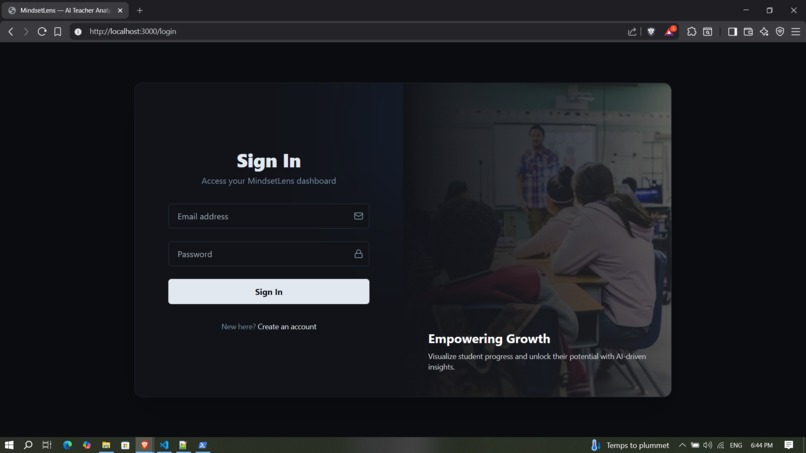
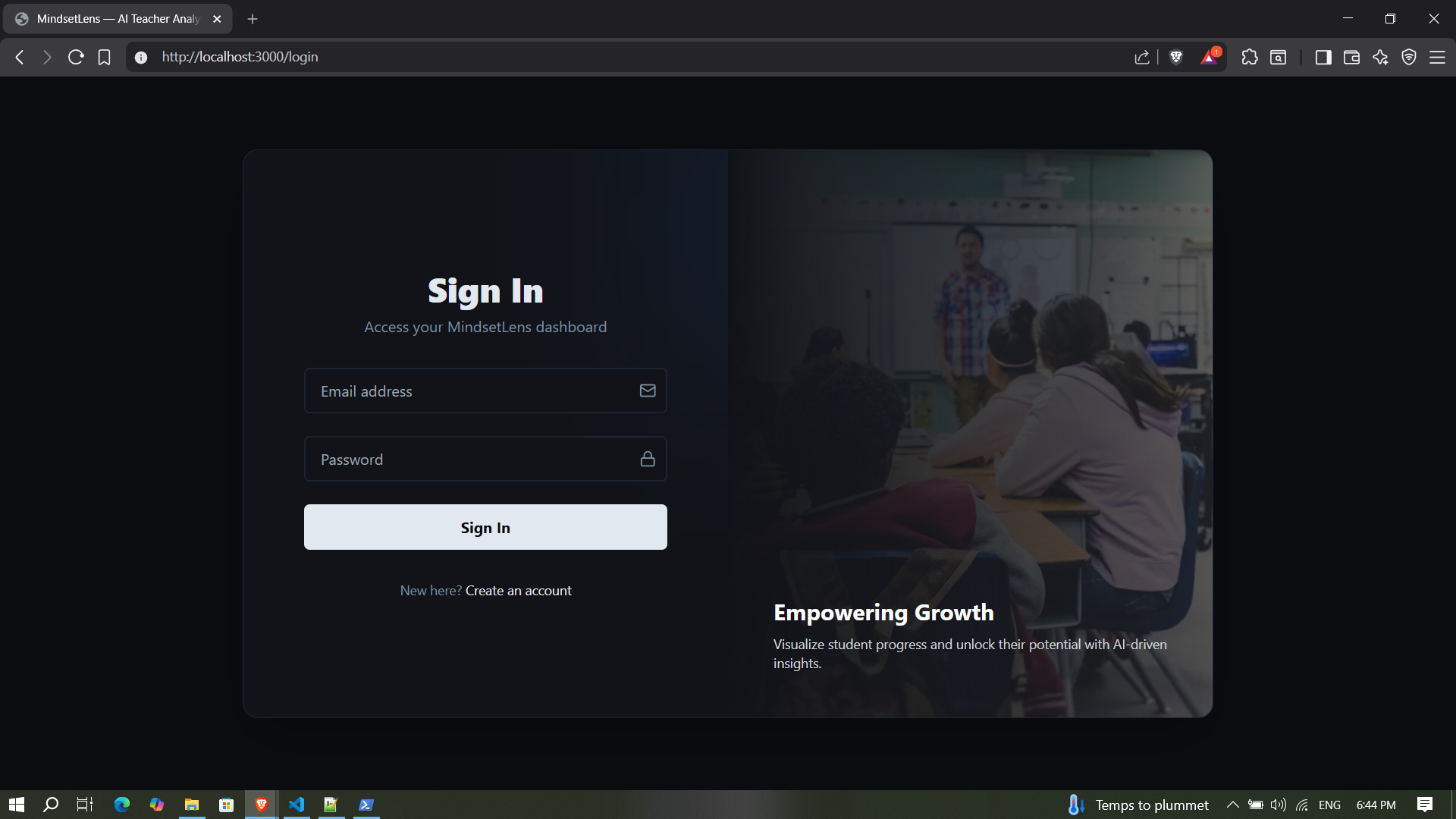
Login page
-
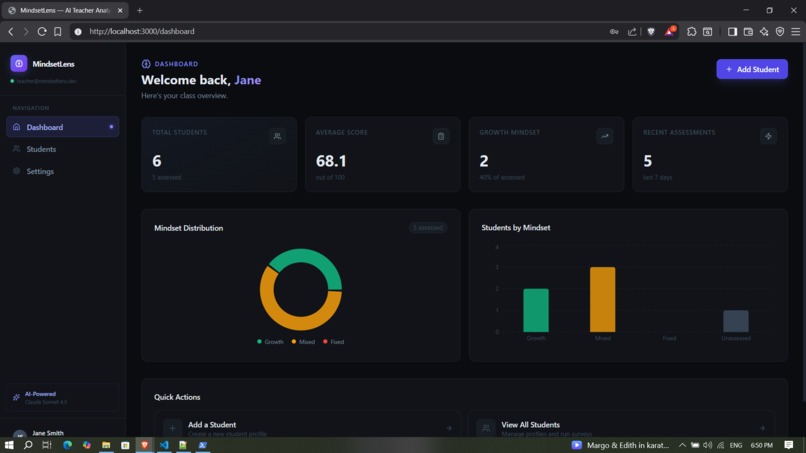
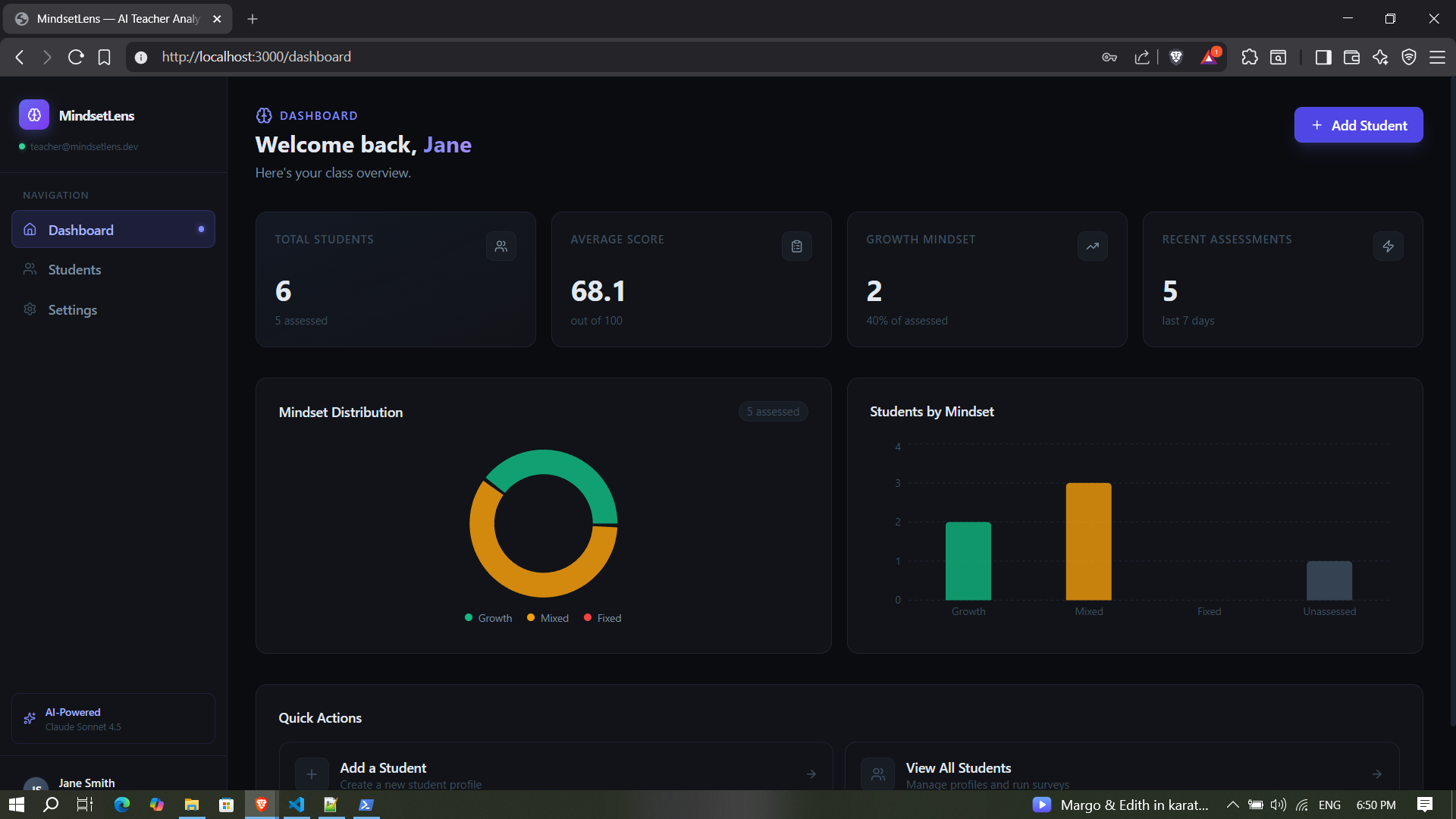
Dashboard
-
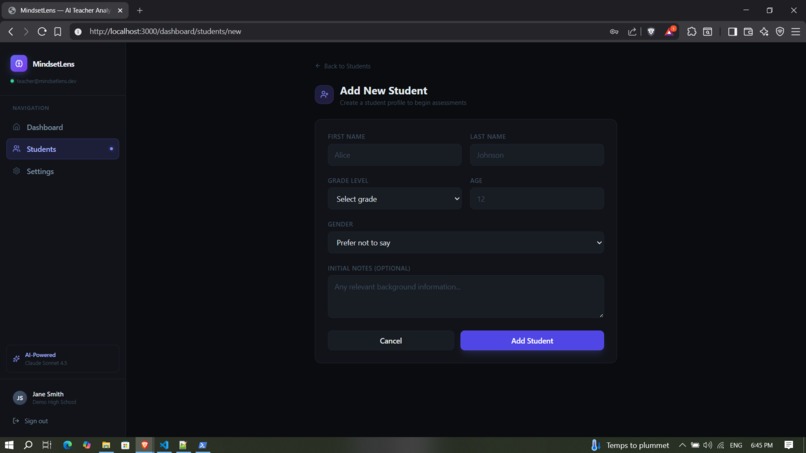
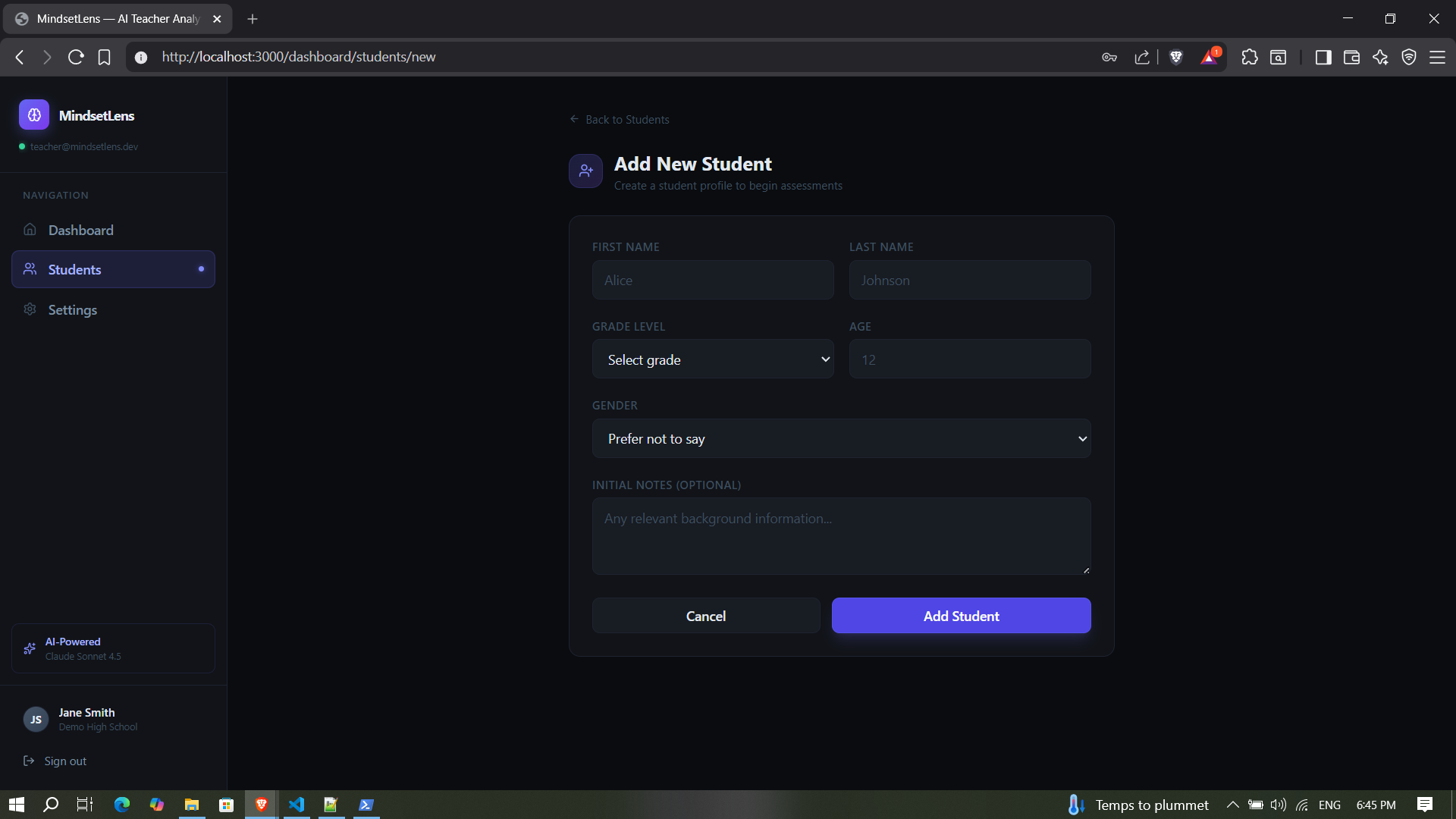
add new student
-
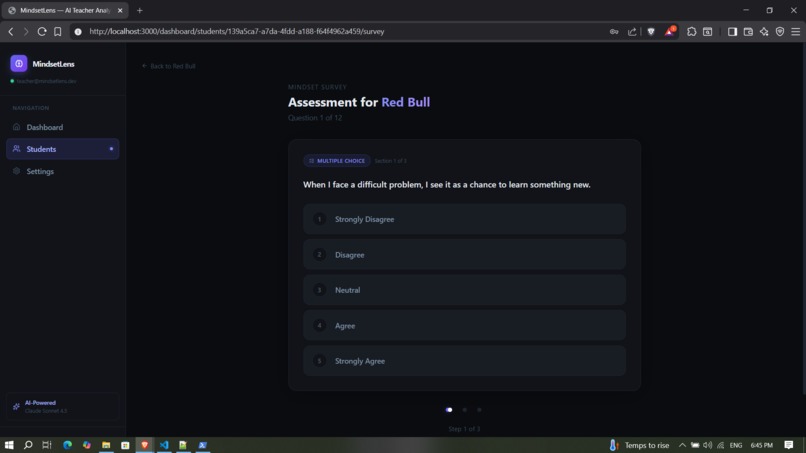
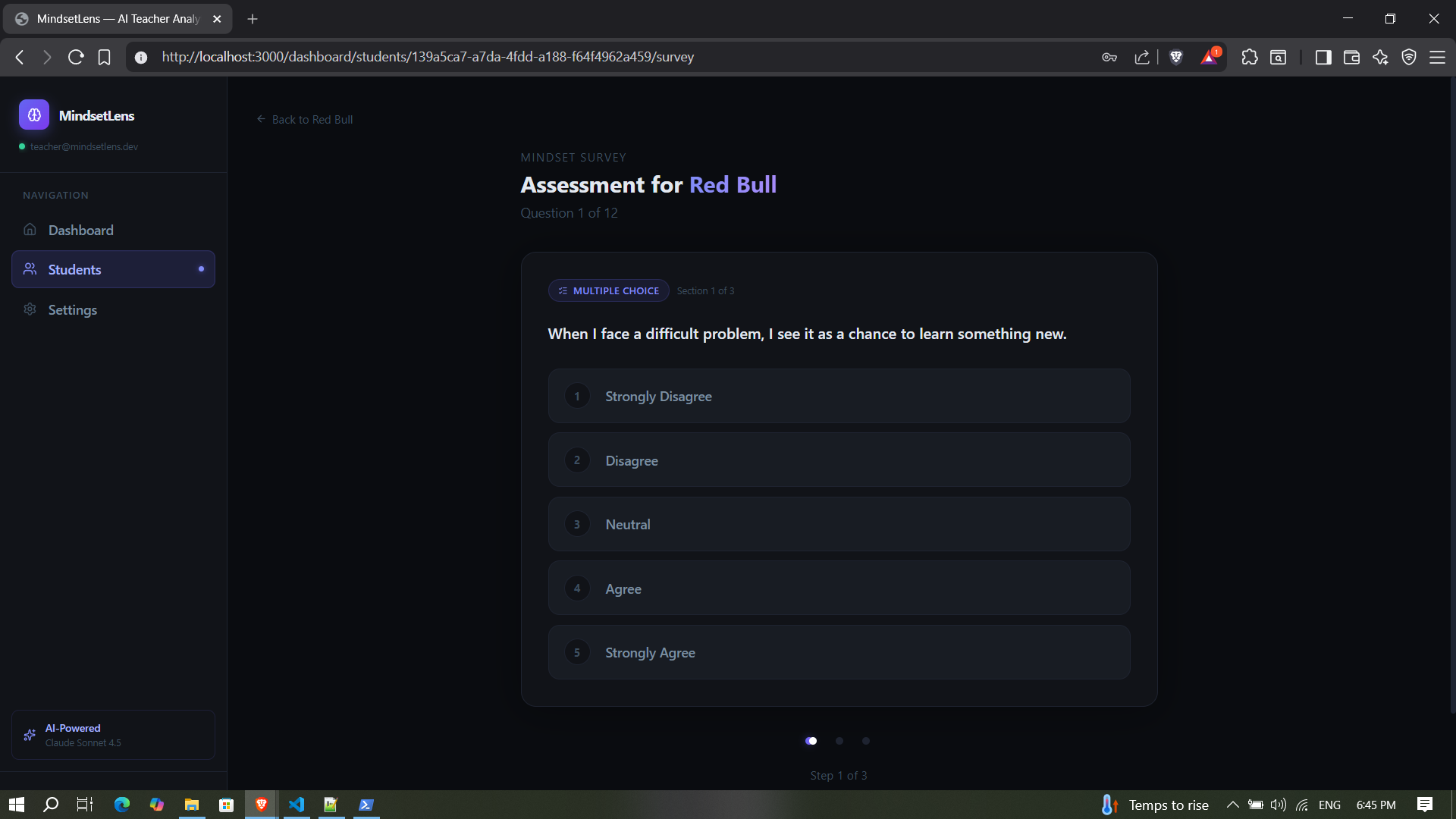
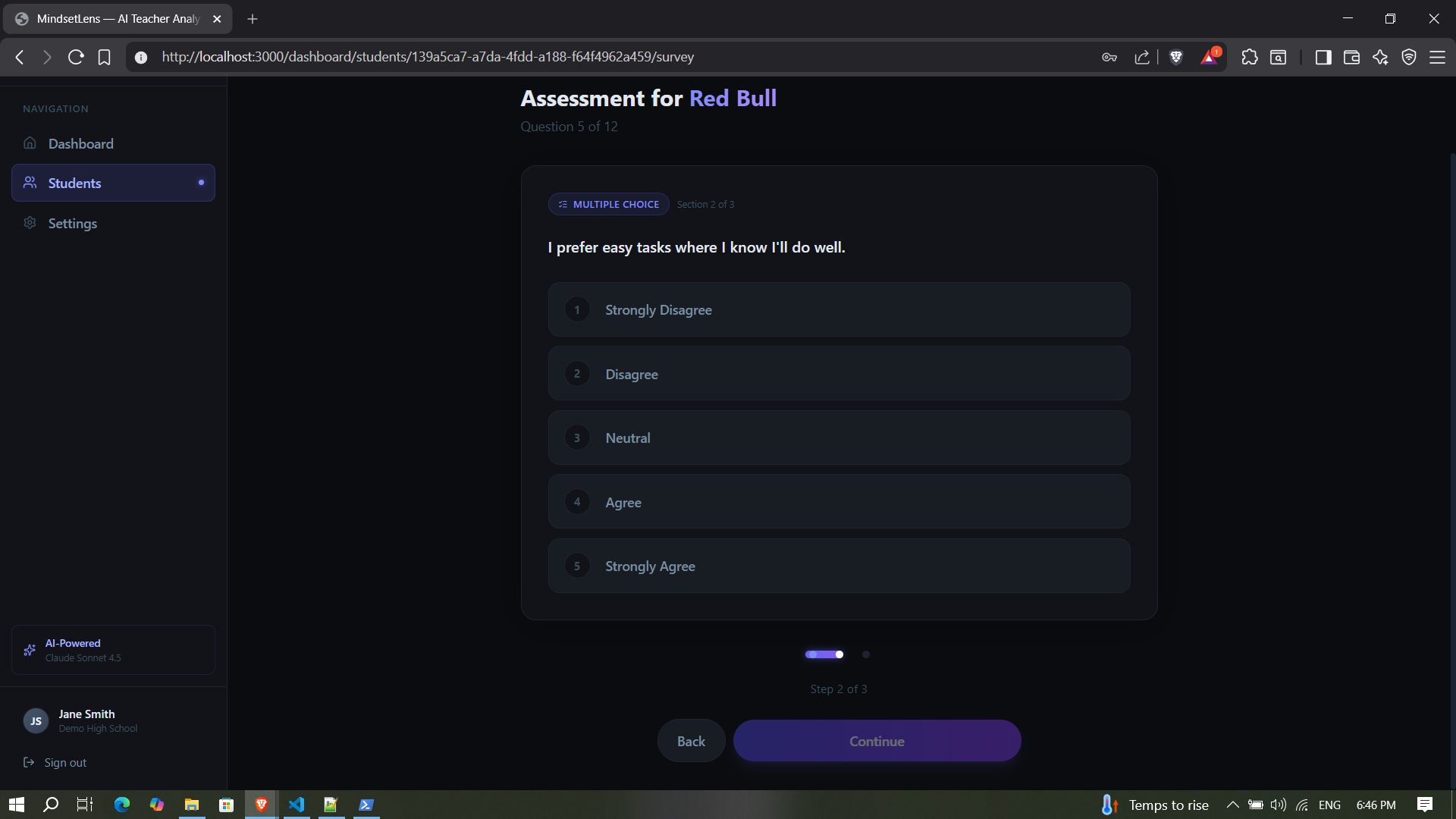
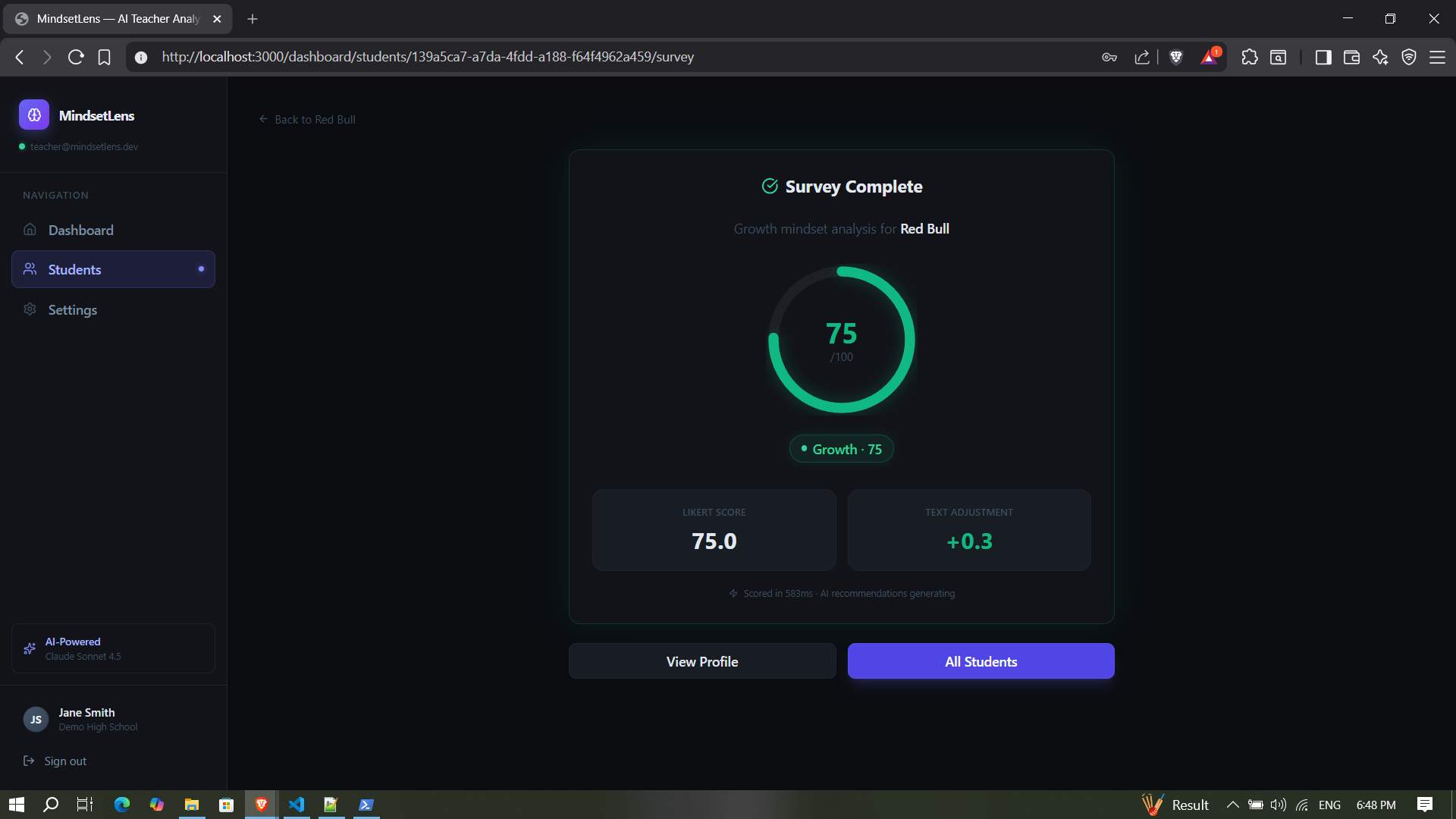
survey
-
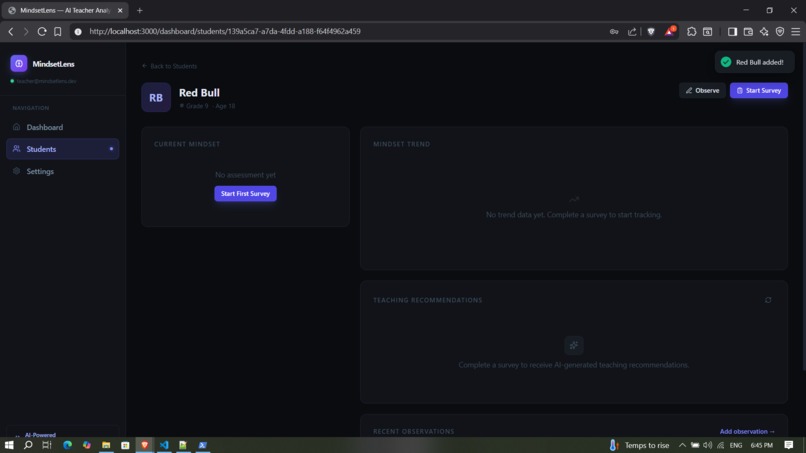
-
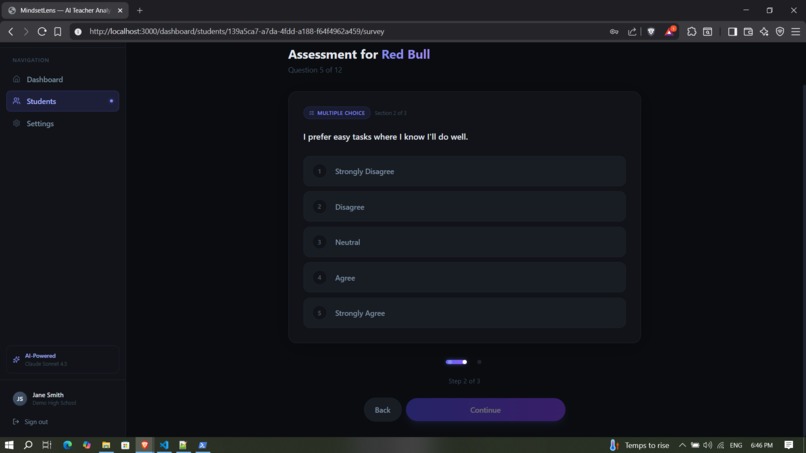
-
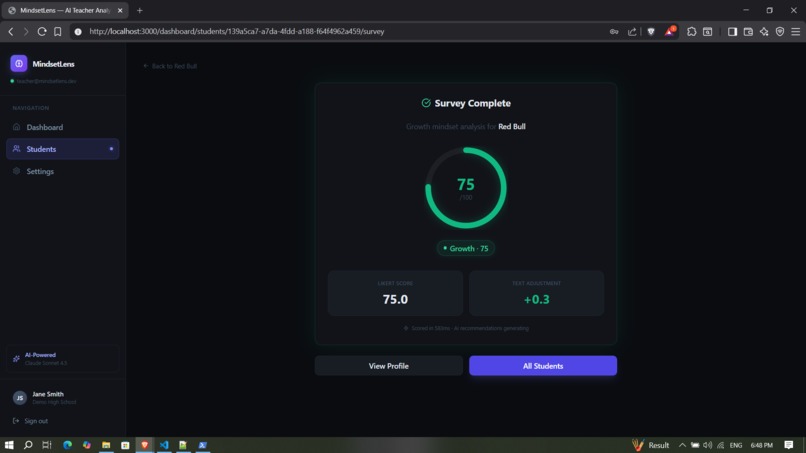
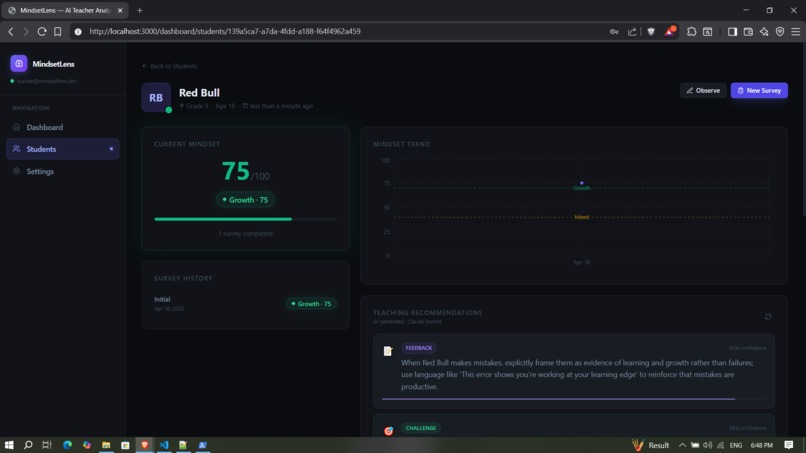
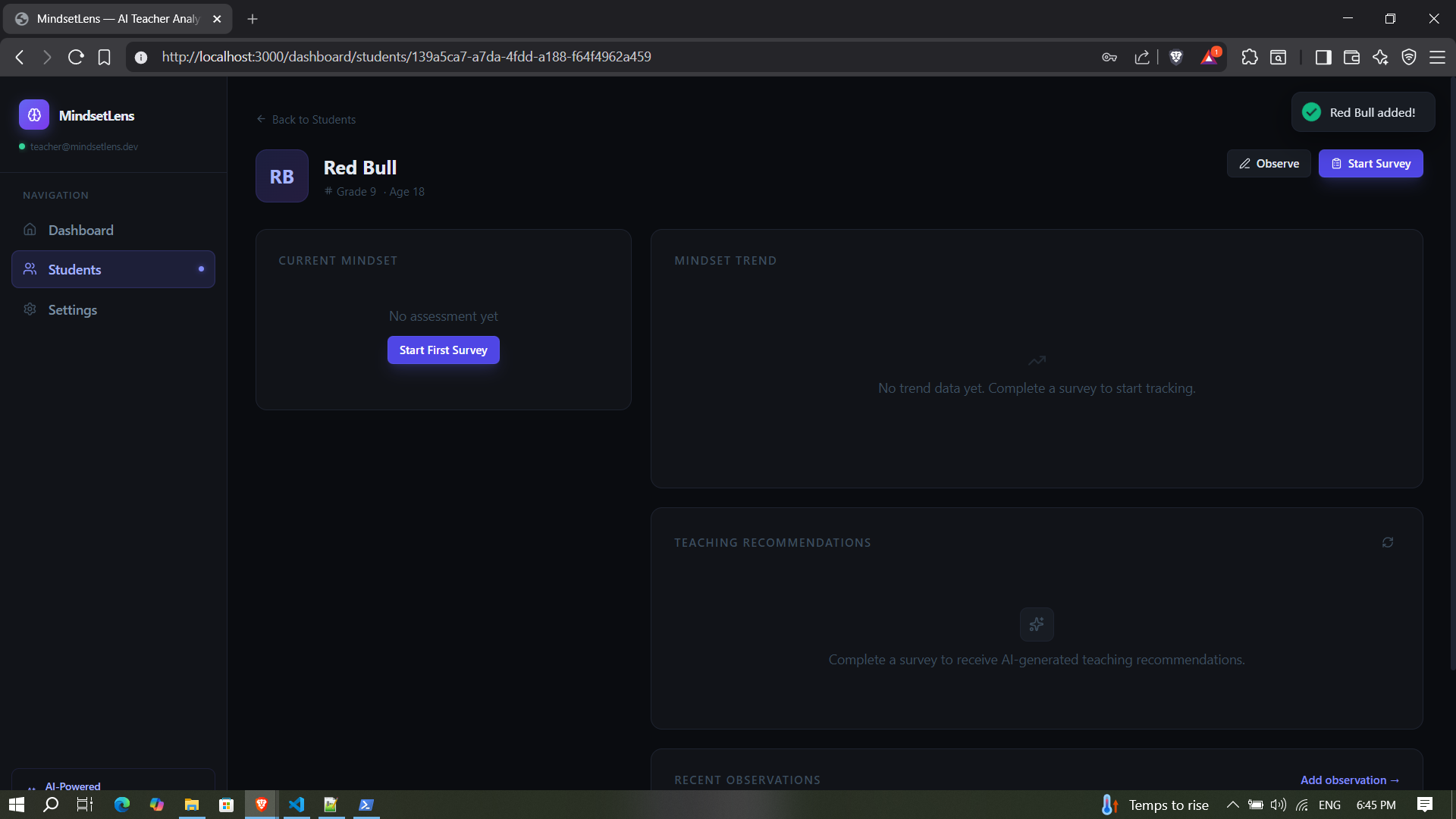
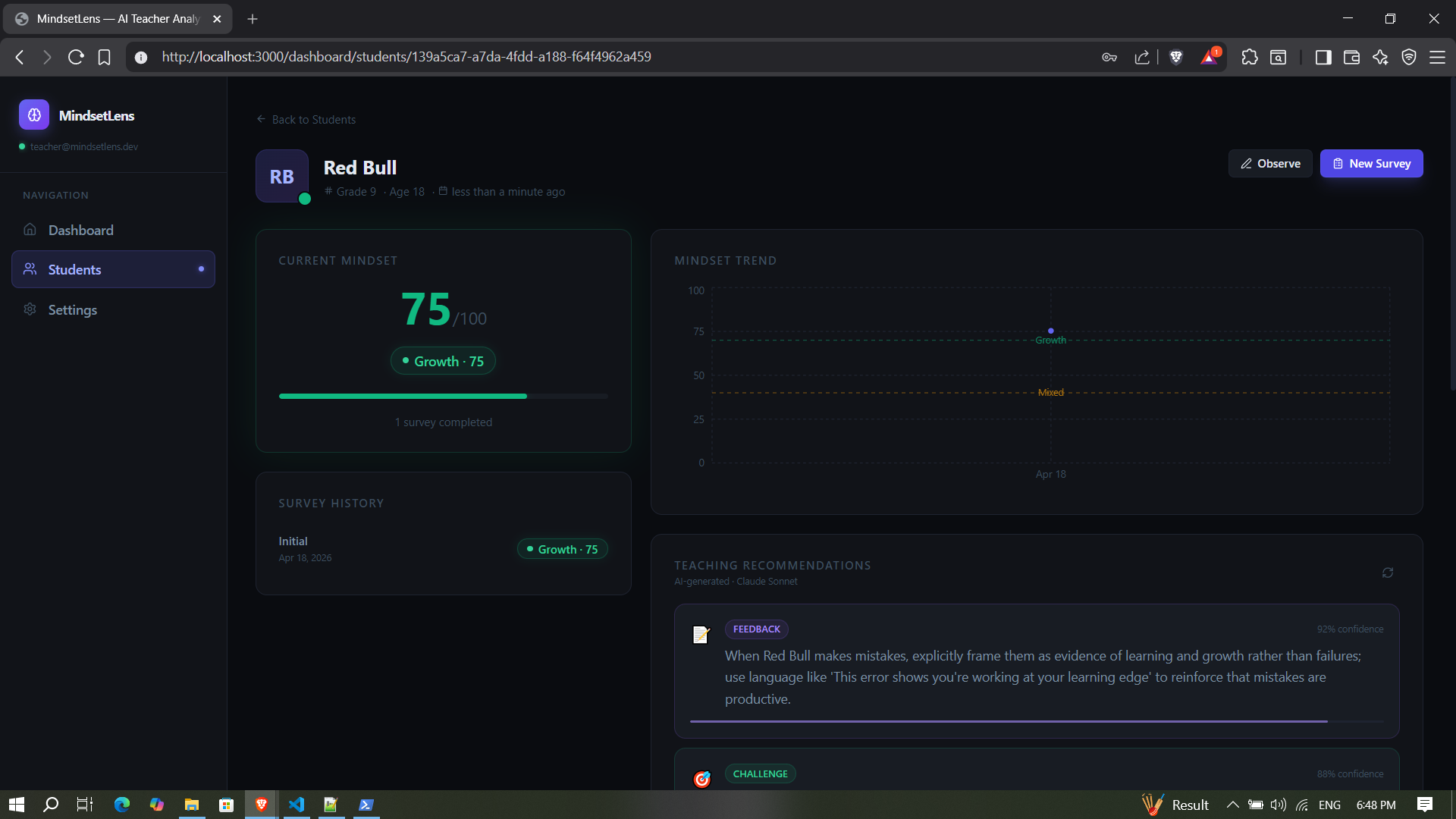
student dashboard
-
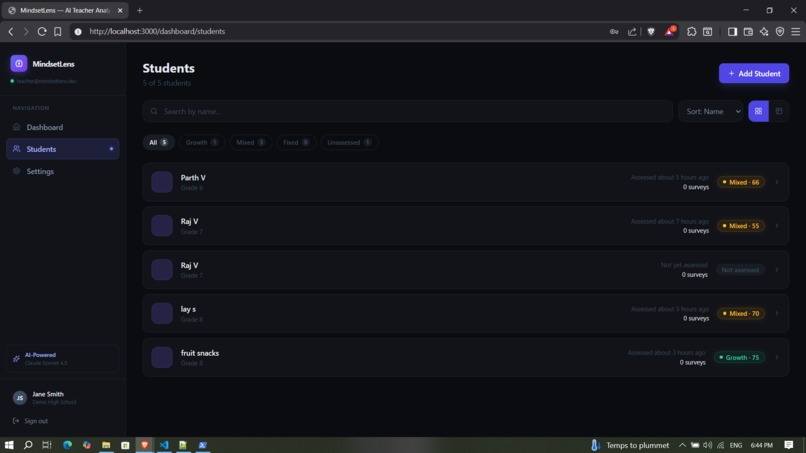
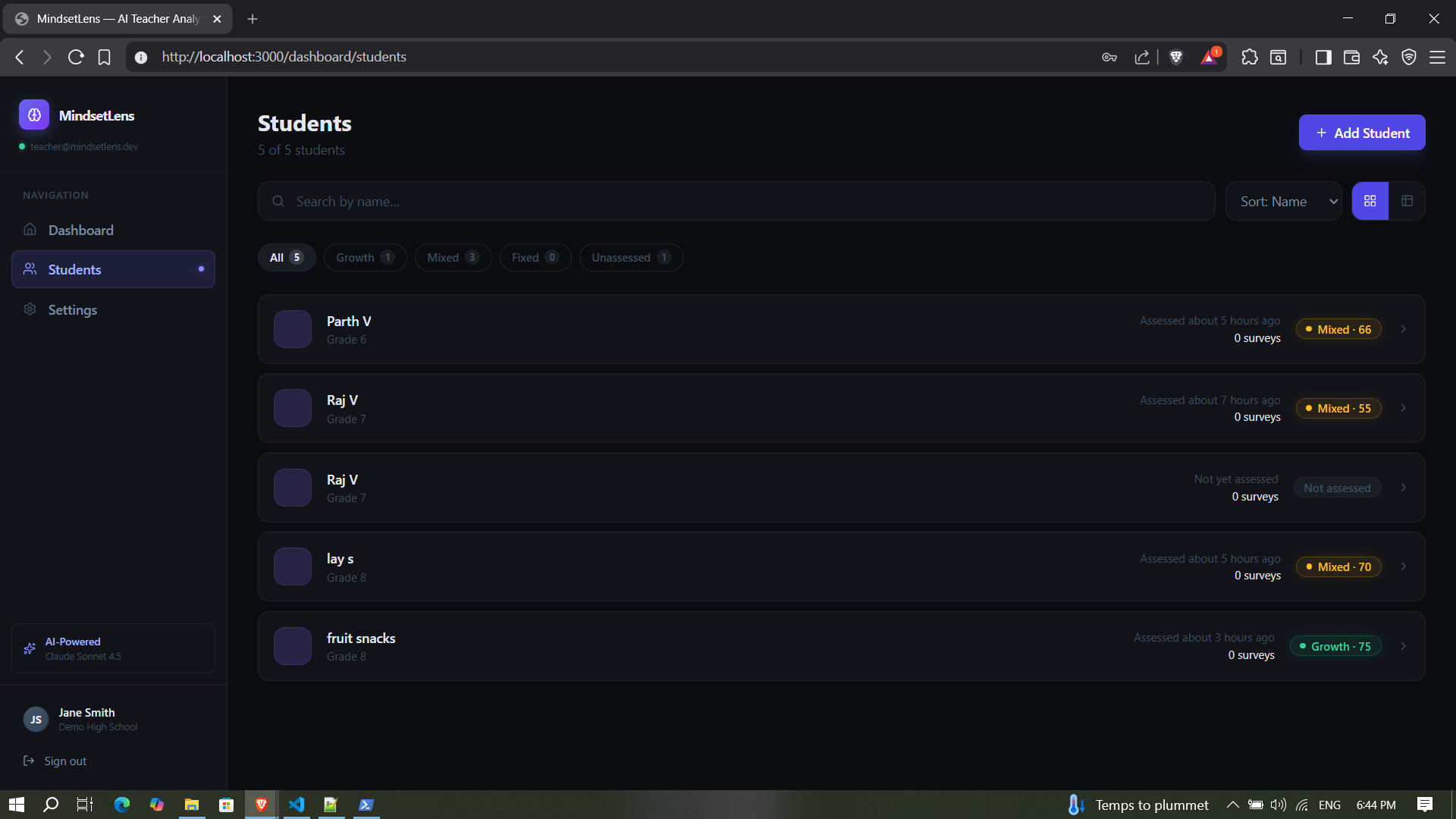
Students
-
-
-
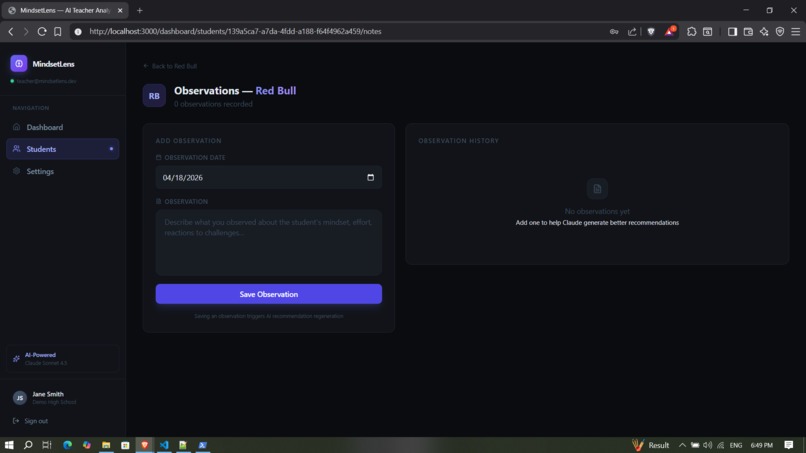
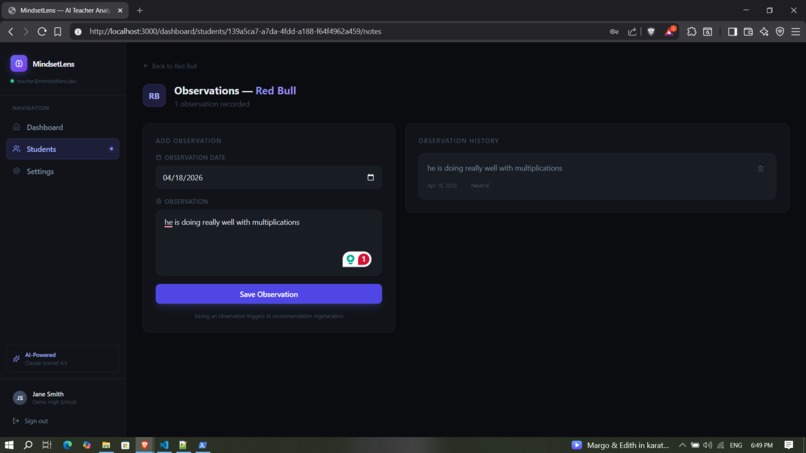
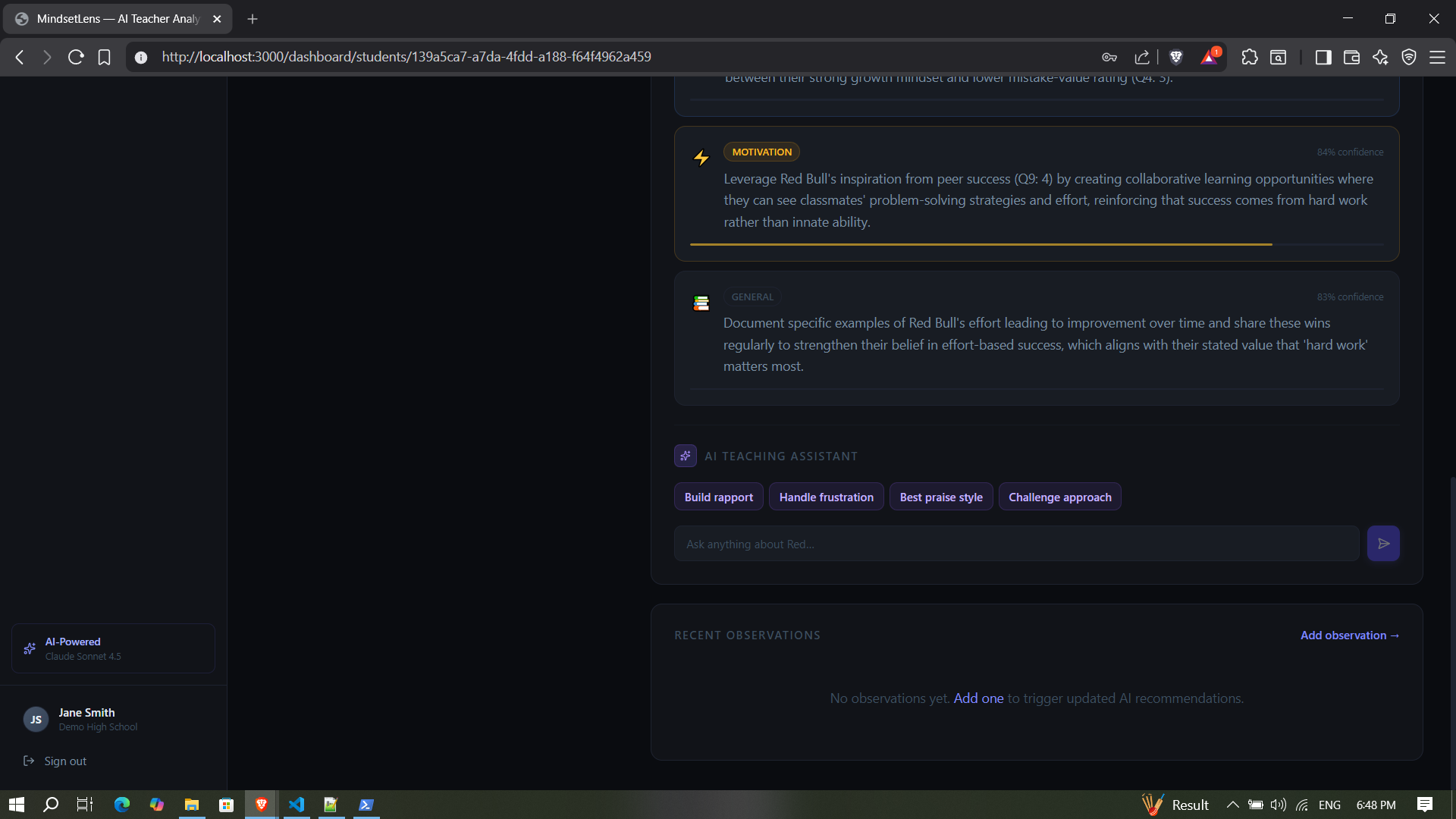
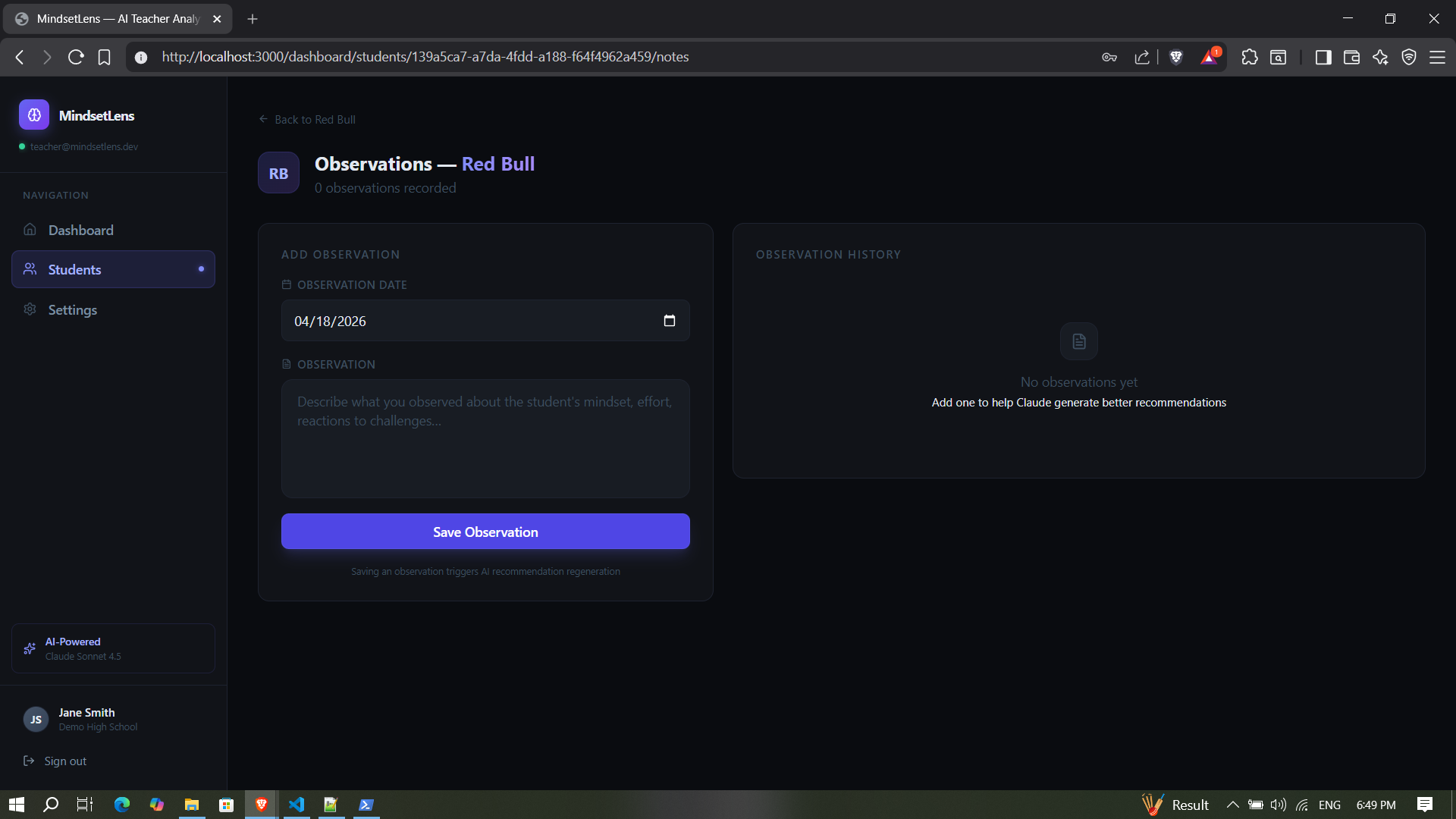
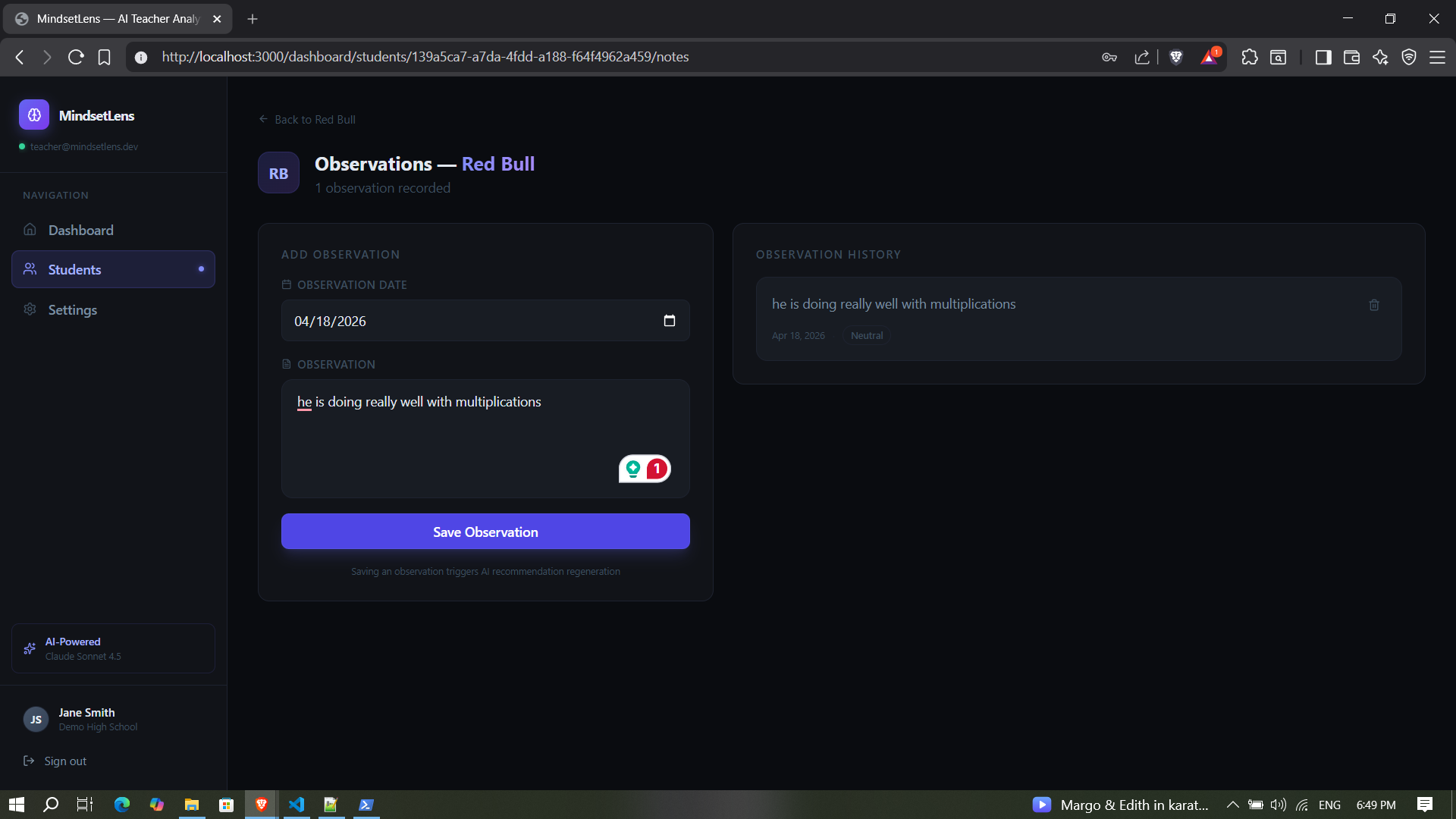
Add observations
-
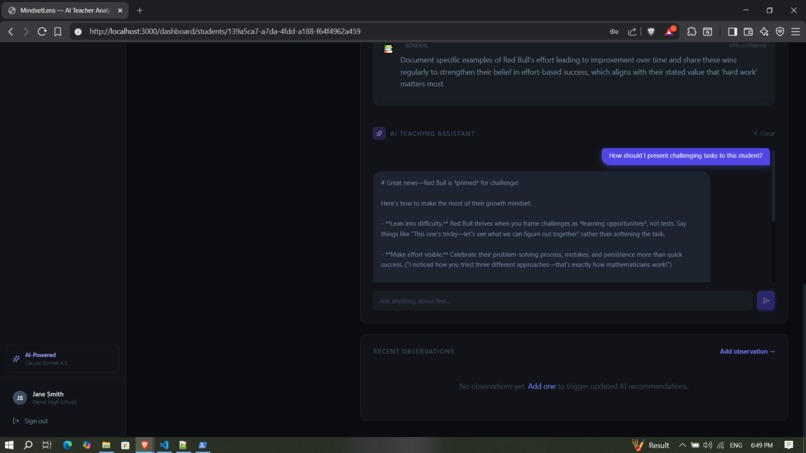
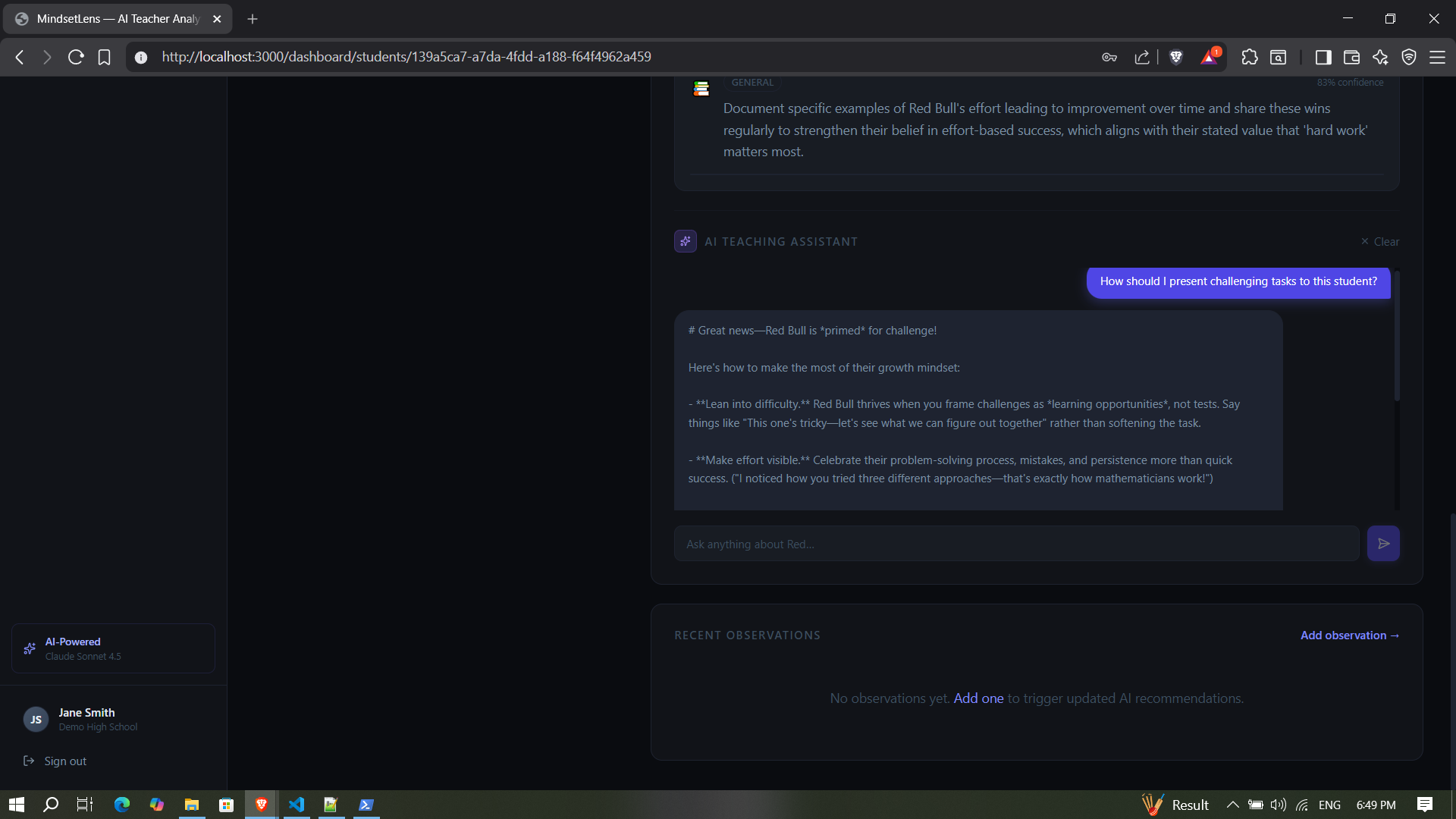
AI Assistant
-
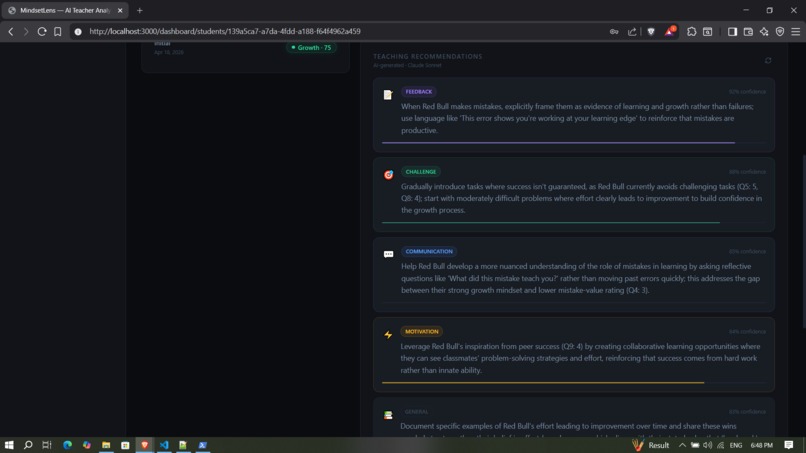
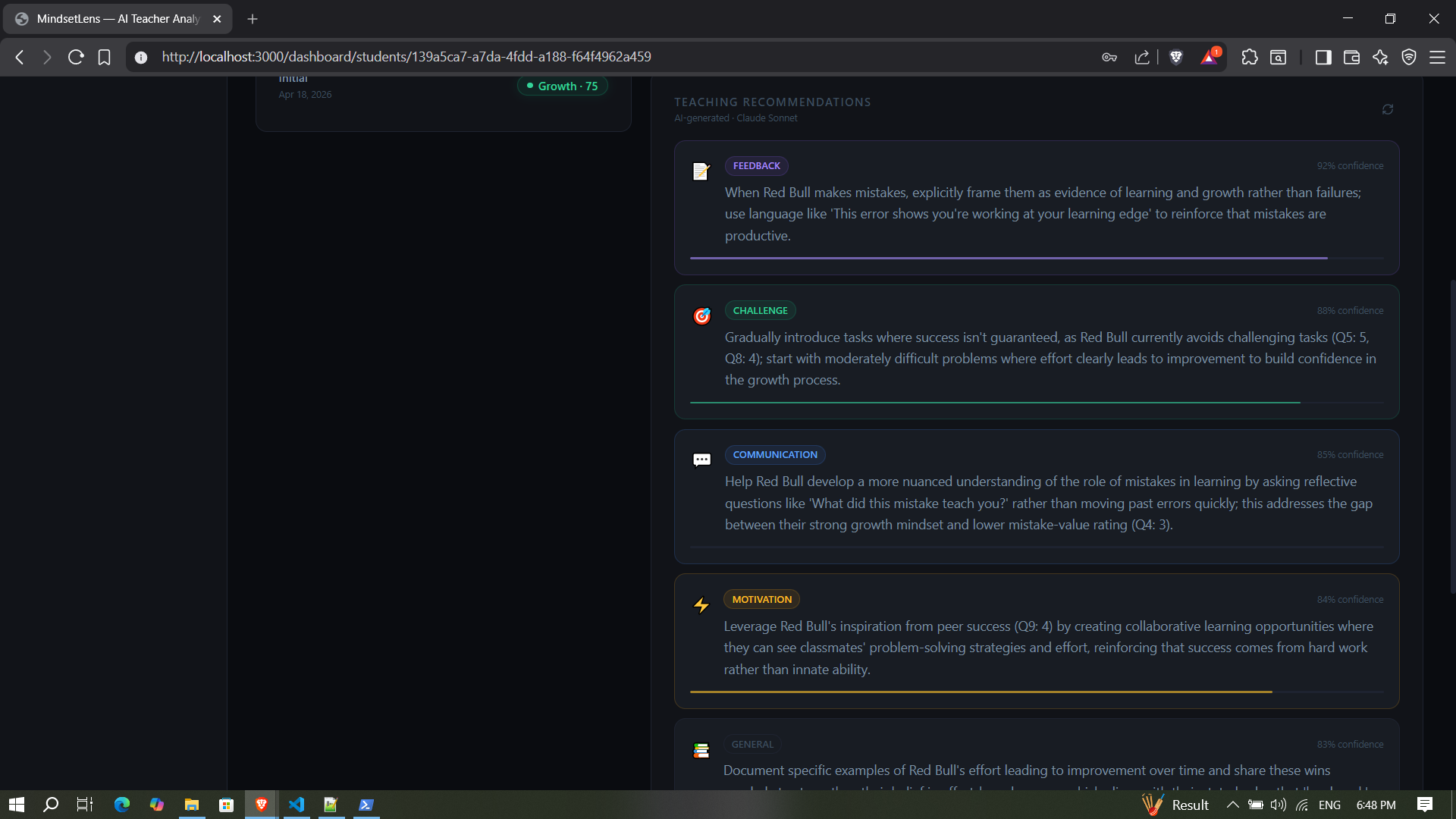
AI recommendations
-
Inspiration
I'm a math tutor working with students who have fundamentally different learning mindsets. One student picks up concepts quickly, another struggles with basic arithmetic, and a third has autism requiring entirely different approaches. Every session, I need different examples, different framing, and different strategies for each student.
Keeping all of that in my head across 30+ students is nearly impossible. I wanted a tool that could assess where each student is mentally and give me actionable strategies without spending hours planning. MindsetLens can work in any teaching context, from special education to language learning.
What it does
MindsetLens is a teacher-only dashboard where educators can:
- Add student profiles.
- Conduct 12-question mindset assessments (10 Likert-scale + 2 open-ended).
- Receive an AI-calculated Growth Mindset Score (0-100).
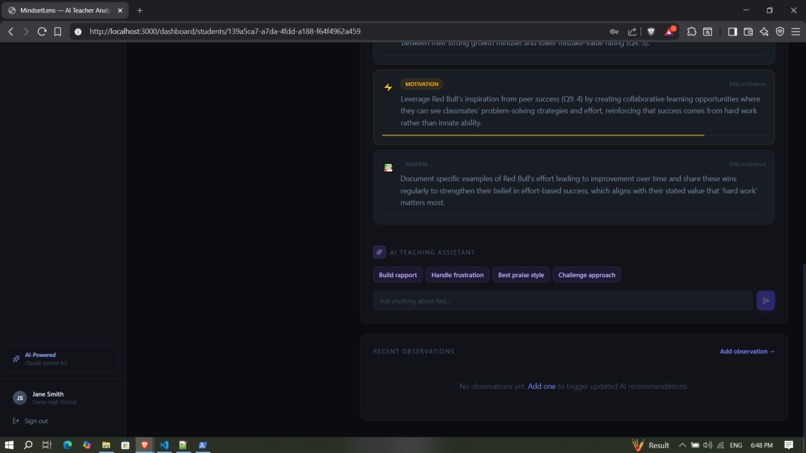
- Get 4-5 personalized teaching recommendations generated by Claude.
- Add ongoing observations that trigger updated recommendations.
- Track mindset evolution over time through interactive trend charts.
How I built it
- Backend: Django 4.2 with Django REST Framework, SQLite for development (PostgreSQL for production), Celery + Redis for async processing, and JWT authentication.
- Frontend: Next.js 14 with TypeScript, Tailwind CSS, Zustand for state management, TanStack Query for data fetching, and Recharts for visualizations.
- AI: Google Gemini and Anthropic Claude API for recommendation generation, TextBlob for sentiment analysis, and a custom keyword-based NLP scoring algorithm.
Challenges I ran into
- Scoring Algorithm: Designing an algorithm that meaningfully combines quantitative Likert data with qualitative free-text responses.
- Prompt Engineering: Structuring Gemini/Claude API prompts to consistently return parseable JSON with categorized recommendations.
- Architecture: Building a sync/async dual-path system so the app works locally without Redis while keeping the Celery pipeline ready for production.
- UI/UX: Integrating animated UI components (Framer Motion, GSAP) without degrading page load performance.
Accomplishments that I am proud of
- Built a production-grade full-stack application end-to-end with AI-assisted development.
- Created a real NLP pipeline combining sentiment analysis with keyword extraction for mindset scoring.
- Achieved sub-200ms API response times for all non-AI endpoints.
- Seamlessly integrated the Gemini/Claude API with both synchronous and asynchronous processing paths.
What I learned
- Metric Translation: Growth mindset theory translates well into quantifiable metrics when combining multiple assessment types.
- Design Focus: Designing for teachers (not students) simplifies privacy concerns and sharpens the UX.
- Tech Stack Validation: Full-stack Django + Next.js is a powerful combination for data-heavy educational platforms.
What's next for MindsetLens
- Multi-classroom support with comparative analytics across classes.
- RAG-powered insights using embedded teaching research papers.
- Auto-generated parent communication reports.
- School-wide admin dashboards with aggregate mindset trends across grades and demographics.
Built With
- anthropic-claude-api
- celery
- django
- django-rest-framework
- docker
- framer-motion
- gimini
- gsap
- jwt
- next.js
- nginx
- postgresql
- python
- react
- recharts
- redis
- spacy
- sqlite
- tailwind-css
- tanstack-query
- textblob
- typescript
- zustand


Log in or sign up for Devpost to join the conversation.