Inspiration
I used to journal a lot when I was in school. It was something that helped me process my thoughts and understand myself better. As I entered college, I gradually stopped journaling because I felt like I did not have enough time. Later, when I started working, I felt even more exhausted and often guilty for not keeping up with it.
I realized that the friction was not the habit itself, but the effort required to sit down and write. I kept thinking that if I could just speak my thoughts instead of writing them, I would be much more consistent. When I discussed this idea with my housemates and friends, they all agreed that a tool like this would be genuinely helpful.
I also wanted a single place where I could freely express everything on my mind, not just daily reflections but also ideas, dreams, goals, and memories. That became the core inspiration behind MindScribe.
What it does
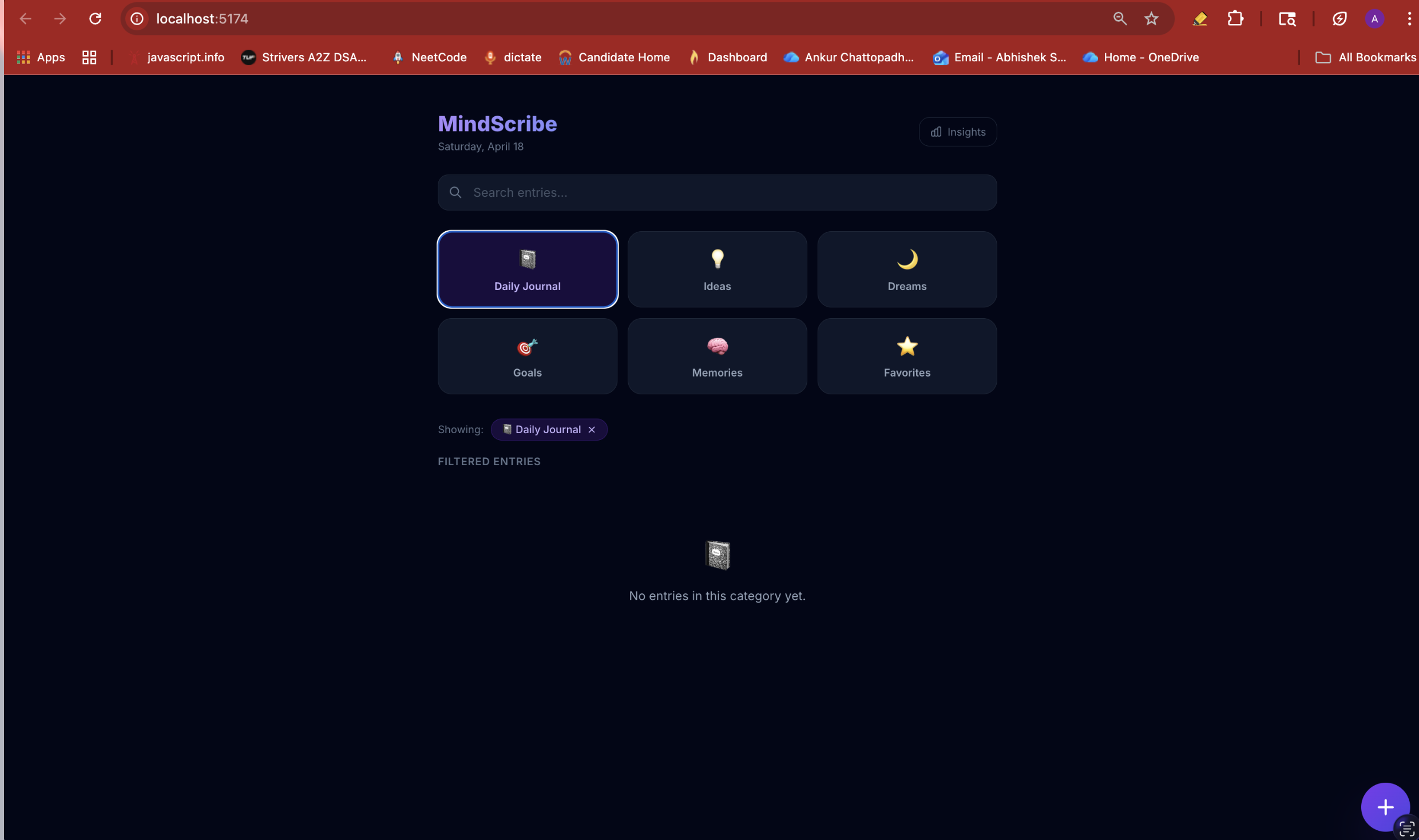
MindScribe is a voice-first journaling app where you can speak or write your thoughts and get a structured entry with your words, a summary, emotions, a highlight, and feedback.
How we built it
We built it using React and Tailwind for the frontend, the Web Speech API for voice input, OpenAI for AI processing, and Supabase for storing entries.
Challenges we ran into
We had to fix redundancy in AI outputs, handle real-time speech input properly, and debug issues with saving entries to Supabase.
Accomplishments that we're proud of
Proud of how simple and natural the experience feels. It makes journaling easy and something people would actually use.
What we learned
We learned that reducing friction matters more than adding features, and that good AI prompt design makes a big difference.
What's next for MindScribe
We want to improve AI quality, add better insights and search, and make the app more personal and intuitive.
Built With
- openaiapi
- react
- supabase
- tailwind
- webspeechapi


Log in or sign up for Devpost to join the conversation.