MindScribe
More Human Care. Less Paperwork.
Inspiration
Mental health care is built on meaningful conversations. Every question, response, and moment of connection matters. Yet during clinical intake sessions, mental health professionals must balance actively listening to their patients with recording information, completing questionnaires, and preparing documentation.
We wanted to explore a simple but important question: What if clinicians could spend less time managing paperwork and more time focusing on the people in front of them?
That question inspired MindScribe, an AI-assisted mental health intake platform designed to support clinicians throughout the documentation process without replacing their professional judgment.
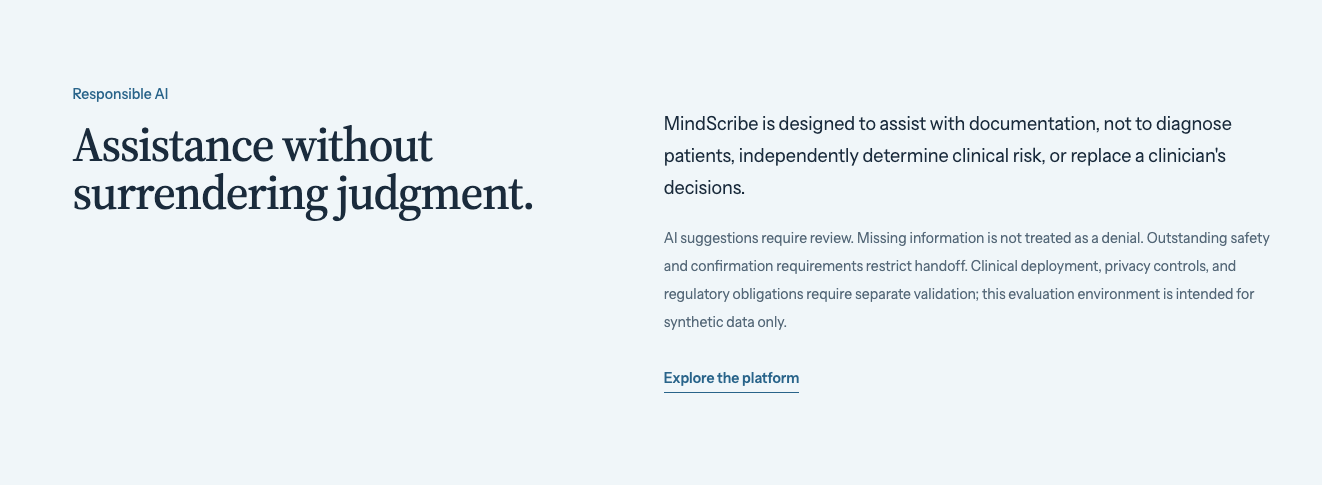
Our goal is not to automate mental healthcare. It is to use technology to reduce administrative friction, preserve important conversational details, and make clinical documentation more efficient and organized.
What It Does
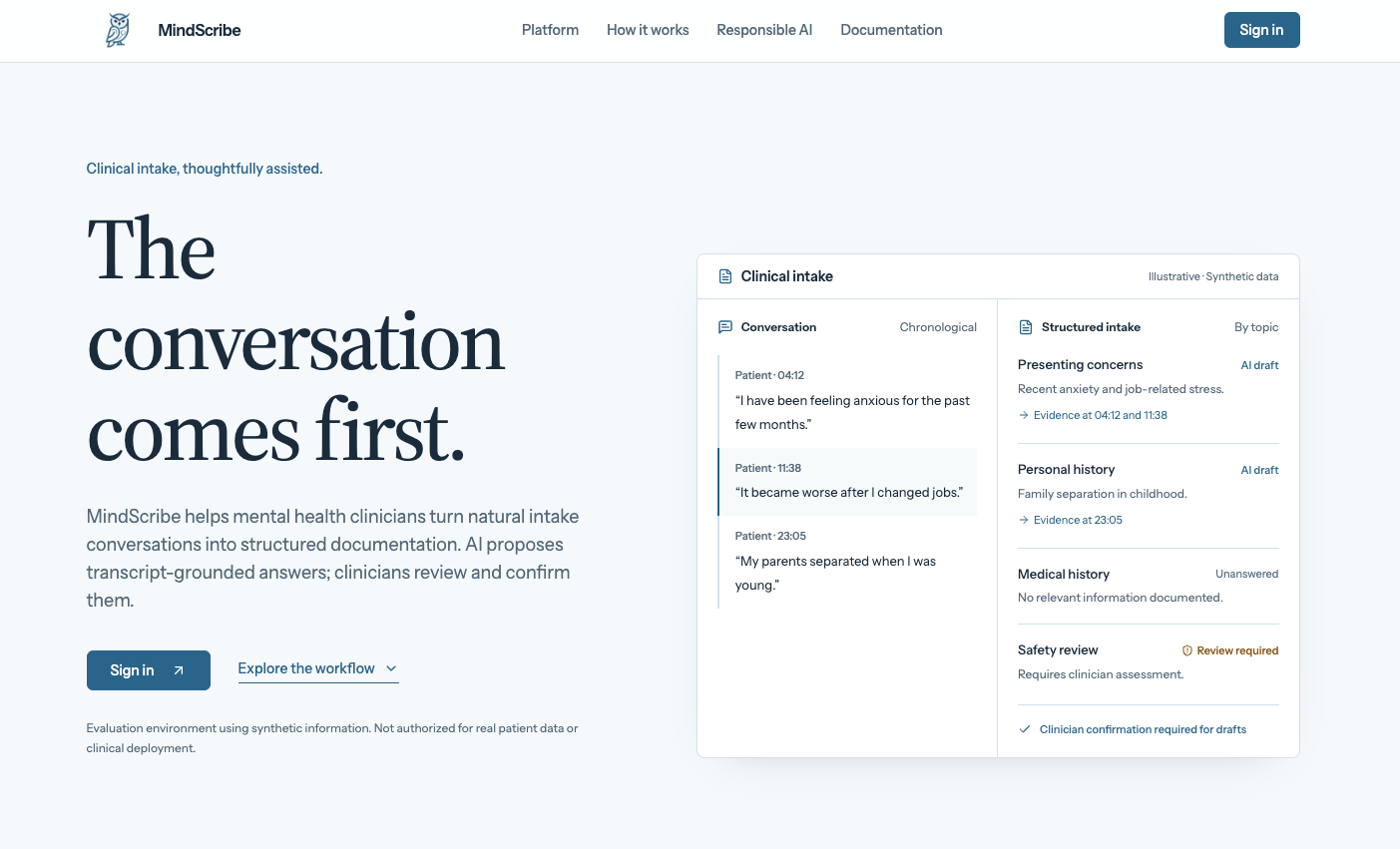
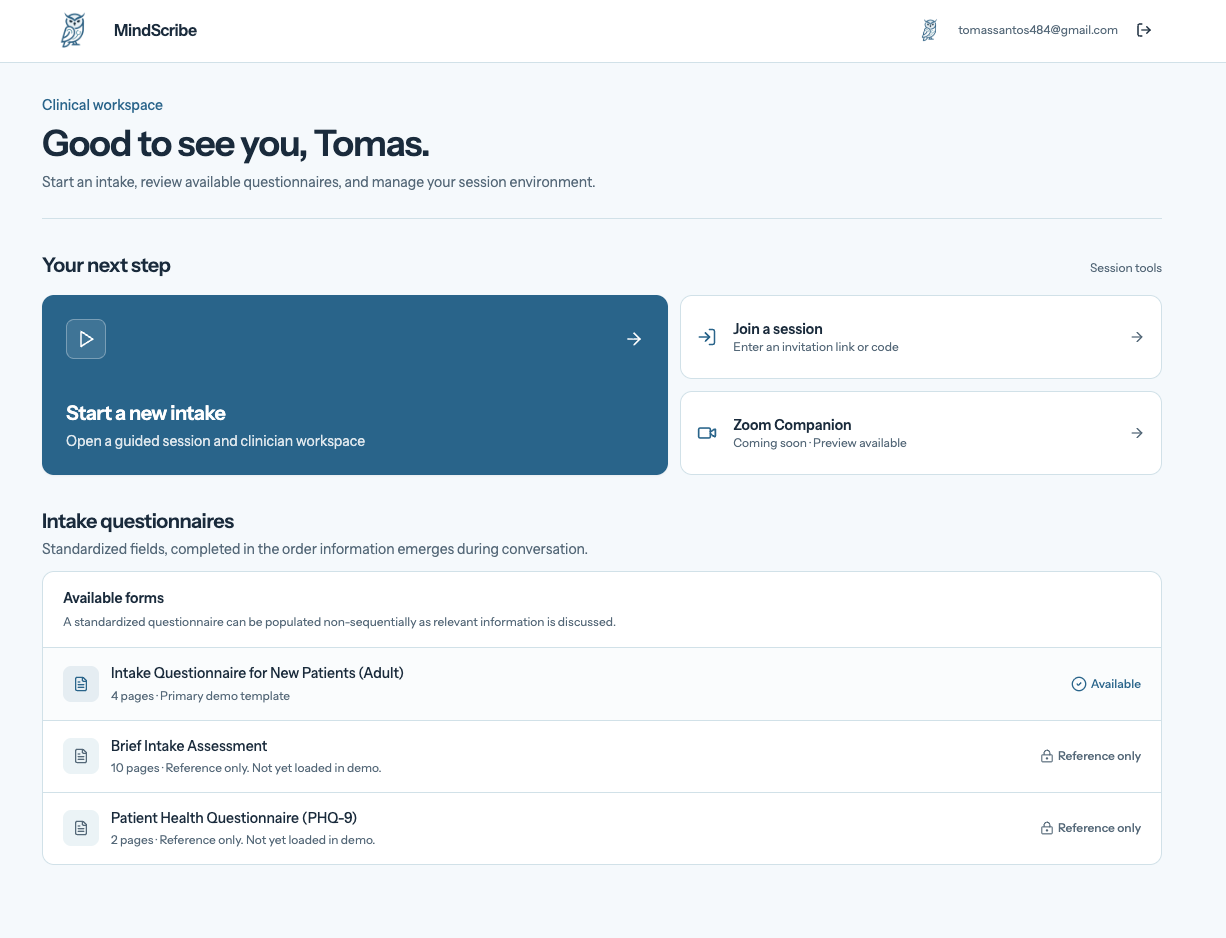
MindScribe transforms mental health intake conversations into structured, clinician-reviewed documentation.
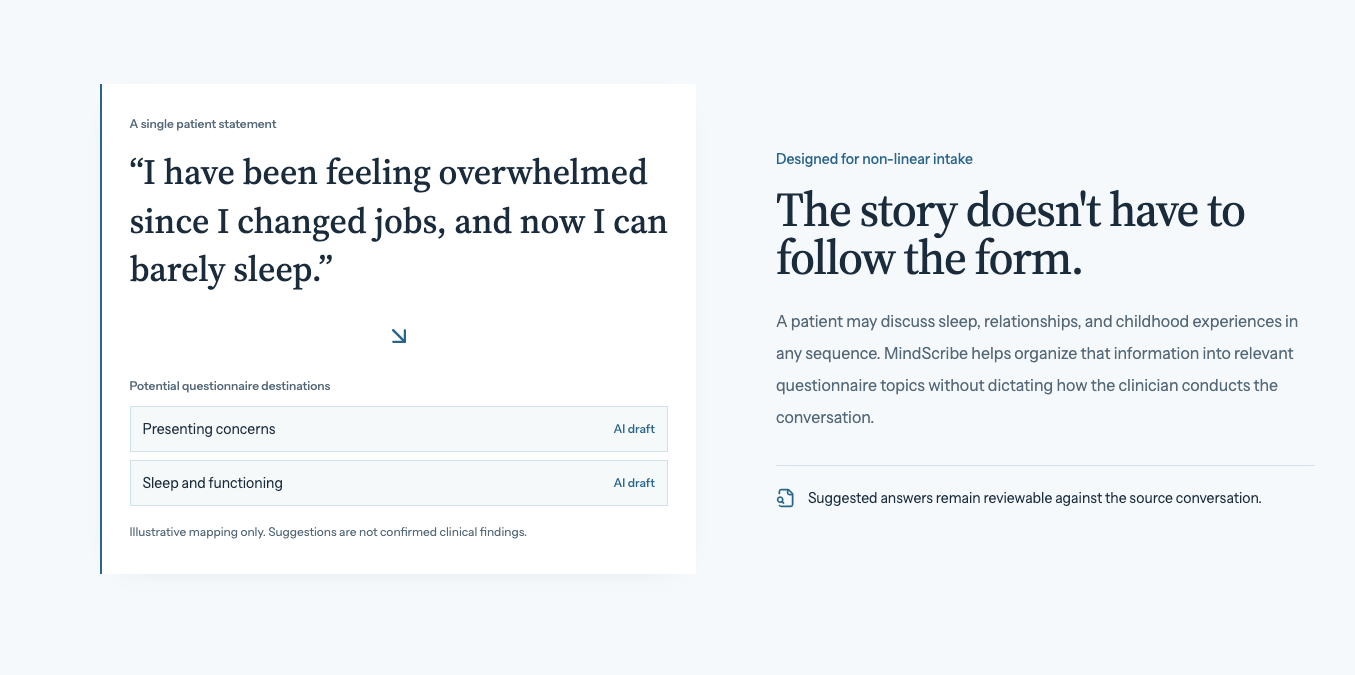
Rather than manually transferring information from a conversation into multiple questionnaire fields, clinicians can use MindScribe to organize relevant information while maintaining full control over the final record.
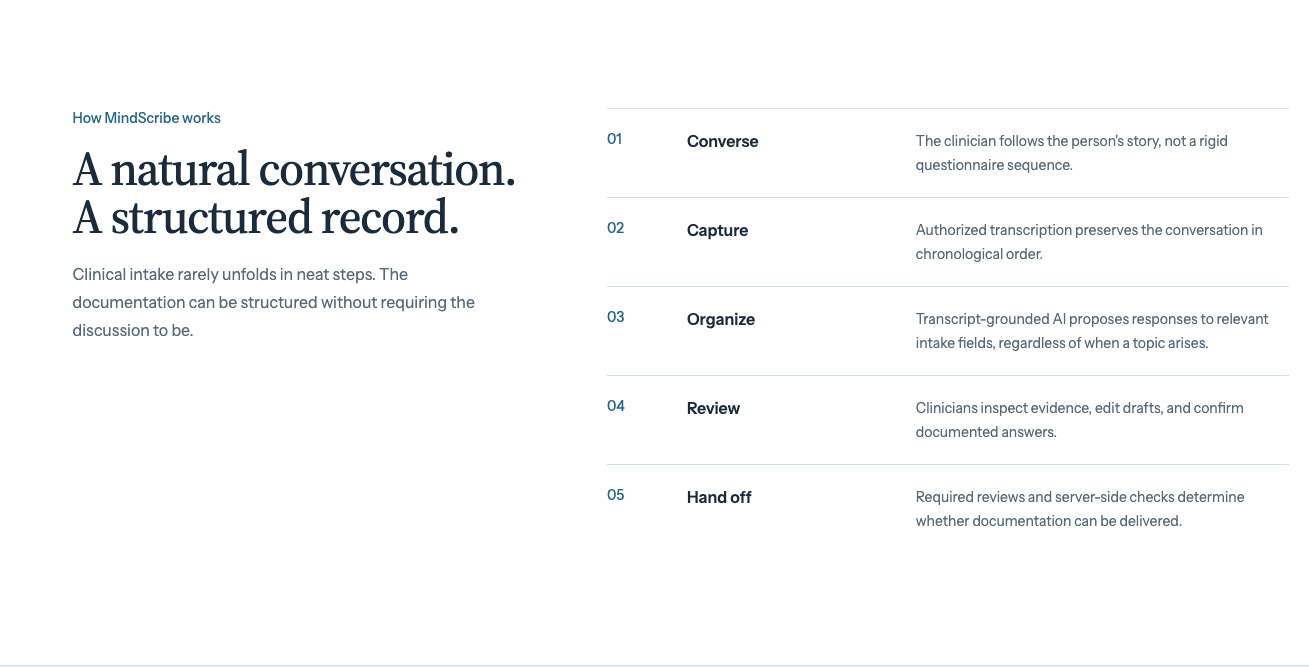
Our workflow includes:
- Conversation transcription: ElevenLabs Scribe supports real-time speech-to-text transcription, converting spoken conversations into reviewable text.
- AI-assisted intake mapping: Google Gemini helps identify relevant patient responses and map them to structured intake questions.
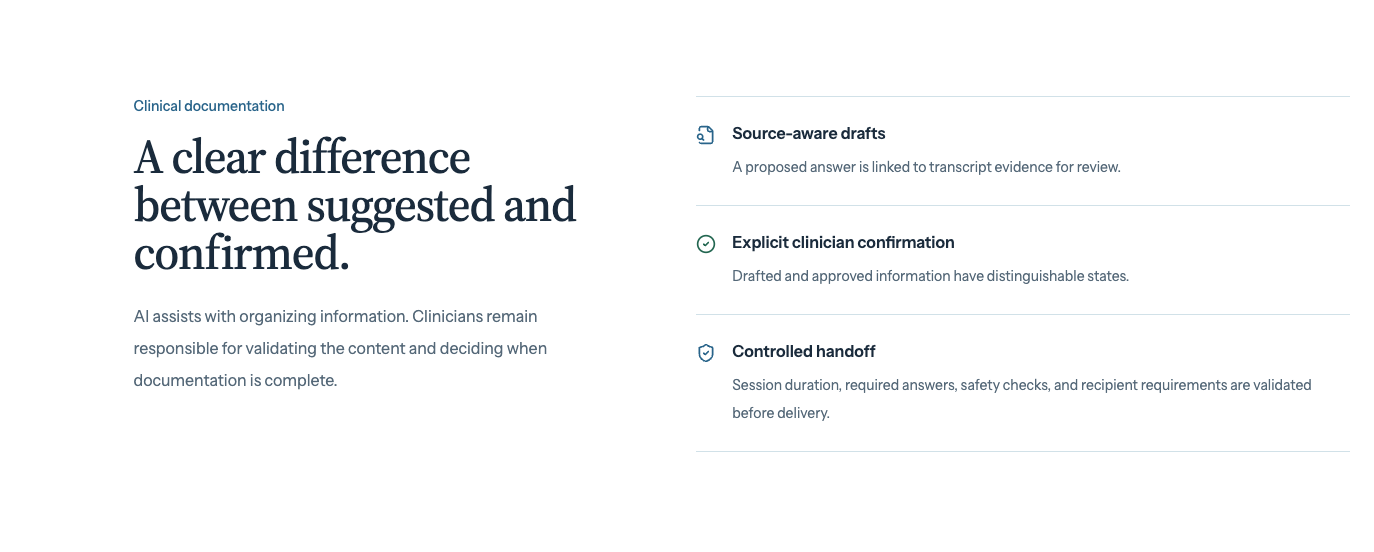
- Transcript-grounded evidence: Draft responses are tied to information explicitly supported by the conversation, reducing the risk of unsupported AI-generated content.
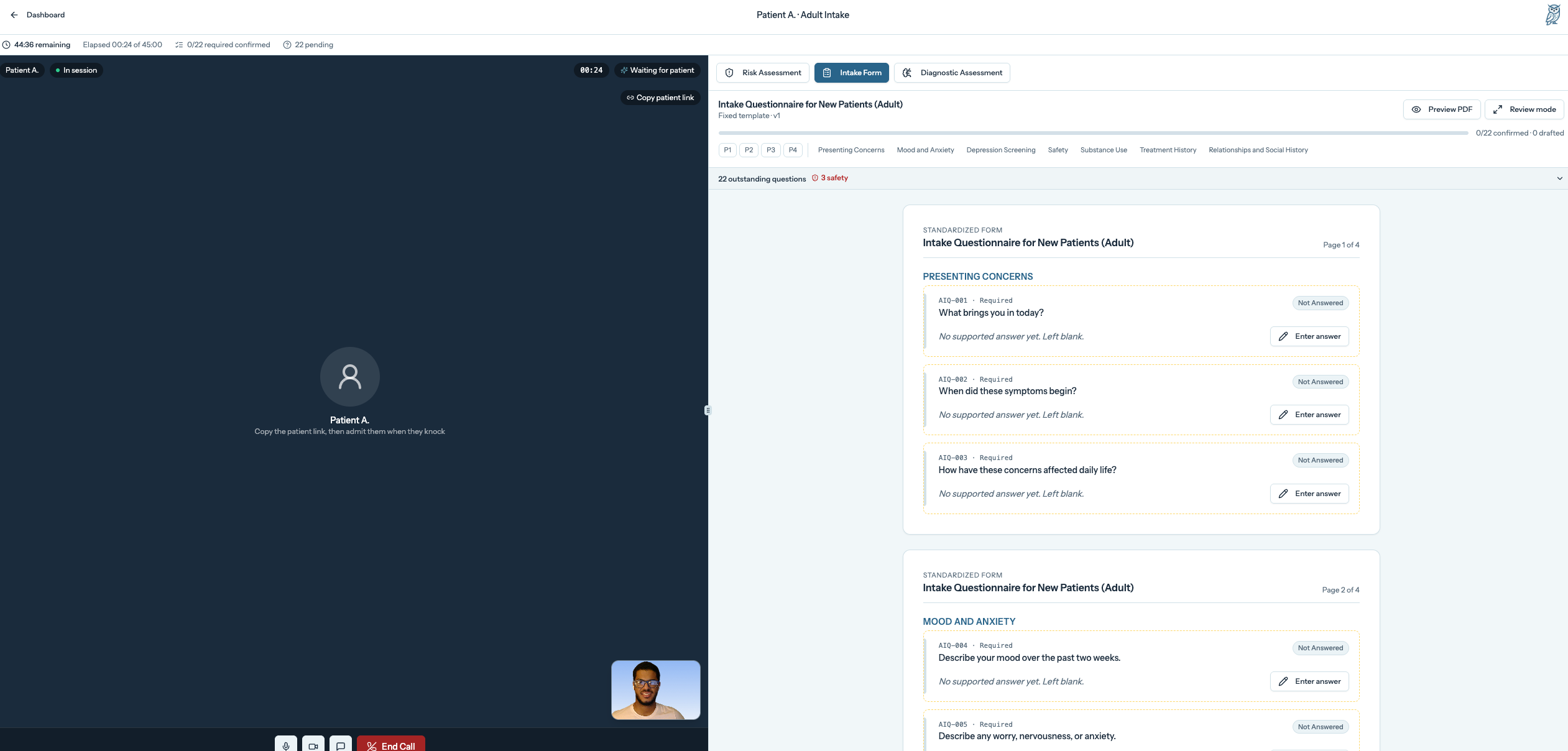
- Clinician confirmation: Clinicians review, edit, and confirm answers rather than allowing AI to finalize clinical documentation independently.
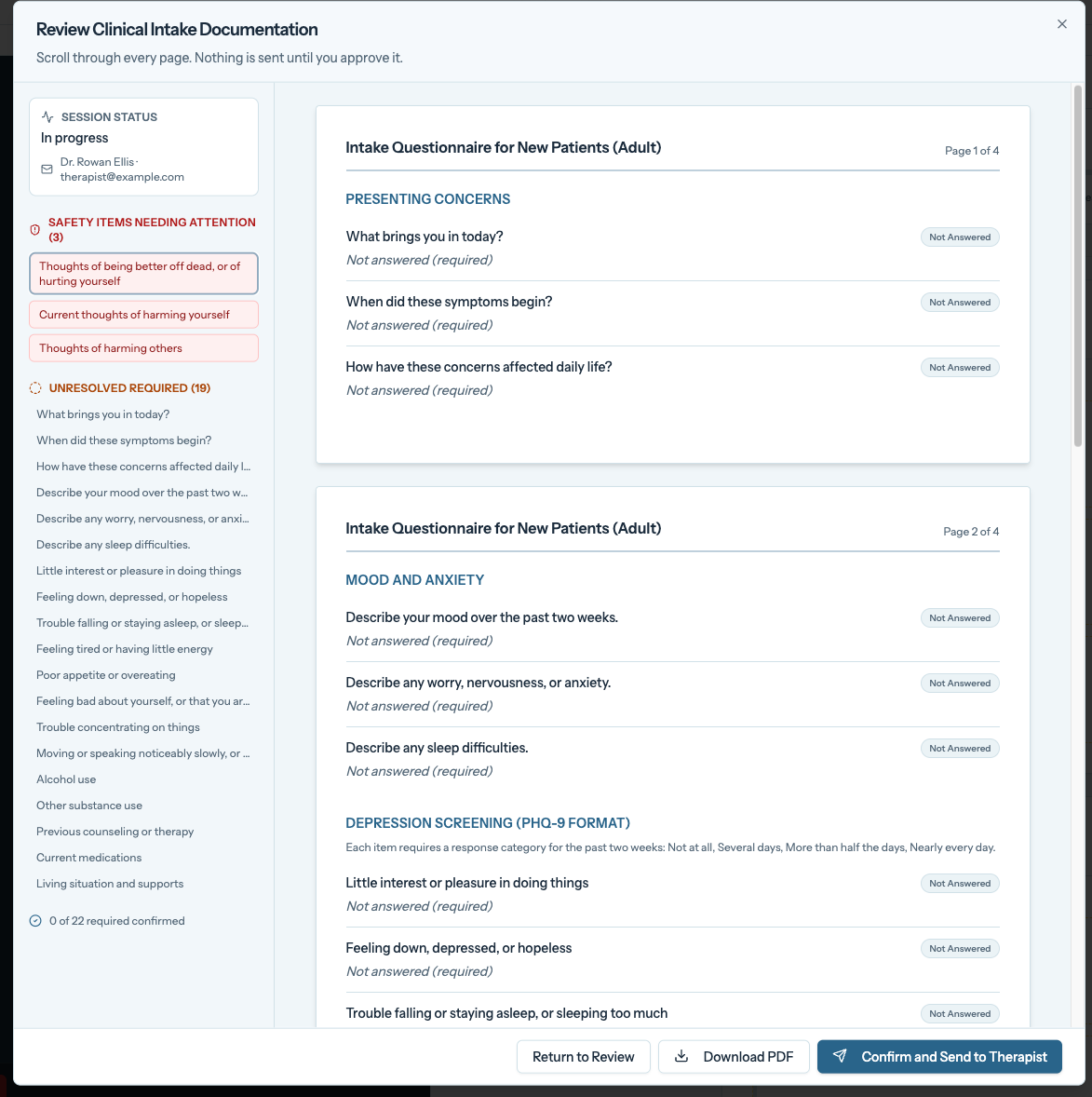
- Protected handoff: Server-side authorization checks the minimum session duration, required confirmations, unresolved safety questions, and recipient availability.
- Structured documentation: Authorized handoffs can generate a PDF containing confirmed intake information and supporting evidence, with an email delivery module for the intended recipient.
MindScribe is designed to assist clinicians, not replace them. Every important clinical decision remains under human supervision.
How We Built It
We developed MindScribe as a full-stack application with a React-based clinician workspace, a Node.js backend, and integrations for AI-assisted transcription and documentation. We use GoDaddy for our website which is on production, go to https://www.mindscribe.health/
Frontend
We used React, Vite, and Base44 to build the application interface. The workspace is designed around the clinician's workflow, including session management, intake questions, transcription, and answer review.
Artificial Intelligence
We incorporated Google Gemini for AI-assisted extraction of relevant information from clinical conversations.
Instead of treating AI-generated text as automatically correct, our implementation emphasizes evidence-based responses. Proposed answers are checked against transcript content, and unsupported information must not automatically populate clinical fields.
We also integrated ElevenLabs Scribe to support speech-to-text transcription.
Backend and Clinical Safeguards
Using Node.js and JavaScript, we implemented server-side session handling, clinician confirmation actions, and validation.
A key component is our 45-minute minimum session clock, which determines whether a session has met the required duration.
We also developed a server-side handoff authorization gate that verifies required conditions before allowing documentation to be sent. This includes safeguards against clients attempting to bypass the rules by submitting fabricated timestamps or confirmations.
Tiger Data is where a finished intake packet goes after the therapist email sends. Each successful handoff saves the case id, therapist, PDF, send time, and any follow-up question ids. If the handoff is refused, nothing is written and stored.
PDF Generation and Delivery
We used pdf-lib to generate structured PDF documents from confirmed intake responses and Nodemailer to support email delivery.
Our delivery logic also includes duplicate-send protection, helping prevent repeated handoff requests from producing multiple emails.
Challenges We Faced
Balancing AI Automation with Clinical Responsibility
One of our biggest challenges was determining how AI could meaningfully assist with documentation without assuming responsibility for clinical decisions.
We addressed this through a clinician-in-the-loop workflow, where AI proposes information but clinicians remain responsible for reviewing and confirming it.
Preventing AI Hallucinations
Clinical documentation requires particular care because unsupported information could misrepresent what a patient actually said.
To address this, we designed our extraction process around transcript-grounded evidence. The system distinguishes proposed answers from clinician-confirmed answers and does not treat silence as a negative response.
Building Reliable Authorization
Another challenge was ensuring that the handoff process could not be bypassed through frontend manipulation.
We implemented server-side validation for session duration, confirmations, safety requirements, and recipient information rather than relying solely on client-side checks.
Integrating Multiple Technologies
Coordinating transcription, AI extraction, clinical data structures, PDF generation, and delivery required careful planning across our four-person team.
We divided development into modular components and used Git branches and automated tests to validate functionality while minimizing conflicts between contributions.
Accomplishments We're Proud Of
We are especially proud of developing a workflow that prioritizes both technical functionality and responsible AI design.
Our accomplishments include:
- Implementing transcript-grounded AI-assisted intake drafting.
- Supporting clinician review, editing, and confirmation of intake answers.
- Building a deterministic minimum-duration clock with boundary testing.
- Creating server-side handoff authorization that rejects incomplete or unauthorized requests.
- Generating structured PDF documentation from confirmed responses.
- Implementing duplicate-send protection for the email delivery module.
- Passing 60 automated backend tests covering the implemented components and existing functionality.
Most importantly, we built these safeguards into the application architecture rather than treating them as optional features.
What We Learned
MindScribe taught us that developing AI for healthcare requires more than connecting a language model to an application.
We learned the importance of designing around trust, traceability, human oversight, and secure workflow boundaries.
We also gained experience integrating modern AI services with full-stack development, managing a collaborative Git workflow, and creating automated tests for safety-critical application behavior.
One of our biggest takeaways was that AI is most valuable when it supports human expertise rather than attempting to substitute for it.
What's Next for MindScribe?
Our vision is to continue developing MindScribe into a more comprehensive clinical intake assistant.
Future development could include expanding the supported intake questionnaires, improving transcript-to-question mapping, strengthening persistent session storage, refining the clinician interface, and supporting more clinical documentation workflows.
We also want to continue improving privacy, security, reliability, and human oversight before considering any real-world clinical use.
Ultimately, we envision a future in which technology handles more of the administrative burden, giving mental health professionals more opportunities to focus on meaningful patient interactions.
MindScribe: More human care. Less paperwork.
Built With
- base44
- daily.co
- elevenlabs
- git
- github
- google-gemini
- javascript
- node.js
- nodemailer
- pdf-lib
- react
- vite


Log in or sign up for Devpost to join the conversation.