-
-
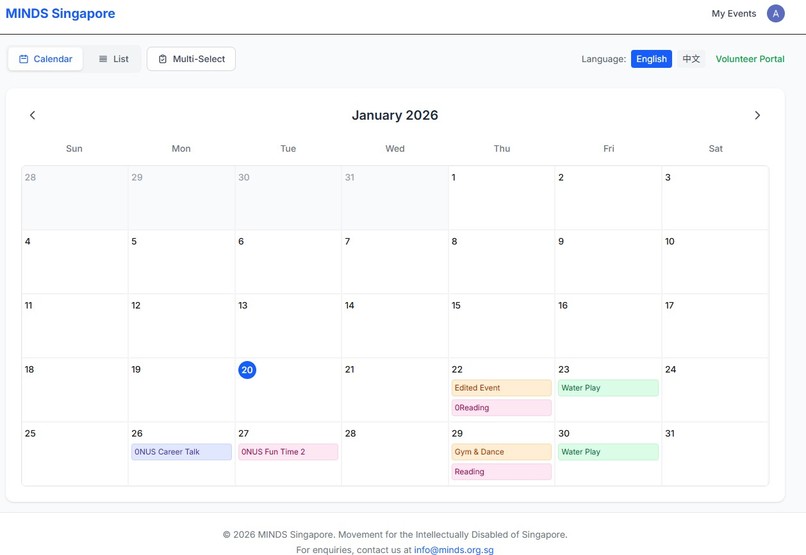
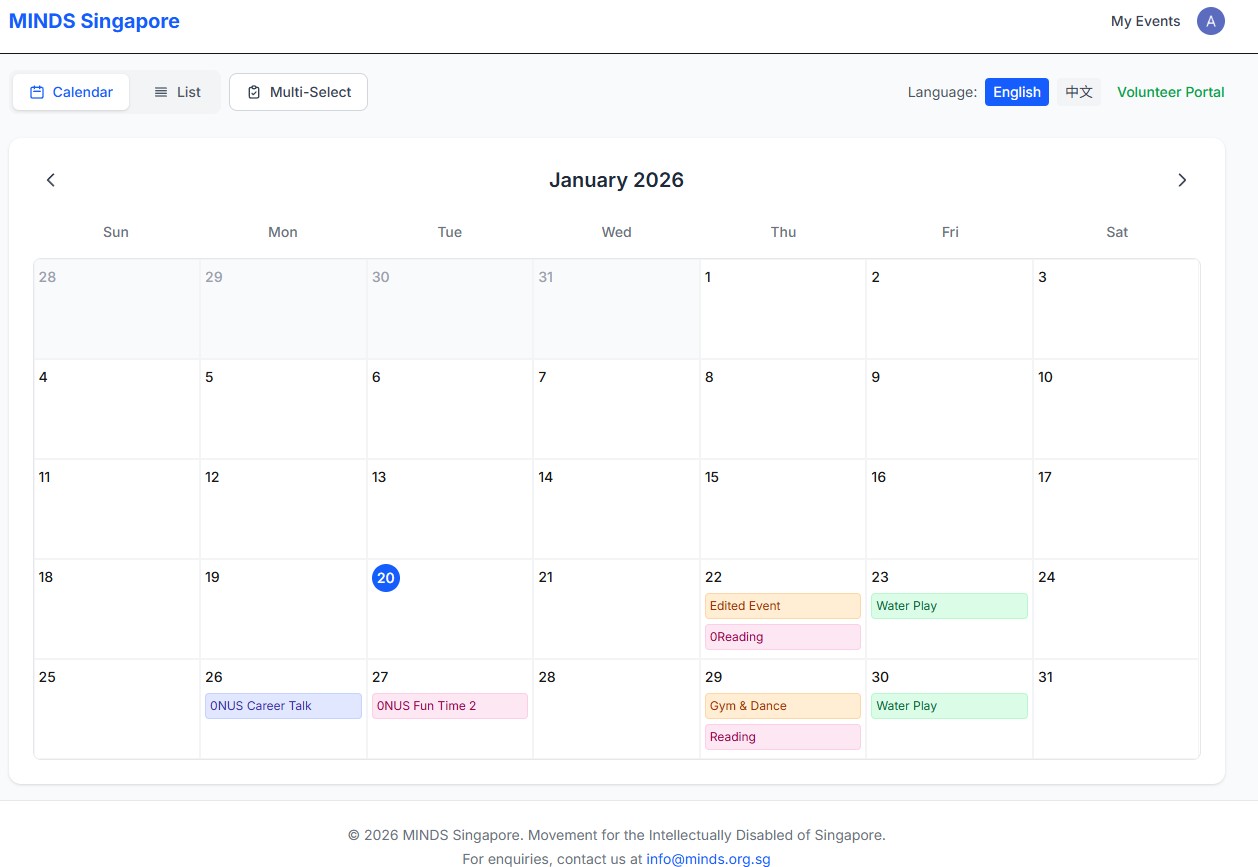
User calendar interface
-
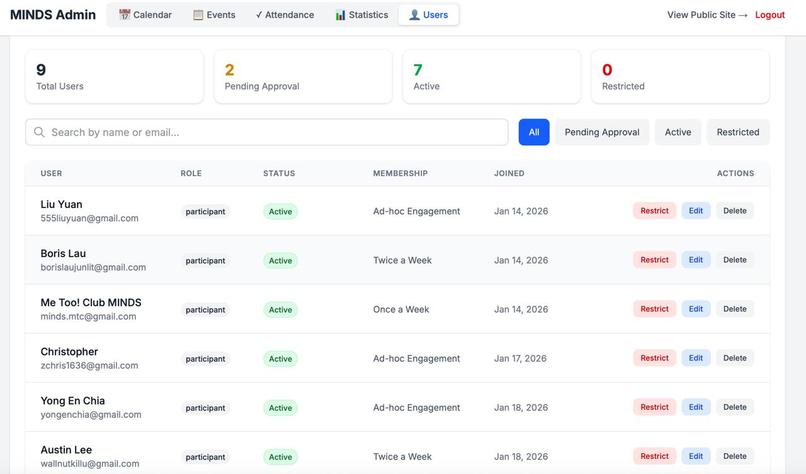
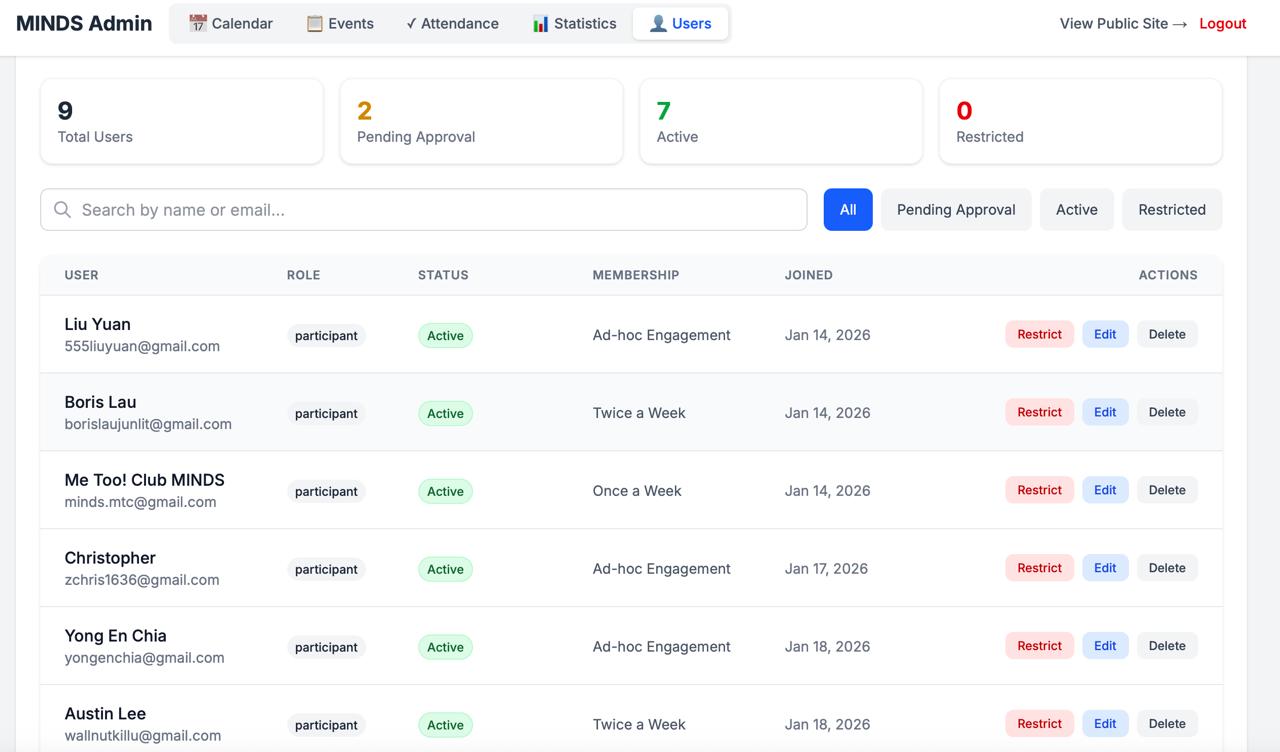
Staff portal: User management
-
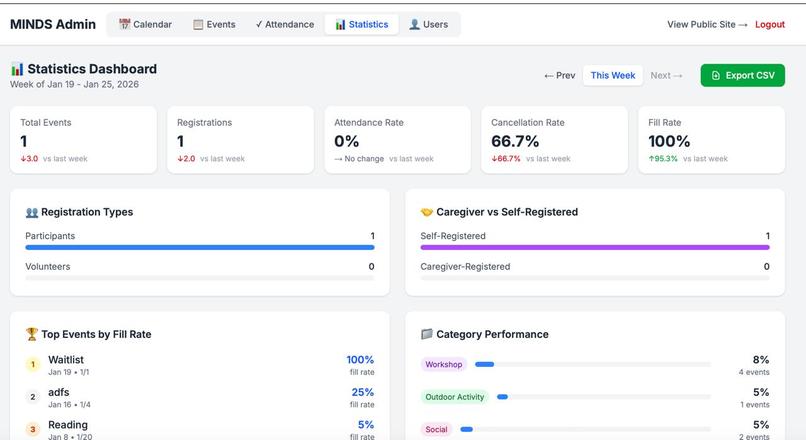
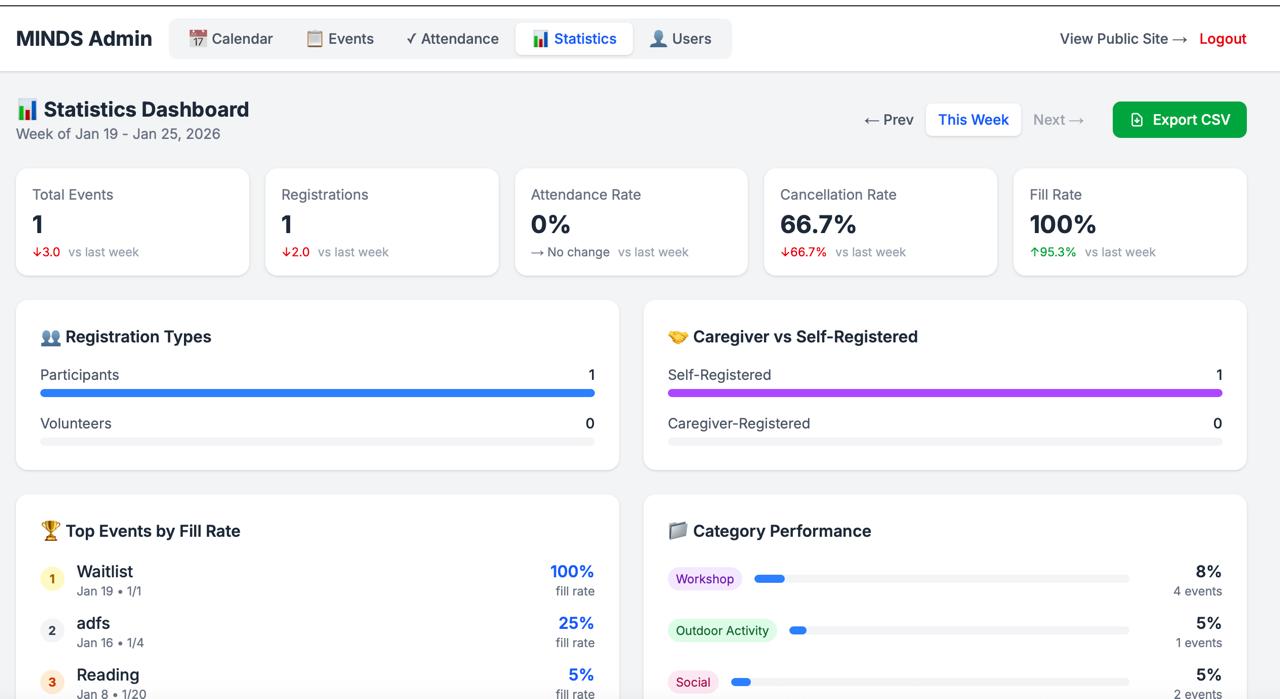
Staff portal: Statistics dashboard
-
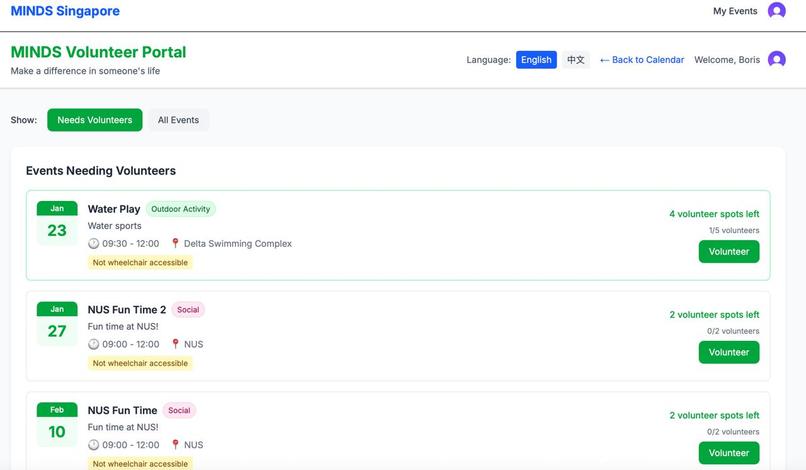
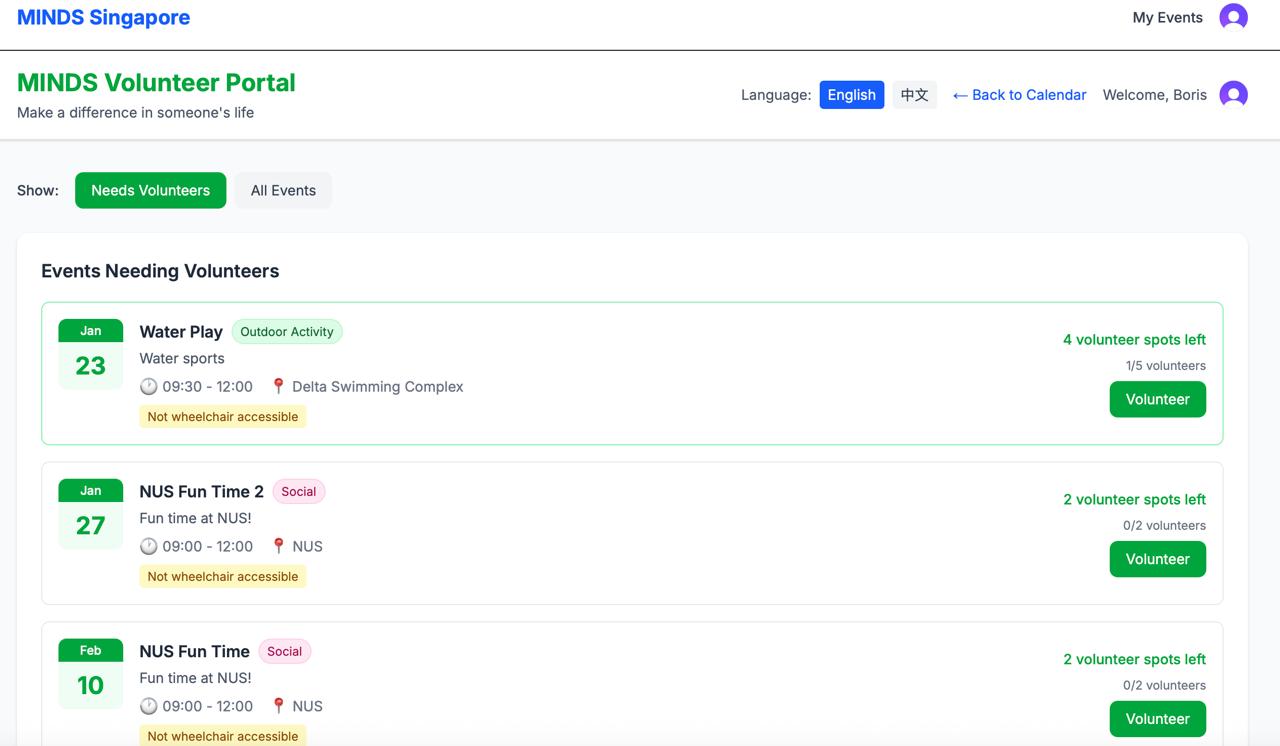
Volunteer portal
-

Chinese interface

Inspiration
Having been part of many hackathons, with numerous projects ending at the hackathon’s presentation and nothing more, Hack4Good stood out. Hack4Good stood out to us as a platform for purposeful hacking and inspired us to code with the beneficiaries in mind. In this case, MINDS (Movement for the Intellectually Disabled of Singapore) presented us with an issue of collating event registration data and inefficiencies. That’s when we had the idea to build not the most flamboyant of solutions, but something simple, workable, and ultimately, to see it being implemented.
What it does
Catering our product to their needs to solve real life issues, our solution is a centralised booking platform for users, volunteers and staff to use.
For users, our intuitive interface guides them through events in either a scrollable calendar or list view. Event registration is easy, with our SMS and email reminders ensuring users turn up for activities timely. We also implemented a simplified-chinese interface to provide greater accessibility, with capacity for additional languages in the future.
From the volunteer’s perspective, it is a platform to easily identify events that require assistance, sign up and register for the event.
We focused our efforts largely on reducing staff workload. The staff dashboard is able to search for event specific information such as attendance. It also provides diagnostics on past events, which leads to deep insights for the organisation to push for events with more support, as well as flag out clients which have repeatedly cancelled or did not attend for long periods, for the staff to check in and assist them.
How we built it
To be frank, as Y1 students, much of this was ‘vibe-coded’ or prompt engineered with the support of Claude Opus. However, we would like to express that even with the help of generative AI, it requires deep thought into the needs of the users of our product, as well as features to implement to address those needs. Additionally, much consideration was put behind the architecture and the APIs we utilised, as we kept it as low cost as possible while being functional, for a non profit organisation like MINDS to use.
Challenges we ran into
As advanced as generative AI is, there was a need for us to constantly adjust and provide clearer prompts to better describe what we wanted in the product. At times, we needed to look at the code ourselves to locate the bugs for the AI tool.
Beyond this, in order for us to implement a realistic solution that targeted real world issues, we delved beyond the problem statement slides given. We had to contact MINDS and ask numerous questions to gain a proper understanding of their current operation. We had to see many examples of their google forms that were being used and understand the inefficiencies. We had to put ourselves in the shoes of the users and streamline the registration process for easier usage.
Prior to this, cybersecurity was neither our expertise nor area of interest. However, this hackathon gave us the opportunity to develop a skill that we were unfamiliar with. Having never made a public website, only through this experience did we learn the procedures and steps that are put in place when setting up security for online projects.
Accomplishments that we're proud of
We are proud that we came into this hackathon wanting more than a hackathon prize and another line on our CV, but created a product for a greater purpose. We are proud that we adapted through cost constraints and information gaps via our own creative ways.
What's next for MINDS Ease
We hope to continue our mission and target real world problems. Hackathons should never stop at the final presentation, but go on to be developed to make an impact on those around us.
Built With
- clerk
- css
- github
- google-cloud
- google-sheets
- node.js
- npm
- resend
- twilio
- typescript
- vercel


Log in or sign up for Devpost to join the conversation.