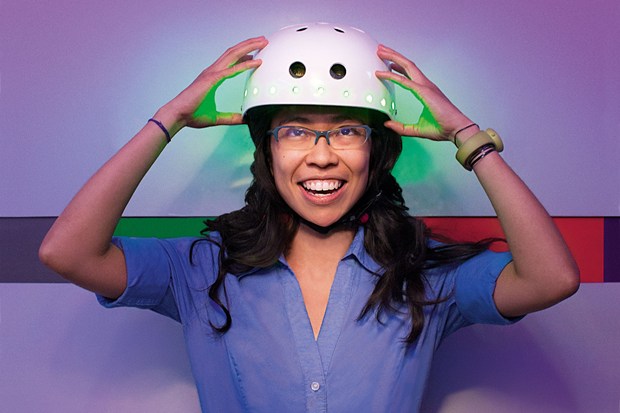
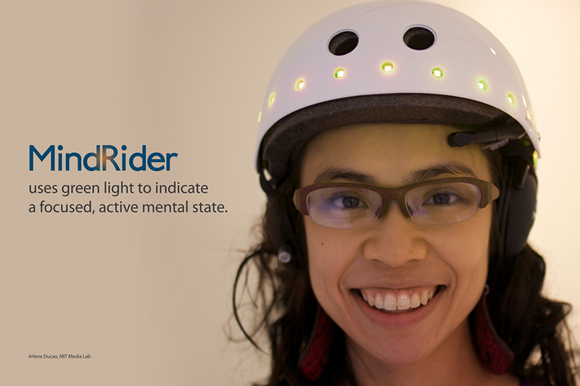
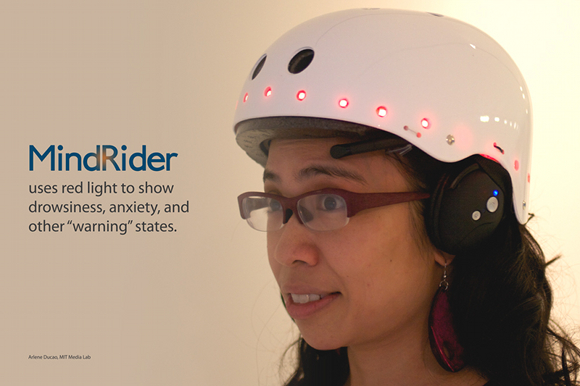
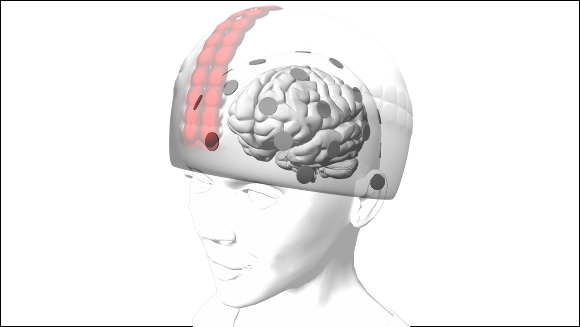
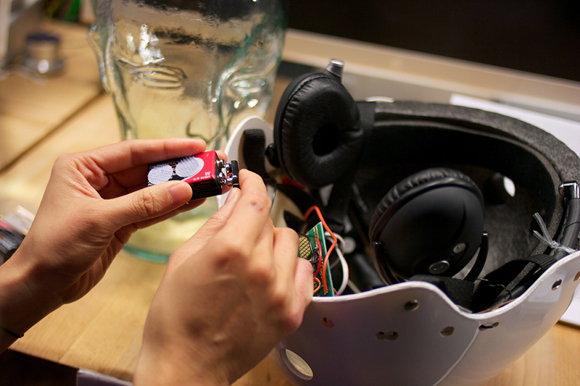
MindRider is a bike helmet that translates electroencephalogram (EEG) feedback into an embedded LED display. MindRider employs the visual language of traffic lights; for the wearer, green lights indicate a focused, active mental state, while red lights indicate drowsiness, anxiety, and other states not conducive to operating a bike or vehicle. Flashing red lights indicate extreme anxiety (panic). As many people return to cycling as a primary means of transportation, MindRider can support safety by adding visibility and increased awareness to the cyclist/motorist interaction process.
In future versions, MindRider may be outfitted with an expanded set of EEG contacts, proximity sensors, non-helmet wearable visualization, and other features that will increase the cyclist's awareness of self and environment. These features may also allow for hands-free control of cycle function. A networked set of MindRiders may be useful for tracking, trauma, and disaster situations. MindRider was originally developed in 2011 by Arlene Ducao at the MIT Media Lab, in Henry Holtzman’s Information Ecology group. Before her stint at MIT, Arlene co-founded, with Ilias Koen, The DuKode Studio LLC in 2009. DuKode is based in the Gowanus section of Brooklyn, and will take over the development of MindRider if there is market demand.
Wired UK (http://www.wired.co.uk/magazine/archive/2012/11/start/traffic-lights-for-the-mind), The Boston Herald (http://bostonherald.com/2012/12/stress_levelmindriderarlene_ducao), and a slew of gadget blogs have profiled the MindRider prototype. With your help, we can bring MindRider to the real world!

Log in or sign up for Devpost to join the conversation.