-
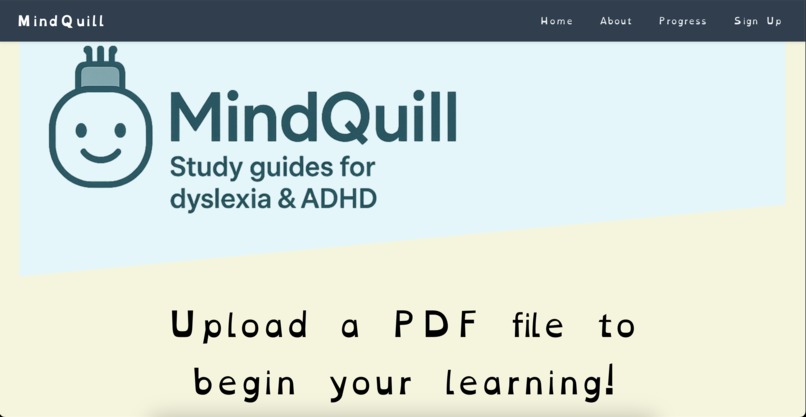
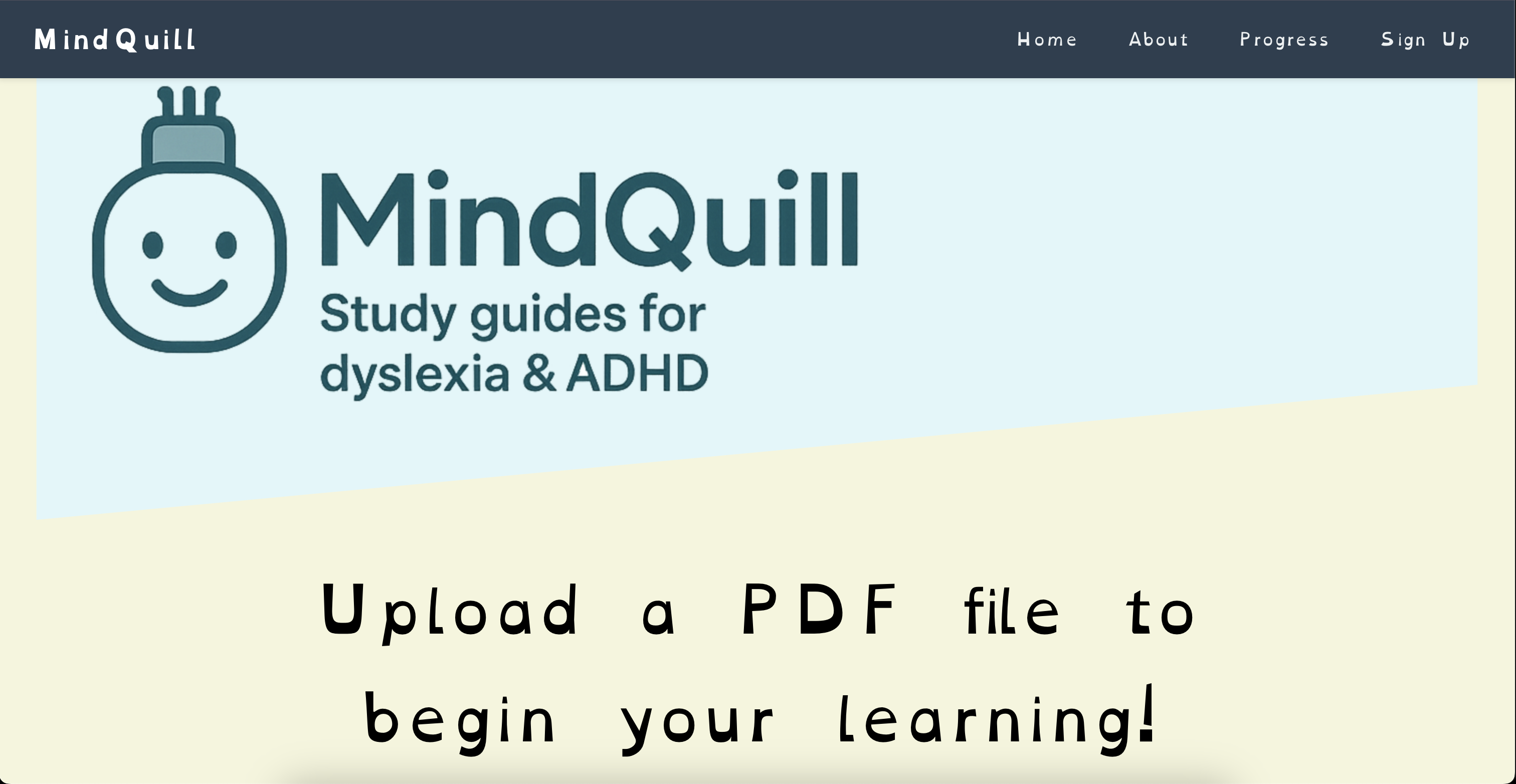
home page
-
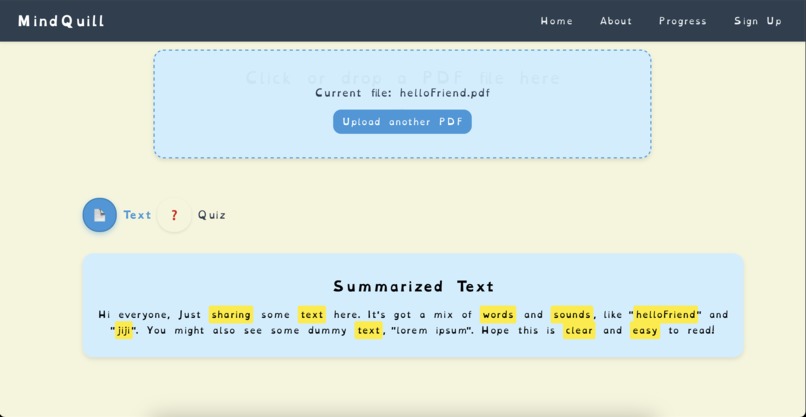
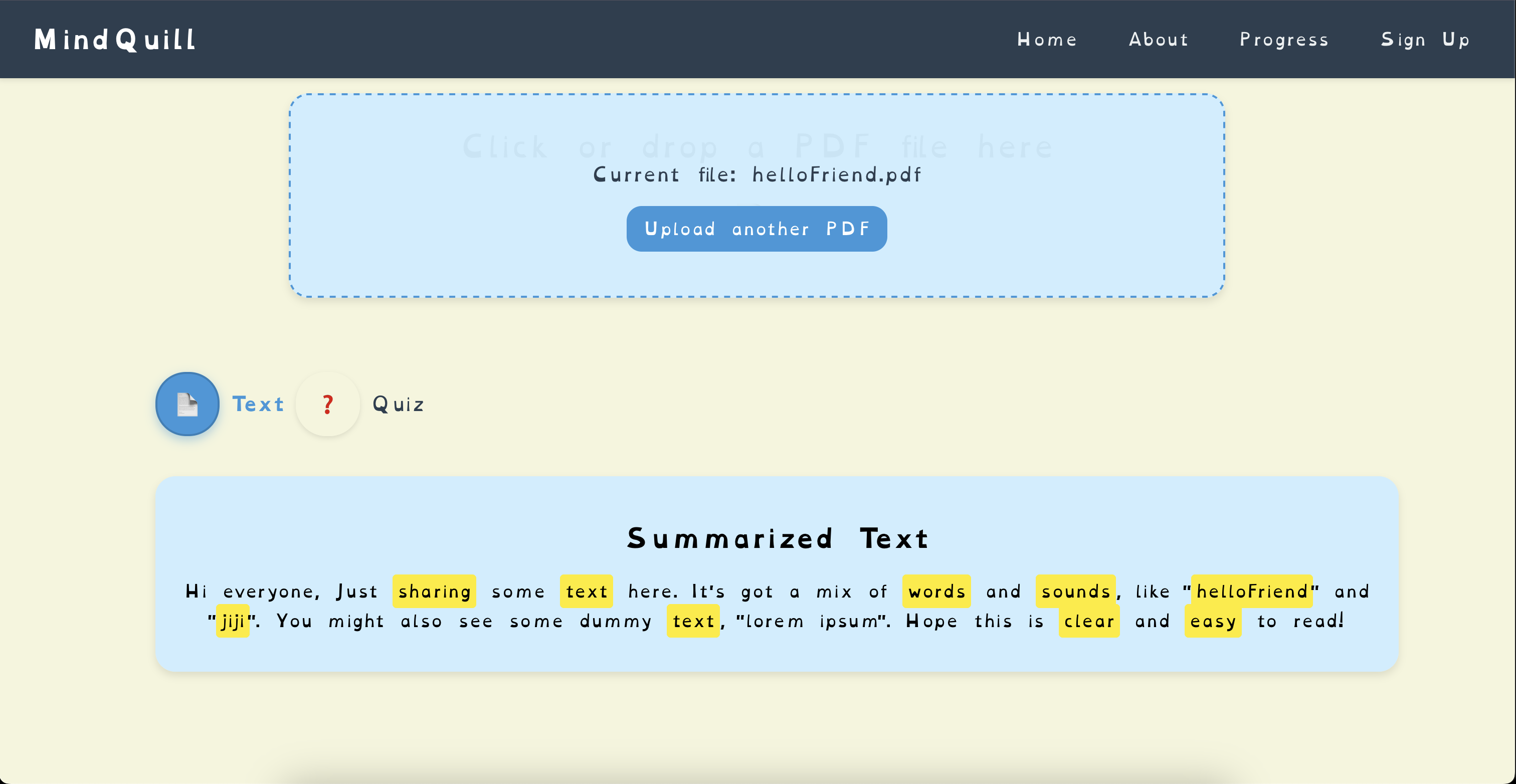
example of summarized text
-
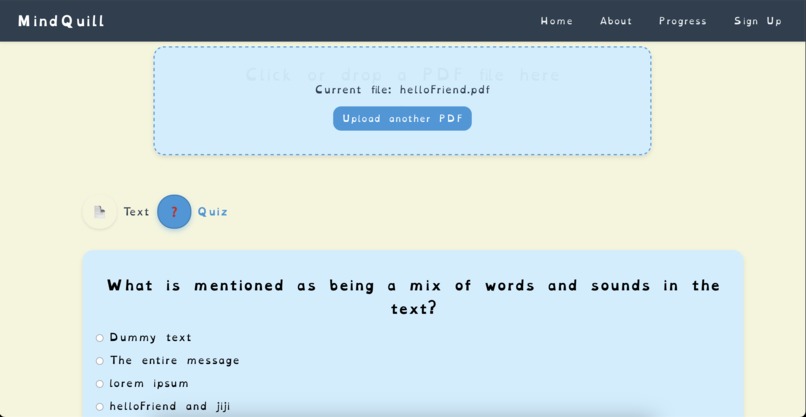
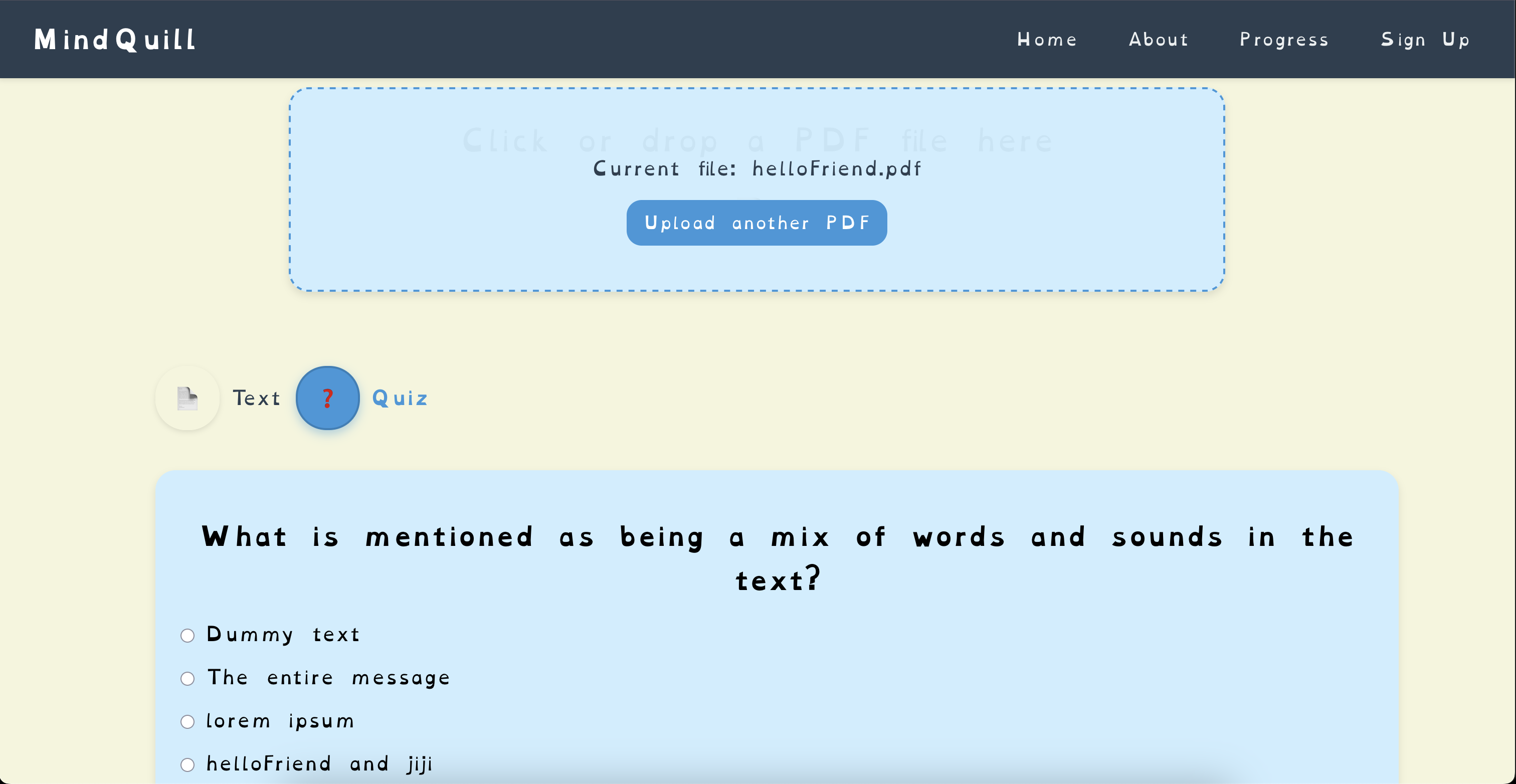
example of interactive quiz
-
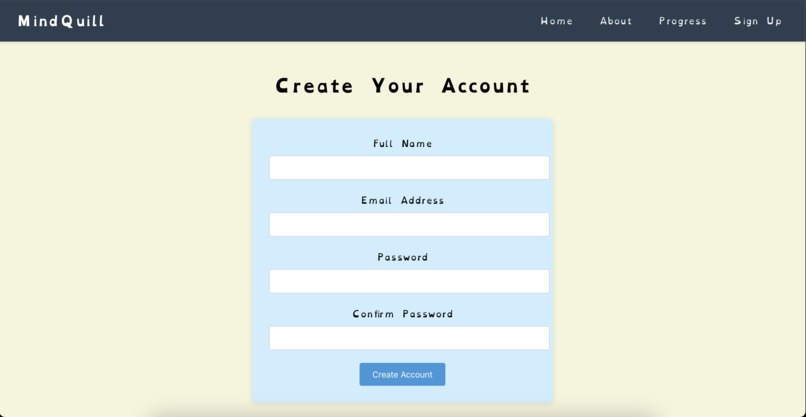
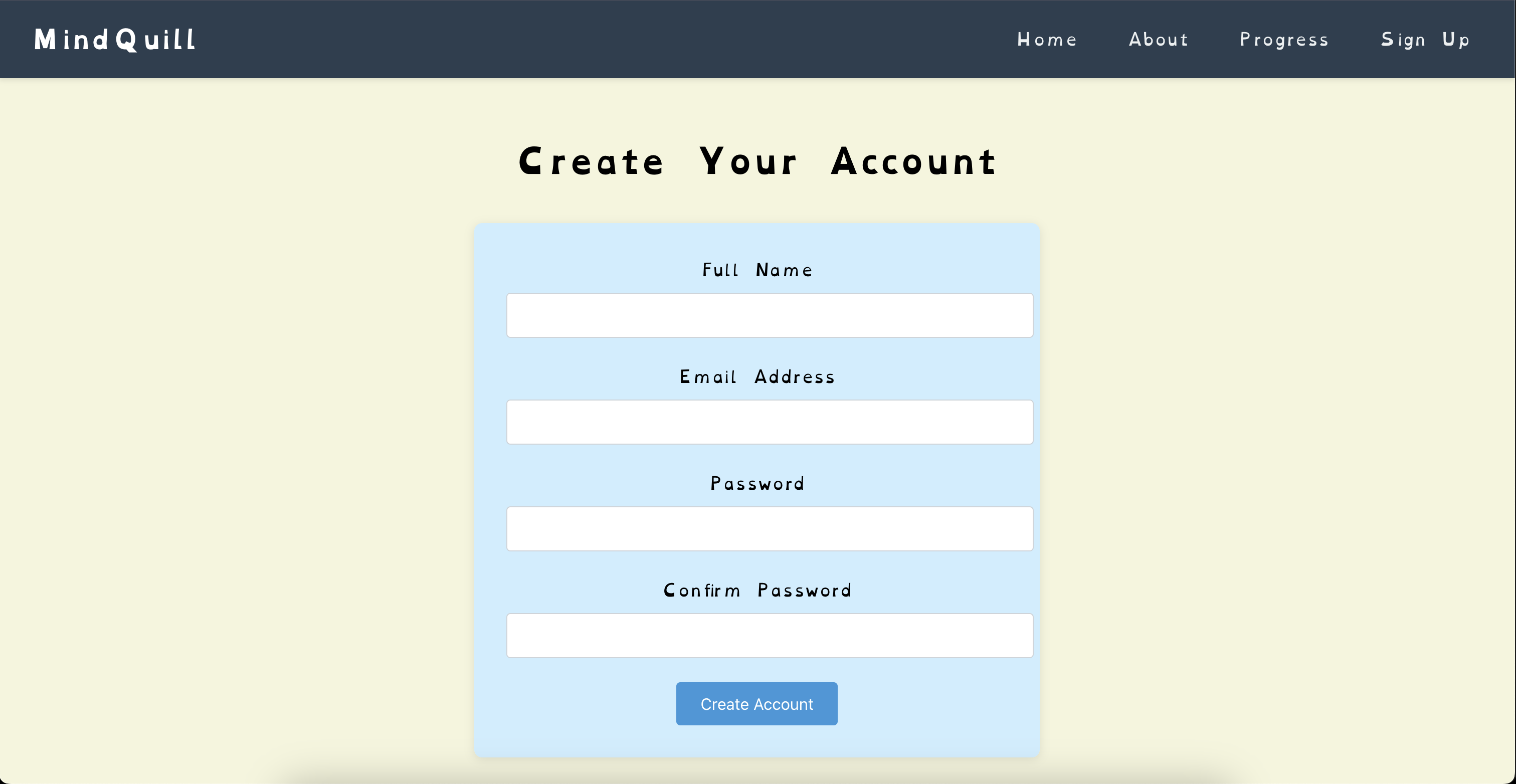
account creation screen
-
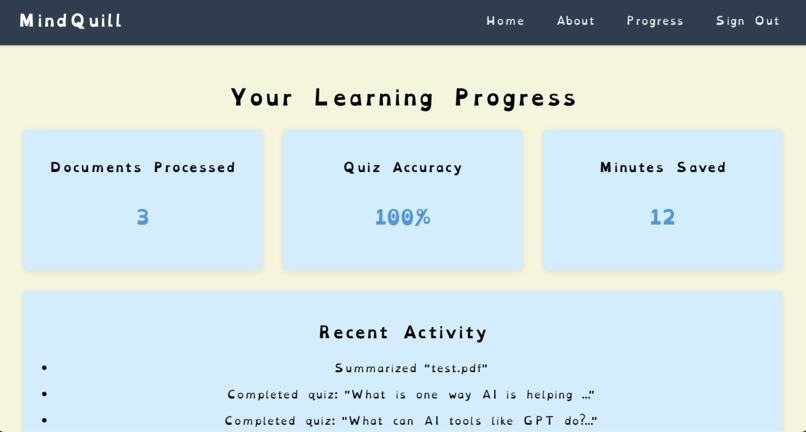
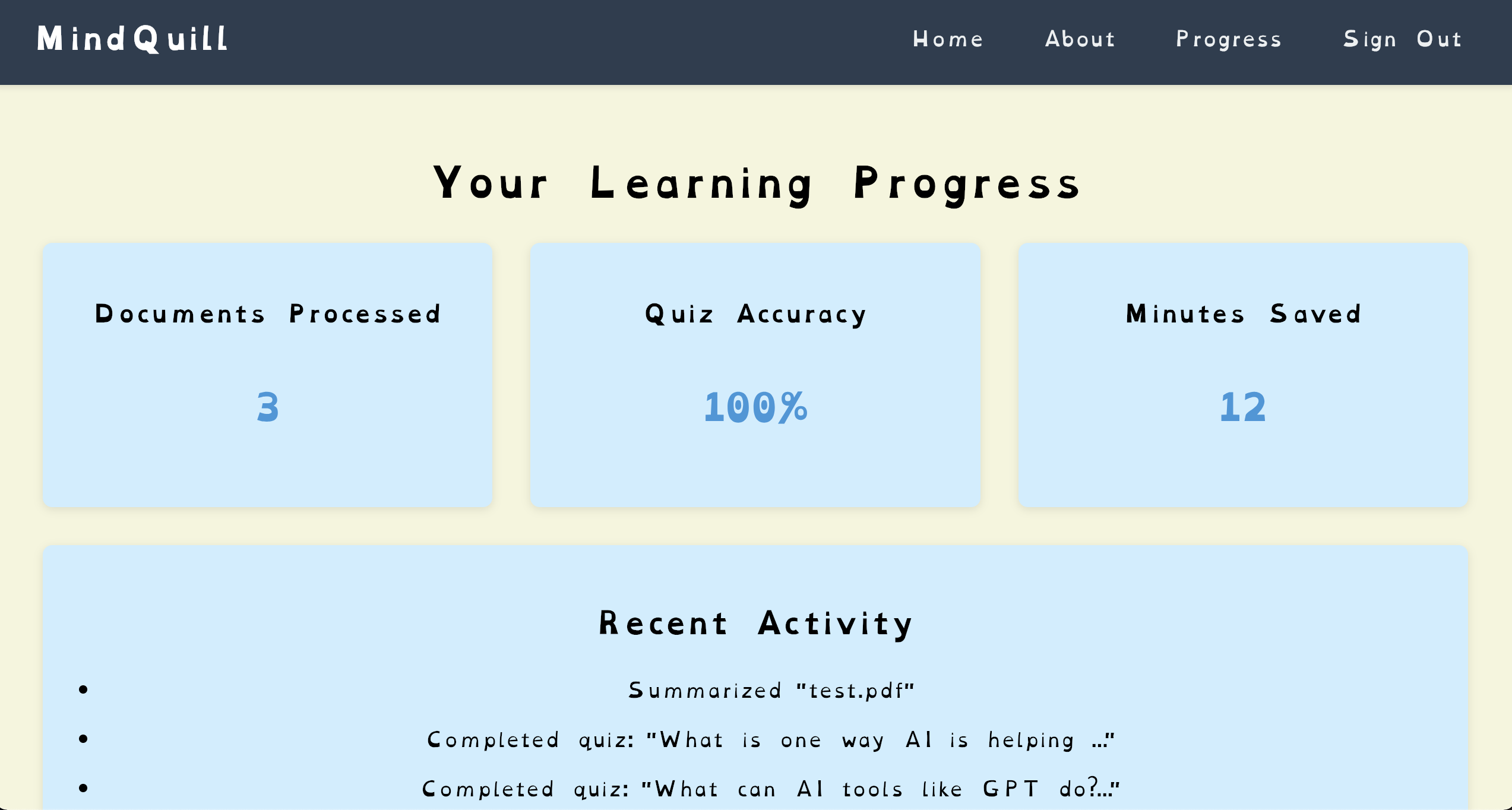
learning outcomes summarizing documents processed, quiz accuracy, and minutes saved
Inspiration
There have been many iterations on AI study assistants, but none of them that we could find were really geared toward being accessible to people with dissabilities like dyslexia.
What it does
Users can upload a PDF file and receive either a simplified summary of the text or an interactive quiz in colors and a font that is intended to be dyslexia-friendly (OpenDyslexia).
How we built it
We used react for the frontend and flask for the backend. Most of the program was written in Javascript and Python, and we utilized the Google Gemini API in order to generate the summaries and interactive quiz. For deployment, we used vercel for the frontend and render for the backend.
Challenges we ran into
One of the things we wanted to implement was the ability to create an account and login in order to keep track of stats like progress, files uploaded, and average quiz score. Although we were able to get a rudimentary database working with firebase, we didn't have time to fully flesh out all of the features with login.
Accomplishments that we're proud of
This was our first hackathon and we were all proud to be able to deploy the website and get the API up and running.
What we learned
This was our first time working with flask backend as well as fully deploying a web app, so I'd say we learned a lot of skills in those areas. We also learned about working with APIs since we worked with Google Gemini and had to connect our backend and frontend.
What's next for MindQuill
We would like to implement more features for the strat tracking when you login. Additionally, we want to accept more file formats aside from only PDFs and maybe include things like text to speech.
Built With
- firebase
- gemini
- javascript
- jsx
- react
- render

Log in or sign up for Devpost to join the conversation.