-
-
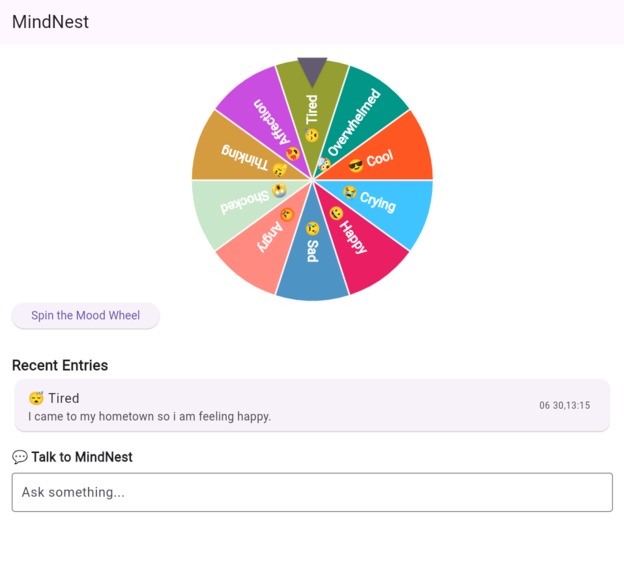
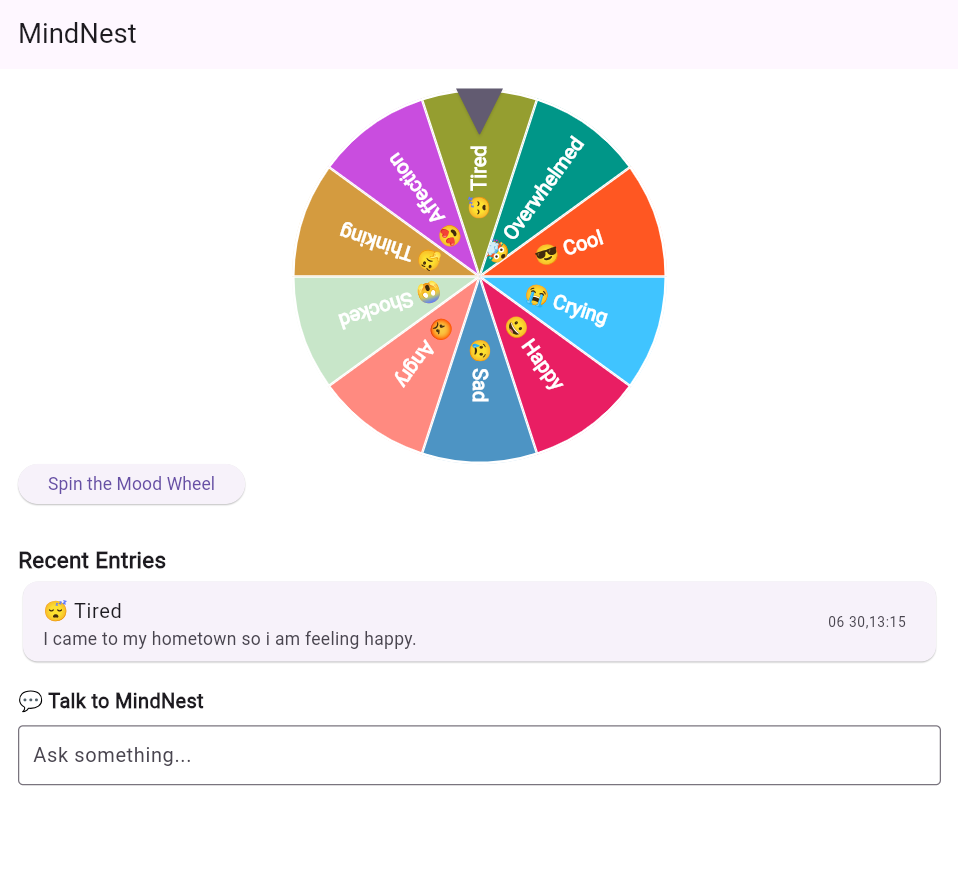
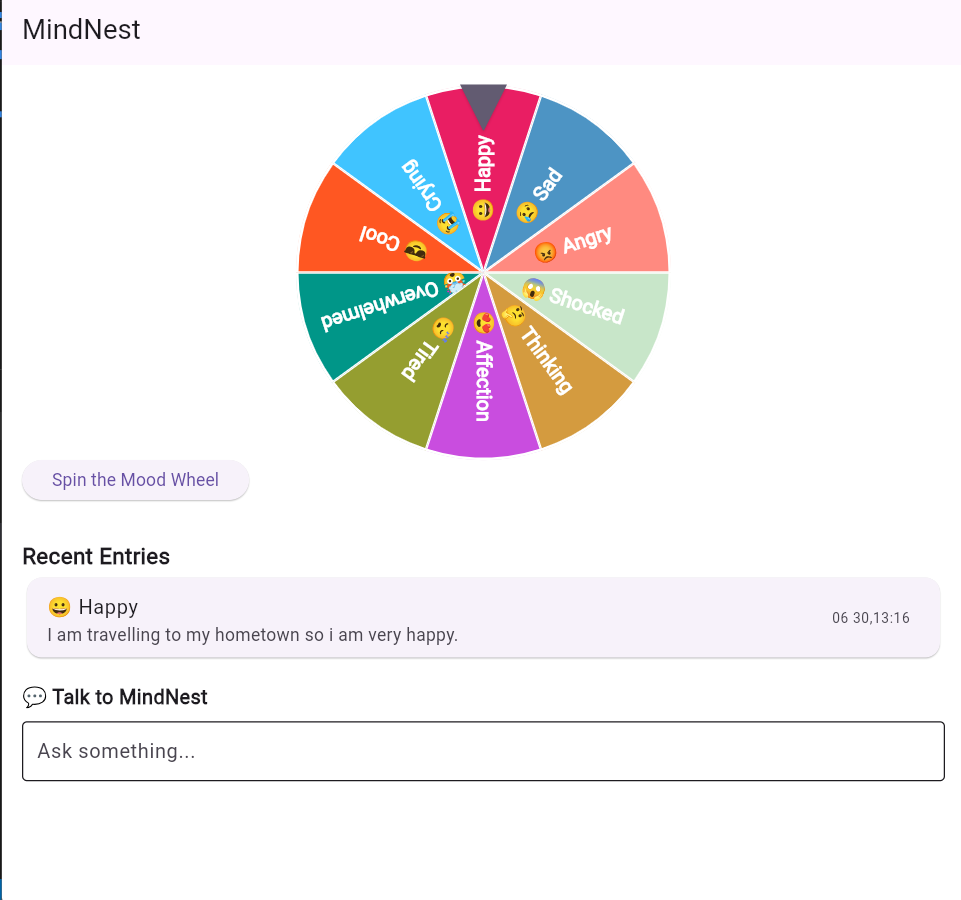
Spinning mod wheel
-
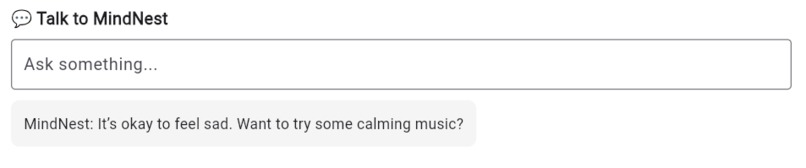
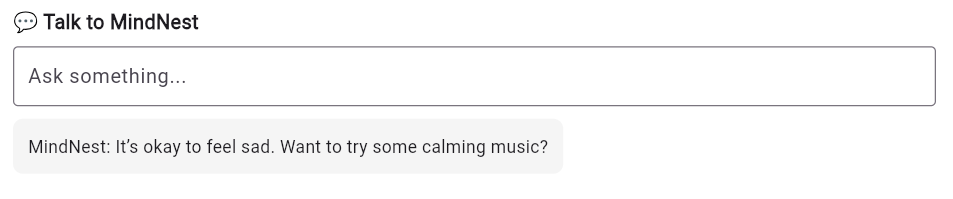
friend like chatbot suggestion
-
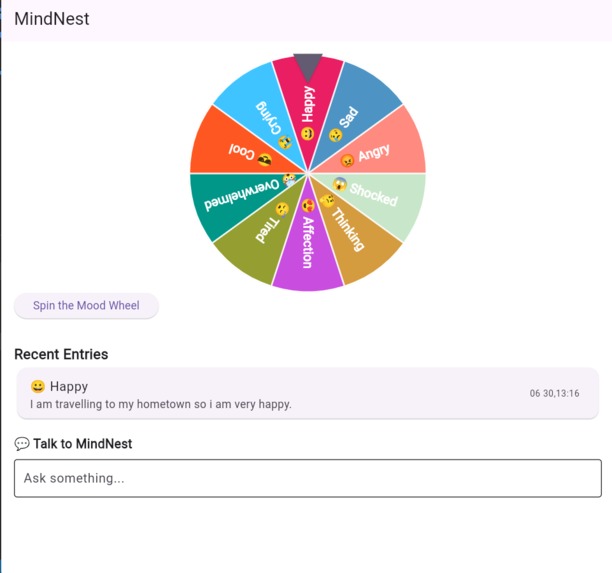
Mood selection and journaling that thoughts
-
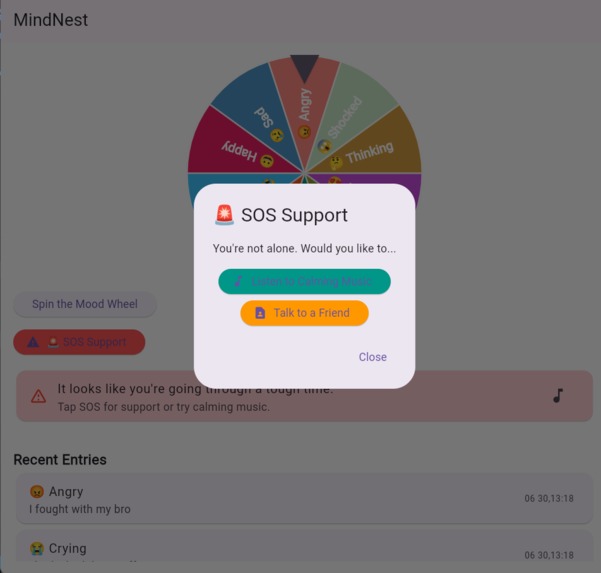
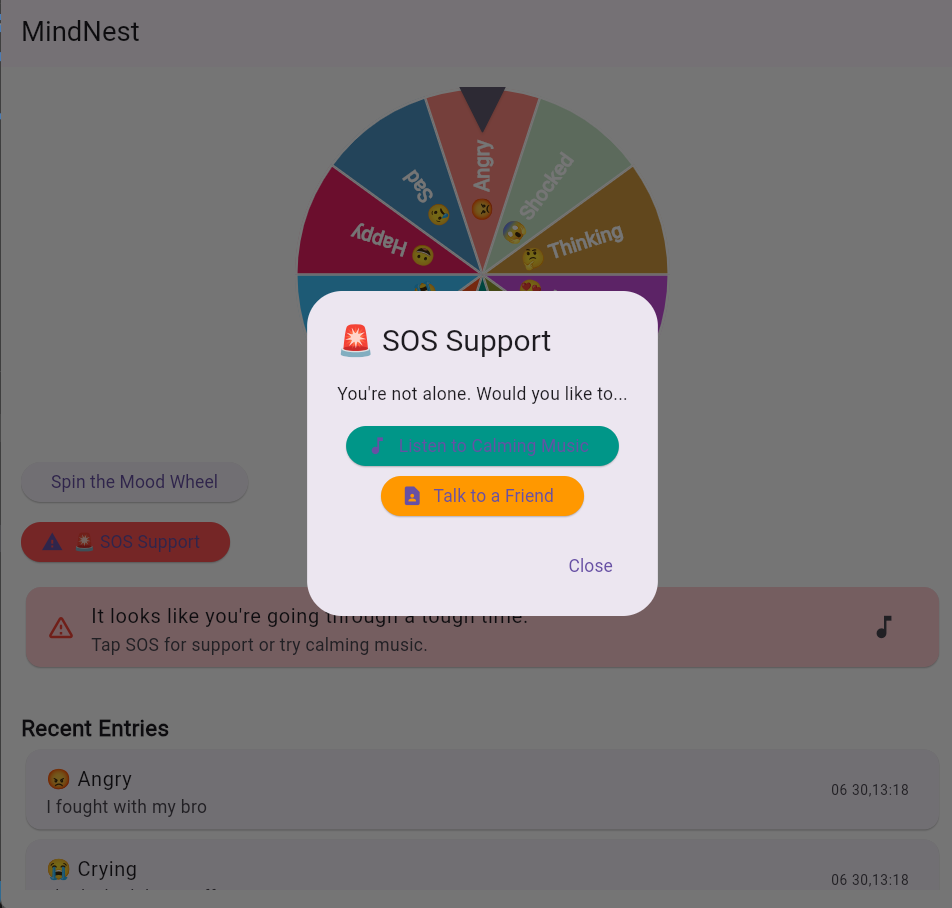
SOS alert system
-
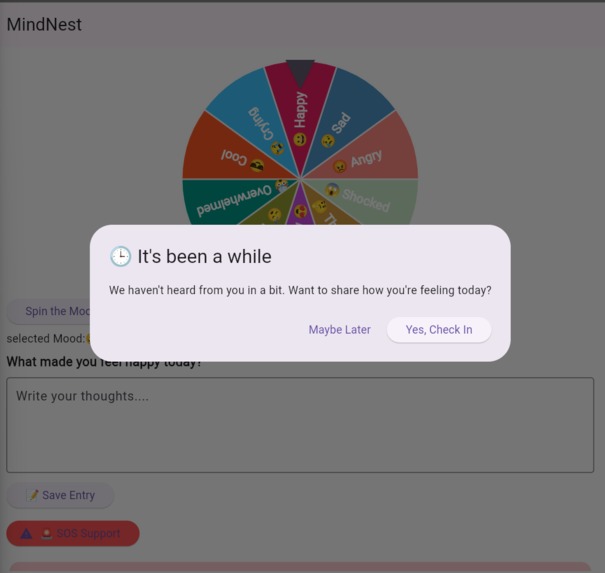
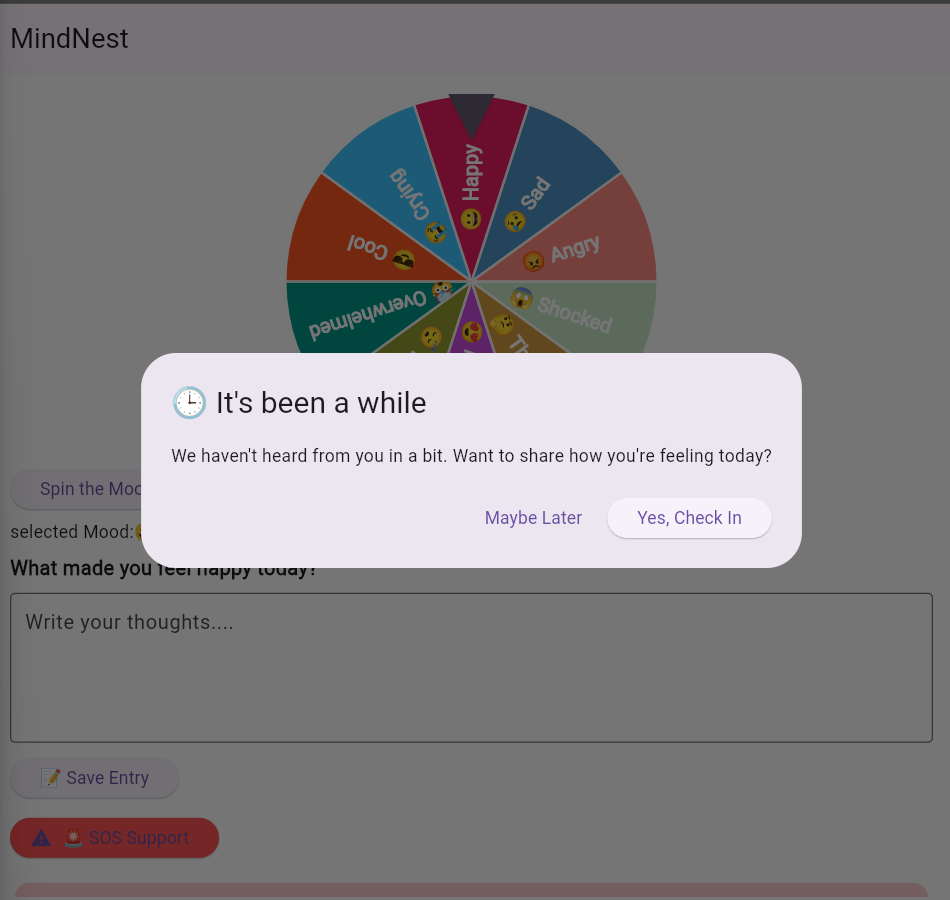
Inactivity notification
Inspiration
We’ve all had days when we feel overwhelmed, disconnected, or simply unsure about how we’re doing mentally. In today’s fast-paced, high-pressure world, it’s easy to ignore emotional well-being until it becomes too much to handle. I am inspired by the need for a non-intrusive, emotionally intelligent space for self-reflection — a way to gently check in with ourselves, one mood at a time. MindNest was born from the belief that mental health support doesn't always have to be clinical — it can be gentle, playful, and personal
What it does
MindNest is an interactive journaling app along with agentic AI that helps users identify and record their emotions through a playful yet insightful experience. Users spin a Mood Wheel to select how they feel, respond to emotion-based prompts, and log their thoughts. Key features include:
Mood Spinner for intuitive emotional selection. Prompted journaling based on selected mood. Emotionally-tagged journal entries stored locally. SOS Support when negative patterns are detected (e.g., calming music, simulated friend contact).
How we built it
We built MindNest using: Flutter for cross-platform UI Dart for app logic Shared Preferences for local data persistence flutter_fortune_wheel for the interactive mood selector intl for date formatting url_launcher for external support links (e.g., calming music) We focused on keeping the app lightweight, offline-friendly, and accessible, making it perfect for everyday use without login or internet.
Challenges we ran into
Emoji parsing: Ensuring consistent mood tracking required us to carefully handle emojis in both display and logic. State management: Managing mood selection and data refresh between wheel spins and journal saves took fine-tuning. SOS logic: Designing a detection system that feels supportive, not intrusive, involved balancing logic with empathy.
Accomplishments that we're proud of
Building a smooth, emotion-first UX using the Fortune Wheel mechanic. Implementing a dynamic journaling experience with contextual prompts. Crafting a meaningful SOS system that responds to user behavior empathetically. Creating an app that feels like a friend, not a form.
What we learned
How to solve a real world problem with Technology. How to use Flutter packages like flutter_fortune_wheel and shared_preferences effectively. The value of data privacy in mental health apps, which is why we started with offline-first, locally stored journaling. The importance of empathy in UI/UX, especially for mental health tools. The value of clean, reactive code for a seamless user experience. How emotional triggers and support systems can be simulated in small ways — like offering calming music or the option to “talk to a friend.”
What's next for MindNest – Your Personal AI Wellness Agent
Mood analytics dashboard to visualize mood trends over time. Cloud sync and cross-device support AI-powered journaling assistant for reflective suggestions or CBT-style feedback. Daily emotional check-ins with reminders. Mindfulness mini-games and breathing exercises We envision MindNest as a long-term companion — a gentle, AI-driven wellness agent for everyone navigating emotional ups and downs.
Built With
- dart
- flutter
- ui
- ux


Log in or sign up for Devpost to join the conversation.