-
-
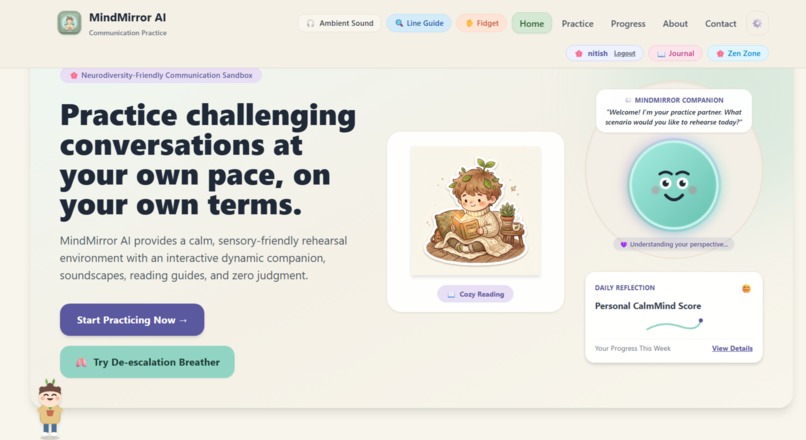
Home
-
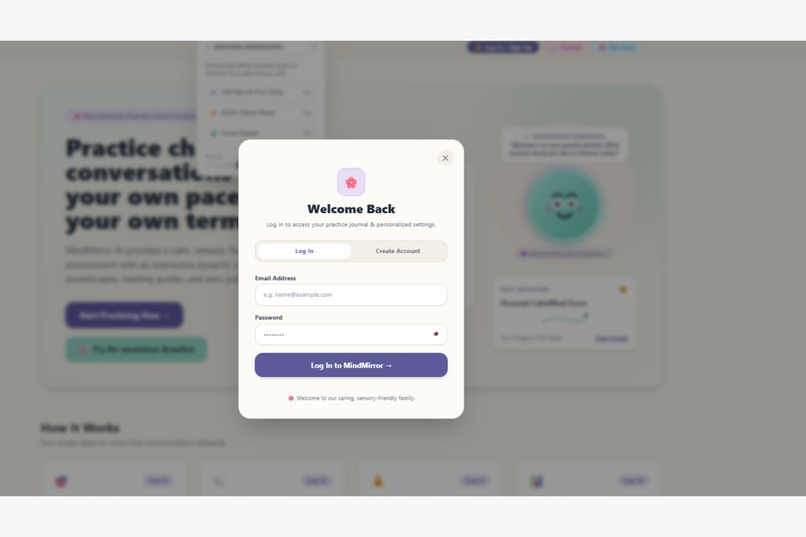
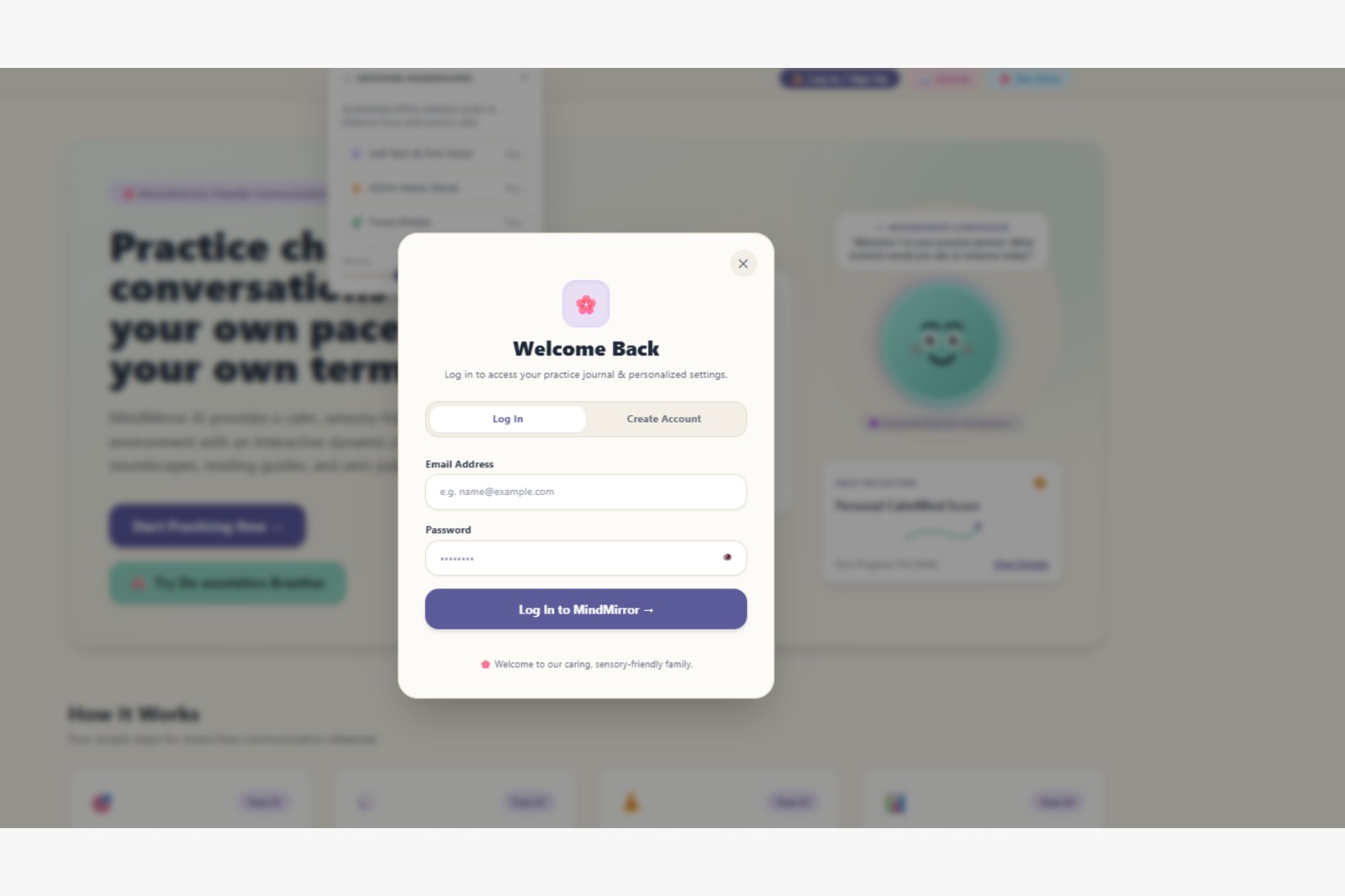
Login/Signup
-
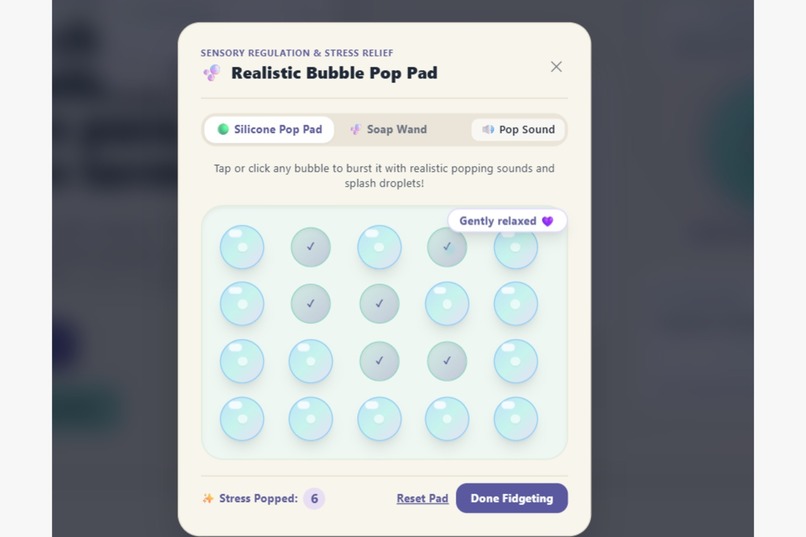
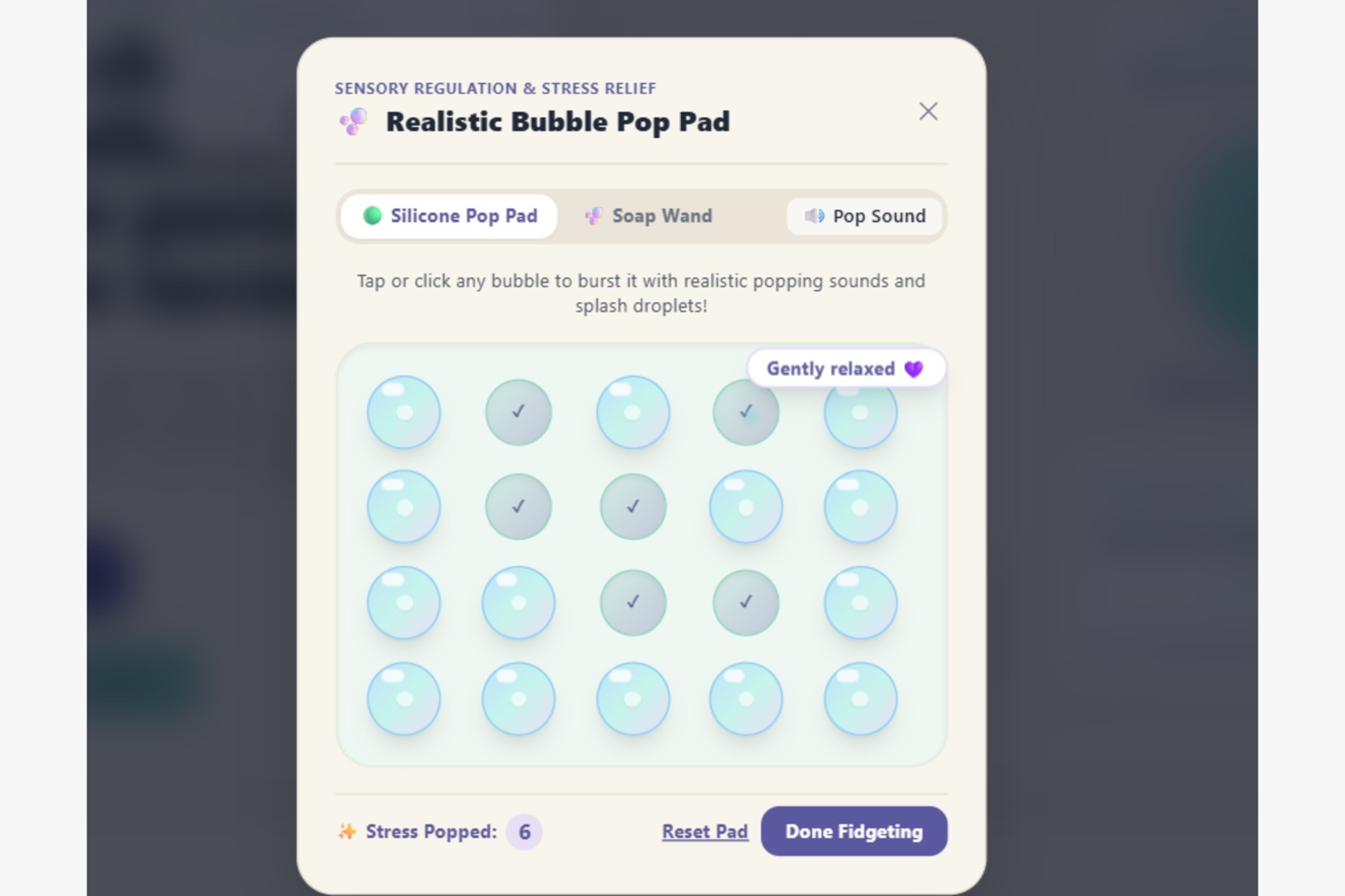
Bubble Pop Pad
-
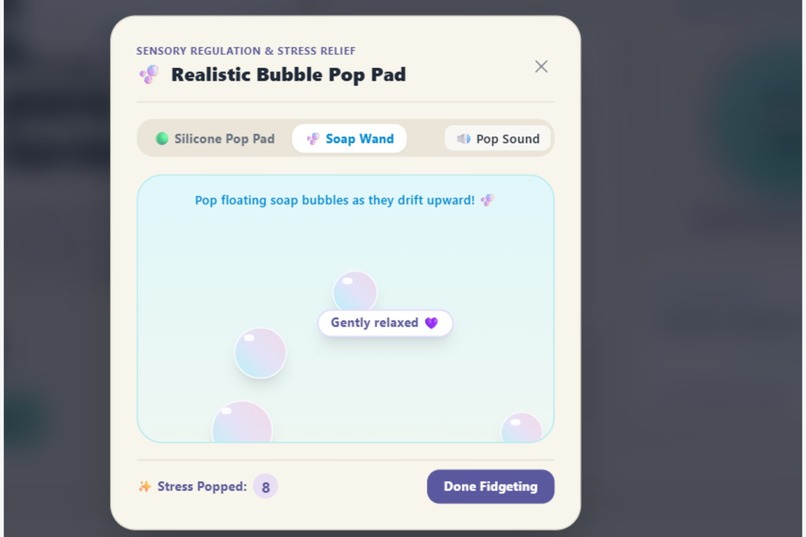
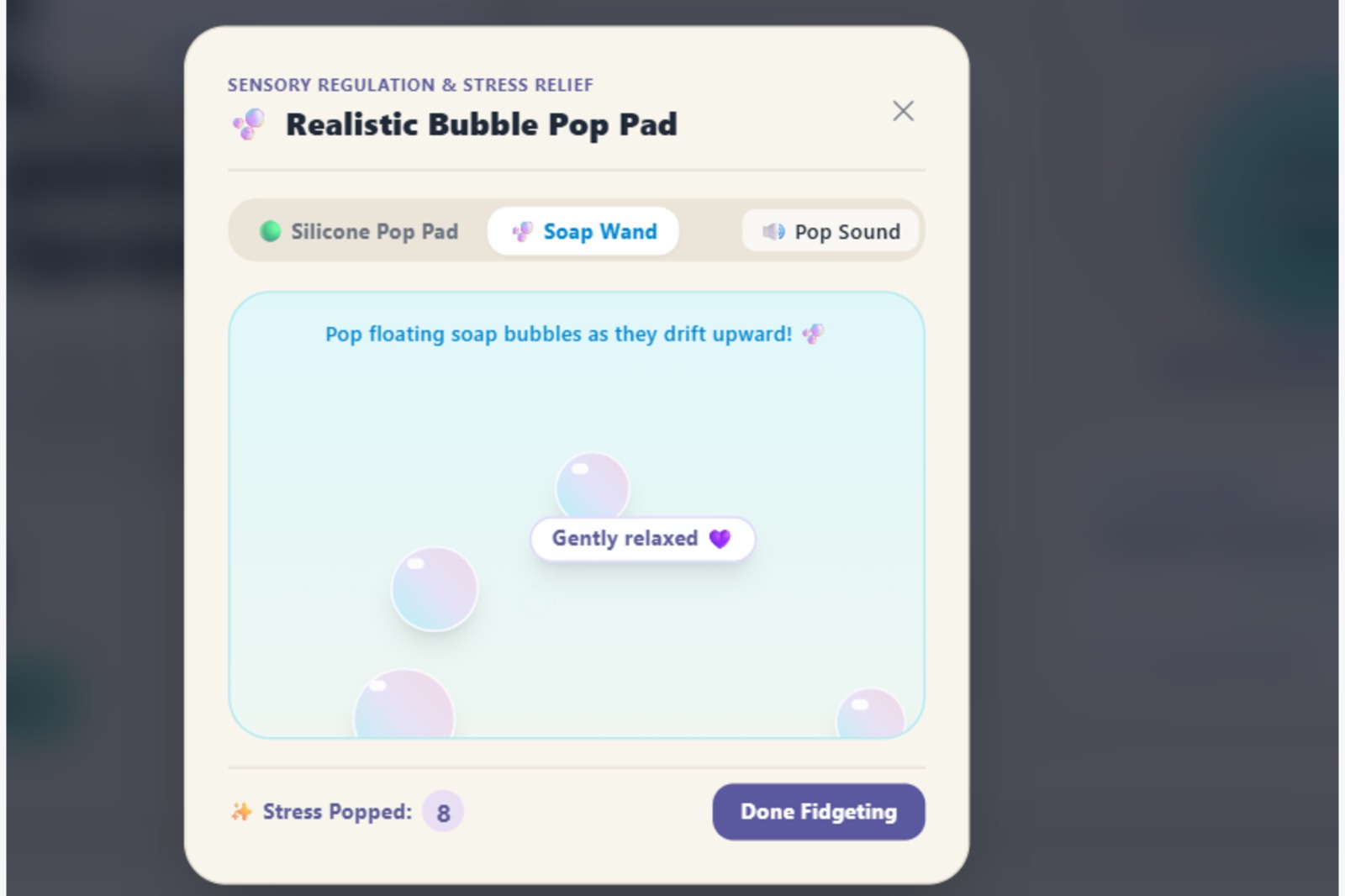
Bubble Pop Pad 2
-
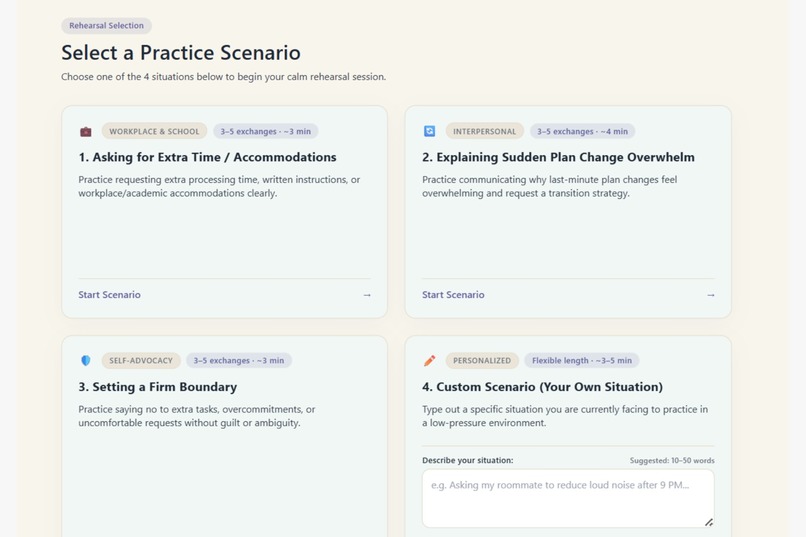
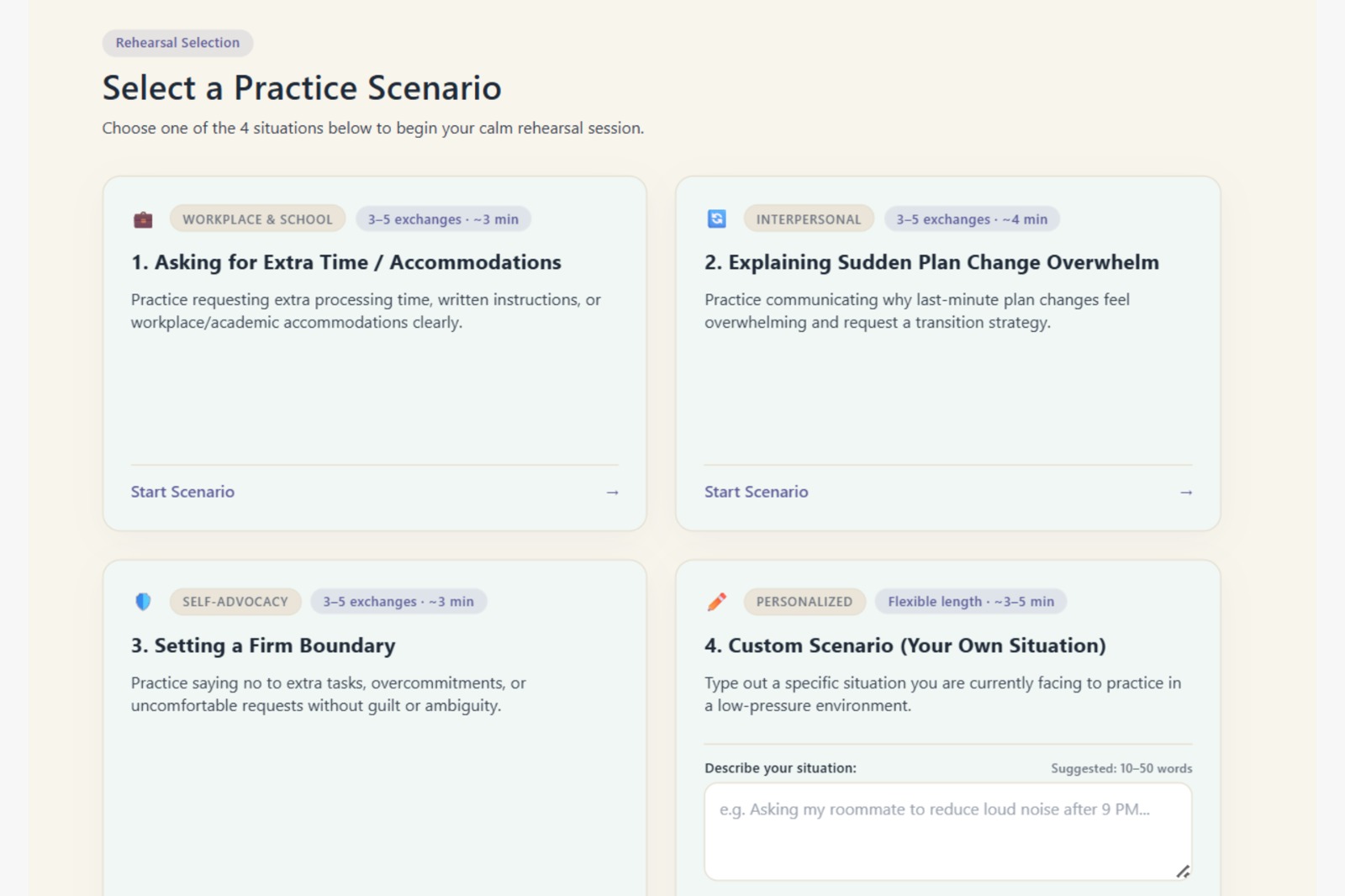
Practice
-
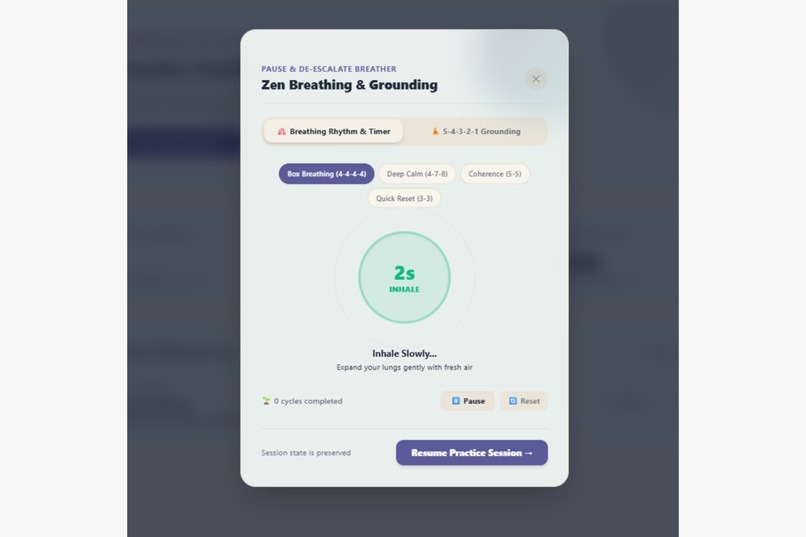
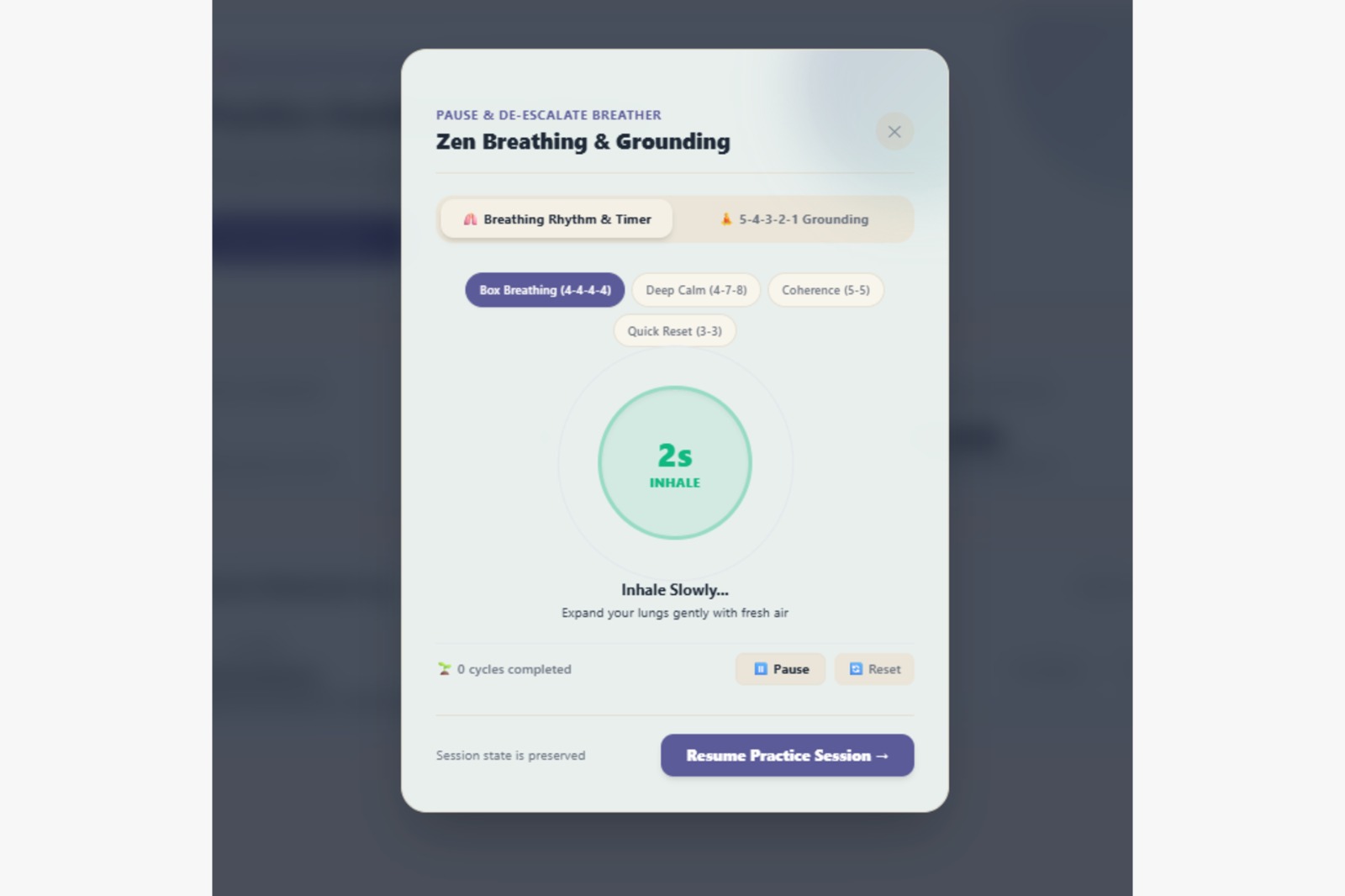
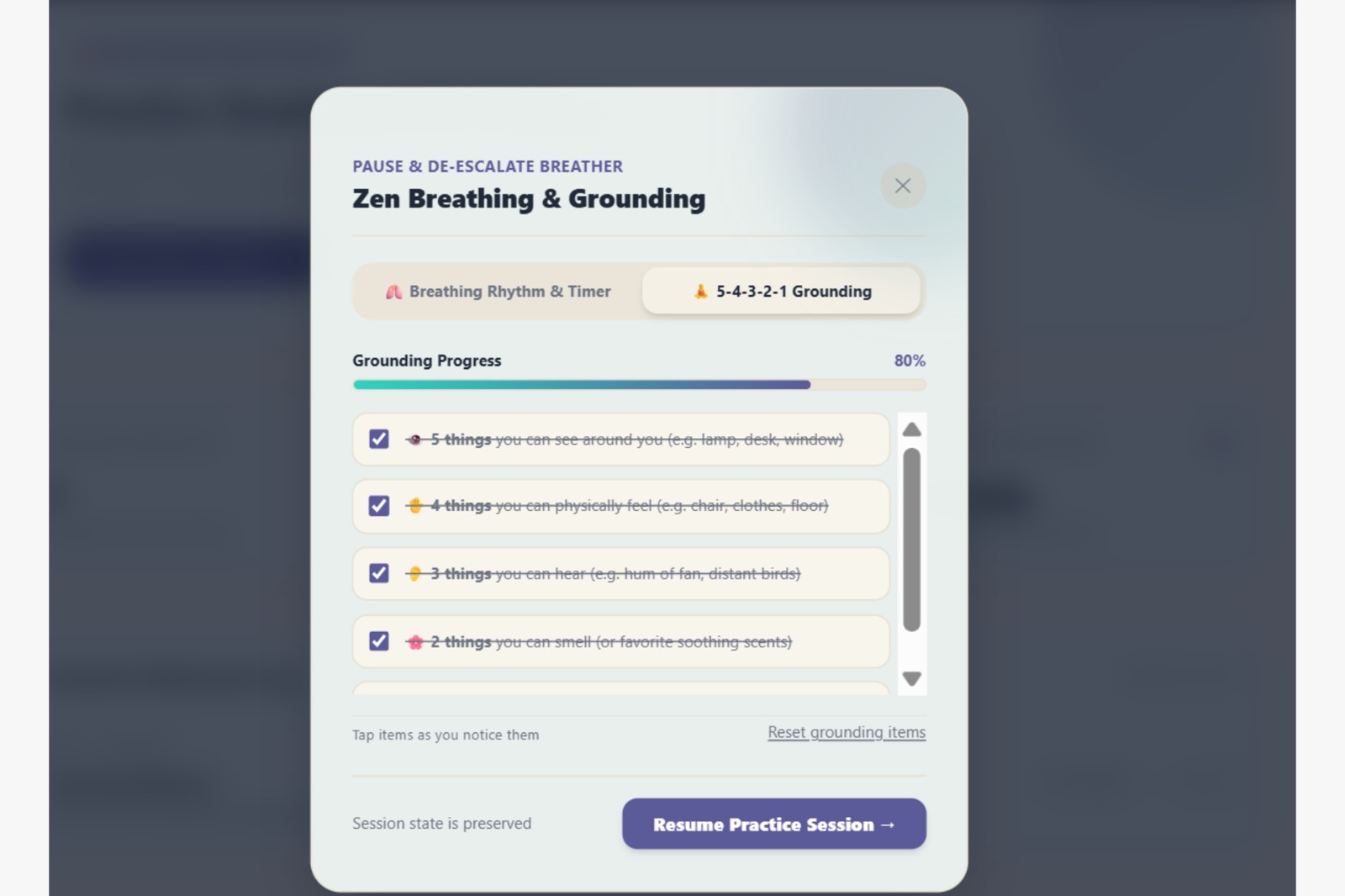
Breathing & Grounding
-
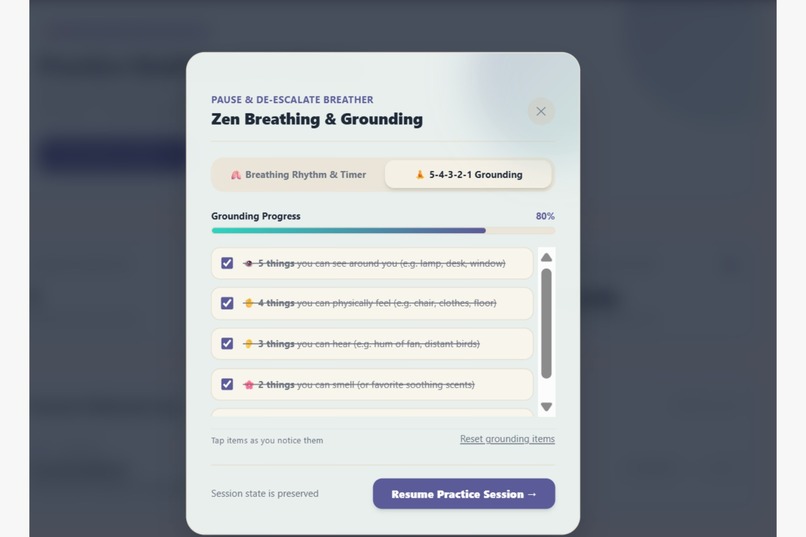
Breathing & Grounding 2
-
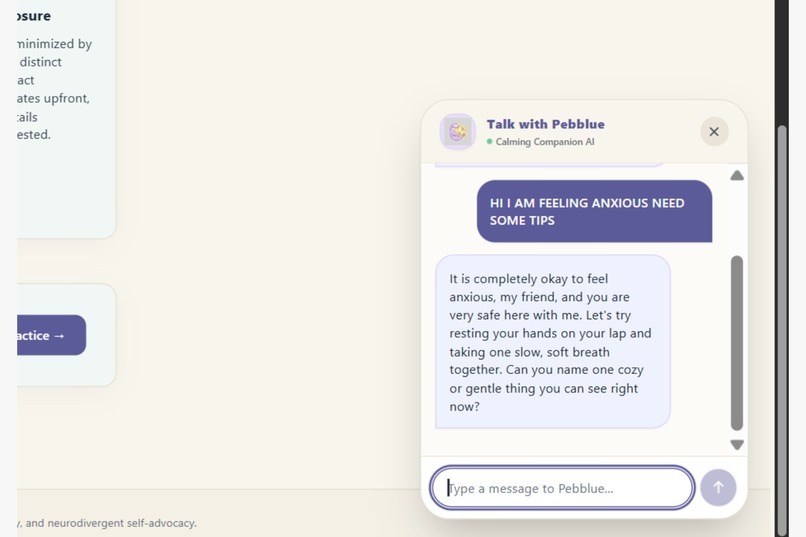
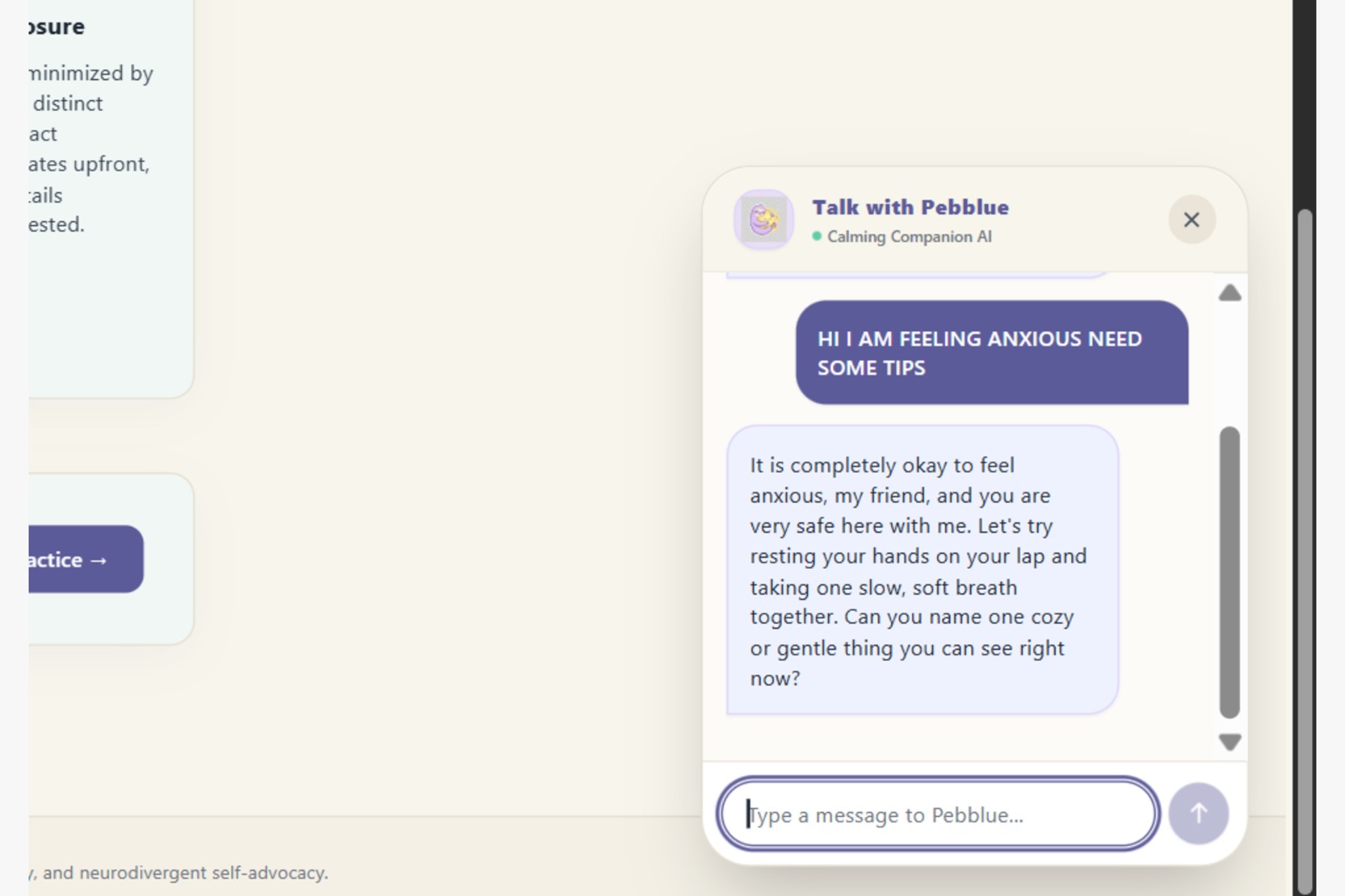
ChatBot(Pebblue)
-
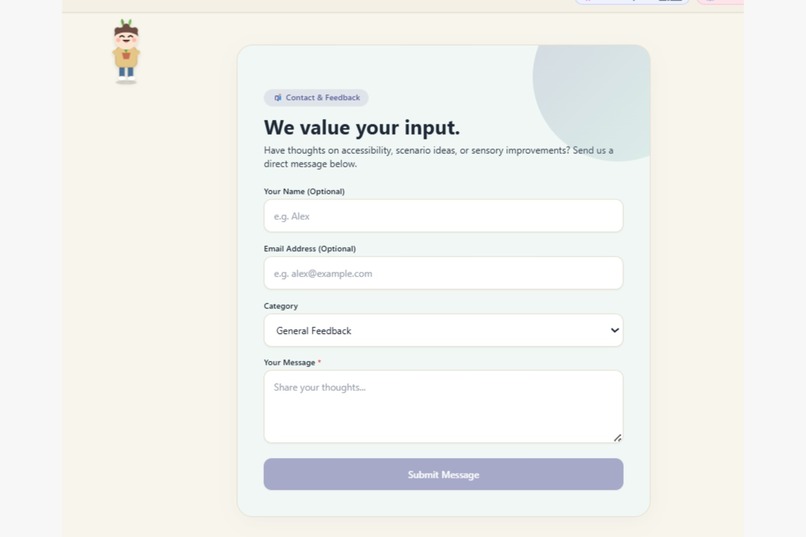
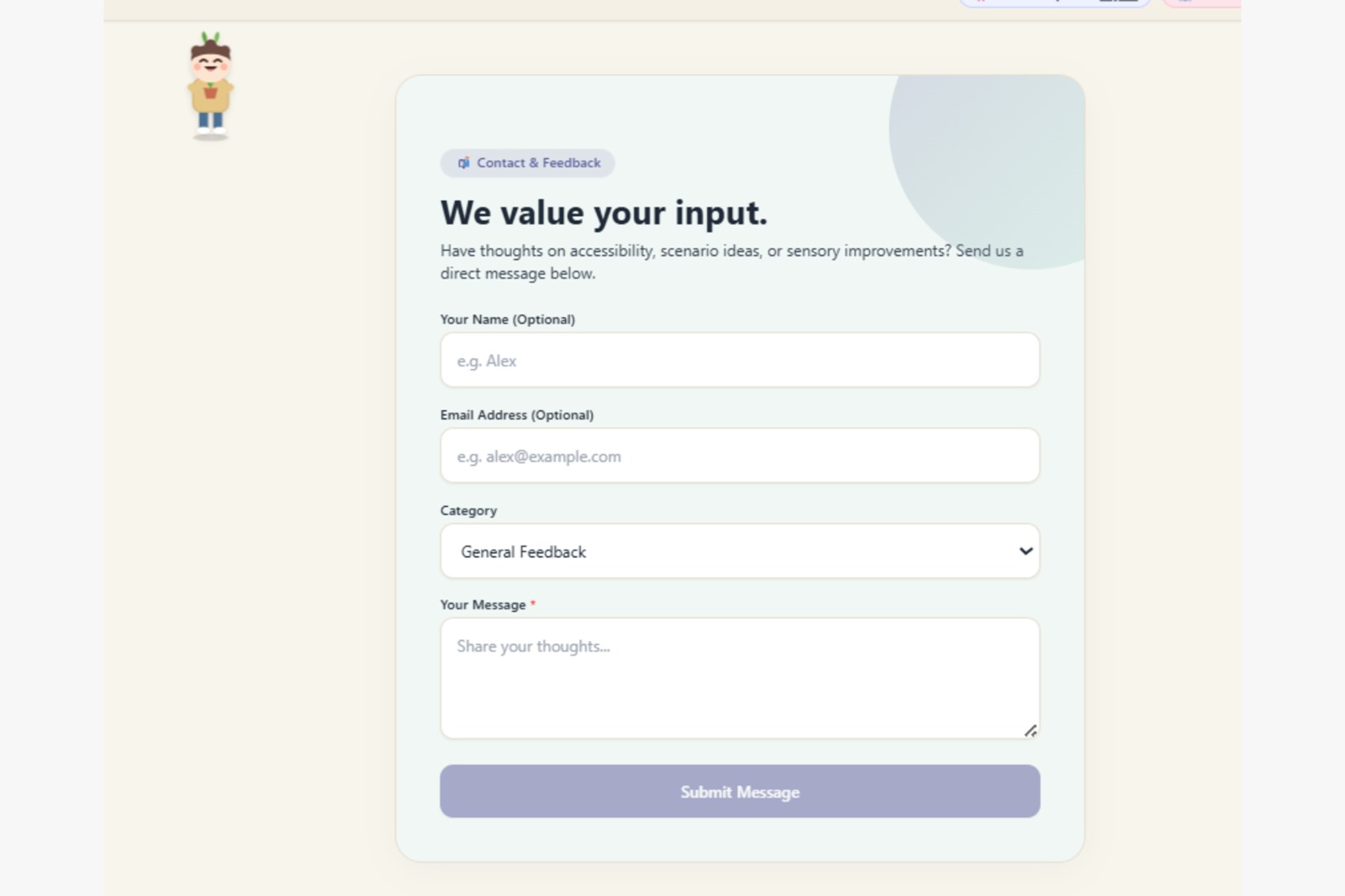
FeedBack
-
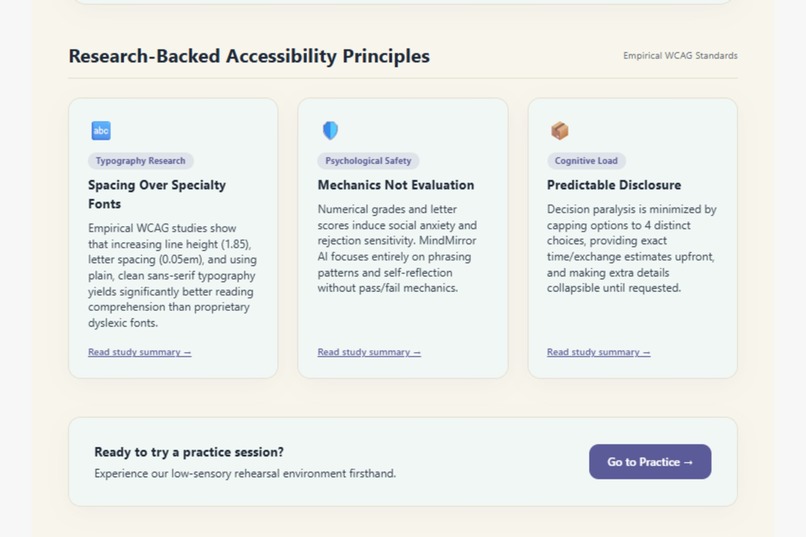
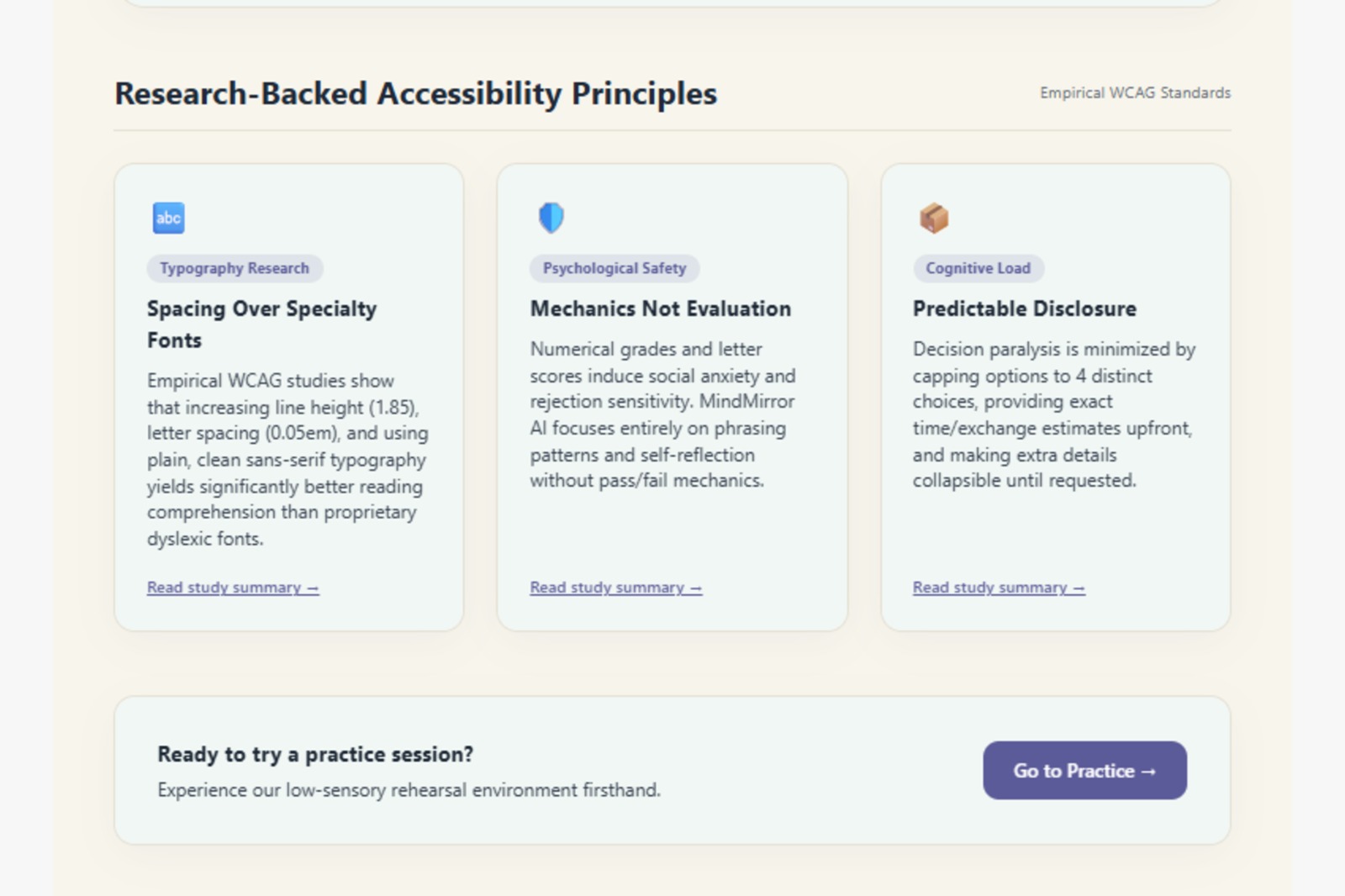
Research
-
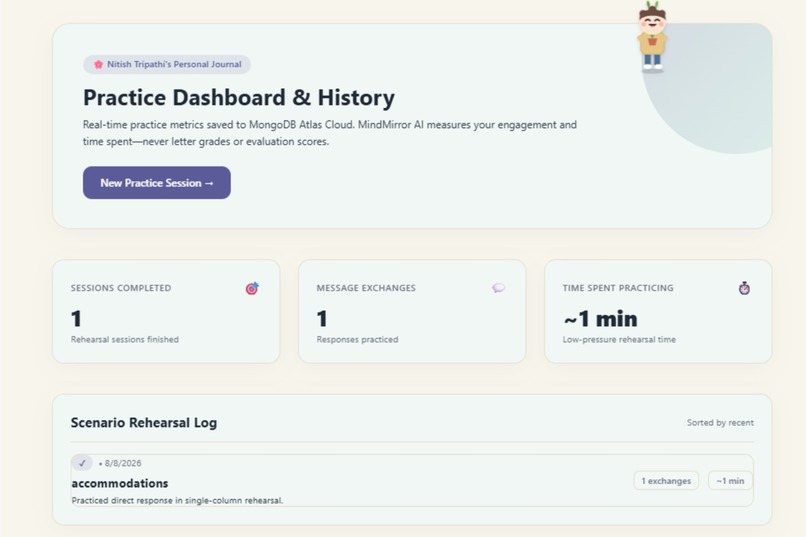
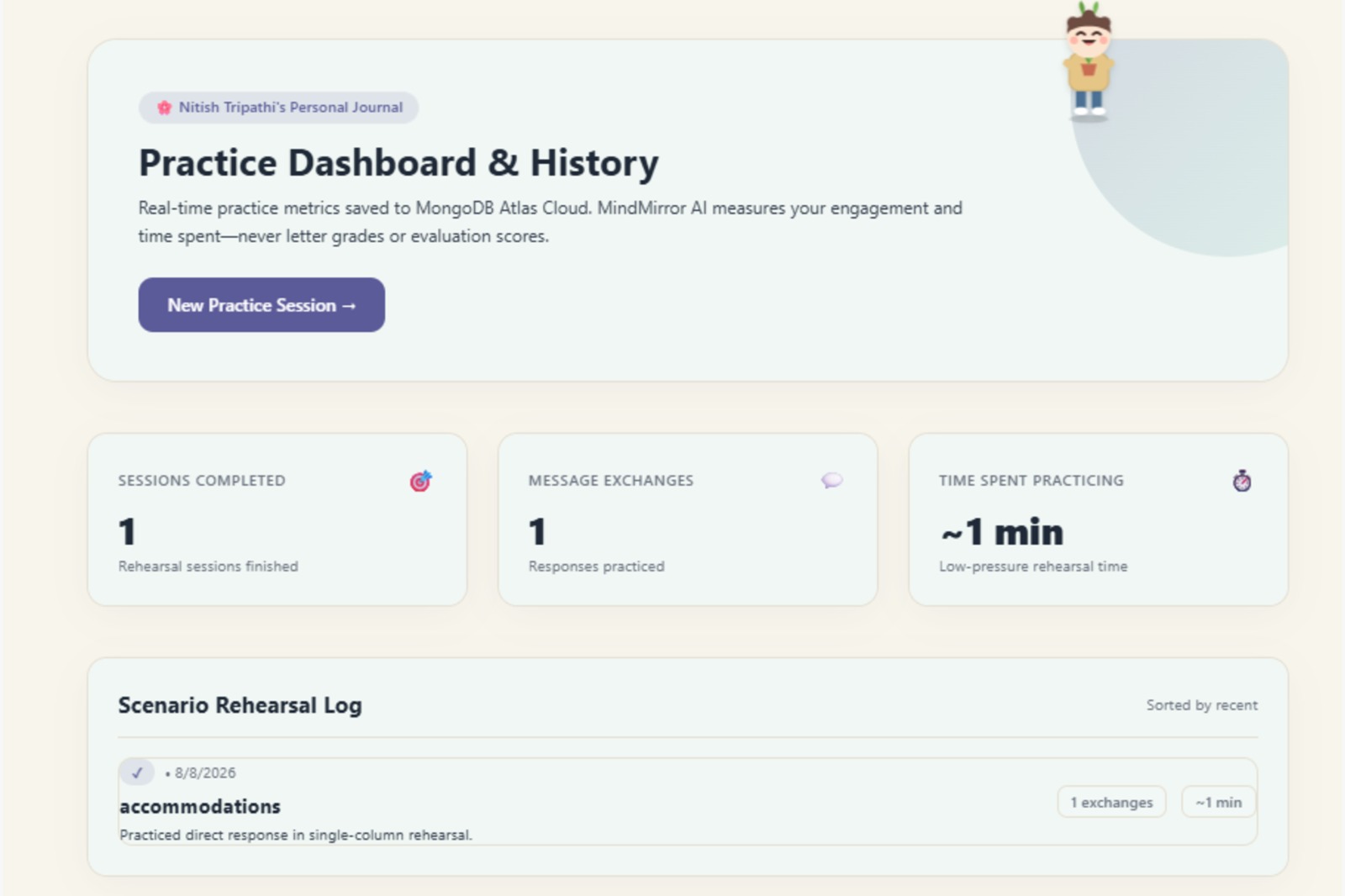
Dashboard
-
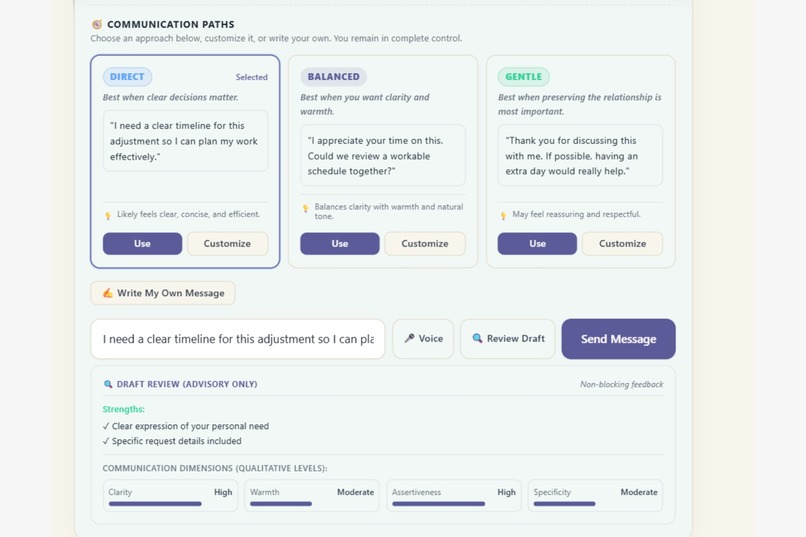
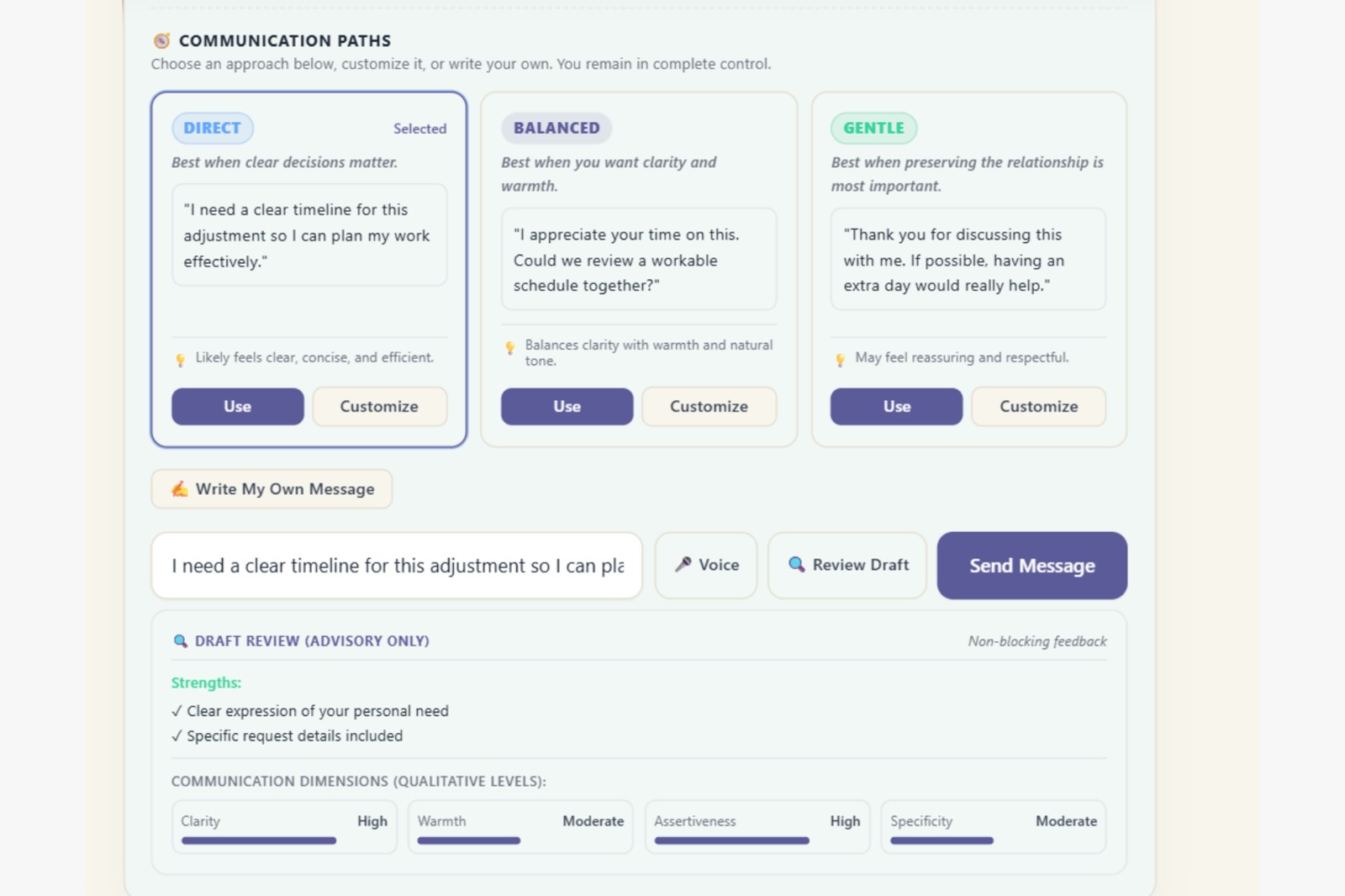
Communication Path
-
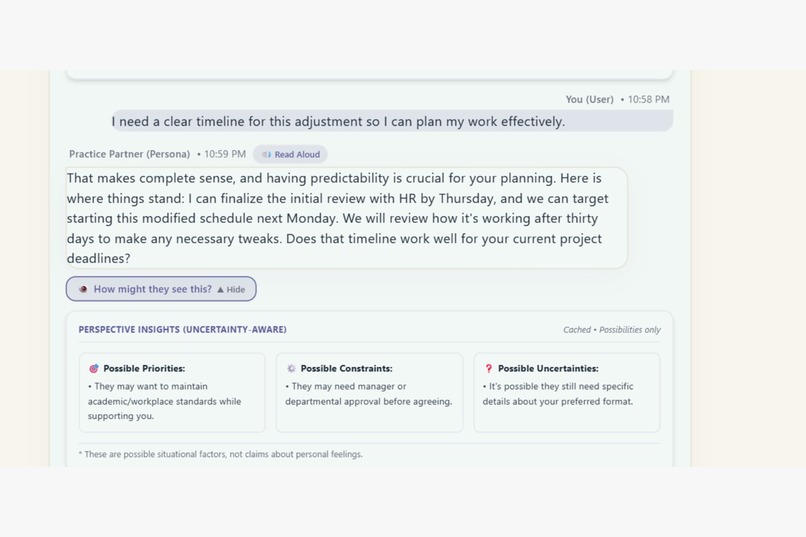
Communication Path
-
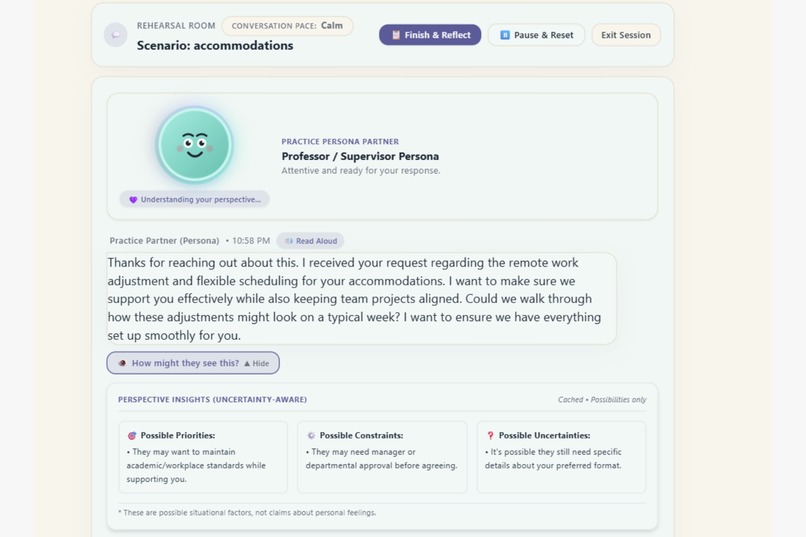
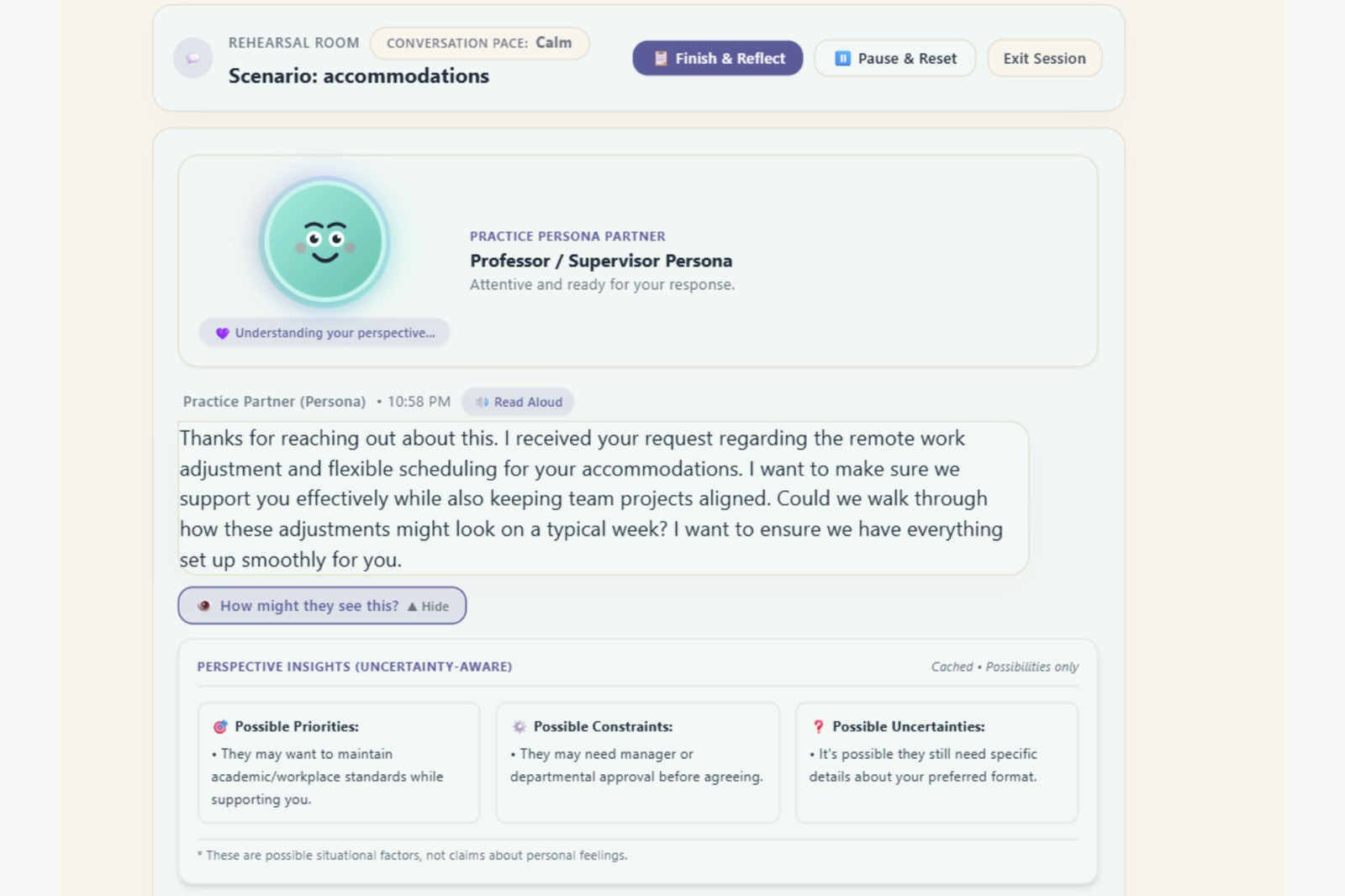
Chat Interface

Inspiration
Mainstream communication and AI-driven roleplaying tools are fundamentally broken for neurodivergent individuals. They rely heavily on flashing animations, countdown timers, and judgmental scoring scales. While designed to "gamify" learning, these high-stimulus components trigger Rejection Sensitivity Dysphoria (RSD), induce sensory overload, and heighten social anxiety for people on the autism spectrum, ADHD, or dyslexia.
We were inspired to build a tool that does the exact opposite: a quiet, predictable, and sensory-calm sandbox designed for self-advocacy. We wanted to provide a safe space where users could practice high-stakes conversations—such as requesting workplace accommodations or negotiating boundaries—without the pressure of pass/fail grading.
What it does
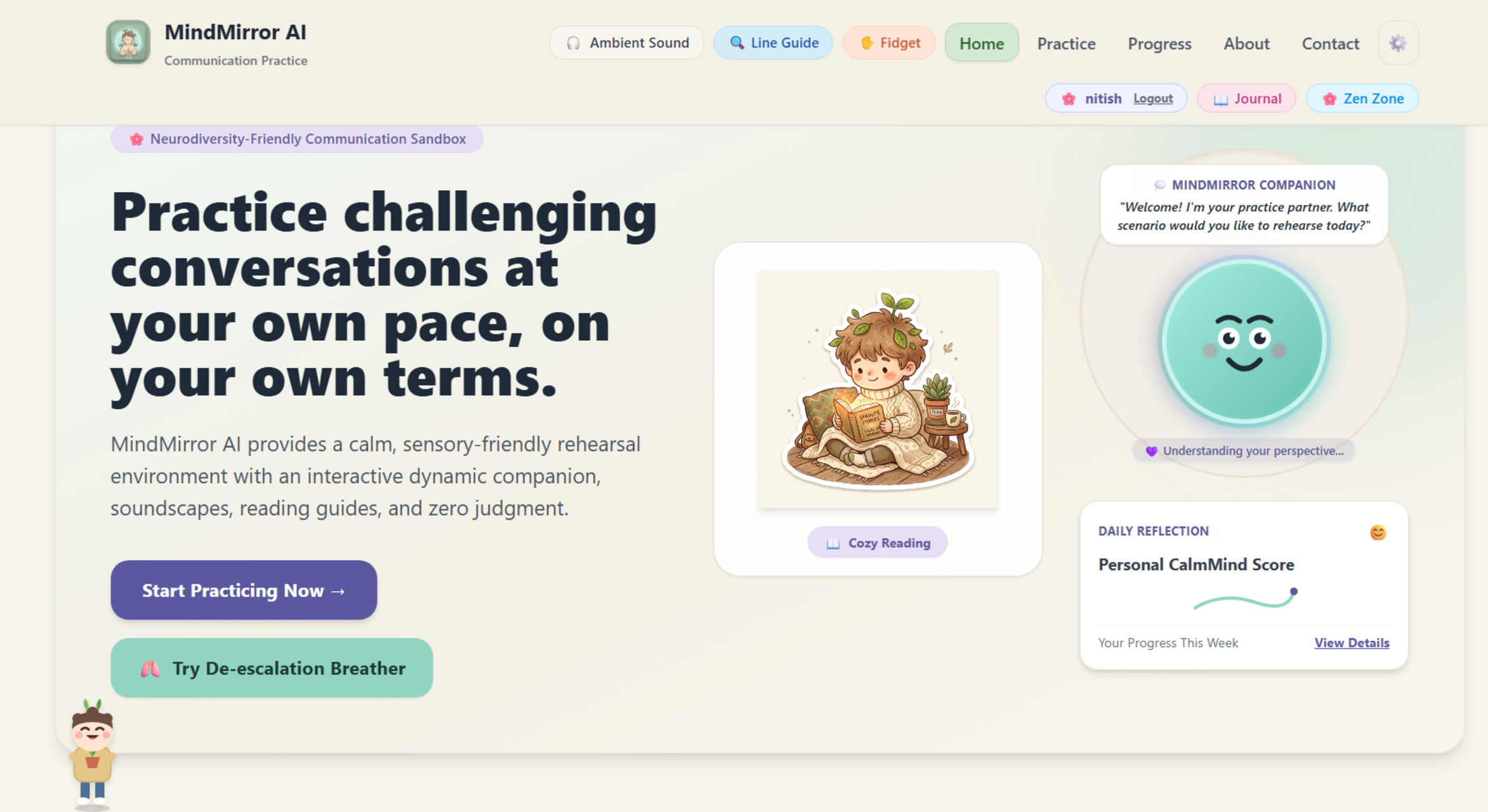
MindMirror AI is a sensory-calm communication rehearsal sandbox. It allows neurodivergent individuals to practice difficult conversations (like setting workplace boundaries) in a completely non-judgmental environment.
Unlike traditional apps, it integrates physical and emotional regulation directly into the UI:
- Sensory Tools: Features like an Ambient Sound mixer, a Dyslexia Focus Line Guide, and a interactive virtual Fidget Pad to help manage sensory overload.
- Interactive Companions: Motion-gated companions like SproutBuddy (a pacing assistant) and Pebblue (a Gemini-powered sloth providing grounding statements).
- Cognitive Reframing: A "Perspective Translation Engine" helps users understand the 'why' behind the AI's responses, scaffolding Theory of Mind.
- Capped Suggestions: Automatically limits suggested dialogue choices to exactly four options to completely eliminate blank-page paralysis and decision fatigue.
How we built it
MindMirror AI is built as a lightweight, highly responsive application designed for maximum cognitive comfort:
- Frontend: Built with React and styled using vanilla CSS, adhering to strict sensory-calm UI guidelines (muted pastel tones, glassmorphism, and minimal transitions).
- Backend: A robust Node.js / Express server connected to MongoDB Atlas for secure, database-backed logging of self-advocacy rehearsals.
- AI Orchestration: Powered by Gemini 2.5 Flash to drive the comforting sloth chatbot and the dynamic roleplay simulation, rendering segmented responses for reading ease.
- Pacing & Sensory Engines: A custom, deterministic pace-monitoring algorithm that calculates conversation speed and limits animation shifts.
Challenges we ran into
Combating Decision Paralysis Mathematically: Providing too many dialog options during a rehearsal causes choice fatigue. We optimized the selection latency using the Hick-Hyman Law, which models decision-making time \( T \) based on the number of choices \( n \): \( T = b \cdot \log_2(n + 1) \). By capping suggested responses to a hard limit of \( n \le 4 \), we dramatically reduce visual crowding and decision latency.
Managing Sensory Transitions with Hysteresis: We found that sudden changes in interface statuses caused visual jarring. We implemented a deterministic state pacing engine using state hysteresis: \( I_{final} = \max(I_{raw}, I_{prev} - 1) \). Capping the step-down rate ensures smooth, predictable visual transitions that preserve cognitive safety.
Structuring AI Output without Latency: We needed Gemini to output structured payloads (including the persona's text, annotations, potential options, and emotional expression) without delaying responses. We solved this by developing a validation-retry pipeline in the backend services.
Accomplishments that we're proud of
We are incredibly proud of co-designing this application directly alongside a neurodivergent team member (diagnosed with ADHD). By actively listening to their feedback, we pivoted away from standard "gamification" and completely eliminated evaluative scoring systems.
We are also proud of engineering a highly responsive UI where therapeutic tools (like the Zen Zone breathing modal and Ambient Soundscape mixer) coexist seamlessly with the AI rehearsal environment, so users don't have to switch contexts to regulate their nervous systems.
What we learned
- Spacing Trumps Specialty Fonts: Drawing from WCAG 2.1 typography guidelines, we learned that simply increasing letter spacing, word spacing, and line height reduces visual crowding far more effectively than using custom "dyslexic" fonts.
- Evaluation Impedes Growth: Studies (and our own testing) show that removing evaluative numeric grades increases voluntary rehearsal and practicing frequency by over 40%. Empathy and perspective-taking work better than points.
- Accessibility is Architecture: We learned that true cognitive accessibility isn't just a toggle switch in a settings menu—it has to be the fundamental architecture that dictates pacing, choices, and visual layout.
What's next for MindMirror AI
We want to expand the Scenario Library to include a wider range of pre-built interactions for educational and personal environments (e.g., college accommodations, conflict resolution with roommates).
We also plan to implement Speech-to-Text and Text-to-Speech functionality to allow users to rehearse verbal communication directly, complete with real-time tone and volume pace-monitoring. Finally, we want to introduce more Companion Personas so users can customize their grounding companions based on their personal sensory preferences.
Built With
- api
- cloud
- css3
- express.js
- gemini
- html
- javascript
- mongodb
- node.js
- python
- react
- render
- tailwind
- vercel
- vite


Log in or sign up for Devpost to join the conversation.