-
-
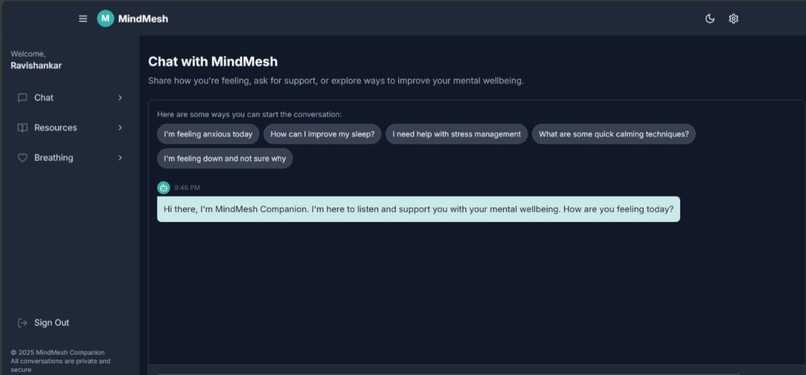
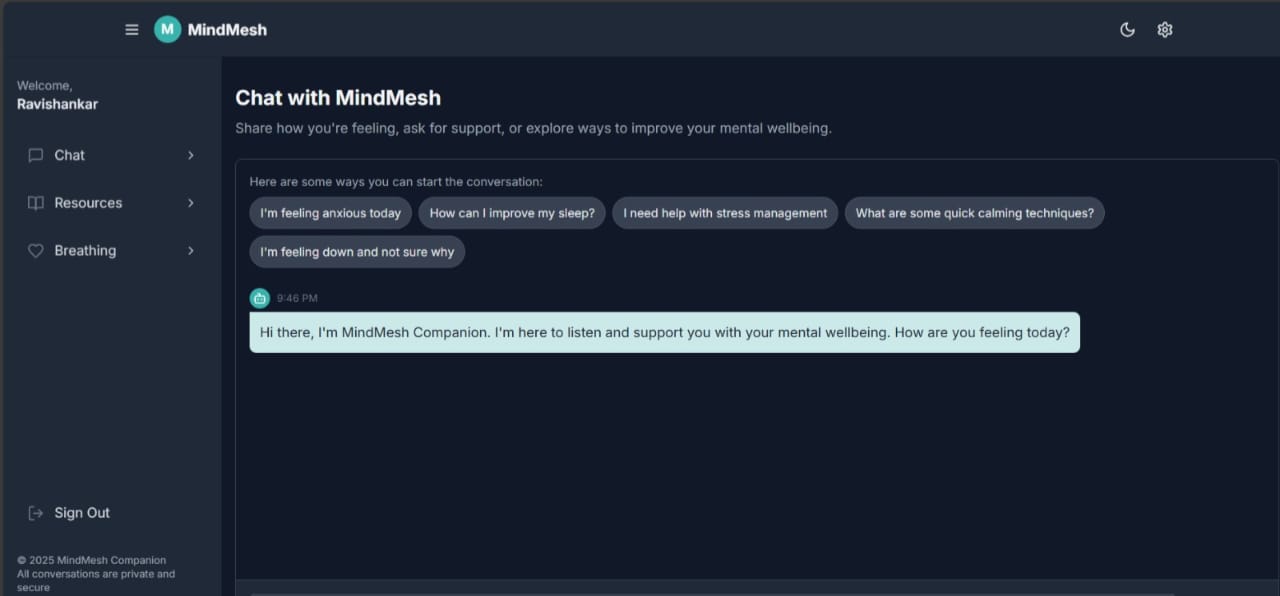
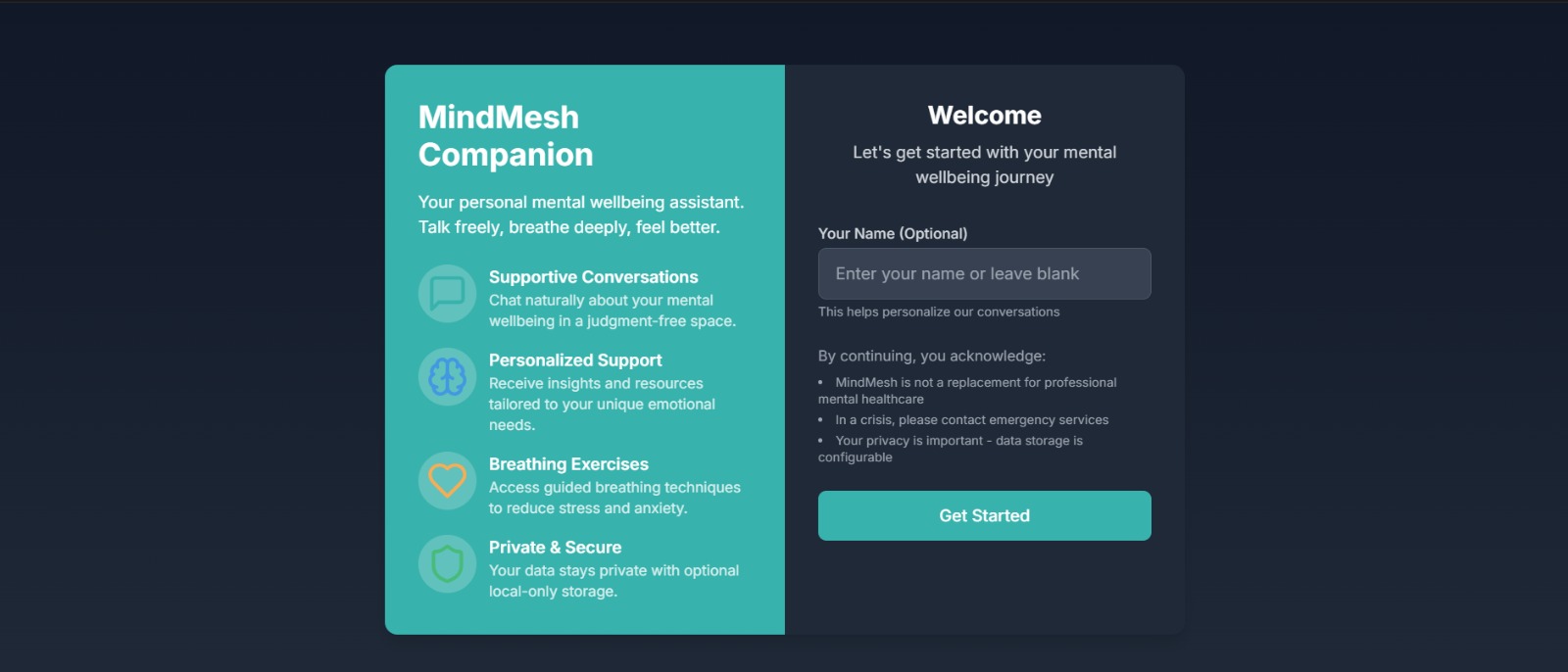
Home Page
-
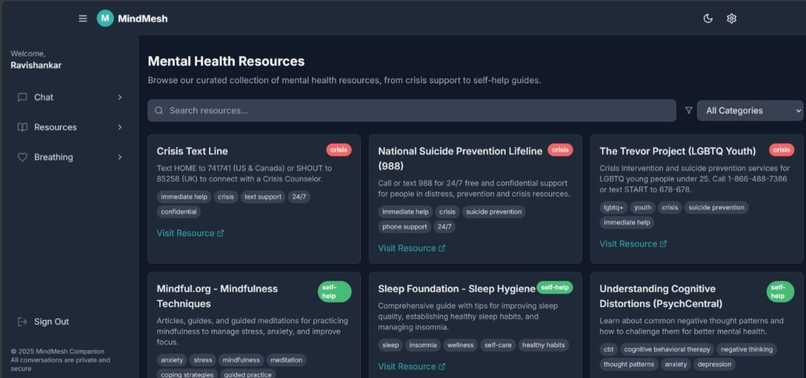
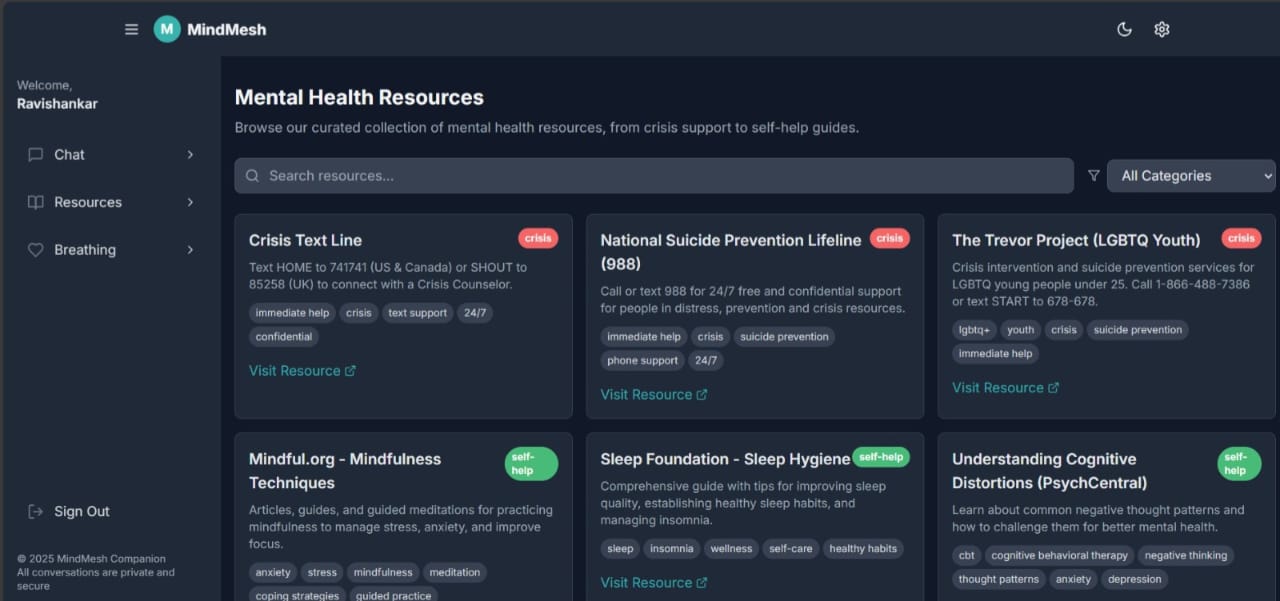
Resources
-
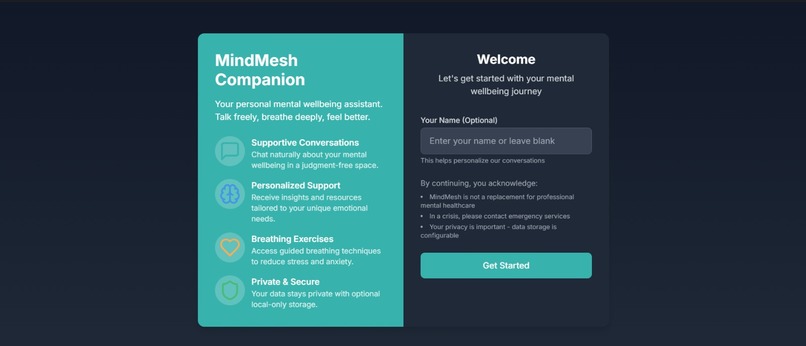
Main Page
-
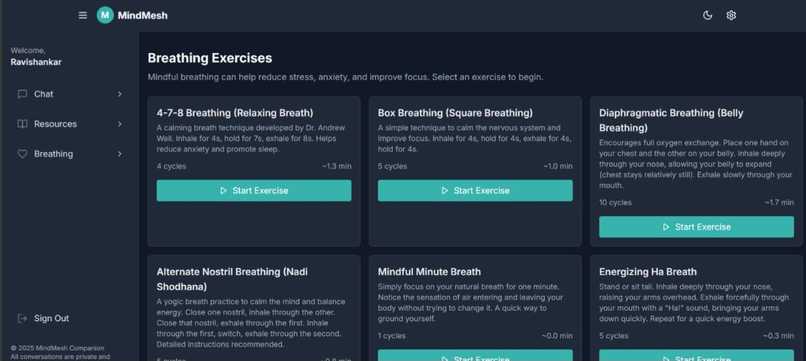
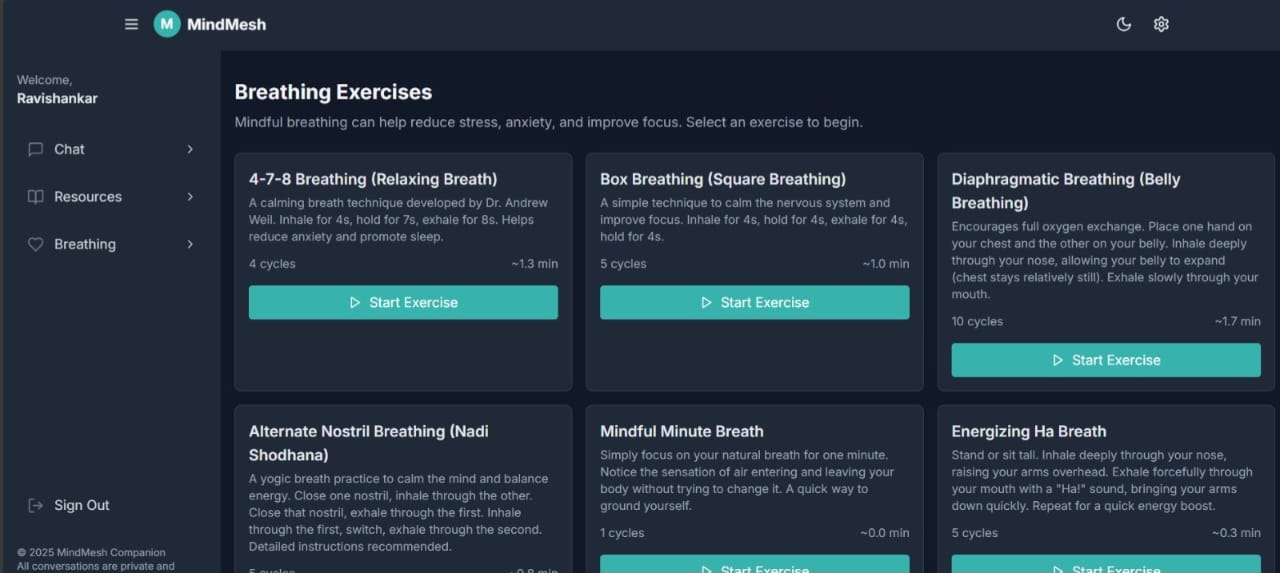
Breathing
Inspiration
MindMesh was sparked by the World’s Largest Hackathon presented by Bolt, which challenges developers to craft entirely new AI-powered experiences on Bolt.new and showcase them with a visible “Built with Bolt.new” I saw an opportunity to rethink online knowledge-sharing: instead of endless scrolling, users can build living “mind-maps,” receive emotionally-aware nudges, and grow together.
What it does • Lets anyone create a personal profile and drop thoughts —text, links, short voice notes—onto a canvas that organically clusters related ideas. • Runs multimodal sentiment analysis (text + optional voice tone) to detect mood and recommend uplifting or focus-boosting content. • Surfaces a daily, AI-curated feed and smart search so users discover insights that match their learning goals or current emotions. • Encourages collaboration via real-time board co-editing and inline reactions, all delivered over Bolt WebSockets. • Keeps mental-wellness front-and-center with guided breathing timers that pop up when frustration or stress is detected.
How we built it
Bootstrapped a brand-new workspace after the Submission Period opened to comply with “new projects only.” Front end: React + Tailwind on Bolt.new’s instant dev server; every page auto-injects . Back end: • Edge Functions for auth, vector search, and sentiment APIs. • Bolt KV stores embeddings (MiniLM) for notes and user preference vectors. AI layer: transformer embeddings + logistic head for text tone; on-device MFCC + tiny-CNN for voice valence.
Challenges we ran into • Latency—blending voice and text analysis in real time pushed us to quantize models and cache aggressively. • Vector storage limits—optimized KV schema and sharded indices by user cohort. • Time crunch—packing ideation, build, and polish into the May 30 → June 30 window meant ruthless scope cuts.4 • Ensuring equal excellence across all four judging pillars: Potential Impact, Idea Quality, Tech Implementation, and Design.
What we learned • Design matters: a calm palette and subtle micro-interactions dramatically improve perceived empathy. • Small models + smart caching beat heavyweight APIs for real-time UX on the edge. • Clear role assignment and daily retros keep a distributed team synced under hackathon pressure. • Early alignment with judging criteria prevents last-minute feature whiplash.
What’s next for MindMesh • Launch a plug-in marketplace so educators can drop in course-specific AI tutors. • Add spaced-repetition reminders tied to each mind-map node for deeper learning retention. • Integrate WebRTC voice chat so peers can co-brainstorm with sentiment-aware moderation. • Open-source our sentiment-fusion pipeline under Apache-2.0 to qualify for future bonus prizes and support the community.
Built With
- boldedgefunctions
- bolt.new
- react
- supabase
- tailwind
- typescript

Log in or sign up for Devpost to join the conversation.