-
-
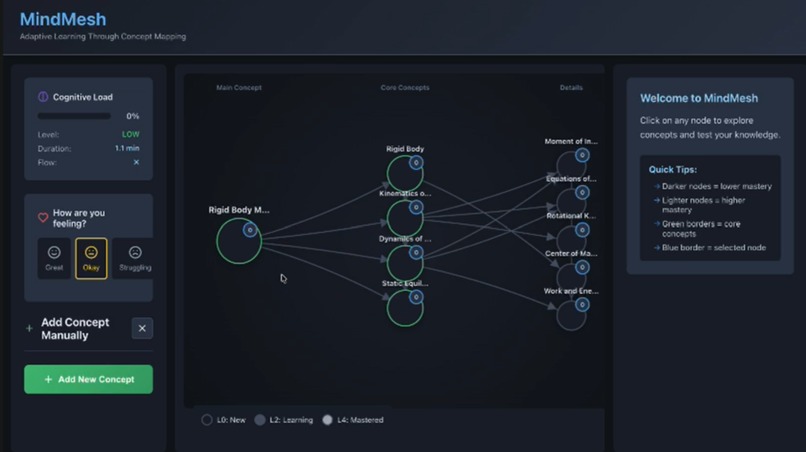
Main Hub
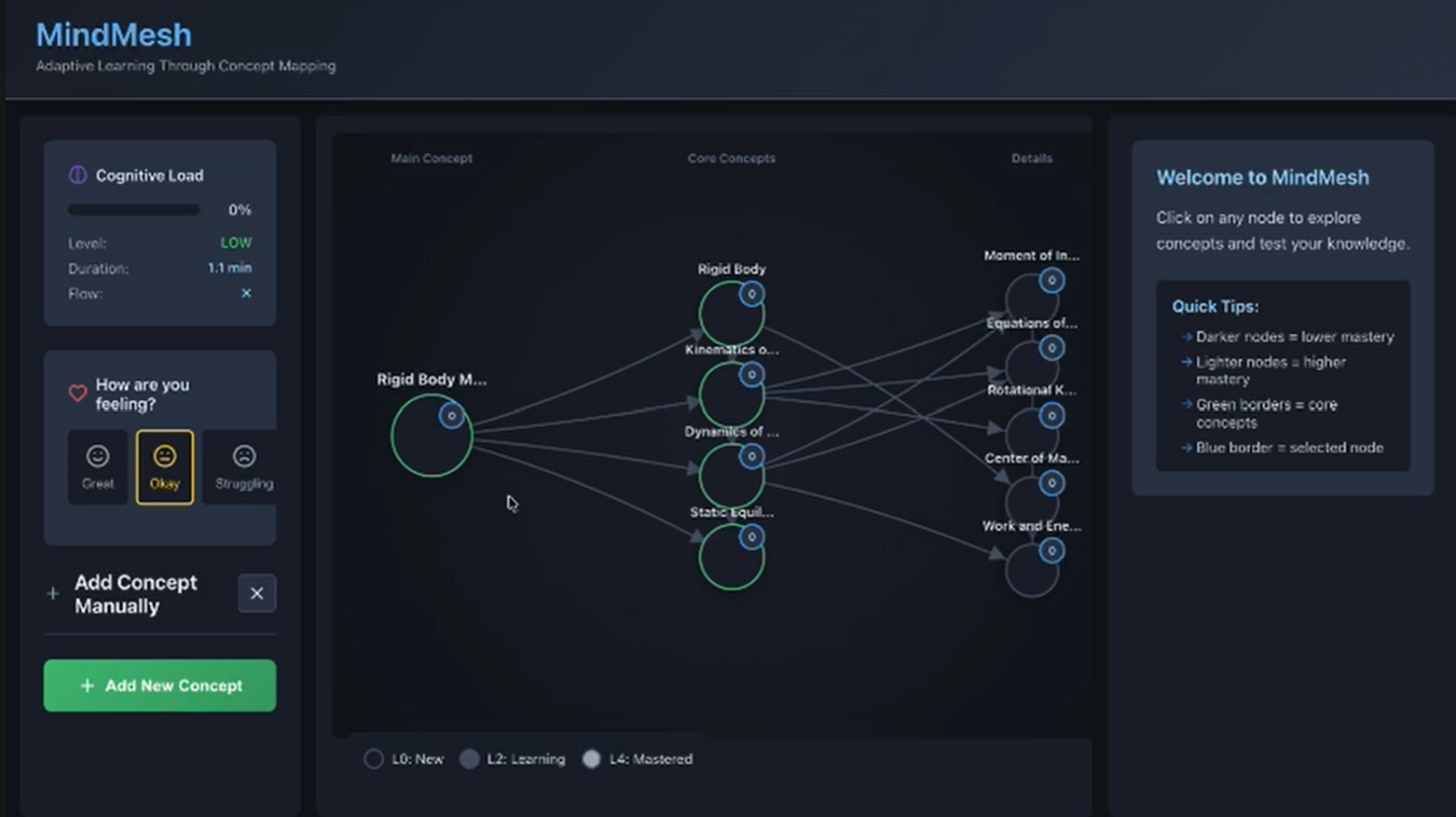
Inspiration
Our inspiration for MindMesh came from our own frustration while studying for exams. We often had plenty of learning resources, but they were scattered and poorly organized. Even when we understood individual concepts, connecting them into a clear structure was difficult. We wanted to build something that could organize knowledge visually and intelligently, making studying less stressful and more efficient.
What it does
MindMesh is an intelligent, client-side learning platform that turns any study topic into an interactive concept map using Azure GPT-4o-mini. It helps learners visualize relationships between concepts, test their understanding through adaptive quizzes, and retain information using spaced repetition. It also tracks cognitive load and emotional state to promote balanced, effective learning.
How we built it
We built MindMesh using React for the front-end and D3.js for visualizing concept graphs. The AI backbone uses Azure OpenAI’s GPT-4o-mini for extracting key concepts and generating adaptive quizzes. Everything runs on the client side, with local storage handling data persistence and privacy. We also included a manual mode, so users can create concept maps from scratch, perfect for organizing existing notes. Throughout development, we used tools like Claude, online documentation, and open-source resources to speed up prototyping and fine-tuning.
Challenges we ran into
Our biggest challenge was time. We had ambitious ideas, adaptive learning, spaced repetition, cognitive load tracking, but limited hours during the hackathon. Integrating multiple systems efficiently while keeping the design lightweight and privacy-focused pushed us to plan carefully and work collaboratively.
Accomplishments that we're proud of
We’re proud that MindMesh works entirely offline and locally, maintaining user privacy while still offering intelligent features. Creating a full adaptive learning experience, from concept mapping to emotion-based quiz adjustments, within a short timeframe was a huge milestone. We’re also proud of how visually clean and intuitive the interface turned out, making complex learning feel simple.
What we learned
We learned how to make the most of limited time and resources, how to divide work effectively, and how to integrate multiple technologies seamlessly. We also deepened our understanding of AI prompt optimization, user experience design, and learning science concepts like spaced repetition and cognitive load theory. Most importantly, we learned the power of teamwork and persistence under pressure.
What's next for MindMesh
Next, we plan to introduce multi-user collaboration, allowing classmates to share and build concept maps together. We also want to develop a mobile app and add cloud sync so progress can be accessed across devices. In the long term, we aim to integrate curriculum templates, voice-based interaction, and learning analytics dashboards to personalize education even further.
MindMesh started as a solution for our own struggles, but we hope it becomes a tool that transforms how students everywhere learn and connect ideas.
Built With
- azure-openai
- claude.ai
- d3.js
- javascript
- react


Log in or sign up for Devpost to join the conversation.