-
-
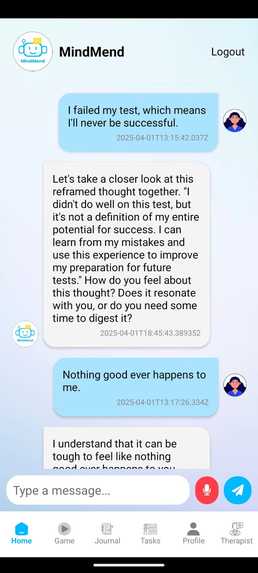
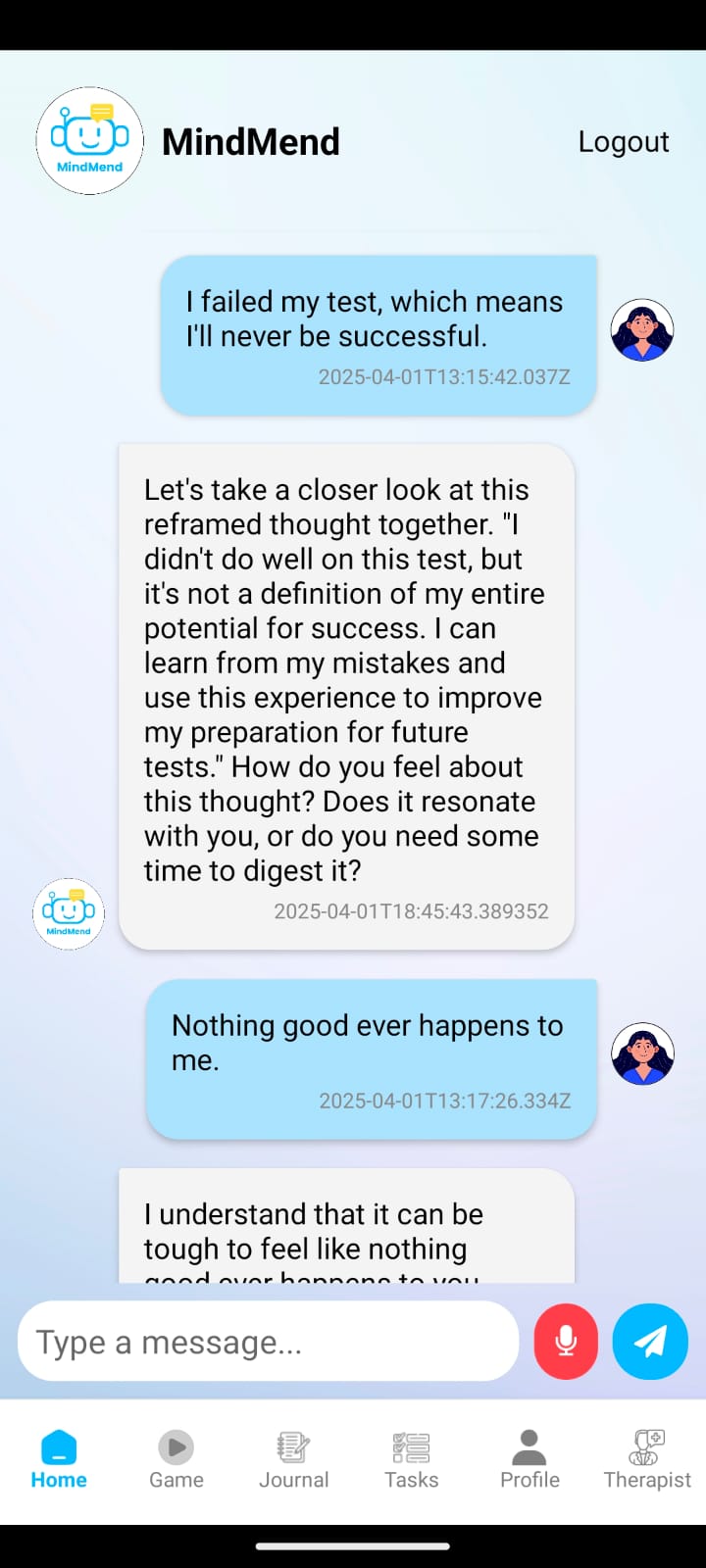
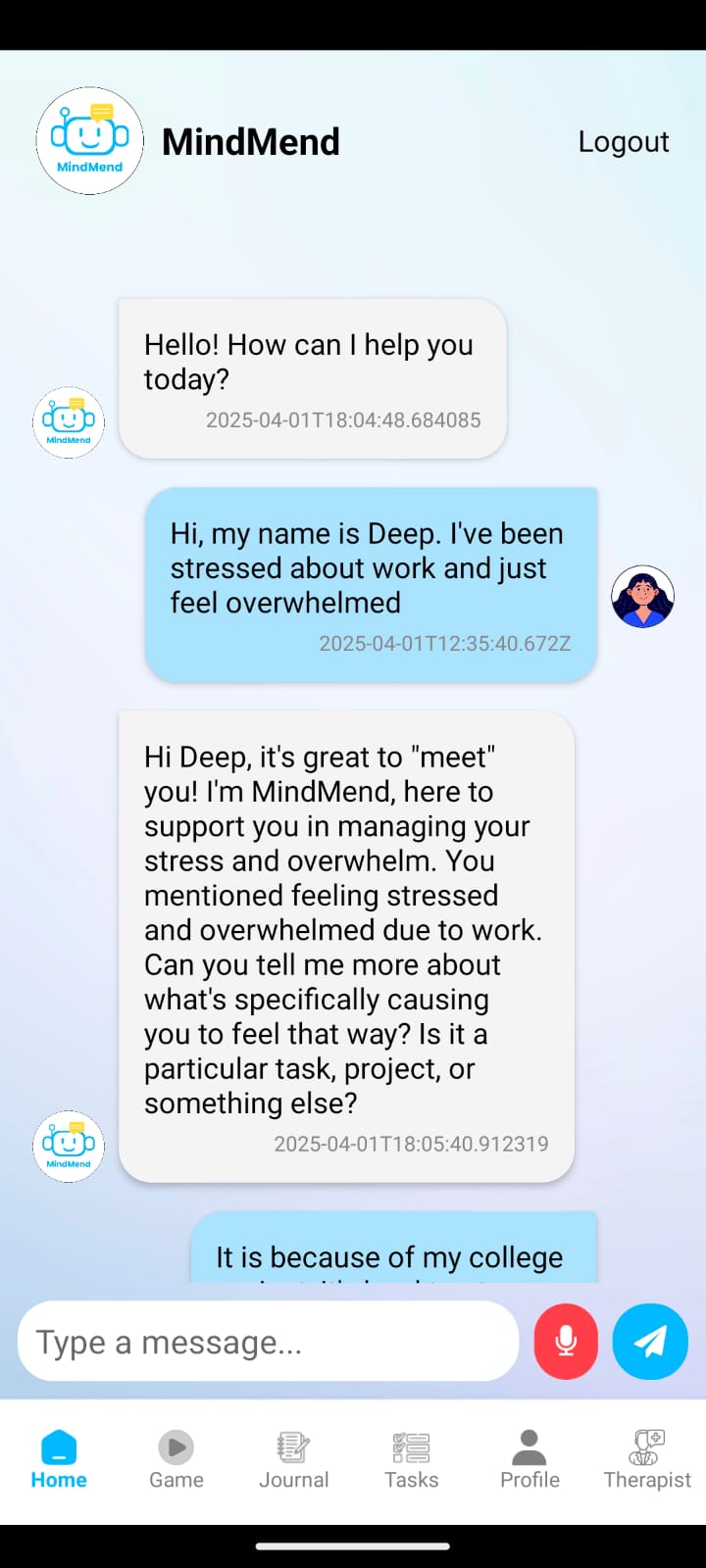
Chatbot Screen - Users can engage in therapeutic conversations with the chatbot
-
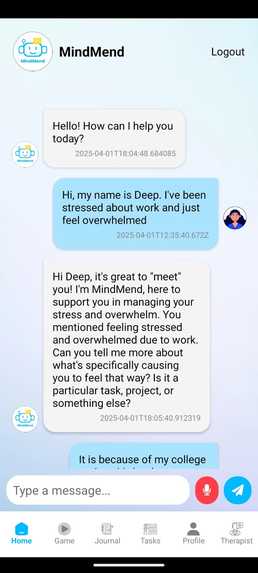
Chatbot gives therapeutic response and identifies distortions in users thinking patterns
-
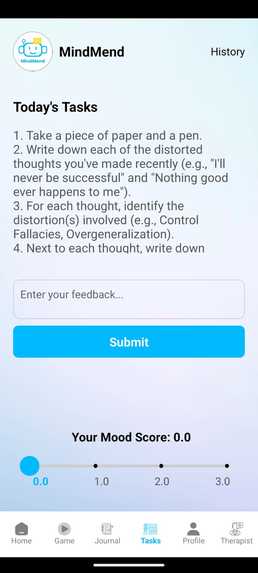
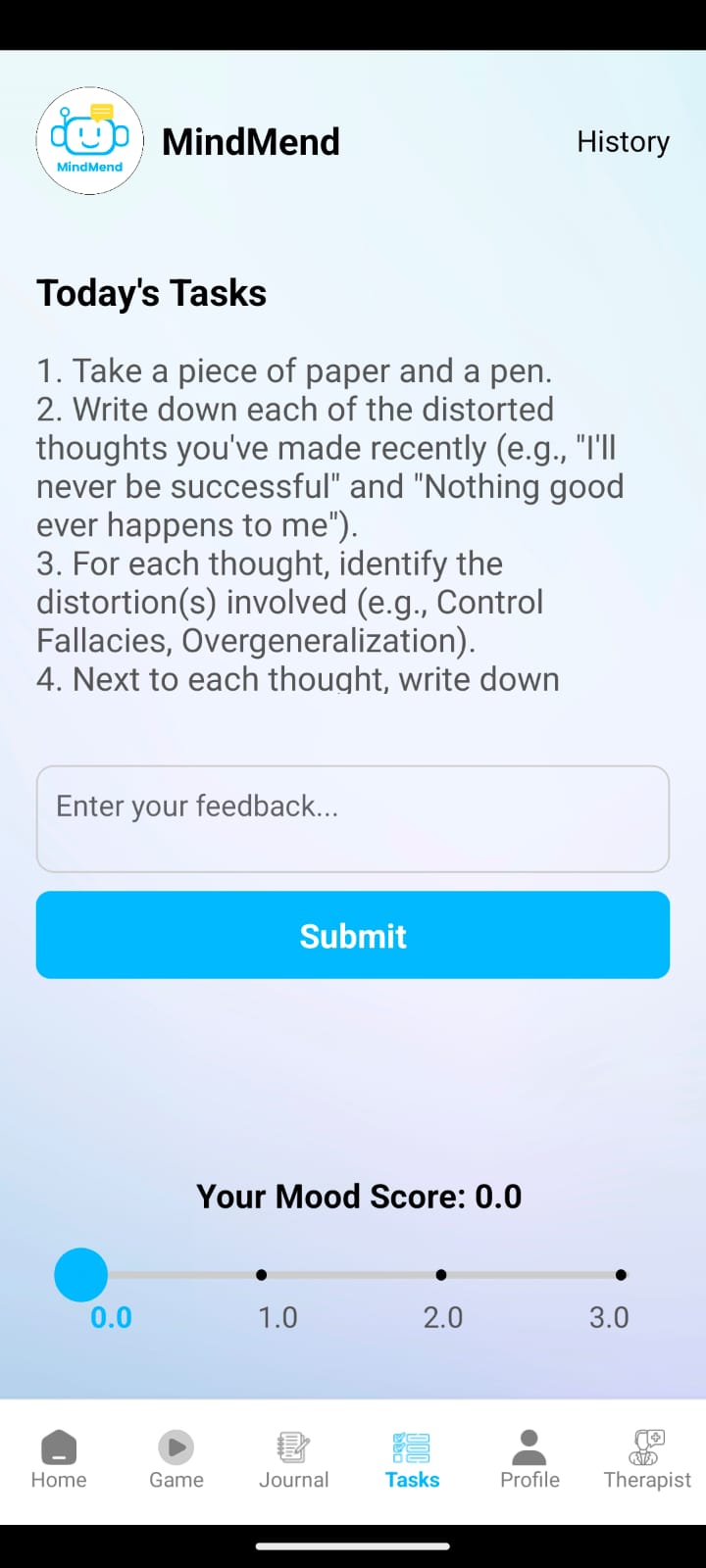
Personalized tasks for each user based on their history is generated
-
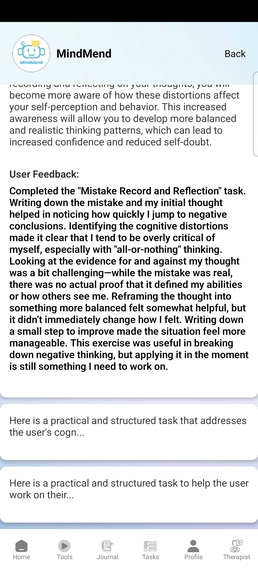
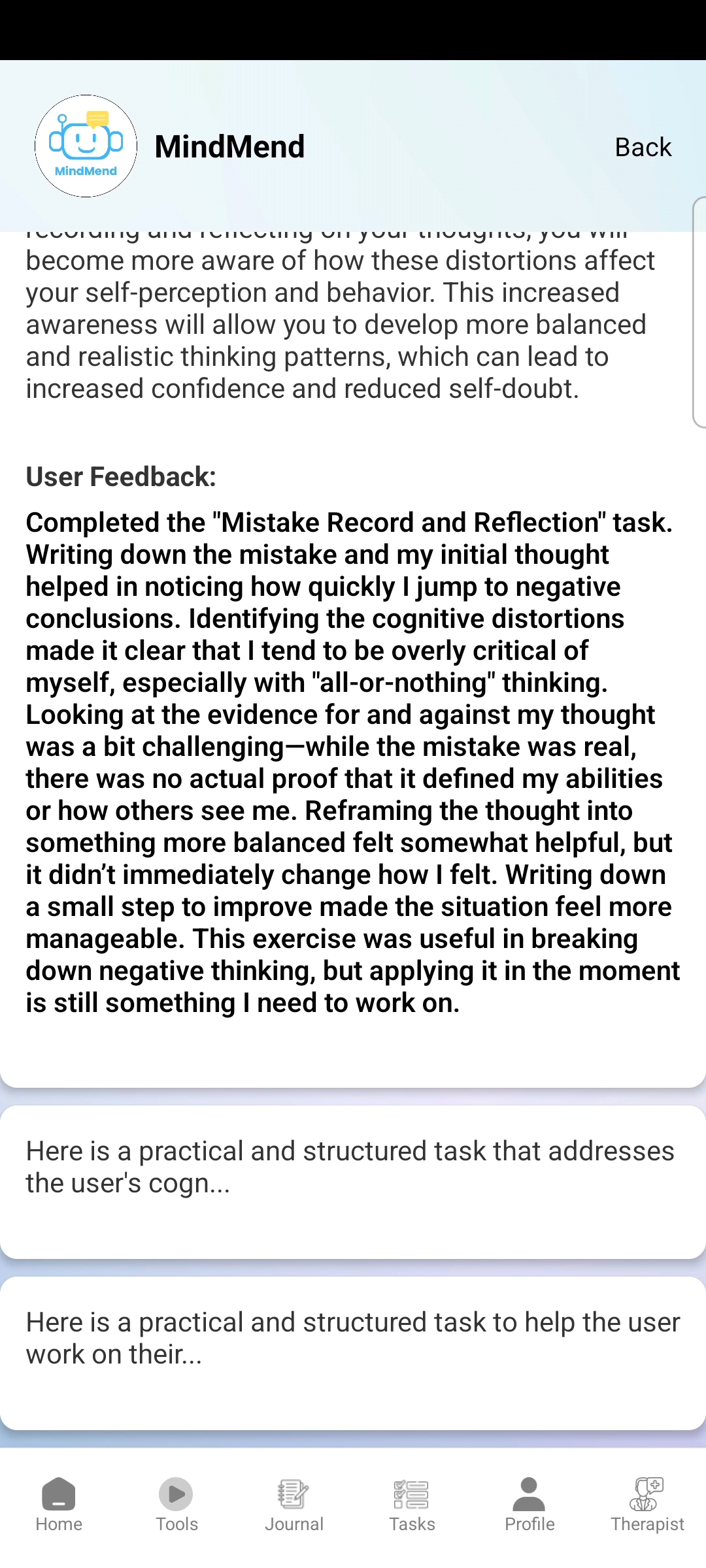
Previously assigned tasks are stored for future reference
-
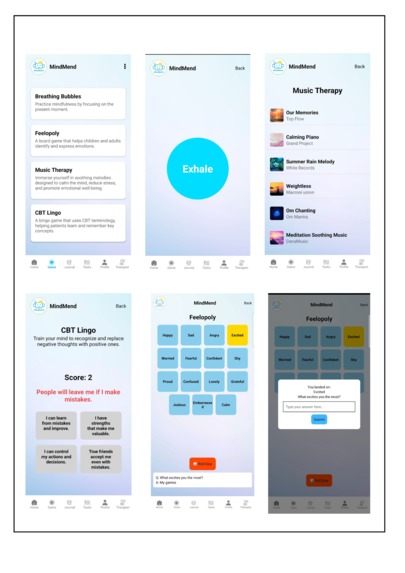
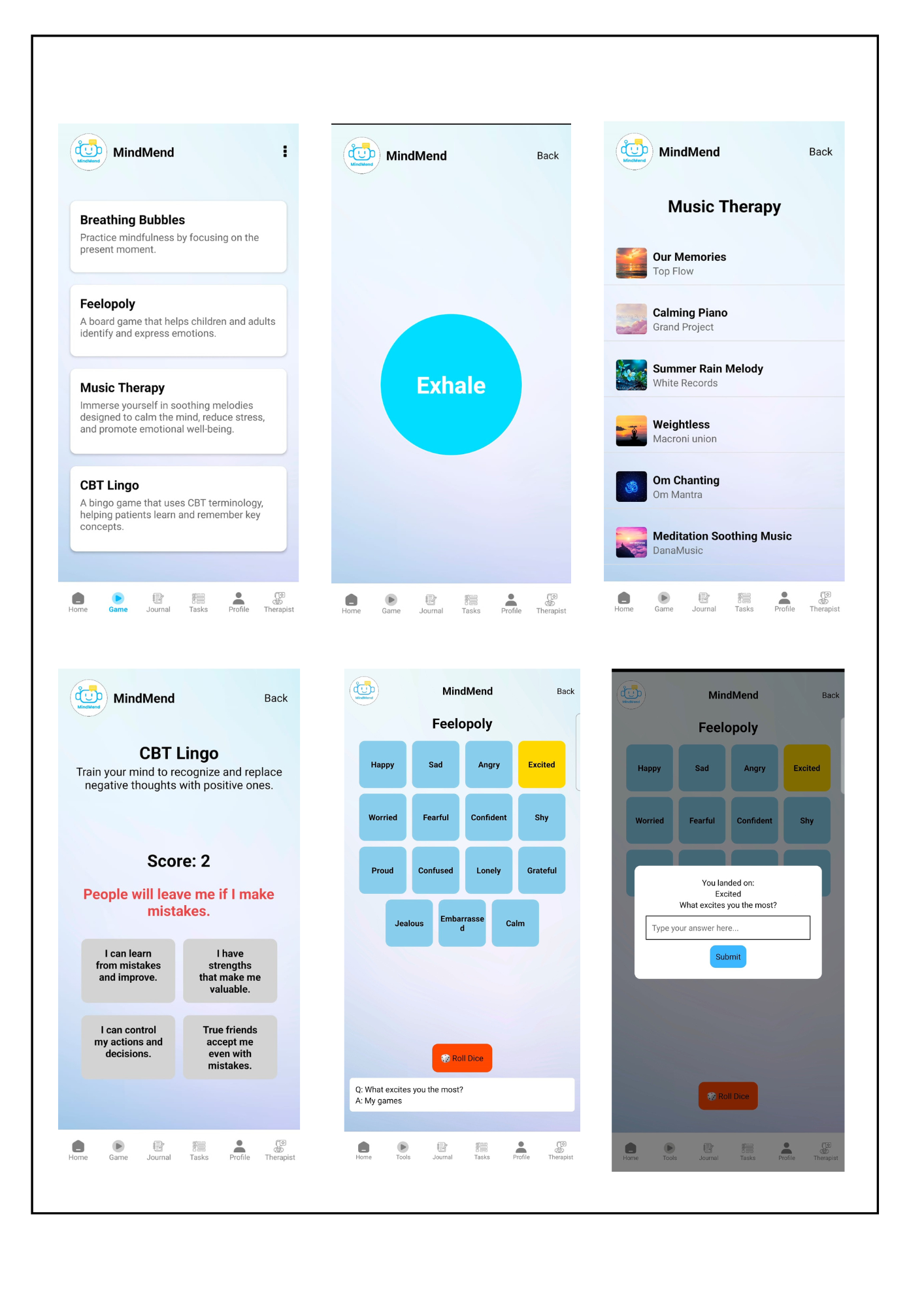
Interactive tools to make the therapy journey more engaging
-
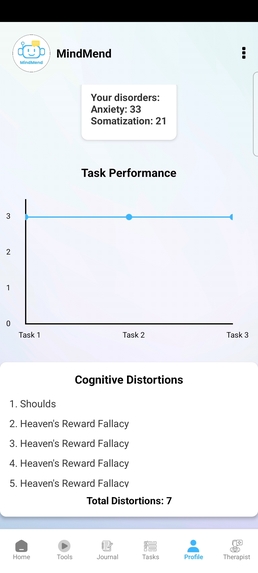
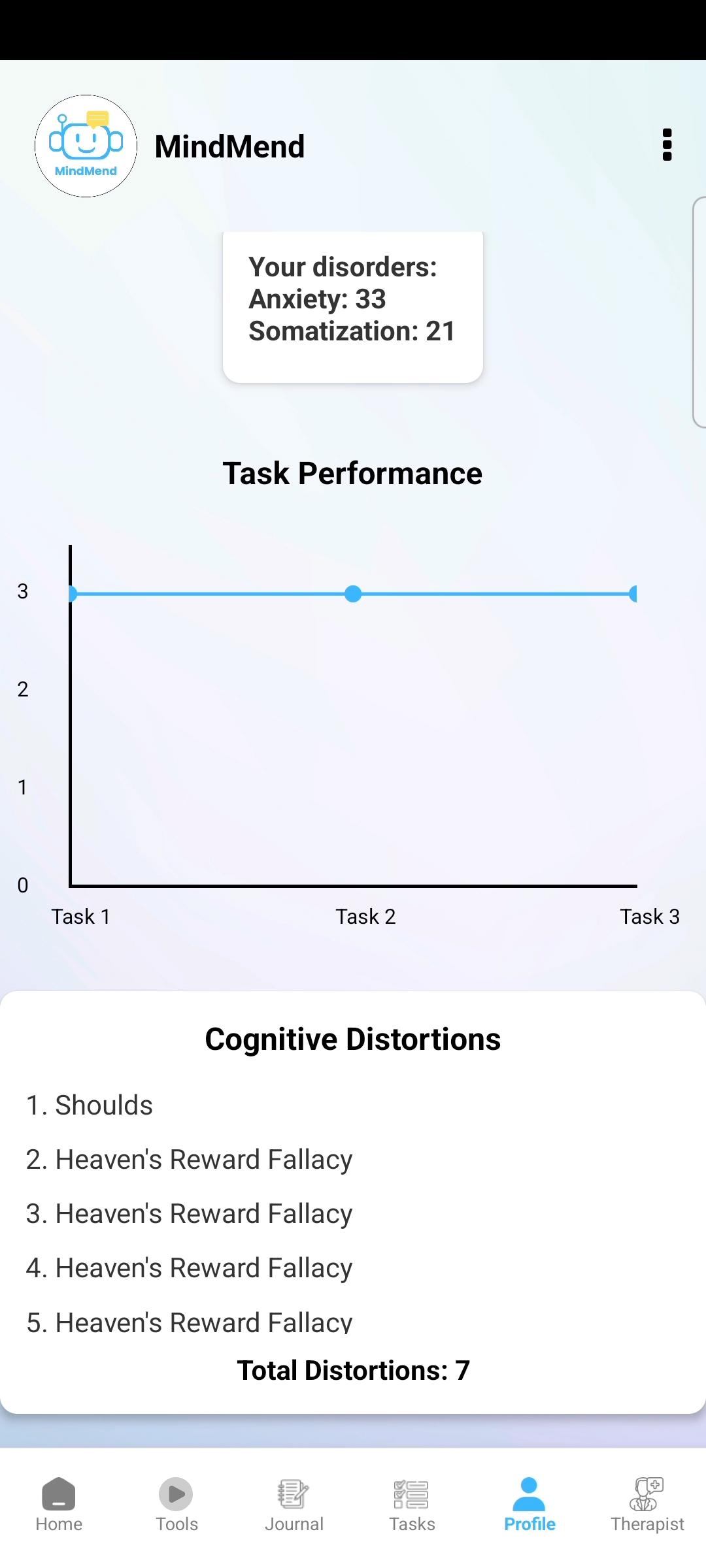
Profile Screen - User details and progress tracking is done here
Inspiration
With rising awareness around mental health, the urgency to address it has never been greater. At the same time, mental health challenges—ranging from depression and anxiety to academic stress and emotional burnout—are steadily increasing, especially among young people. Despite growing conversations, access to timely and effective support remains limited for many. This growing gap between awareness and action inspired us to explore meaningful, accessible solutions to support mental well-being in a more connected and responsive way.
What it does
MindMend is an intelligent mental health companion that actively engages in conversations with users to understand their emotional patterns, learn individual traits, and detect cognitive distortions. It goes beyond surface-level support by teaching users how to shift negative thought patterns through cognitive restructuring, empowering them to develop healthier perspectives. Based on each user's history and ongoing interactions, MindMend assigns personalized therapeutic tasks, collects feedback, and securely stores this information to refine future support. The platform also offers a suite of interactive tools including journaling, music therapy, mental health games, a guided meditation library, the Beck Depression Inventory test, and a therapist connect feature. To ensure users stay on track, MindMend includes progress tracking tools that visualize mental health trends and highlight personal growth over time. By combining evidence-based CBT techniques with continuous feedback and immersive experiences, MindMend bridges the gap between therapy sessions and supports users in achieving consistent, meaningful mental wellness.
How we built it
We built MindMend by integrating several advanced AI models and components into a seamless pipeline for continuous mental health support. The system starts with a React Native-based interface where users input their details and interact with the chatbot. These interactions, along with user information, are stored in a central database, which also holds a history of all previous conversations. To provide context-aware responses, we use Mistral to summarize past conversations and feed them to the AI Chatbot. The chatbot acts as the first point of communication, engaging with the user and forwarding responses to the next components. For detecting cognitive distortions, we employ a BERT-based model that analyzes the conversation for distorted thinking patterns. These distortions are stored in an array within the database for historical tracking and personalized insights. Once distortions are identified, LLaMA 3 is used for task generation, crafting personalized CBT tasks tailored to the user’s cognitive patterns. The user then completes these tasks and provides feedback, which is again analyzed by BERT for summarization and sentiment analysis. This feedback loop ensures that the system continuously learns about the user's emotional and cognitive traits, refining its support over time. All of this allows MindMend to deliver a dynamic, personalized, and therapeutically effective experience that bridges the gap between traditional therapy sessions.
Challenges we ran into
While building MindMend, one of our biggest challenges was navigating the sensitivity of mental health as a domain. It required extensive research to understand therapeutic methodologies like CBT and how they could be responsibly translated into an AI-driven system. Choosing the right models was crucial — we had to ensure they were accurate, safe, and ethically aligned with the needs of vulnerable users. Balancing personalized interaction with data privacy, and building each component with precision to avoid misinformation or misguidance was both technically demanding and deeply important to us.
