Inspiration
Mental health among students is a rising concern, especially with increased academic pressure and isolation. I wanted to create a simple, accessible tool that feels like talking to a supportive friend — not a cold chatbot.
What it does
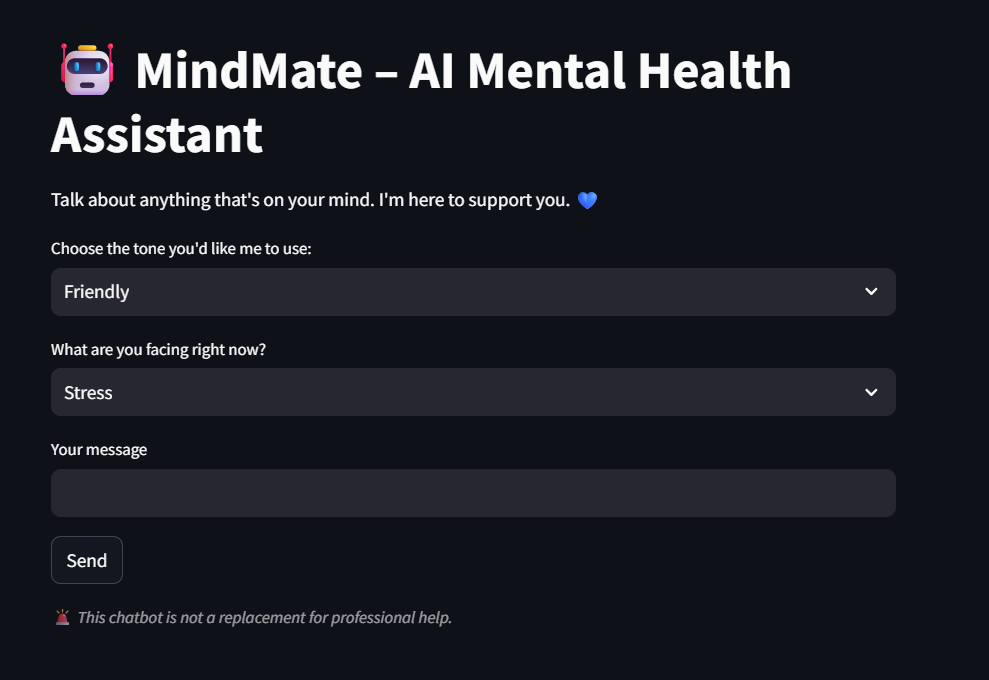
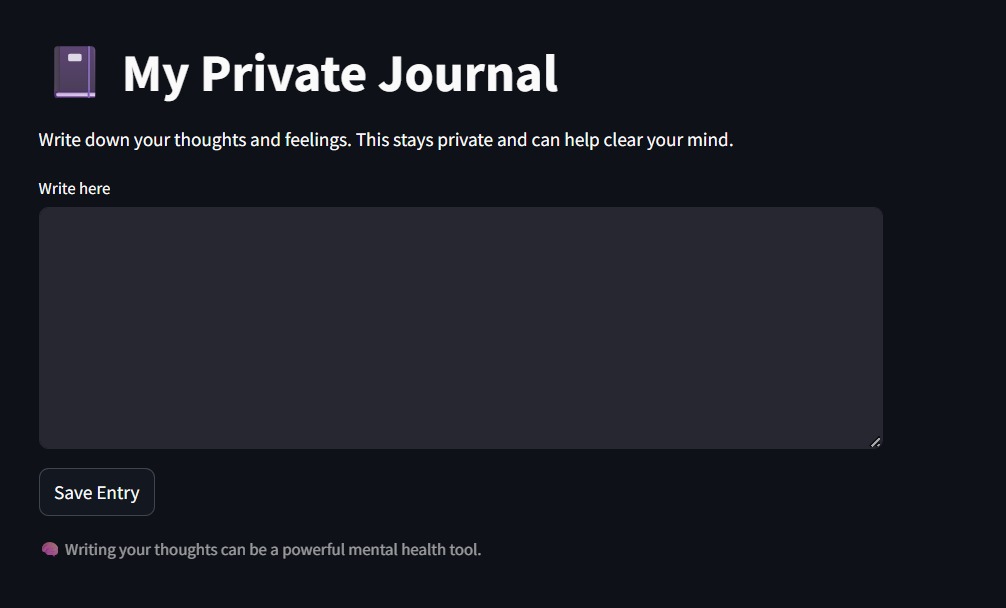
• 🤖 Offers AI-powered mental health chat for teens • 🧩 Users select tone (Friendly, Motivational, Supportive) • 📚 Topic selector (Stress, Anxiety, Exam Pressure, etc.) • ⚠️ Filters unsafe/harmful messages with proper warning • 📓 Journaling feature to express thoughts privately • 🪧 Disclaimer included for responsible AI usage
How we built it
• Frontend/UI: Streamlit • AI Model: Groq’s hosted LLaMA 3 (via OpenAI-compatible API) • Language: Python
Challenges we ran into
• Designing AI prompts to feel supportive without being clinical • Making safety a priority while keeping the UX friendly • Completing everything solo within the hackathon deadline
Accomplishments that we're proud of
• Built a fully functional AI chatbot for youth mental health support in under 24 hours. • Integrated a journal feature to help users reflect and track their wellbeing over time. • Added safety triggers that recognize crisis keywords and show appropriate disclaimers. • Designed an intuitive, clean UI with Streamlit to ensure accessibility.
What we learned
• How to use LLM APIs securely and responsibly in public-facing apps. • Techniques for prompt engineering to tailor chatbot responses to sensitive topics. • Best practices in rapid prototyping and deploying AI-powered web apps. • The importance of designing digital tools that are safe, inclusive, and empathetic.
What's next for MindMate
• Add emotion detection for more personalized replies • Multilingual support for non-English-speaking students • Optional anonymous peer support forum

Log in or sign up for Devpost to join the conversation.