-
-
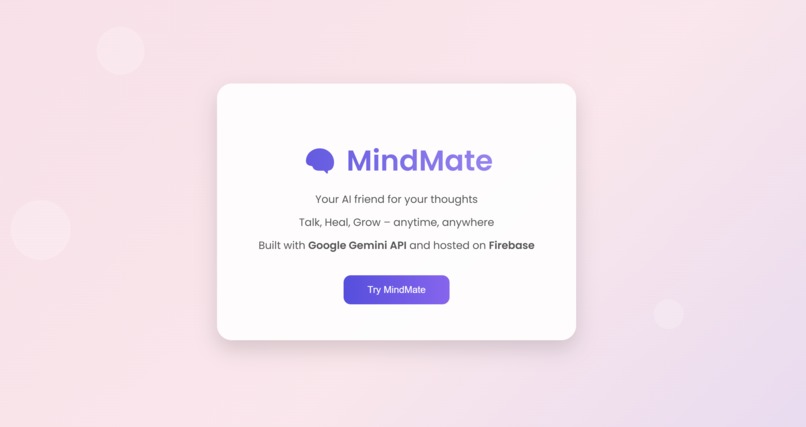
The Landing Page
-
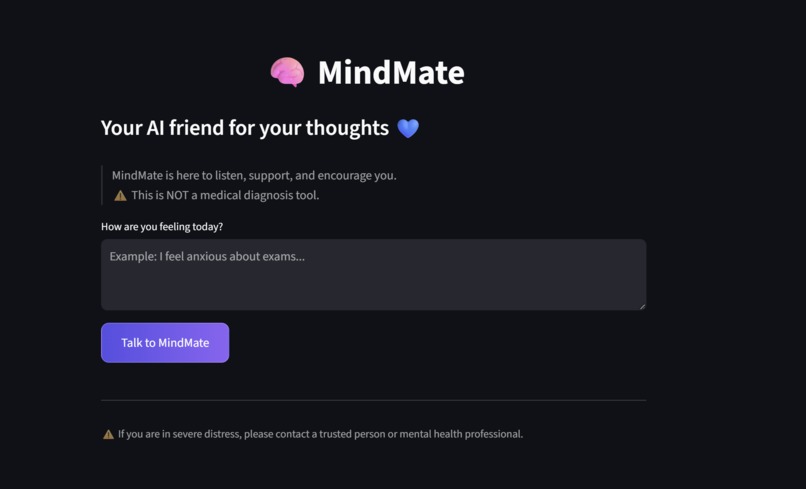
The Chat Interface
-
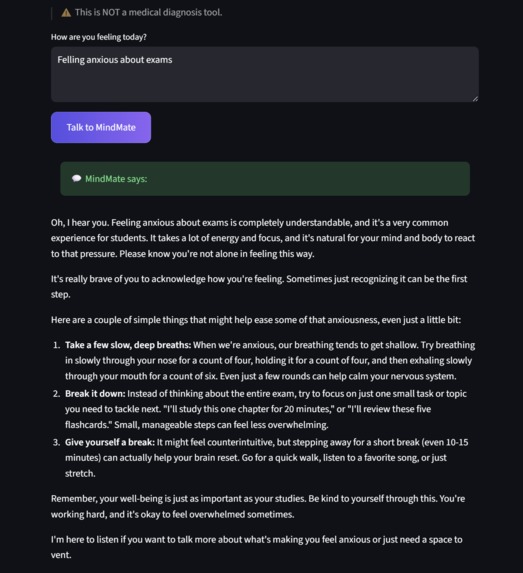
Conversation in Action


Inspiration
As a student, I’ve often noticed a "support gap." It’s 2 AM during finals week, stress levels are peaking, and friends or professionals aren't always available to talk. I realized that while many AI tools exist, they often feel cold or purely utility-based. I was inspired to build MindMate to personally create a "friend for your thoughts"—a judgment-free, empathetic companion that understands the unique pressures of academic life from a student's point of view.
What it does
I built MindMate to be an AI-powered mental wellness companion. It provides:
- Empathetic Dialogue: Using advanced NLP to validate feelings and offer support.
- Coping Strategies: Suggesting grounding techniques and simple actions to reduce anxiety.
- Anonymous Safe Space: A secure, web-based platform where students can express thoughts they might not be ready to share with others yet.
- Instant Access: A seamless landing page I designed to guide users straight to the support they need.
How I built it
I leveraged the Google Ecosystem to create a production-ready application by myself:
- AI Brain: Integrated Google Gemini 2.0 Flash for its low latency and high emotional intelligence. Used Google AI Studio to engineer specific system instructions that prioritize empathy and safety.
- Frontend & UI: Developed a responsive landing page using HTML5 and CSS3, focusing on a calming "Mint & Blue" color palette. Built the chat interface using Streamlit.
- Deployment: Hosted the global entry point via Firebase Hosting to ensure security (HTTPS) and fast delivery.
- Backend: Wrote Python logic to handle secure API requests and managed environment variables via
python-dotenvto keep credentials secure.
Challenges I ran into
- Tone Tuning: Initial AI responses felt too "medical" or formal. Worked solo in Google AI Studio to refine prompts so MindMate sounded like a supportive peer rather than a clinical bot.
- Integration: Bridging the static Firebase landing page with the dynamic Streamlit app for a smooth user transition.
Accomplishments that I'm proud of
- Full-Stack Execution: Built and deployed a project spanning frontend design to AI backend integration.
- Google Integration: Mastered combining Gemini AI and Firebase to create a cohesive project.
- User-Centric Design: Created a UI that feels "safe" and reduces the "clinical stigma" often associated with mental health tools.
- Performance: Optimized response time using the Gemini 2.0 Flash model.
What I learned
This hackathon was a deep dive into Prompt Engineering and Cloud Deployment. I learned how to transform a raw Large Language Model into a specialized "persona." I also realized the importance of UX in Mental Health—color, font, and response speed are as critical as the response content itself.
What's next for MindMate
- Personalized Context: Implement features for MindMate to remember previous sessions and offer more personalized check-ins.
- Local Resource Mapping: Add a directory of local campus mental health resources for direct support.
- Voice Interaction: Integrate Google’s Speech-to-Text for a more natural, hands-free conversational experience.
