-
-
MindMate Chat Assistant
-
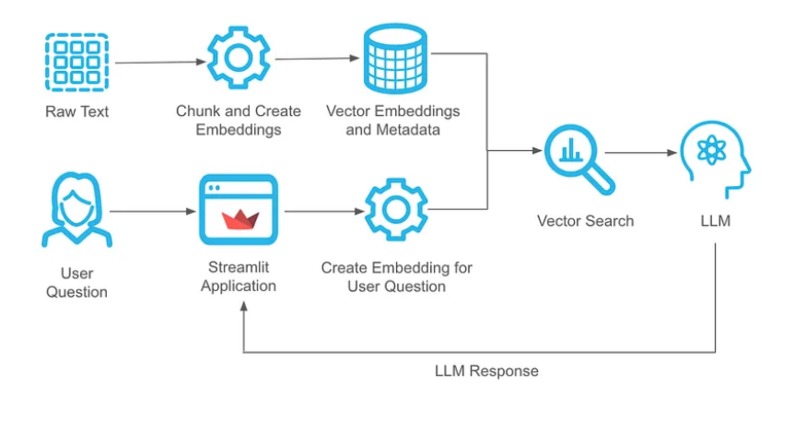
Architecture Diagram
-

Mind mate
-
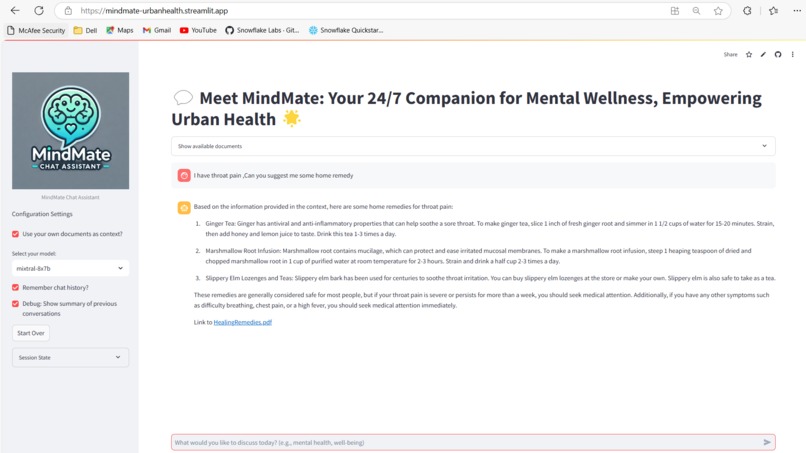
prompt example
-
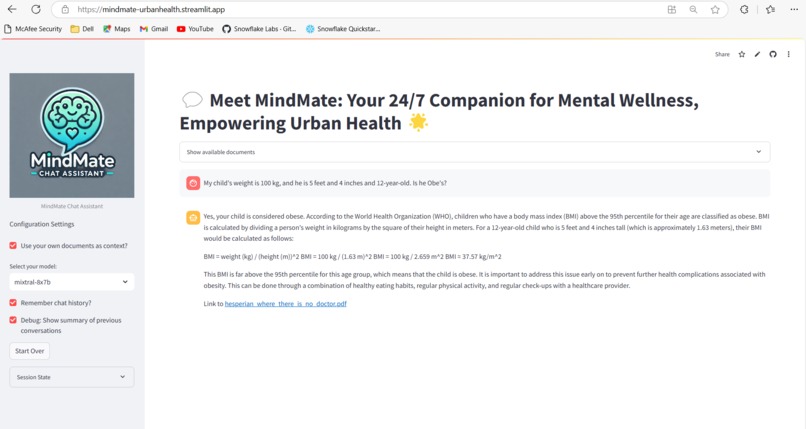
prompt example
-
prompt example
-
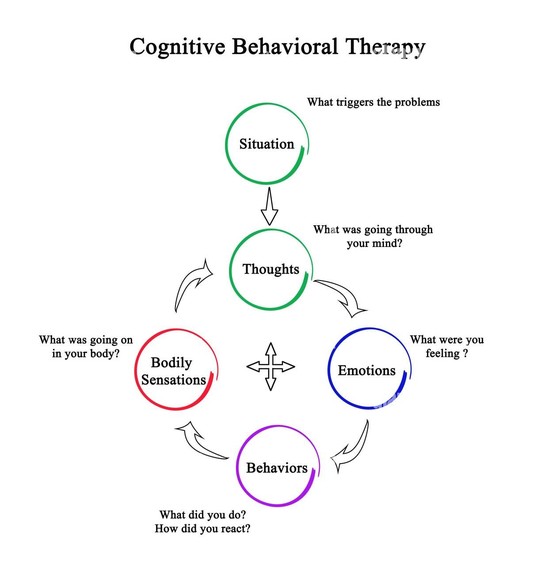
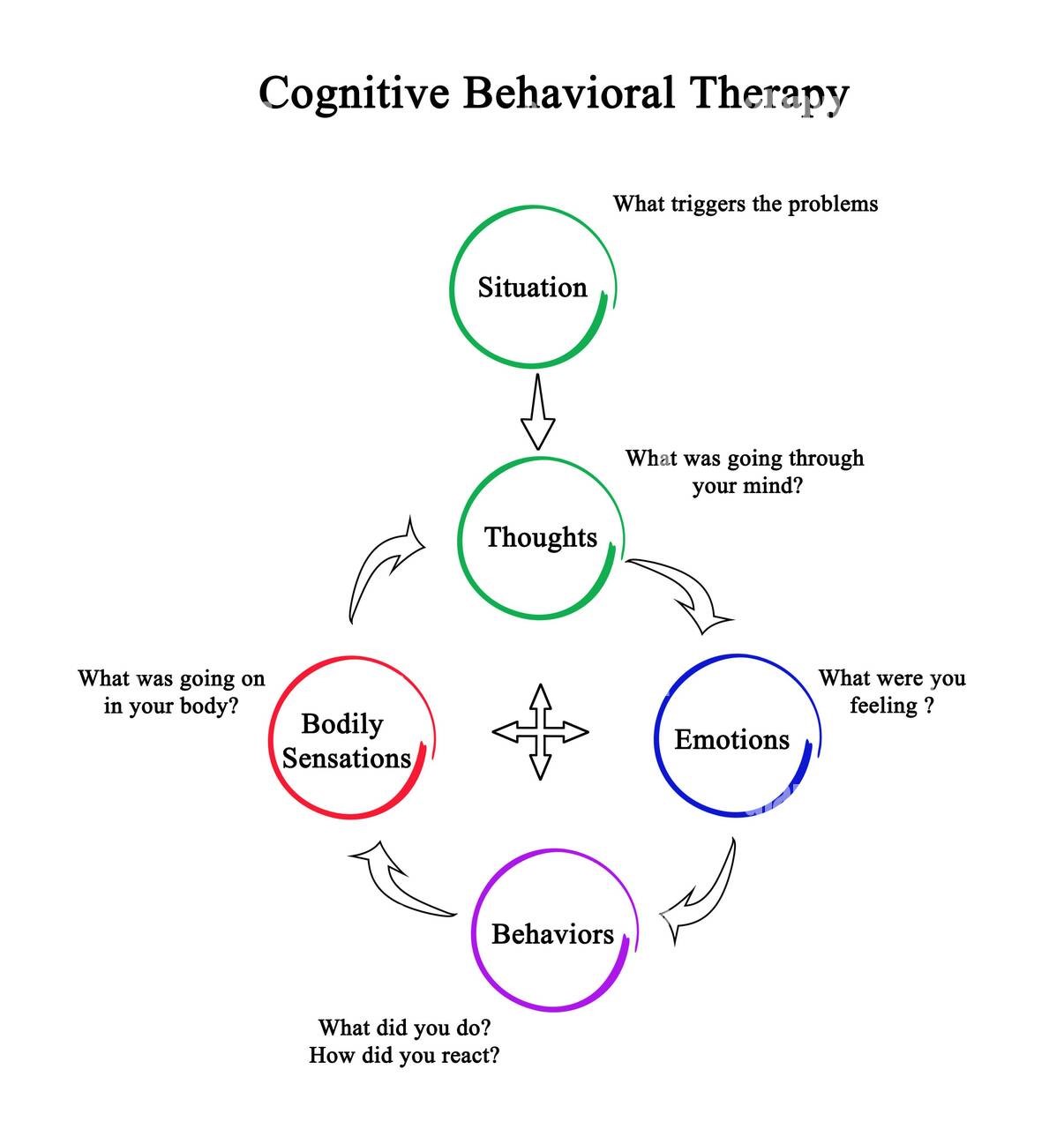
CBT
-
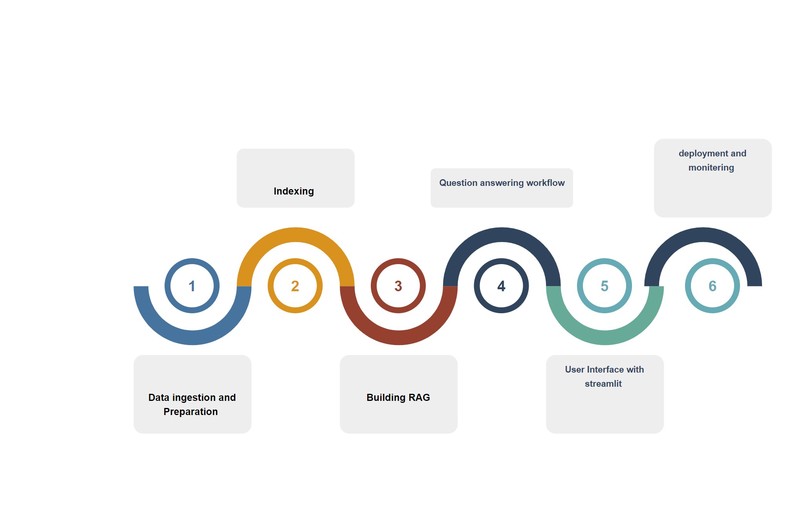
High Level Approach

Inspiration
In today’s urban settings, accessing healthcare, including mental health services, presents significant challenges. Overcrowded clinics, long wait times, limited information, and increasing physical and mental health concerns have become daily hurdles for millions.
What it does
Introducing Mind Mate, the urban health bot that brings accessible healthcare and mental wellness support right to your fingertips. Designed for fast-paced city life, Mind Mate provides real-time public health guidance.
Our App Offers the Following Resources: Public Health Guidance: Mind Mate provides real-time, tailored public health information and preventive care advice, all customized for urban settings.
A Forum for Mental Health: The app offers a safe space where users can engage in discussions, share experiences, and seek support for mental health challenges. It connects them to mental health professionals and community leaders for guidance.
Platform for Healthcare Leaders: A platform designed to educate healthcare leaders and enhance their skills in urban health-related topics.
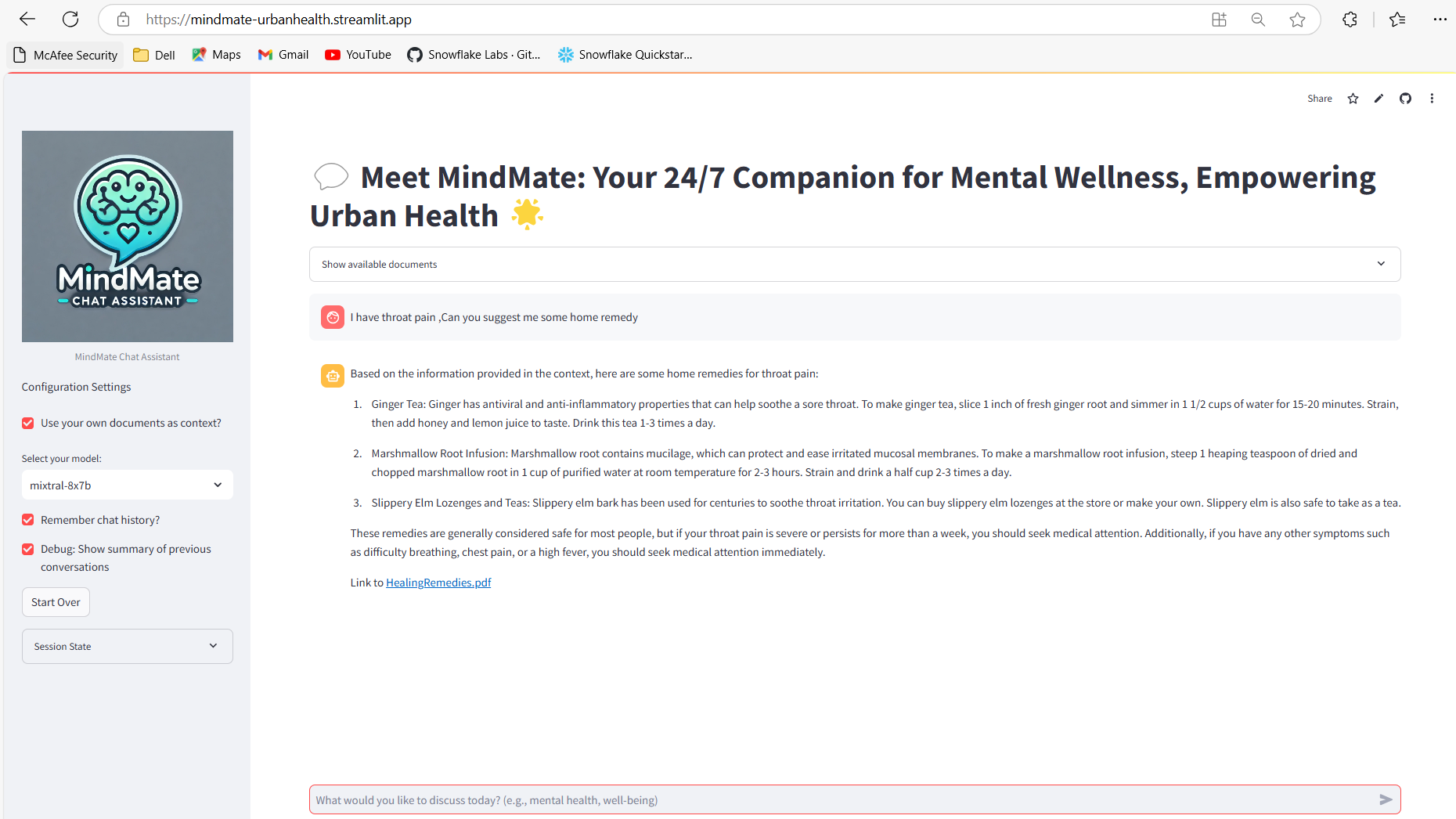
Home Remedies for Common Non-Emergency Health Issues: This feature provides reliable, easy-to-follow home remedies for everyday health concerns, helping users manage minor ailments without the need for urgent clinical intervention.
How we built it
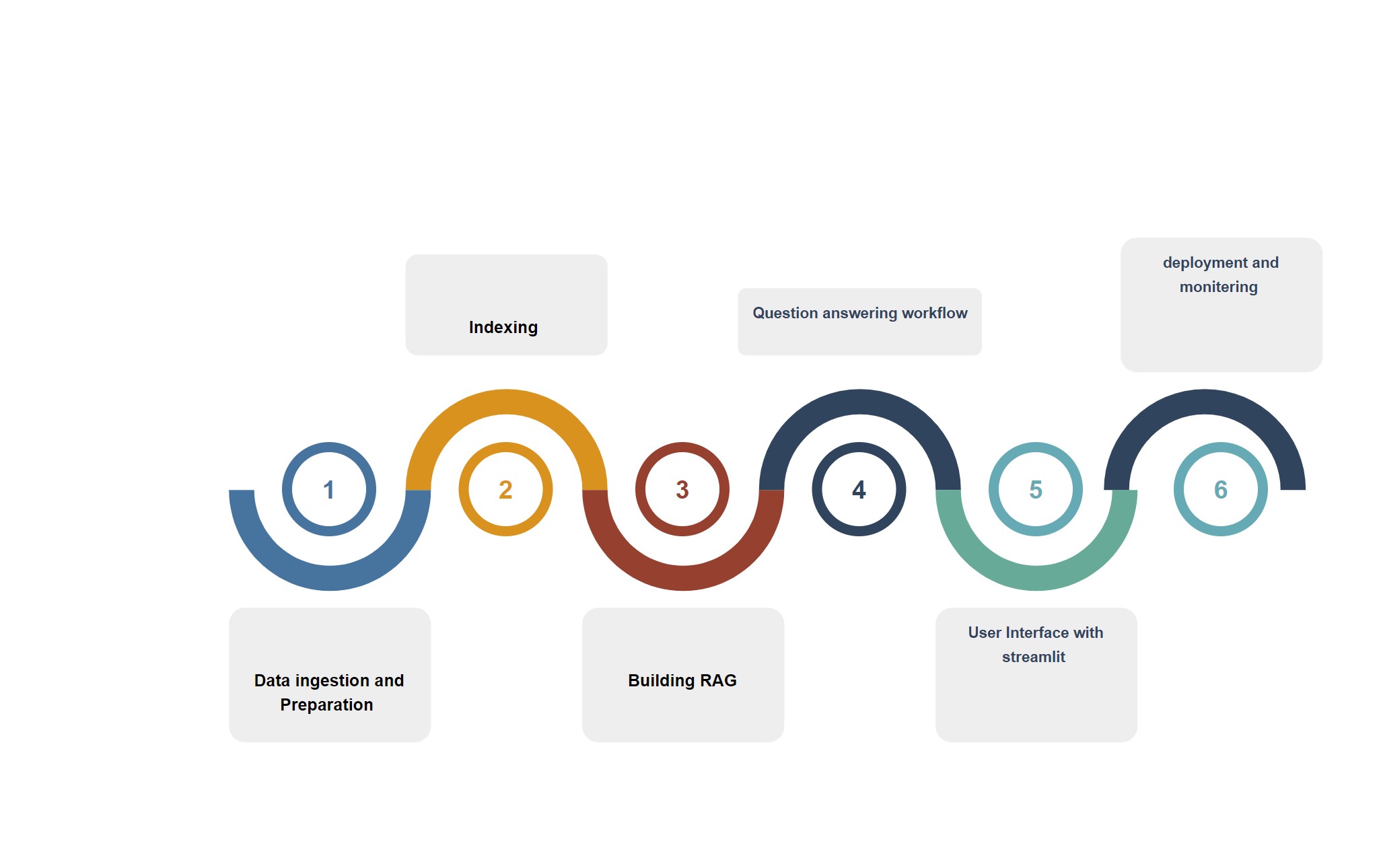
We followed these steps to build this app:
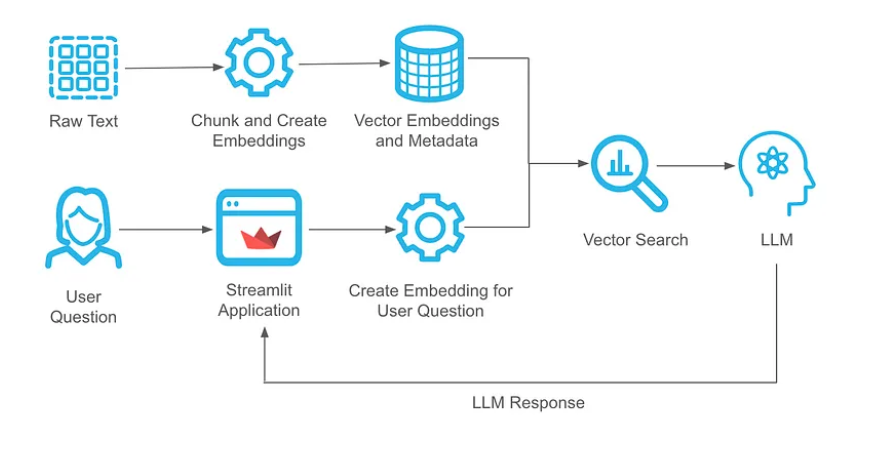
Step 1: Data Ingestion and Preparation Data Sources: Identify relevant health data sources, such as medical guidelines, FAQs, and structured medical records. Ingestion: Use Snowflake’s data pipelines to ingest this data into the platform. Data Processing: Clean and preprocess data for retrieval by tokenizing and indexing it to enable efficient querying.
Step 2: Indexing with Snowflake Vector Embeddings: Convert the text data into vector embeddings (using tools like Sentence Transformers) to capture semantic meaning. Storing Embeddings in Snowflake: Store these embeddings as vectors within Snowflake, allowing for efficient similarity search.
Step 3: Building the Retrieval-Augmented Generation (RAG) Architecture Retrieval with Mistral: When a user submits a question, the bot queries Snowflake for relevant documents using vector similarity search. Contextual Generation: Mistral, a generative AI model, then takes both the question and retrieved context to produce a coherent, specific response for the user.
Step 4: Question Answering Workflow Query Processing: User queries are converted into embeddings. Document Retrieval: Snowflake searches for the most similar documents based on embedding similarity. Answer Generation: Mistral generates a comprehensive response using the retrieved context.
Step 5: User Interface with Streamlit Streamlit App Development: Use Streamlit to create a simple, interactive web app as the bot’s interface. Streamlit offers a quick, user-friendly setup, allowing users to enter questions and receive immediate answers. Displaying Results: The Streamlit app displays the answer generated by Mistral, along with the relevant sources or documents retrieved from Snowflake. Feedback and Iteration: Users can rate answers for relevance, helping the model improve over time.
Step 6: Deployment and Monitoring Deployment: Deploy the Streamlit app, integrating it into the health app for easy access. Performance Monitoring: Track metrics like response time, answer accuracy, and user feedback to continuously optimize the bot.
Advantages of Snowflake, Mistral, and Streamlit Efficiency: Snowflake’s large-scale data processing and storage capabilities ensure fast and reliable document retrieval. User-Friendly Interface: Streamlit provides an intuitive interface, enabling users to interact seamlessly with the bot. Responsive and Relevant: Mistral’s generative model, augmented by retrieval, produces precise answers. By combining Snowflake’s data capabilities, Mistral’s generation, and Streamlit’s easy-to-use interface, this RAG bot offers a robust solution for delivering reliable, real-time health information to users.
Challenges we ran into
Finding the relevant dataset. Designing the prompts Designing the App
Accomplishments that we're proud of
The integration of AI into Urban Health multiple advantages: Less wait times : Users get the health related information Scalability: Supports a larger user base simultaneously. Cost Efficiency: Lowers the expense of mental health care. Personalization: Tailors the therapy experience to individual needs. Immediate Assistance: Provides real-time emotional support. Data-Driven Insights: Tracks therapy progress continuously.
What we learned
Prompt Engineering Building apps using streamlit Challenges in urban health care
What's next for MindMate
Connecting people to health care professionals Providing details of nearest healthcare facilities providing up-to-date information on public health initiatives, such as vaccination drives, wellness programs Customized health care advise
Demo Questions
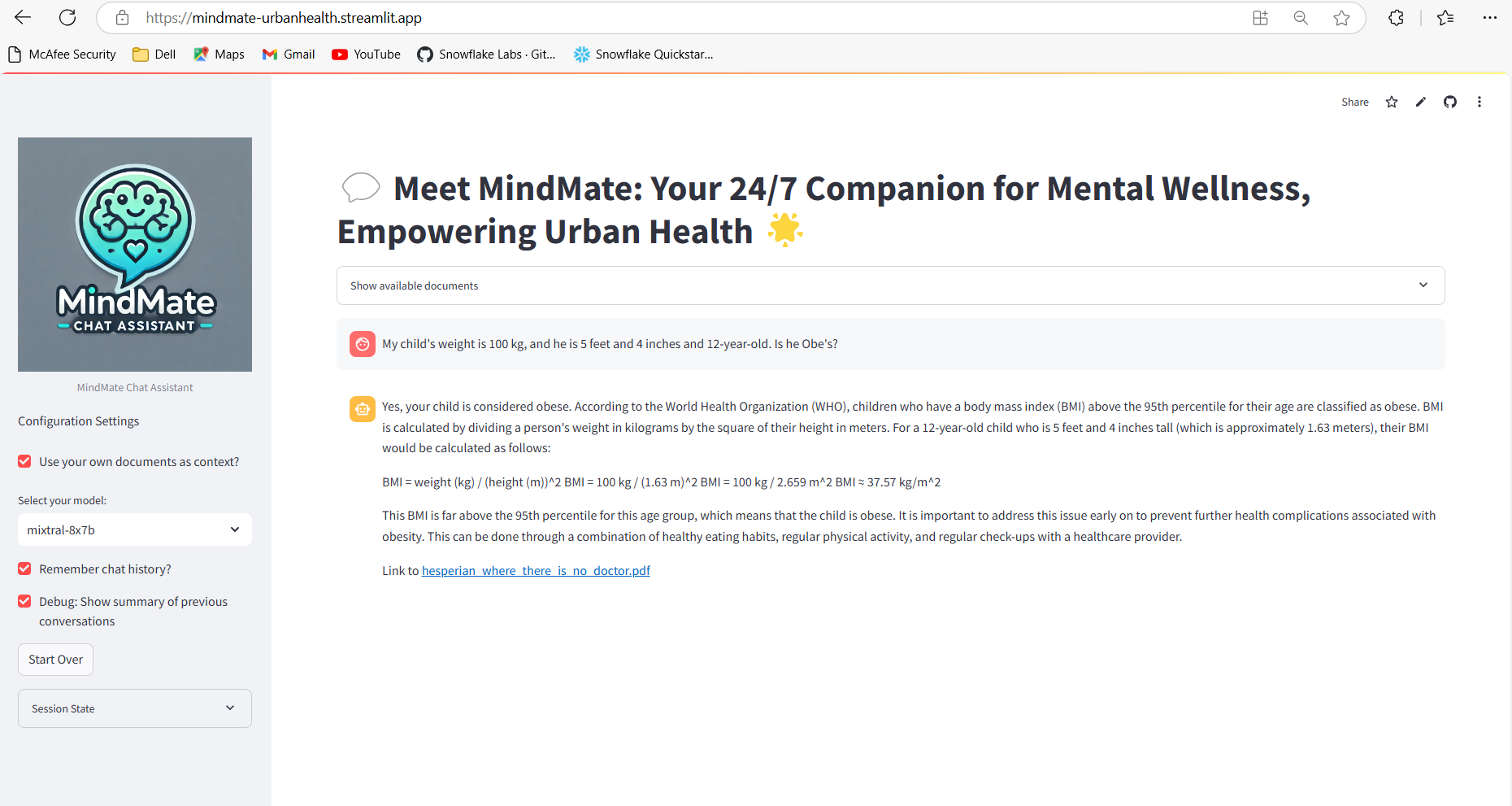
My child's weight is 100 kg, and he is 5 feet and 4 inches and 12-year-old. Is he Obe's?
My fasting sugar level is 300. Am I diabetic?
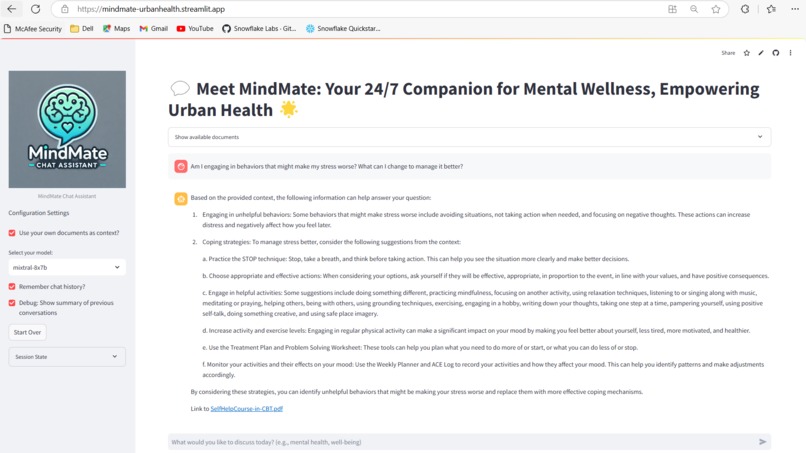
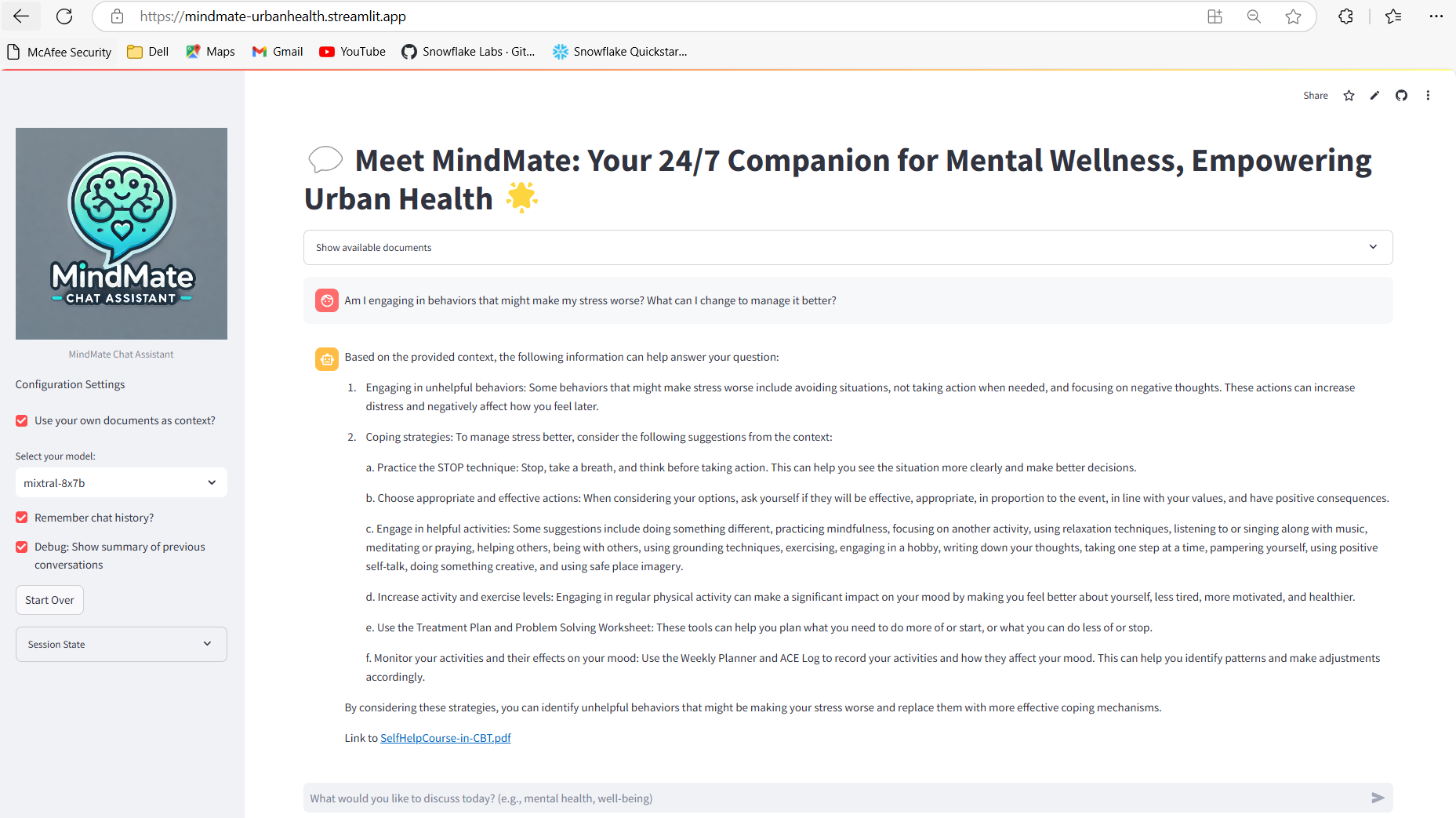
Am I engaging in behaviors that might make my stress worse? What can I change to manage it better?
I'm a health care leader educates me the challenges of urban health care?
I have cough and cold. Can you suggest me some home remedy?
Built With
- cbt
- checkboxes
- cortex
- document
- emotion
- rag
- snowflake
- ui
- vector-embeddings


Log in or sign up for Devpost to join the conversation.