-
-
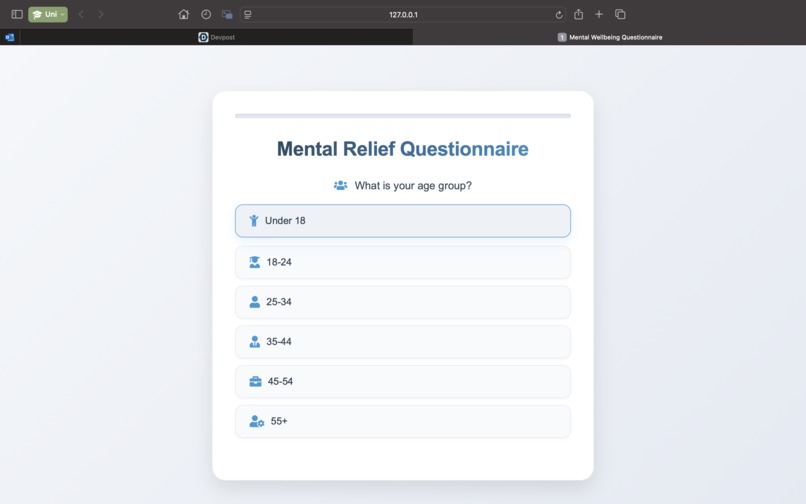
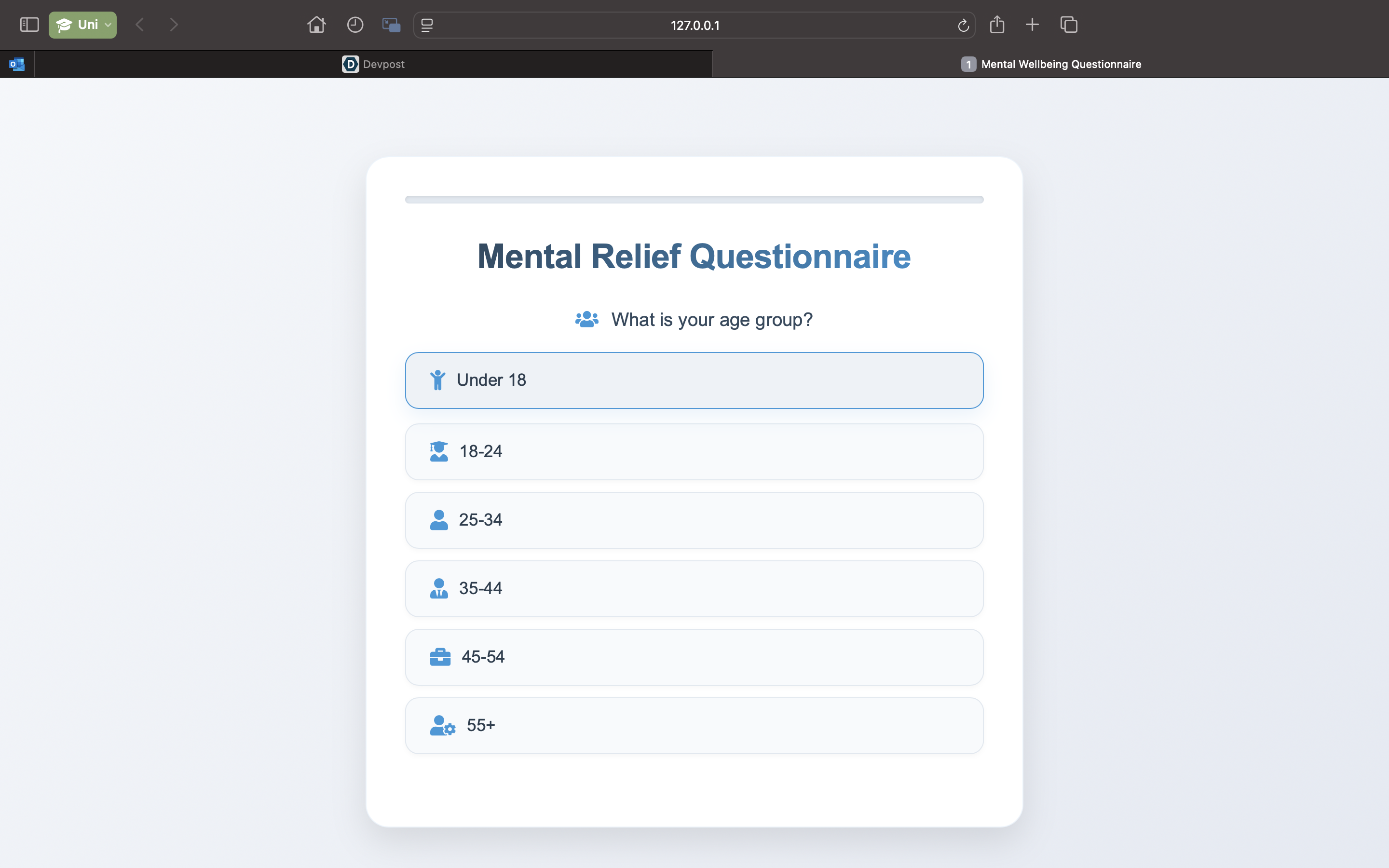
Demographic Questionnaires
-
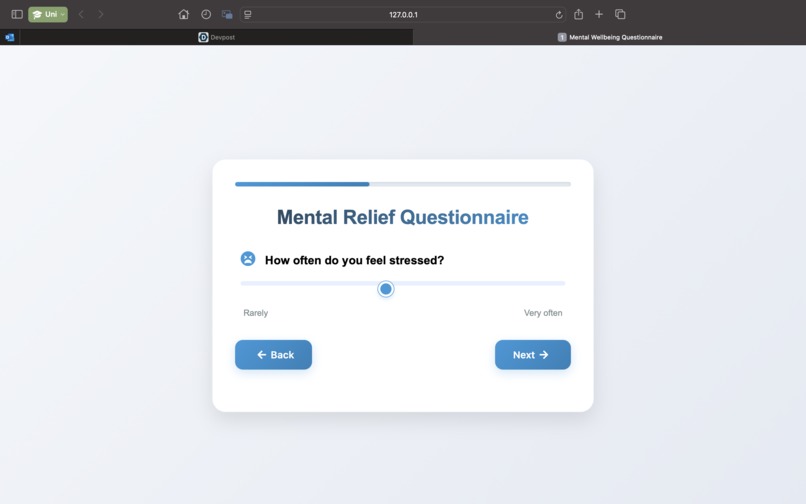
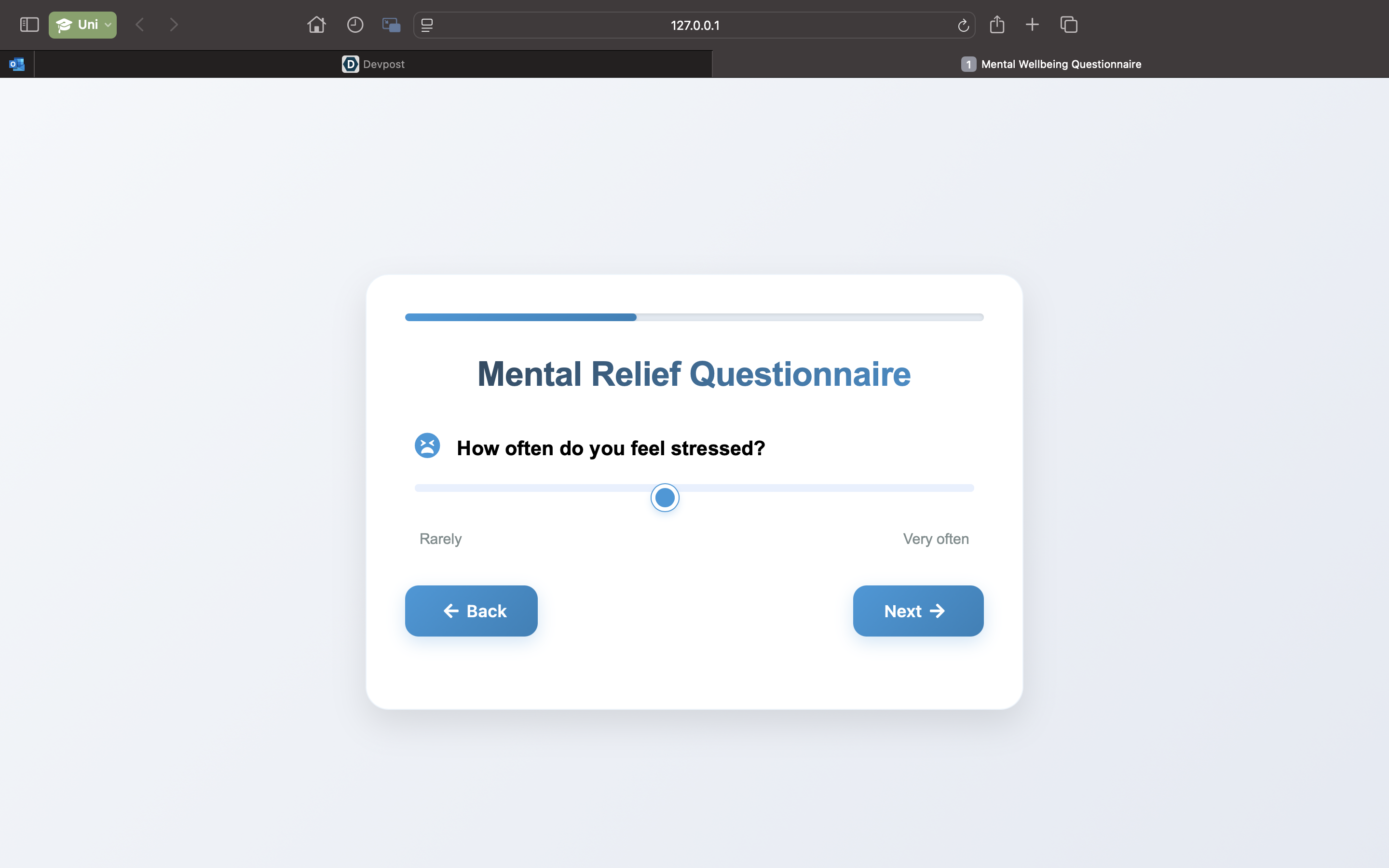
Dynamic Gen-AI Created Questionnaire
-
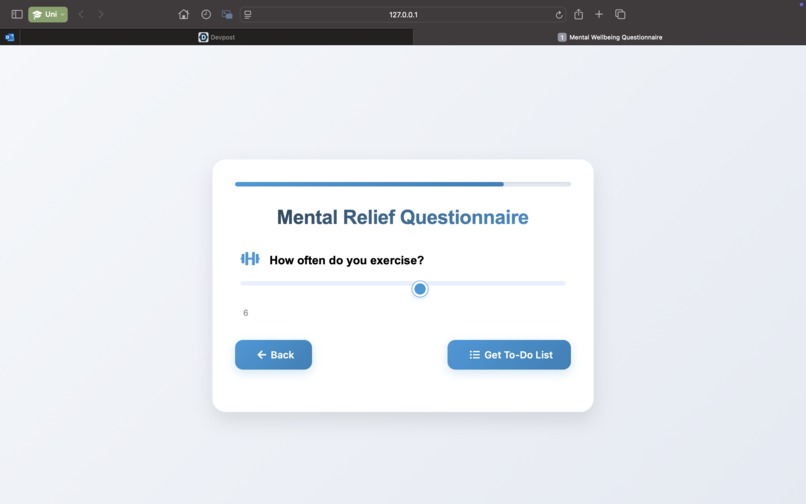
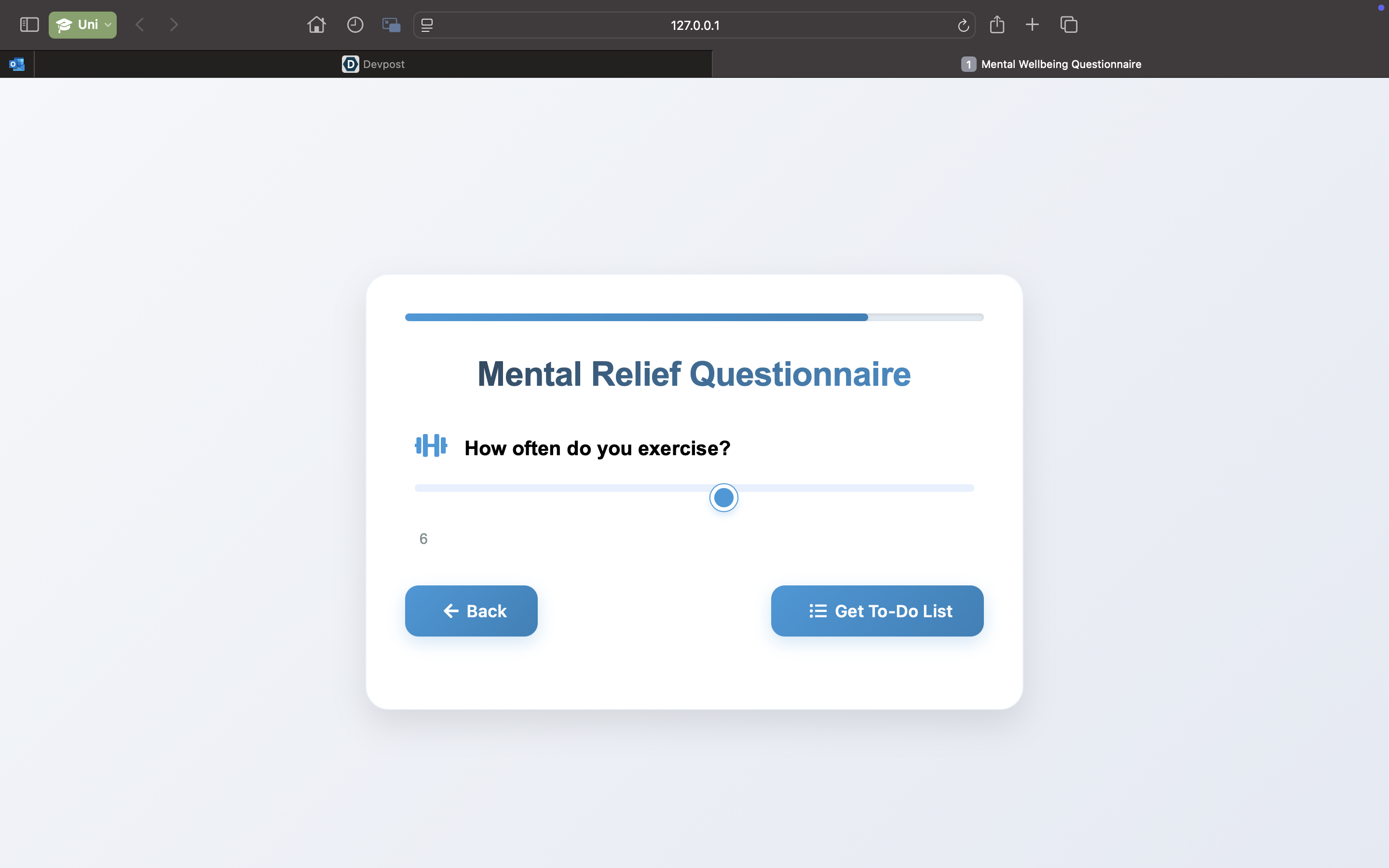
Dynamic Gen-AI Created Questionnaire
-
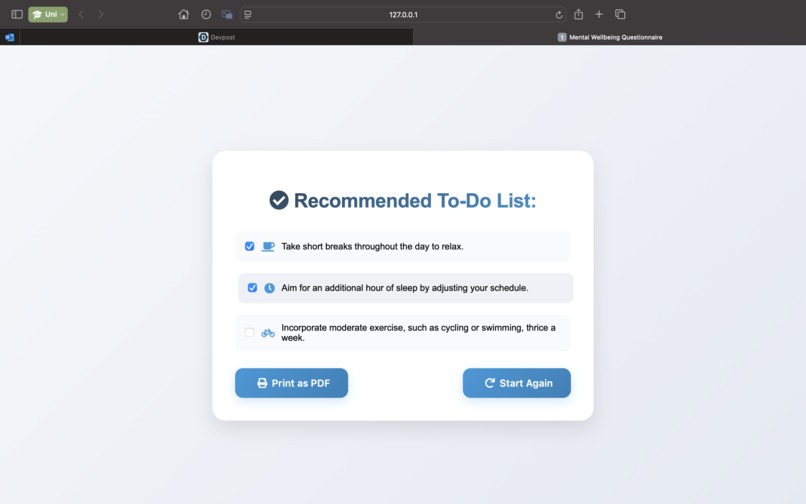
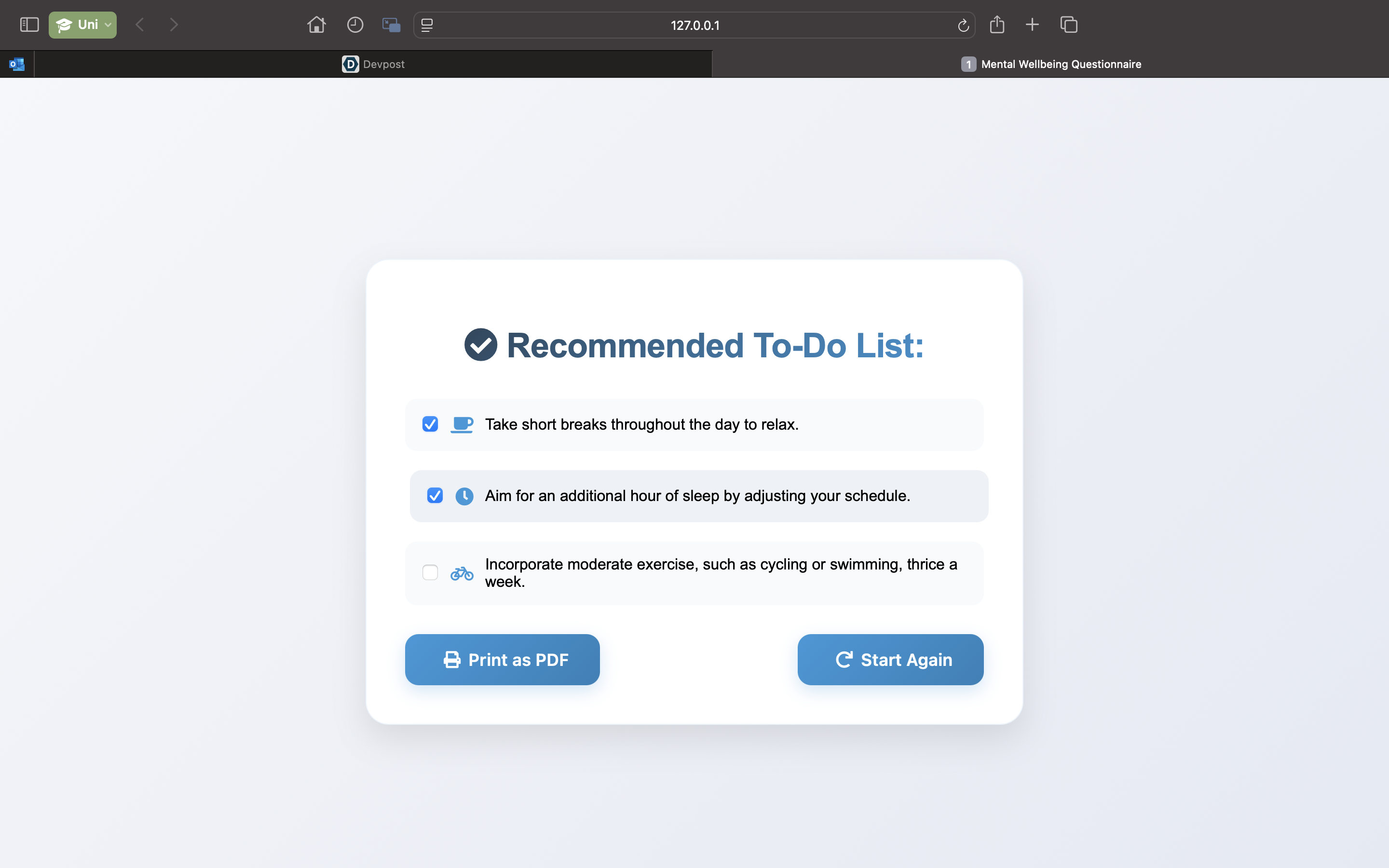
Gen-AI created tailored To-do list
About the Project
Inspiration
MindMate was inspired by the limitations of traditional mental health surveys, which often lack personalization and engagement. Our team aimed to create a dynamic solution that adapts to individual user needs, providing a more accurate and supportive mental health assessment experience.
What We Learned
Throughout this project, we explored the challenges and potential of AI in mental health care. We learned about the intricacies of adaptive survey systems, the importance of user data privacy, and the impact of personalized interactions on user engagement. Our journey also deepened our understanding of integrating AI into practical, real-world applications to support mental health.
How We Built the Project
MindMate was developed as an adaptive survey system with the following key components:
- Dynamic Question Generation: Using AI models to create personalized questions based on user responses, enhancing the relevance and accuracy of assessments.
- Adjustable Depth: Allowing the number of survey iterations to be tailored, providing flexibility in the depth of mental health evaluations.
- AI Integration: Leveraging OpenAI's API for initial question generation, with plans to transition to custom-trained models for improved specificity and accuracy.
- User Interface: Developing a user-friendly web or mobile interface to ensure seamless interaction with the system.
Challenges Faced
During development, we encountered several challenges:
- Personalization: Creating an adaptive system that effectively personalizes questions based on user demographics and responses.
- Data Privacy: Ensuring secure handling of sensitive user data while maintaining a high level of system usability.
- Engagement: Designing the survey to maintain user interest and encourage consistent participation.
Key Features
- Dynamic Question Generation: Questions evolve based on user inputs, making the survey experience more engaging and relevant.
- AI-Powered Personalization: Customized to-do lists and recommendations are generated based on the severity of mental health issues.
- Post-Survey Pathways: Users receive a severity score and personalized recommendations, with follow-up surveys to track progress.
Vision and Long-Term Goals
Our vision for MindMate includes:
- Bias-Free Assessments: Minimizing user bias through dynamic question generation.
- Progress Monitoring: Providing tools to track changes in mental health over time and adjust interventions accordingly.
- Virtual Counseling: Developing an AI-driven chatbot for real-time emotional support and guidance.
MindMate represents a significant step towards innovative mental health management, combining AI technology with user-centric design to offer a comprehensive support system.
Built With
- docker
- java
- javascript
- mysql
- react
- springboot


Log in or sign up for Devpost to join the conversation.