-
-
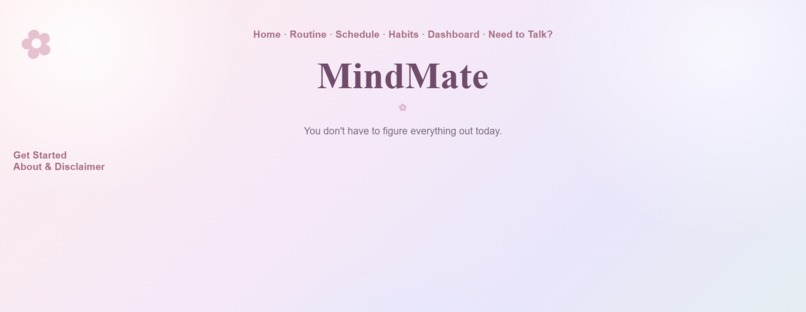
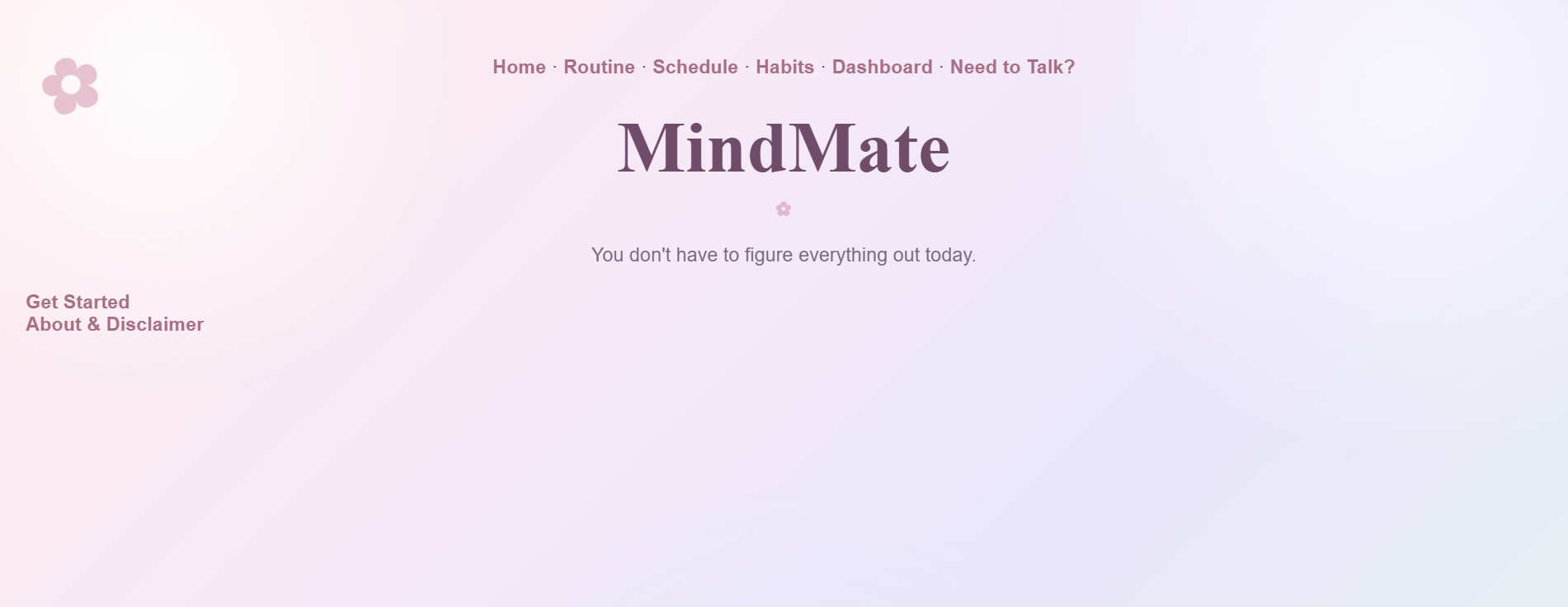
The welcoming starting point of MindMate.
-
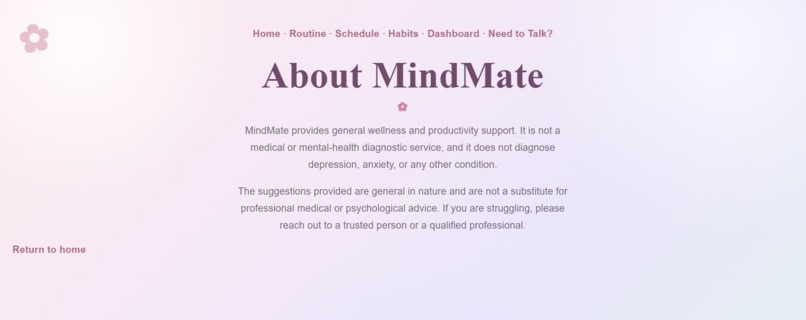
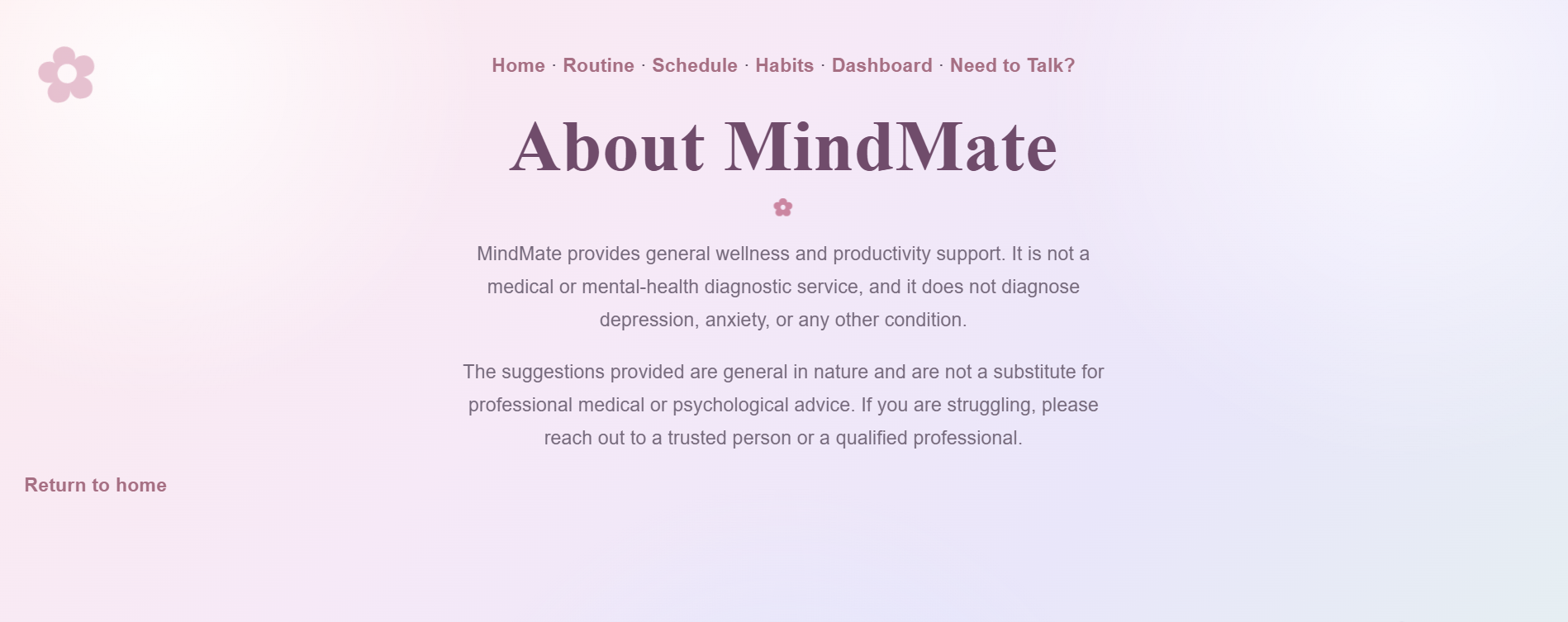
Clearly explains MindMate’s purpose, limitations, and the importance of seeking professional help when needed
-
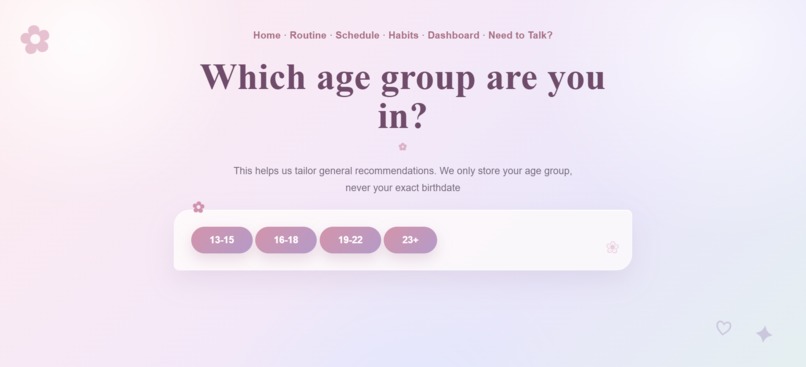
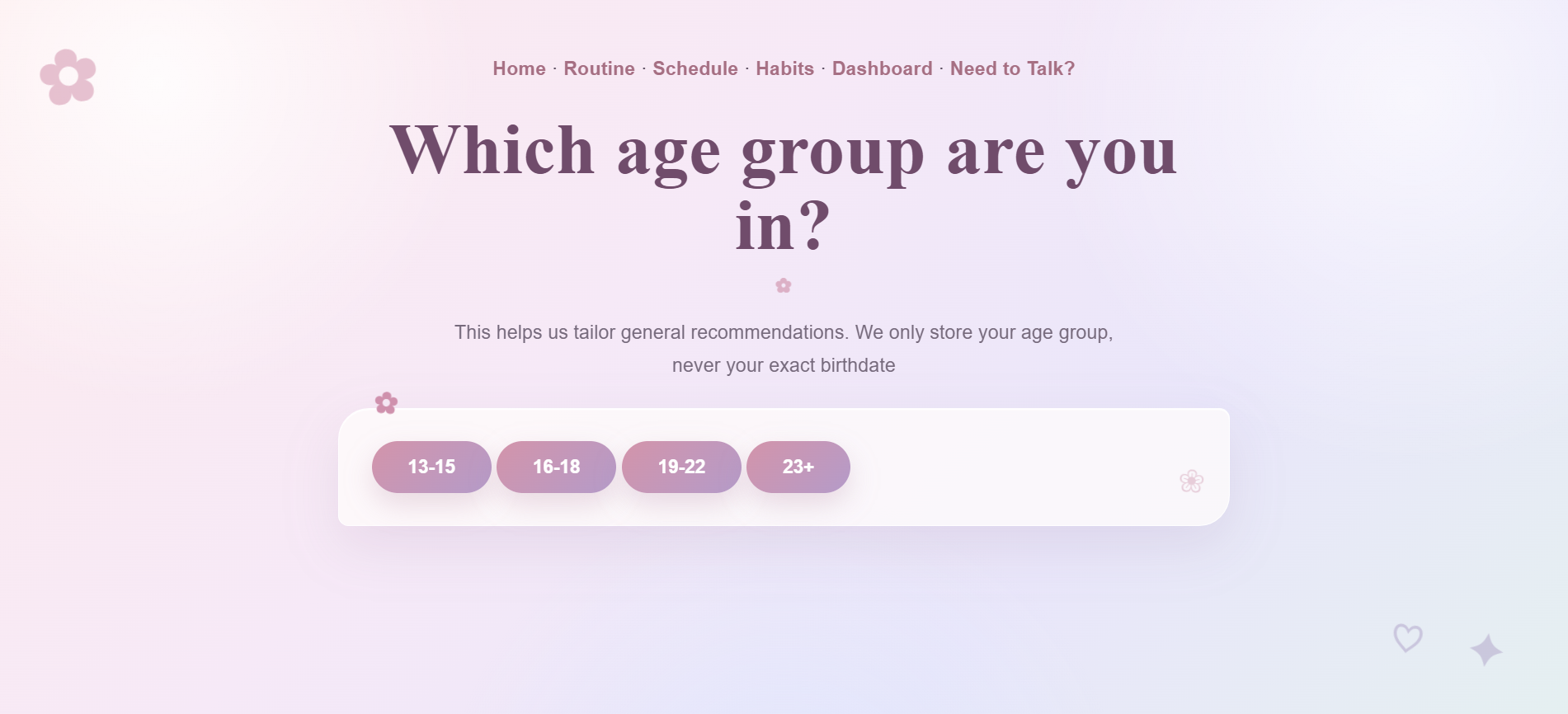
Users select their age group to personalize their experience.
-
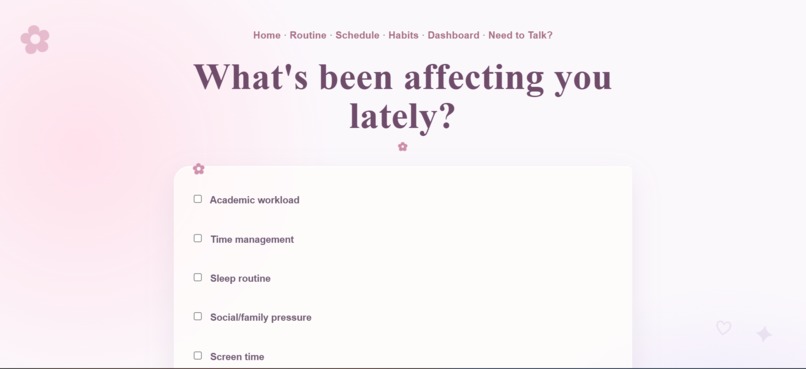
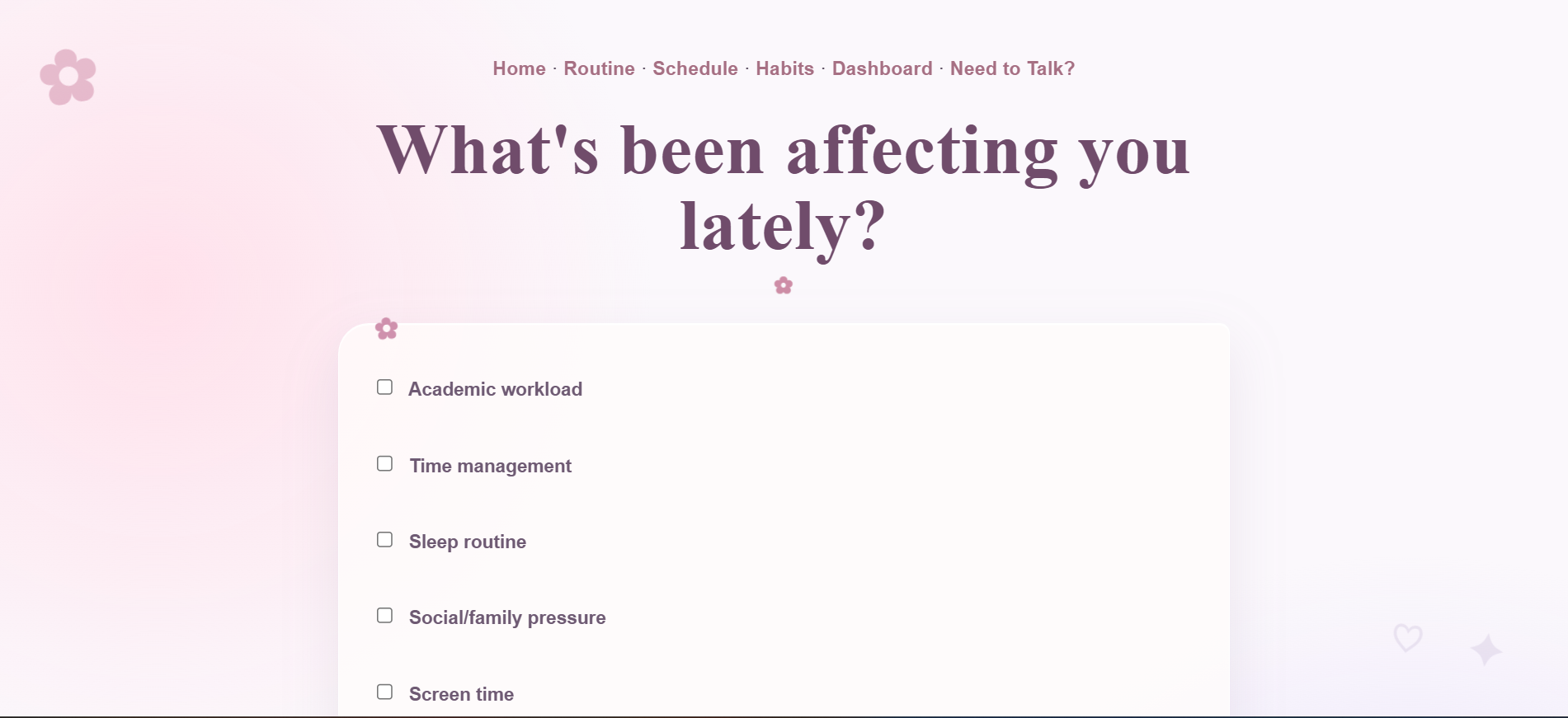
User can choose or write what is affecting them lately
-
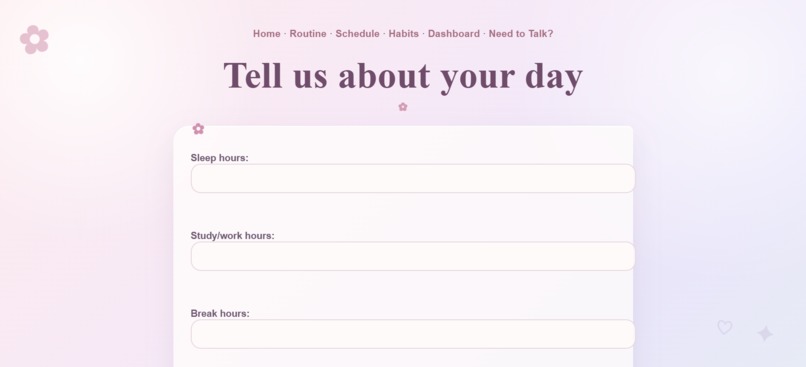
Users share details about their day and routine, helping MindMate understand their everyday habits and provide personalized insights.
-
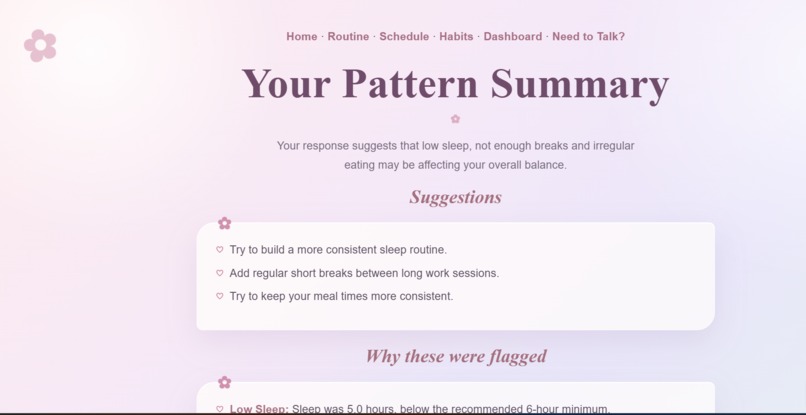
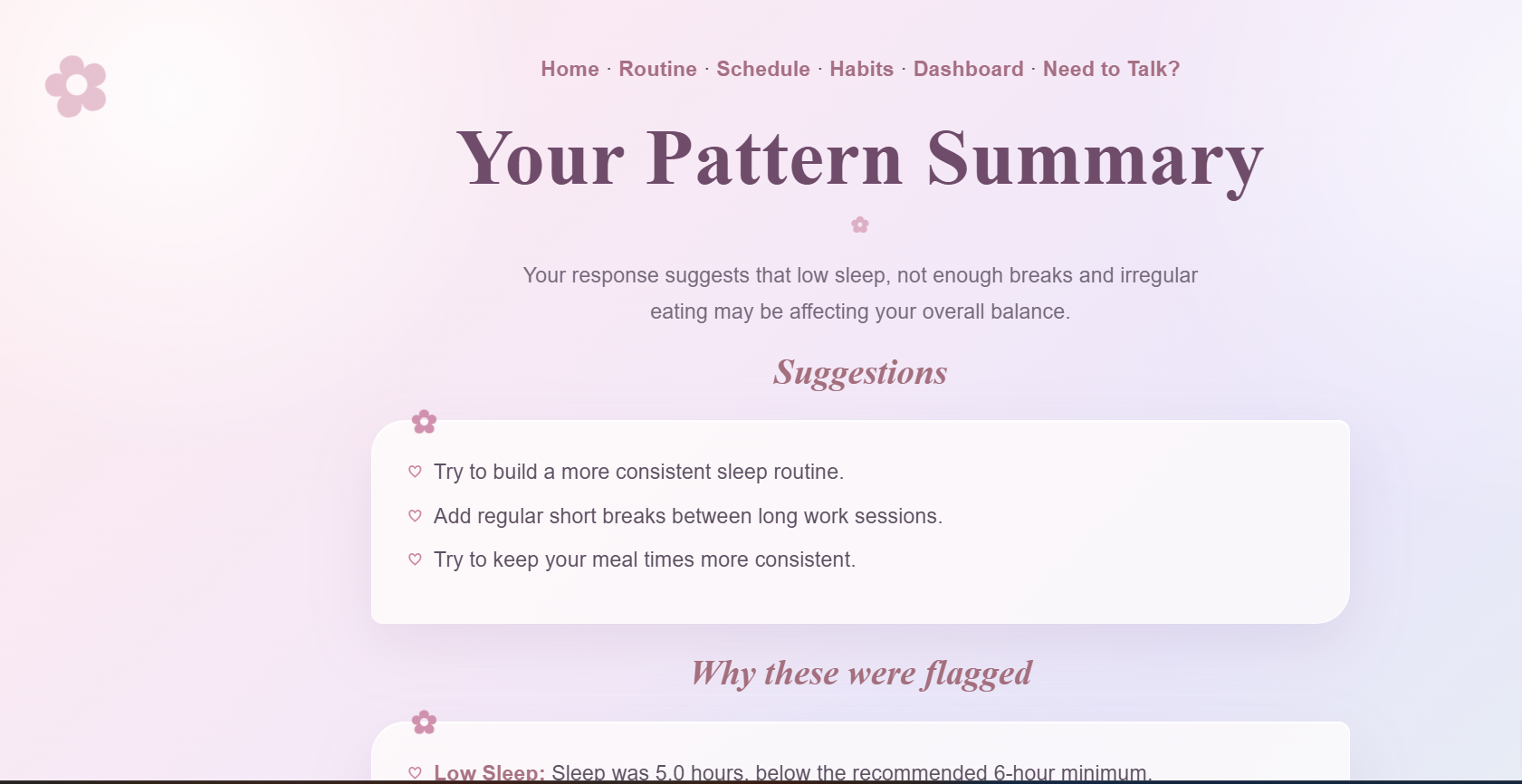
MindMate turns the user’s daily routine into clear insights, highlighting patterns that may be affecting their overall well-being
-
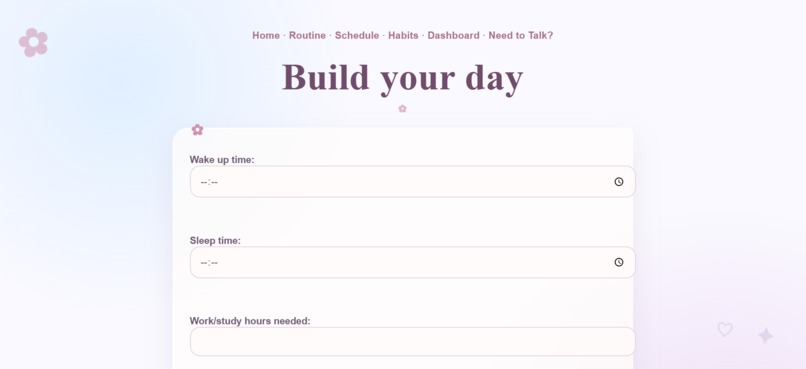
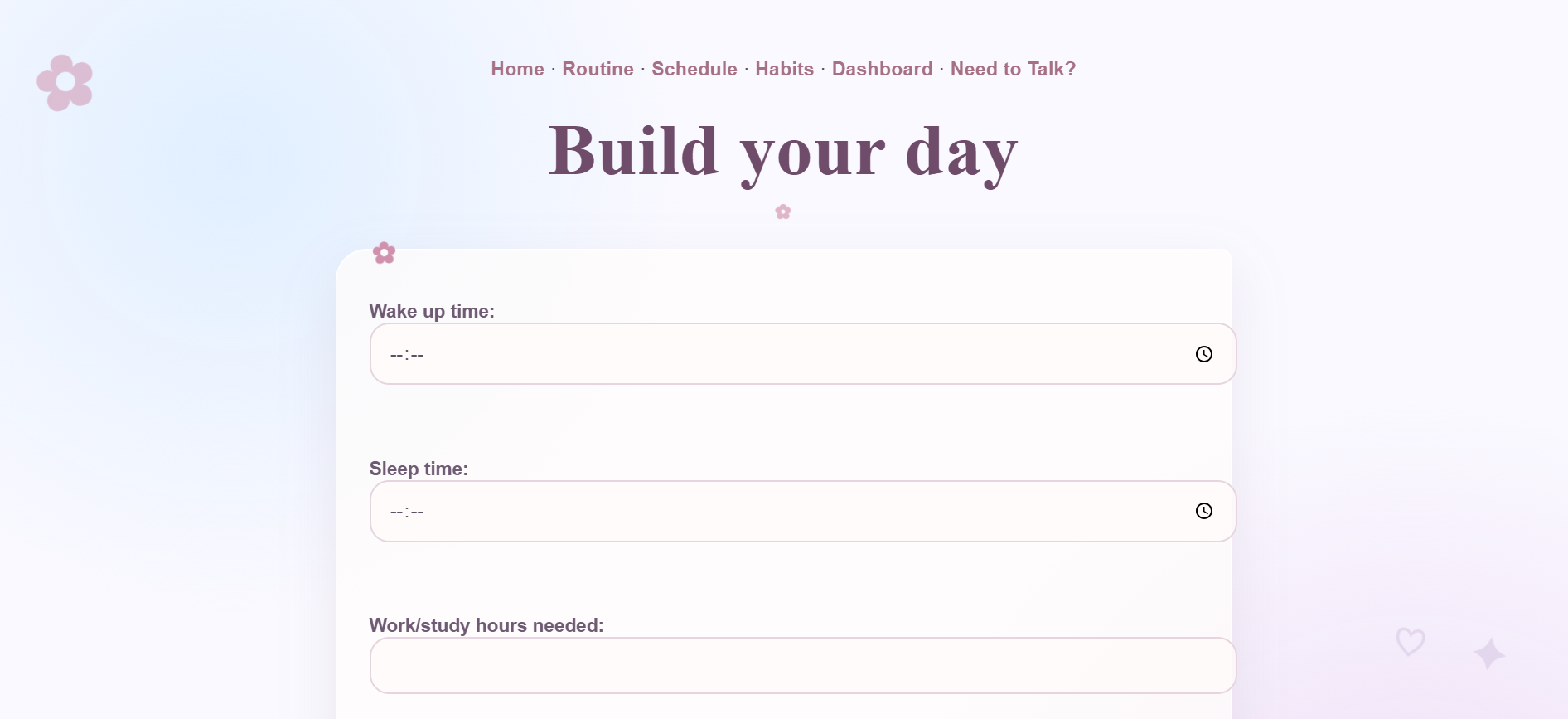
MindMate helps users create a balanced daily routine tailored to their schedule, priorities, and well-being.
-
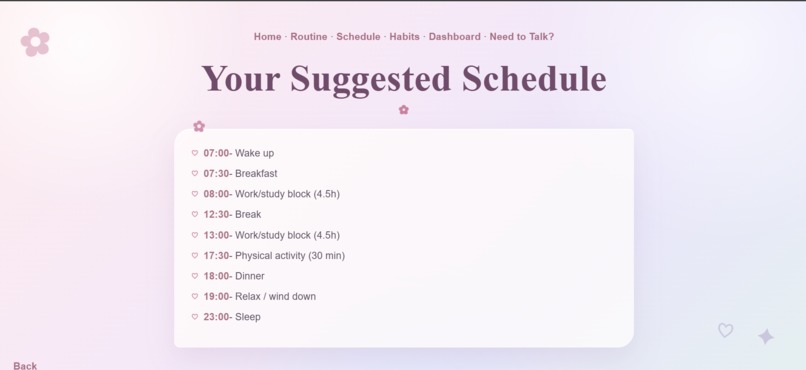
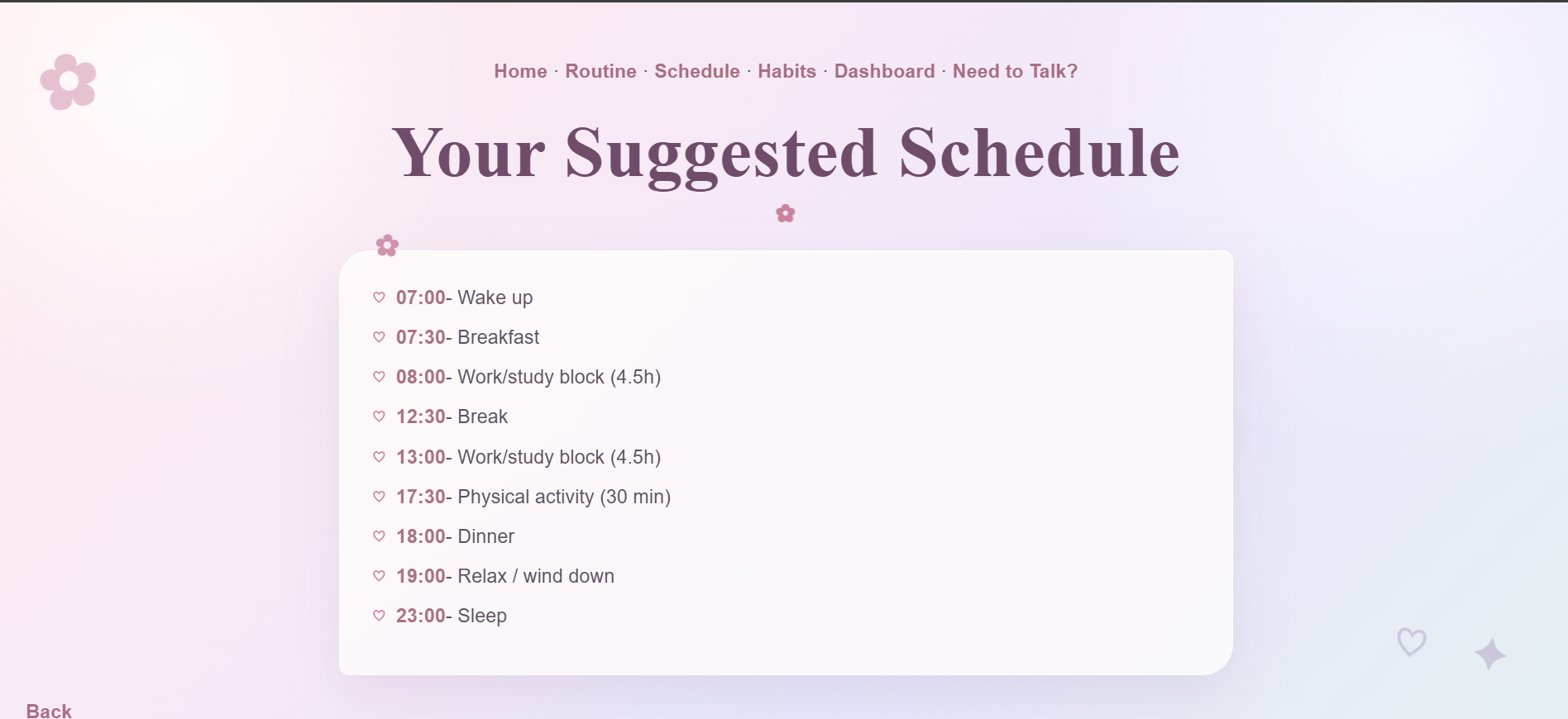
MindMate creates a personalized schedule that balances responsibilities, breaks, activity, and rest throughout the day.
-
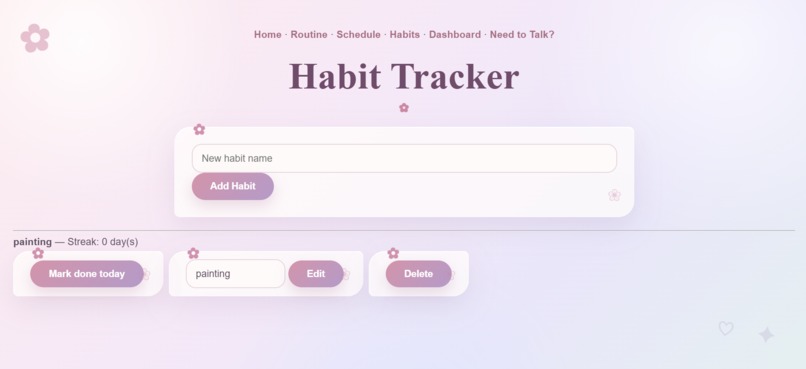
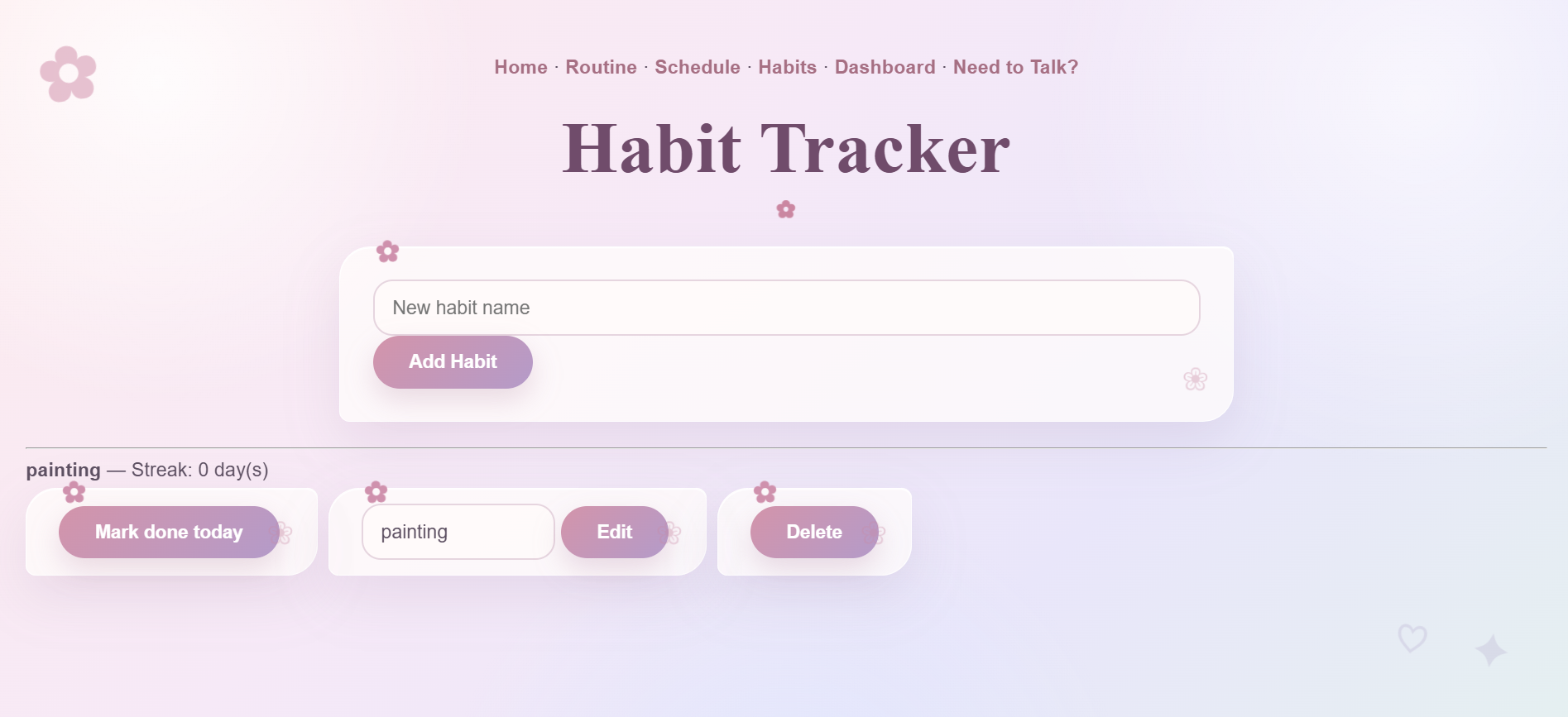
Users can add personal habits they want to build and keep track of their daily wellness goals.
-
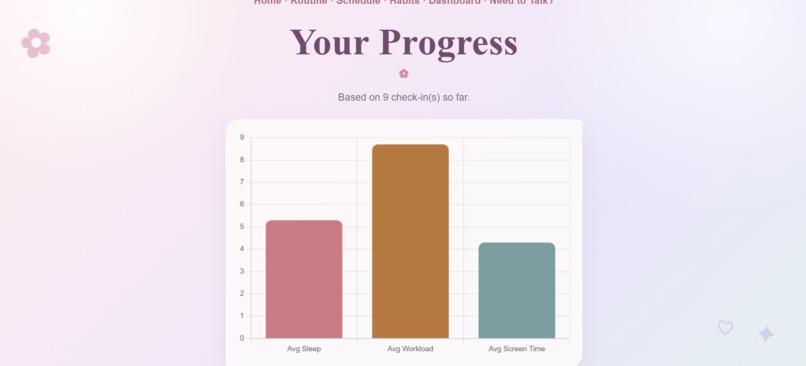
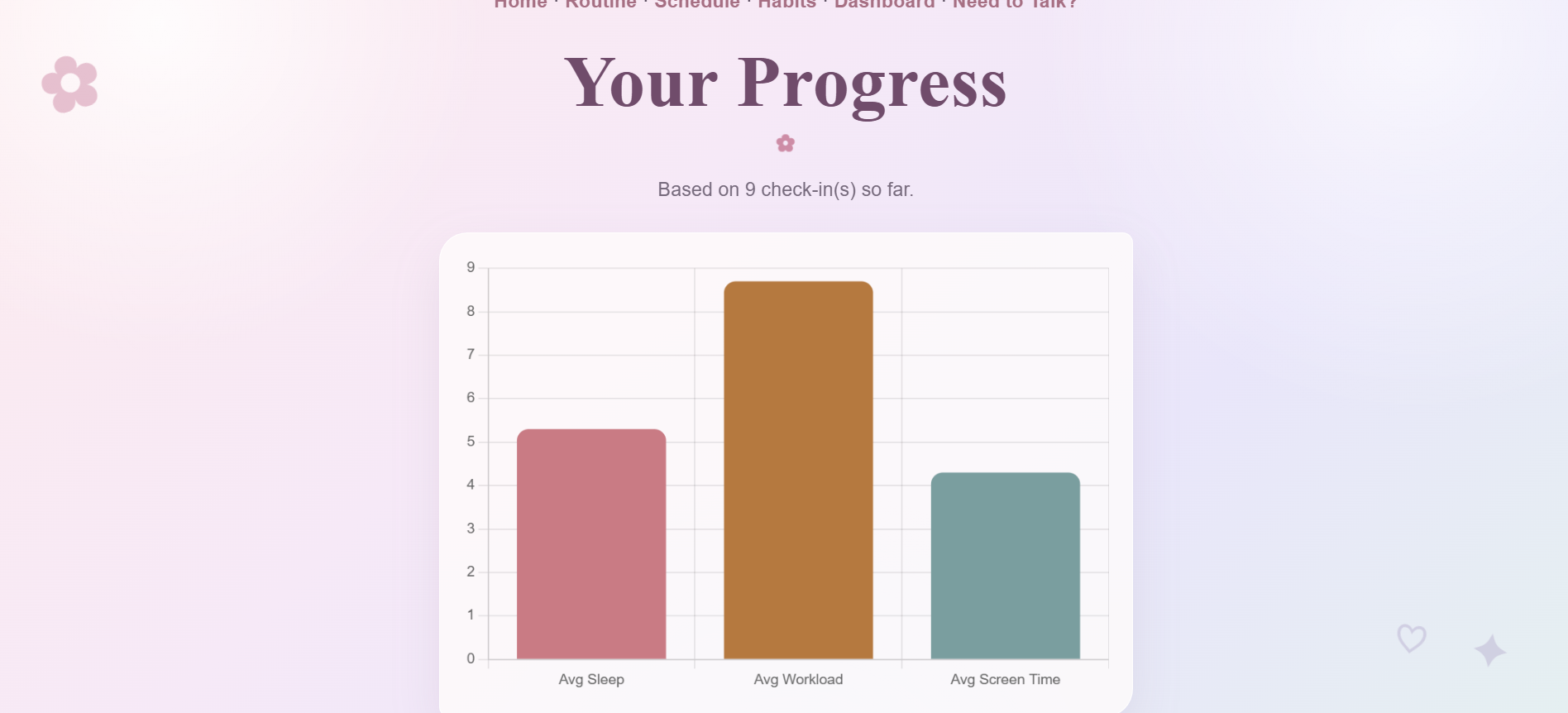
clear visual overview of the user’s wellness patterns, routine insights, habits, and progress—all in one place.
-
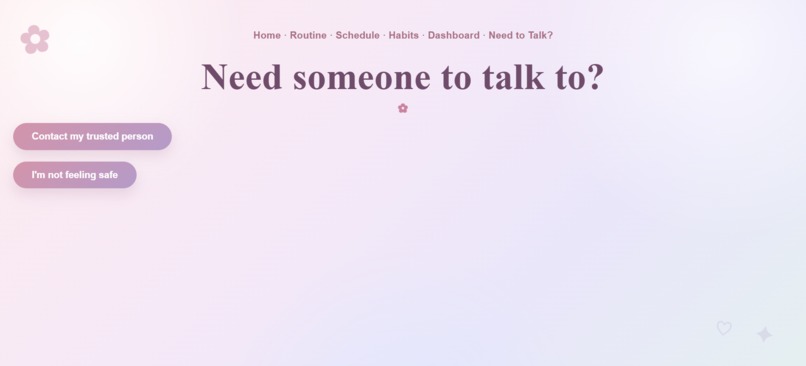
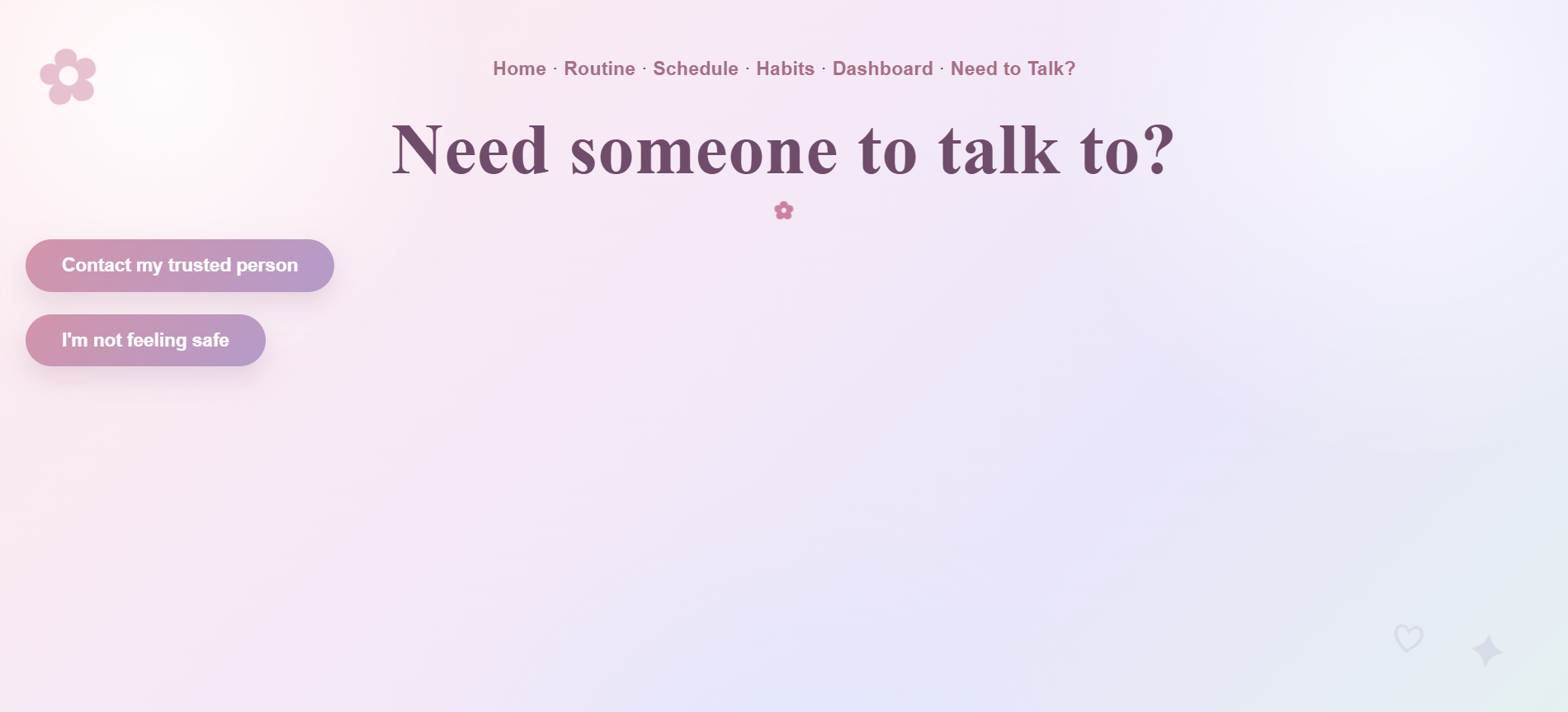
A supportive space where users can reach out, express how they feel, and find guidance when they need it.
-
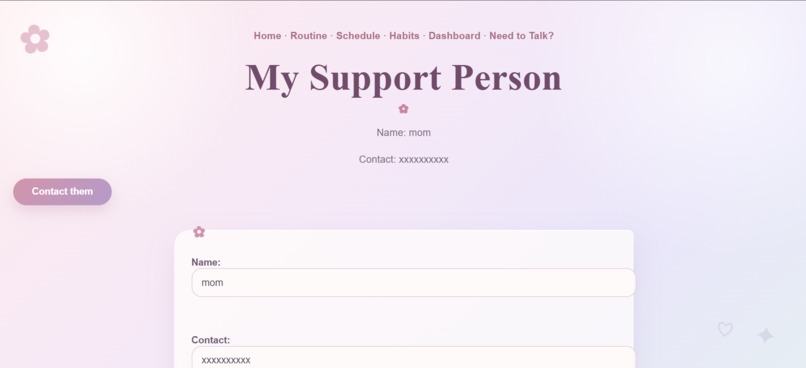
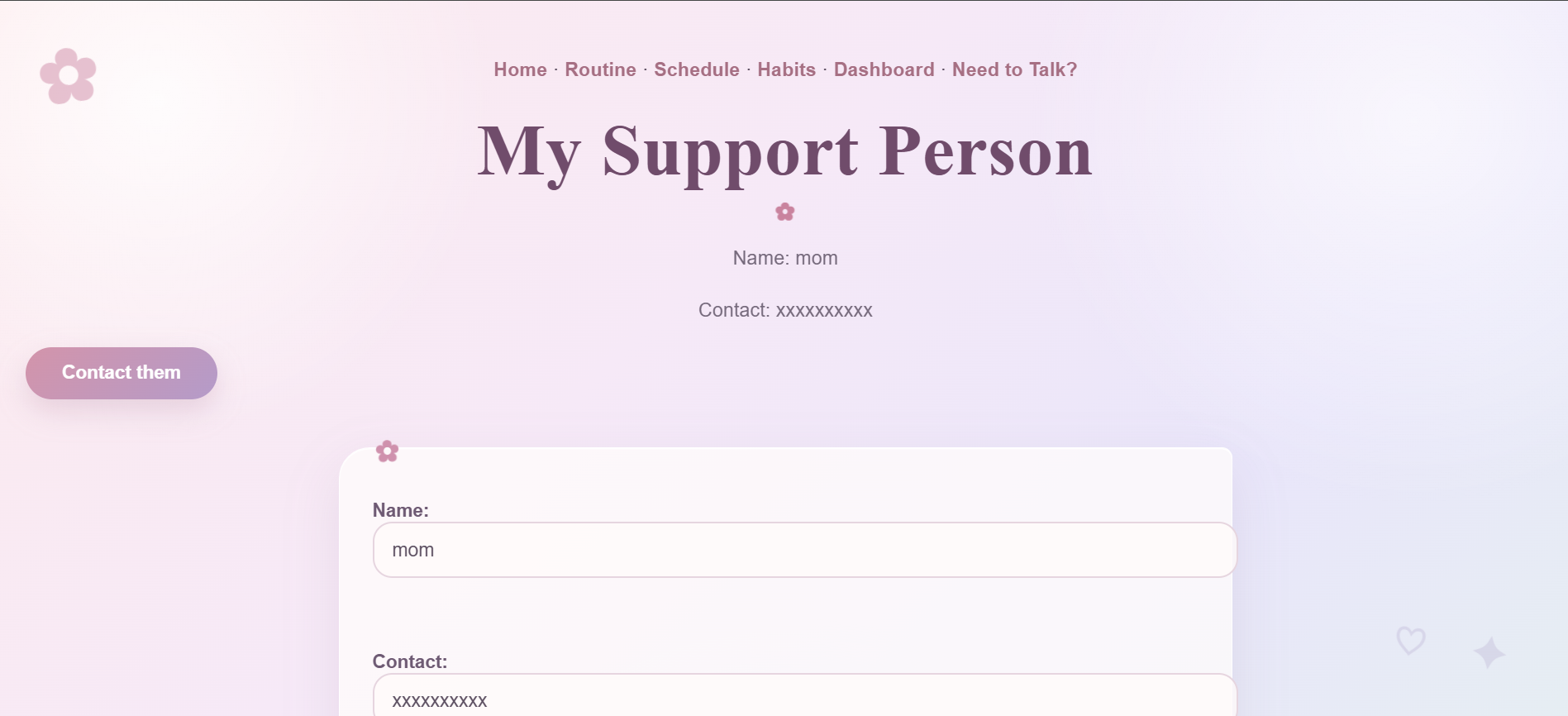
Lets users save and update the details of a trusted person they can reach out to when they need support.
-
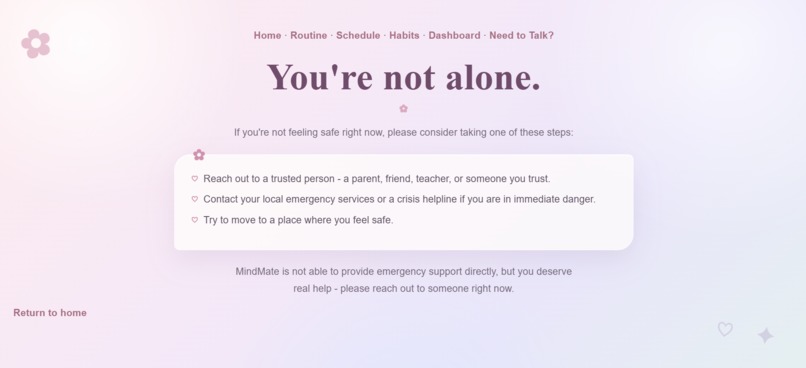
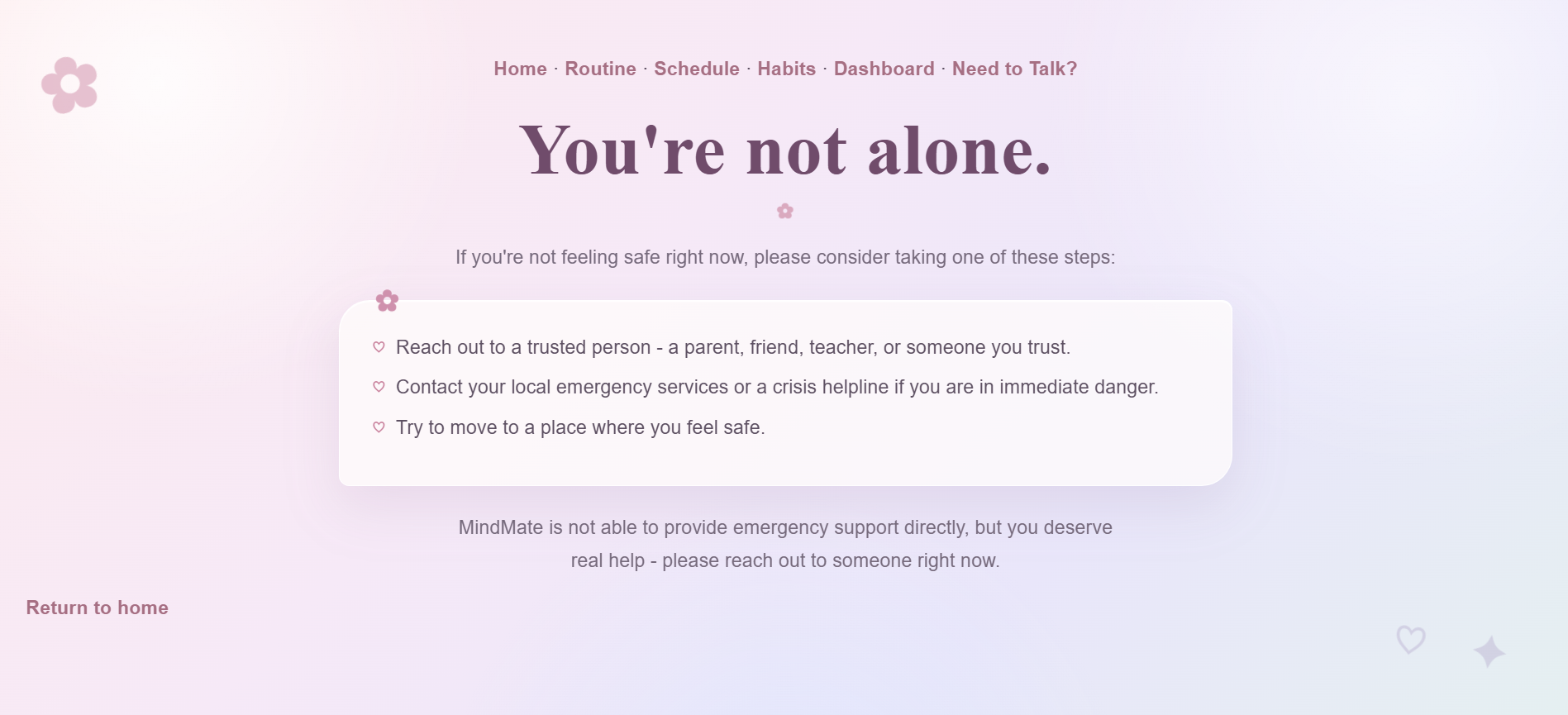
A dedicated safety-focused space that guides users toward immediate support when they feel unsafe.

Inspiration
Life can become overwhelming without us even realizing it. Between responsibilities, expectations, constant screen time, disrupted routines, and the pressure to always keep moving forward, it is easy to put our own well-being at the bottom of the list. Sometimes, we don't need a complicated solution—we simply need something that helps us pause, understand what we're going through, and take one small step toward feeling better. That thought inspired MindMate. I wanted to create a space where people could look beyond just how they feel in the moment and understand the everyday patterns that may be affecting their well-being. Instead of waiting until stress becomes overwhelming, MindMate encourages small, meaningful changes through personalized insights, healthier routines, habit tracking, and supportive conversations. My inspiration came from a simple belief: Taking care of your mind shouldn't be something you remember only when you're struggling. It should be part of everyday life. With MindMate, I wanted to turn that belief into something practical, approachable, and human—a companion that doesn't judge, doesn't demand perfection, and simply helps you take better care of yourself, one day at a time.
What it does
MindMate is a wellness companion designed to help people better understand and improve their everyday well-being. It looks at factors such as stress, sleep, screen time, breaks, eating habits, physical activity, and daily routines to identify patterns that may be affecting a person's well-being. Based on these inputs, MindMate provides:
- 🧠 Personalized wellness insights to identify possible stress factors and unhealthy patterns
- 🌱 Practical suggestions for making small, sustainable improvements
- 🗓️ Personalized routine planning to create a more balanced daily schedule
- ✅ Habit tracking to help users stay consistent with positive changes
- 💬 Supportive conversations for users who simply need a space to express how they're feeling
- 📊 A visual dashboard to help users understand their progress and patterns over time MindMate isn't about achieving a “perfect” routine. It's about helping people understand themselves better, make small changes, and build healthier habits—one day at a time.
How we built it
I built MindMate as a full-stack web application using Python and Flask for the backend, SQLite with Flask-SQLAlchemy for storing user data, and HTML, CSS, and JavaScript for the frontend. The core of MindMate is a rule-based wellness engine built in Python. Instead of simply giving generic advice, it analyzes the information provided by the user—such as sleep, screen time, breaks, physical activity, eating habits, and daily routine—and identifies patterns that may be contributing to stress or an unbalanced lifestyle. I used Flask and Jinja2 to connect the frontend with the backend and dynamically generate personalized results. Chart.js was used to turn wellness and habit data into simple visualizations on the dashboard. I also designed a structured supportive conversation flow, keeping safety-sensitive interactions separate from the more general wellness companion. The result is a system where the user provides information about their everyday life, MindMate processes those patterns, and the application turns them into personalized insights, practical suggestions, routines, and trackable habits. I focused on keeping the technology simple and understandable while making the experience feel warm, supportive, and genuinely useful.
Challenges we ran into
One of the biggest challenges was figuring out how to turn a broad idea like “help people improve their well-being” into something practical and actionable. I had to carefully decide what information MindMate should use, how to identify meaningful patterns, and how to make the suggestions feel personalized rather than generic. Another challenge was connecting all the different parts of the application. Building the frontend, Flask backend, database, rule-based wellness engine, and dashboard separately was one thing—making them work together smoothly was another. Each challenge pushed me to learn something new, rethink my approach, and ultimately build a product that was much closer to what I originally imagined.
Accomplishments that we're proud of
What makes MindMate especially meaningful to me is that this was my first project.
Taking an idea from a blank page and turning it into a working application was both exciting and challenging. I had to learn as we built—figuring out how the frontend, Flask backend, database, wellness engine, and different features could all come together as one product.
There were plenty of moments where things didn't work the way I expected, but every bug, redesign, and problem became part of the learning process. Instead of letting the unfamiliar parts stop me, I kept experimenting, fixing, and improving.
I'm proud that my first project wasn't just about learning to code—it was about learning how to build something meaningful from scratch.
Seeing MindMate go from an idea to a real, working application is something I'll genuinely remember as the starting point of my journey as developers.
What we learned
Building MindMate taught me that creating a project is much more than just writing code.
Technically, I learned how to connect a Flask backend with a frontend and SQLite database, structure a full-stack application, work with user data, and build a rule-based system that can turn inputs into personalized insights. I also learned how important it is to think about how different parts of a project communicate with each other.
Beyond the technical side, I learned how to turn an abstract idea into a real, usable product. I had to make decisions about user experience, safety, personalization, and design—and often rethink my approach when something didn't work as expected.
Most importantly, I learned that good technology isn't just about having more features. It's about solving a real problem in a way that feels useful, thoughtful, and human.
MindMate taught me to experiment, debug, iterate, and keep going when things didn't work the first time. And that mindset is probably the biggest thing we'll take away from this experience.
What's next for MindMate
MindMate is only the beginning. My next step is to make MindMate more personalized, intelligent, and accessible. I want to improve the wellness engine so it can understand patterns over longer periods instead of relying mainly on a single check-in.
I also envision adding features such as smarter mood and habit tracking, progress-based recommendations, customizable routines, and a more natural conversational companion.
As MindMate grows, I want to focus even more on privacy and safety while making the experience useful for a wider range of people and everyday situations.
Ultimately, my goal is to evolve MindMate from a hackathon project into a reliable everyday wellness companion—one that helps people understand their patterns, build healthier routines, and make small positive changes that can add up over time.
The hackathon may be where MindMate started, but I don't want it to be where it ends.


Log in or sign up for Devpost to join the conversation.