-
-
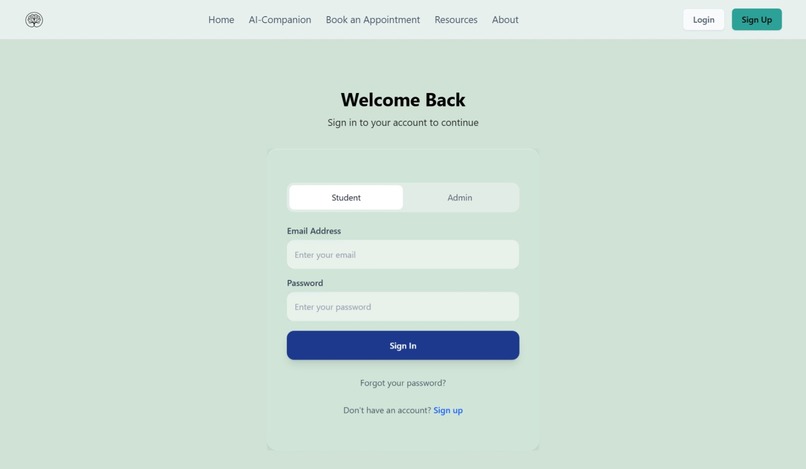
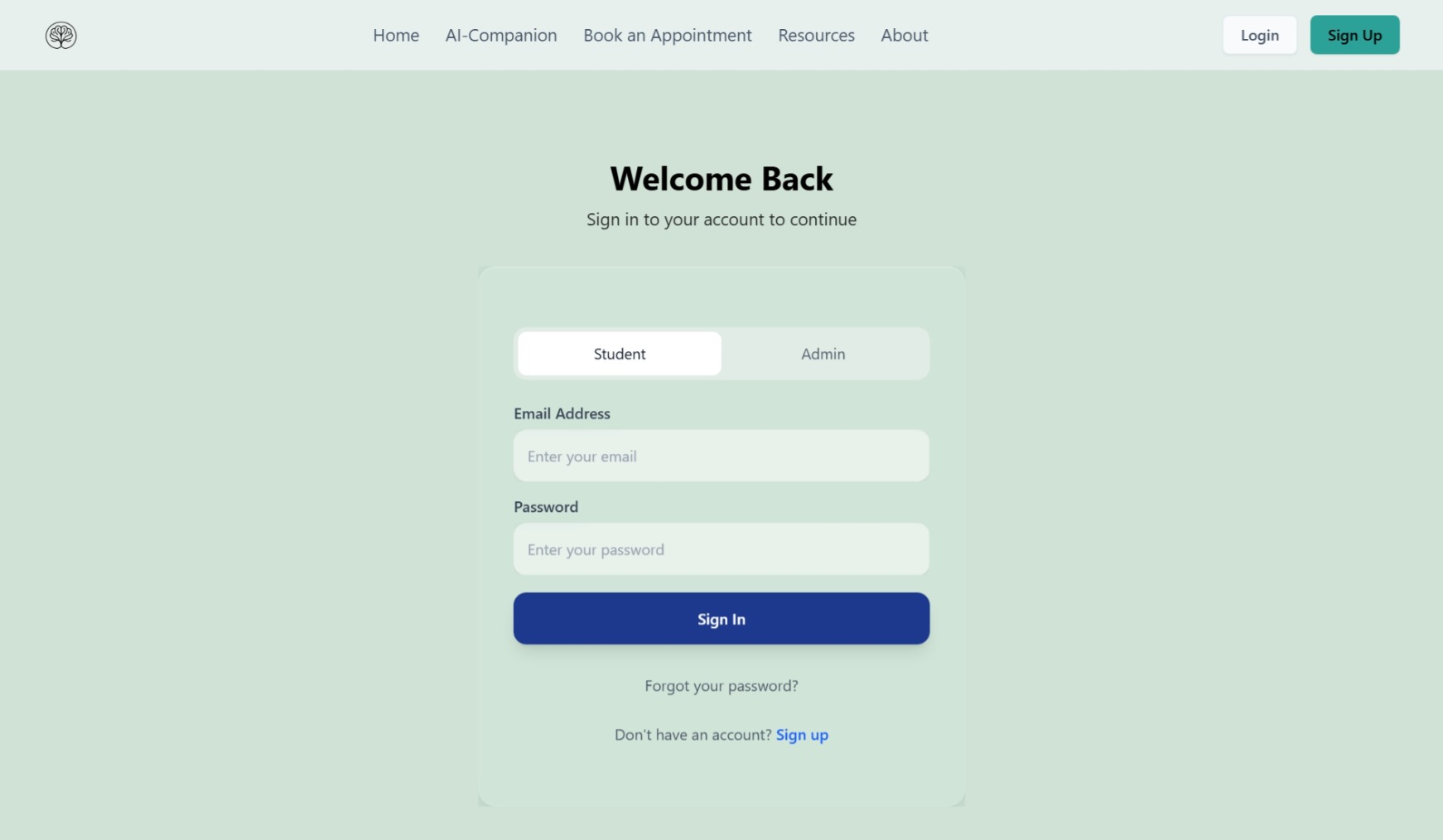
Sign in Page
-
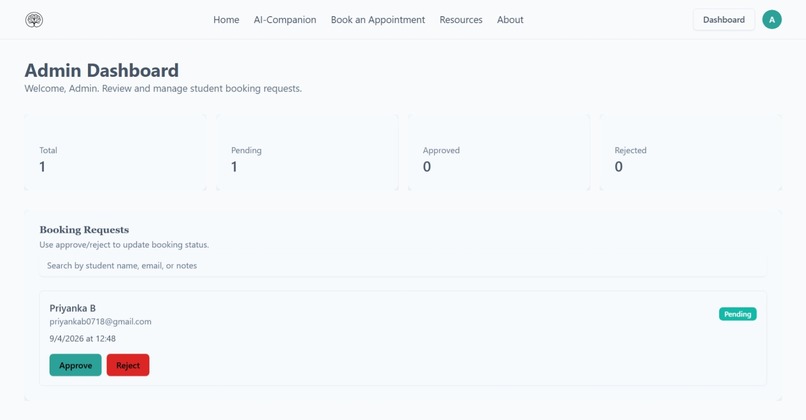
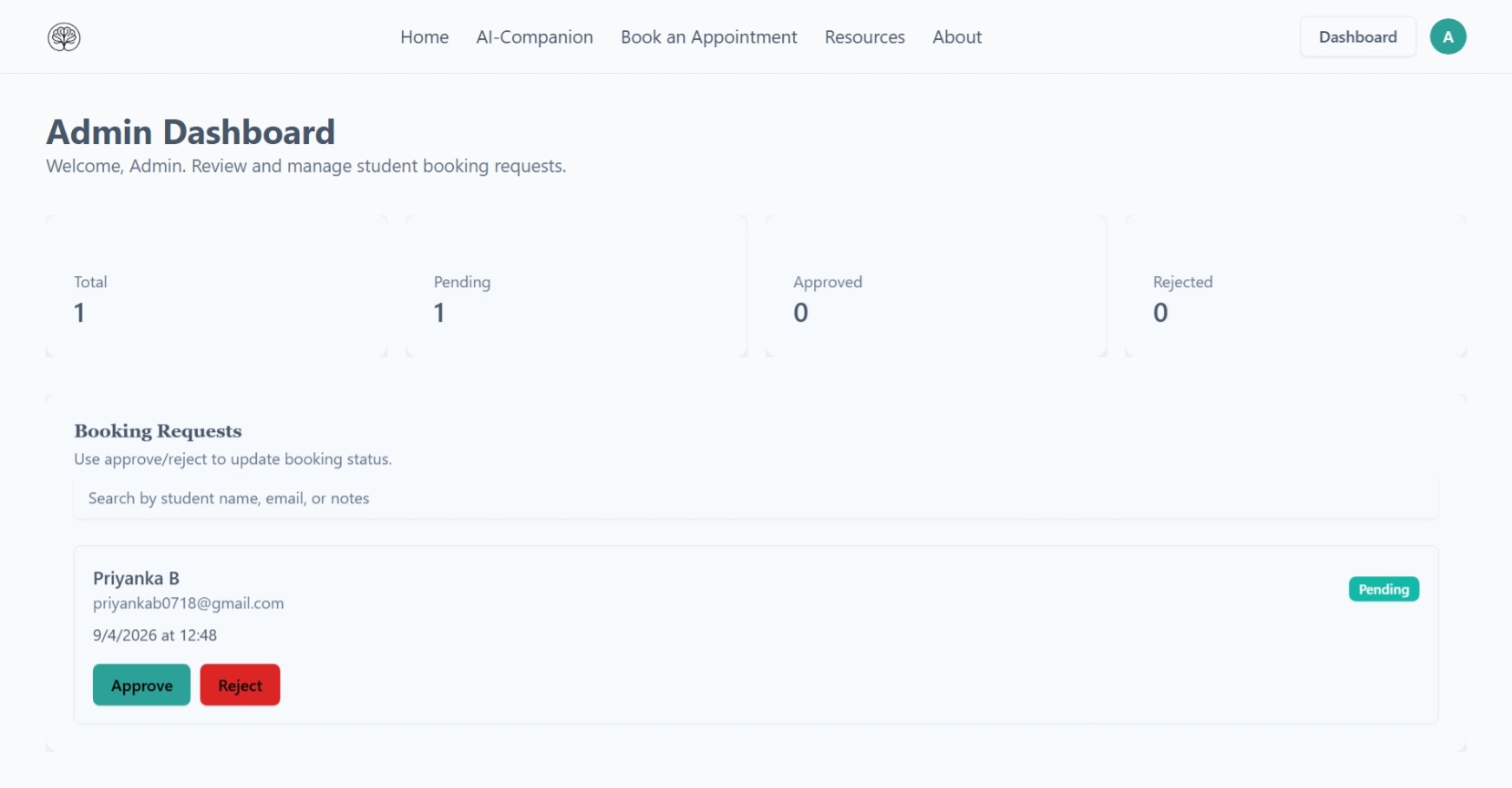
Admin Dashboard
-
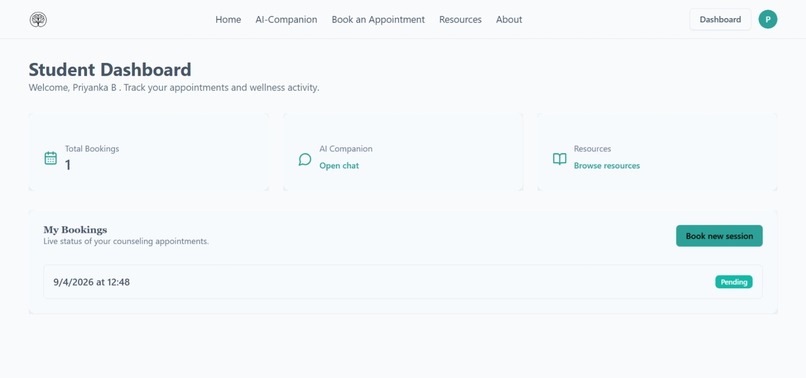
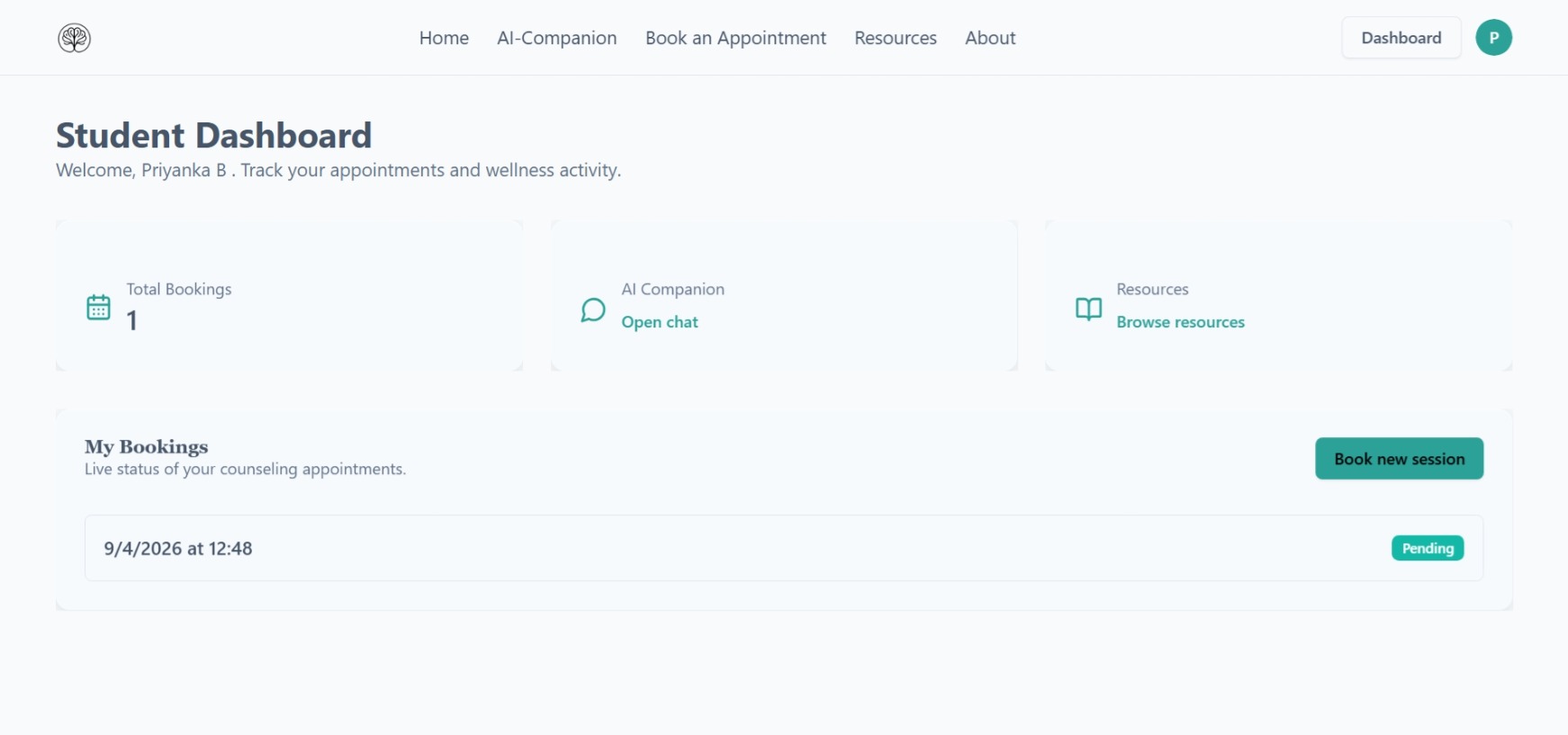
Student Dashboard
-
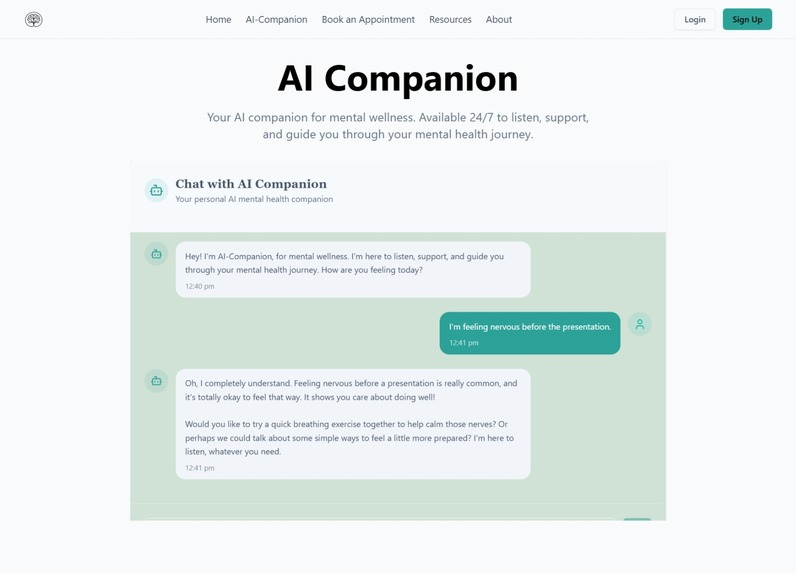
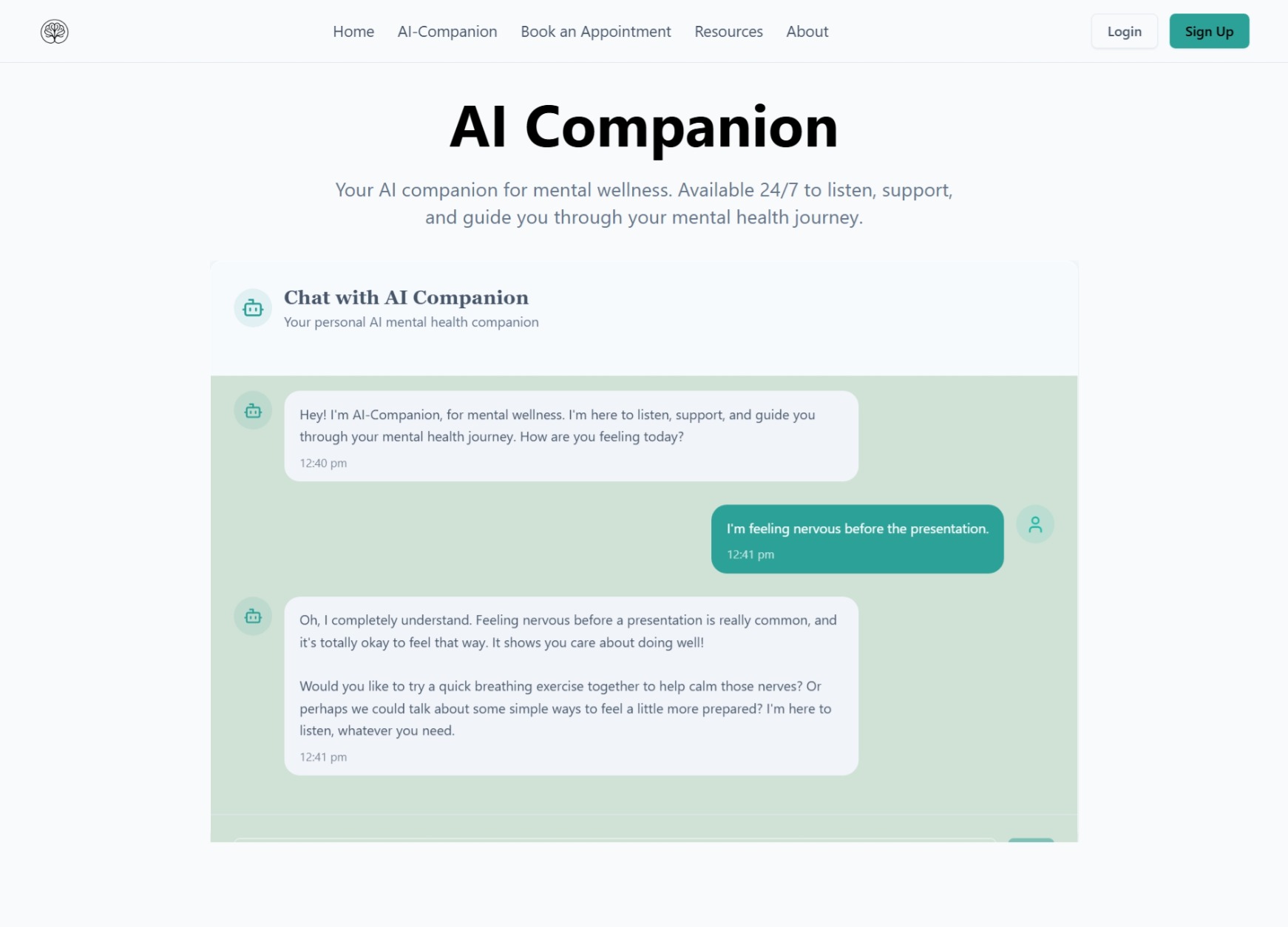
AI Companion Page
-
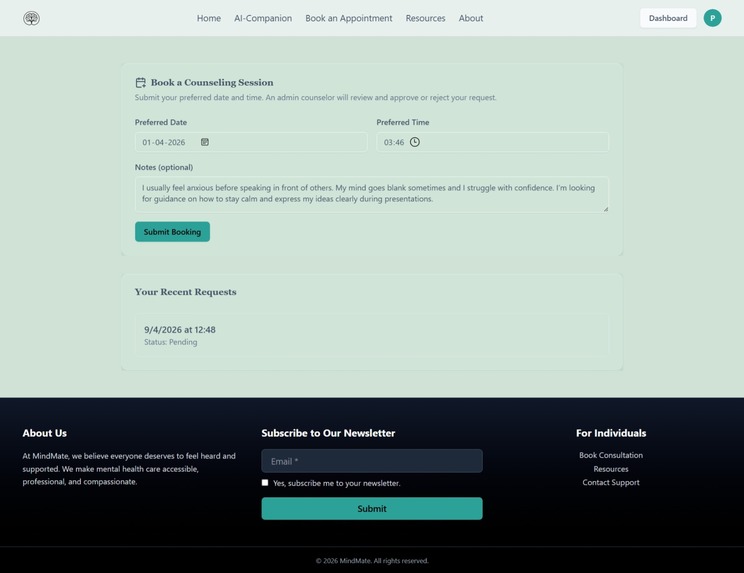
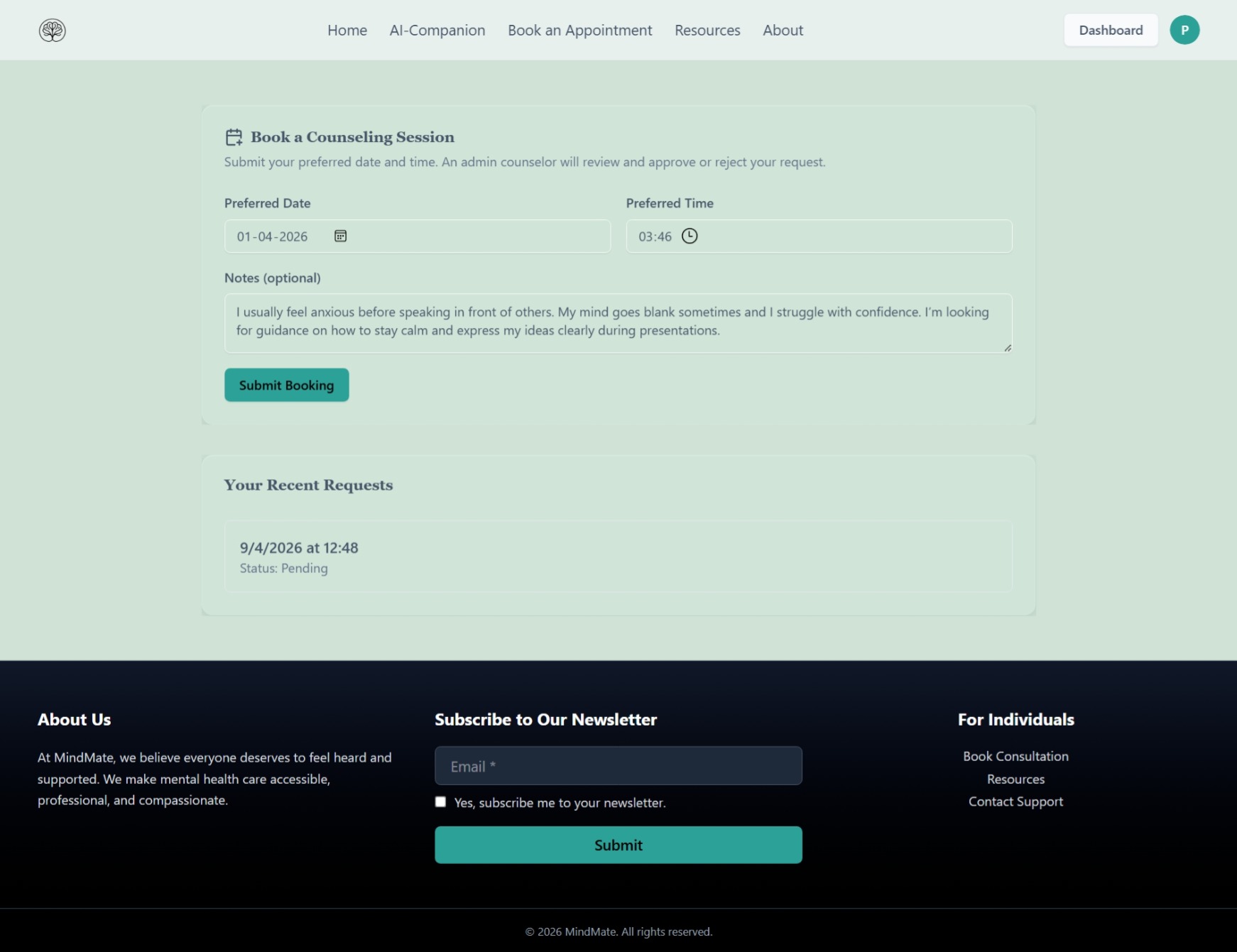
Book an Appointment Page
-
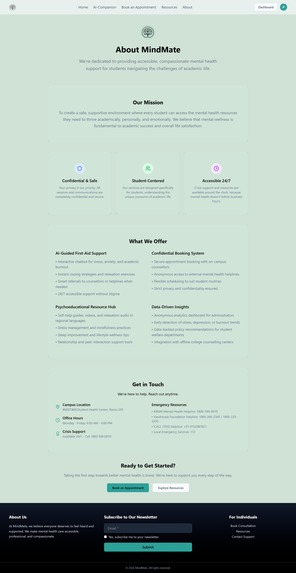
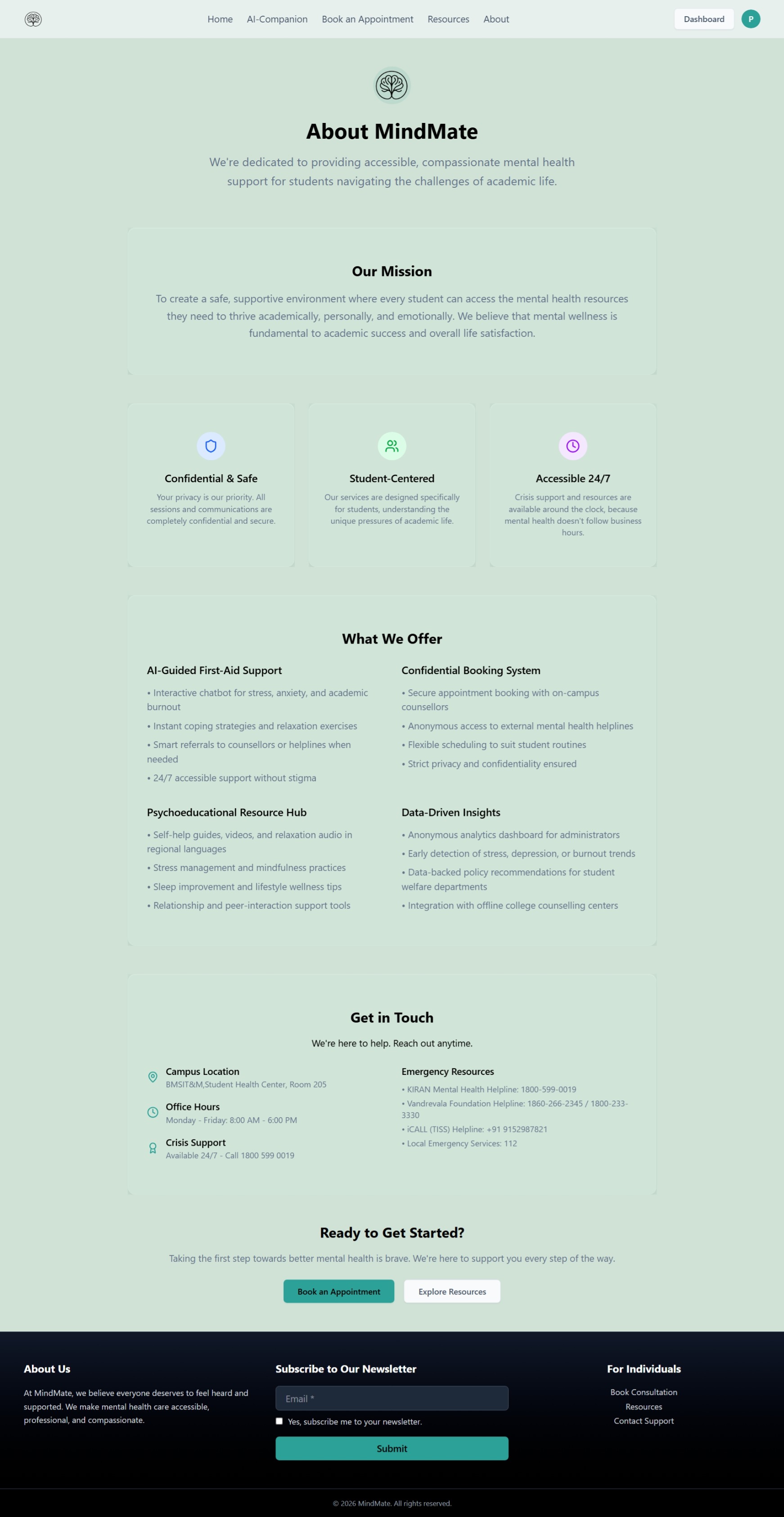
About Page
-
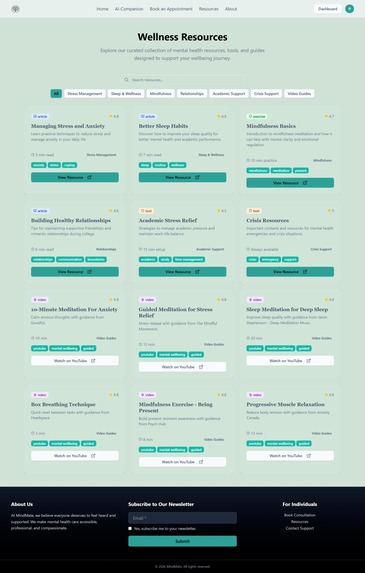
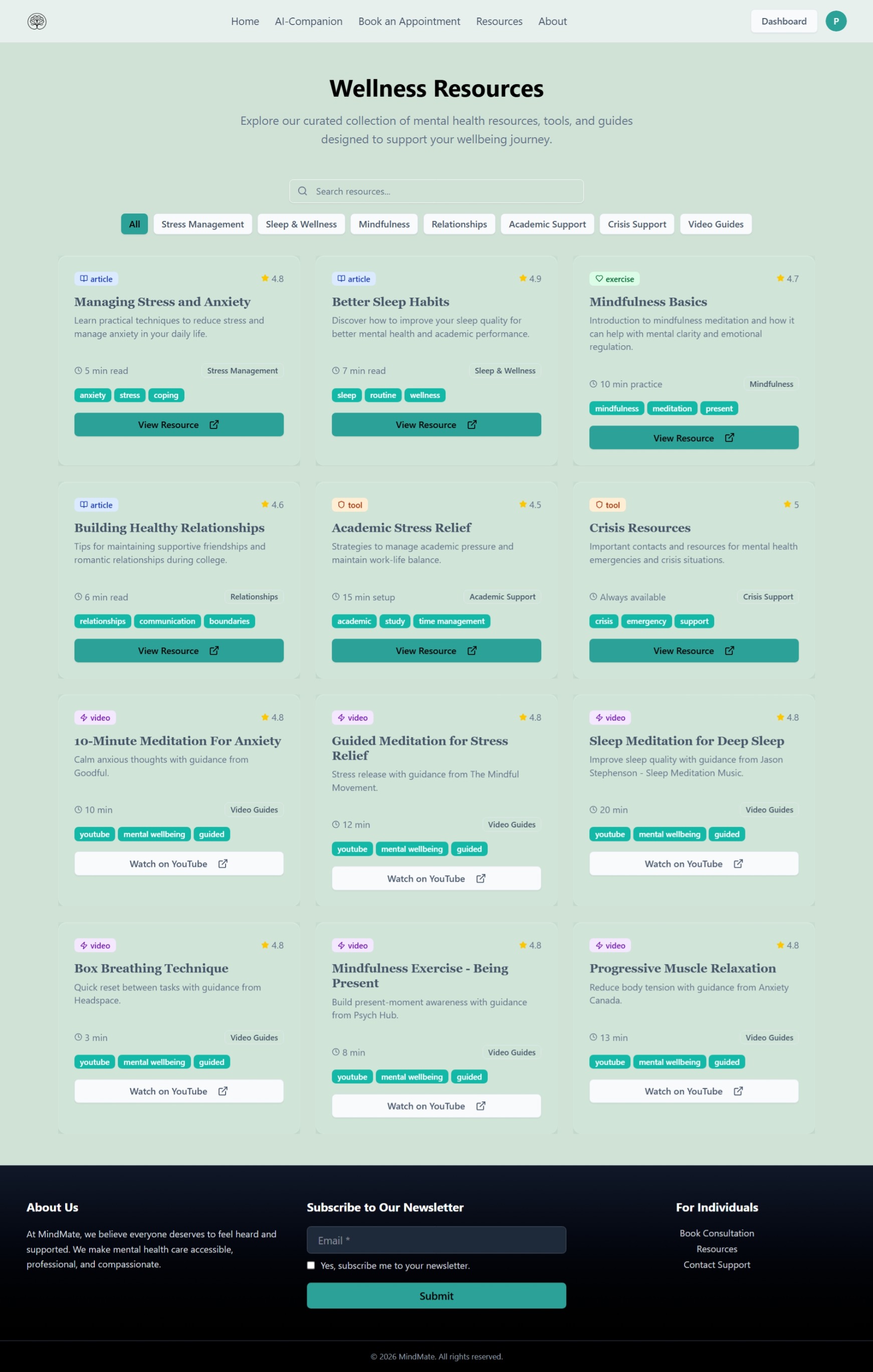
Resource Hub Page
-
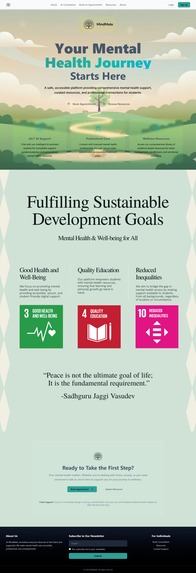
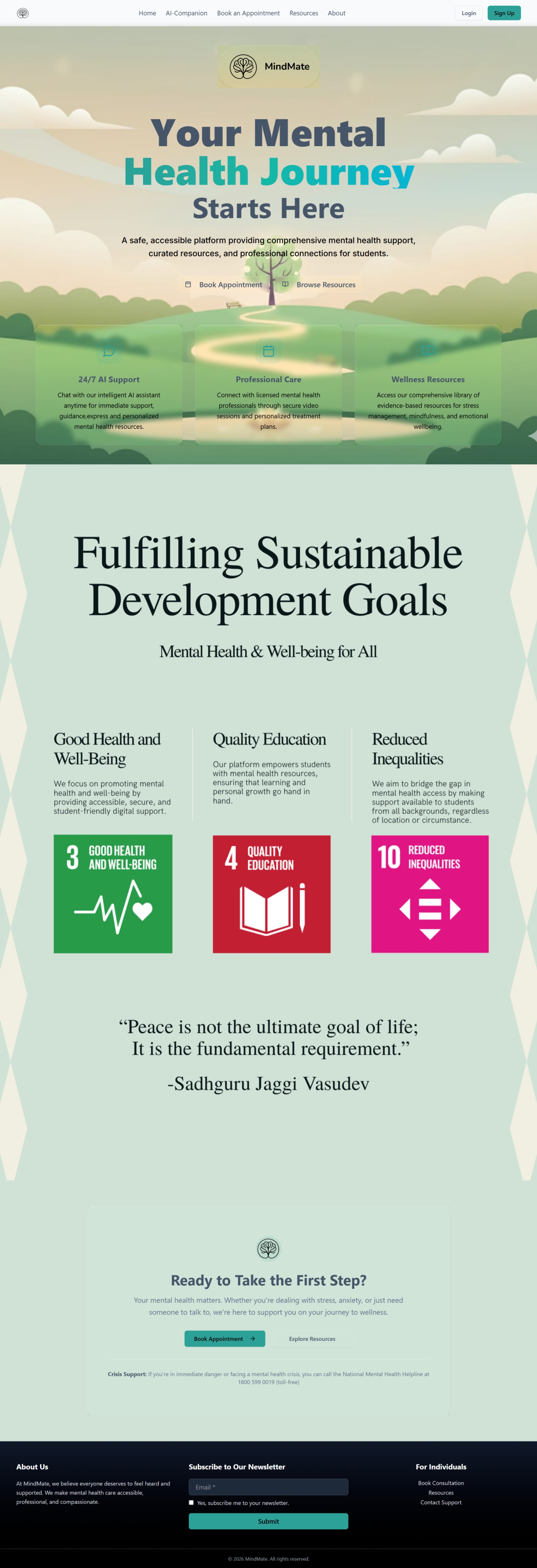
Home Page
Inspiration
Student mental health support is often delayed because help feels hard to access, stigmatized, or limited to office hours. We wanted to build something that gives immediate emotional support while still connecting students to real human counselors. MindMate was inspired by one simple idea: make support available in the same way students already seek help, fast, digital, and judgment-free.
What it does
MindMate is a role-based mental wellness platform for students and counselors.
- Students can sign up, log in, and access a personal dashboard.
- AI Companion provides empathetic conversational support for stress, anxiety, and burnout.
- Students can request counseling sessions by submitting booking details.
- Students can track booking status (pending, approved, rejected).
- A Resources page combines articles, exercises, tools, and YouTube wellbeing content.
- Admin counselors can review all booking requests and approve or reject them from an admin dashboard.
How we built it
We built MindMate as a modern web app with a production-style architecture:
- Frontend: Next.js App Router, TypeScript, Tailwind UI components.
- Authentication and DB operations: Supabase Auth + Postgres.
- Additional ORM layer and schema management: Prisma with migrations.
- AI support: Gemini API through a server route with validation and fallback handling.
- Role logic: centralized role utilities for student/admin routing and effective role resolution.
- Deployment: Vercel with environment-variable based configuration. We designed the flow to be simple: Login → Dashboard → AI Support / Booking / Resources → Admin Review Pipeline.
Challenges we ran into
- Prisma migration connectivity issues with managed database endpoints.
- Differences between direct DB host and pooler behavior during runtime vs migration.
- Lockfile and package manager mismatches during cloud deployment.
- Prisma client generation issues in CI build environments.
- Handling network failures gracefully in AI chat (for example, failed fetch and timeouts).
- Ensuring role consistency so admin identity always resolves correctly across pages.
Accomplishments that we're proud of
- Delivered a full end-to-end student-to-counselor workflow, not just isolated pages.
- Built clean role-based routing for student and admin dashboards.
- Implemented robust AI error handling for better real-world reliability.
- Integrated practical resource discovery with mixed content types and direct YouTube linking.
- Successfully deployed the platform on Vercel and validated production flow.
What we learned
- Deployment reliability is as important as feature completeness.
- Authentication, role control, and data policies need to be treated as core product logic.
- Prisma and Supabase can work well together, but connection strategy matters.
- User trust improves when errors are clear, humane, and actionable.
- Small UX decisions, such as status visibility and simple booking flows, greatly improve usability.
What's next for MindMate
- Add mood check-ins and weekly trend insights.
- Introduce personalized resource recommendations.
- Build structured guided programs (7-day/14-day wellbeing plans).
- Add counselor notes and session summaries for continuity.
- Strengthen safety workflows with crisis escalation and one-tap helpline actions.
- Expand analytics for impact measurement, such as engagement and support completion rates. If we model student support impact as: Impact ∝ Accessibility × Personalization × Consistency, our next roadmap focuses on maximizing all three.
Built With
- api
- gemini
- next.js
- postgresql
- prisma
- radix
- react
- shadcn/ui
- supabase
- tailwind
- typescript
- vercel
- vitest
- zod


Log in or sign up for Devpost to join the conversation.