
About the Project
Inspiration
Mental health conversations are often avoided, especially among students, due to fear of judgment, cultural stigma, and lack of safe spaces. Many young people experience stress, loneliness, and emotional overload but hesitate to speak openly—either because they do not want to burden others or because mental health is not openly discussed in their environment.
I was inspired to build MindMate after observing how students around me often suppress emotions during exams, family pressure, and social expectations. I wanted to create a non-judgmental, anonymous, and culturally sensitive platform where users can express emotions freely without fear.
The inspiration grew from the idea that technology can provide emotional reflection and peer support safely, helping users feel heard and validated even when professional help is not immediately accessible.
What I Learned
Through this project, I learned that building mental health technology requires ethical responsibility in addition to technical skills. Key insights include:
How AI can be used for empathetic reflection without diagnosis, ensuring emotional validation while respecting boundaries.
The importance of privacy and anonymity in mental health tools.
Designing technology that is supportive, context-aware, and culturally sensitive.
The need for emergency detection and escalation, including displaying helplines and recommending peer support.
How to balance user engagement and safety, such as providing community support without implying professional therapy.
I also strengthened my skills in frontend design, backend logic, UX/UX for mental health, and structuring an ethical web application suitable for real-world demonstrations.
How I Built the Project
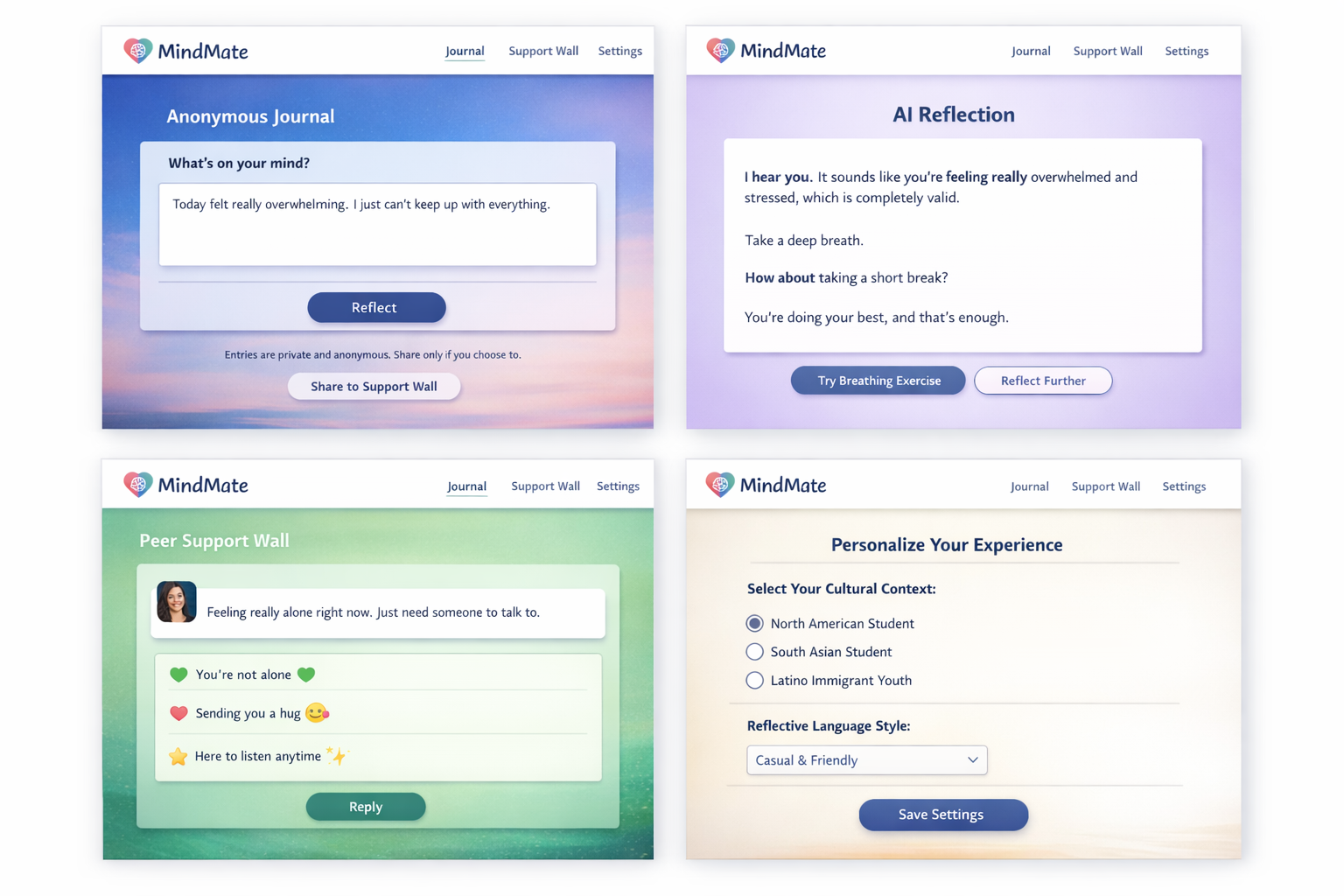
MindMate is a web-based application with a thoughtful architecture designed to balance usability, empathy, and safety.
Frontend: HTML, CSS, and JavaScript create a calm and minimal interface, featuring journaling, reflective feedback, and real-time UI changes for emotional context.
Backend: Node.js with Express handles user input, detects keywords, and returns empathetic, context-aware reflections.
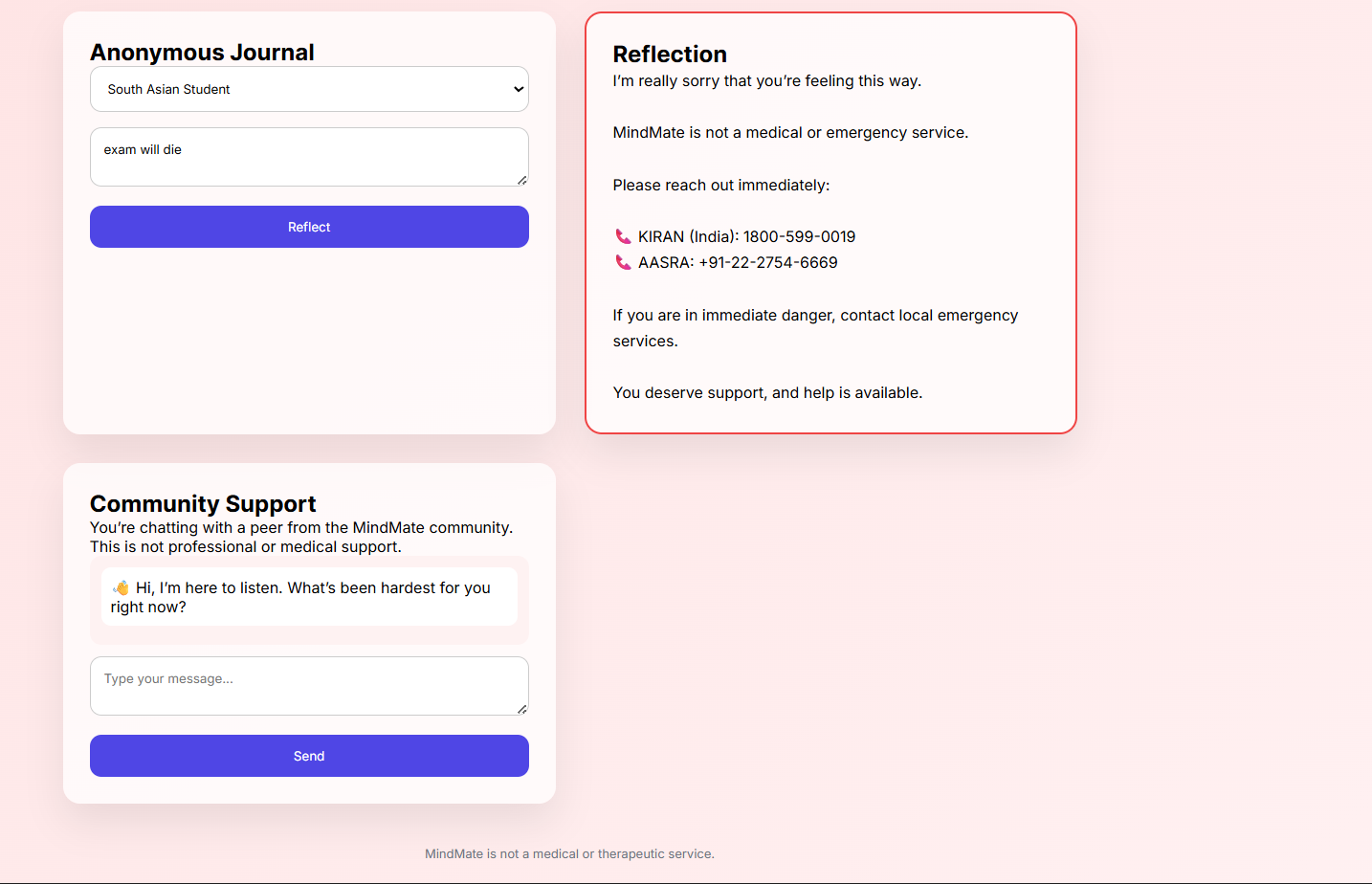
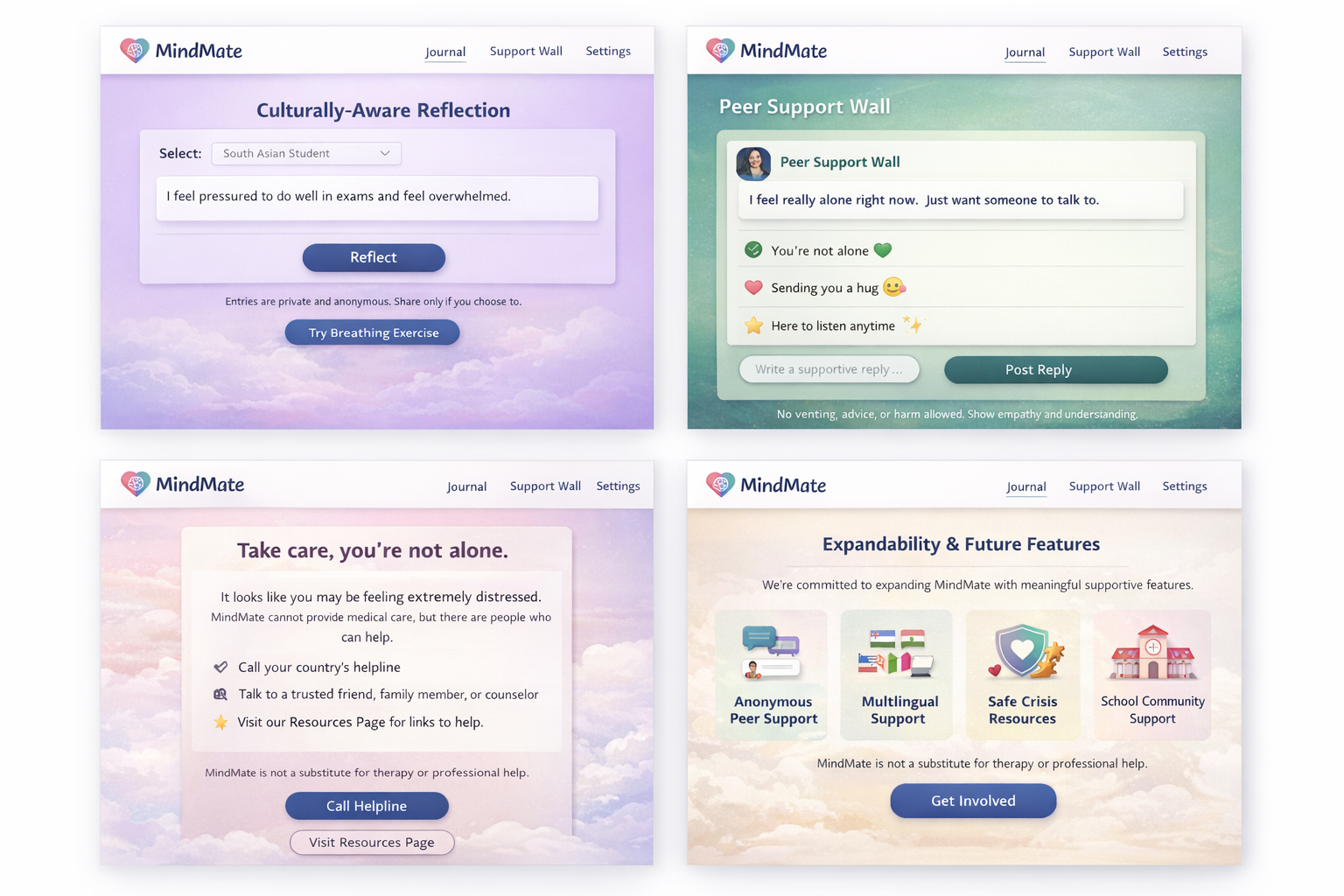
AI Logic: The system analyzes journal entries for emotional cues and provides human-like, supportive responses. It detects crisis-related words (e.g., "suicide", "die") and automatically triggers emergency mode, changing UI colors, tone of messaging, and displaying helpline numbers.
Community Support: In emergency mode, users can engage in a peer support chat within the app, allowing them to communicate with trained community listeners. This is clearly labeled as non-professional support, ensuring ethical compliance.
Ethics & Safety: MindMate includes clear disclaimers, ensures user anonymity, and directs users toward trusted emergency resources when needed.
The system emphasizes impactful, explainable features rather than attempting to provide medical advice.
Challenges I Faced
Ethical AI Response: Ensuring that AI reflections are empathetic and validating without crossing into medical advice required careful wording and design.
Emergency Handling: Implementing emergency detection with appropriate UI changes, helpline redirection, and community support while keeping the experience supportive and safe was a technical and UX challenge.
Cultural Sensitivity: Designing an inclusive platform that respects diverse emotional expressions and cultural contexts required careful planning and testing.
Time Management: Prioritizing core features such as journaling, reflection, emergency detection, and peer support was necessary to create a functional and meaningful prototype.
Conclusion
MindMate represents a step toward accessible, anonymous, and stigma-free mental health support for students. By combining AI reflection, emergency detection, helpline redirection, and community support, the project bridges the gap between silent struggle and meaningful engagement.
This project reinforced my belief that responsibly designed technology can provide emotional validation, support, and safety—offering real value to users even before professional intervention is available.
MindMate demonstrates how empathy, ethical design, and thoughtful UX can create a safe and culturally sensitive digital space for mental well-being.
NOTE: for now if you write " i will die "then it will show the result just to show about the unique feature in it and made it different from other people


Log in or sign up for Devpost to join the conversation.