Inspiration
Mental health is something many people struggle with silently. In today’s fast-paced world, stress, anxiety, and emotional burnout have become increasingly common, especially among students and young adults. However, not everyone feels comfortable seeking help due to stigma, lack of access, or cost.
We wanted to create something simple yet meaningful — a space where people can express their thoughts freely and feel heard without judgment. This idea led to the creation of MindMate, a lightweight digital companion designed to support emotional well-being.
What it does
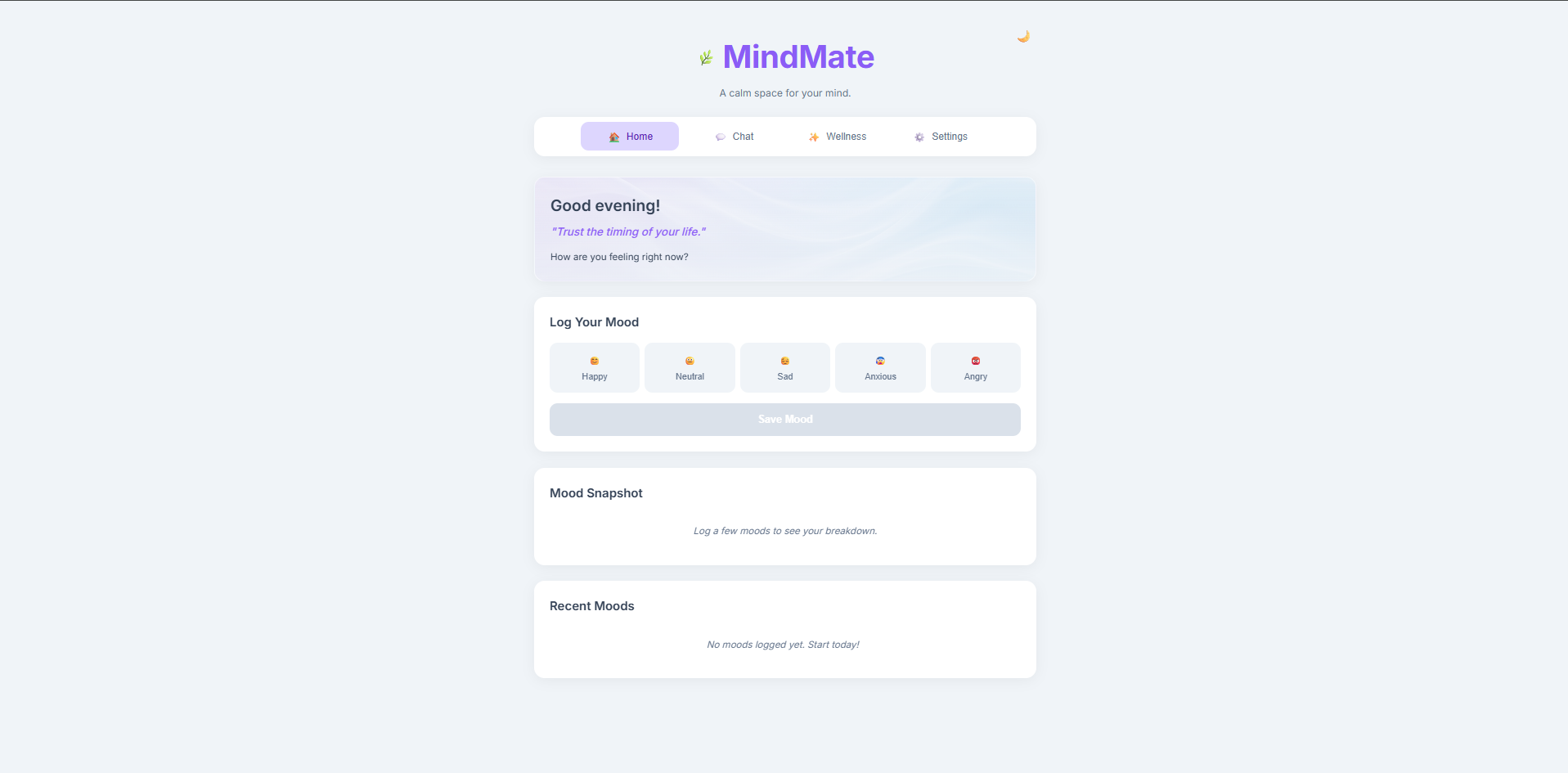
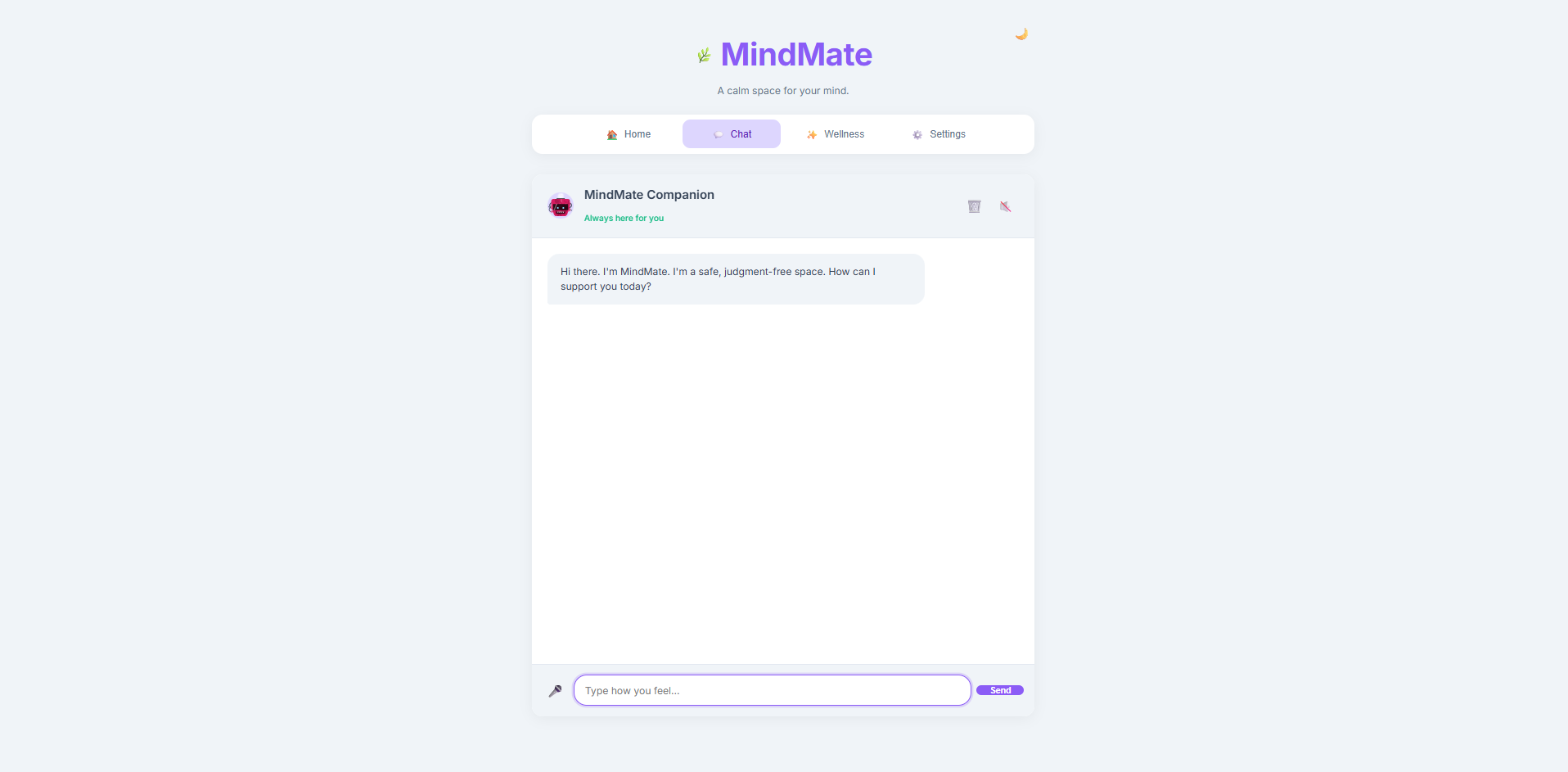
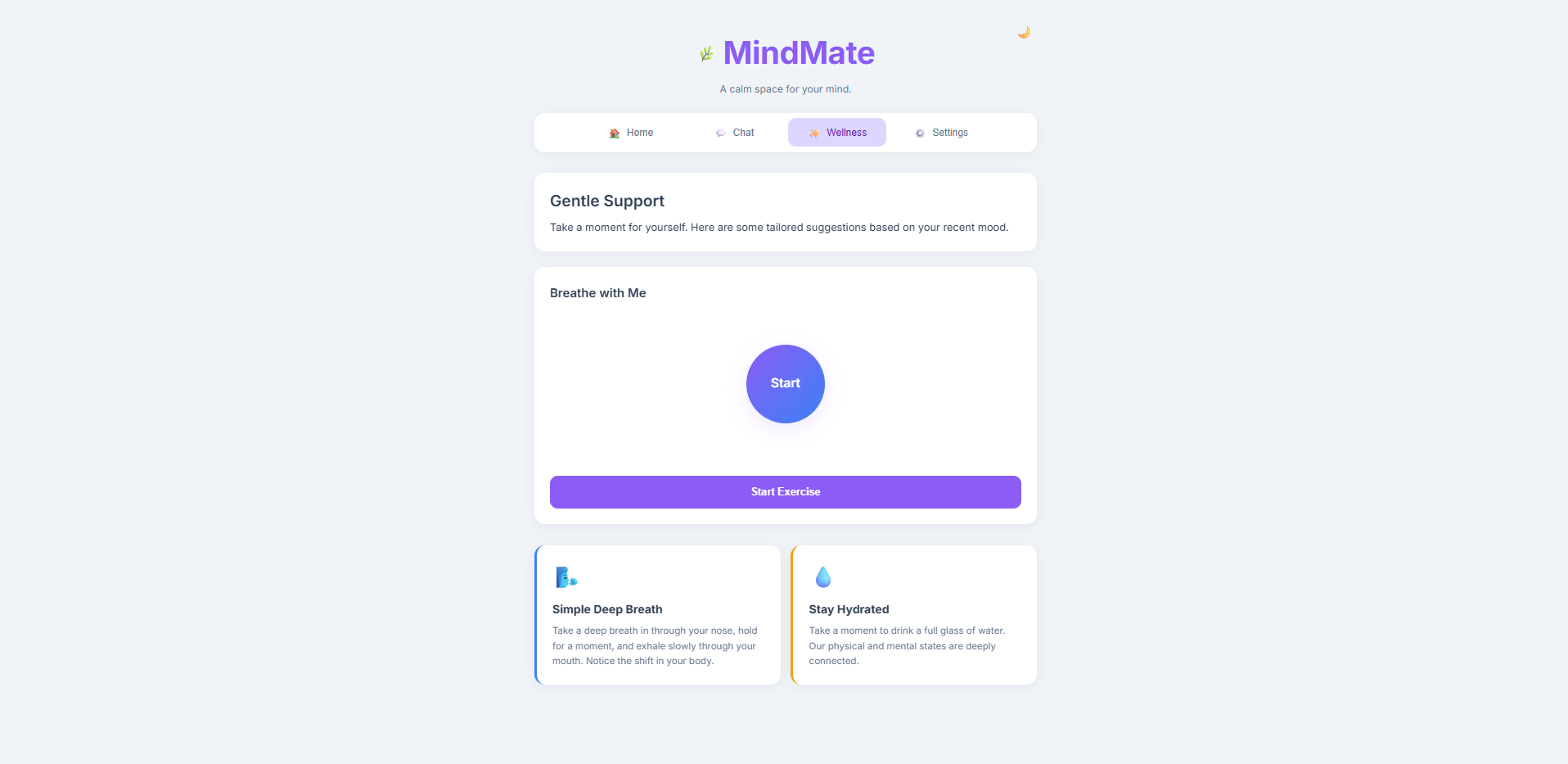
MindMate is a web-based mental wellness application that allows users to:
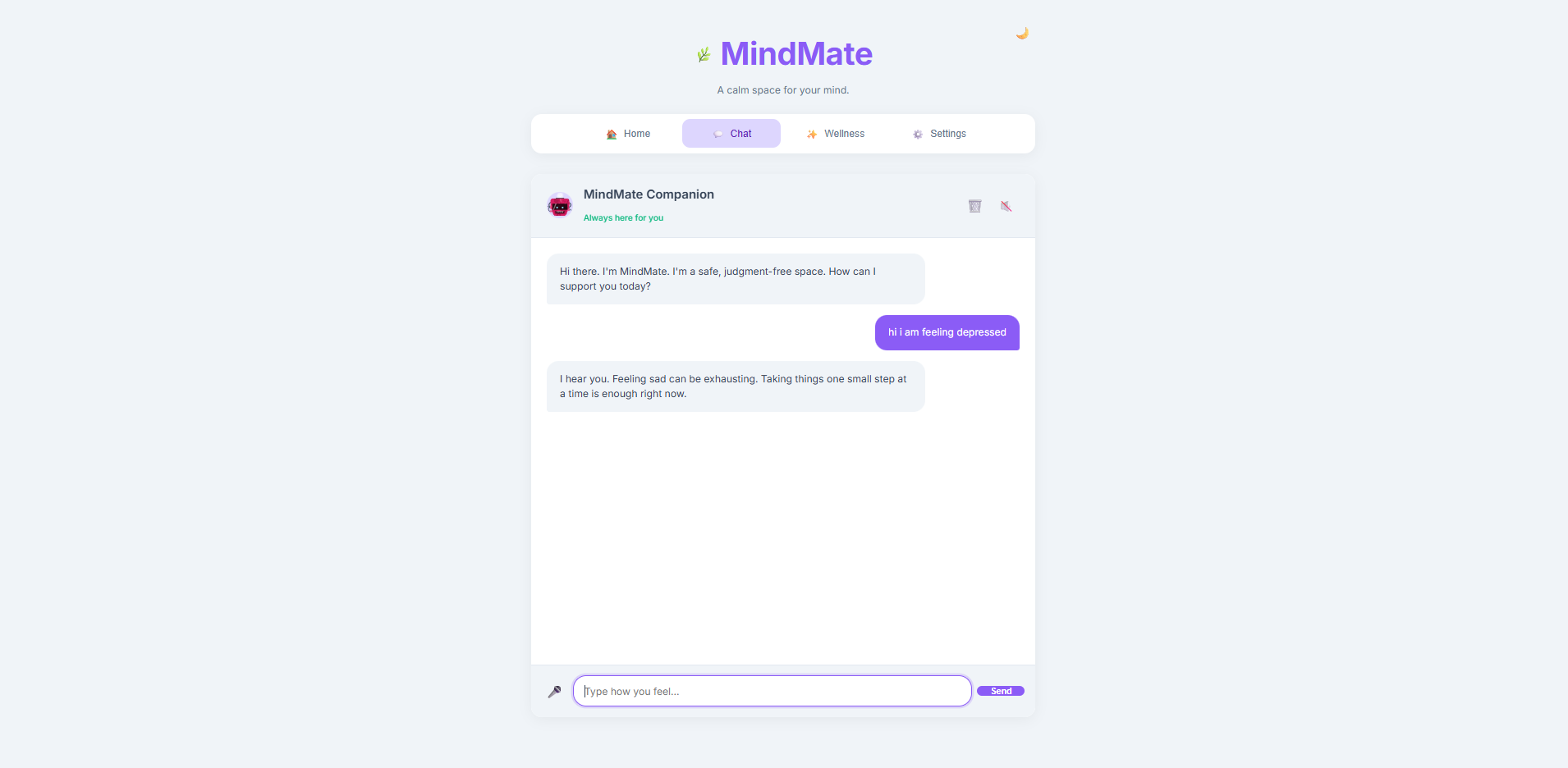
- Chat with a supportive AI companion
- Track their daily mood
- Receive personalized wellness suggestions
- Reflect on emotional patterns over time
The app provides a safe, calming environment where users can check in with themselves and take small steps toward better mental health.
How we built it
We built MindMate using simple and accessible web technologies to ensure ease of use and deployment:
HTML for structure CSS for styling and responsive design JavaScript for interactivity and logic JSON for storing responses and suggestions
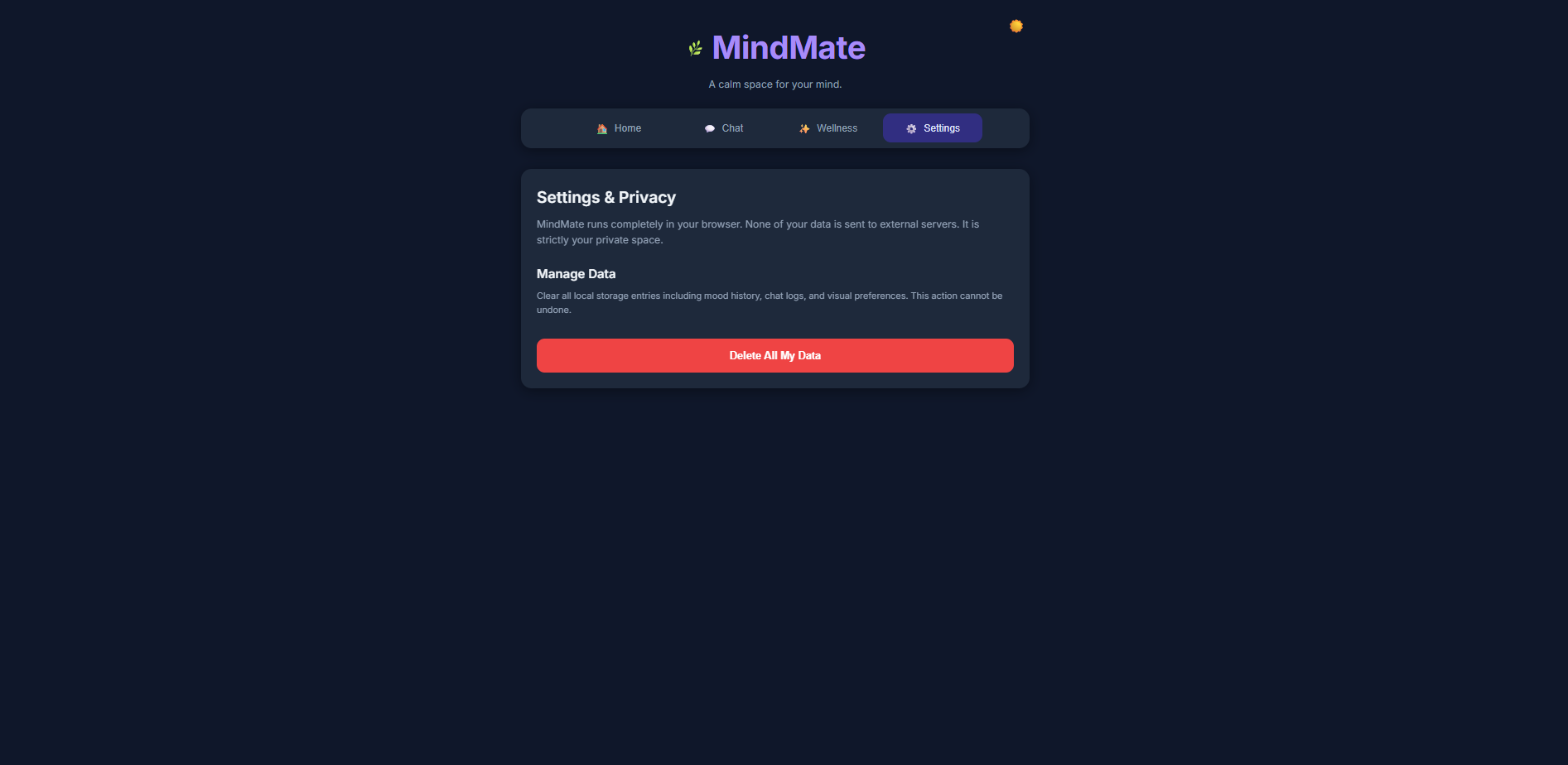
The chat system uses rule-based logic to simulate empathetic responses, while mood tracking data is stored locally using browser storage. The app is designed to run seamlessly using Live Server without requiring any backend setup.
What we learned
Through this project, we learned:
- How to design user interfaces focused on emotional comfort and simplicity
- The importance of empathy in technology design
- How to manage user interaction using JavaScript and local storage
- The value of building impactful solutions with minimal resources
We also gained experience in structuring a complete project from idea to execution.
Challenges we ran into
- Designing responses that feel natural and supportive rather than robotic
- Keeping the interface minimal while still functional
- Making the app fully responsive across devices
- Handling user input in a meaningful way using simple logic
Despite these challenges, we focused on creating a smooth and meaningful user experience.
What’s next for MindMate
In the future, we plan to:
- Integrate advanced AI for more natural conversations
- Add user accounts and cloud-based data storage
- Provide region-based mental health resources
- Include voice interaction and real-time analytics
Our vision is to evolve MindMate into a powerful yet accessible mental wellness platform that can help people worldwide.
Final Thoughts
MindMate is more than just a project — it’s a step toward making mental health support more accessible, approachable, and stigma-free. Even small tools can make a big difference, and we hope MindMate can be one of them.

Log in or sign up for Devpost to join the conversation.