-
-
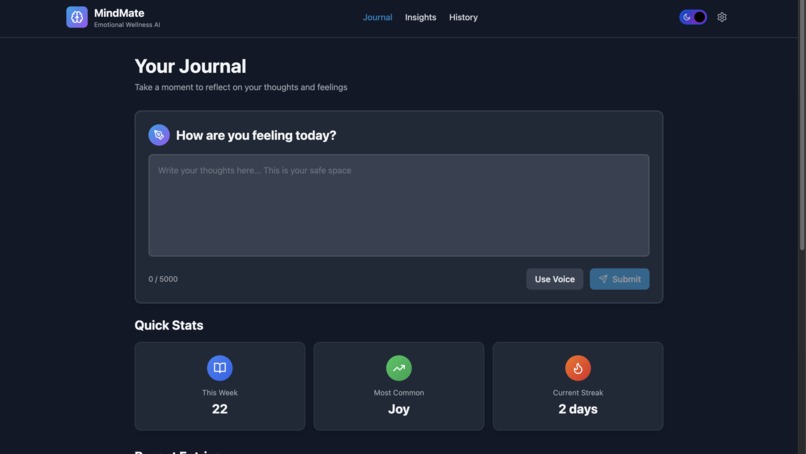
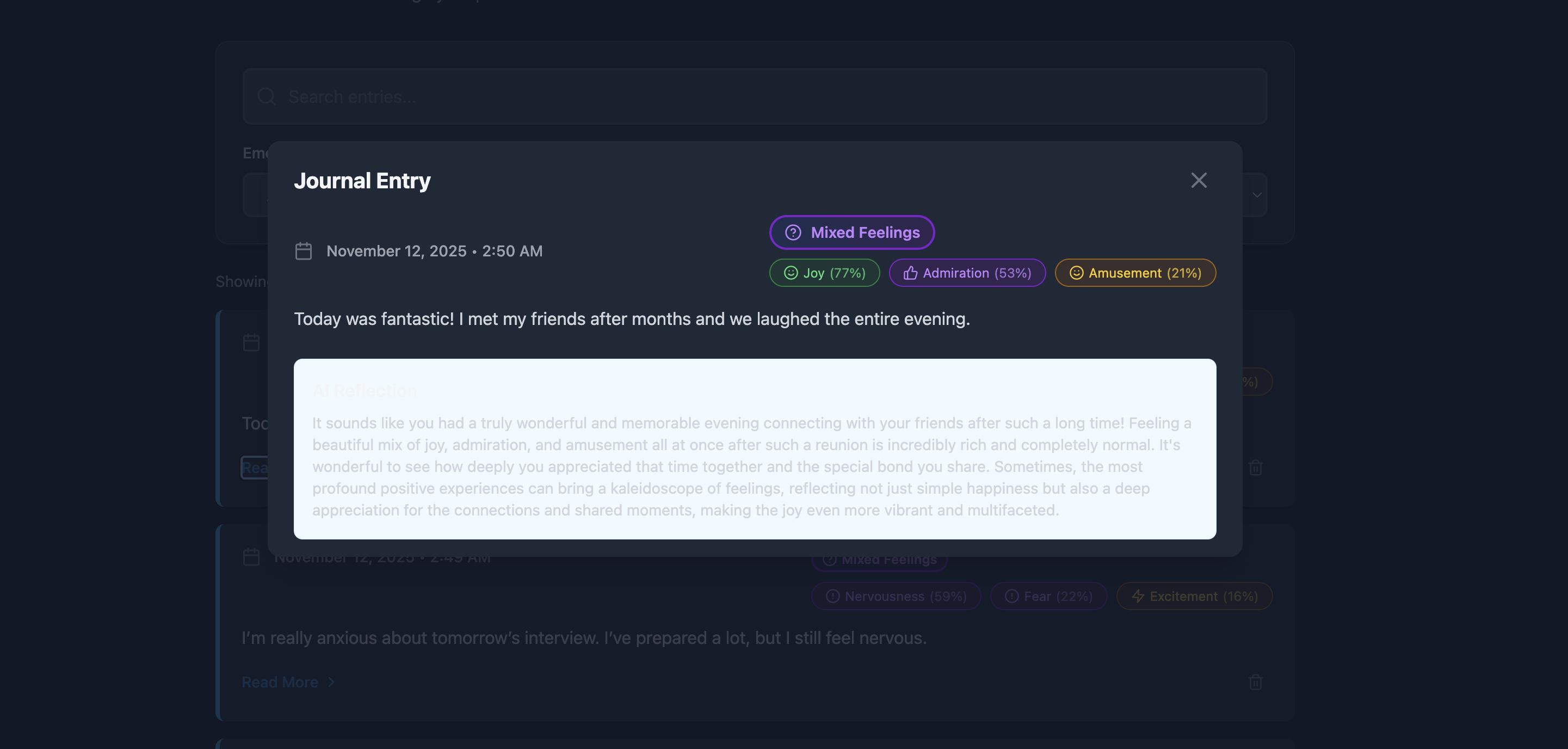
Journal entry
-
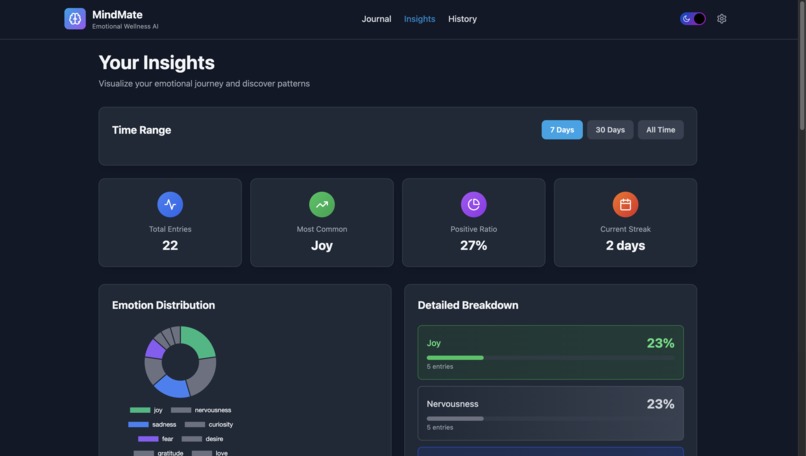
insights
-
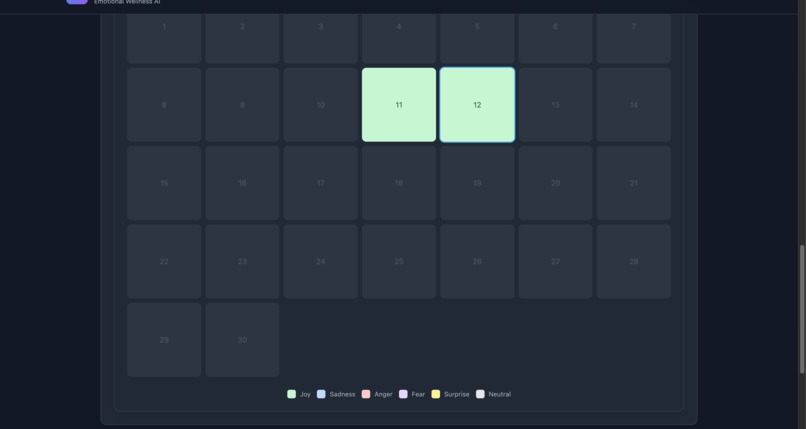
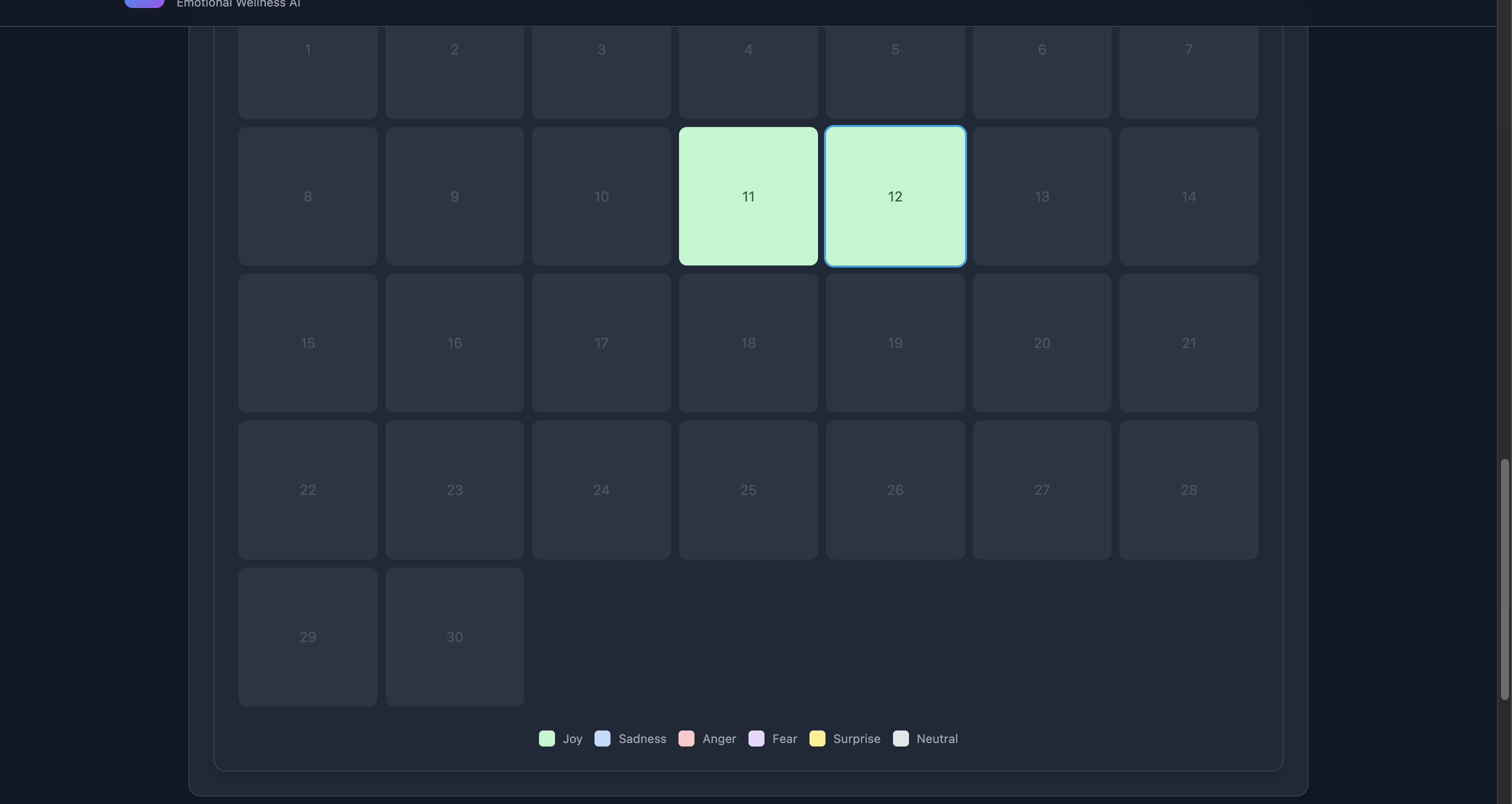
calender tracker
-
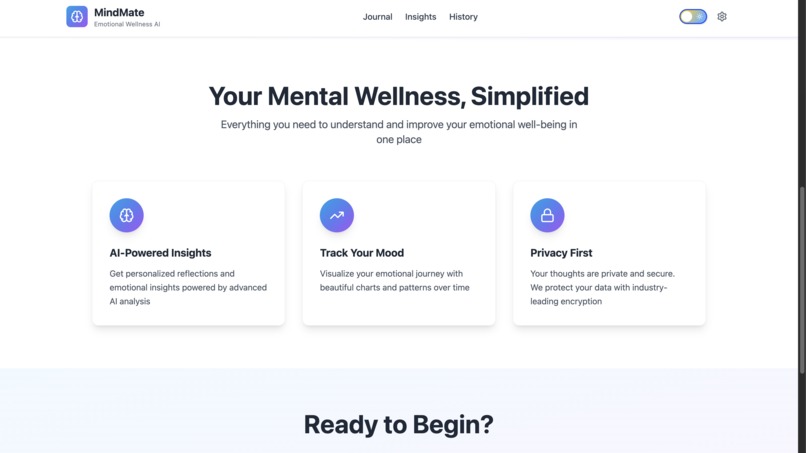
Descriptiom
-
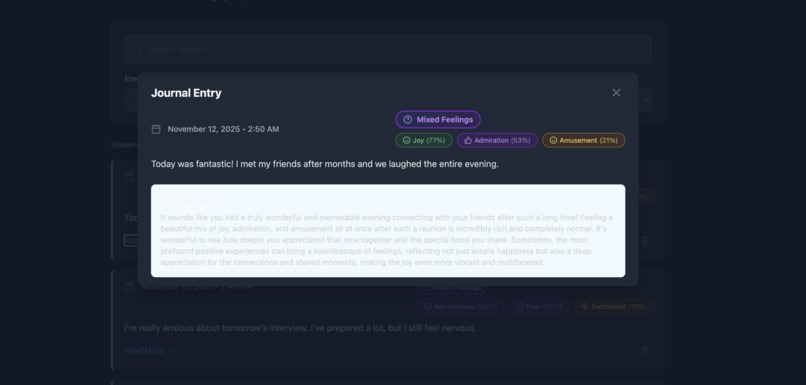
reflections
-
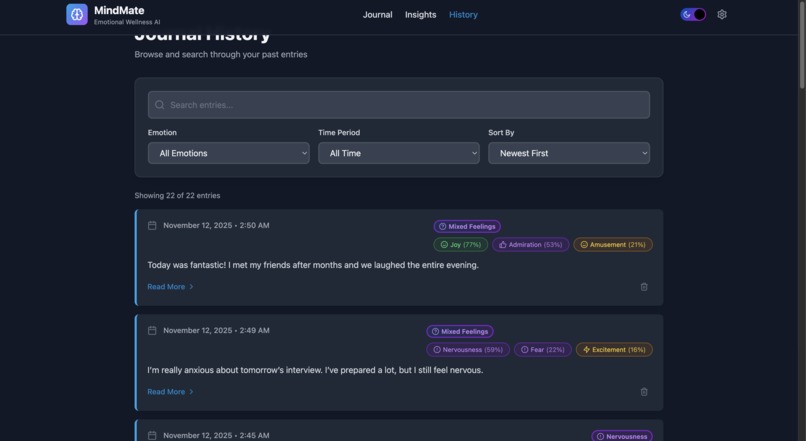
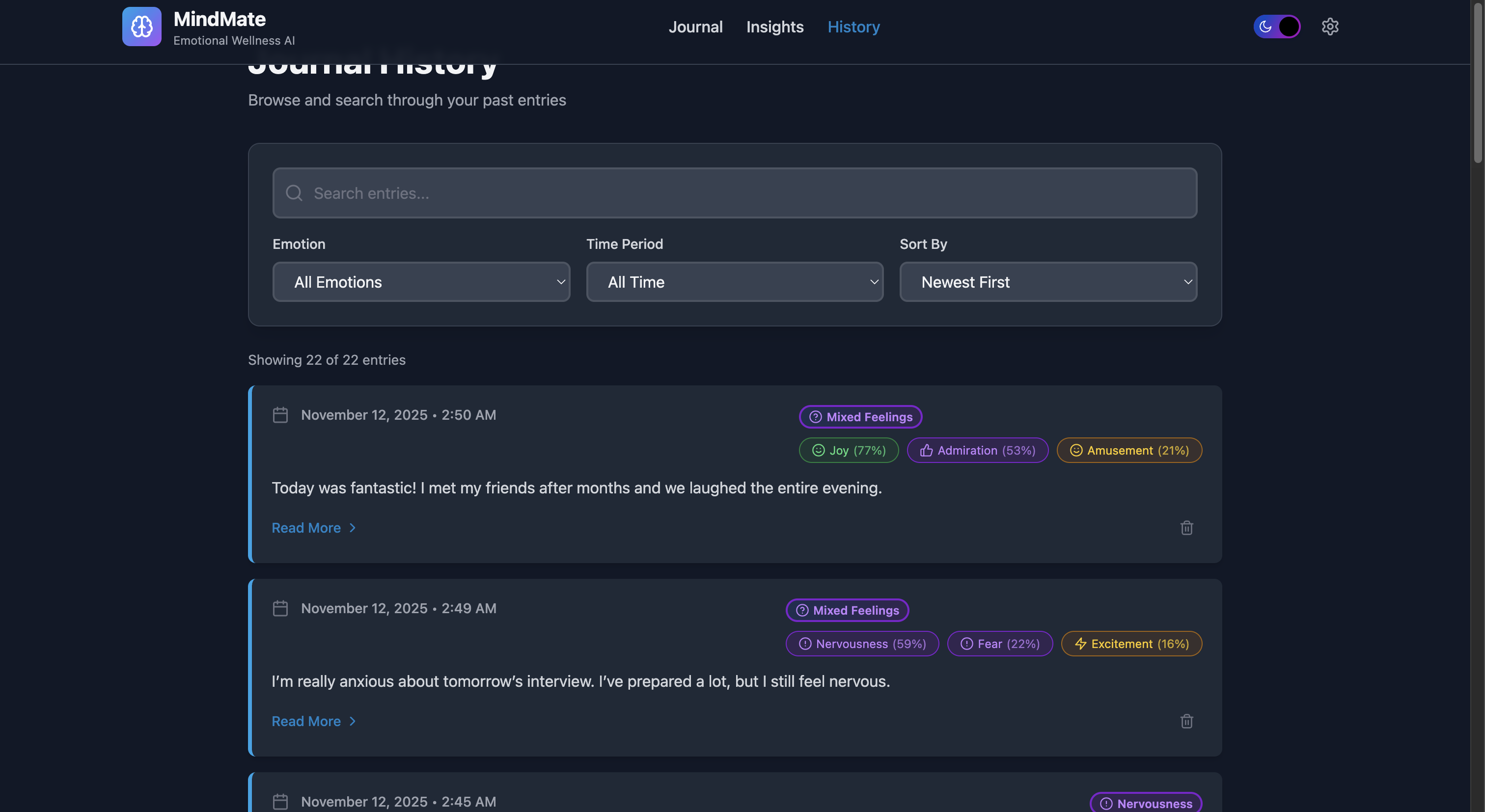
past entries stored
-
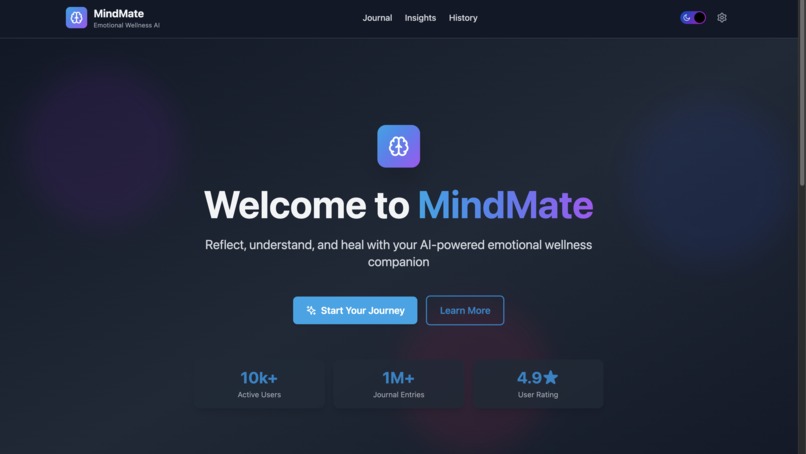
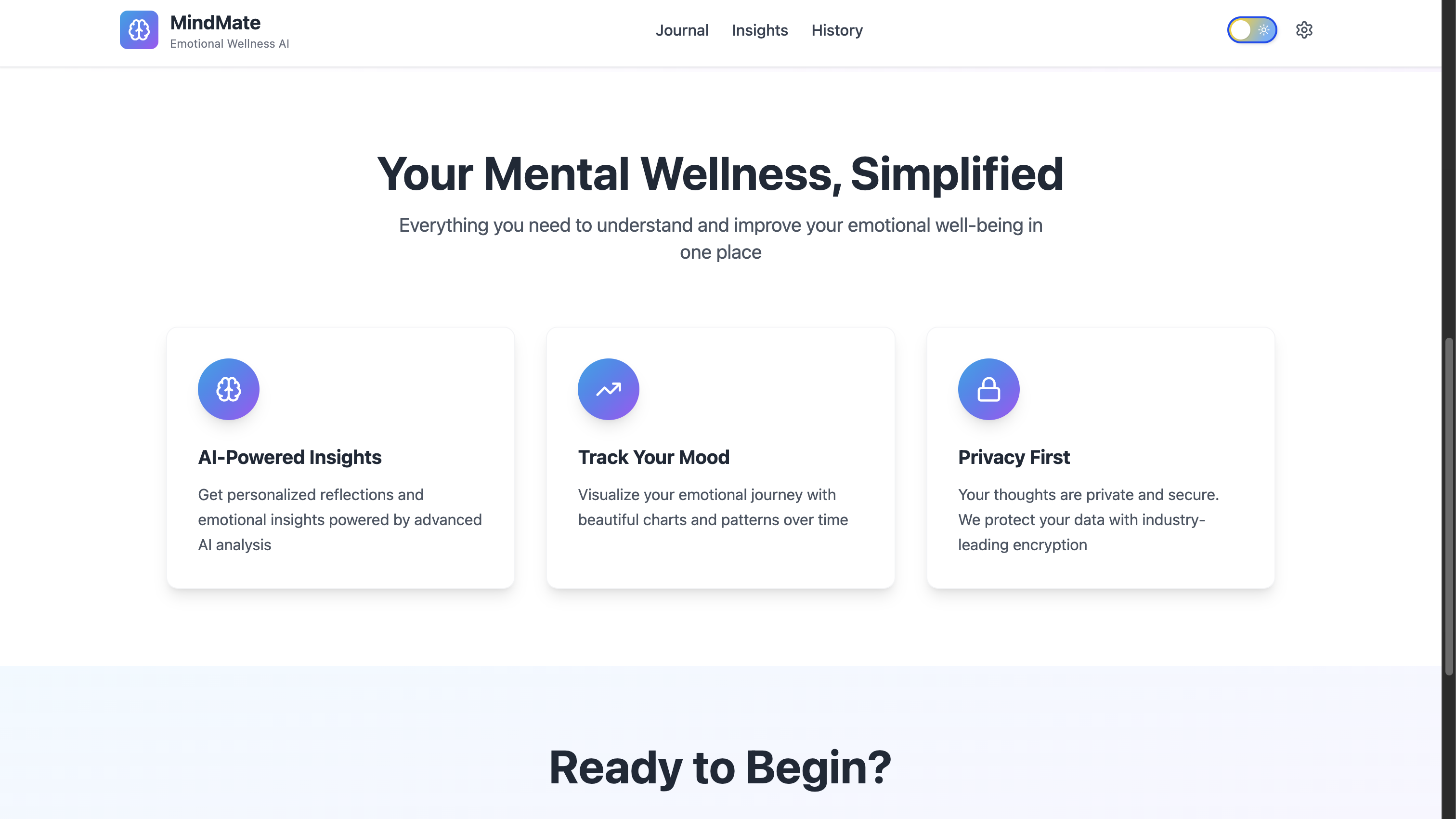
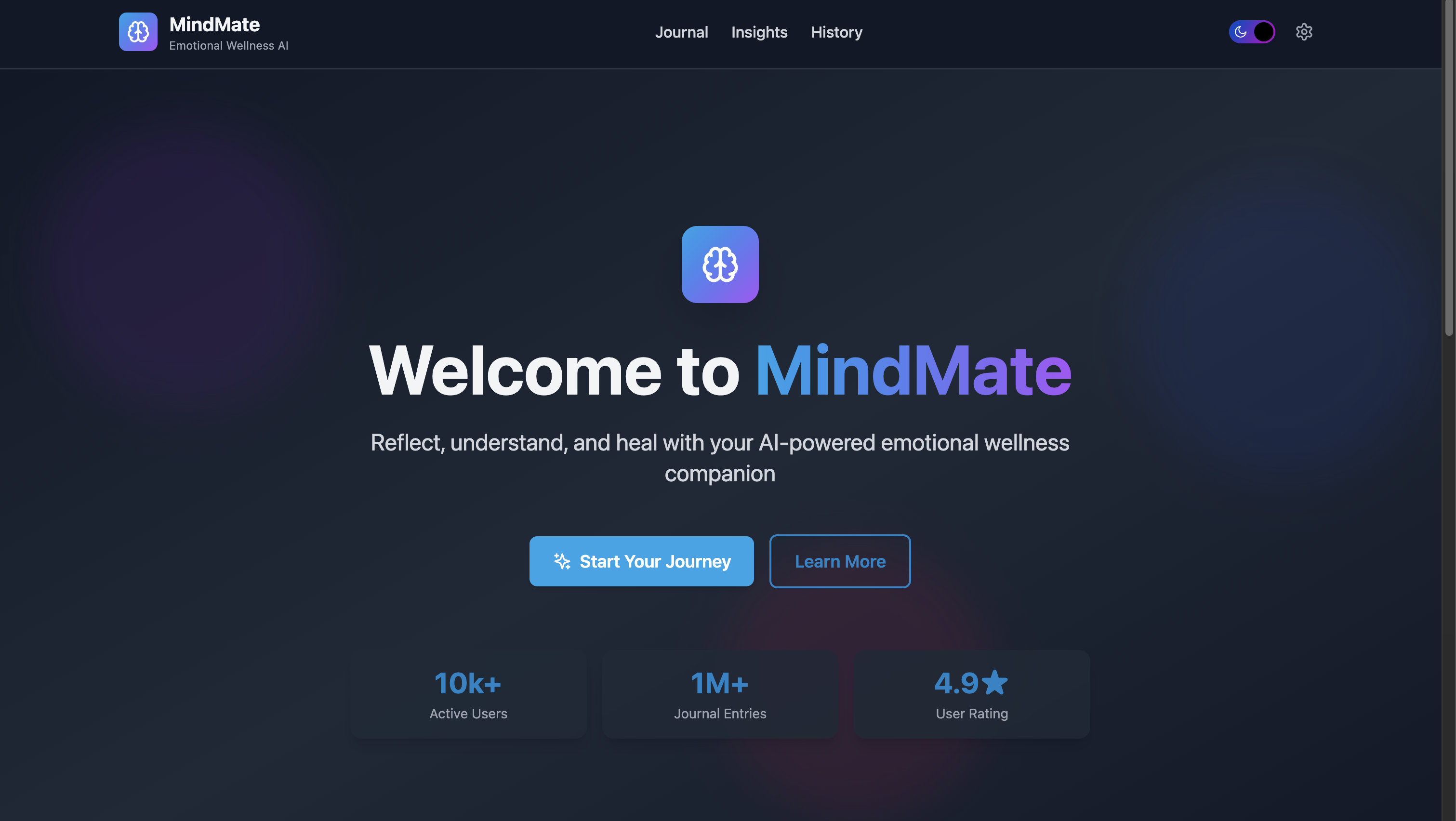
Homepage
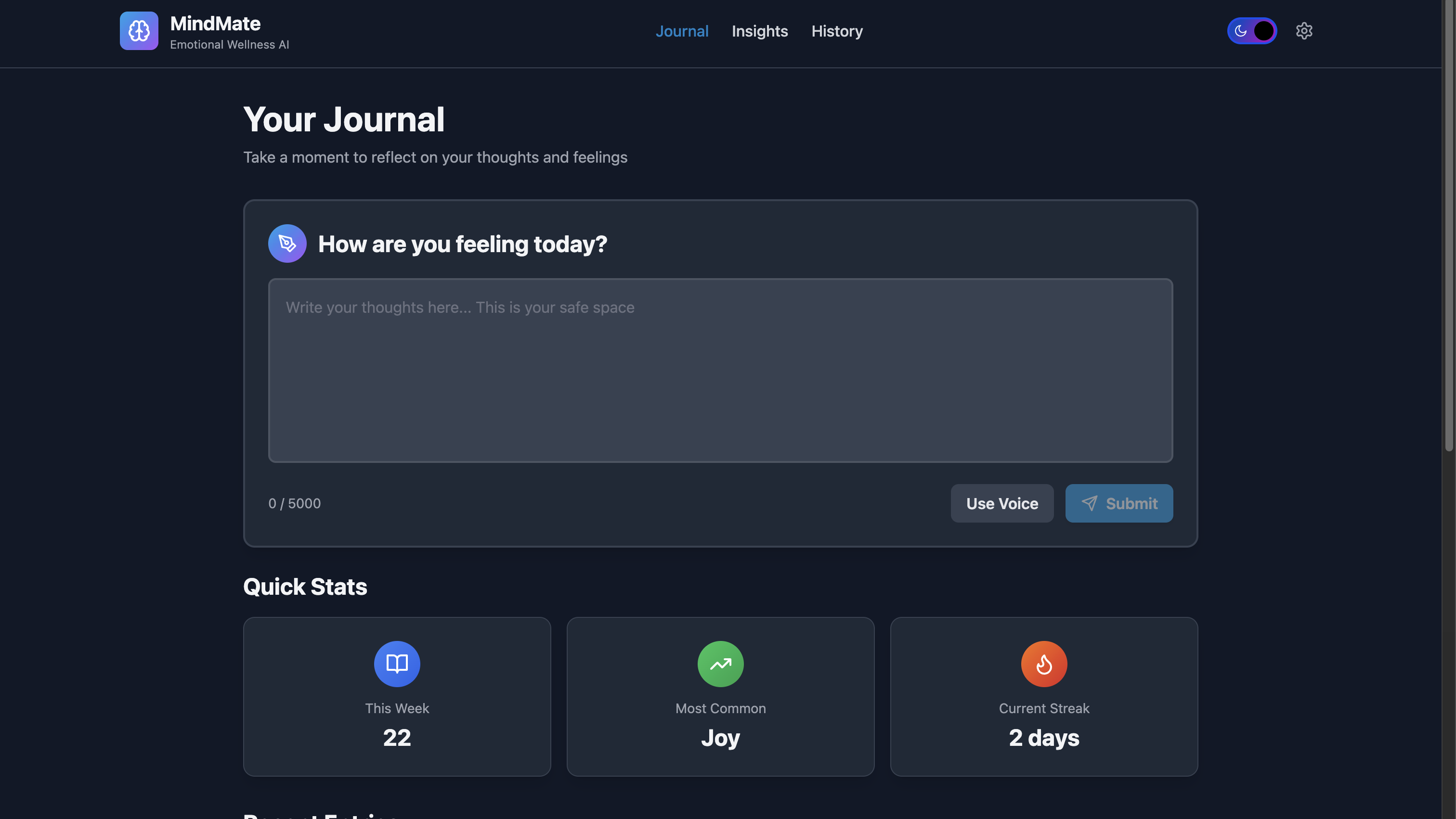
About MindMate
Inspiration
The inspiration for MindMate came from recognizing a critical gap in mental health accessibility. With rising mental health challenges globally and barriers like cost, wait times, and stigma preventing people from seeking help, we saw an opportunity to leverage AI technology for good. Traditional journaling apps provide a space to write but offer no feedback or insights—leaving users to process complex emotions alone.
We were particularly inspired by the potential of transformer-based NLP models to understand the nuanced complexity of human emotions. The GoEmotions dataset, with its 27 distinct emotion labels, showed us that AI could detect emotional states far more sophisticated than simple "happy" or "sad" classifications. This technical capability, combined with the empathetic potential of large language models like Gemini and GPT, created a perfect foundation for building a truly intelligent mental wellness companion.
The vision was clear: create an accessible, private, and effective platform that combines cutting-edge AI technology with user-centered design to help people understand their emotions, process their experiences, and take proactive steps toward improved mental wellness.
About the Project
MindMate is an AI-powered mental wellness companion designed to help users understand, process, and reflect on their emotions through intelligent journaling. The platform combines advanced natural language processing, sentiment analysis, and generative AI to provide users with personalized insights, emotional awareness, and supportive guidance for their mental wellness journey.
What Inspired Us
The inspiration came from multiple sources:
- Accessibility Gap: Recognizing that professional mental health support is expensive, has long wait times, and may not be accessible to everyone
- Technology Opportunity: Seeing the potential of transformer-based NLP models to understand complex human emotions
- User Need: Traditional journaling provides no feedback—users process emotions alone without insights or validation
- AI for Good: Leveraging cutting-edge AI technology to create meaningful impact in mental wellness
What We Learned
Building MindMate was an incredible learning journey across multiple domains:
Natural Language Processing & Emotion Detection: We dove deep into transformer architectures, learning how RoBERTa-based models process text to identify emotions. We discovered that emotion detection isn't binary—humans experience complex, mixed emotional states that require sophisticated analysis. We implemented entropy-based complexity calculations to quantify emotional complexity:
$$H(E) = -\sum_{i=1}^{n} p(e_i) \log_2 p(e_i)$$
where $H(E)$ represents the emotional entropy, $p(e_i)$ is the probability of emotion $i$, and $n$ is the number of detected emotions.
Multi-Provider AI Integration: We learned to build flexible systems that can seamlessly switch between different AI providers (Gemini and OpenAI) without code changes. This required understanding API differences, implementing abstraction layers, and creating fallback mechanisms for reliability.
Full-Stack Development: We mastered the FastAPI + React stack, learning async programming patterns, state management, and real-time audio processing using the Web Audio API and MediaRecorder API.
Prompt Engineering: We discovered that generating empathetic, contextual AI responses requires sophisticated prompt engineering. Different emotional states need different tones—validating for confusion, empathetic for negative emotions, encouraging for positive ones.
Privacy-First Architecture: We learned to design systems with privacy as a core principle, implementing local data storage, secure API communication, and user-controlled data retention.
How We Built It
MindMate is built on a modern, modular architecture that separates concerns and allows for easy extension:
Backend Architecture (FastAPI + Python):
- Started with FastAPI for its async capabilities and automatic OpenAPI documentation
- Integrated Hugging Face Transformers to load the GoEmotions model (
SamLowe/roberta-base-go_emotions) - Built a service layer architecture with separate services for emotion analysis, reflection generation, and speech-to-text
- Implemented SQLAlchemy 2.0 for database operations with SQLite (development) and PostgreSQL support (production)
- Created a provider abstraction layer that allows dynamic switching between Gemini and OpenAI APIs
Frontend Architecture (React + Vite):
- Built a component-based React application with custom hooks for state management
- Integrated Chart.js for mood visualization and analytics
- Implemented real-time audio recording using the MediaRecorder API
- Created a responsive, modern UI with Tailwind CSS
AI Pipeline Integration:
- Emotion Analysis: Text → GoEmotions Model → 27 emotion scores → Post-processing (mixed detection, conflict detection, complexity calculation)
- Reflection Generation: Emotion data + Journal text → Contextual prompt → LLM (Gemini/OpenAI) → Parsed reflection + suggestions
- Voice Processing: Audio recording → Whisper API/Google STT → Transcription → Emotion analysis pipeline
Key Technical Decisions:
- FastAPI over Flask/Django: Chosen for async support, automatic validation, and modern Python features
- GoEmotions over simpler models: Provides 27 emotion labels vs. basic sentiment analysis
- Multi-provider support: Allows cost optimization (Gemini for testing, OpenAI for production) and reliability through fallbacks
- SQLite for development: Enables quick setup and local-first privacy
Challenges We Faced
Challenge 1: Model Integration Complexity Integrating the GoEmotions transformer model required understanding PyTorch, handling model loading (2-3GB downloads), and managing GPU/CPU inference. We initially struggled with token limits (512 tokens) and had to implement smart text truncation strategies. The solution involved preprocessing text intelligently and implementing fallback models.
Challenge 2: Handling Mixed and Conflicting Emotions Detecting when users experience multiple emotions simultaneously or conflicting feelings required custom logic beyond the base model. We implemented pattern detection algorithms to identify linguistic markers of conflict (e.g., "but", "however", "although") and developed entropy-based complexity scoring to quantify emotional complexity.
Challenge 3: API Provider Switching Building a system that could dynamically switch between Gemini and OpenAI without server restarts required careful architecture. We created an abstraction layer with a singleton pattern and implemented runtime provider switching through a settings API endpoint. This also required handling different API response formats and error handling strategies.
Challenge 4: Real-Time Audio Processing Implementing voice recording in the browser and handling audio file uploads, transcription, and error handling was complex. We had to deal with browser compatibility issues, audio format conversions, and handling large audio files efficiently. The solution involved using the MediaRecorder API, implementing chunked uploads, and creating fallback transcription providers.
Challenge 5: Prompt Engineering for Empathy Getting AI models to generate truly empathetic, contextually appropriate responses required extensive prompt engineering. Generic prompts produced generic responses. We developed sophisticated prompt templates that adapt based on emotional state, complexity, and detected conflicts. This involved many iterations and testing with real emotional scenarios.
Challenge 6: Model Version Compatibility
We encountered issues with Gemini API model names changing (e.g., gemini-pro deprecated, replaced with gemini-2.5-flash). This required implementing configuration-based model selection and staying updated with API changes.
Challenge 7: Performance Optimization The emotion analysis model is computationally intensive. We optimized by implementing lazy loading, caching model instances, and using async processing where possible. For production, we'd implement model quantization and potentially GPU acceleration.
What It Does
MindMate is a comprehensive mental wellness platform that helps users understand and process their emotions through intelligent journaling. Here's what it does:
Core Functionality
Smart Journaling
- Text-based journaling with an intuitive interface
- Voice journaling with automatic transcription
- Rich context capture with timestamps and emotional metadata
Advanced Emotion Detection
- Detects 27 distinct emotion labels using the GoEmotions model
- Identifies mixed emotions when users experience multiple feelings simultaneously
- Detects emotional conflicts and confusion
- Calculates emotional complexity using entropy-based scoring
- Determines overall sentiment (positive, negative, neutral) with confidence scores
AI-Powered Reflections
- Generates personalized, contextual reflections based on emotional state
- Adapts tone based on emotional complexity (validating, empathetic, encouraging)
- Provides 3-5 actionable self-care tips tailored to the user's emotional state
- Handles complex emotional states with appropriate validation and support
Mood Tracking & Analytics
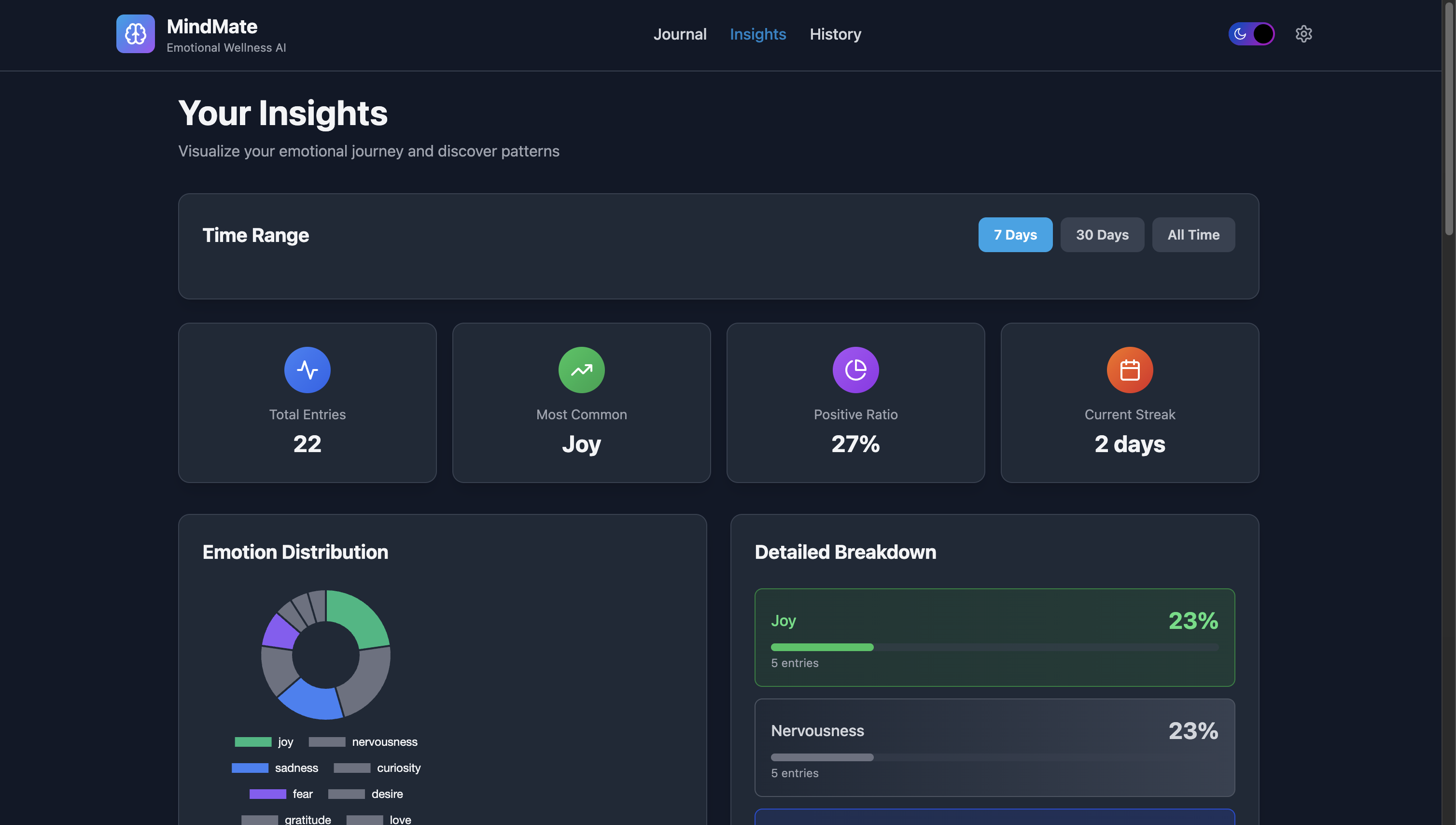
- Visual mood charts showing emotion distribution over time
- Trend analysis to track emotional patterns
- Historical insights with full emotional metadata
- Emotional journey visualization over days, weeks, or months
Voice Input & Transcription
- Real-time voice recording directly in the browser
- Automatic transcription using OpenAI Whisper or Google Speech-to-Text
- Multi-provider support with fallback mechanisms
- Seamless integration with journal entry creation
Provider Flexibility
- Dynamic switching between Gemini (testing) and OpenAI (production) providers
- User-configurable provider selection
- Automatic fallback to alternative providers if primary fails
- Cost optimization through provider selection
Privacy-First Design
- Local data storage in SQLite database
- No third-party data sharing
- Secure API communication with HTTPS
- Full user control over data retention and deletion
How We Built It
Technology Stack
Backend:
- Framework: FastAPI (Python 3.10+)
- Database: SQLite (development), PostgreSQL (production-ready)
- ORM: SQLAlchemy 2.0
- AI/ML Libraries:
- Transformers (Hugging Face)
- PyTorch
- scikit-learn
- NumPy
- API Clients: OpenAI Python SDK, Google Generative AI SDK
- Server: Uvicorn ASGI server
Frontend:
- Framework: React 18+
- Build Tool: Vite
- UI: Custom components with Tailwind CSS
- State Management: React Hooks
- Audio: Web Audio API, MediaRecorder API
- Charts: Chart.js for visualization
Architecture
Backend Architecture:
- Service layer architecture with separate services for:
- Emotion analysis (
emotion_analyzer.py) - Reflection generation (
reflection_generator.py,reflection_generator_v2.py) - Speech-to-text (
speech_to_text.py)
- Emotion analysis (
- RESTful API endpoints organized by domain (journal, mood, analysis, settings)
- Provider abstraction layer for multi-AI support
- Database models with SQLAlchemy ORM
Frontend Architecture:
- Component-based React application
- Custom hooks for state management (
useJournal.js,useMood.js) - Service layer for API communication
- Responsive design with modern UI/UX
AI Pipeline:
- Emotion Analysis Pipeline: Text → Preprocessing → GoEmotions Model → Post-processing → Emotion metadata
- Reflection Generation Pipeline: Emotion data + Journal text → Contextual prompt → LLM → Parsed response
- Voice Processing Pipeline: Audio → Transcription → Text → Emotion analysis
Development Process
- Planning: Identified core features and technical requirements
- Backend Development: Built FastAPI backend with AI service integration
- Frontend Development: Created React frontend with modern UI
- Integration: Connected frontend and backend with RESTful API
- Testing: Tested emotion detection, AI reflections, and voice transcription
- Optimization: Improved performance and added fallback mechanisms
- Documentation: Created comprehensive documentation and setup guides
Challenges We Ran Into
Technical Challenges
Model Integration Complexity
- Problem: Integrating the GoEmotions transformer model required deep understanding of PyTorch and handling large model files (2-3GB)
- Solution: Implemented lazy loading, caching, and smart text truncation strategies
Handling Mixed and Conflicting Emotions
- Problem: Detecting complex emotional states beyond simple classification
- Solution: Developed custom pattern detection algorithms and entropy-based complexity scoring
API Provider Switching
- Problem: Building dynamic provider switching without server restarts
- Solution: Created abstraction layer with singleton pattern and runtime provider switching
Real-Time Audio Processing
- Problem: Browser compatibility, audio format conversions, and handling large files
- Solution: Used MediaRecorder API, implemented chunked uploads, and created fallback providers
Prompt Engineering for Empathy
- Problem: Getting AI to generate truly empathetic, contextually appropriate responses
- Solution: Developed sophisticated prompt templates that adapt based on emotional state
Model Version Compatibility
- Problem: Gemini API model names changing (e.g.,
gemini-prodeprecated) - Solution: Implemented configuration-based model selection and updated to use
settings.gemini_model
- Problem: Gemini API model names changing (e.g.,
Performance Optimization
- Problem: Emotion analysis model is computationally intensive
- Solution: Implemented lazy loading, caching, and async processing
Design Challenges
- Balancing Privacy and Functionality: Ensuring user privacy while providing powerful AI features
- User Experience: Creating an intuitive interface for complex emotional analysis
- Error Handling: Gracefully handling API failures and providing fallback mechanisms
- Responsive Design: Ensuring the app works well on different screen sizes
Accomplishments That We're Proud Of
Advanced Emotion Detection: Successfully integrated a transformer-based model that detects 27 distinct emotions, far beyond simple sentiment analysis
Complex Emotion Handling: Built sophisticated algorithms to detect mixed emotions, emotional conflicts, and confusion—handling the nuanced complexity of human emotions
Multi-Provider AI Integration: Created a flexible system that seamlessly switches between Gemini and OpenAI providers, allowing cost optimization and reliability
Real-Time Voice Processing: Implemented voice journaling with automatic transcription, making journaling more accessible and natural
Privacy-First Design: Built a platform with local data storage and user control, prioritizing privacy in mental health technology
Full-Stack Application: Successfully built a complete full-stack application with modern technologies (FastAPI, React, Vite)
Sophisticated Prompt Engineering: Developed context-aware prompts that generate empathetic, personalized responses based on emotional state
Entropy-Based Complexity Scoring: Implemented mathematical models to quantify emotional complexity using information theory
Fallback Mechanisms: Created robust error handling with multiple fallback providers for reliability
Comprehensive Documentation: Created detailed documentation, setup guides, and project descriptions
What We Learned
Technical Skills
- Transformer Architectures: Deep understanding of how RoBERTa-based models process text for emotion classification
- Full-Stack Development: Mastered FastAPI + React stack with async programming patterns
- AI/ML Integration: Learned to integrate multiple AI providers (Gemini, OpenAI) with abstraction layers
- Audio Processing: Implemented real-time audio recording and transcription in the browser
- Prompt Engineering: Discovered the art of crafting prompts that generate empathetic, contextual responses
- Database Design: Designed efficient database schemas with SQLAlchemy ORM
- API Design: Created RESTful APIs with proper error handling and validation
Domain Knowledge
- Emotion Science: Learned about the complexity of human emotions, mixed states, and emotional conflicts
- Mental Health Technology: Understood the importance of privacy, accessibility, and user control in mental health apps
- Information Theory: Applied entropy calculations to quantify emotional complexity
- User Experience: Learned to design interfaces that make complex AI features accessible
Soft Skills
- Problem-Solving: Tackled complex technical challenges with creative solutions
- Architecture Design: Designed modular, extensible systems
- Documentation: Created comprehensive documentation for complex systems
- Iterative Development: Learned to iterate on prompts and features based on testing
Key Insights
- Emotion Detection is Complex: Human emotions are not binary—they're complex, mixed, and often conflicting
- AI Can Be Empathetic: With proper prompt engineering, AI can generate truly empathetic responses
- Privacy Matters: In mental health technology, privacy and user control are paramount
- Flexibility is Key: Building systems that can adapt to changing APIs and requirements is crucial
- User Experience First: Complex AI features need intuitive interfaces to be useful
What's Next for MindMate
Planned Features
Multi-Language Support
- Support for emotions and reflections in multiple languages
- Localized emotion models for different cultures
Therapy Integration
- Integration with professional therapy platforms
- Export capabilities for sharing with therapists (with user consent)
Crisis Detection
- Advanced detection of crisis situations
- Integration with crisis hotlines and resources
- Safety protocols and user notifications
Community Features
- Optional anonymous community support (with privacy controls)
- Peer support groups
- Shared experiences and insights
Mobile Applications
- Native iOS and Android applications
- Push notifications for mood check-ins
- Offline functionality
Advanced Analytics
- Machine learning-based pattern recognition
- Predictive analytics for mood trends
- Personalized insights based on historical data
Custom Emotion Models
- User-trainable emotion models for personalization
- Custom emotion labels based on user needs
Export Capabilities
- Export journal entries and analytics for personal records
- PDF generation for therapy sessions
- Data portability
Technical Improvements
Performance Optimization
- Model quantization for faster inference
- GPU acceleration support
- Caching strategies for improved response times
Offline Mode
- Full offline functionality with local models
- Sync capabilities when online
- Progressive web app (PWA) support
Real-Time Processing
- WebSocket-based real-time emotion analysis
- Live transcription with streaming
- Real-time mood updates
Enhanced Security
- End-to-end encryption for journal entries
- Two-factor authentication
- Advanced access controls
Scalability
- Cloud deployment with horizontal scaling
- Database optimization for large datasets
- CDN integration for static assets
Advanced AI Features
- Fine-tuned models for specific use cases
- Multi-modal input (text, voice, images)
- Conversational AI for extended interactions
Research & Development
Emotion Model Improvements
- Fine-tuning GoEmotions model on domain-specific data
- Exploring newer emotion detection models
- Custom emotion taxonomies
Personalization
- User-specific emotion models
- Adaptive prompt engineering
- Personalized reflection styles
Clinical Validation
- Collaboration with mental health professionals
- Clinical studies and validation
- Evidence-based feature development
Long-Term Vision
MindMate aims to become a comprehensive mental wellness platform that:
- Provides accessible, private, and effective emotional support
- Complements professional therapy and mental health services
- Uses cutting-edge AI to understand and support human emotions
- Empowers users to understand their emotional patterns and improve their mental wellness
- Contributes to mental health research through anonymized, aggregated data (with user consent)
The future of MindMate is focused on making mental wellness support more accessible, personalized, and effective through the thoughtful application of AI technology.
Built With
- aiofiles-**frontend:**-react-18
- autoprefixer-**ai/ml:**-pytorch
- axios
- built-with-**languages:**-python-3.12
- date-fns
- google-gemini-api-(gemini-2.5-flash)-**databases:**-sqlite-(development)
- httpx
- hugging-face-transformers
- j-hartmann/emotion-english-distilroberta-base
- javascript-(es6+)-**backend:**-fastapi
- lucide-react
- mediarecorder-api-**models:**-samlowe/roberta-base-go-emotions-(goemotions)
- numpy
- postcss
- postgresql-(production-ready)-**libraries:**-chart.js
- protobuf-**apis:**-openai-api-(gpt-4o-mini
- pydantic
- python-dotenv
- react-chart.js-2
- react-hot-toast-**tools:**-eslint
- react-router-dom
- scikit-learn
- sentencepiece
- sqlalchemy-2.0
- tailwind-css
- uvicorn
- vite
- vite-plugin-react
- web-audio-api
- whisper)

Log in or sign up for Devpost to join the conversation.