-
-
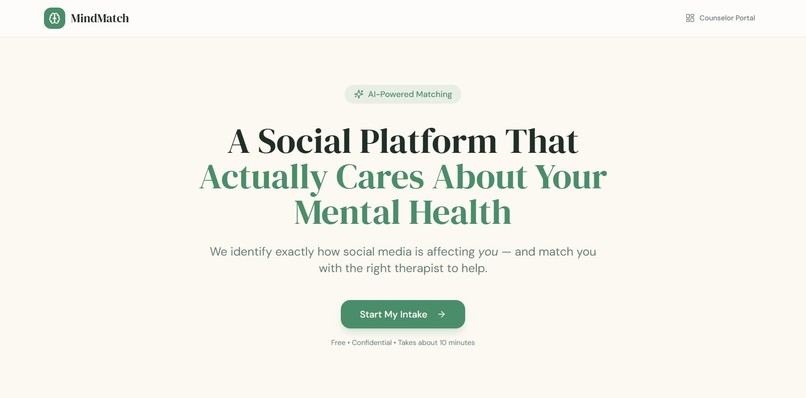
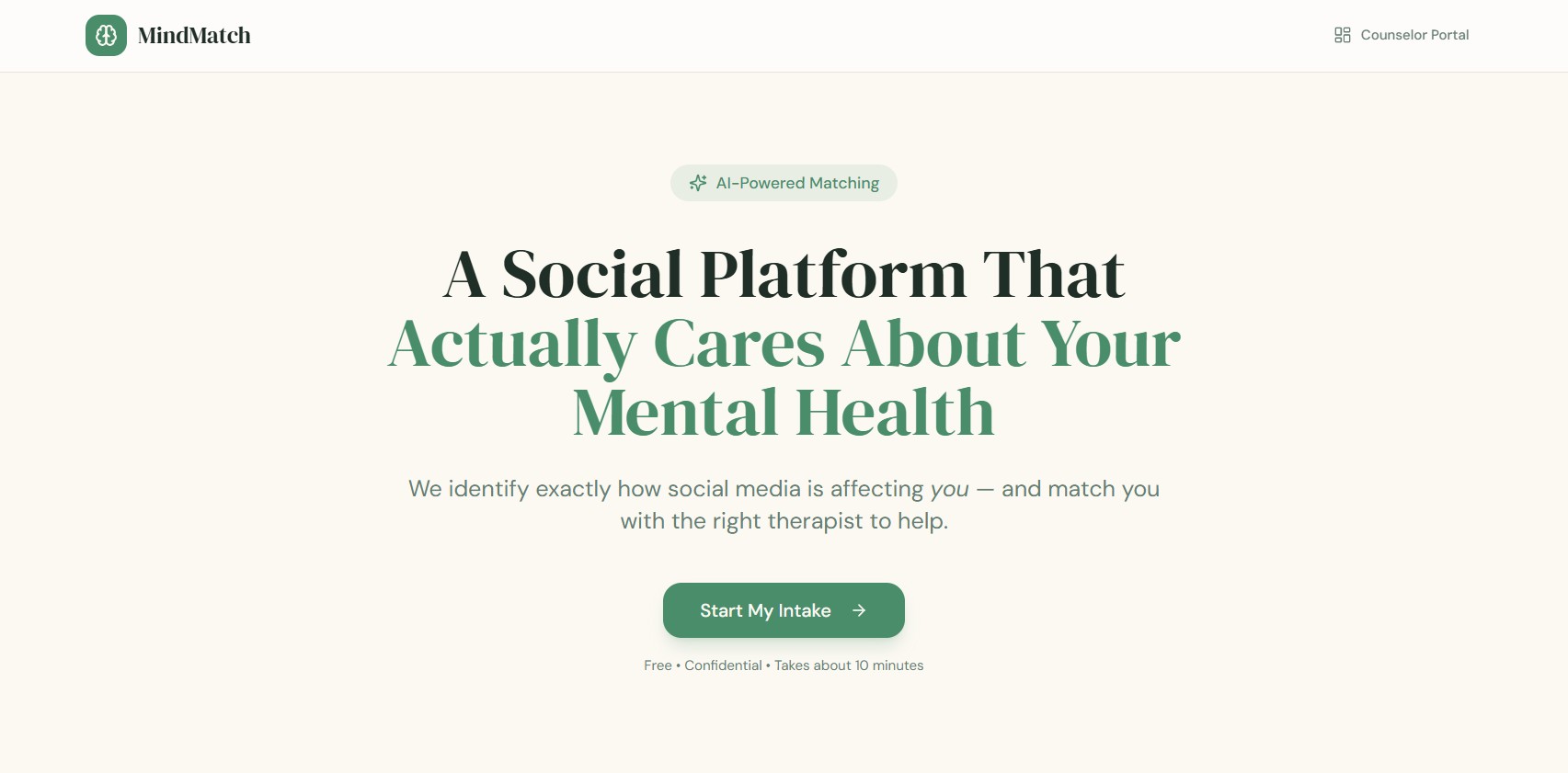
Landing page: "A Social Platform That Actually Cares About Your Mental Health" with Social Media Assessment and Wellness Plan features
-
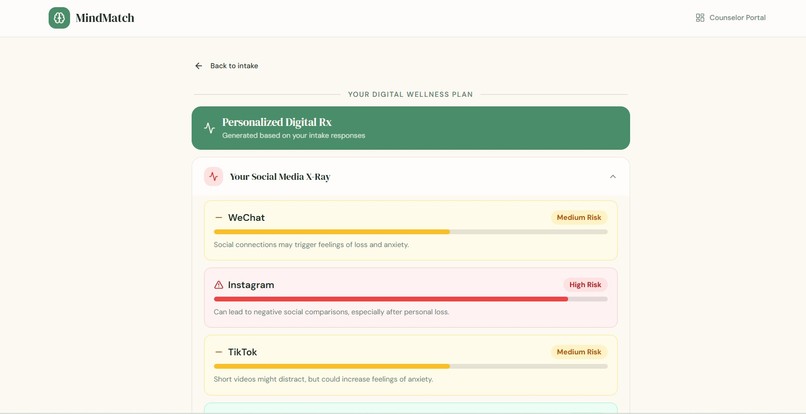
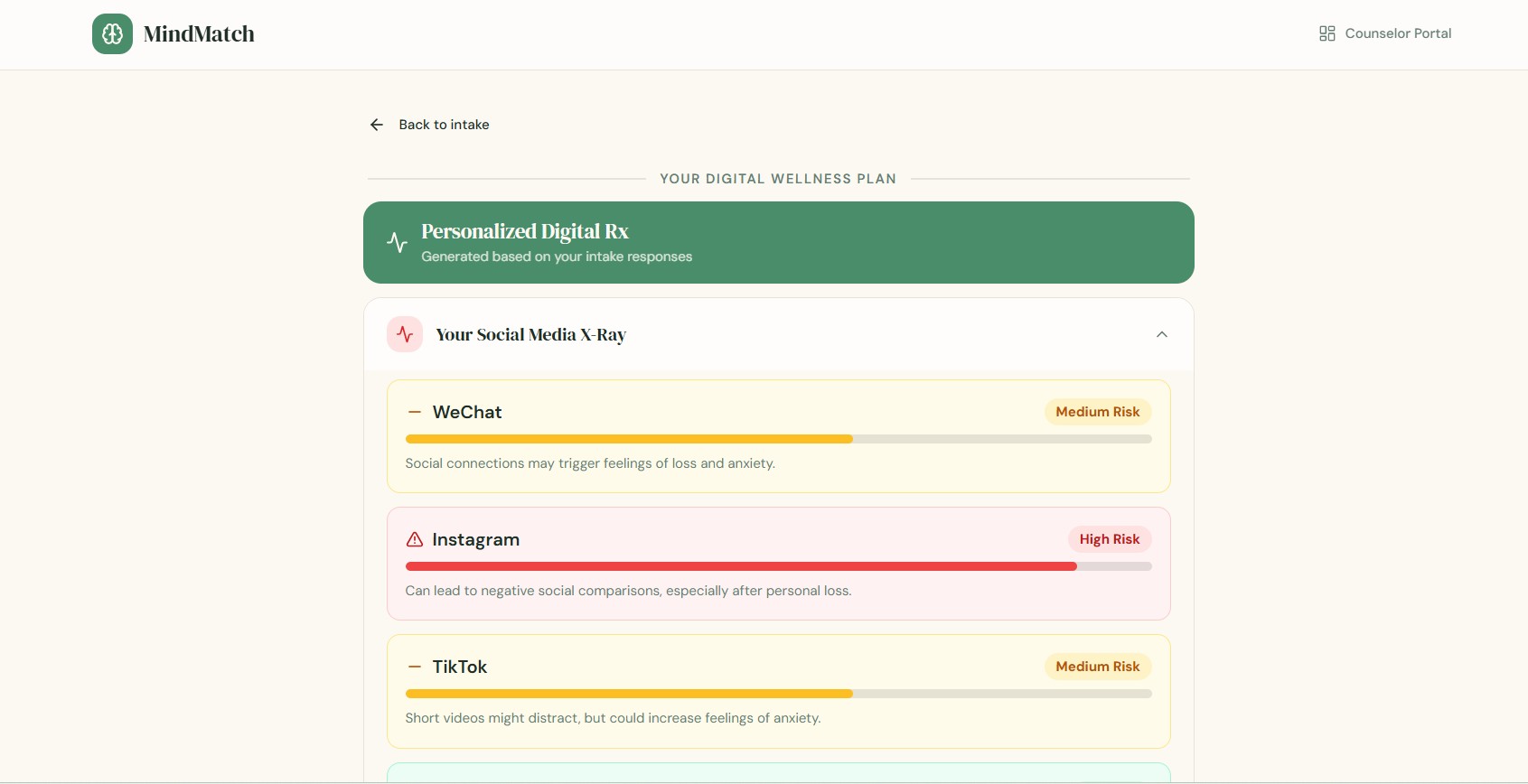
Social Media X-Ray: color-coded risk profile showing which platforms hurt you and how — Instagram, TikTok, Twitter, Discord
-
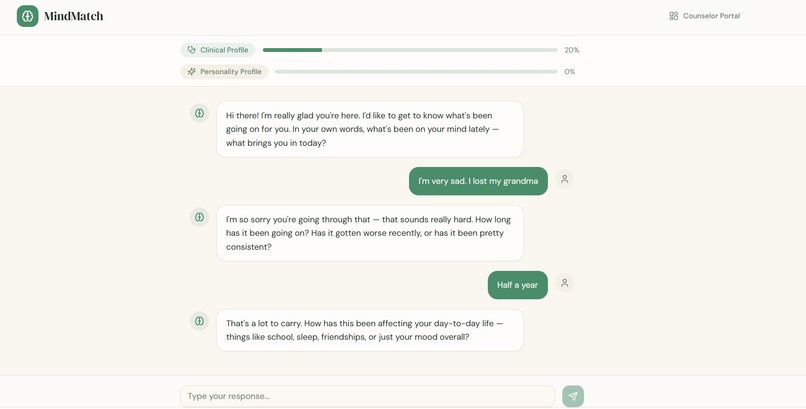
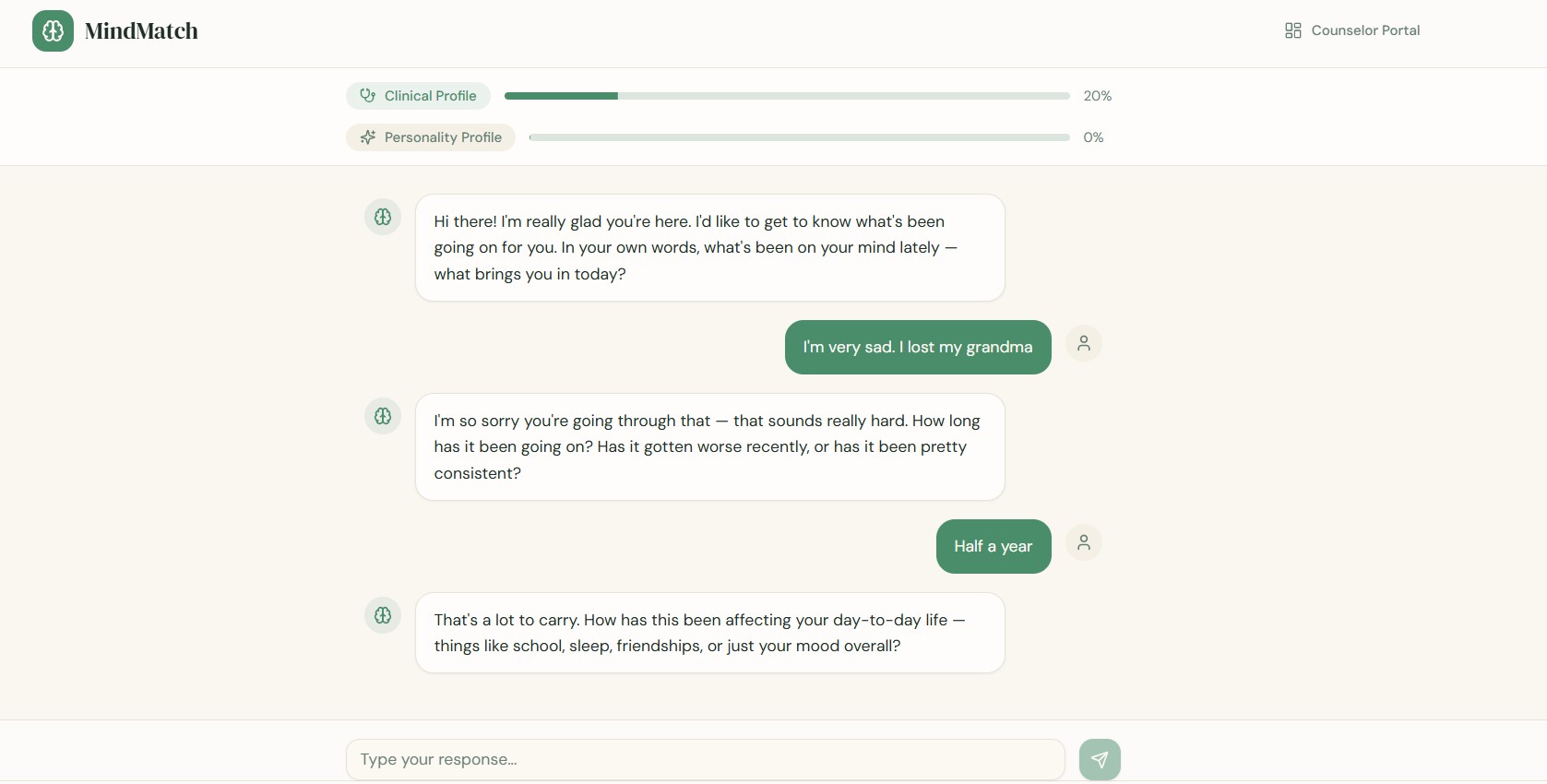
AI intake chat: empathetic conversational assessment gathering clinical profile, social media habits, and personality preferences
-
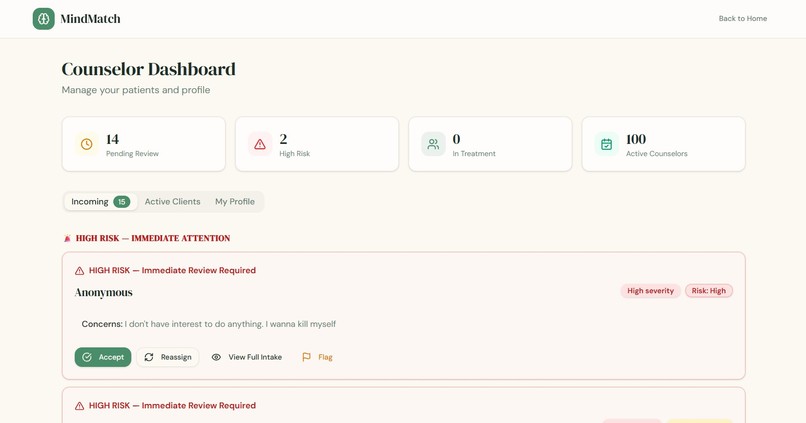
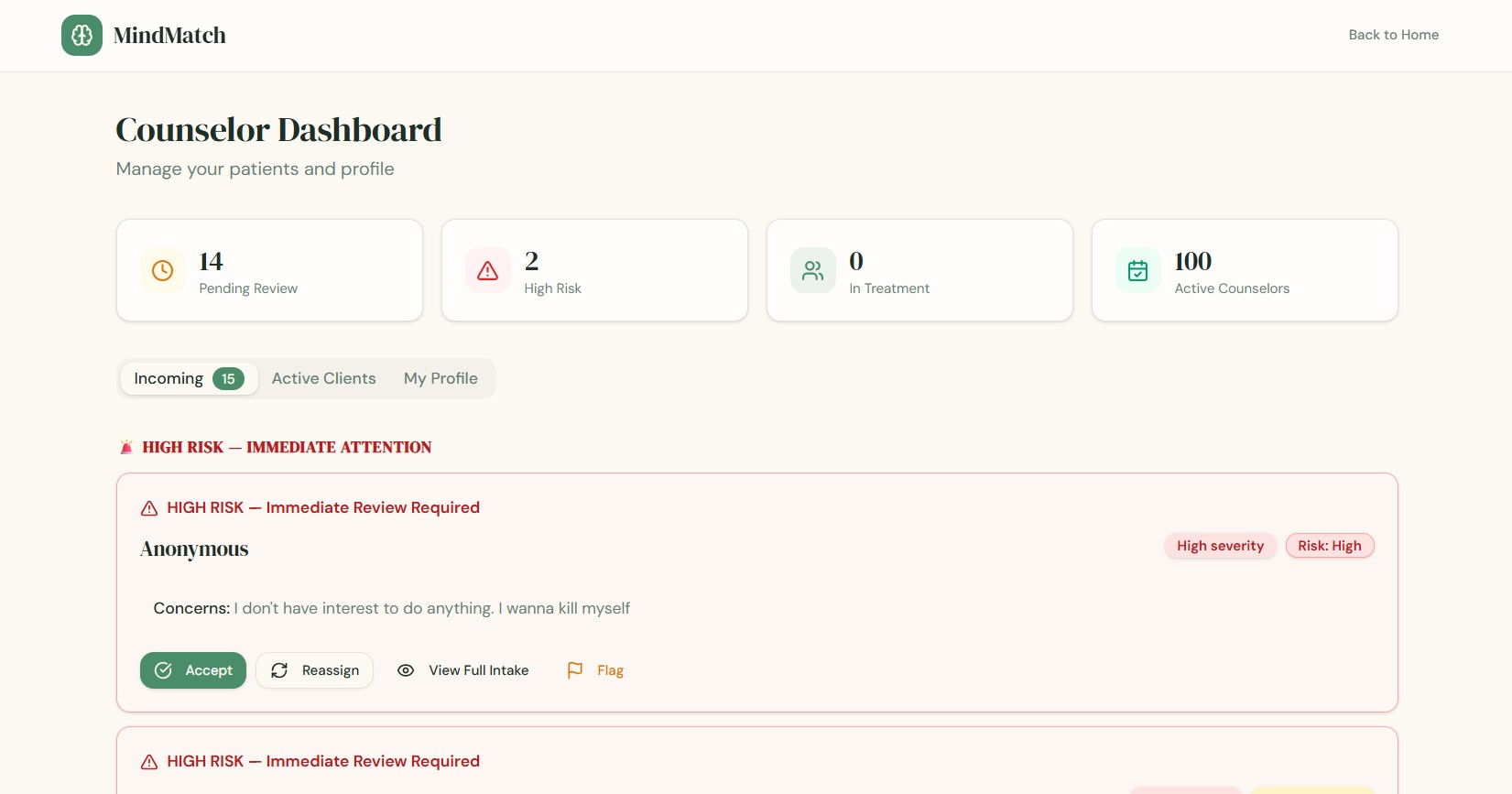
Counselor dashboard: AI-generated patient summaries replace 30-min manual reviews one click to accept, flag, or reassign
-
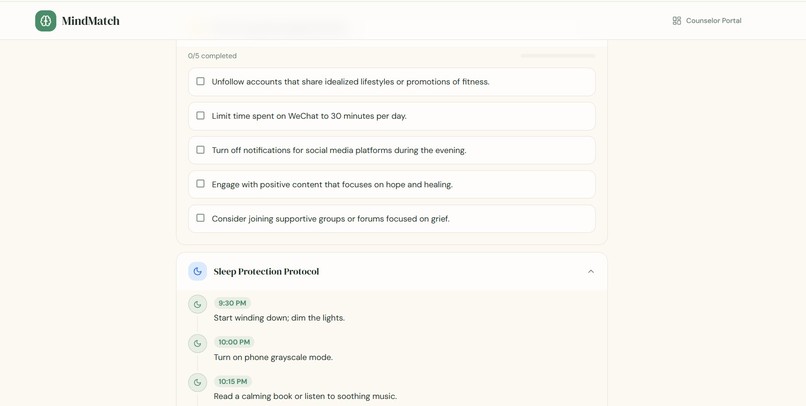
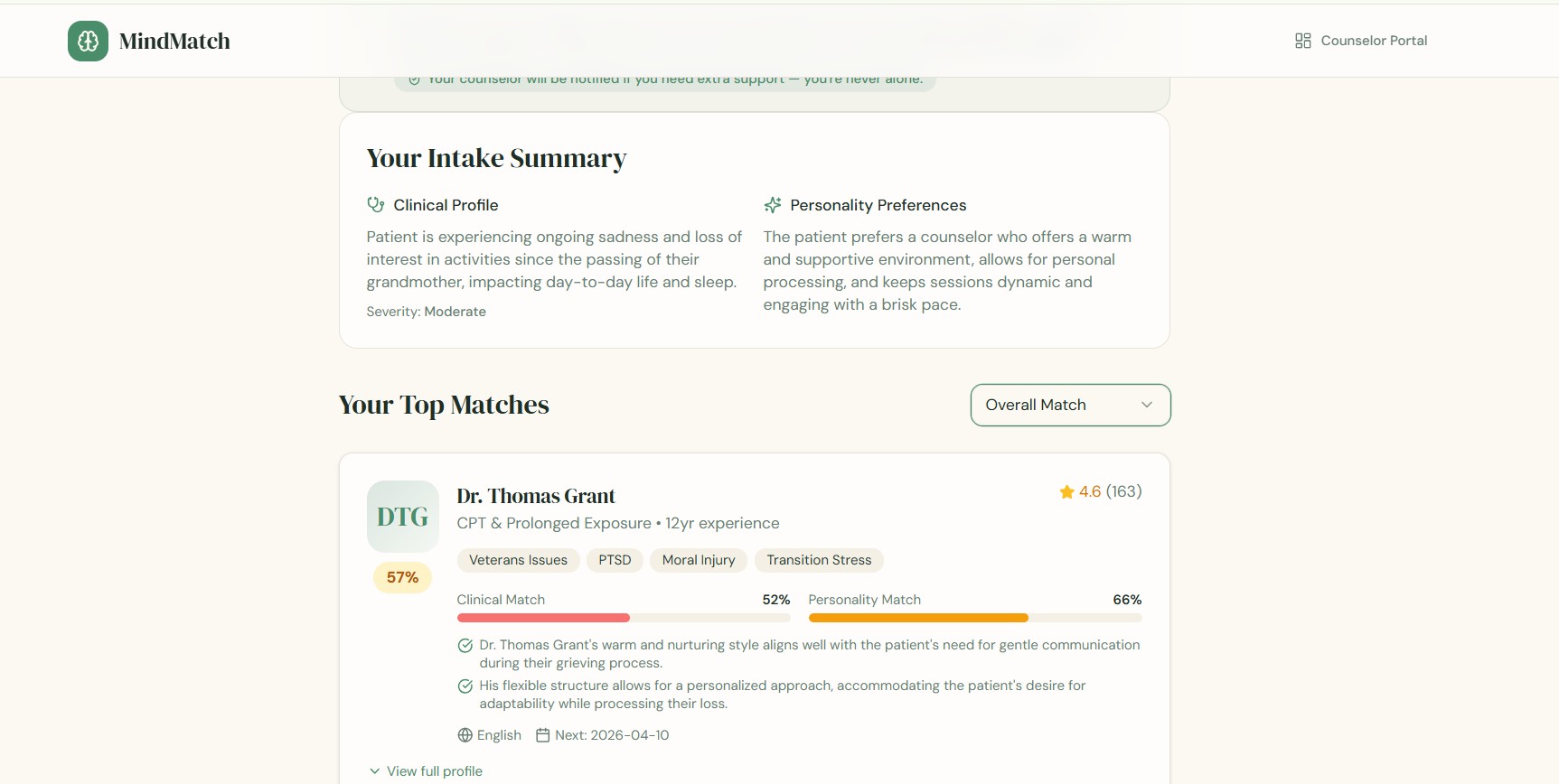
Match results: 11-dimension algorithm scoring both clinical fit (65%) and personality compatibility (35%) for each counselor
-
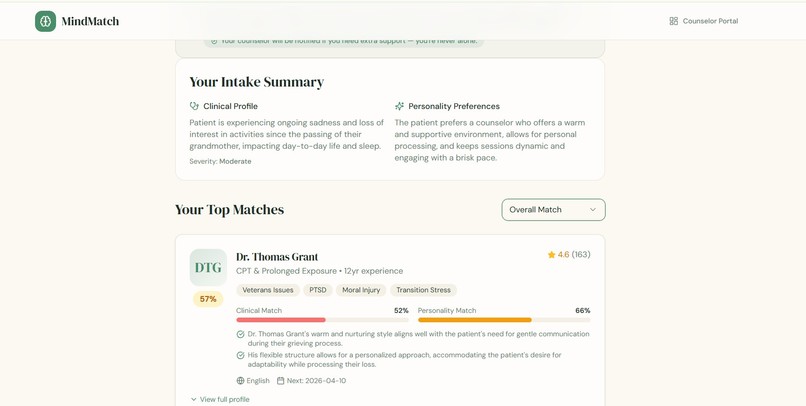
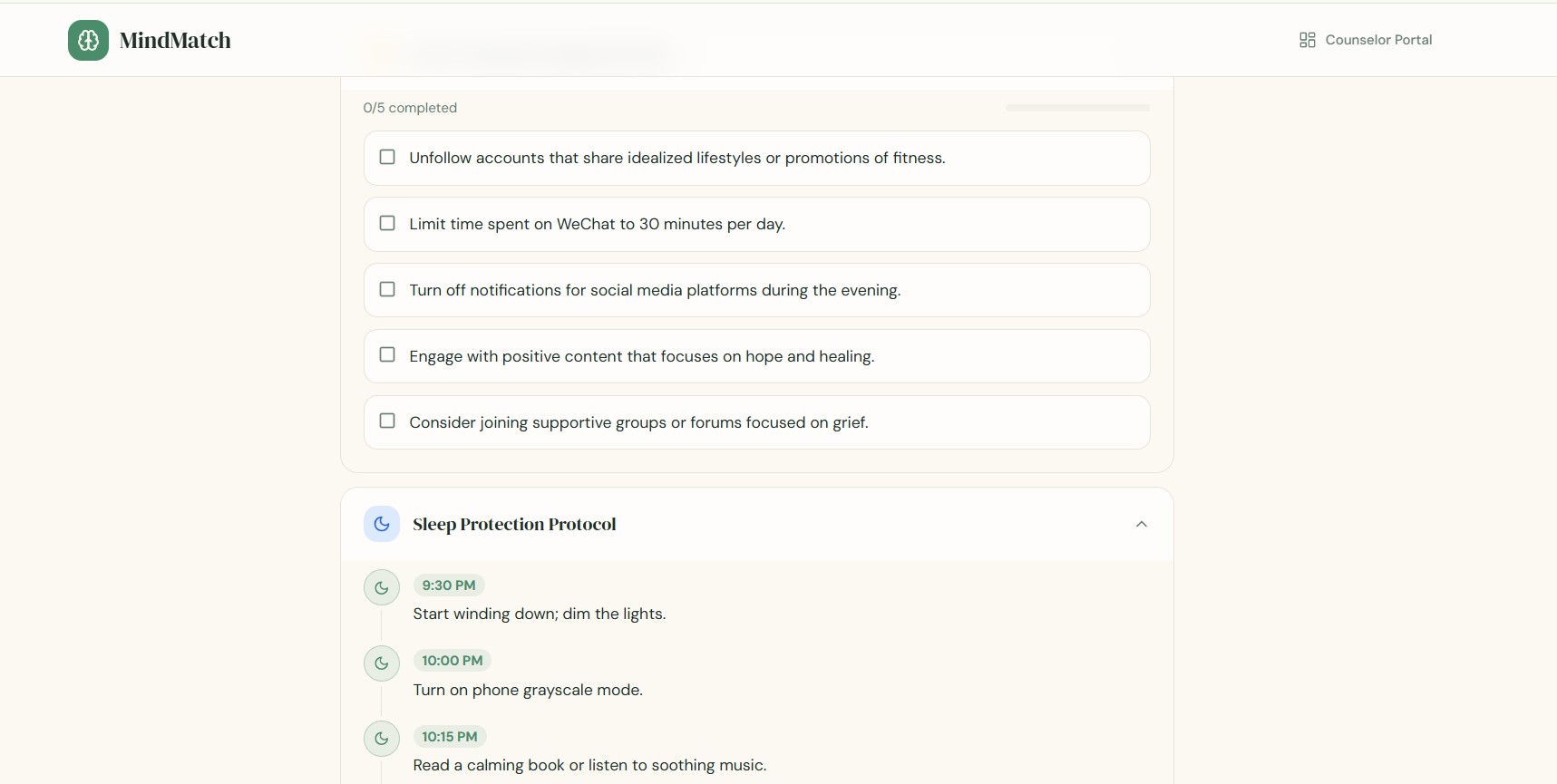
Digital Wellness Plan: toxic content cleanup checklist, sleep protection protocol, and crisis tripwire for ongoing monitoring
Inspiration
At Penn State, the counseling center intake wait time is approximately 6 months. I watched classmates finally work up the courage to seek mental health support — only to be told to come back in half a year. Some of them never came back. Meanwhile, these same students were spending hours every day on social media that was actively making them feel worse — comparing themselves on Instagram, doom-scrolling Twitter at 3AM, watching their confidence erode on TikTok. No one was connecting the dots between their social media habits and their mental health struggles, and no tool existed to help them understand exactly how social media was hurting them. I built MindMatch to make sure no student has to wait 6 months while the thing causing their pain is sitting in their pocket.
What it does
MindMatch is an AI-powered platform that diagnoses how social media impacts your mental health and matches you with the right counselor in minutes instead of months.
It works in three steps. First, an empathetic AI chatbot conducts a two-phase conversational intake — a clinical assessment that gathers your mental health concerns, and a personality assessment that identifies your communication style preferences. During this conversation, the AI asks about your social media habits and generates a "Social Media X-Ray" — a color-coded visual showing which platforms are harming you and how (for example, "Instagram: High Risk — body image comparison anxiety" or "Twitter: High Risk — doom-scrolling causing insomnia").
Second, an 11-dimension matching algorithm combines clinical fit (65%) and personality compatibility (35%) to find counselors who don't just treat your diagnosis but actually match your communication style. The platform includes 100 diverse counselors spanning 41 languages and multiple therapeutic approaches.
Third, MindMatch generates a personalized Digital Wellness Plan — a toxic content cleanup checklist, a sleep protection protocol, and a crisis tripwire that automatically alerts your matched counselor if your symptoms worsen during weekly check-ins.
How we built it
I built MindMatch as a solo developer using Base44 as the primary full-stack development platform for rapid prototyping with AI-powered chat, database management, and authentication. I integrated OpenClaw with Claude Sonnet 4.6 to power the conversational AI intake system. The counselor database was designed with 100 counselors, each with full clinical profiles and five therapeutic personality dimensions (communication style, session structure, feedback style, emotional approach, and pacing). The matching algorithm uses weighted scoring with fuzzy matching — for example, a patient who prefers "gentle guidance" partially matches counselors tagged as both "warm & nurturing" and "collaborative exploration."
Challenges we ran into
The hardest challenge was making the AI feel genuinely human. Early versions responded to painful disclosures like "I lost my grandmother" with "Thanks for sharing that" — which sounds like a customer service script, not a caring person. I spent significant time rewriting the system prompt so the AI responds with real empathy: "I'm so sorry you're going through that." The crisis response was even harder to get right. When a user mentions suicidal thoughts, the AI needs to be warm ("I know how much you're carrying right now") while immediately surfacing crisis resources (988 Lifeline) and flagging the case — without ever sounding clinical or robotic. Balancing data collection with genuine compassion was a constant tension throughout the build.
Accomplishments that we're proud of
I'm most proud of three things. The Social Media X-Ray — no other platform diagnoses which specific social media platforms are hurting you and visualizes it as a personalized risk profile. The empathetic AI design — after many iterations, the chatbot genuinely feels like talking to someone who cares, not filling out a medical form. And the Digital Wellness Plan — instead of generic "use your phone less" advice, it generates specific, actionable prescriptions based on your exact social media impact profile, complete with a crisis tripwire that keeps your counselor in the loop. Building all of this as a solo developer in 24 hours pushed me to my limits, and I'm proud the result feels like a real product, not a hackathon prototype.
What we learned
The biggest insight was that the most important predictor of therapy success isn't the therapist's specialty — it's therapeutic alliance, the quality of the relationship. This is why our personality matching exists. I also learned that social media's mental health impact is deeply personal — Instagram destroys one person's self-esteem but is another person's creative outlet. Generic "reduce screen time" advice fails because it doesn't account for this. Personalized diagnosis must lead to personalized treatment. Finally, I learned that crisis design is not just a feature checkbox — it's the most important design decision in any mental health product, and it deserves the most careful attention.
What's next for MindMatch
I plan to pilot MindMatch with Penn State's counseling center to validate the matching algorithm with real clinical outcomes. Next steps include adding opt-in social media usage tracking for more accurate impact assessment, building the weekly check-in system with dynamic wellness plan adjustments, and expanding the counselor database with real practitioners. The long-term vision is making MindMatch available to university counseling centers nationwide — so no student ever has to wait 6 months while the app in their pocket keeps making things worse.
Built With
- anthropic-api
- base44
- bot
- claude-sonnet-4.6
- discord
- javascript
- openclaw
- react

Log in or sign up for Devpost to join the conversation.