-
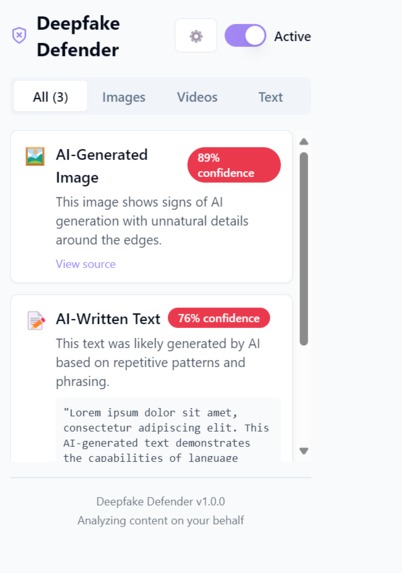
view of deefack
Inspiration
In today’s world, deepfake technology is becoming increasingly accessible and dangerously realistic. We saw how AI-generated content—whether manipulated videos, fake images, or AI-written text—is fueling misinformation on social media. From false political speeches to fake celebrity endorsements, the damage is real and growing. This inspired us to build Deepfake Defender—a browser extension that acts like a digital truth shield, detecting and warning users about AI-generated content in real-time as they browse.
What it does
Automatic Content Scanning: Scans images, videos, and text content in your feed as the page loads or scrolls.
AI-Powered Detection:
Uses deepfake detection APIs (like Hive.ai, Deepware, or ZeroGPT) to analyze and classify media/text.
Real-Time Warnings:
Flags suspicious content with visual alerts (e.g., red borders, warning badges, tooltips).
Displays a confidence score indicating how likely the content is to be AI-generated.
Popup Dashboard:
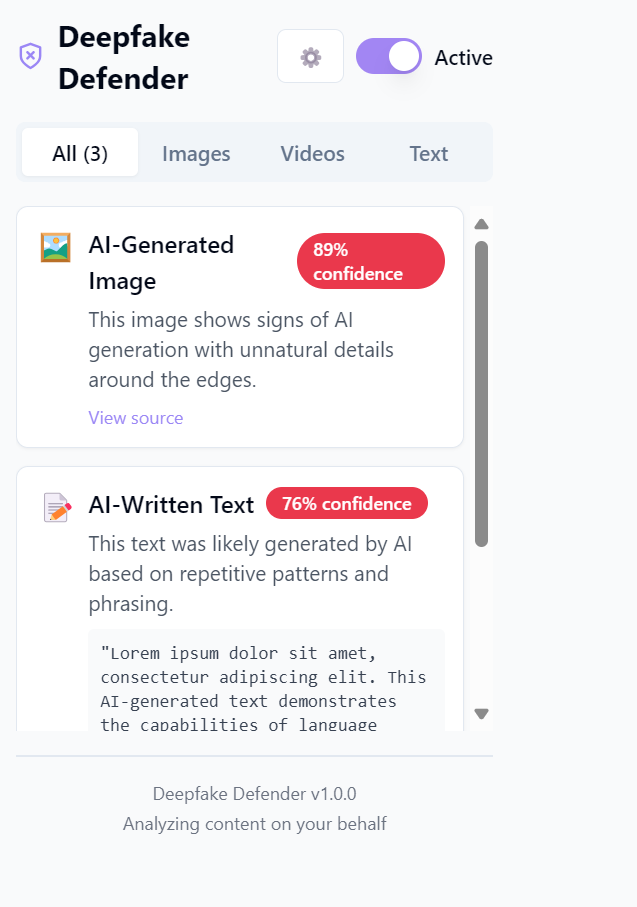
Summarizes detected deepfakes on the current page.
Lets users toggle detection types (images, videos, or text).
Privacy-First Design:
No user content is stored or tracked.
Analyzes content either locally or via secure, trusted APIs.
How we built it
Component Tech Stack Extension Logic JavaScript (Manifest V3) UI (Popup + Options) HTML, CSS (optional React) Detection APIs Deepware, Hive AI, ZeroGPT DOM Manipulation Vanilla JS + MutationObserver (Optional) Server/API Node.js or Python (Flask)
Challenges we ran into
Dynamic Content on Social Media Feeds Modern websites like Twitter and Instagram load content dynamically as you scroll. This made it difficult to reliably detect and flag new content. Solution: We used the MutationObserver API to detect DOM changes and re-run scans whenever new posts are injected into the page.
Accomplishments that we're proud of
Smooth Integration with Dynamic Websites We overcame the complexity of dynamic content loading (like infinite scroll on Twitter) and implemented MutationObserver logic to ensure our detection system remains responsive and up-to-date—even on highly interactive pages.
What we learned
How Deepfake Detection Works We explored how deepfake detection algorithms analyze artifacts in images, frame-level inconsistencies in videos, and statistical patterns in AI-generated text. We learned about:
Image forensics techniques
NLP-based classifiers for text detection (e.g., DetectGPT, ZeroGPT)
Challenges in evaluating authenticity, especially with rapidly evolving AI models
What's next for Deepfake Defender
Expand Platform Support Currently, the extension supports popular platforms like Twitter, Instagram, and Facebook. In the future, we plan to:
Add support for TikTok, Reddit, YouTube, and other high-impact platforms.
Customize the detection logic to work with specific types of content (e.g., memes, videos, comments) across various sites.
Built With
- background/api
- css
- html
- javascript
- python
- react)


Log in or sign up for Devpost to join the conversation.