Inspiration
Mental health is one of the most overlooked aspects of everyday life. Most people have no way to track how they're feeling over time, spot emotional patterns, or get a compassionate response when they're struggling. I wanted to build something that feels less like an app and more like a trusted companion — something private, intelligent, and genuinely helpful.
What it does
MindMap AI is a personal mental wellness companion that lets you:
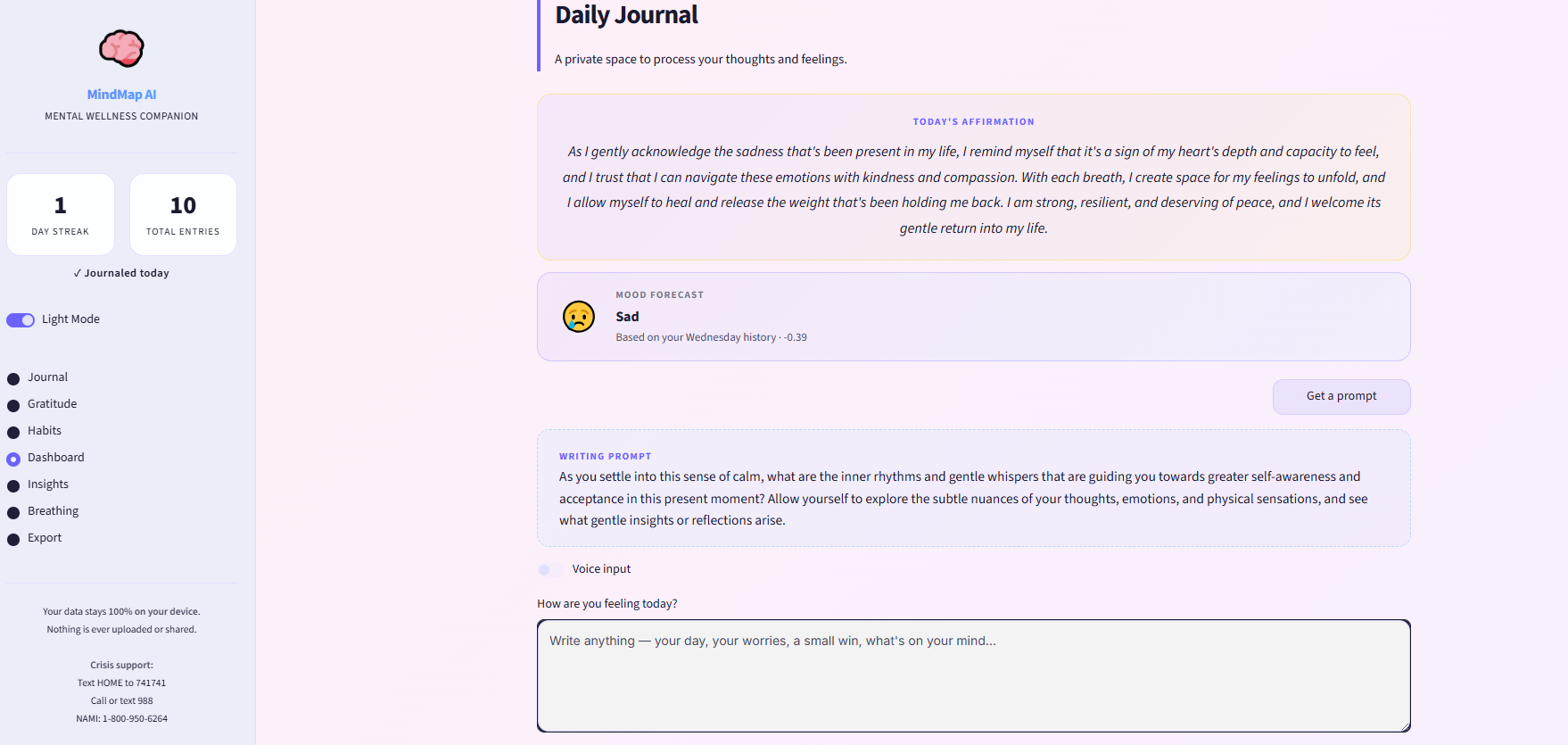
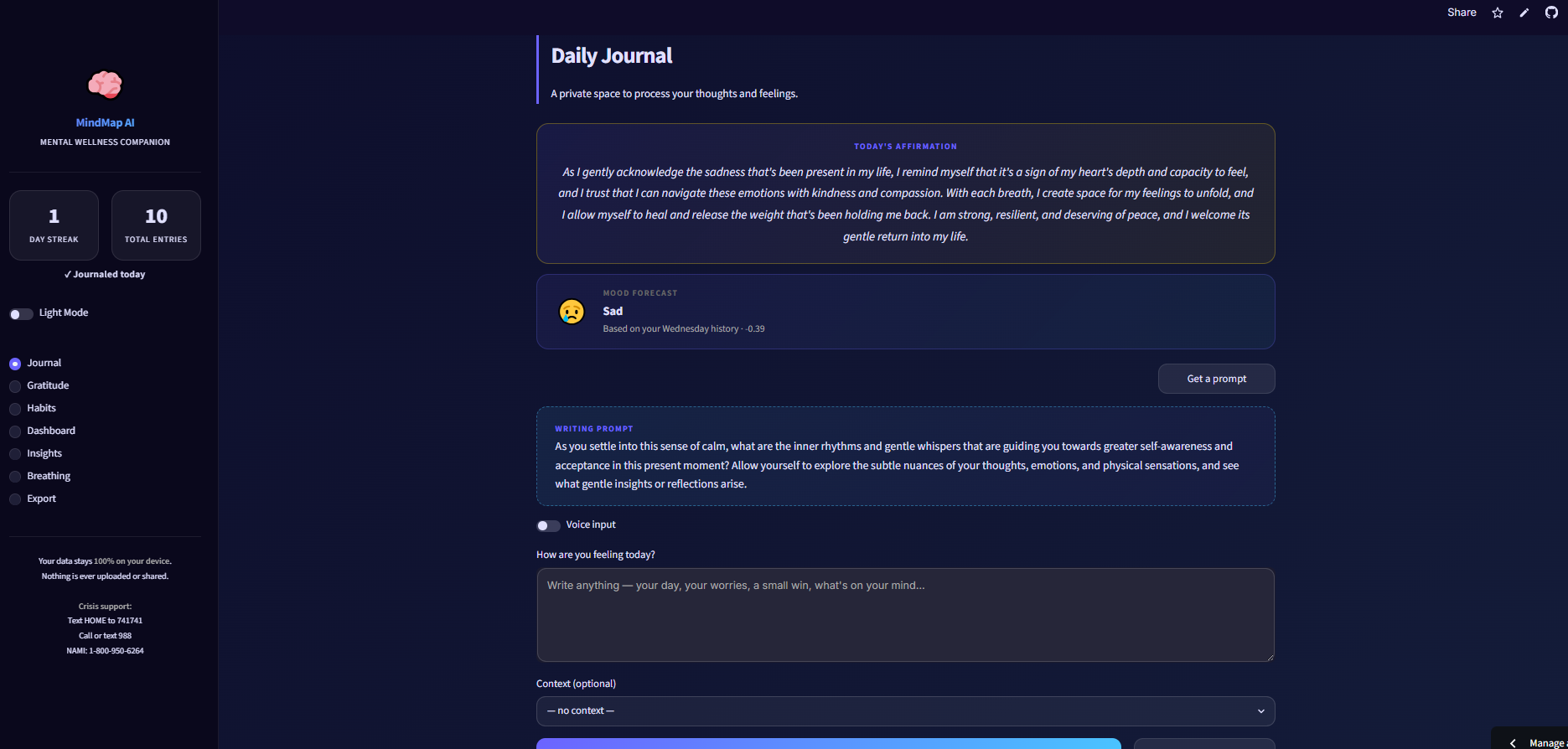
- Journal daily and receive an empathetic AI response tailored to your mood
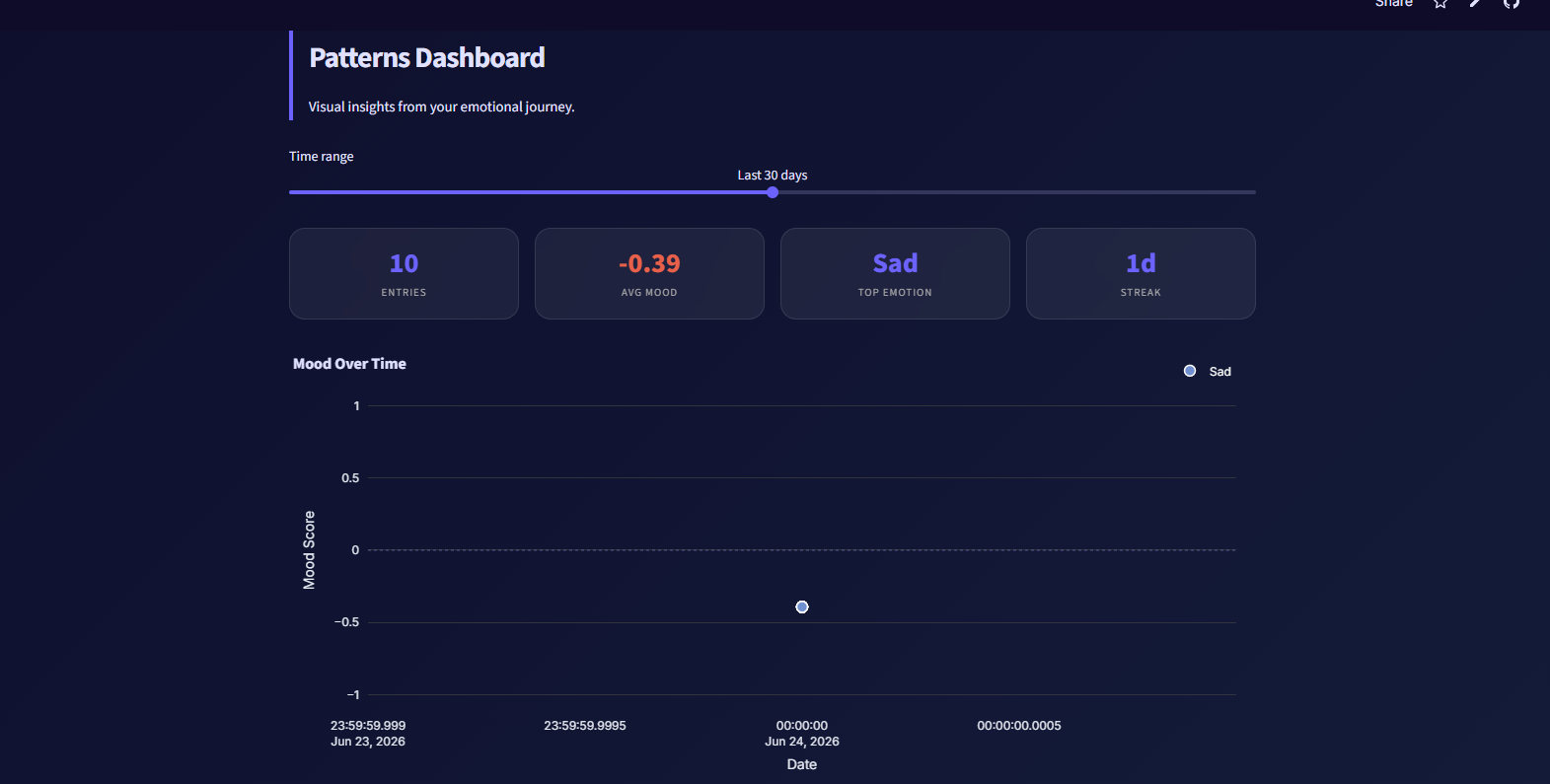
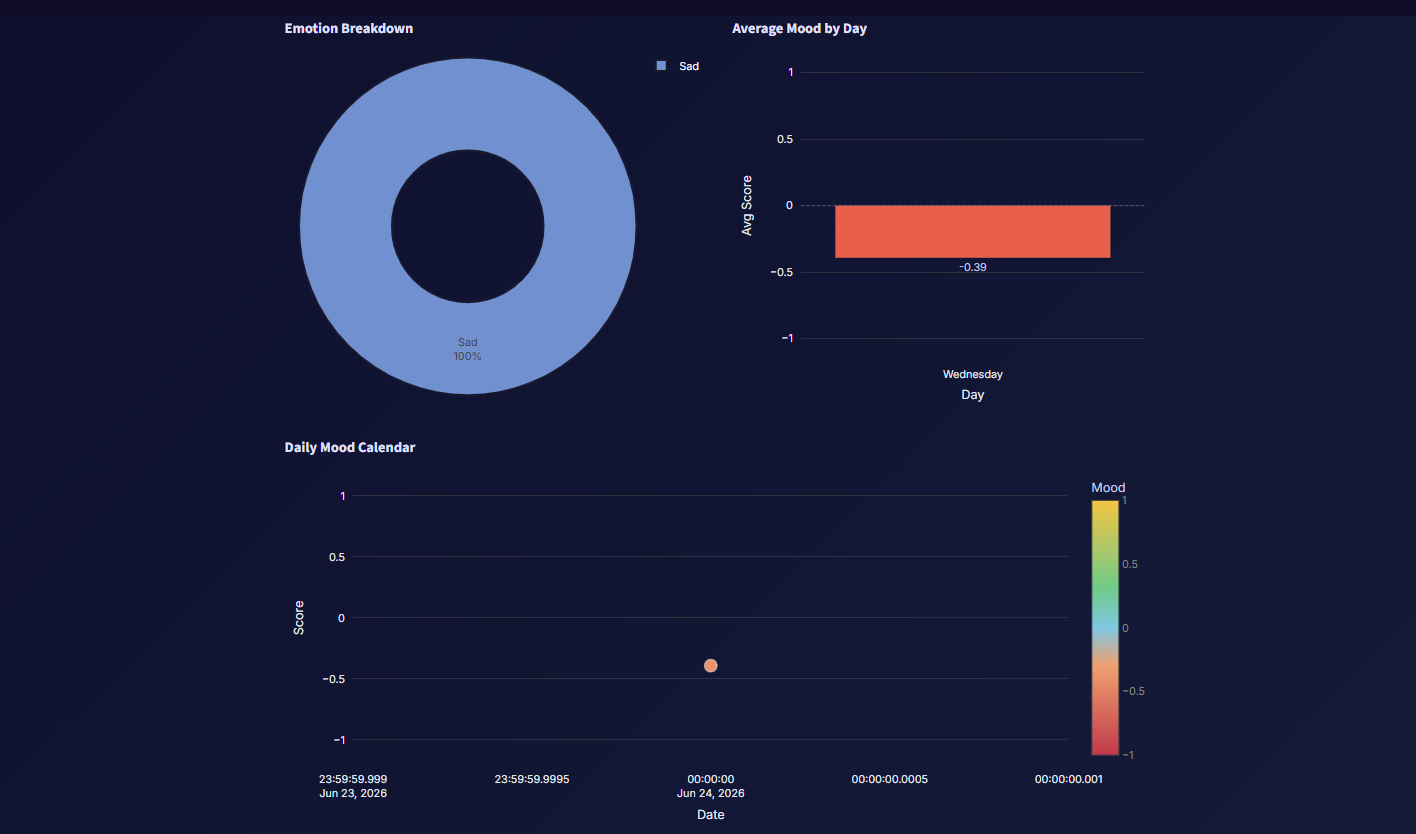
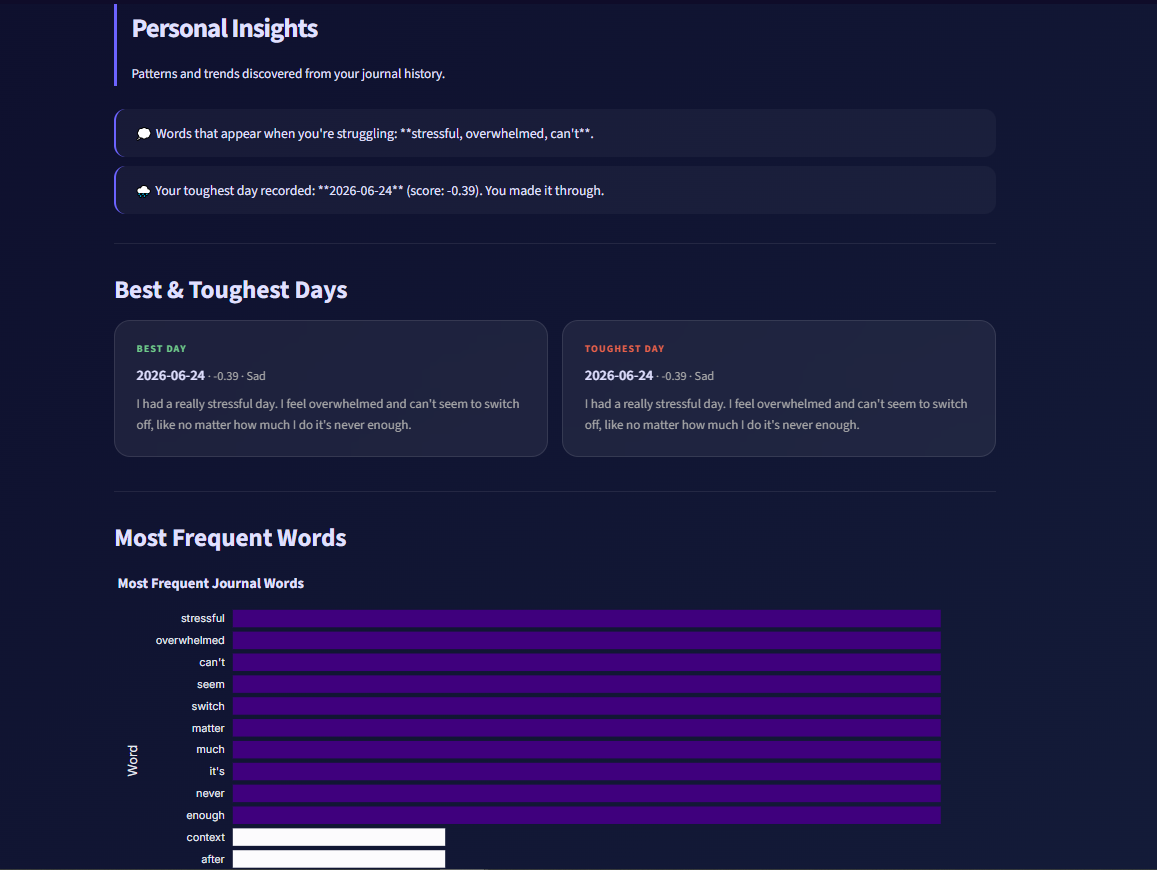
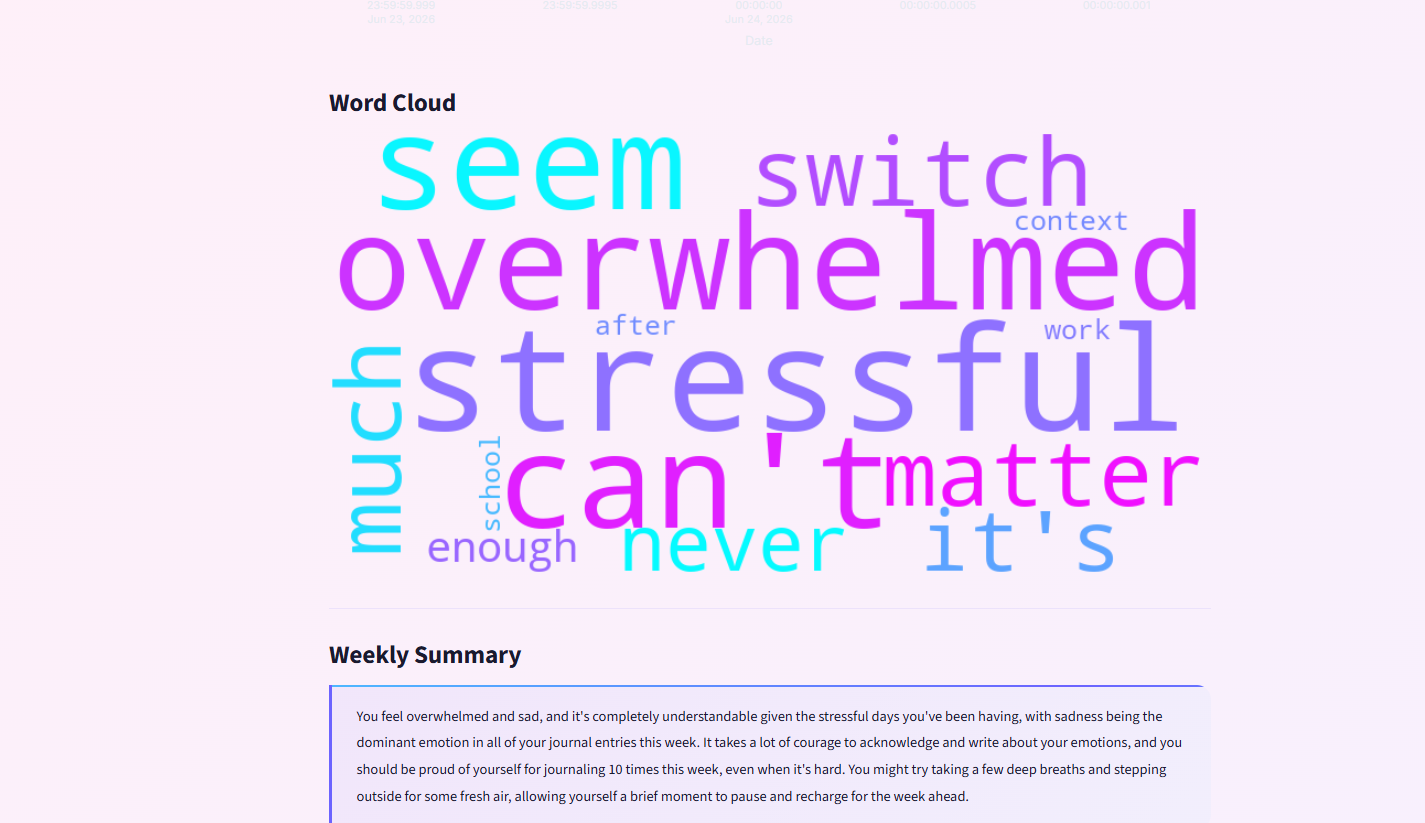
- Track emotions over time with sentiment analysis and interactive charts
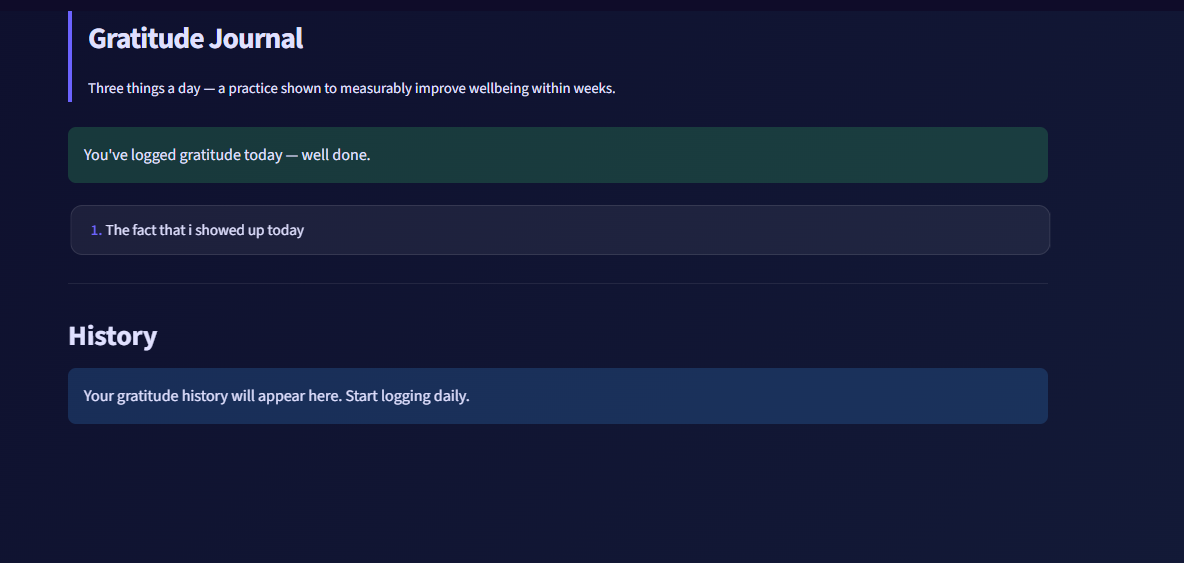
- Log gratitude with a daily 3-item gratitude journal
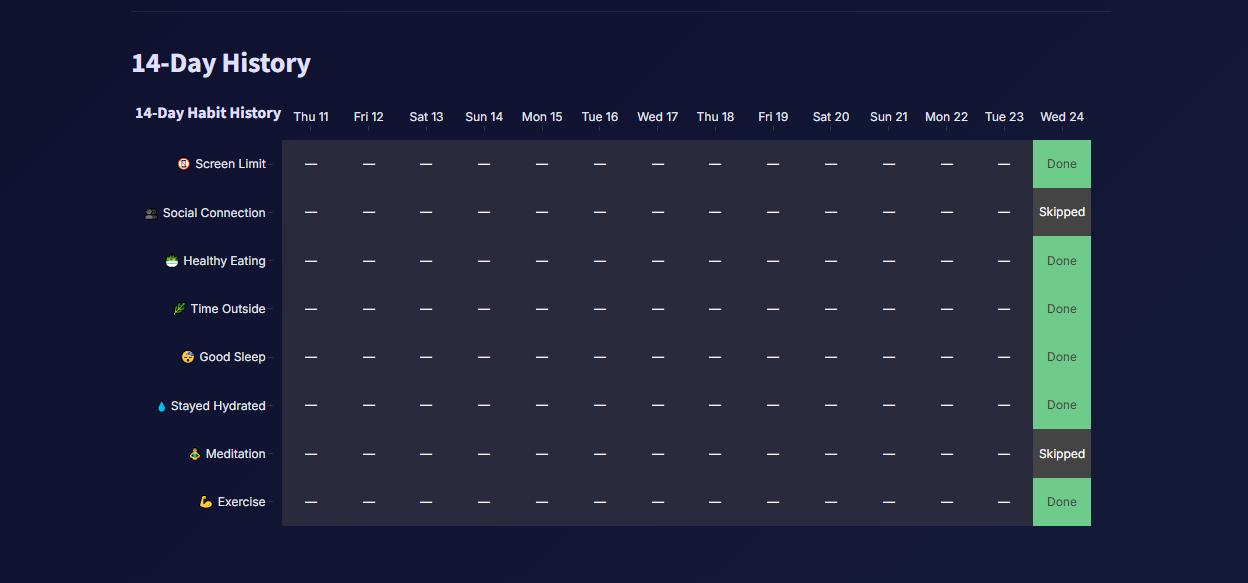
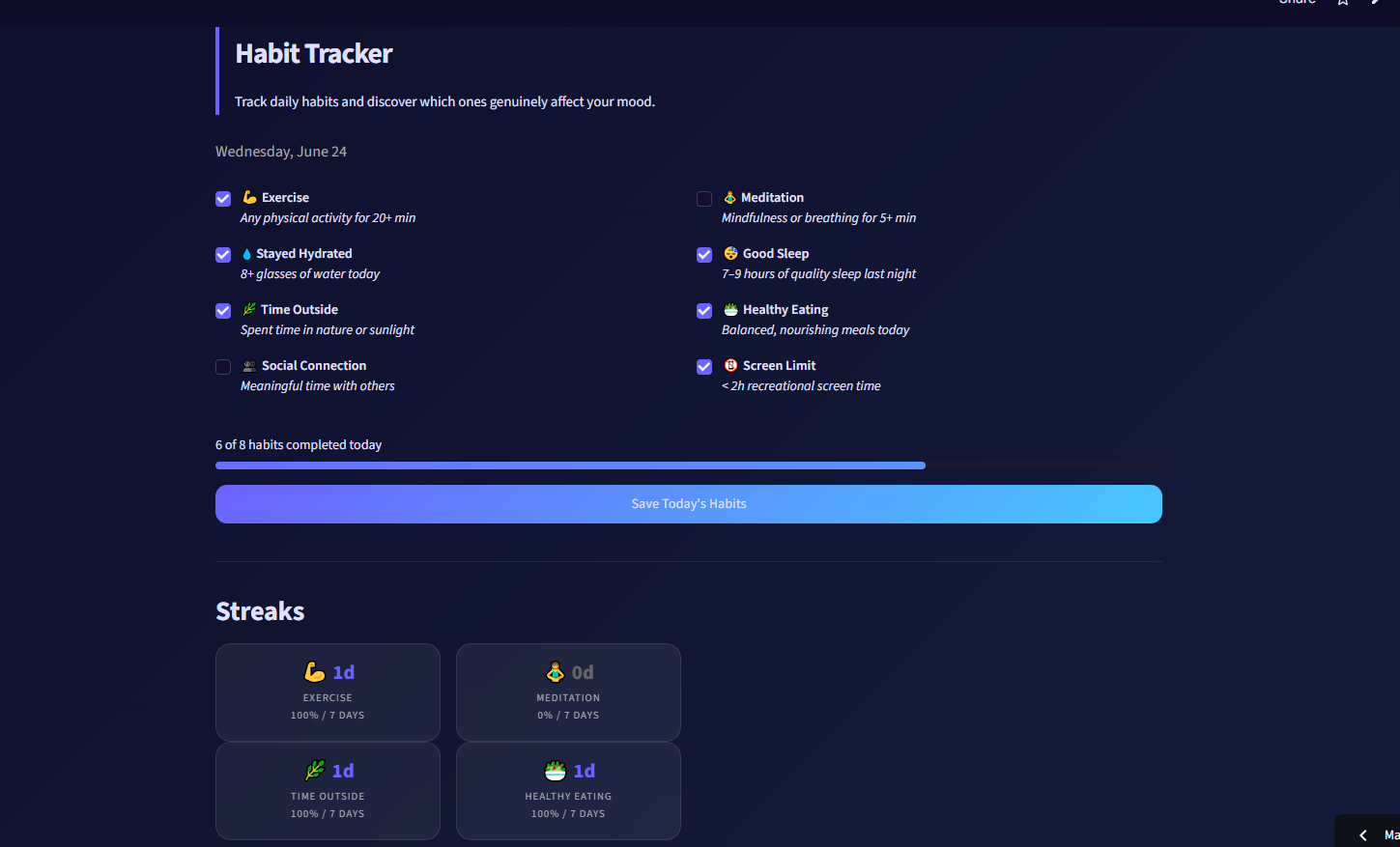
- Build healthy habits and discover which ones actually improve your mood
- Get a daily affirmation personalized to your recent emotional state
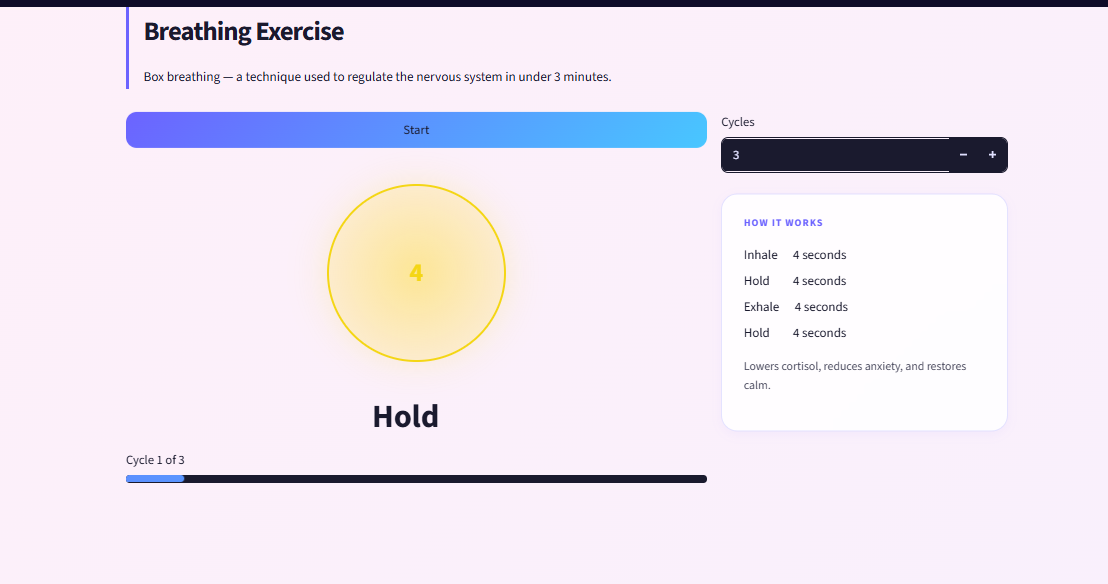
- Practice breathing with a guided box breathing exercise
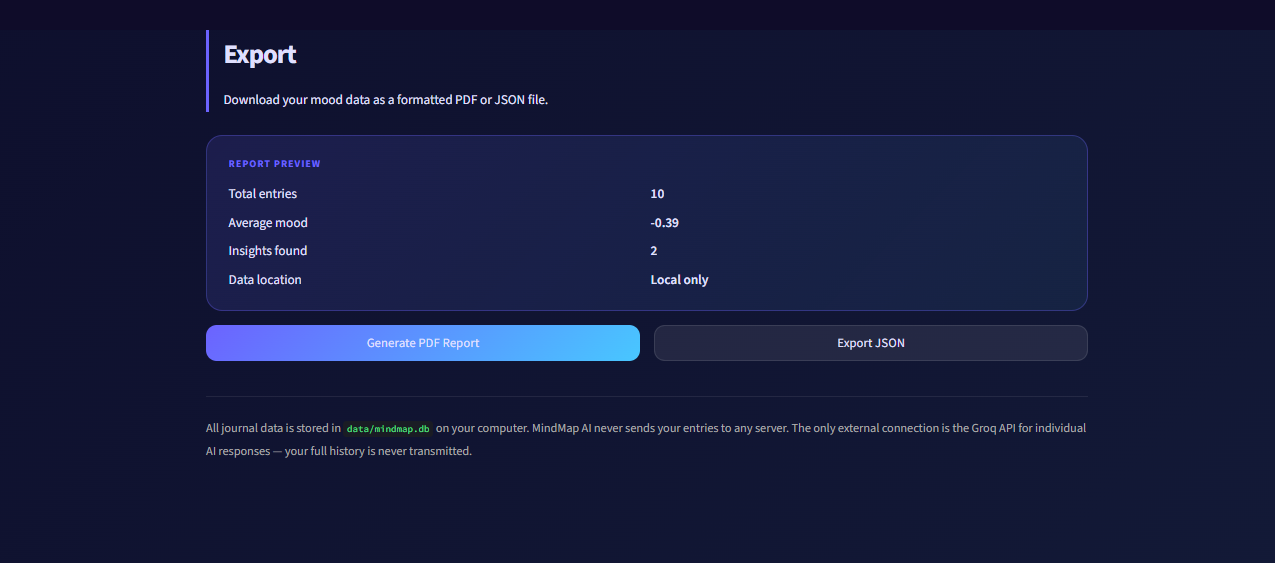
- Export your data as a PDF report or JSON file
Everything stays 100% on your device — your journal entries are never uploaded or shared.
How I built it
- Streamlit for the multi-page web app with dark/light mode and CSS animations
- Groq API (Llama 3.3 70B) for AI-generated responses, affirmations, writing prompts, and weekly summaries
- VADER + TextBlob for real-time sentiment analysis and 7-category emotion classification
- SQLite for local data storage — entries, habits, gratitude logs, and settings
- Plotly for interactive mood timeline, emotion pie chart, weekly bar chart, and habit heatmap
- ReportLab for PDF report generation
- Python-dotenv for secure API key management
Challenges I faced
The biggest challenge was making the UI feel warm and human rather than clinical or robotic. Mental health tools need to feel safe — so I spent significant time on the copy, reducing emoji overuse, and designing a color system that works in both dark and light mode. Getting sentiment analysis to map meaningfully to real emotions (not just positive/negative) also required careful calibration of the VADER score thresholds.
What I learned
Building MindMap AI taught me how much thoughtful UX matters in health-focused apps. I also deepened my understanding of LLM prompt engineering — crafting system prompts that produce empathetic, non-preachy responses consistently was harder than expected.


Log in or sign up for Devpost to join the conversation.