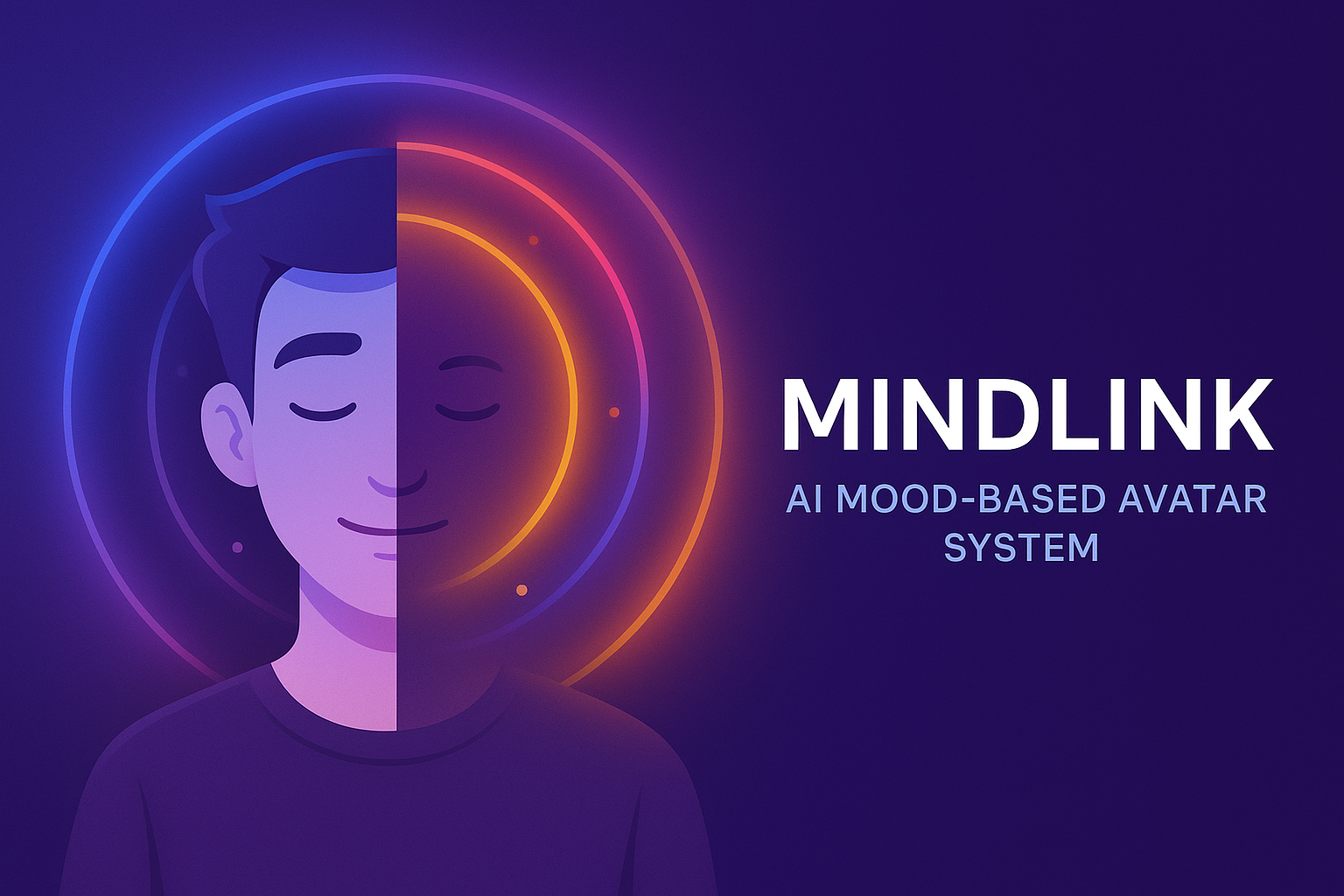
MindLink was born from a simple question: What if our avatars could finally understand us — not just represent us?
In today’s virtual environments, avatars look better than ever, but they still lack the most human element: emotion. Whether people are gaming, collaborating, or socializing in VR, their digital identities remain static, unable to reflect how they actually feel. This disconnect limits immersion and makes virtual interactions feel less authentic.
MindLink changes that.
The project began as an experiment in mapping voice emotion analysis to real-time avatar expression. As the idea grew, the vision became clearer: Create an AI system that listens, understands, and responds — allowing avatars to adapt their mood, lighting, animations, and environment based on the user's emotional tone.
Imagine joining a VR space after a long day. Your avatar instantly softens its expression, the environment adjusts to calming colors, and your friends can sense your mood without asking. Or imagine entering in an excited tone — your avatar becomes energetic, with vibrant animations and brighter surroundings.
MindLink aims to make virtual presence feel more alive, more personal, and more human.
By combining Meta Horizon tools, speech-to-emotion AI, and dynamic avatar rendering, MindLink brings emotional intelligence into VR. It enhances communication, supports mental well-being, and opens the door to a new era of emotionally responsive virtual worlds.
MindLink isn’t just about avatars. It’s about creating digital spaces that understand us — and respond to us — just like people do.
Built With
- ai
- animatore
- api
- avatars
- blender
- c#
- cloud
- cloude
- figma
- firebase
- firestore
- github
- horizon
- javascript
- meta
- node.js
- phython
- presence
- react
- sdk
- ser
- tensorflow
- unity
- voice
- websockets


Log in or sign up for Devpost to join the conversation.