-
-
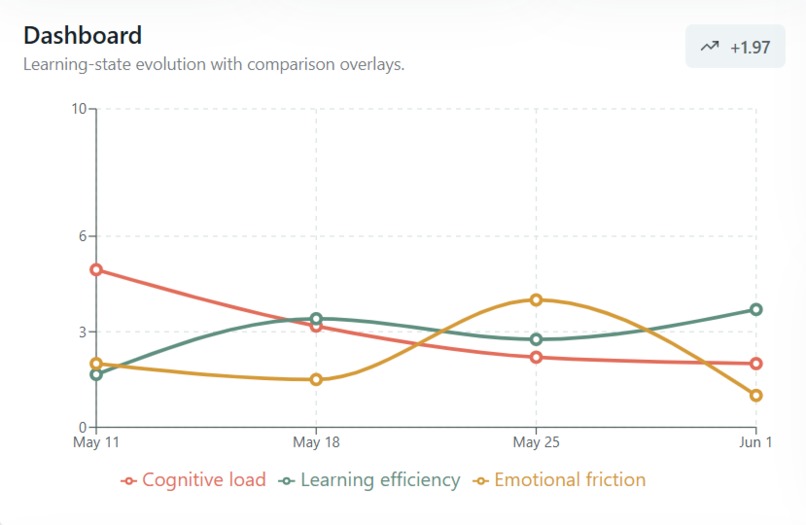
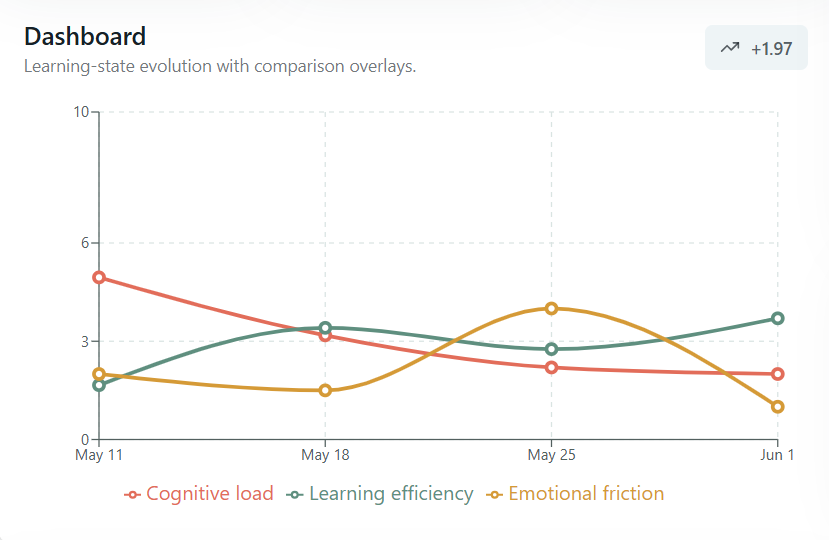
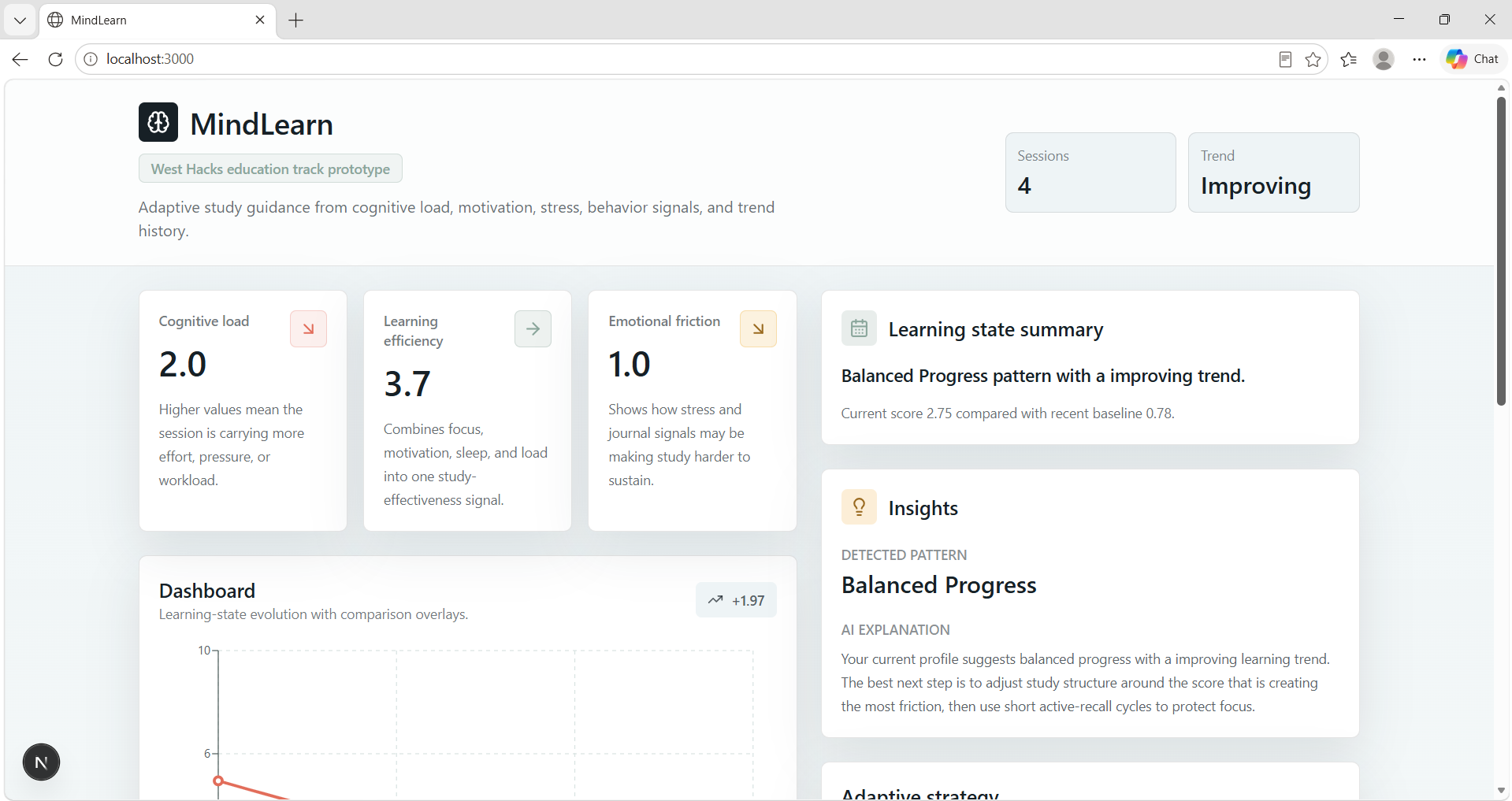
Dashboard Learning-state evolution with comparison overlays.
-
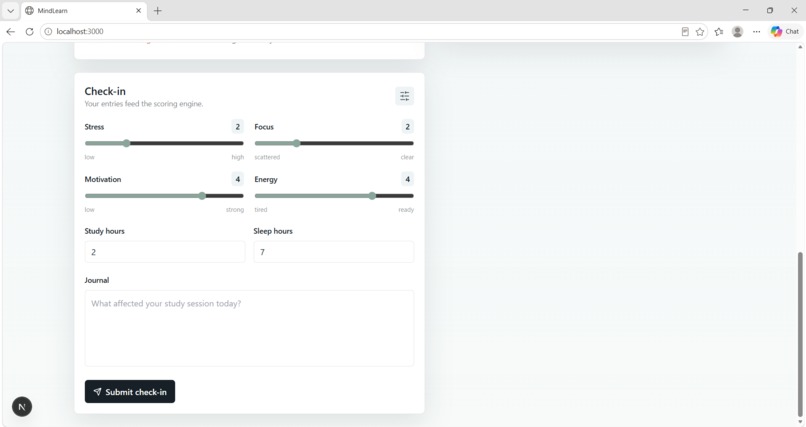
working demo part2
-
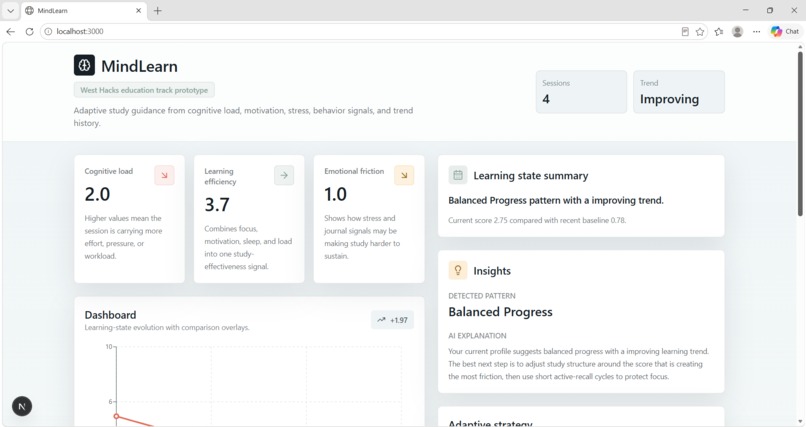
working demo part1
Inspiration
MindLearn was inspired by a simple but overlooked observation: students often evaluate their learning only through outcomes like grades, not through the internal learning conditions that produce those outcomes.
Many high-achieving students appear successful externally but struggle internally with stress, perfectionism, inconsistent focus, and inefficient study strategies. Existing educational tools track assignments and performance, but rarely help students understand why their learning process is or isn’t working.
This project was designed to bridge that gap by combining educational psychology concepts such as cognitive load theory, self-regulated learning, and motivation research into a structured, explainable learning analytics system.
What it does
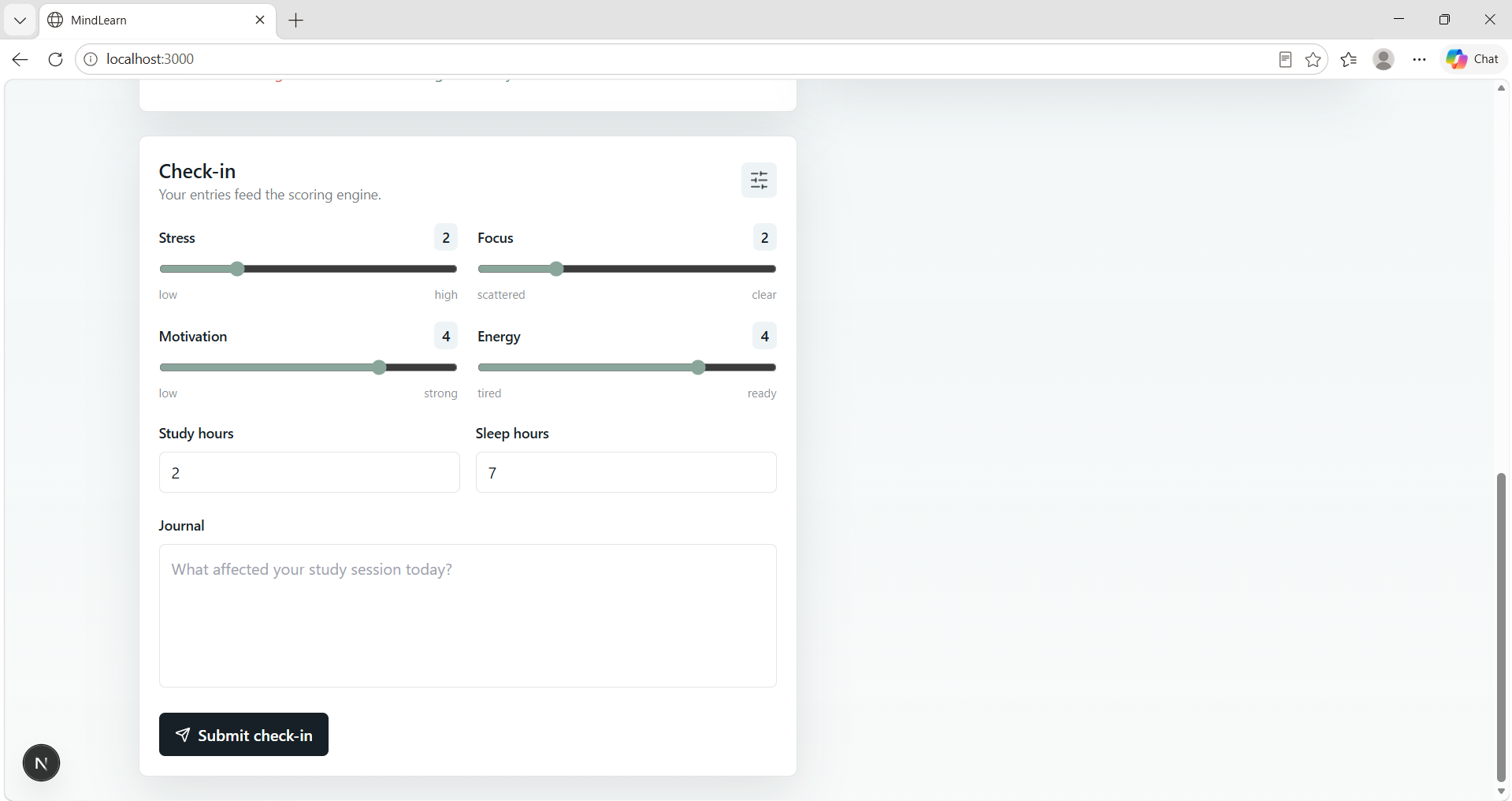
MindLearn is an AI-assisted learning analytics platform that helps students understand how stress, motivation, focus, sleep, and study habits affect their learning effectiveness.
Instead of only tracking grades or assignments, it analyzes the learning process itself through short check-ins and journal reflections.
The system:
collects student self-reported learning data extracts behavioral signals from journal text computes cognitive load, learning efficiency, and emotional friction scores detects learning patterns such as overload, avoidance, perfectionism, and inefficient studying tracks changes over time provides adaptive, explainable study recommendations
The goal is to help students understand why their study methods work or fail and improve learning sustainability over time.
How we built it
MindLearn was built as a full-stack web application using Next.js and TypeScript. The system processes student check-ins containing both structured inputs (stress, focus, motivation, sleep, study hours) and unstructured journal text.
Instead of relying on machine learning models for core logic, I designed a deterministic inference engine that:
Extracts behavioral signals from journal entries using rule-based NLP Computes cognitive load, learning efficiency, and emotional friction scores Detects recurring learning patterns such as overload, avoidance, perfectionism, and inefficient studying Tracks changes in these metrics over time Generates adaptive study recommendations using predefined educational rules
An optional AI layer is used only for explanation and summarization of results, not for decision-making.
Challenges we ran into
The biggest challenge was ensuring the system remained both intelligent and trustworthy. I intentionally avoided using AI as the core decision-maker because it would make the system less explainable and harder to justify scientifically.
Instead, I built a transparent scoring and pattern detection system that could be audited and understood. Another challenge was designing meaningful metrics that connect psychological learning factors (like stress and motivation) with academic behavior in a structured and measurable way.
Balancing scientific grounding, usability, and system complexity was the most difficult part of the project.
Accomplishments that we're proud of
We are proud that we built a full end-to-end system that goes beyond a typical AI chatbot and instead implements a structured learning analytics pipeline.
Key accomplishments include:
Designed a hybrid system combining rule-based scoring, behavioral feature extraction, and AI explanation layers Created a deterministic learning-state model that translates subjective student input into measurable metrics Implemented pattern detection logic for identifying common learning barriers such as overload, avoidance loops, and perfectionism-driven studying Built time-based trend tracking to analyze how learning efficiency and stress change over time Ensured the system is explainable, with all core decisions being transparent and not dependent on black-box AI Successfully integrated a modern full-stack web application using Next.js, TypeScript, and data visualization tools
We are especially proud that the system focuses on educational interpretability rather than just generating generic AI advice.
What we learned
Key learnings include:
How cognitive load theory and self-regulated learning principles can be translated into computational models How to design rule-based AI systems that remain explainable and reliable How to structure feature extraction pipelines from unstructured text data How to combine deterministic logic with AI-generated explanations in a controlled and safe way How important interpretability is when building tools related to learning and wellbeing How to design systems that track behavioral change over time instead of relying on single-point predictions
What's next for MindLearn
Future improvements include:
Introducing personalized learning profiles that adapt recommendations over longer time periods Improving pattern detection using more advanced machine learning models trained on anonymized behavioral data Adding a more advanced visualization dashboard for long-term learning trends Expanding the intervention system with research-backed learning strategy suggestions Developing a mobile version to make daily check-ins more seamless for students Conducting user testing with students to validate learning effectiveness and improve scoring models
Built With
- css
- framer
- javascript
- next.js
- openai-compatible
- postgresql-ready
- powershell
- recharts
- typescript


Log in or sign up for Devpost to join the conversation.